Wolframite


Quick answer: Wolframite is a dark brown to black tungsten ore mineral with a metallic to submetallic luster, high specific gravity, and a typical Mohs hardness of 4 to 4.5. Its unusually heavy feel, dark streak, and association with quartz or tin-bearing veins are useful clues for identification.
AI Rock ID can help compare a suspected wolframite specimen against visually similar dark metallic minerals using photos and observable traits. RockIdentifier.io provides reference information that can support, but not replace, hands-on checks such as streak, density, and hardness testing.
Good fit
- Collectors interested in ore minerals and tungsten-bearing specimens
- Students comparing high-density metallic minerals
- Specimens with clear crystal habit, striations, or quartz vein association
- Collections focused on industrial minerals, mining geology, or pegmatites
Not a good fit
- Buyers looking for brightly colored display crystals
- Jewelry use, because wolframite is relatively soft and dense
- Situations where only photos are available and no streak or density checks can be made
- Collections that avoid heavy-metal ore minerals
Most commonly confused with
- Cassiterite: Cassiterite is also heavy and dark but is a tin oxide, commonly has a paler brown streak, and is harder than wolframite.
- Hematite: Hematite may look metallic and dark but usually gives a red-brown streak rather than wolframite's dark brown to black streak.
- Magnetite: Magnetite is strongly magnetic, while wolframite is not typically strongly attracted to a simple magnet.
- Columbite: Columbite can be black, dense, and metallic-looking, but it belongs to a different niobium-tantalum mineral group and often requires lab testing to separate confidently.
Wolframite vs Similar Dark Heavy Minerals
| Mineral | Key clue | Typical difference from wolframite | Simple check |
|---|---|---|---|
| Wolframite | Very heavy, dark brown to black, often bladed or massive | Tungsten ore mineral with Mohs 4–4.5 | Check heft, streak, and hardness |
| Cassiterite | Heavy brown-black tin oxide | Usually harder, about Mohs 6–7 | Try scratch resistance against steel |
| Hematite | Metallic or earthy iron oxide | Red-brown streak is diagnostic | Use an unglazed streak plate |
| Magnetite | Black iron oxide | Strong magnetic response | Test with a small magnet |
| Columbite | Dense black niobium-tantalum mineral | Often visually very close to wolframite | May need lab confirmation |
AI identification confidence
AI identification confidence for wolframite is moderate when the specimen shows a dark metallic appearance, high apparent density, and clear crystal habit. Confidence is lower for massive black ore pieces because cassiterite, columbite, hematite, and manganese oxides can look similar in photos.
When AI gets it wrong
- The photo does not show scale, crystal habit, or fresh broken surfaces.
- The specimen is a massive black ore with no visible crystals.
- Lighting makes metallic, submetallic, and resinous luster hard to separate.
- No streak, hardness, magnetism, or density information is available.
Final recommendation
For a collector specimen, prioritize labeled wolframite with locality information, visible crystal form, and a noticeably heavy feel. For confirmation, combine photo-based identification with simple physical tests and consider expert or laboratory verification for high-value pieces.
How to Check Wolframite Authenticity
Authentic wolframite should feel unusually heavy for its size and usually shows a dark brown to black streak. It should not behave like strongly magnetic magnetite, and it should be softer than cassiterite. Locality labels, association with quartz veins, and seller-provided mineral data improve confidence.
Buying Wolframite Specimens
When buying wolframite, look for clear photos of multiple angles, a stated locality, and information about whether the specimen is crystalline, massive, or attached to matrix. Well-formed crystals, sharp striations, and classic mining localities can affect collector interest. Avoid relying only on the name when the piece is a featureless black mass.
Field Clues for Wolframite
Wolframite is commonly associated with hydrothermal veins, greisen systems, pegmatites, quartz, fluorite, mica, and tin minerals such as cassiterite. In hand sample, the combination of high density, dark streak, modest hardness, and non-strong magnetism is more useful than color alone.
What Is Wolframite?
Wolframite is a tungsten oxide mineral in the ferberite–hübnerite series, with the formula (Fe,Mn)WO4. The first thing you notice when you pick up a chunk is the heft. It just drops into your palm like a scrap of metal, and for a second your brain kind of insists it can’t be “just rock.”
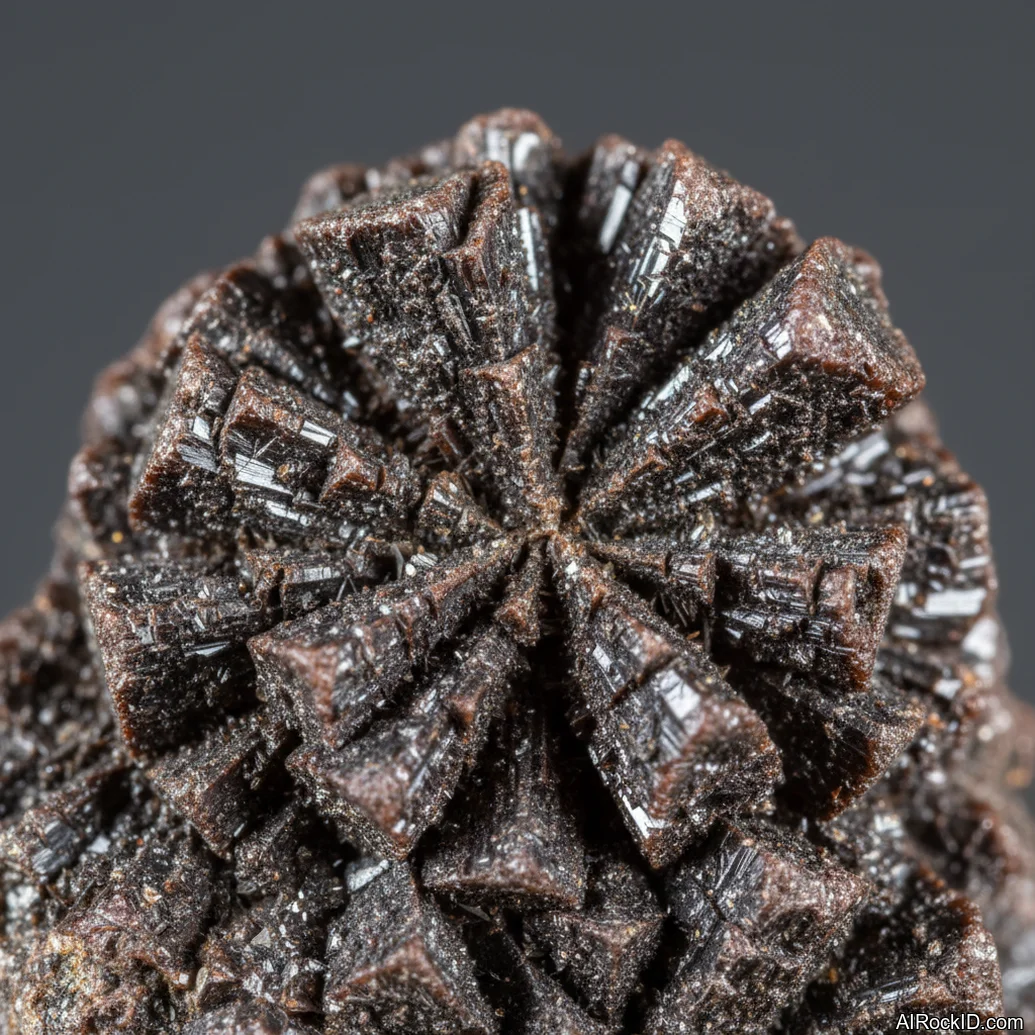
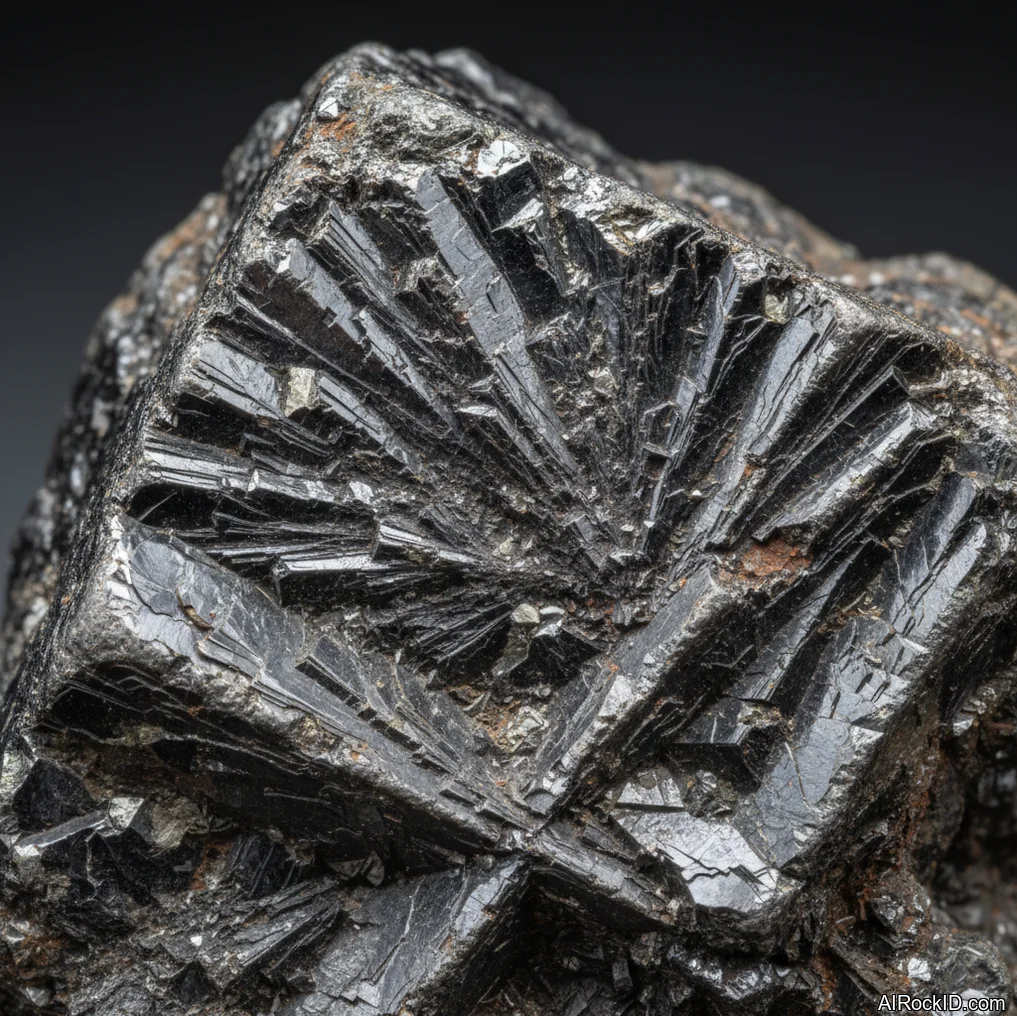
It looks black at a glance, sure, but not the dead, flat kind of black. Tip it under a desk lamp and those cleavage faces kick back a greasy flash, sometimes drifting toward steel-gray. A lot of pieces have that familiar bladed, flattened crystal habit, like little wedges or thin “book” stacks pressed together. And in hand? It isn’t what I’d call tough. Tap two pieces together in a tray and the edges can chip (ask me how I know).
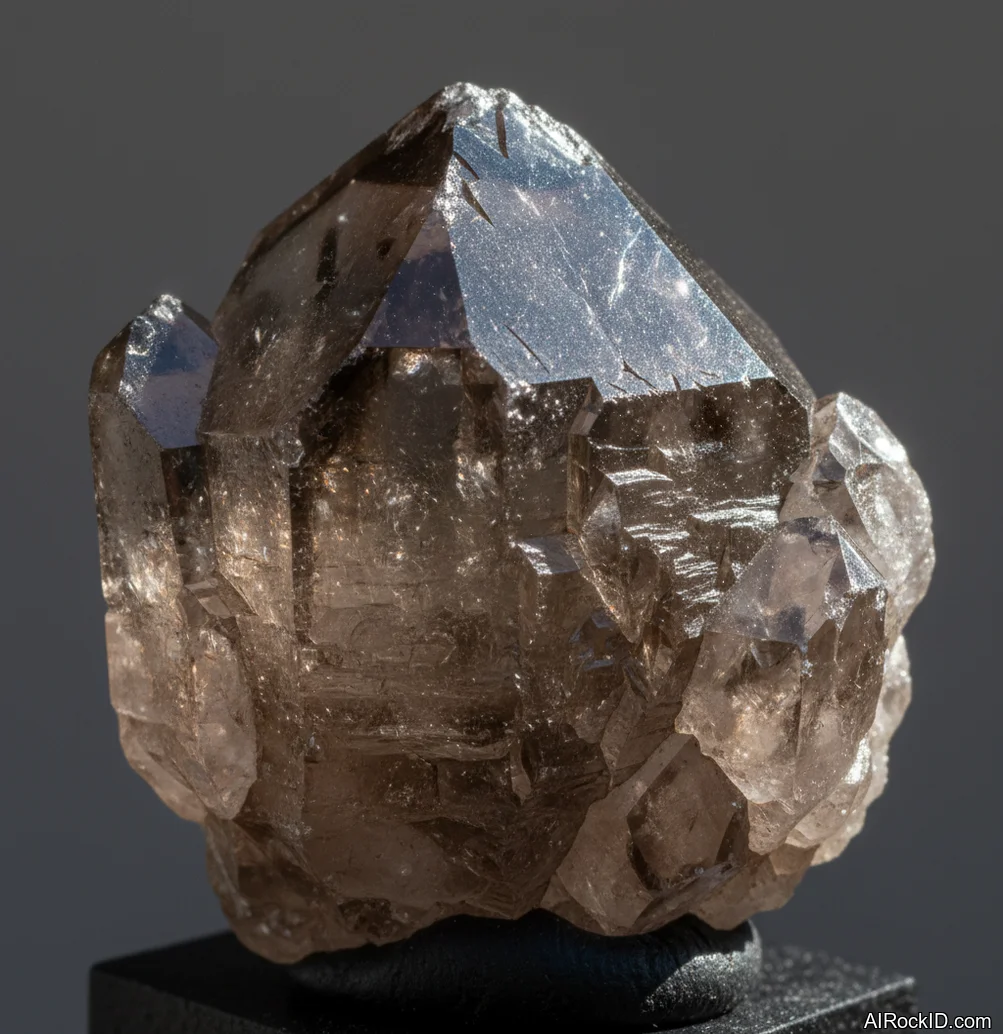
Most of what you see for sale is either chunky massive ore or those sharp bladed crystals sitting on quartz or a greisen matrix. The really nice display specimens have clean faces that grab the light and show fine striations. But don’t go in expecting a jewelry look. It’s an ore mineral first, and only sometimes a collector crystal.
Origin & History
“Wolframite” gets its name from an old German and Swedish mining word, “wolfram.” And it wasn’t some poetic nickname either. Miners used it because this ore would mess up tin smelting, kicking off these stubborn slags that just wouldn’t behave.
Thing is, if you’ve ever spent time around old-timers in the mines, or even just dug through older papers, you’ll notice they call tungsten “wolfram” like it’s the normal thing. That’s on purpose, not a mix-up.
Wolframite got described as an official mineral species in the 18th century, right when mineralogy started getting more formal and chemistry finally caught up with what miners already had figured out by doing the work. It matters historically because it’s one of the main ores of tungsten. And tungsten’s a big deal for hard alloys, tooling, and high-temperature uses. Most people heard the name through mining, not crystal shops.
Where Is Wolframite Found?
It turns up in tungsten districts worldwide, especially in granite-related vein systems. Classic collector localities include Panasqueira (Portugal) and several Brazilian and Bolivian pegmatite and vein areas.
Formation
Raw chunks out of granite country usually give themselves away. Wolframite most often shows up in high-temperature hydrothermal veins connected to granitic intrusions, and it’s rarely alone. You’ll see it riding with quartz, cassiterite, topaz, fluorite, plus sulfides.
And then there are greisen zones, which are another classic spot. That’s where the granite gets altered until it turns into a quartz and mica rich rock (you can almost picture the original granite getting “washed out” into something leaner).
Compared to something like galena, wolframite isn’t soft and easy in quite the same way, but it’s not hard, either. It tends to grow in those bladed crystals with strong cleavage, and that cleavage is exactly why a piece can look great in hand but still show up with a corner snapped off. Annoying, right?
Thing is, the chemistry slides along a range from iron-rich ferberite to manganese-rich hübnerite. So the exact look can shift depending on where it lands in that series.
How to Identify Wolframite
Color: Usually black to brownish-black, sometimes with a subtle brown tone on thin edges or broken surfaces. In bright light it can flash steel-gray on cleavage faces.
Luster: Metallic to submetallic, sometimes with a slightly resinous or greasy look on fresh cleavage.
Pick up the specimen and judge the heft. Wolframite feels surprisingly heavy for its size, closer to a chunk of metal than a typical black silicate. Look closely for bladed crystals and flat cleavage faces, and then check the streak if you can: it’s dark brown to reddish-brown, not black like magnetite. The real test is magnetism and streak together. Magnetite is strongly magnetic and has a black streak, while wolframite is usually only weakly magnetic at most and streaks brown.
Common Look-Alikes
Wolframite is sometimes confused with these materials:
- Schorl (black tourmaline)
- Cassiterite
- Ilmenite
- Magnetite
- Black glass (especially dense leaded glass)
- Manganese-rich garnet (almandine or spessartine, very dark)
Market Cautions & Treatments
When AI Can Get This Wrong
AI often confuses wolframite with schorl and cassiterite in photos, since all three come chunky and pitch black. Pictures flatten the greasy metallic luster, so it's easy to miss. If you're not sure, scratch the surface—wolframite leaves a dark reddish-brown streak, unlike tourmaline or glass.
Properties of Wolframite
Physical Properties
| Crystal System | Monoclinic |
| Hardness (Mohs) | 4.0-4.5 (Medium (4-6)) |
| Density | 7.0-7.5 g/cm3 |
| Luster | Metallic |
| Diaphaneity | Opaque |
| Fracture | Uneven |
| Streak | dark brown to reddish-brown |
| Magnetism | Weakly Magnetic |
| Colors | black, brownish-black, gray-black |
Chemical Properties
| Classification | Oxides |
| Formula | (Fe,Mn)WO4 |
| Elements | Fe, Mn, W, O |
| Common Impurities | Nb, Ta, Sn |
Optical Properties
| Refractive Index | 2.17-2.23 |
| Birefringence | 0.06 |
| Pleochroism | Strong |
| Optical Character | Biaxial |
Wolframite Health & Safety
Handling it is generally safe. But don’t grind it up or snap it and then breathe in that fine dust. It’s the kind that hangs in the air for a second and you can feel it in the back of your throat. Wash your hands after you handle it, especially before eating.
Safety Tips
If you’re going to cut it or grind it, do it wet and wear a real respirator, not just a paper dust mask. And don’t leave the little crumbs or those powdery chips sitting around where kids or pets can get into them.
Wolframite Value & Price
Price Range
Rough/Tumbled: $15 - $250 per specimen
Cut/Polished: $80 - $400 per carat
Clean, sharp bladed crystals with bright, reflective faces and strong contrast against the matrix tend to move quickly, especially if they’re from a known spot like Panasqueira. Big chunks of massive ore? Usually pretty cheap. But if the crystals are crisp and undamaged, the price jumps, because cleavage damage is everywhere (you see it the moment you tilt the piece under a light).
Durability
Nondurable — Scratch resistance: Fair, Toughness: Poor
It’s stable in normal room conditions, but it chips easily and cleavage makes it unforgiving in a pocket or a crowded display case.
How to Care for Wolframite
Use & Storage
Store it so crystals can’t knock into each other, because the cleavage edges chip like crazy. I wrap bladed pieces in tissue and give them their own box slot.
Cleaning
1) Rinse briefly with lukewarm water if needed and don’t soak for long. 2) Use a soft brush to lift clay or dust from crevices. 3) Pat dry and let it air dry fully before putting it back on matrix or into a closed box.
Cleanse & Charge
If you do the metaphysical side, I’d stick to smoke, sound, or a quick pass over a selenite plate. I avoid salt bowls for anything with metallic luster because it’s just asking for grime and scratches.
Placement
Put it somewhere stable where it won’t get bumped, like a lower shelf or a cabinet. A single overhead light makes the cleavage flashes look way better than diffuse room light.
Caution
Don’t throw wolframite into a tumble mix or carry it loose in your pocket next to quartz. It sounds harmless, but it’ll get scuffed up fast, and quartz can be a real bully. And if you’re thinking about doing an acid test, don’t bother. It won’t tell you anything useful, and you could end up wrecking the matrix (and then you’re stuck with a damaged piece for no reason).
Works Well With
Wolframite Meaning & Healing Properties
Wolframite isn’t like those fluffy, sugar-sweet crystals that look like they belong on a cupcake. This one feels serious in your hand. It’s dense, dark, kind of blunt looking, and that’s exactly why people tie it to grounding and “get it done” intentions. On a long day, just picking up a piece can yank your attention back into your body, because the weight is so unmistakable. Hard to stay floaty and scattered when what you’re holding feels like a small dumbbell.
But there’s a catch. Wolframite has cleavage, and that makes it a rough pick for pockets or constant fidgeting, which matters if your practice is very hands-on. I’ve watched people buy a sharp, bladed piece, carry it around all week, and then get irritated when it starts shedding tiny chips from getting knocked around. For me, it’s better as a desk stone you don’t mess with much (set it down, leave it alone), or as a specimen you look at for a quick mental reset.
All the metaphysical stuff aside, none of this is medical. I use it like a focus cue. When I’m sorting flats at a show, I’ll sometimes park a heavy stone nearby just to remind myself to slow down and be picky. Wolframite does that really well, especially if you pair it with something clearer like quartz so the whole thing doesn’t slide into a “too heavy” mood.
Common mistakes
- Identifying any heavy black metallic mineral as wolframite without checking streak or hardness.
- Confusing wolframite with cassiterite because both can occur in tin-tungsten mining environments.
- Assuming a specimen is magnetite based only on black color and metallic luster.
- Using polished or weathered surfaces for identification instead of a fresh surface when possible.
- Overlooking locality and matrix information, which can be important for ore-mineral identification.
- Expecting photo identification alone to separate wolframite from columbite in all cases.
Identify Wolframite from a photo
Compare Wolframite traits, care tips, value clues, and common lookalikes with a clear photo.