Black Moonstone
What Is Black Moonstone?
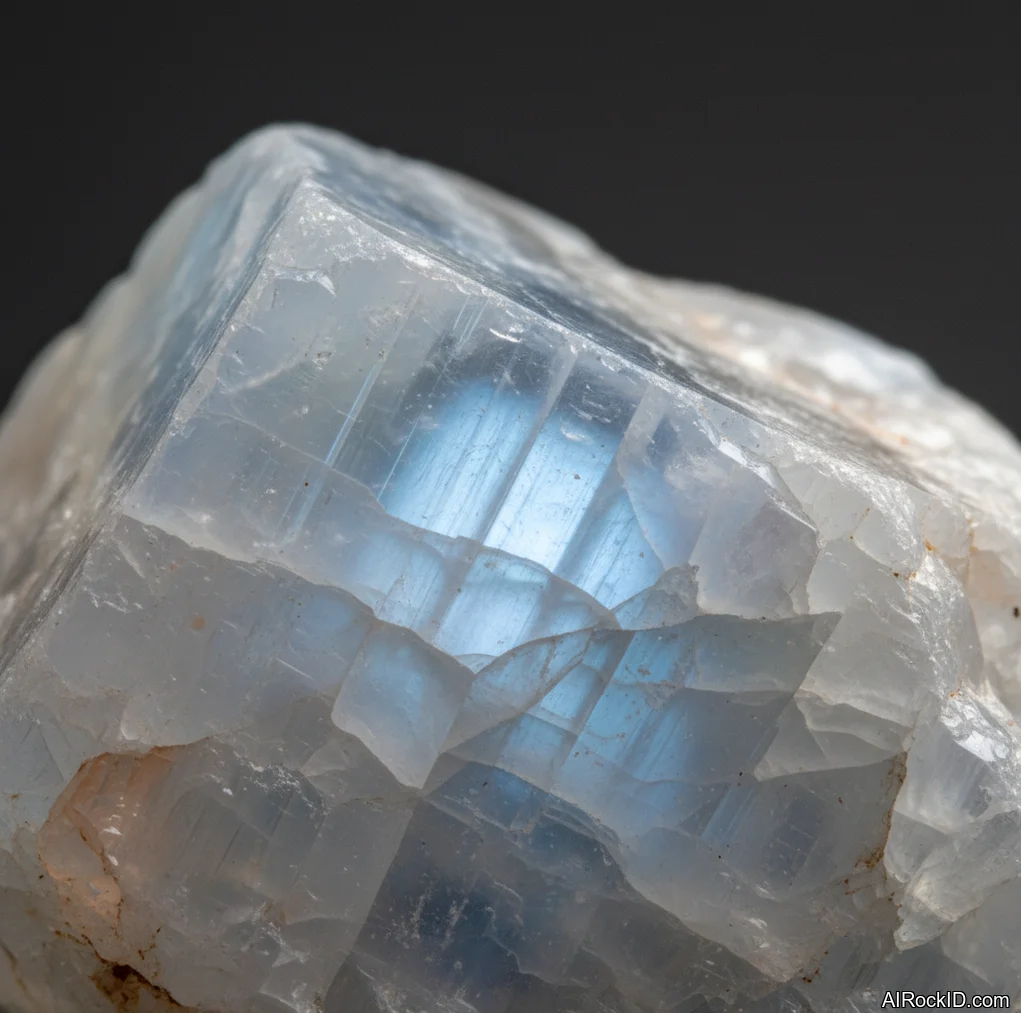
Black moonstone is the dark end of moonstone (a feldspar), and it has that soft, floating glow people call adularescence.
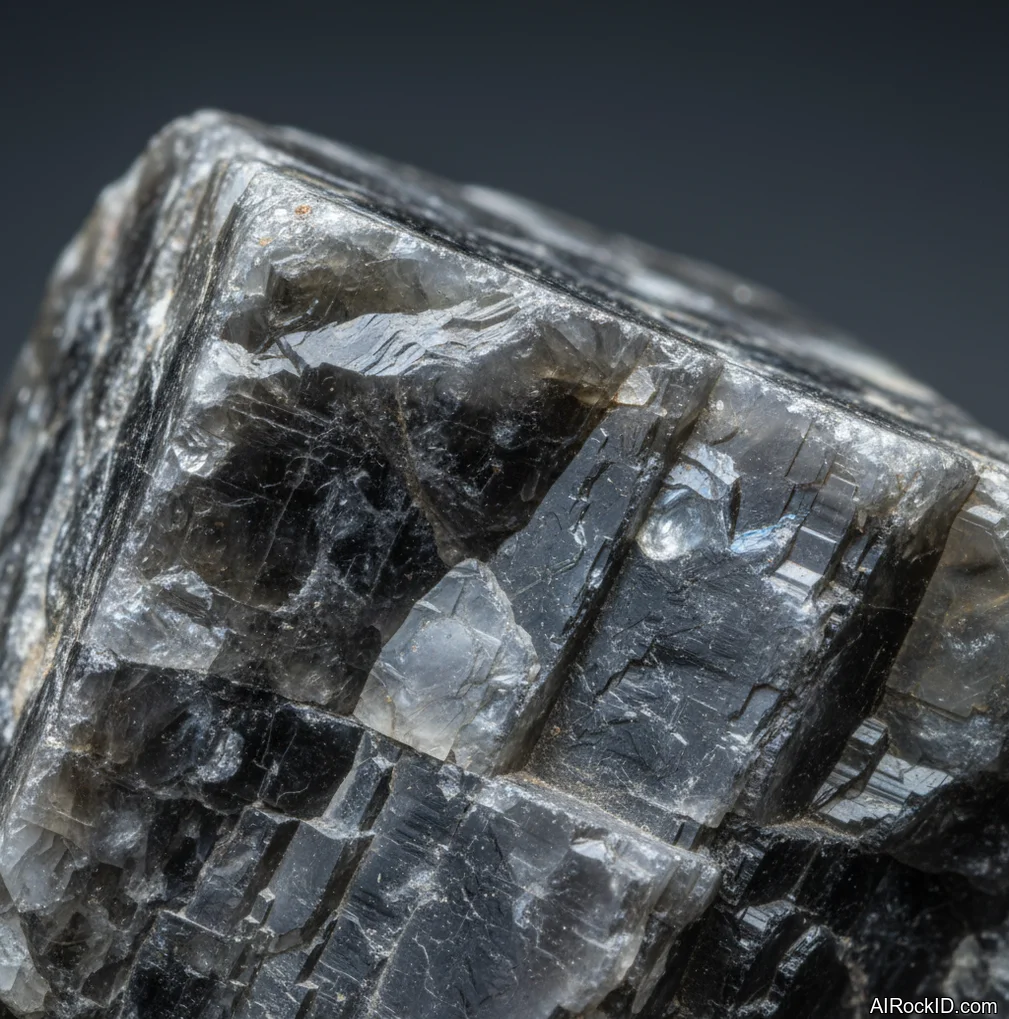
Hold a piece for a second and you’ll feel it. It’s cooler than glass. And it’s got that feldspar slickness, kind of like a bar of soap that’s been rinsed clean and left to dry on the edge of the sink. Most stones sold as black moonstone aren’t pitch-black, though. They sit in that dark gray to charcoal range, with a silver or blue-white sheen that slides over the surface when you tip it under a lamp. Some bits show tiny peppery inclusions, or you get more of a quiet satin shimmer instead of a big, punchy flash.
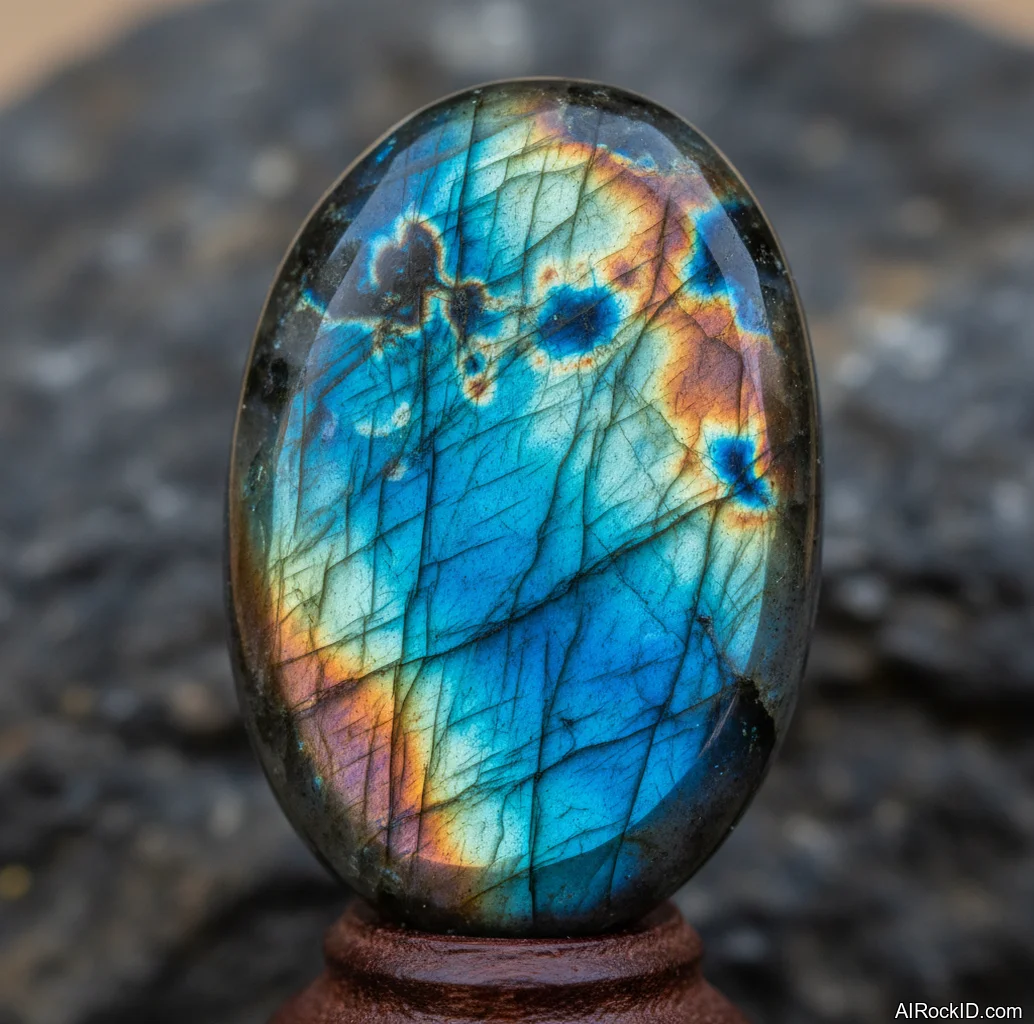
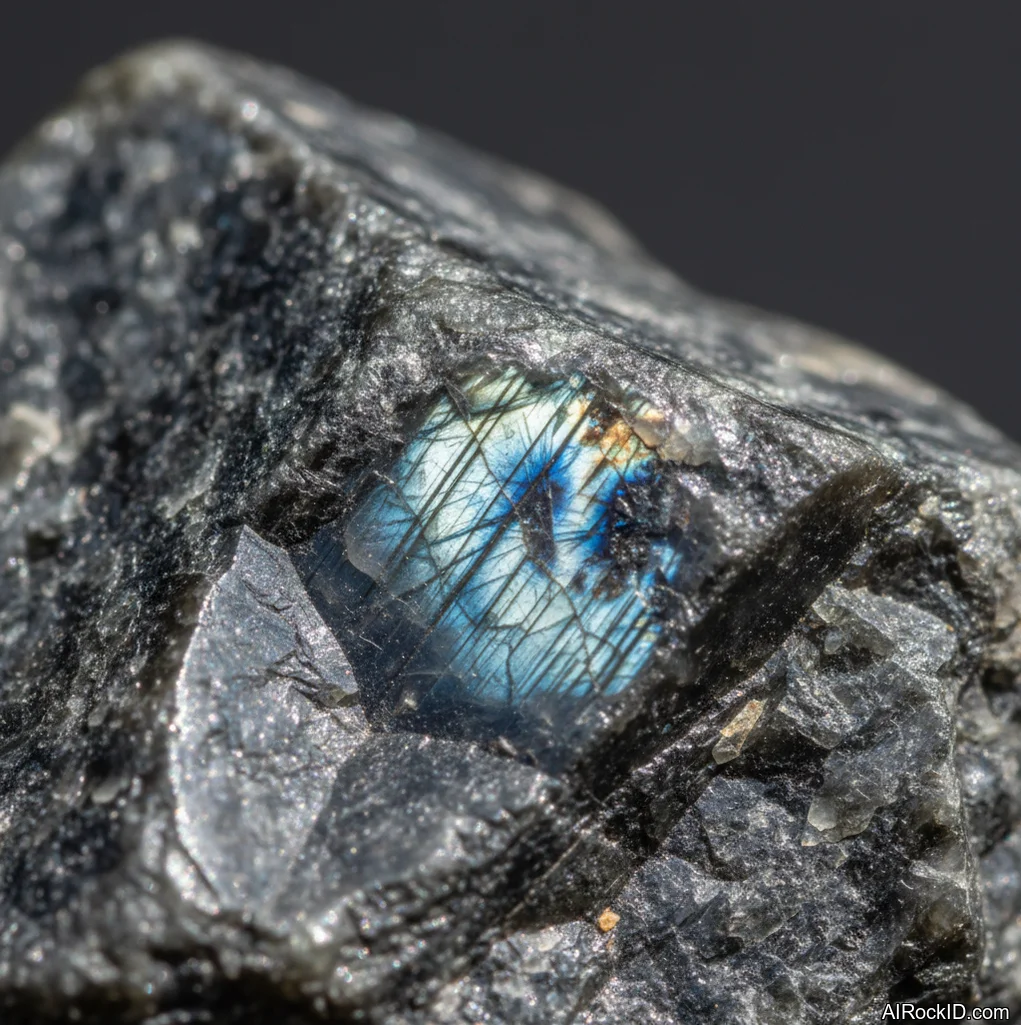
But here’s the headache: a lot of “black moonstone” online is actually larvikite or dark labradorite. They’re all feldspars, so yeah, the mix-ups don’t stop. In your hand, real moonstone’s glow looks like it’s coming from inside the stone, not like a sharp metallic plate stuck on top. If the flash is loud and blocky, and you’re seeing strong blue or green panels, what you’ve probably got is labradorite or larvikite being sold under a friendlier name.
Origin & History
Moonstone has been used as a gem name for ages. But the mineral side of the story didn’t really get tidied up until the 1800s, when European mineralogists started sorting feldspars properly instead of lumping everything together.
The word “adularia” comes straight from the Adula region in the Swiss Alps, where people studied and collected fine orthoclase (the kind you’d see as pale, blocky feldspar with those clean cleavage faces that catch the light when you turn it in your fingers). That’s the classic academic root of moonstone.
“Black moonstone,” though? That’s mostly a trade label, not some formally defined mineral variety. It popped up when dealers began separating out darker feldspar material for the metaphysical market and for jewelry makers who wanted something moodier than the usual milky peach or white moonstone.
Where Is Black Moonstone Found?
Commercial black moonstone is commonly sold from India and Madagascar, with look-alikes frequently sourced from Norway (larvikite) and other feldspar-bearing igneous rocks.
Formation
Most moonstone shows up in igneous and metamorphic environments, where feldspar gets the luxury of growing for a while and then cooling down slowly instead of freezing in place. That glow isn’t magic. It’s coming from microscopic layering and intergrowth inside the feldspar, basically tiny internal structures that scatter light so it looks like it’s floating. Get those layers lined up just right and the sheen actually rolls when you rotate the stone.
Raw pegmatite pieces can feel chunky and blocky in your hand, and the cleavage faces catch light like little mirrors when you tilt them near a lamp. And that’s exactly why cutters keep reaching for domes. A cabochon concentrates the adularescence, so it reads like a soft spotlight sliding around under the surface. In rough, though? The effect can be pretty shy until you hit the right angle.
How to Identify Black Moonstone
Color: Typically dark gray to charcoal with a soft silver, white, or faint bluish sheen that moves with the light. Some pieces look almost smoky-brown in daylight and more steel-gray indoors.
Luster: Pearly to vitreous with adularescence on polished surfaces.
Look closely under a single point light source, like your phone flashlight, and rock the stone slowly. True moonstone sheen looks cloudy and internal, like a glow sitting under the polish, not a sharp mirror flash. If you scratch it with a steel nail, it usually won’t take a deep gouge, but it also won’t feel “tough” like quartz; feldspar can bruise along edges and show little white dings.
Properties of Black Moonstone
Physical Properties
| Crystal System | Monoclinic |
| Hardness (Mohs) | 6-6.5 (Hard (6-7.5)) |
| Density | 2.55-2.63 g/cm3 |
| Luster | Pearly |
| Diaphaneity | Translucent to opaque |
| Fracture | Uneven |
| Streak | White |
| Magnetism | Non-magnetic |
| Colors | black, dark gray, charcoal, smoky brown, silver sheen |
Chemical Properties
| Classification | Silicates (tectosilicates; feldspar) |
| Formula | KAlSi3O8 |
| Elements | K, Al, Si, O |
| Common Impurities | Fe, Ti, Na, Ca |
Optical Properties
| Refractive Index | 1.518-1.526 |
| Birefringence | 0.008 |
| Pleochroism | Weak |
| Optical Character | Biaxial |
Black Moonstone Health & Safety
Black Moonstone’s usually fine to pick up, wear, or keep on a shelf. Just don’t breathe in any dust if you grind or carve it, since it’s a silicate (same basic deal as other silicates).
Safety Tips
If you’re cutting or sanding, keep things wet and wear a respirator. And when you’re done, rinse the slurry off while it’s still muddy instead of letting it dry into dusty powder.
Black Moonstone Value & Price
Price Range
Rough/Tumbled: $5 - $40 per piece
Cut/Polished: $2 - $15 per carat
Prices jump when the stone takes a clean polish, throws a strong, centered sheen, and doesn’t show many fractures once you tilt it under a lamp. Big cabs with that smooth, almost “floating” glow are the ones that run higher, not the dark stuff that just sits there and looks flat.
Durability
Moderate — Scratch resistance: Good, Toughness: Fair
It’s stable in normal conditions, but it can chip on edges and show bruising if it rattles around with harder stones.
How to Care for Black Moonstone
Use & Storage
Store it in a soft pouch or a divided box slot. Feldspar will pick up little chips if you let it clack against quartz or topaz.
Cleaning
1) Rinse with lukewarm water and a drop of mild soap. 2) Gently scrub with a soft toothbrush around edges and settings. 3) Pat dry and let it air-dry before putting it away.
Cleanse & Charge
For people who do energy-style care, smoke cleansing or a quick rinse works fine. Skip harsh salt soaks if the piece has cracks or a delicate polish.
Placement
I keep mine where I can tilt it under a lamp, because the sheen is the whole point. A dark shelf with a small directional light makes it look way better than flat overhead lighting.
Caution
Skip ultrasonic cleaners and steamers, especially on jewelry. And don’t just drop it in your pocket next to your keys. You’ll pull it back out with little dings and bruised edges (the kind you can feel with a fingernail).
Works Well With
Black Moonstone Meaning & Healing Properties
In crystal circles, people talk about black moonstone like it’s regular moonstone’s calmer, more grounded cousin. Folks reach for it when they want the “moonstone mood” without that floaty, dreamy thing. That’s the vibe talk, anyway.
Pick up a polished palm stone. Rub your thumb over it for a minute. You feel that smooth little dome, sure, but you also notice every tiny ding and edge nick it’s collected from being carried around, because feldspar shows wear in a pretty honest way. And for a lot of people, that steady, tactile feel is part of why they keep it nearby while journaling, meditating, or winding down at night (especially when you’re trying to get your brain to shut up, right?).
But let me say it straight: none of this is medical care. If you’re dealing with anxiety, sleep issues, or anything bigger than a rough day, crystals are support at best, not a replacement for a professional.
And there’s a practical catch, too. If you buy “black moonstone” expecting a soft internal glow and you end up with larvikite’s blocky flash, you might decide the stone “doesn’t work,” when really it’s just not the material you thought you were getting.
Identify Any Crystal Instantly
Snap a photo and get properties, value, care instructions, and healing meanings in seconds.