Larvikite
What Is Larvikite?
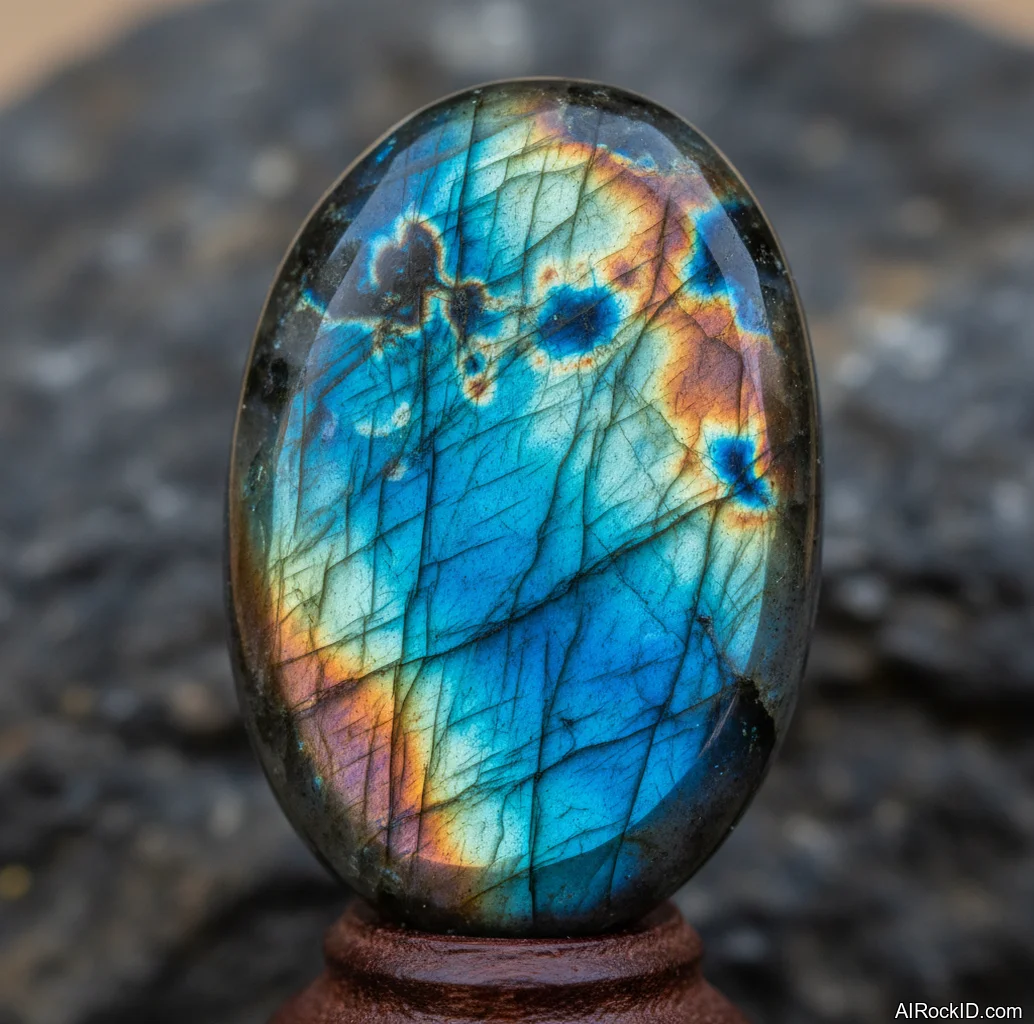
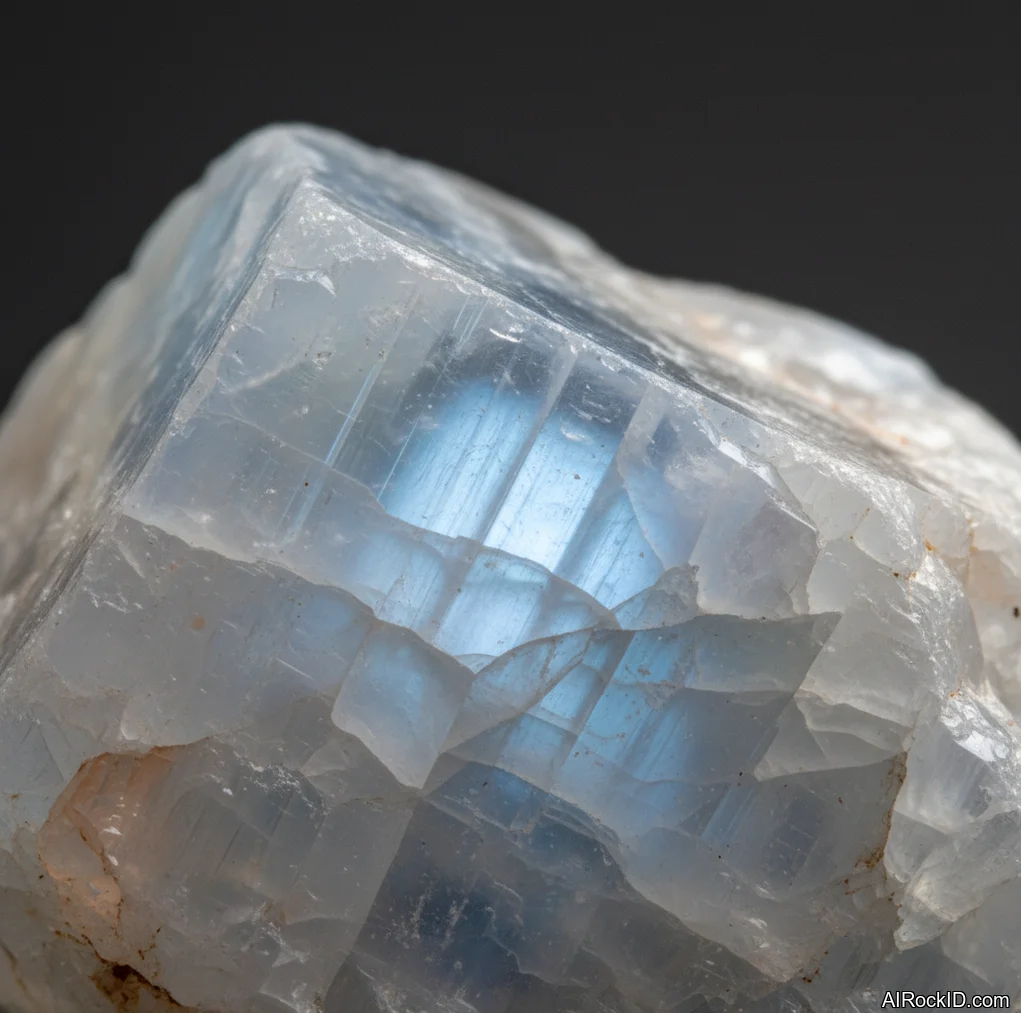
Larvikite is a feldspar-rich igneous rock (monzonite) from Norway, and its feldspar crystals throw off that blue-to-silver labradorescent flash.
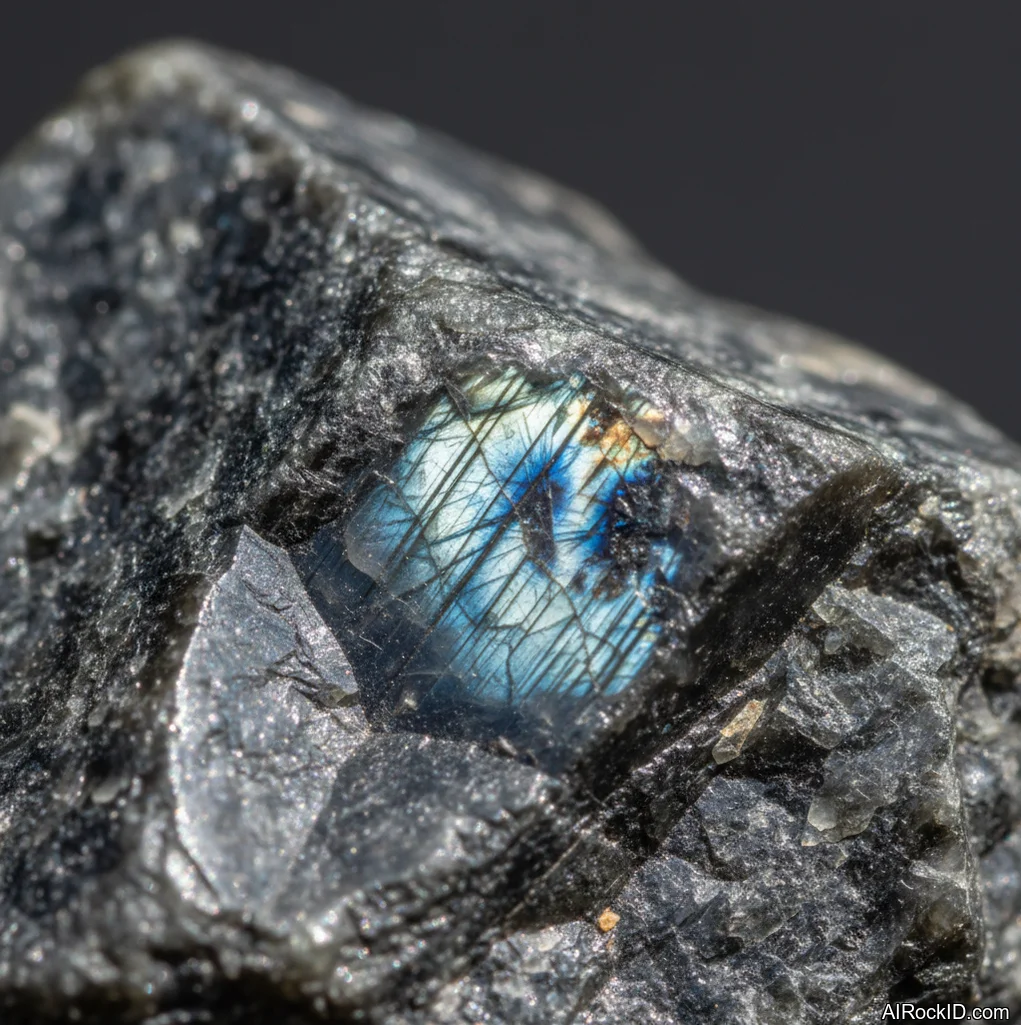
Pick up a chunk and the weight hits you first. It’s got that dense, countertop-offcut heft, not the airy feel of a quartz point. Most pieces just read as charcoal gray until you tip them under a sharp light, and then those blue sheets jump out, vanish, and jump back again like a switch getting flicked.
People glance at it and go, “black labradorite,” which I get. But it isn’t one single crystal doing its thing. It’s a mix of minerals, so the flash shows up in patches and plates, and what you see depends on how the stone was cut compared to the feldspar. And, honestly? Some pieces are kind of dull (it happens). The good material has big, clean flashes that slide around when you roll it between your fingers.
Origin & History
Larvikite got pinned down as its own rock type in the late 1800s, back when Norwegian geologists were out mapping the country in a pretty methodical way. It’s named after the Larvik area in Vestfold, Norway. And if you’ve wandered through a rock shop and spotted tiles or slabs labeled “Blue Pearl,” that’s basically larvikite sold under a trade name as an ornamental stone (same stuff, nicer label).
Geologically, it’s a big deal because it’s linked to the Oslo Rift igneous province, that whole cluster of unusual intrusions in and around the Oslo region. But collectors tend to latch onto it for a more everyday reason: Norway exports a ton of it. So it ended up being one of those stones you bump into constantly, from smooth little worry stones that feel slick in your palm to kitchen counters with that bluish flash, long before most people ever learned what “larvikite” was called.
Where Is Larvikite Found?
Commercial material is overwhelmingly from the Larvik area in southern Norway, within the Oslo Rift igneous province.
Formation
Thing is, the rough stuff from Norway formed way underground, where magma cooled painfully slowly. That slow cooling is the whole trick. It gives feldspar crystals enough time to grow big, and that’s what lets you see that sheet-like flash when you tilt the stone and the light hits it just right.
And compared to volcanic rocks that chill fast up at the surface, larvikite ends up coarse and granular. Even on a polished face, you can usually pick out tiny light and dark grains if you get close and actually look (it’s easier in strong side light). The flash is coming from feldspar, often anorthoclase with exsolution features, and the darker bits can be amphibole, biotite, plus other common igneous minerals. But it’s a rock, not one single mineral species, so yeah, one piece can look a little different from the next.
How to Identify Larvikite
Color: Base color is dark gray to black with scattered blue, silver, sometimes greenish flashes that show at certain angles. The flash is usually patchy rather than a full-face glow.
Luster: Polished surfaces look vitreous to slightly pearly where the feldspar flashes.
Pick up a tumbled piece and rotate it under a single bright lamp, not soft room light. Real larvikite will “turn on and off” in plates, and you’ll see the grain of the rock around the flashy zones. The real test is the pattern: labradorite often gives broader, smoother color areas, while larvikite tends to look more speckled and blocky because it’s a coarse rock.
Properties of Larvikite
Physical Properties
| Crystal System | Triclinic |
| Hardness (Mohs) | 6-6.5 (Hard (6-7.5)) |
| Density | 2.60-2.75 g/cm3 |
| Luster | Vitreous |
| Diaphaneity | Opaque |
| Fracture | Uneven |
| Streak | white |
| Magnetism | Non-magnetic |
| Colors | dark gray, black, blue, silver, gray-white |
Chemical Properties
| Classification | Silicates (feldspar-dominant rock) |
| Formula | (Na,K)AlSi3O8 (dominant feldspar component; larvikite is a rock and has no single formula) |
| Elements | Na, K, Al, Si, O |
| Common Impurities | Fe, Mg, Ca, Ti |
Optical Properties
| Refractive Index | 1.52-1.57 |
| Birefringence | 0.005-0.010 |
| Pleochroism | None |
| Optical Character | Biaxial |
Larvikite Health & Safety
Larvikite’s basically safe to pick up and keep on a shelf. Thing is, like most silicate rocks, the one genuine issue comes up when you cut or grind it, because the dust can get everywhere (you’ll see it settle as a fine gray film on the workbench).
Safety Tips
If you’re going to lapidary it, keep water running, wear a real respirator (not just a flimsy dust mask), and wipe up the slurry while it’s still wet instead of letting it dry out and turn into dust.
Larvikite Value & Price
Price Range
Rough/Tumbled: $5 - $60 per piece
Price mostly comes down to how much flash you’re getting and how the piece is cut. A big, clean blue plate you can actually see when you tilt it in your hand (like in a palm stone or a sphere) is going to cost more than the gray, low-flash material that ends up tossed in those bulk bins.
Durability
Durable — Scratch resistance: Good, Toughness: Good
It’s stable in normal home conditions, but sharp knocks can chip polished edges because feldspar has cleavage.
How to Care for Larvikite
Use & Storage
Store it like you would labradorite or moonstone: separate from harder stones so it doesn’t get scuffed. A simple cloth bag works.
Cleaning
1) Rinse with lukewarm water. 2) Use a mild soap and a soft toothbrush to get into drilled bead holes or carvings. 3) Rinse again and dry with a soft towel.
Cleanse & Charge
If you do energetic cleansing, smoke, sound, or a quick rinse are the low-drama options. Sunlight won’t usually hurt it, but long window-sill time can make polished pieces look tired from surface wear and dust.
Placement
Put it where you get angled light, like near a desk lamp, so the flash actually shows. On a dark shelf in a dim room it just reads as gray rock.
Caution
Skip harsh acids. And don’t throw it in a tumbler with quartz unless you actually want that dull, frosted look on the surface. Thing is, feldspar has cleavage, so if it hits the floor (or even bounces off a workbench edge), the edges can chip fast.
Works Well With
Larvikite Meaning & Healing Properties
Look, if you pay attention to how larvikite gets talked about in metaphysical spaces, it usually gets parked right next to labradorite, just… steadier. Less “cosmic rainbow,” more “keep your head on straight.” And honestly, that matches what it’s like in your hand. It’s cool to the touch, has that real weight to it, and it sits there like it isn’t trying to impress anyone.
When I carry it, it feels like a focus stone for regular, practical days, not a floaty, dreamy mood. But thing is, there’s a catch: if you’re expecting nonstop flash and big, dramatic color like the social media clips, you’re probably going to be let down unless you choose your piece carefully. In a pocket, the best part is how it feels. Your thumb keeps finding that slick, polished face (you can feel the tiny edge where it’s been rounded), you tilt it, you get a quick blue blink, and that split second is enough to yank your attention back. Who hasn’t needed that?
And none of this is medical advice. It won’t replace sleep, therapy, or the basics. Still, I’ve seen customers reach for larvikite when they want something that feels protective without the “all black stone” vibe. It’s dark, sure, but it’s not dead. There’s that little spark in it.
Identify Any Crystal Instantly
Snap a photo and get properties, value, care instructions, and healing meanings in seconds.