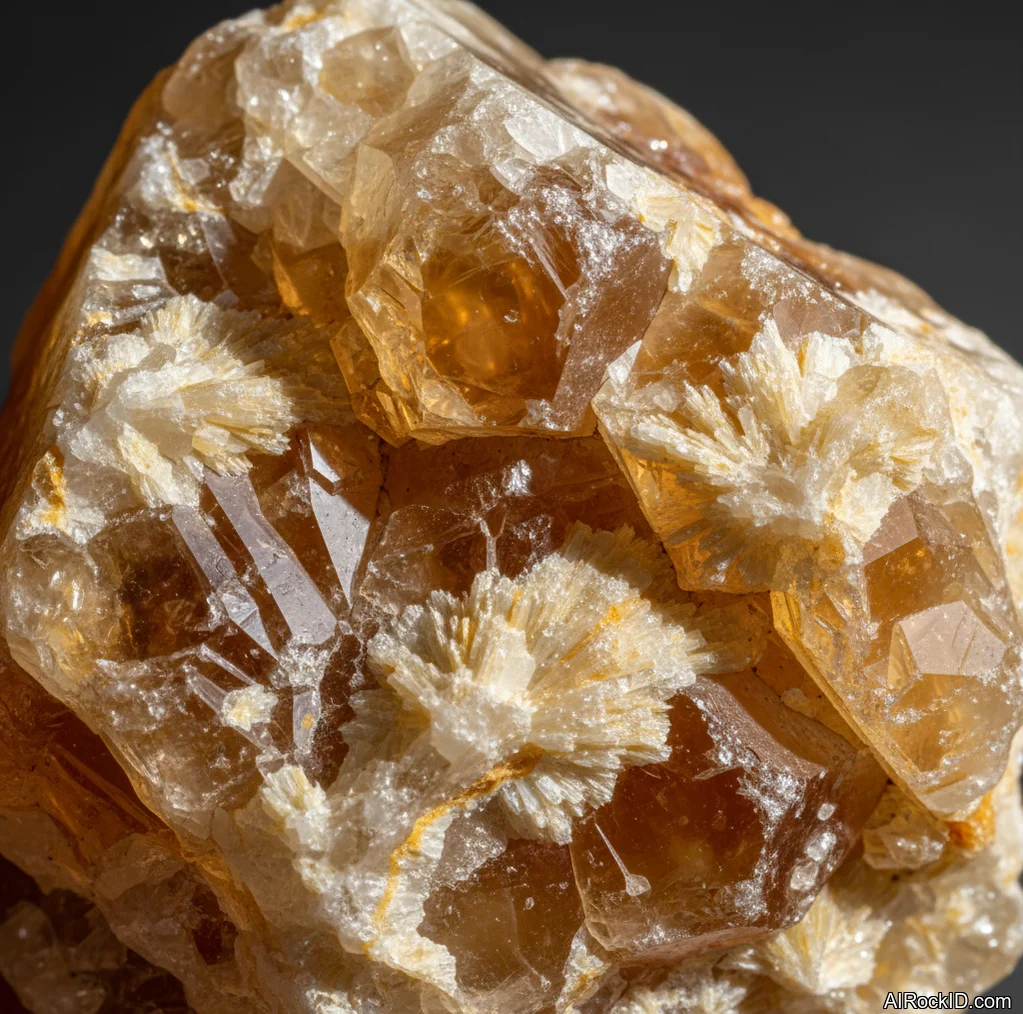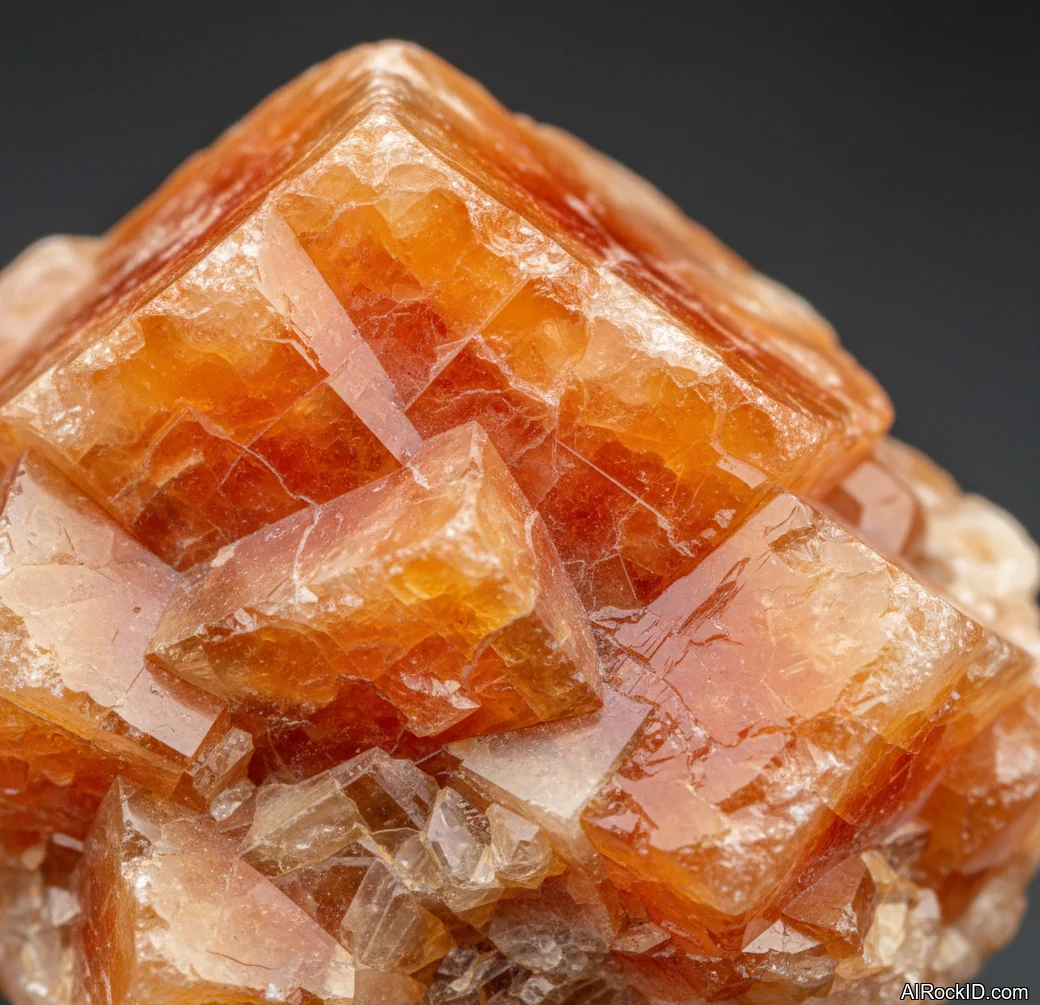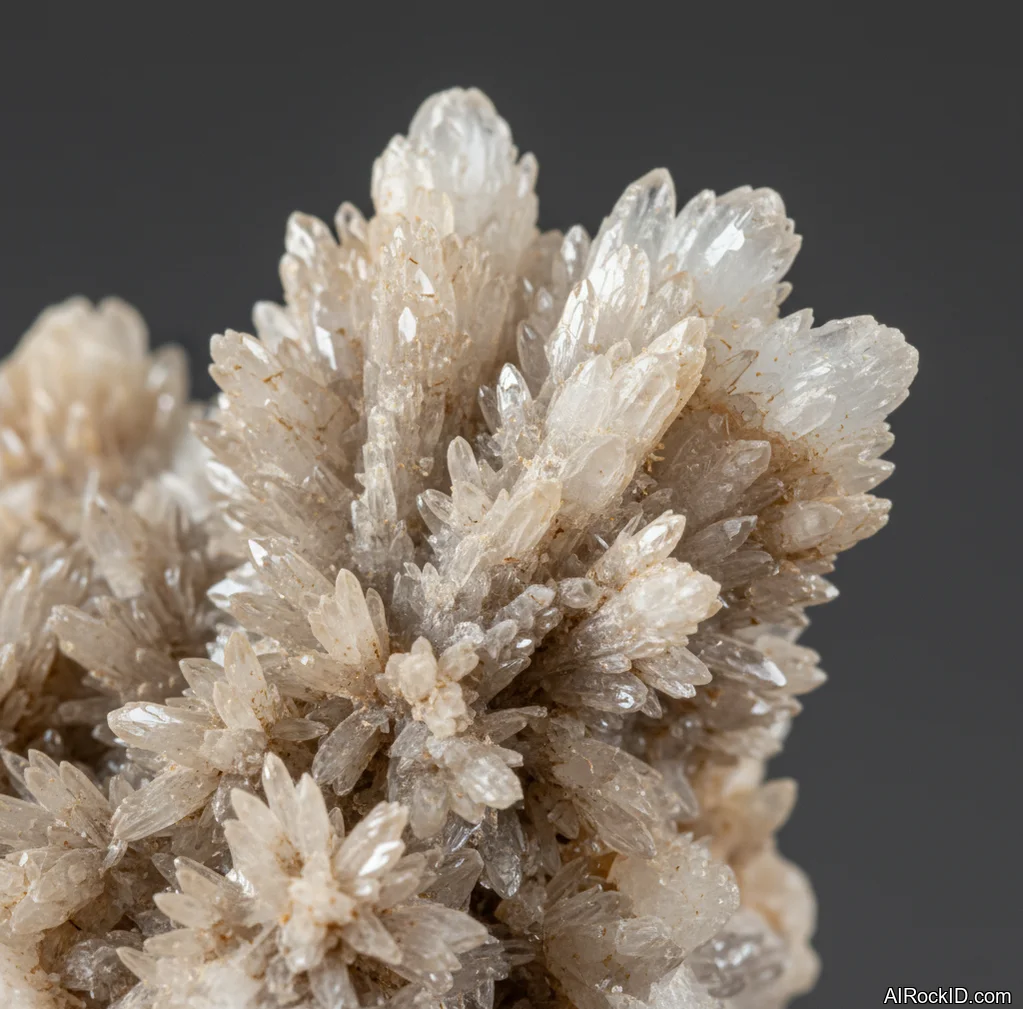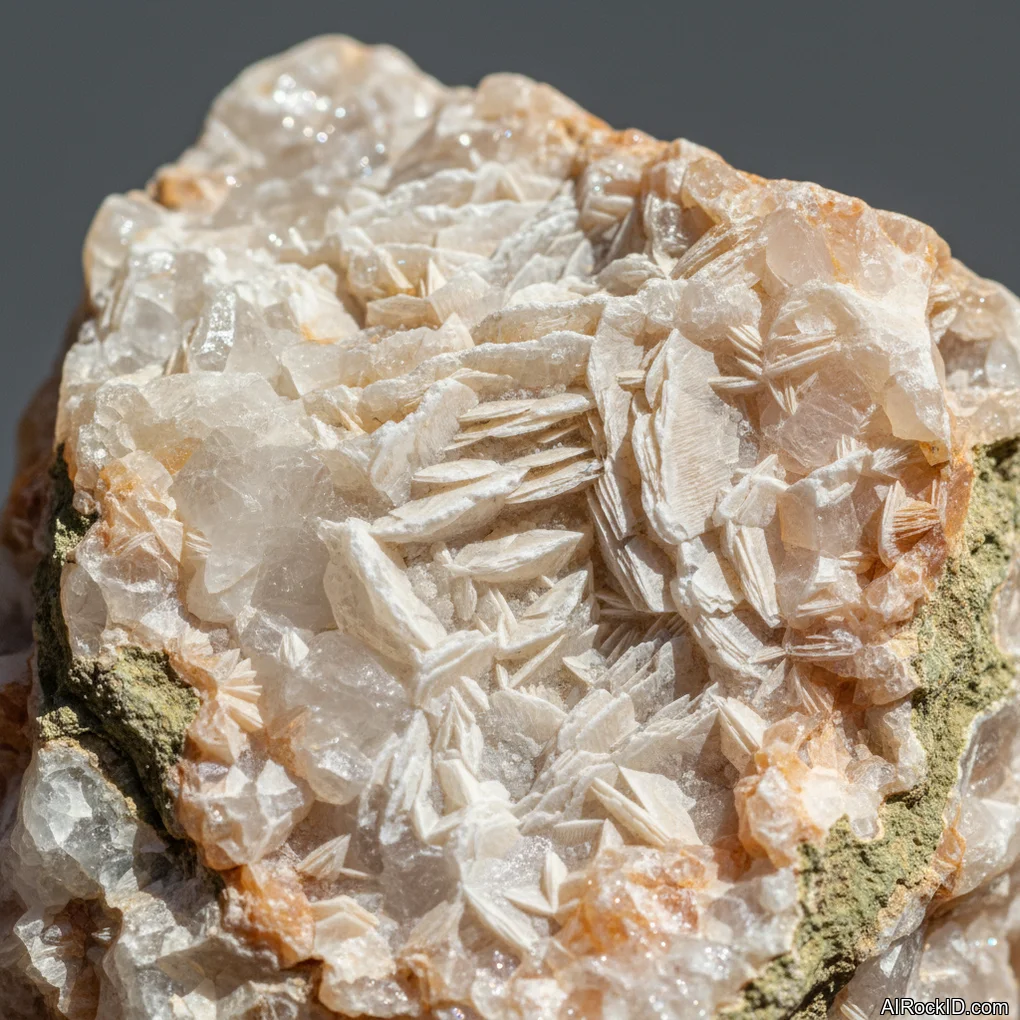
Dali Calcite


Quick answer: Dali Calcite is a trade name for decorative banded calcite, typically showing tan, cream, caramel, and brown patterns. It is a soft carbonate mineral, so visual identification should be paired with basic tests such as hardness, reaction to weak acid, and observation of cleavage.
AI Rock ID can help compare Dali Calcite against visually similar banded stones using pattern, color, luster, and surface clues. RockIdentifier.io provides mineral information that can support, but not replace, hands-on checks such as hardness and acid reaction testing.
Good fit
- Collectors who like warm neutral banding and decorative calcite patterns
- Beginners learning to identify carbonate minerals
- Carvings, palm stones, spheres, and display pieces kept away from abrasion
- People comparing patterned calcite varieties by color and band structure
Not a good fit
- Rings, bracelets, or other jewelry exposed to frequent impact or scratching
- Outdoor décor where rain, acidic soil, or weathering may damage the surface
- Situations requiring a rare or formally recognized mineral species name
Why people search for this
People often search for Dali Calcite to confirm whether a tan-and-brown patterned stone is calcite, aragonite, onyx marble, or another banded carbonate. Buyers may also want to know whether the name refers to a mineral species or a decorative trade variety.
Most commonly confused with
- Banded Calcite: A broader trade term for layered calcite; Dali Calcite is usually a color-pattern variety within this general group.
- Aragonite: Also calcium carbonate, but it has a different crystal structure and may show fibrous or radiating textures rather than calcite cleavage.
- Onyx Marble: A decorative stone name for banded carbonate material; it is not true quartz onyx and may overlap with calcite trade material.
- Travertine: Usually more porous and earthy, with cavities or layered sedimentary texture rather than polished calcite banding.
Dali Calcite vs. Similar Banded Stones
| Material | Typical Clue | Simple Difference |
|---|---|---|
| Dali Calcite | Cream, tan, and brown banding with calcite softness | Scratches around Mohs 3 and reacts to weak acid |
| Aragonite | Fibrous, radiating, or clustered carbonate textures | Same chemistry as calcite but different structure |
| Onyx Marble | Decorative banded carbonate sold for carvings and slabs | Trade name may include calcite or aragonite-rich material |
| Travertine | Porous, layered, often beige stone | More open cavities and sedimentary texture |
| Agate | Waxy luster and hard quartz banding | Much harder and does not fizz like calcite |
AI identification confidence
AI identification confidence for Dali Calcite is usually moderate because many banded carbonate stones share similar colors and patterns. Confidence improves when photos show a fresh surface, close-up banding, cleavage, luster, and scale, but lab or simple field tests may still be needed.
When AI gets it wrong
- Highly polished pieces can hide cleavage and make calcite resemble agate or marble.
- Trade names vary by seller, so the same material may be labeled Dali Calcite, banded calcite, or onyx marble.
- Dyed or resin-filled carbonate carvings may change the apparent color and surface texture.
- Photos taken under warm lighting can exaggerate yellow, orange, or brown tones.
Final recommendation
Choose Dali Calcite for its patterned appearance and identifiable calcite traits, not for rarity implied by the trade name. For authenticity, look for consistent carbonate behavior such as Mohs 3 softness, calcite cleavage, and a reaction to weak acid on an inconspicuous spot.
Is Dali Calcite a Trade Name?
Dali Calcite is best understood as a trade or descriptive name rather than a separate mineral species. The mineral is calcite, while the name usually refers to a distinctive tan, cream, and brown patterned appearance used for carvings, polished stones, and décor.
How to Check Dali Calcite Before Buying
Ask whether the piece is natural calcite, dyed, stabilized, or sold under another carbonate trade name such as onyx marble. A genuine calcite piece should be relatively soft, show vitreous to pearly luster on fresh surfaces, and react to weak acid, though acid testing should only be done carefully on a hidden area.
Photo Tips for Identifying Dali Calcite
Use clear daylight photos with one full-stone image and at least one close-up of the bands, edges, and any chips or cleavage faces. Include a coin or ruler for scale, and avoid heavy filters because color balance can strongly affect tan, cream, and brown calcite identification.
What Is Dali Calcite?
Dali Calcite is just a trade name sellers use for patterned, banded calcite. It’s usually cut into slabs and then polished so those creamy white, tan, and brown layers pop, and yeah, they really can look like tiny desert scenes in stone.
Pick up a slab and the first thing you’ll notice is it doesn’t have that cold, glassy feel quartz gets. It’s warmer in your hand, a little softer-feeling, like calcite always is. And if you’ve got a fresh-cut face or a little chipped corner, tilt it under a shop light and you’ll see that quick, sheet-like flash from calcite cleavage. That’s the giveaway. Most of what you see for sale ends up as palm stones, freeforms, bookends, or thick display slabs, because the whole draw is that picture-style banding.
People glance at the colors and go, “Oh, jasper.” But it’s not silica. Different beast. So it scratches easier, it really doesn’t get along with acids, and the edges will bruise if you toss it into a bowl with harder tumbled stones. Why risk it?
Origin & History
“Dali Calcite” isn’t an official mineral name. It’s just a nickname sellers use. And yeah, they’re borrowing the Salvador Dalí vibe on purpose, because the patterns can look surreal, like melting horizons or those wispy dune lines you only get when the slab’s cut and oriented just right.
Calcite itself has been described and studied for ages (the species name comes from the Latin word for lime). But this particular look is mostly a lapidary and home décor thing, not some separate mineral “type.” I started seeing it show up regularly at shows in the 2010s, usually as polished pieces you could feel were taken through a full buff because the surface has that slick, glassy glide under your fingertips. The tags? Total chaos. I’d see Dali calcite, picture calcite, landscape calcite, and in the décor booths they’d sometimes even call it “onyx” (which is misleading, because it’s not agate onyx).
Where Is Dali Calcite Found?
Most Dali Calcite on the retail market is imported as polished décor material, commonly from Mexico and Pakistan, with smaller amounts from other carbonate deposits.
Formation
Most of what gets sold as Dali Calcite is just calcite that got laid down by carbonate-rich fluids. Picture water moving through fractures, little cavities, and vein systems, then losing CO2 as it goes and dropping calcite out in thin layers. And those layers are what turn into the banding you see, especially when the chemistry changes a bit over time.
On a polished face, if you tilt it under a lamp, you’ll usually catch cloudy white patches sitting right next to honey or coffee-colored bands. The color swings are typically from impurities and tiny inclusions. Iron oxides are a big reason you get those tan-to-brown tones, and sometimes manganese shows up and gives things a warmer tint. But it’s still calcite, plain and simple, with perfect rhombohedral cleavage hiding under that smooth polish (even if you can’t see it until it catches just right).
How to Identify Dali Calcite
Color: Creamy white, beige, tan, caramel, and brown banding is the usual look, sometimes with wispy “landscape” swirls or straight parallel layers. The patterns can be bold like stripes or soft like watercolor.
Luster: Polished pieces show a vitreous to slightly pearly luster.
If you scratch it with a copper coin or a steel nail, it’ll mark easier than most jaspers, and that’s your first clue it’s calcite. The real test is a tiny drop of dilute acid on an inconspicuous spot: calcite fizzes, silica doesn’t. And if you’ve handled a lot of calcite, you’ll recognize the way the cleavage planes throw bright flashes as you roll it under a light, even on a chipped edge.
Common Look-Alikes
Dali Calcite is sometimes confused with these materials:
- Banded onyx marble (calcite/aragonite sold as "onyx")
- Travertine and other decorative banded limestones
- Banded aragonite (often sold as "onyx" too)
- Picture jasper / landscape jasper (especially slabbed material)
- Dyed calcite slabs (tan bands boosted to chocolate brown)
- Printed resin or glass "stone" slabs made to mimic landscape patterns
Market Cautions & Treatments
When AI Can Get This Wrong
Phone ID apps love calling Dali Calcite “picture jasper” because the desert-scene banding reads the same in a flat photo. Polished banded aragonite and onyx-marble slabs also trip AI up since they all photograph as cream and tan stripes with a glossy finish. The real test is physical: calcite will fizz with a drop of weak acid on a fresh chip and it scratches easily with a copper coin or steel nail, while jasper won’t budge and won’t fizz.
Properties of Dali Calcite
Physical Properties
| Crystal System | Trigonal |
| Hardness (Mohs) | 3 (Soft (2-4)) |
| Density | 2.71 g/cm3 |
| Luster | Vitreous |
| Diaphaneity | Translucent |
| Fracture | Uneven |
| Streak | White |
| Magnetism | Non-magnetic |
| Colors | Cream, White, Beige, Tan, Brown, Honey, Caramel |
Chemical Properties
| Classification | Carbonates |
| Formula | CaCO3 |
| Elements | Ca, C, O |
| Common Impurities | Fe, Mn, Mg |
Optical Properties
| Refractive Index | 1.49–1.66 |
| Birefringence | 0.172 |
| Pleochroism | None |
| Optical Character | Uniaxial |
Dali Calcite Health & Safety
Dali Calcite is non-toxic, so it’s safe to handle with bare hands. But keep it away from acids, because even a little splash can etch the surface and leave it looking dull (that cloudy, scuffed kind of dull you notice when you tilt it under a light).
Safety Tips
If you’re going to cut or sand it, put on eye protection and a real dust mask, not one of those flimsy paper ones that leaks around your nose. And keep some water on it while you work so the dust doesn’t go flying everywhere.
Dali Calcite Value & Price
Price Range
Rough/Tumbled: $10 - $120 per piece
Price mostly follows the pattern quality and the cut, more than anything else. A clean polish you can feel when you run a thumb over it, sharp contrast “landscape” banding, and those bigger décor chunks that actually have some heft to them will shove the price up fast. But the average palm stones (the ones that sit nicely in your hand and don’t have that museum-level striping) usually stay affordable.
Durability
Nondurable — Scratch resistance: Fair, Toughness: Fair
It’s stable in normal room conditions, but it scratches easily and reacts to acids, including vinegar and citrus juice.
How to Care for Dali Calcite
Use & Storage
Store it by itself or in a soft pouch because quartz and feldspar will scuff it up fast. I don’t leave calcite loose in a mixed tumble bowl unless I’m okay with a bunch of fresh scratches.
Cleaning
1) Rinse quickly with lukewarm water and a drop of mild soap. 2) Wipe with a soft microfiber cloth, no scrubbing pads. 3) Dry right away and keep it away from acids and bathroom cleaners.
Cleanse & Charge
If you do energy cleansing, skip salt water and anything acidic. Smoke, sound, or a quick rinse and a full dry are the low-drama options.
Placement
On a desk or shelf it looks great under warm light because the brown bands pop. Keep it out of sunny windows if you want the polish to stay crisp and you don’t want heat cycling on the stone.
Caution
Skip vinegar, citric acid, and any commercial crystal “cleaner” that won’t tell you what’s in it (seriously, why hide the ingredients?). And don’t put it in an ultrasonic cleaner or hit it with steam. Thing is, as a ring stone it’s going to get knocked around, and at Mohs 3 it just doesn’t take hits well, so don’t wear it as an everyday ring.
Works Well With
Dali Calcite Meaning & Healing Properties
Clear calcite feels slick and kind of airy to me. Dali Calcite doesn’t. It sits heavier in your palm, like it wants to stay put. And I’m pretty sure it’s the color doing half the work. Those tan and brown bands just read “dirt and stone,” and when my brain’s running in circles, I’ll grab it because it’s visually quiet. Something to look at without getting pulled in. Grab a palm stone and run your thumb over the polish. You can feel that smooth, almost waxy glide under your skin (the kind that makes you keep rubbing it without thinking). Simple. Calming.
A lot of people who meditate with stones pair banded calcites with settling routines. Breath counting. Journaling. Slow walks where you’re not trying to hit a step goal. I’ve had customers tell me they like it for focus because the bands give your eyes a path to follow, but it’s not flashy or “loud.” But, look, I always say the same thing: none of this is medical. If you’re dealing with anxiety or sleep stuff, treat the stone like a comfort object that helps you stick to a routine, not some magic fix. Fair?
And it’s not just woo, either. There’s a practical angle. Since it’s calcite, it’s a great “teacher stone” for beginners who want to learn hardness and care by actually handling something, not babying a pricey specimen. I’ve literally watched people bring one back with a brand-new etch from lemon water, that dull little spot that catches the light differently, and suddenly they never forget the “calcite fizzes” lesson again.
Common mistakes
- Assuming Dali Calcite is a separate mineral species instead of a calcite trade variety.
- Calling any banded tan stone agate without checking hardness or acid reaction.
- Using acidic cleaners, vinegar, or lemon juice on polished calcite surfaces.
- Buying a polished piece based only on the trade name without asking about dye, resin, or stabilization.
- Expecting Dali Calcite to withstand daily-wear jewelry conditions like quartz or jade.
Identify Dali Calcite from a photo
Compare Dali Calcite traits, care tips, value clues, and common lookalikes with a clear photo.