Elestial Quartz


Quick answer: Elestial quartz is identified mainly by its skeletal, stepped, or etched surface growth rather than by a separate mineral species. It is still quartz, so it shares quartz hardness and optical properties, but its layered faces and cavities help distinguish it from ordinary quartz points or clusters.
AI Rock ID can help screen an elestial quartz specimen by comparing visible features such as stepped growth, etched faces, transparency, and color zoning. RockIdentifier.io treats elestial quartz as a quartz growth habit, so a photo-based result should be checked against physical traits and seller information.
Good fit
- Collectors who like unusual quartz growth habits and surface textures
- Buyers comparing natural etched quartz against polished or carved pieces
- People building a quartz collection with smoky, clear, amethyst, or iron-stained varieties
- Photographers or educators looking for examples of skeletal crystal growth
Not a good fit
- Anyone who needs a rare mineral species rather than a quartz growth form
- Buyers expecting every surface pit or indentation to prove natural origin
- Jewelry settings that require smooth, snag-free stones
- Situations where a clean, transparent quartz point is preferred
Most commonly confused with
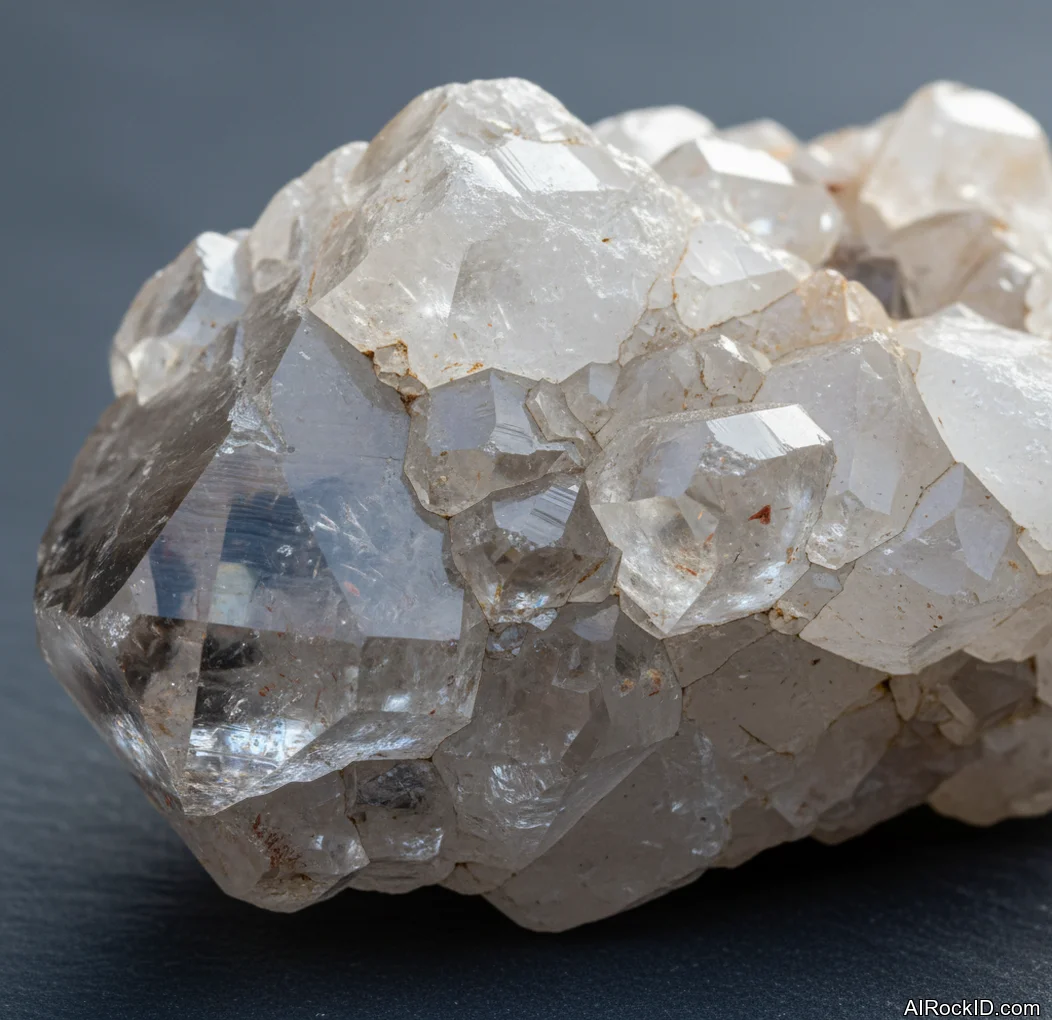
- Clear Quartz: Clear quartz may form simple points or clusters without the deeply stepped, etched, skeletal surfaces typical of elestial quartz.
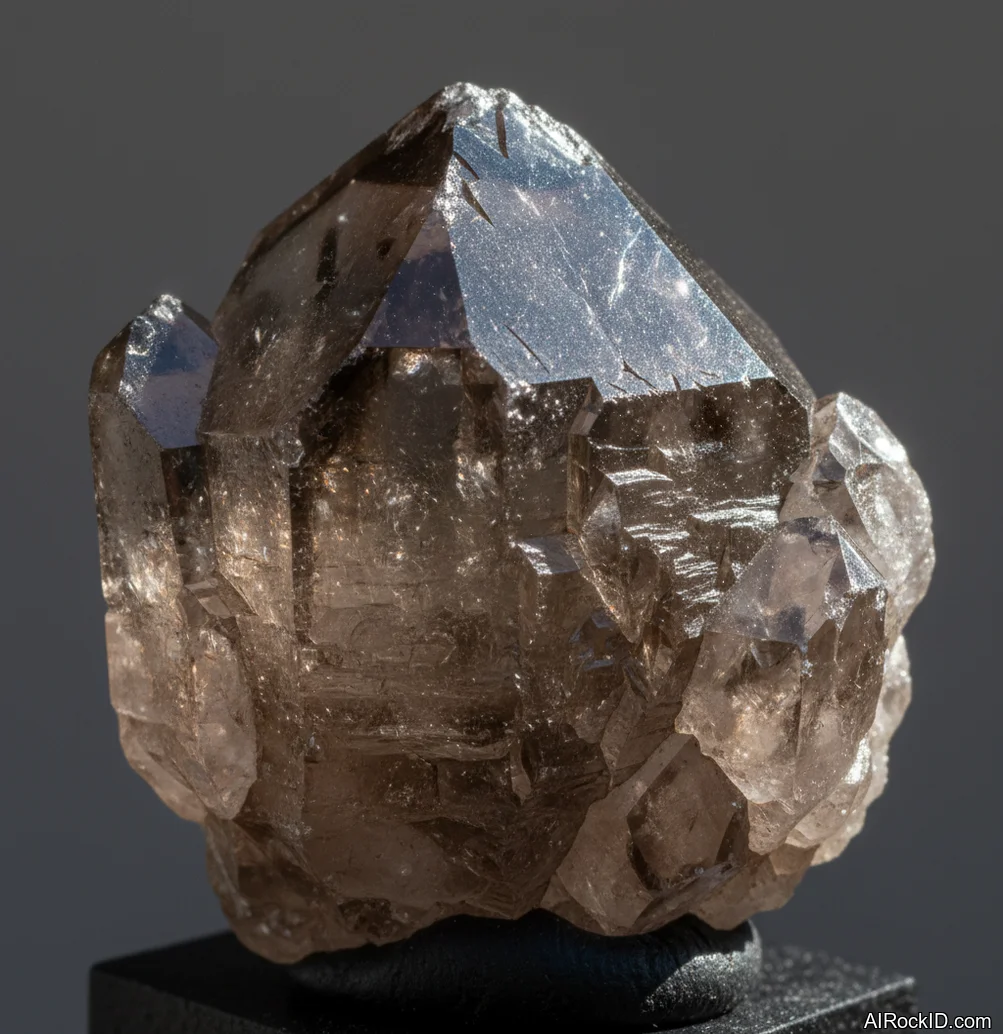
- Smoky Quartz: Smoky quartz is defined by brown to gray color, while elestial quartz is defined by growth texture and may also be smoky.
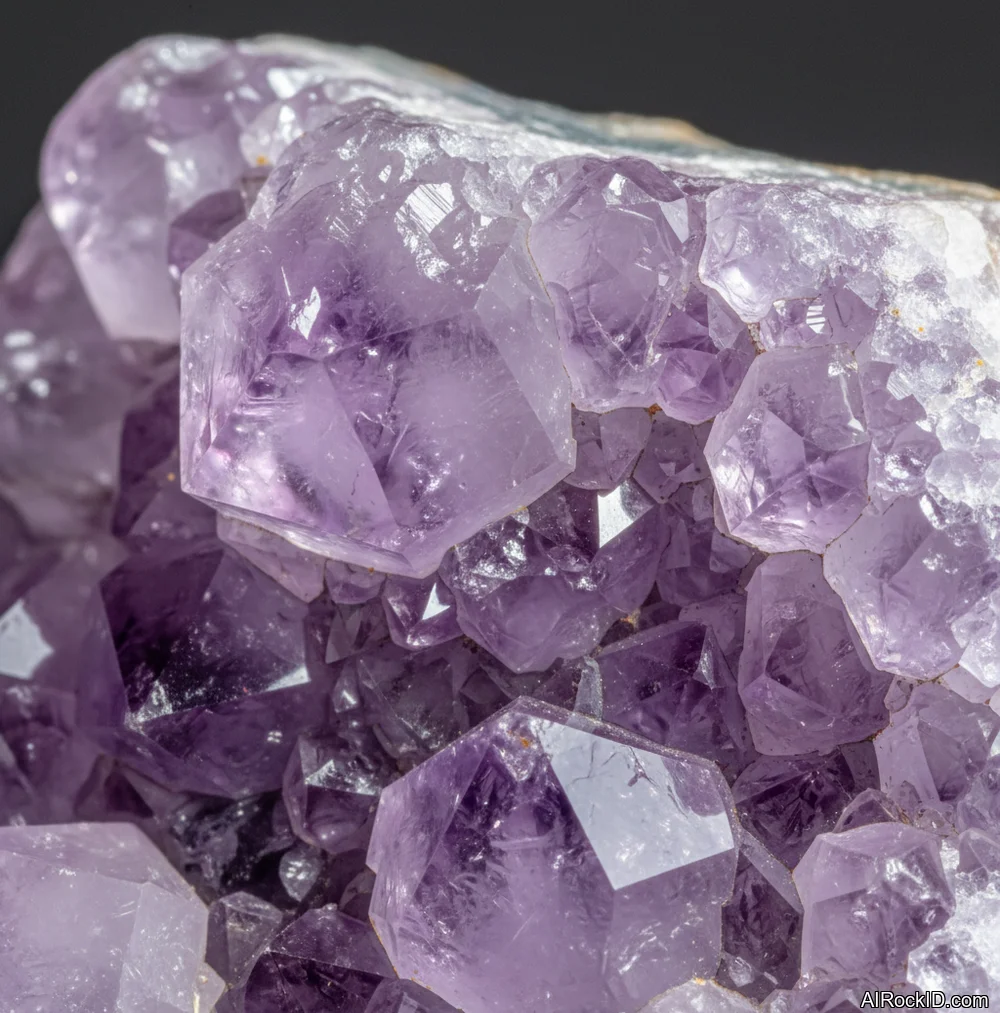
- Amethyst: Amethyst is purple quartz; an amethyst specimen can be elestial only if it also shows skeletal or etched growth.
- Herkimer Diamond: Herkimer diamonds are typically bright, double-terminated quartz crystals, while elestial quartz usually has layered or etched faces.
Elestial Quartz vs. Common Lookalikes
| Specimen | Key identifier | Hardness | Common confusion |
|---|---|---|---|
| Elestial quartz | Skeletal, stepped, etched quartz faces | Mohs 7 | Mistaken for damaged or artificially carved quartz |
| Clear quartz | Glassy quartz points or masses with simpler faces | Mohs 7 | May be mislabeled as elestial without skeletal texture |
| Smoky quartz | Brown to gray quartz color | Mohs 7 | Color name may be confused with growth habit |
| Herkimer diamond | Bright double-terminated quartz crystal habit | Mohs 7 | Often confused when quartz is clear and sharply formed |
| Calcite | Cleavage, lower hardness, acid reaction | Mohs 3 | Etched calcite surfaces can resemble textured quartz |
AI identification confidence
Photo-based identification is usually moderate for elestial quartz because the main clue is visible surface habit rather than chemistry. Confidence improves when images show multiple angles, termination faces, cavities, matrix, scale, and any broken edges.
When AI gets it wrong
- A polished or acid-etched quartz piece may be mistaken for natural elestial growth.
- Close-up photos without scale can make ordinary damage look like skeletal texture.
- Iron staining or smoky color can shift the result toward smoky quartz, citrine, or other quartz varieties.
- Soft minerals with etched surfaces, especially calcite, can appear similar in low-detail images.
Final recommendation
Choose elestial quartz based on clear skeletal growth, intact surfaces, and transparent seller photos rather than the name alone. For higher-priced pieces, ask for origin, treatment disclosure, and photos in natural light from several angles.
How to Check Elestial Quartz Authenticity
Authentic elestial quartz should show natural-looking stepped growth, etched faces, and irregular cavities that continue into the crystal rather than sitting only on the surface. Check for tool marks, uniform carving patterns, resin fills, dye concentration in cracks, or unusually glossy acid-polished recesses. A simple hardness check against softer materials can support quartz identification, but destructive testing is not recommended for valuable specimens.
What to Ask Before Buying Elestial Quartz
Ask whether the piece is natural, cleaned, acid-treated, polished, repaired, or dyed. Request photos of the terminations, side faces, base, and any cavities because elestial texture can be exaggerated by selective photography. Locality information can add context, but the specimen’s visible structure should still match the label.
Natural Texture vs. Damage
Natural elestial growth tends to show repeating stepped forms, layered faces, and interconnected etched areas. Damage usually appears as random chips, fresh breaks, sharp impact marks, or isolated missing corners. A specimen can have both natural skeletal growth and later damage, so inspect high points and edges carefully.
What Is Elestial Quartz?
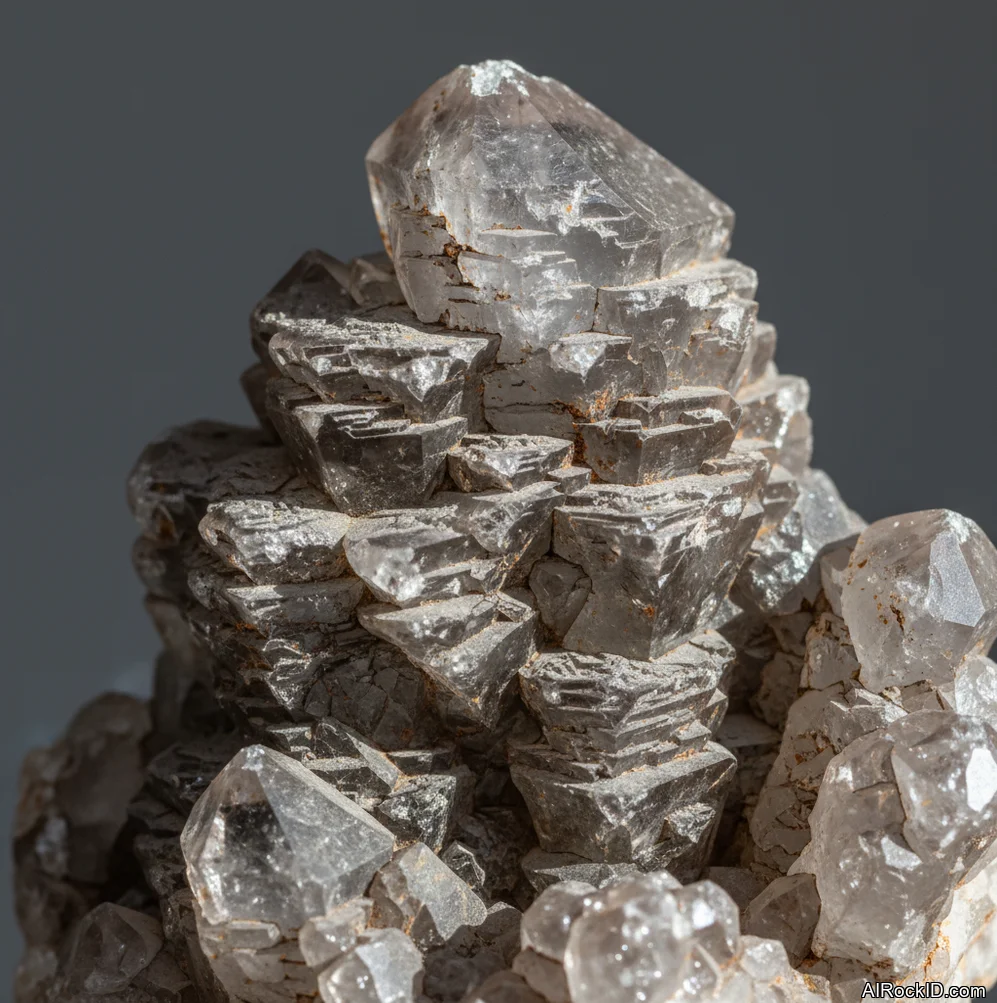
Elestial Quartz is quartz that grows in a skeletal, stepped habit, so instead of smooth prism sides you get terraced layers and etched faces.
Hold a decent piece in your hand and you notice it fast. It’s that classic quartz feel, hard and cool, but not slick like a polished point. The surface is a mess of little stair-steps, ridges, and tiny “windows” that flash all over the place when you tilt it under a lamp. I’ve had elestials that actually snag a microfiber cloth because the edges are that crisp (even though it’s still just SiO₂). Weirdly sharp.
Look, a lot of people take one glance and assume it’s carved or man-made, because the geometry looks almost too chaotic to be natural. But handle a few from different localities and the pattern starts to look familiar. The growth has this stop-start vibe, like the crystal rushed, then paused, then rushed again. And those pauses are what leave the terraces.
Origin & History
Most dealers toss around “elestial” as a trade name, not a proper mineral term. You won’t see “elestial quartz” listed as its own species, because it’s still just quartz, only with a weird growth habit that collectors and the metaphysical crowd grabbed onto.
Thing is, you’ll hear the word explained ten different ways at shows (usually over a table covered in black velvet, with price tags stuck to the trays). But the version that comes up most is that it got linked to “celestial” or “angelic” sales language that floated through the late 20th century mineral and crystal market. In older mineralogy books, you’re more likely to run into skeletal quartz, hopper growth, or etched quartz instead. And “Jacaré quartz” pops up for Brazilian pieces with that alligator-skin texture.
Where Is Elestial Quartz Found?
Elestial-style skeletal quartz shows up in several classic quartz regions, with a lot of commercial material coming out of Brazil. Smaller occurrences are reported from alpine-type pockets and hydrothermal areas in Europe, Russia, and parts of the western United States.
Formation
Skeletal and elestial textures usually mean the crystal didn’t grow under steady conditions. Temperature swings, shifts in the chemistry, or just plain fast growth can do it. When quartz grows that quickly, it tends to throw down the edges and corners first, and you’re left with little hollows, ledges, and step-like voids where the middle never quite caught up.
Look, if you stare at the terraces long enough, you can almost read the timeline. Some faces look lightly etched, like they took a weak chemical bath after the fact (you’ll see it a lot on smoky pieces or ones with iron staining tucked into the grooves). And in pockets, quartz can grow, get partly dissolved by later fluids, then grow again. Back and forth. That stop-start cycle is why so many elestials have that layered, weathered architecture instead of clean, textbook faces.
How to Identify Elestial Quartz
Color: Most elestial quartz on the market is clear to smoky, often with tan to rusty iron staining in the grooves. You’ll also see gray-brown “tea smoky” pieces and occasional milky sections.
Luster: Vitreous luster, but broken up into glittery flashes because the surface is made of many tiny faces.
Pick up the crystal and run a fingertip along the sides. Real elestial texture feels like fine stairs or scales, not like a uniform sandblasted matte. If you scratch it with a steel nail, it won’t bite, but it’ll scratch glass without trying. And watch for dyed or “aura” coated pieces: the color will sit on the high points and look too even when you tilt it.
Common Look-Alikes
Elestial Quartz is sometimes confused with these materials:
- Smoky Quartz clusters (especially when the color is light brown and the piece has etched faces)
- Cactus Quartz / Spirit Quartz (South Africa) when the elestial has lots of tiny secondary growth and looks “spiky” in photos
- Calcite (honey or clear) that’s been acid-etched to fake a stepped, “windowed” surface
- Man-made quartz or glass “skeletal” clusters (cast or molded) sold as elestial, often with too-even terraces
- Dyed crackle quartz clusters sold as “aura/elestial” or “smoky elestial” with color sitting in fractures
Market Cautions & Treatments
When AI Can Get This Wrong
At first glance, AI tends to tag elestial quartz as cactus quartz or just “smoky quartz cluster” because the stepped faces read as spines or rough growth in flat photos. Strong backlighting helps: real elestial quartz still has quartz clarity in the thicker parts and sharp, glassy edges on the terraces, while etched calcite looks waxier and rounds off fast. The real test is a quick hardness check on an inconspicuous ridge (quartz bites glass at 7), and a loupe check for dye sitting in the micro-fractures between steps.
Properties of Elestial Quartz
Physical Properties
| Crystal System | Trigonal |
| Hardness (Mohs) | 7 (Hard (6-7.5)) |
| Density | 2.65 g/cm3 |
| Luster | Vitreous |
| Diaphaneity | Transparent to translucent |
| Fracture | Conchoidal |
| Streak | White |
| Magnetism | Non-magnetic |
| Colors | Colorless, White, Gray, Brown, Smoky, Rusty orange |
Chemical Properties
| Classification | Silicates |
| Formula | SiO2 |
| Elements | Si, O |
| Common Impurities | Fe, Al, Ti, Mn, Li |
Optical Properties
| Refractive Index | 1.544–1.553 |
| Birefringence | 0.009 |
| Pleochroism | None |
| Optical Character | Uniaxial |
Elestial Quartz Health & Safety
Elestial quartz is non-toxic, so it’s safe to pick up and handle. Thing is, the real hazard is pretty basic: sharp, chipped edges that can nick your skin. And if you’re grinding or cutting it, you can kick up respirable silica dust, which you definitely don’t want to breathe in.
Safety Tips
Don’t breathe in the dust when you’re cutting or sanding. Keep things wet with water, and wear the right respirator (not just a flimsy paper mask). And when you put sharp specimens away, wrap them so the edges don’t clack together and chip while they’re sitting in storage.
Elestial Quartz Value & Price
Price Range
Rough/Tumbled: $15 - $250 per specimen
Prices jump around with size, intact terminations, and how crisp those stepped faces look when you tilt it under a lamp and the edges catch (or don’t catch) the light. A clean, undamaged elestial point will usually run higher than an iron-crusted chunk, even if the crusty piece is bigger.
Durability
Durable — Scratch resistance: Excellent, Toughness: Good
Quartz is stable in normal home conditions, but the thin ridges and points on elestial pieces can chip if they bang together.
How to Care for Elestial Quartz
Use & Storage
Store it so the points and stair-step edges don’t rattle against harder pieces. I use small boxes or wrap the tips in tissue because those ridges chip easier than you’d think.
Cleaning
1) Rinse with lukewarm water to remove loose grit. 2) Use a soft toothbrush with a drop of mild soap to get into the grooves. 3) Rinse well and air-dry; compressed air helps blow water out of the tiny steps.
Cleanse & Charge
If you do energy-style cleansing, plain water rinse or smoke cleansing is gentle and doesn’t mess with the surface. Avoid salt scrubs since the crystals can pack into the grooves and feel gritty later.
Placement
A low shelf is safer than a high one because elestials are the kind of piece you’ll want to pick up and turn in your hand. Put it where side-light hits it and the terraces throw little flashes.
Caution
Look, don’t reach for harsh acids or rust removers unless you genuinely know what you’re doing, because you can frost the faces and kill the sparkle fast. And don’t toss it loose in a drawer with other quartz points either, unless you’re fine opening it later and finding surprise chips along the edges.
Works Well With
Elestial Quartz Meaning & Healing Properties
People who do metaphysical stuff tend to treat elestial quartz like a “library stone.” And honestly, I get why, even though I’m usually pretty nuts-and-bolts about minerals. You sit with one and your eyes keep catching new steps, tiny ledges, little window-like pockets. It just keeps going. That alone can nudge you into a quiet, focused headspace. Not magic. Just attention.
Compared to a clean, glossy quartz point, elestial feels kind of messy in a good way. The surface is busy. There’s always something else to look at, and you can feel those terraces under your thumb when you turn it (some pieces even have those sharp-ish little ridges that make you slow down and handle it carefully). So, I can see why people pair it with journaling or meditation, because it gives your brain something to land on without getting bored. I’ve noticed I grab my smoky elestial when I’m scattered and I want something grounding that still feels active in my hand.
But here’s the limit. If you’re buying it for healing claims, keep your feet on the ground. Quartz is quartz, and the form comes from growth conditions, not some guaranteed outcome for your mood or your health. If you like it, use it as a tool for routine and reflection (a little anchor), not a replacement for actual care.
Common mistakes
- Assuming every rough quartz point with chips is elestial quartz
- Treating elestial quartz as a separate mineral species instead of a quartz growth habit
- Confusing smoky color with elestial structure
- Overlooking artificial polishing, dye, or surface treatment in online listings
- Using one close-up photo without scale to judge authenticity
- Expecting all elestial quartz specimens to have the same color or clarity
Identify Elestial Quartz from a photo
Compare Elestial Quartz traits, care tips, value clues, and common lookalikes with a clear photo.