Euclase


Quick answer: Euclase is a rare beryllium aluminum silicate best known for its glassy luster, pale to vivid blue colors, and very perfect cleavage. It is mainly collected as a mineral specimen or carefully set gem rather than used for everyday jewelry.
AI Rock ID can help compare a Euclase photo against visually similar minerals by checking color, crystal habit, transparency, and luster. RockIdentifier.io provides educational identification support, but rare or high-value Euclase should be confirmed by a qualified gemologist or mineral lab.
Good fit
- Collectors seeking rare beryllium silicate mineral specimens
- Buyers comparing blue, colorless, or pale green transparent crystals
- Gem enthusiasts interested in uncommon faceted stones
- Users who want to distinguish Euclase from aquamarine, topaz, and quartz
Not a good fit
- Everyday rings or bracelets exposed to knocks
- Buyers who want a low-maintenance gemstone
- Anyone relying only on color for identification
- Unlabeled specimens sold without clear provenance or testing
Most commonly confused with
- Aquamarine: Aquamarine is beryl and usually has less obvious perfect cleavage than Euclase.
- Topaz: Topaz may show similar pale blue color but has different crystal form, hardness, and density.
- Quartz: Quartz lacks cleavage and commonly shows conchoidal fracture rather than Euclase’s very perfect cleavage.
- Phenakite: Phenakite is another beryllium silicate but is typically harder and lacks Euclase’s diagnostic perfect cleavage.
Euclase vs. Common Lookalikes
| Feature | Euclase | Common Lookalikes |
|---|---|---|
| Cleavage | Very perfect in one direction | Quartz has none; beryl has poor to imperfect cleavage |
| Typical color | Colorless, pale blue, greenish, or vivid blue | Aquamarine and blue topaz are often more evenly blue |
| Durability concern | Brittle due to perfect cleavage | Quartz and beryl are generally more wearable |
| Crystal habit | Prismatic, often striated, sometimes sharp and glassy | Topaz and beryl may show different terminations and cross sections |
| Best confirmation | Refractive index, specific gravity, and cleavage observation | Color alone is not reliable for separation |
AI identification confidence
AI identification can be moderately helpful for Euclase when the specimen shows clear prismatic crystals, strong vitreous luster, and good photo detail. Confidence is lower for faceted stones, broken fragments, or pale blue specimens that resemble aquamarine, topaz, quartz, or glass.
When AI gets it wrong
- The photo is overexposed, making colorless Euclase look like quartz or glass.
- A faceted gemstone is shown without inclusions, cleavage features, or test data.
- The specimen has matrix material that hides the crystal habit.
- Lighting makes aquamarine, blue topaz, or treated quartz appear similar in color.
Final recommendation
For collecting, choose Euclase with clear labeling, locality information, and visible diagnostic features such as crystal form and cleavage. For jewelry or investment-level purchases, request gemological testing because appearance alone is not enough to verify rare Euclase.
Euclase Buying and Authenticity Checks
Authentic Euclase is uncommon, so unusually cheap vivid blue stones should be checked carefully. Reliable listings should include locality, size, treatment disclosure when relevant, and clear photos from multiple angles. For faceted Euclase, a gem report or measurable data such as refractive index and specific gravity is more reliable than color-based claims.
Where Euclase Is Commonly Found
Notable Euclase localities include Brazil, Colombia, Zimbabwe, Russia, Austria, and parts of the United States. Brazilian and Colombian material is especially known among collectors for attractive blue crystals. Locality can affect collector interest, but identification should still be based on mineral properties rather than origin claims alone.
Euclase in Jewelry Settings
Euclase can be faceted, but its perfect cleavage makes it vulnerable to chipping or splitting if struck. Protective settings, pendant use, and occasional wear are safer choices than exposed ring settings. A jeweler experienced with fragile collector gems is recommended for mounting or repair.
What Is Euclase?
Euclase is a rare beryllium aluminum silicate mineral, BeAlSiO4(OH), and people mostly know it for that glassy sparkle and the kind of cleavage that’s almost too perfect. If you’ve ever had a loose crystal in your fingers at a gem show, you probably remember the moment: it looks tough, crisp, like it could take a knock. Then you realize it’s a bit of a heartbreaker if you bump it the wrong way.
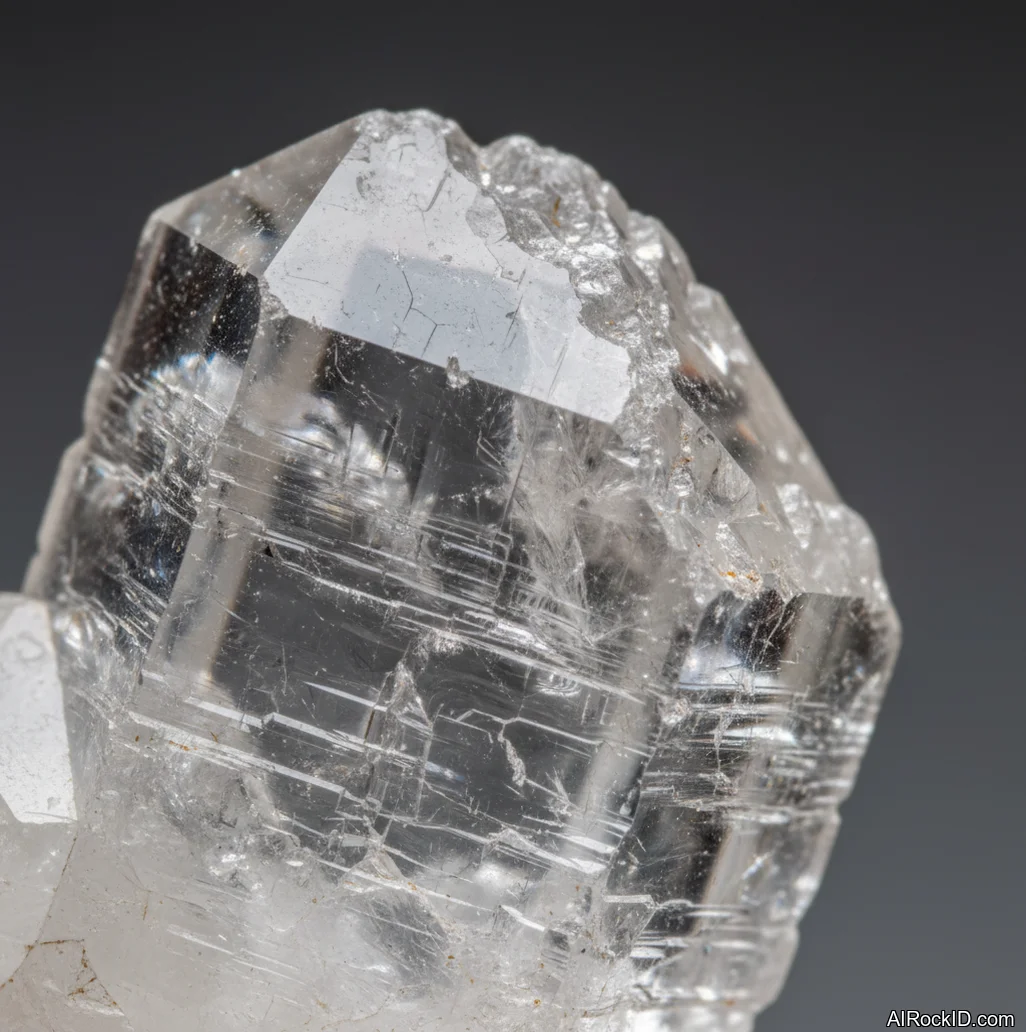
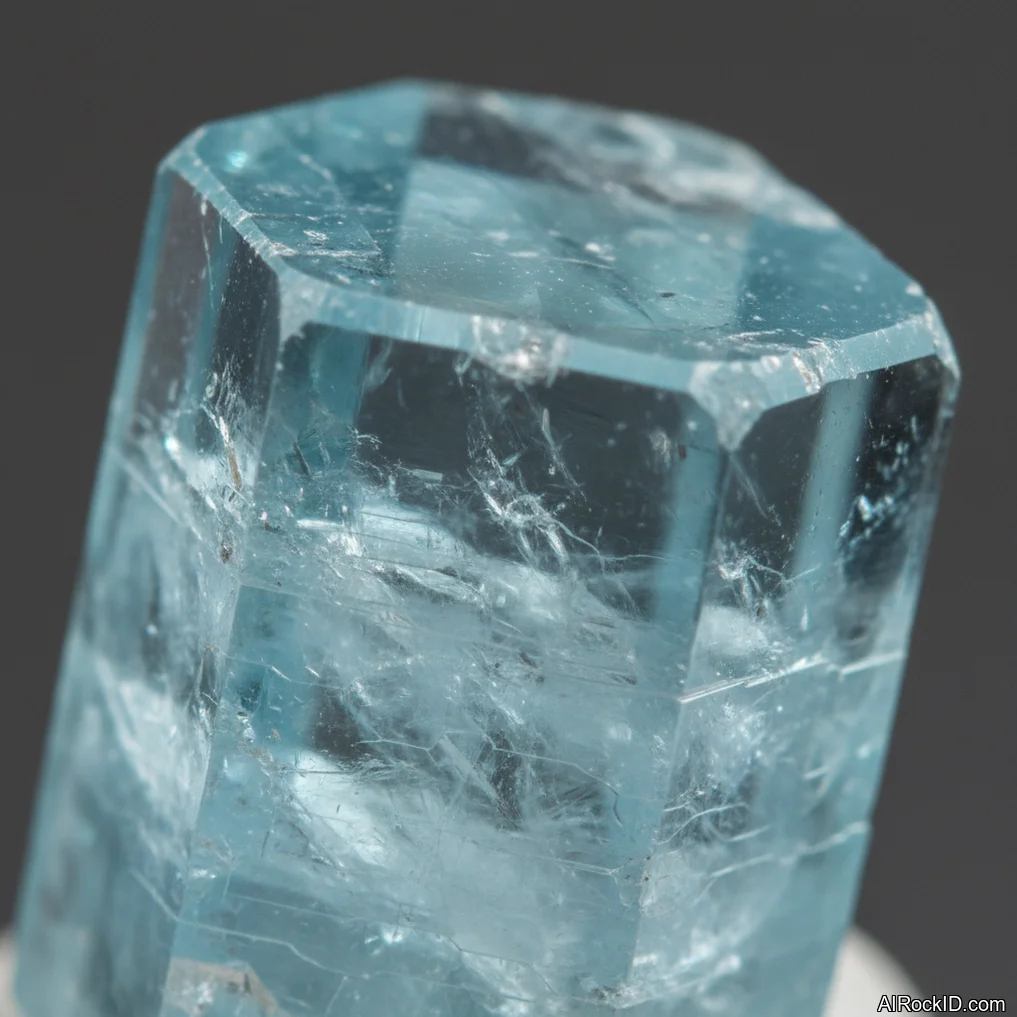
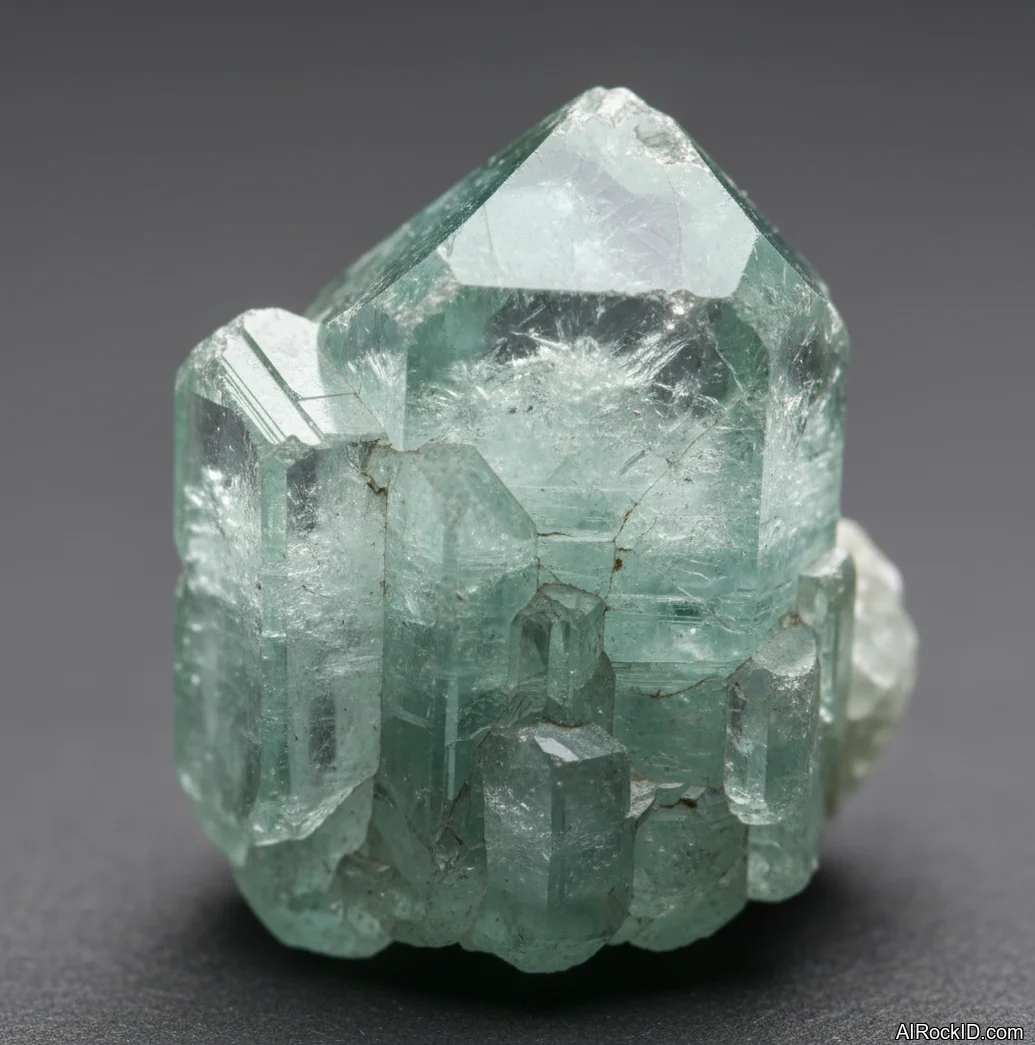
Pick up a clean euclase and, thing is, it feels sharp right away. Like, actually sharp. The edges can be blade-like, and the faces kick back a hard flash under the lights, almost like a little windowpane someone cut and forgot to sand. The color range is all over the place: totally colorless, a watery blue, or that cool blue-green that people keep calling aquamarine when they’re guessing (or hoping). You hear it all the time.
Compared to topaz or beryl, euclase is the one that makes dealers lower their voice and say, “Careful, it cleaves.” And they’re not being dramatic. You can be holding a crystal that looks absolutely perfect, and then a gentle tap and it splits along that cleavage like it was pre-scored. Just like that.
Origin & History
In 1792, René Just Haüy described euclase, and the name really is just him calling it like he saw it. “Euclase” comes from Greek roots meaning “easily broken,” which sounds a bit theatrical until you’ve actually watched a clean crystal snap right along its cleavage because you held it a little too confidently.
Collectors never needed a sales pitch here. The mineral sells itself. It’s one of those specimens that proves “hardness” isn’t the whole durability story, and it’s exactly why the old mineralogists kept fussing over cleavage angles and how things break (because, yeah, it matters).
Where Is Euclase Found?
Fine crystals turn up in granitic pegmatites and some hydrothermal settings, with Brazil (Minas Gerais) being the name most people recognize in the trade.
Formation
Most euclase shows up in places where beryllium-rich fluids can hang around long enough to do their slow, picky chemistry, usually in granitic pegmatites or in the hydrothermal veins that cut through the same kind of rock. Thing is, you need Be and Al on hand, you need silica in the mix, and the conditions have to land in a pretty narrow slot so euclase can form instead of beryl, phenakite, or some other mineral swooping in and grabbing the ingredients first.
Pieces out of Minas Gerais usually give off that pegmatite-neighborhood feel when you look at what they’re sitting with. You’ll spot them alongside quartz, feldspar, mica, and sometimes beryl relatives right nearby. But don’t expect heaps of it. Even when the rock’s “right,” euclase tends to show up like a cameo, not the main act.
How to Identify Euclase
Color: Euclase ranges from colorless to pale blue, blue-green, and occasionally a deeper blue in gemmy pieces. The color is usually clean and watery rather than inky.
Luster: Vitreous luster, like fresh broken glass under a bright light.
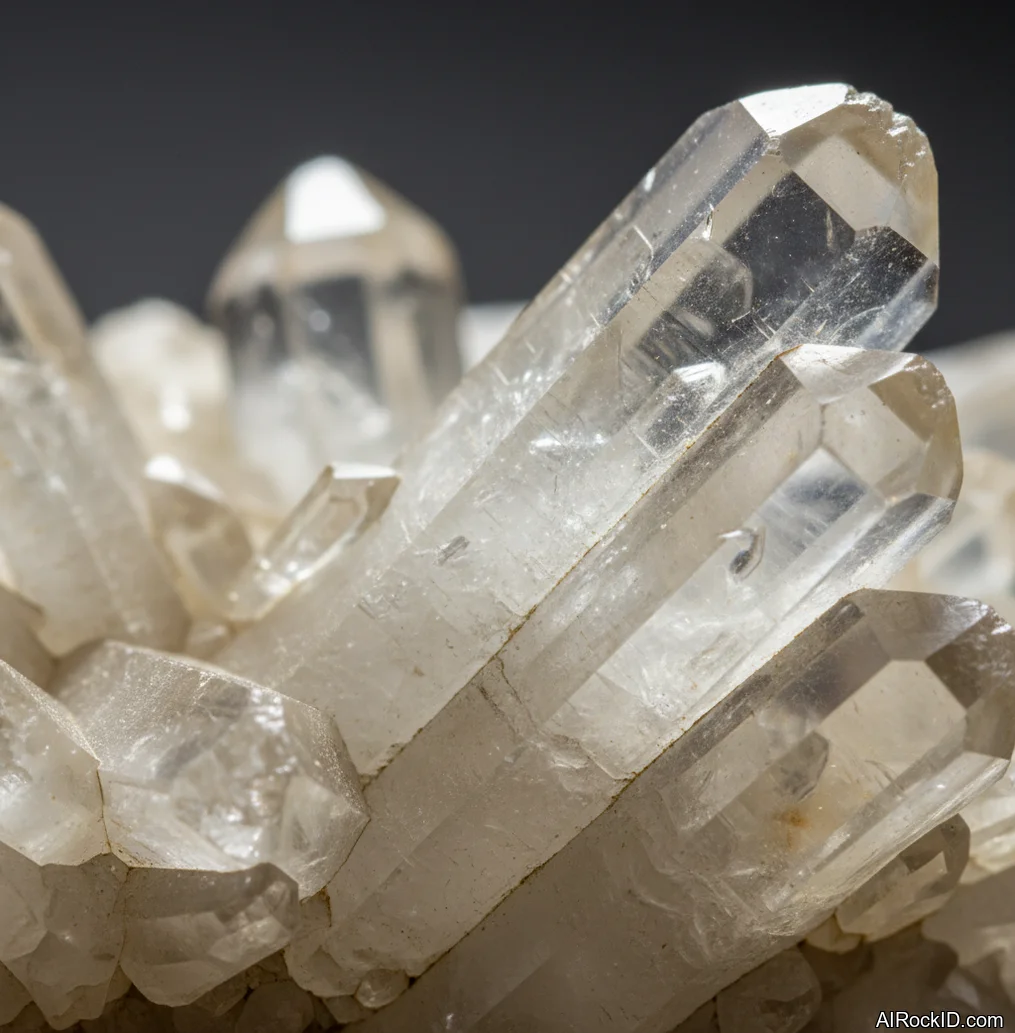
Look closely at the crystal habit: euclase often forms slender, prismatic crystals with very sharp edges and bright, flat faces. The real test is cleavage. If a specimen shows a single super-flat break face that looks too perfect, that’s euclase behavior, not typical quartz chipping. And if you’re handling a loose crystal, don’t squeeze it between your fingers the way you might with beryl, because euclase can punish that mistake.
Common Look-Alikes
Euclase is sometimes confused with these materials:
- Aquamarine (beryl), especially pale blue faceted stones
- Blue topaz (often irradiated), sold as “sky” or “Swiss” blue
- Blue apatite (faceted), when it’s clean and bright
- Blue-green tourmaline (elbaite), in small clean crystals
- Dyed quartz or dyed chalcedony sold as “blue euclase” cab/tumble material
- Blue glass imitations (sometimes sold as “euclase rough”)
Market Cautions & Treatments
When AI Can Get This Wrong
At first glance, phone pics mix euclase up with aquamarine and blue topaz because all three can look like clean icy blue, especially under LED lighting. Photos don’t capture euclase’s “oops” factor: the real test is a careful look for dead-straight cleavage steps and that knife-edge feel on the ridges when you rotate it under a point light. If you can handle it, hardness and heft help too: euclase is lighter than a same-size topaz, and it’ll scratch glass easily but still hates being bumped on a corner.
Properties of Euclase
Physical Properties
| Crystal System | Monoclinic |
| Hardness (Mohs) | 7.5 (Very Hard (7.5-10)) |
| Density | 3.05-3.10 g/cm3 |
| Luster | Vitreous |
| Diaphaneity | Transparent to translucent |
| Fracture | Conchoidal |
| Streak | White |
| Magnetism | Non-magnetic |
| Colors | Colorless, Pale blue, Blue, Blue-green, Greenish blue |
Chemical Properties
| Classification | Silicates |
| Formula | BeAlSiO4(OH) |
| Elements | Be, Al, Si, O, H |
| Common Impurities | Fe, Cr, Mn |
Optical Properties
| Refractive Index | 1.651-1.671 |
| Birefringence | 0.020 |
| Pleochroism | Weak |
| Optical Character | Biaxial |
Euclase Health & Safety
Handling risk is pretty mechanical. Sharp edges and those sudden cleavage breaks can spit out tiny, glassy shards that skitter off your fingers (and they’re annoyingly hard to spot).
Safety Tips
Handle it over a soft pad or a tray, and don’t press down on the thin edges (they chip faster than you’d think). And when you put it away, tuck it in so it can’t rattle around and knock into harder stones.
Euclase Value & Price
Price Range
Rough/Tumbled: $60 - $600 per specimen
Cut/Polished: $200 - $2,000 per carat
Price can swing a lot depending on clarity, color, and whether the crystal’s actually intact with crisp, clean terminations. Thing is, cleavage damage is pretty common (you’ll see those flat, step-like breaks the second you tilt it under a light), so when you find a piece that’s truly clean and unbroken, the value shoots up fast.
Durability
Fragile — Scratch resistance: Excellent, Toughness: Poor
Euclase is chemically stable for normal wear and display, but it’s mechanically fragile because of its perfect cleavage.
How to Care for Euclase
Use & Storage
Store euclase in its own box or compartment, ideally wrapped, because a light knock can start a cleavage break. If it’s a thumbnail-size crystal, I treat it like a tiny piece of glassware.
Cleaning
1) Rinse briefly with lukewarm water and a drop of mild soap. 2) Use a very soft brush only on sturdy areas, not on thin edges. 3) Pat dry with a microfiber cloth and let it air-dry before storing.
Cleanse & Charge
For a metaphysical reset, stick to gentle options like smoke, sound, or a short rest on a dry selenite plate. Avoid banging it around in a bowl with other stones.
Placement
A stable shelf is better than a windowsill ledge where it can get bumped. Put it where you can see the flashes, but where elbows and pets won’t reach it.
Caution
Don’t use ultrasonic or steam cleaners on euclase. And don’t throw it into a tumble-cleaning batch with quartz or corundum. It’s a hard stone, sure, but one sharp knock and it can split cleanly right along its cleavage.
Works Well With
Euclase Meaning & Healing Properties
Euclase, at first glance, feels like a “clear mind” stone just because it looks so crisp. When I use one on purpose, that’s exactly what I use it for: tidier thoughts, cleaner choices, fewer half-decisions hanging around. It has this straight-up “cut through the noise” vibe. Not soft. Not dreamy.
But look, I’m not going to pretend it’s comforting. Euclase isn’t the stone I put in someone’s hand when they want a hug in mineral form. It’s more like a bright desk lamp in your face. Awesome when you’re journaling, studying, or trying to be brutally honest with yourself, and honestly a little too sharp if you’re already wound up.
If you meditate, try holding it lightly between your finger and thumb instead of clenching it in a fist. You’ll notice how cool it stays, and how the edges kind of snap your attention into place (it’s a weirdly specific feeling, right?). And just to keep this in the real world: none of that is medical care. I treat it like a focusing tool, same as a notebook or a timer, just with better sparkle.
Common mistakes
- Identifying Euclase by blue color alone instead of checking cleavage, habit, and test results.
- Assuming a transparent pale blue crystal is aquamarine without considering Euclase or topaz.
- Using Euclase in everyday jewelry without accounting for its perfect cleavage.
- Cleaning Euclase with ultrasonic or steam methods that may worsen fractures.
- Buying rare Euclase specimens without asking for locality details or verification.
- Confusing glassy luster with proof of authenticity.
Identify Euclase from a photo
Compare Euclase traits, care tips, value clues, and common lookalikes with a clear photo.