Flower Stone


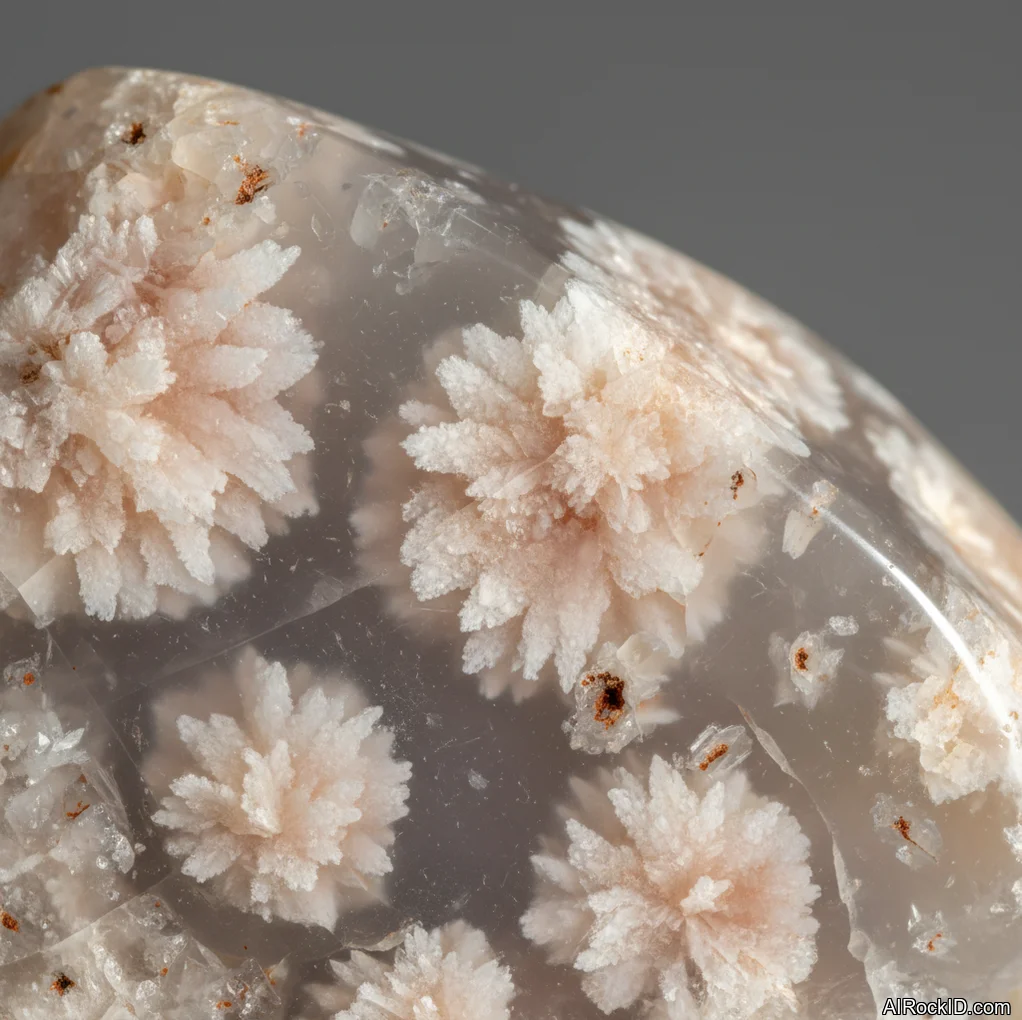
Quick answer: Flower Stone, often sold as Flower Agate, is a pink to beige chalcedony with soft, plume-like or blossom-shaped inclusions. It is most often associated with Madagascar material and is commonly cut into palm stones, towers, beads, and decorative carvings.
AI Rock ID can help compare Flower Stone against visually similar chalcedony and agate varieties using color, pattern, and translucency cues. RockIdentifier.io provides crystal reference details that can support identification, buying checks, and care decisions.
Good fit
- Collectors who like pastel pink, cream, or peach chalcedony patterns
- Buyers looking for a relatively durable polished stone for display or jewelry
- People comparing flower-like inclusions against moss, plume, or pink agate varieties
- Beginners who want a recognizable crystal with moderate hardness
Not a good fit
- Anyone needing a precise laboratory identification based only on photos
- Buyers expecting every piece to show clear flower-shaped inclusions
- Use in rough physical wear where polished edges or points may chip
- People seeking verified geographic origin without seller documentation
Most commonly confused with
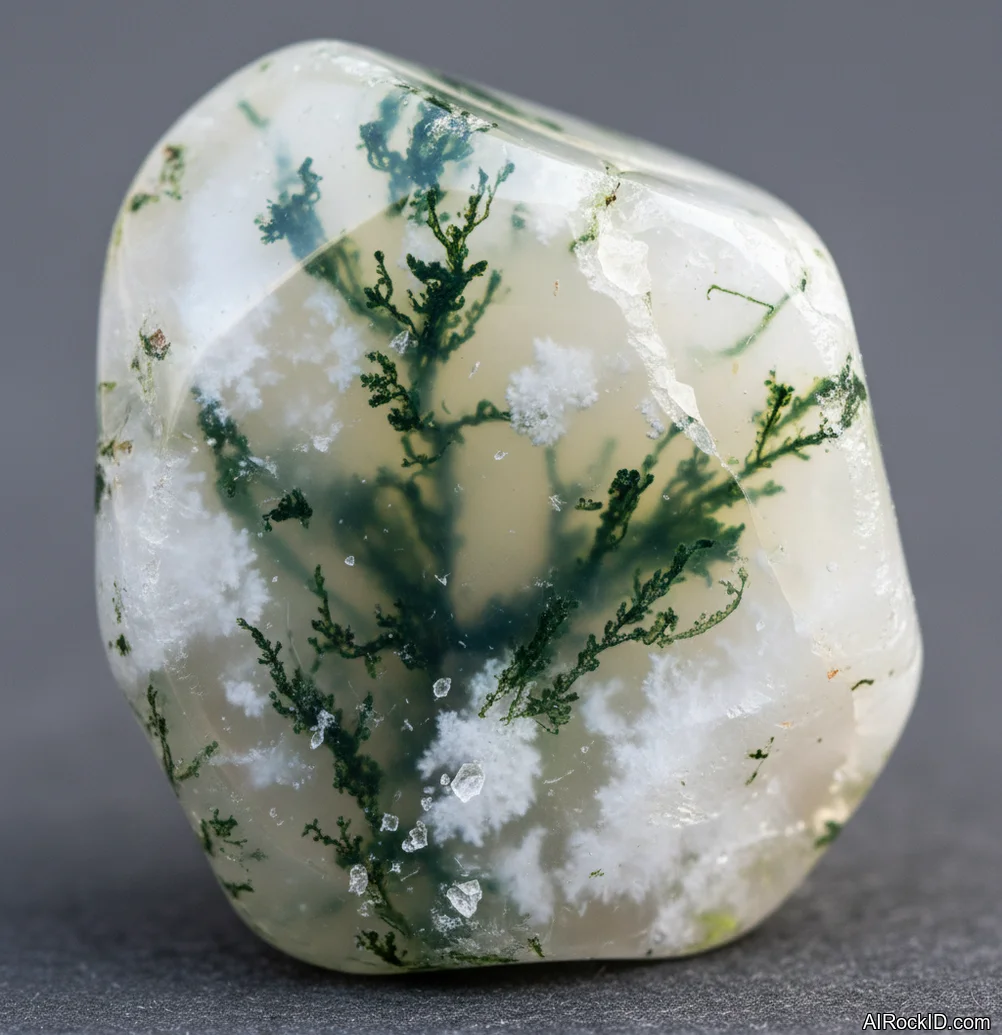
- Moss Agate: Moss Agate usually has green, moss-like dendritic inclusions rather than pink or cream blossom-like plumes.
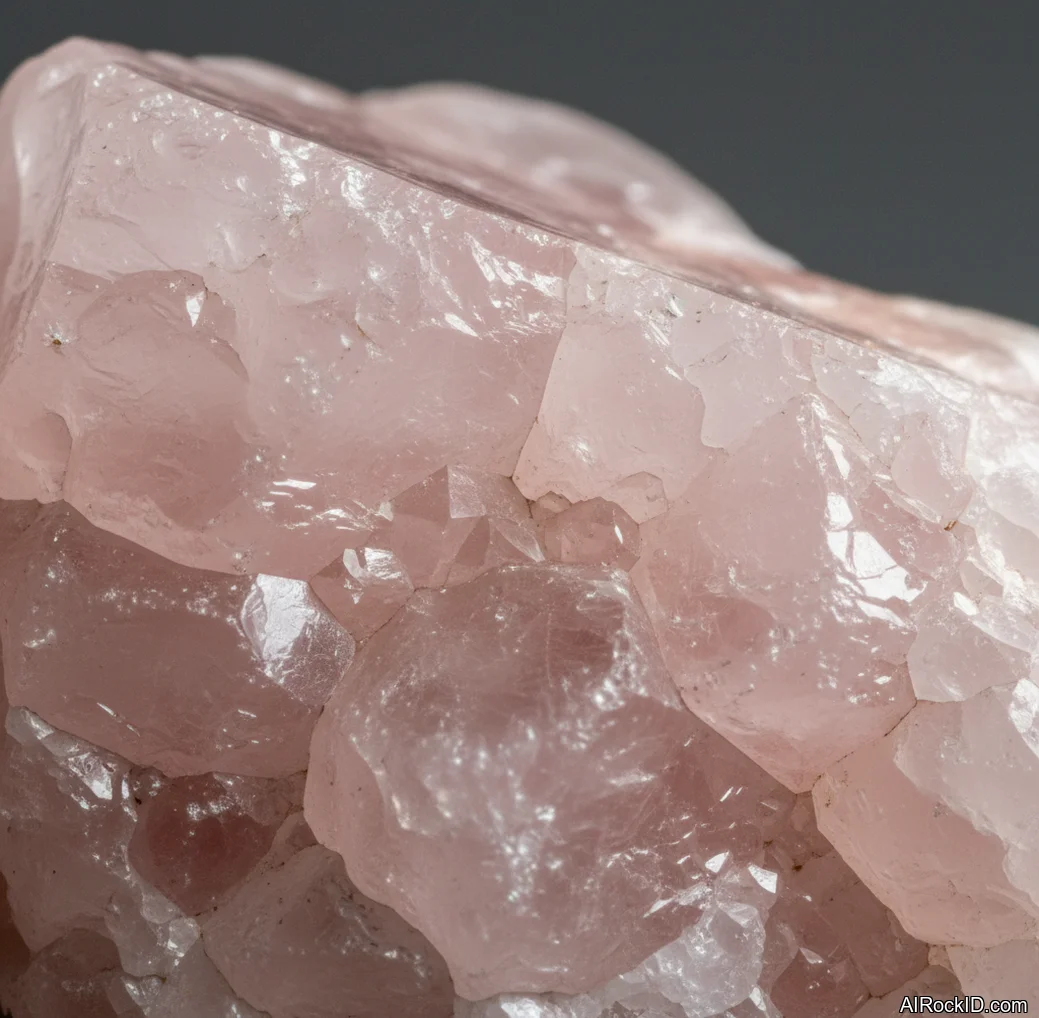
- Pink Agate: Pink Agate may be banded or dyed and does not always contain the rounded plume inclusions typical of Flower Stone.
- Cherry Blossom Agate: Cherry Blossom Agate is often used as a trade name for similar Madagascar flower-patterned chalcedony and may overlap with Flower Stone.
- Rhodochrosite: Rhodochrosite is softer, usually more saturated pink, and commonly shows carbonate banding rather than chalcedony plumes.
Flower Stone vs. Similar Pink Stones
| Stone | Typical look | Key ID clue | Hardness |
|---|---|---|---|
| Flower Stone | Pink to beige chalcedony with blossom-like plumes | Rounded inclusions inside translucent to semi-opaque agate | 6.5-7 |
| Moss Agate | Clear to milky agate with green branching inclusions | Green dendritic or moss-like patterns | 6.5-7 |
| Rhodochrosite | Pink to red bands or swirls | Reacts as a carbonate and scratches more easily | 3.5-4 |
| Pink Opal | Soft pastel pink, usually even and opaque | Waxy look with no chalcedony banding or plumes | 5.5-6.5 |
| Dyed Agate | Bright or uniform pink agate | Color may concentrate in cracks, edges, or drill holes | 6.5-7 |
AI identification confidence
AI identification of Flower Stone is usually moderate when a photo clearly shows pink chalcedony with internal plume or blossom-like inclusions. Confidence drops when the stone is heavily polished, dyed, backlit, or shown under strong color-changing lighting.
When AI gets it wrong
- A dyed agate has a strong pink color but lacks natural-looking plume structure.
- A close-up photo hides scale, translucency, or surface texture needed for comparison.
- The specimen is labeled with overlapping trade names such as Flower Agate, Cherry Blossom Agate, or Sakura Agate.
- The stone is a similar pink material such as rhodochrosite, pink opal, or banded agate.
Final recommendation
Choose Flower Stone based on natural-looking plume patterns, polish quality, and clear seller photos rather than name alone. For higher-value pieces, ask whether the stone is natural, dyed, stabilized, or sold under a regional trade name.
How to Tell If Flower Stone Is Dyed
Natural Flower Stone typically has soft pink, peach, cream, gray, or beige tones with uneven internal inclusions. Dyed pieces may show unusually bright or uniform color, darker pigment in cracks, or concentrated color around bead holes. A seller should clearly disclose dyeing, stabilization, or other treatments when known.
Buying Checklist for Flower Stone
Look for sharp photos taken in natural or neutral light, especially views that show depth rather than only surface polish. Check whether the seller identifies the material as chalcedony, Flower Agate, or a trade-name agate, and ask about treatments if the color appears vivid. For carvings and towers, inspect tips, bases, and edges for chips or repaired fractures.
Photo Tips for Identification
Photograph Flower Stone on a neutral background with indirect daylight and minimal filters. Include one close-up of the inclusions, one full-stone image, and one edge or backlit view if the piece is translucent. A coin or ruler helps show scale, which can improve visual comparison with other agates.
What Is Flower Stone?
Flower Stone is just a trade name for Flower Agate. It’s a pink to peach chalcedony (microcrystalline quartz) with white-to-cream plume inclusions that really do look like tiny blossoms.
Grab a palm stone and the first thing you’ll notice is how it stays cool longer than glass or resin. Most pieces have that soft, cloudy pink base, and then the “flowers” sort of hover inside like little cauliflower puffs or cherry-blossom clusters, usually with fuzzy edges instead of crisp, sharp banding. And if it’s been polished right, the surface gets that slick, almost soapy feel chalcedony has (you can feel it the second you rub your thumb across it), not that plasticky drag you get from dyed fakes.
People sometimes expect it to be an actual “flower” mineral, which is funny, but it’s really all about the inclusions and the patterning. Some pieces are jammed with plumes and look pretty busy. Others are mostly clean pink with only a few blooms, and those tend to feel calmer both in your hand and sitting on a shelf. I’ve also handled a couple slabs where the plumes stack up in layers, and you can tell the silica gel moved in pulses, not all at once.
Origin & History
“Flower Agate” is a pretty new name, honestly. It really started getting thrown around in the late 2010s, right when that Madagascar material showed up everywhere in the bead bins and palm-stone trays. Dealers needed something fast and visual, something a customer could remember after holding one for five seconds (smooth in the hand, kind of waxy like other chalcedony).
Thing is, there’s no single old-school “first described by” moment the way you’d get with an officially named mineral species. It’s chalcedony with a pattern, so it doesn’t come with that tidy origin story. The “flower” part is just literal description. And “sakura” or “cherry blossom” got used for the exact same reason.
In shops you’ll also hear “plume agate” now and then, which is closer to the geology. But “Flower Stone” is what stuck with the retail crowd. Why? Because it’s easy to picture.
Where Is Flower Stone Found?
Most Flower Stone on the market is Madagascar chalcedony. Similar plume and flower-like agates also come out of Brazil, India, and parts of the western United States.
Formation
Look hard at those “blooms” and you’re basically reading a repeat process: silica-rich fluids seep into little cavities, harden, then another pulse comes through and does it all over again. Chalcedony shows up when super-fine quartz fibers drop out of gels or hydrothermal fluids, and you see it a lot in volcanic rock because old gas bubbles left those empty pockets in the first place.
That flower look? Usually it’s plume inclusions, most often manganese or iron oxides, plus shifts in translucency as the silica firms up. And in some pieces you can literally track it: the plumes kick off from a tiny “seed” spot and branch outward, like they were spreading into the cavity, then later chalcedony seals them in. Looks alive. It isn’t. Just chemistry, and timing, doing their thing.
Next to classic banded agate, Flower Stone usually shows less obvious fortification banding and more of that milky, cloudy body. So the backlight test matters. Take a thin slice, press your phone flashlight right up behind it (you’ll see the edge glow first), and the plumes jump out in layers. Pretty hard to miss once you’ve done it.
How to Identify Flower Stone
Color: Base color ranges from milky white to blush pink, peach, or light mauve, with cream to white plume clusters that resemble flowers. Some pieces show pale gray or tan zones where the chalcedony is more opaque.
Luster: Waxy to vitreous luster when polished, with a soft glow instead of a mirror shine.
Pick up a real piece and it feels like quartz in the hand, cool and a little heavier than you expect for something pastel. If you scratch it with a steel nail, it shouldn’t bite easily, but a sharp piece of quartz will scratch it without much effort. The problem with a lot of “flower” lookalikes is dye and resin: dyed agate tends to have color pooled in tiny cracks or around drill holes, and resin copies feel warmer and lighter, with patterns that look printed instead of suspended in depth.
Common Look-Alikes
Flower Stone is sometimes confused with these materials:
- Moss Agate (especially pale pink or peach-dyed varieties)
- Cherry Blossom Agate (same mineral, but often sold as separate)
- Dyed Quartz (pink or peach glassy quartz with fake inclusions)
- Pink Opal (opaque, sometimes with cloudy banding)
- Glass fakes (pink glass with suspended white swirls)
- Pink Botswana Agate (banded, but some sellers push it as 'Flower Stone')
Market Cautions & Treatments
When AI Can Get This Wrong
Photo AIs trip up when Flower Stone’s inclusions look like mossy patches or when the pink base washes out under bad lighting. Moss Agate, Cherry Blossom Agate, and even some dyed quartz pop up as false positives. Best check: scratch it on glass—real Flower Stone leaves a mark, glass fakes don’t. Tilt under a light and look for those soft, floating 'blossoms', not sharp banding.
Properties of Flower Stone
Physical Properties
| Crystal System | Trigonal |
| Hardness (Mohs) | 6.5-7 (Hard (6-7.5)) |
| Density | 2.58-2.64 g/cm3 |
| Luster | Waxy |
| Diaphaneity | Translucent |
| Fracture | Conchoidal |
| Streak | White |
| Magnetism | Non-magnetic |
| Colors | pink, peach, white, cream, light gray, tan |
Chemical Properties
| Classification | Silicates |
| Formula | SiO2 |
| Elements | Si, O |
| Common Impurities | Fe, Mn, Al, Ca |
Optical Properties
| Refractive Index | 1.530-1.543 |
| Birefringence | 0.004-0.009 |
| Pleochroism | None |
| Optical Character | Uniaxial |
Flower Stone Health & Safety
Flower Stone is safe to touch, and it won’t cause problems around water with normal use. But if you start cutting it, grinding it, or sanding it, that’s when you need to watch out because the real hazard is breathing in silica dust.
Safety Tips
If you’re going to do any lapidary work on it, stick to wet cutting so you’re not kicking up dust, and wear proper respiratory protection that’s actually rated for silica. Seriously, don’t skip the mask.
Flower Stone Value & Price
Price Range
Rough/Tumbled: $5 - $80 per piece
Cut/Polished: $1 - $10 per carat
Cleanly polished pieces with a strong 3D plume look and bigger sizes that don’t have fractures, those are the ones where the price shoots up. But if it’s heavily cracked or has that chalky, dusty feel under your fingertips (you know the kind?), it’s usually cheap, even when the color is cute.
Durability
Durable — Scratch resistance: Good, Toughness: Good
It’s stable quartz-chalcedony material, but sharp blows can chip edges and a lot of pieces have natural fractures that can open if you drop them.
How to Care for Flower Stone
Use & Storage
Store it like any polished quartz: separate from softer stones so it doesn’t scratch them, and cushion it if it has thin edges. If you’ve got a tower with a point, don’t let it rattle around in a drawer.
Cleaning
1) Rinse with lukewarm water and a drop of mild soap. 2) Use a soft brush for creases or drill holes. 3) Rinse well and pat dry; avoid harsh chemicals and abrasive powders.
Cleanse & Charge
Smoke cleansing, sound, or a quick rinse are all fine for this material. If you leave it in strong sun for long stretches, the color usually holds, but I still don’t bake any pastel stones on a windowsill.
Placement
Looks best where light can pass through an edge, like near a lamp or on a shelf with some backlighting. On a desk, a palm stone is nice because the plumes are easy to stare at during a break.
Caution
If the piece already has obvious cracks or little pit marks, skip the ultrasonic cleaner. And when you’re cutting or drilling it, don’t breathe in the dust (seriously). Chalcedony is silica.
Works Well With
Flower Stone Meaning & Healing Properties
In the metaphysical world, people call Flower Stone a “growth” stone or a “gentle reset” stone, and honestly, I see the point. The pattern does something to your brain. You’re looking at tiny buds and soft little clusters, not sharp angles, so your mood kind of shifts into patient, step-by-step mode without you trying that hard.
Pick up a chunky palm stone on a stressful day and you’ll notice it right away: the weight, the cool feel in your hand. That isn’t magic, it’s sensory. Smooth surface. Steady temperature. And there’s enough detail in the pattern to give your eyes (and your mind) something to land on. I’ve watched people at shows rub the same little spot with their thumb while they’re talking, like a worry stone, and they settle down without even realizing it.
But look, the market side gets weird. Some sellers hype it like it’s rare, or like it’s going to “manifest” something overnight. It’s chalcedony. The value is the pattern, the skill of the cut, and what it helps you practice mentally. So if you’re using it for meditation or journaling, it fits well with intentions like consistency, self-kindness, and starting small (which sounds simple, but isn’t always). And no, none of that replaces medical care. It’s not a substitute for therapy or treatment.
Common mistakes
- Assuming every pink agate with a floral trade name is from Madagascar
- Judging authenticity only by bright pink color rather than inclusion structure
- Confusing natural plume inclusions with surface cracks or polish marks
- Overlooking dye concentration around bead holes, pits, and fractures
- Expecting all pieces to show distinct flower shapes; many have abstract plumes
- Using metaphysical labels as proof of mineral identity
Identify Flower Stone from a photo
Compare Flower Stone traits, care tips, value clues, and common lookalikes with a clear photo.