Grandidierite


Quick answer: Grandidierite is a rare blue-green borosilicate mineral best known from Madagascar, with colors that can shift from blue to green depending on direction and lighting. Because gem-quality material is scarce, identification should consider color, pleochroism, hardness, refractive data, and possible lookalikes.
AI Rock ID can help screen a suspected grandidierite specimen by comparing visible traits such as color, transparency, crystal habit, and surface texture. RockIdentifier.io provides educational identification support, but rare or high-value grandidierite should be confirmed by a qualified gemologist or mineral laboratory.
Good fit
- Collectors seeking a rare blue-green mineral with documented locality information
- Gem buyers who can request lab reports for faceted stones or expensive cabochons
- Students comparing pleochroic minerals and borosilicate mineral groups
- Collectors comfortable with higher prices and limited availability
Not a good fit
- Buyers who want a low-cost blue-green gemstone for casual jewelry
- Anyone relying only on color for identification
- High-impact jewelry use without protective settings
- Purchases where the seller cannot provide clear photos, weight, dimensions, or origin details
Most commonly confused with
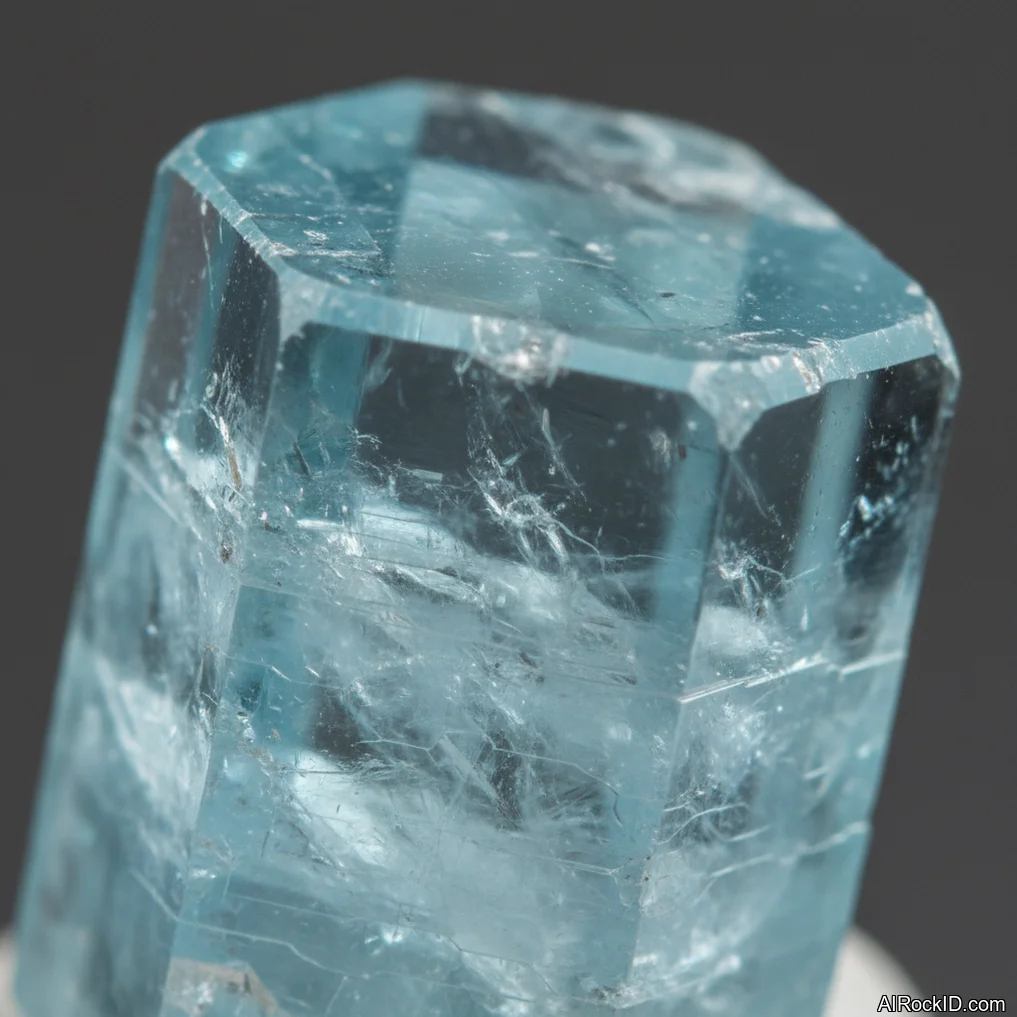
- Aquamarine: Aquamarine is usually lighter blue, has different refractive properties, and belongs to the beryl group.
- Apatite: Blue-green apatite can look similar but is softer and lacks grandidierite’s typical gemological profile.
- Tourmaline: Blue-green tourmaline may show strong color zoning but has a different crystal habit and higher hardness.
- Sapphire: Teal sapphire is corundum, much harder, denser, and typically more durable than grandidierite.
Grandidierite vs. Similar Blue-Green Gems
| Material | Key Difference | Typical Check |
|---|---|---|
| Grandidierite | Blue-green borosilicate with notable pleochroism | Confirm with refractive index, specific gravity, and microscopy |
| Aquamarine | Beryl; usually lighter blue to blue-green | Check beryl crystal habit and gemological readings |
| Apatite | Softer phosphate mineral | Hardness and refractive index separate it |
| Tourmaline | Complex borosilicate with different crystal form | Look for trigonal habit and tourmaline optical properties |
| Glass | Man-made imitation with no mineral crystal structure | Look for bubbles, mold marks, and single refractive behavior |
AI identification confidence
AI identification confidence for grandidierite is usually moderate from photos because several blue-green minerals share similar color and transparency. Confidence improves when images show multiple angles, natural crystal faces, inclusions, scale, and lighting that reveals pleochroism.
When AI gets it wrong
- The photo shows only a polished cabochon or faceted stone without diagnostic features
- Lighting makes aquamarine, apatite, tourmaline, or glass appear the same blue-green shade
- The specimen is labeled by color only, with no locality, hardness, or optical data
- Surface coatings, dye, or heavy editing alter the natural color
Final recommendation
Treat grandidierite identification as a gemological question when value is significant. For purchases, prioritize transparent seller information, clear return terms, and independent lab documentation for costly stones.
How to Check Grandidierite Authenticity
Authentic grandidierite should not be identified by color alone, because several blue-green gemstones and glass imitations can appear similar. Useful checks include refractive index, birefringence, specific gravity, pleochroism, magnification, and comparison with known locality material. For faceted stones or high-value specimens, a report from a recognized gemological laboratory is the most reliable support.
Buying Grandidierite Online
Online listings for grandidierite should include untreated photos, carat weight or dimensions, origin if known, and disclosure of any treatments or stabilizing materials. Be cautious with unusually low prices, vague terms such as “grandidierite-like,” or listings that provide only color-based identification. Expensive stones should come with a lab report or a return policy that allows independent testing.
What Makes Grandidierite Hard to Identify
Grandidierite can show blue, green, and colorless to yellowish tones depending on viewing direction, which can complicate photo-based identification. Many specimens are translucent or included, so visual appearance may overlap with apatite, aquamarine, tourmaline, and glass. Diagnostic testing is especially important when the material is transparent, faceted, or sold as gem quality.
What Is Grandidierite?
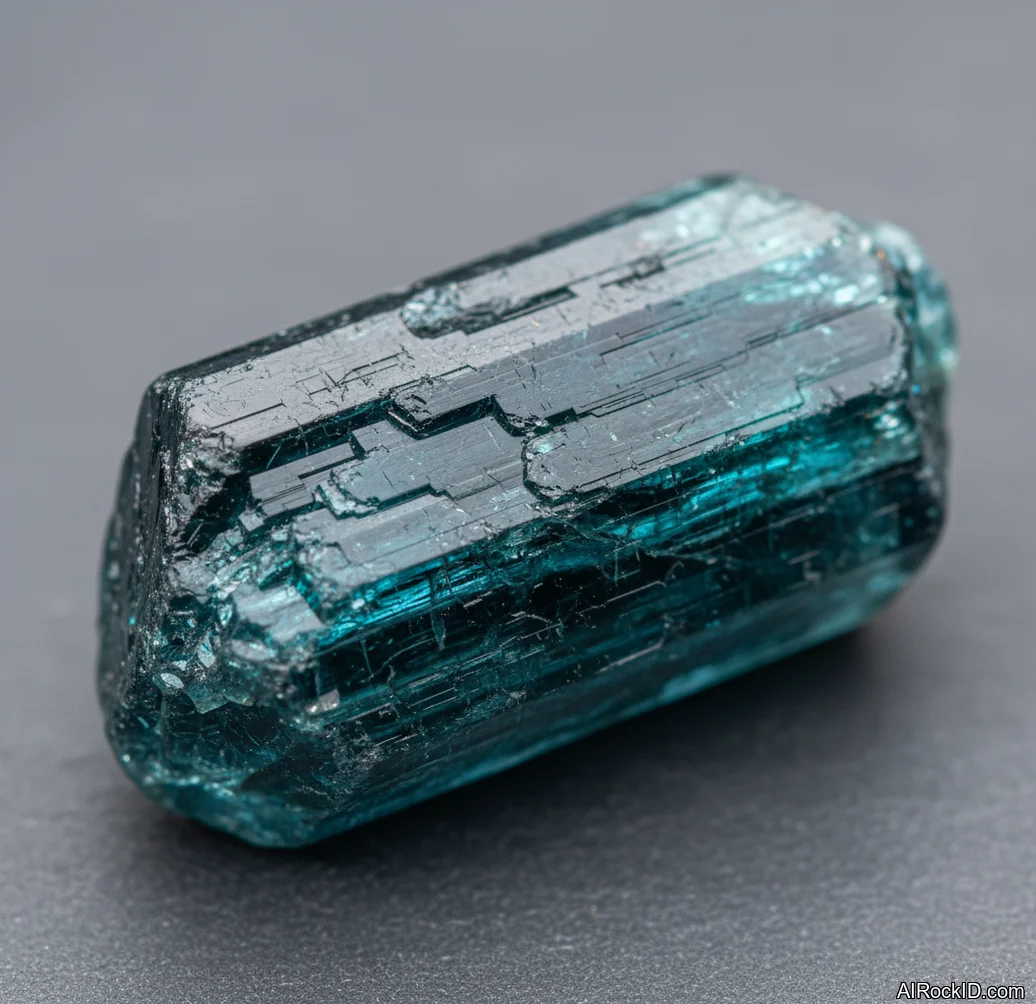
Grandidierite is a seriously rare mineral, a blue to blue-green magnesium–aluminum borosilicate that forms in metamorphic rocks. And yes, it can show up as transparent, gem-quality material.
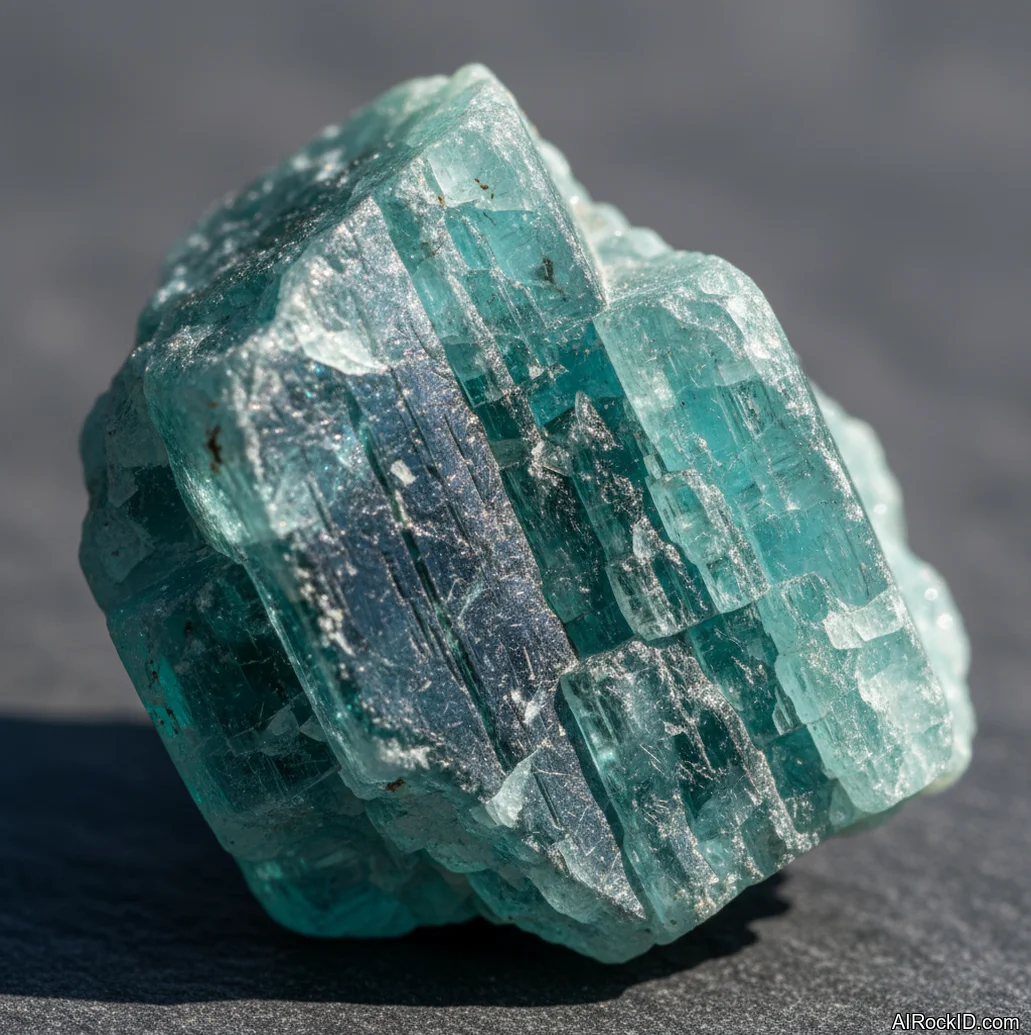
Pick up a piece and you feel it right away. It’s got that “real rock” heft, not that airy, lightweight vibe some silicates have. Most specimens I’ve handled are small, with sharp edges that catch on your fingertip, and they look kind of stubborn sitting there, sea-green to teal until you roll them under a lamp and the tone drops darker.
But the clean, gemmy stuff? Different animal. It can read like a moody teal sapphire at first, then you tilt it and the color shifts on you.
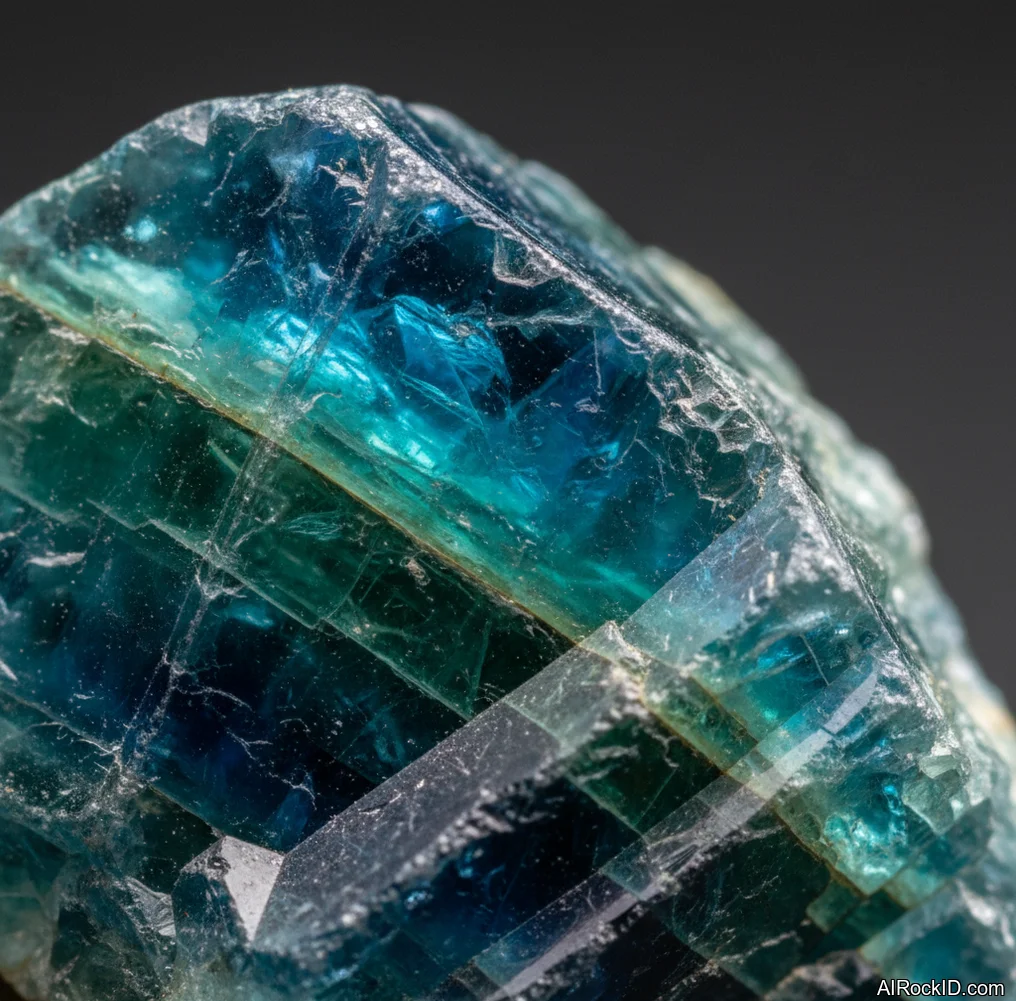
Look, get close and you’ll see why cutters love it and dread it in the same breath. The pleochroism is no joke, so a stone can look incredible from one angle and then go a little inky from another. In the hand, the rough tends to show up as grains or short prismatic bits sitting in a pale matrix, and the best pieces already have that cool, glassy “wet” look even before you polish them (which is kind of wild, honestly).
Origin & History
Madagascar is the first place people mention, and there’s a reason for that. Grandidierite got its first proper description in 1902, when Alfred Lacroix studied material found in southern Madagascar. He named it after the French explorer and naturalist Alfred Grandidier.
For ages, this was the kind of mineral you mostly saw in books, not sitting under a dealer’s lamp in a case with little handwritten tags. Then higher-quality gem material started turning up from Madagascar, and the whole vibe changed. Suddenly it wasn’t just an academic rarity. Collectors and high-end gem people began actively hunting it down. But you still don’t just bump into it in a bargain tray, do you?
Where Is Grandidierite Found?
Most market material traces back to southern Madagascar, with smaller occurrences reported from places like Sri Lanka and parts of southern Africa. Good transparent pieces are uncommon anywhere.
Formation
Raw pieces from Madagascar almost always point back to high-grade metamorphic rock. The kind of magnesium-heavy stuff that’s been cooked hard (you can picture that dense, tough feel when you knock two chips together), and there’s often boron around too, which is how you end up with borosilicates growing alongside the usual metamorphic minerals.
But compared to beryl, which can grow big in pegmatites, grandidierite usually shows up as smaller crystals or even just grains. A lot of it’s included. A lot of it’s fractured. That’s why clean faceting rough is so hard to come by. And when a clean section does turn up, it’s often just a skinny little window of usable color and clarity inside a piece with plenty of internal “weather” (cloudy zones, thread-like breaks, that kind of thing).
How to Identify Grandidierite
Color: Usually blue-green, teal, or greenish blue, and it often looks darker or lighter depending on viewing direction because of strong pleochroism. Some pieces lean more green, others more blue-gray.
Luster: Vitreous luster on fresh faces and polished surfaces.
At first glance people confuse it with indicolite tourmaline or teal sapphire, but the color shift when you rotate it is a big clue. The real test is to view it from different directions under a single bright light and watch it swing between greenish and bluish tones. In rough, I’ve noticed the best pieces stay cool to the touch like most silicates, while dyed or resin-filled lookalikes can feel a little warm and “plasticky” in the hand.
Common Look-Alikes
Grandidierite is sometimes confused with these materials:
- Indicolite (blue tourmaline), especially pale teal stones cut in small ovals
- Aquamarine (beryl), when it’s that washed blue-green and eye-clean
- Apatite (blue-green), since it can hit the same tropical teal but is much softer
- Amazonite (microcline feldspar), in cabochons or tumbled pieces with a similar sea-green vibe
- Dyed quartz/chalcedony sold as “grandidierite” (watch for dye in fractures and drill holes)
- Blue-green glass imitations (often too clean, too uniform, and a touch warm in the hand)
Market Cautions & Treatments
When AI Can Get This Wrong
At first glance, phone cameras push grandidierite into the same bucket as aquamarine, blue tourmaline, and even blue-green apatite, especially under LED lighting that shifts teal. AI also gets tricked by polished amazonite and dyed quartz because the photos flatten out the internal texture. The real test is hardness and feel: grandidierite should scratch glass cleanly (apatite won’t), and in hand it feels denser and cooler than glass, but you’ll still want a refractive index check if it’s faceted.
Properties of Grandidierite
Physical Properties
| Crystal System | Orthorhombic |
| Hardness (Mohs) | 7-7.5 (Hard (6-7.5)) |
| Density | 2.85-3.00 g/cm3 |
| Luster | Vitreous |
| Diaphaneity | Transparent to translucent |
| Fracture | Uneven |
| Streak | White |
| Magnetism | Non-magnetic |
| Colors | Blue-green, Greenish blue, Teal, Blue-gray, Green |
Chemical Properties
| Classification | Silicates (borosilicate) |
| Formula | MgAl3(BO3)(SiO4)O2 |
| Elements | Mg, Al, B, Si, O |
| Common Impurities | Fe, Mn |
Optical Properties
| Refractive Index | 1.590-1.623 |
| Birefringence | 0.033 |
| Pleochroism | Strong |
| Optical Character | Biaxial |
Grandidierite Health & Safety
Grandidierite is generally safe to pick up, handle, and keep on display. But if you’re going to cut it or grind it, treat it like any other silicate: wear a good dust mask or respirator, use water to keep the dust down (that muddy slurry gets everywhere), and don’t breathe the fine powder. Standard lapidary precautions still apply.
Safety Tips
If you’re polishing or cutting, keep a little water running on the work and wear a respirator that’s rated for fine particulates. Stone dust gets everywhere (you can taste it if you’re not careful), so don’t breathe it in.
Grandidierite Value & Price
Price Range
Rough/Tumbled: $80 - $1,500 per piece
Cut/Polished: $200 - $2,000 per carat
Prices spike fast once you’ve got real transparency, that inky blue‑green saturation, and more size. But thing is, a lot of rough comes out with hairline cracks you can catch when you tilt it under a light, plus zoning that shows up as uneven bands of color, so two stones with the same weight can end up miles apart in what they’re actually worth.
Durability
Moderate — Scratch resistance: Good, Toughness: Fair
It’s hard enough for jewelry, but cleavage and internal fractures mean it needs a careful setting and gentle wear.
How to Care for Grandidierite
Use & Storage
Store it in a padded box or a gem jar with foam, especially if it’s faceted or has sharp edges. Don’t let it clack around with quartz or corundum.
Cleaning
1) Rinse with lukewarm water. 2) Use mild soap and a soft brush for crevices. 3) Rinse again and pat dry; skip ultrasonic and steam cleaning.
Cleanse & Charge
For a non-abrasive reset, I stick to smoke, sound, or a quick sit on a piece of selenite. If you use moonlight, keep it out of hot window sun afterward.
Placement
A small stand under a single lamp is great because you can actually see the pleochroism when you rotate it. Keep it away from high-traffic shelf edges since many pieces have internal fractures.
Caution
Skip ultrasonic cleaners, and be careful with rough day-to-day rings unless the stone’s really tucked in and protected. Thing is, cleavage and those tiny fissures mean one sharp knock on a countertop edge can go from “no big deal” to an actual chip in a split second.
Works Well With
Grandidierite Meaning & Healing Properties
Next to the loud, flashy stones, grandidierite is weirdly quiet. You don’t really get it until you’ve held one for a minute and watched it just sit there, not begging for attention. When I’m sorting inventory or slapping labels on flats and my brain’s pinging everywhere, I’ll keep a small piece on the table. Not because it’s “magic.” It just pulls my pace down a notch. A mood cue, basically.
In crystal circles, people link it to clear communication and emotional steadiness, sort of a throat-and-heart thing. And, honestly, I see the connection. The color looks like deep water, and the pleochroism is strong enough that when you tilt it under the same lamp, the tone slides and you can literally see the layers. It’s not subtle.
But look, grandidierite isn’t cheap. Most people aren’t tossing it in a pocket with keys and coins like it’s a tumbled quartz. This is more “take it out, spend a little time with it, then put it back somewhere safe” energy. Back in the box. Lid closed. You know?
If you’re meditating with it, the best little trick I’ve found is simple: use one light source, rotate it slowly, and lock onto the shift as it changes. That tiny visual flip is a solid anchor when your attention starts wandering. And yeah, none of this is medical care. I wouldn’t tell anyone to swap an actual treatment plan for a rare teal rock, no matter how pretty it is (and it is pretty).
Common mistakes
- Assuming every rare blue-green stone from Madagascar is grandidierite
- Using color as the only identification feature
- Ignoring pleochroism, hardness, refractive index, and specific gravity
- Buying expensive faceted stones without a lab report
- Confusing trade names or vague seller labels with verified mineral identity
- Comparing photos taken under different lighting as if they show the same natural color
Identify Grandidierite from a photo
Compare Grandidierite traits, care tips, value clues, and common lookalikes with a clear photo.