Indicolite


Quick answer: Indicolite is the blue to blue-green variety of tourmaline, most often within the elbaite group. It is valued for its color, pleochroism, and relative durability, but it can be confused with other blue gemstones and treated material.
AI Rock ID can help compare an indicolite specimen or gemstone against visual patterns seen in blue tourmaline and common lookalikes. RockIdentifier.io provides crystal identification support, but final confirmation may require refractive index, specific gravity, or gemological testing.
Good fit
- Collectors seeking a natural blue tourmaline variety
- Jewelry buyers who want a durable gem with a Mohs hardness around 7 to 7.5
- People comparing blue-green stones such as aquamarine, apatite, and sapphire
- Specimen owners who want help narrowing down a possible tourmaline identification
Not a good fit
- Buyers who need a low-cost blue gemstone in large sizes
- Situations where only a visual photo is available and exact gem identity is legally or financially important
- People expecting every blue tourmaline to be untreated or highly saturated
Most commonly confused with
- Aquamarine: Aquamarine is beryl and is usually lighter, less pleochroic, and has different refractive index readings.
- Blue Apatite: Blue apatite is softer, commonly around Mohs 5, and is more easily scratched than indicolite.
- Blue Sapphire: Blue sapphire is corundum, much harder at Mohs 9, and usually has higher density and different optical properties.
- London Blue Topaz: London blue topaz is commonly irradiated and heat treated, with a more uniform steely blue color than many indicolite stones.
Indicolite vs. Common Blue Lookalikes
| Stone | Key Difference | Typical Hardness | Identification Clue |
|---|---|---|---|
| Indicolite | Blue tourmaline, often pleochroic | 7-7.5 | Elongated tourmaline crystals and strong color direction |
| Aquamarine | Blue beryl, often paler | 7.5-8 | Lower pleochroism and beryl crystal habit |
| Blue Apatite | Softer phosphate mineral | 5 | Scratches more easily and may show strong neon blue color |
| Blue Sapphire | Corundum, much harder | 9 | Higher durability and different refractive index |
| London Blue Topaz | Commonly treated topaz | 8 | Often very uniform dark blue with high availability |
AI identification confidence
AI-based identification can be moderately helpful for indicolite when the photo shows crystal habit, color zoning, and transparency. Confidence drops for cut gemstones, heavily included stones, dark stones, or images without scale and lighting control.
When AI gets it wrong
- A cut blue gemstone is photographed without refractive index, density, or magnification data
- The stone is very dark, making pleochroism and internal features hard to see
- A treated blue topaz or synthetic blue stone has a similar face-up color
- The specimen is labeled only by color and lacks visible tourmaline crystal habit
Final recommendation
For buying indicolite, prioritize verified identity, attractive blue to blue-green color, clarity appropriate to the cut, and disclosure of any treatment. For higher-value stones, request documentation from a qualified gemologist or gemological laboratory.
How to Verify Indicolite Before Buying
Visual appearance alone is not enough to confirm indicolite, especially in faceted gems. Useful checks include refractive index, birefringence, specific gravity, pleochroism, and microscopic examination. For expensive stones, a gemological report can help separate blue tourmaline from aquamarine, topaz, sapphire, spinel, and glass imitations.
Indicolite Treatments and Disclosure
Some blue tourmaline may be heated or otherwise treated to modify color, and treatment disclosure can affect value. Sellers should clearly state whether a stone is natural, treated, synthetic, assembled, or imitation. Lack of disclosure is a reason to ask for testing or avoid relying on price and color alone.
Photo Tips for Identifying Indicolite
Use sharp photos in daylight or neutral lighting, and include views from more than one direction because indicolite can show pleochroism. Add a scale, show any crystal termination or striations, and photograph inclusions if visible. Avoid overly saturated lighting, backlit images, and filters that make blue stones look more vivid than they are.
What Is Indicolite?
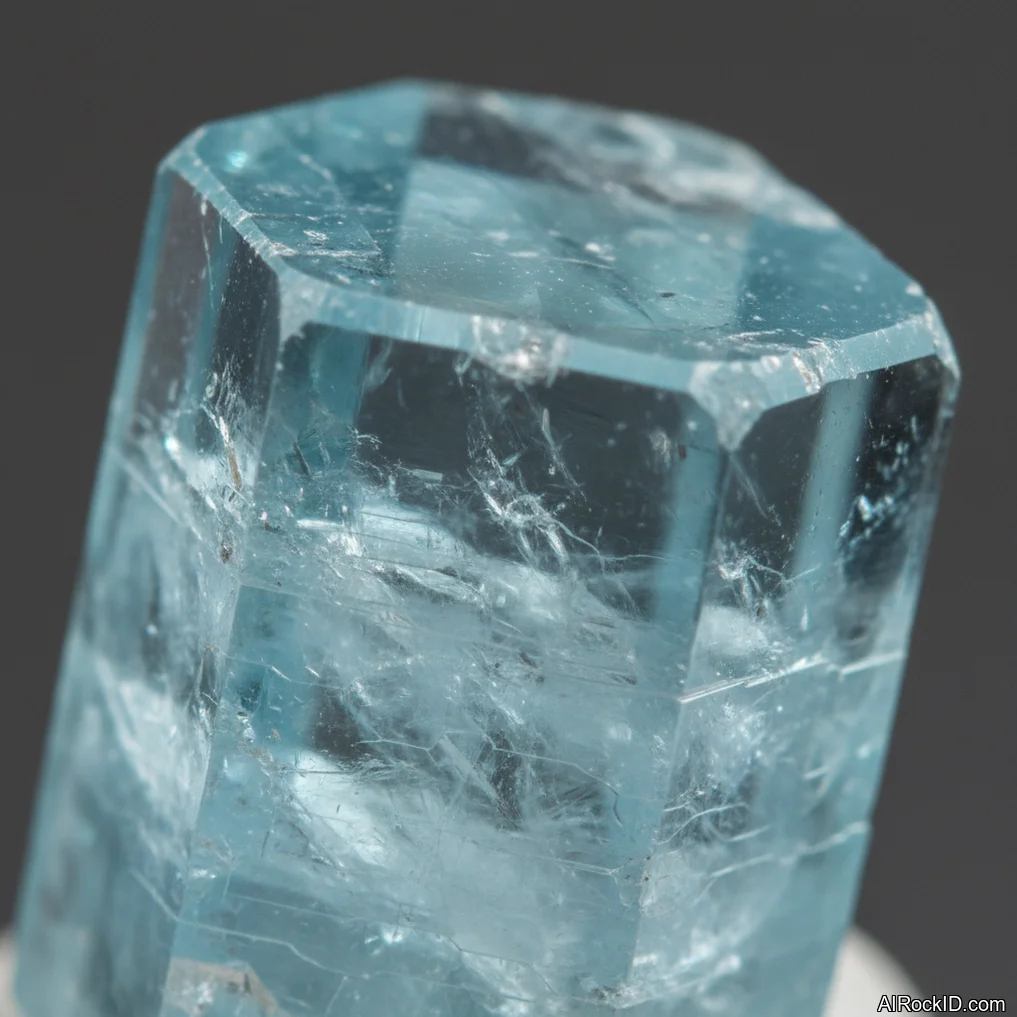
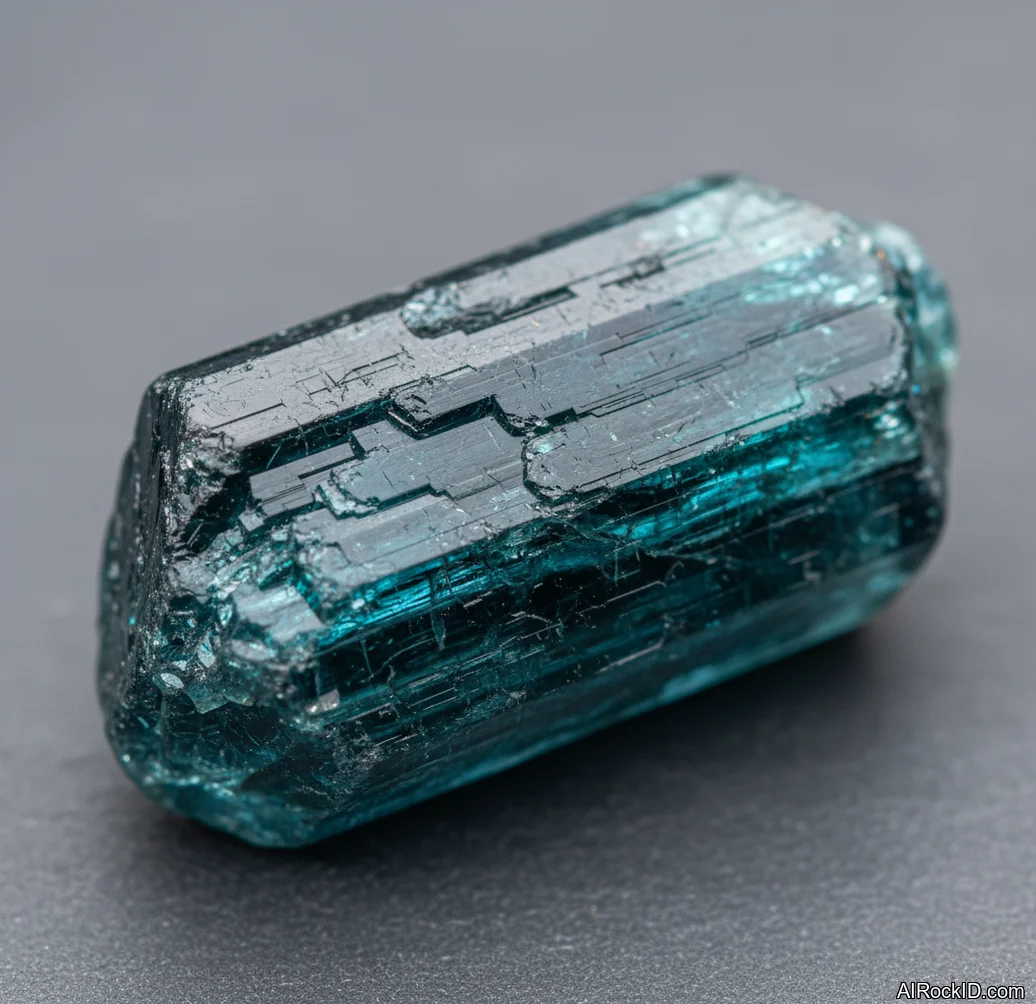
Indicolite is the blue to blue-green kind of tourmaline, and most of the time it’s from the elbaite series. If you’ve handled enough tourmaline, you spot it right away: those lengthwise striations, plus that clean, glassy look when you’ve got a fresh face in front of you.
Grab a crystal and, honestly, the first surprise is that it feels tougher than it looks. The skin of it is usually slick, but you can feel tiny grooves running straight down the length, like somebody lightly scored it with a needle. And the color? It messes with you. In shade it can look inky, sometimes even a gray-blue, then you tip it under a desk lamp and suddenly one edge kicks teal while the other drops into deep denim. Weirdly satisfying.
Next to blue topaz or aquamarine, indicolite has more “mood” in the hand. A lot of stones aren’t evenly colored, and that’s kind of the point. But truly clean, really saturated blue material is scarce, and you notice that scarcity the moment you’re flipping through dealer trays and anything decent is already spoken for.
Origin & History
Tourmaline, as a mineral group, got its formal description in the 18th century. The name itself goes back to the Sinhalese word “turmali,” a term used in Sri Lanka for mixed-color stones. “Indicolite” showed up later as a trade and collector label for the indigo-blue end of tourmaline’s color range.
Thing is, most old-school collectors I’ve run into use “indicolite” pretty narrowly. They mean a blue that reads blue on its own, not a green tourmaline that only looks bluish when you tilt it under a lamp. But dealers don’t always stick to that. So you’ll see plenty of “blue tourmaline” tags on stones that are really blue-green, or even just dark green once you get them out of that flattering counter light (you know the kind) and into normal lighting.
Where Is Indicolite Found?
Indicolite shows up mainly in granitic pegmatites, with famous material coming from Brazil, Afghanistan, Pakistan, and Madagascar, plus classic California localities for U.S. collectors.
Formation
Raw chunks out of pegmatites kind of give it away right from the start. Pegmatites are those coarse-grained granite bodies that cool late and slow, and they’re loaded with water and boron. That combo is basically what tourmaline wants.
The crystals also get space to grow. Lots of it. So you end up with long, striated prisms, and sometimes the tips are sharp and clean, but only if the crystal didn’t get knocked around in the pocket.
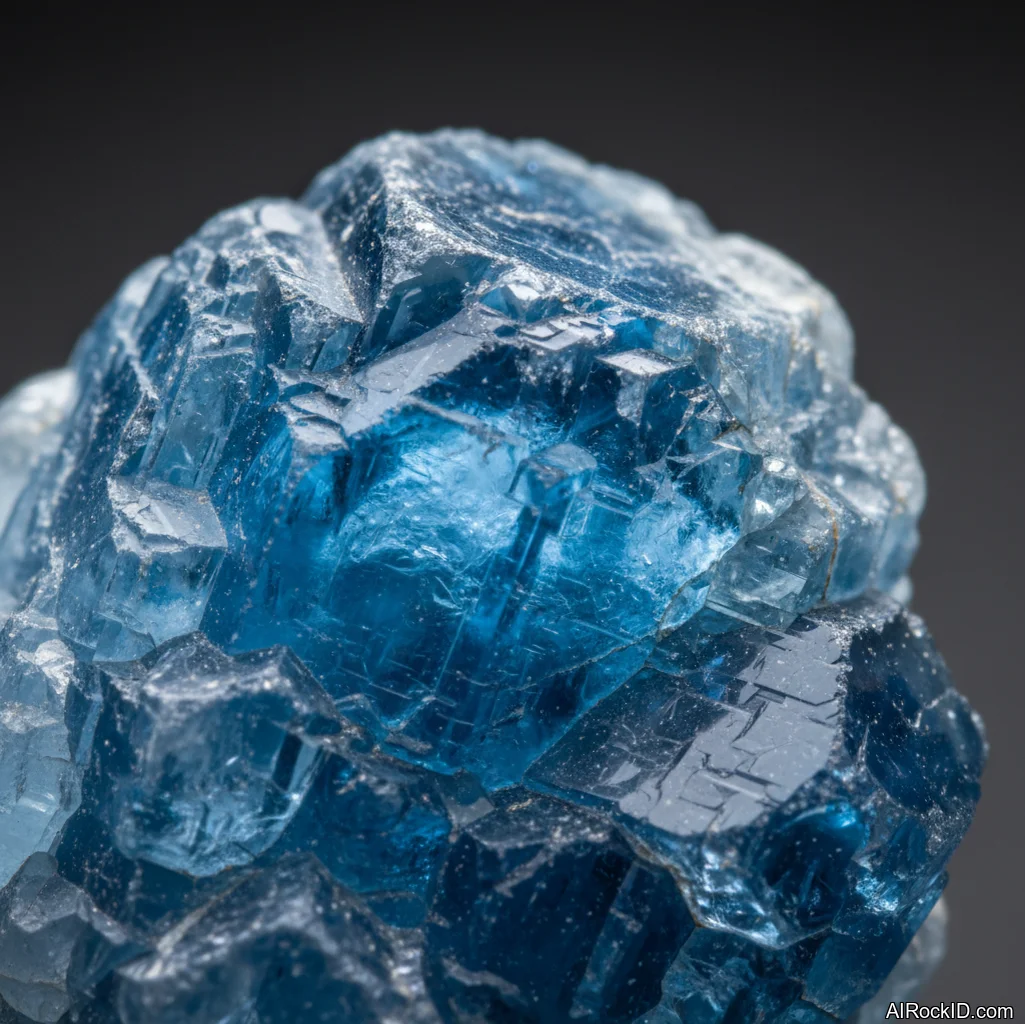
Color comes down to chemistry plus timing. Blue in tourmaline is usually tied to iron (and sometimes charge transfer effects involving Fe and Ti). And inside the same pocket, you can watch the color shift as the fluid changes, leaving green, blue-green, and blue zones stacked through the crystal.
Look, if you’ve ever stared at a broken one in good light, you’ll know what I mean. You’ll sometimes catch a paler core with a darker rim, like a marker line running around the outside (hard to unsee once you spot it). But here’s the annoying part: truly even, saturated blue all the way through is uncommon. So cutters chase the best orientation and live with smaller finished stones.
How to Identify Indicolite
Color: Indicolite ranges from medium blue to deep indigo, often shifting toward blue-green depending on lighting and viewing angle. Zoned color is common, especially in crystals.
Luster: Vitreous luster on clean faces, with a glassy shine that can look almost wet under a bright light.
Look closely for parallel striations running down the length of the crystal, which is a classic tourmaline habit. The real test is pleochroism: rotate a crystal or a cut stone and you’ll often see the blue deepen or shift toward greenish-blue. If you scratch it with a steel nail, you usually won’t get far, but it should scratch window glass without much effort.
Common Look-Alikes
Indicolite is sometimes confused with these materials:
- Blue apatite (especially tumbled pieces sold as “blue tourmaline”)
- Blue kyanite blades (people mix it up with rough indicolite because both show lengthwise lines)
- Iolite (cordierite) in polished stones, since it can go inky blue and shifts with angle
- Blue-green fluorite (clean chunks can mimic that glassy teal look in photos)
- Dyed quartz or dyed chalcedony sold as “blue tourmaline” (watch for dye in cracks)
- Blue glass imitations (often sold as “indicolite” in cheap pendants)
Market Cautions & Treatments
When AI Can Get This Wrong
At first glance, phone photos mix indicolite up with blue apatite and fluorite because they all read as clean teal-blue with a glassy shine. AI also struggles when the tourmaline striations aren’t visible, like on tumbled stones or heavily polished cabochons. The real test is hardness and habit: indicolite will scratch glass and often shows those straight, lengthwise grooves on rough faces, while apatite scratches easier and fluorite will show cleavage steps and chip in a different way.
Properties of Indicolite
Physical Properties
| Crystal System | Trigonal |
| Hardness (Mohs) | 7-7.5 (Hard (6-7.5)) |
| Density | 3.02-3.26 g/cm3 |
| Luster | Vitreous |
| Diaphaneity | Transparent to translucent |
| Fracture | Conchoidal |
| Streak | White |
| Magnetism | Non-magnetic |
| Colors | Blue, Indigo, Blue-green, Teal |
Chemical Properties
| Classification | Silicates (cyclosilicates) |
| Formula | Na(Li,Al)3Al6(BO3)3Si6O18(OH)4 |
| Elements | Na, Li, Al, B, Si, O, H |
| Common Impurities | Fe, Mn, Ti, Ca, Mg |
Optical Properties
| Refractive Index | 1.614-1.666 |
| Birefringence | 0.014-0.040 |
| Pleochroism | Strong |
| Optical Character | Uniaxial |
Indicolite Health & Safety
Indicolite is usually safe to handle and keep on display. If you’re cutting or grinding any tourmaline, just stick to the usual lapidary safety stuff (goggles on, keep the dust down, that kind of thing).
Safety Tips
If you’re going to create dust, don’t mess around. Wear a real respirator (not a flimsy paper mask) and cut it wet so you’re not kicking powder into the air. But for normal collecting or jewelry, it’s pretty straightforward. Just treat it like any other hard silicate and handle it normally.
Indicolite Value & Price
Price Range
Rough/Tumbled: $20 - $800 per specimen
Cut/Polished: $150 - $1500 per carat
Prices climb fast as saturation, clarity, and size go up, and a clean blue with no green cast is what brings the biggest numbers. And pieces with crisp terminations and barely any dings (the kind you can feel if you run a fingernail along the edge) cost more than broken chunks that are heavily etched.
Durability
Durable — Scratch resistance: Good, Toughness: Fair
It’s stable in normal conditions, but chips can happen on sharp edges, and prolonged heat or harsh chemicals aren’t your friend.
How to Care for Indicolite
Use & Storage
Store indicolite so harder stones don’t rub it, and keep crystals from knocking together in a box. A small plastic gem jar or a padded compartment works great.
Cleaning
1) Rinse with lukewarm water and a drop of mild soap. 2) Use a soft toothbrush to get into striations and along the termination. 3) Rinse well and pat dry with a soft cloth.
Cleanse & Charge
If you do energy-style care, stick to gentle options like smoke, sound, or a short rest on dry quartz. I skip salt and I don’t leave mine baking in direct sun for days.
Placement
On a shelf, give it side lighting so the striations throw little shadows and the color zoning shows. In a case, a small spotlight from above makes the blue read stronger.
Caution
Skip ultrasonic cleaners and harsh acids, and don’t assume every tourmaline handles heat the same way. For jewelry, watch the corners and those skinny little points, because tourmaline can chip if it takes a sharp knock.
Works Well With
Indicolite Meaning & Healing Properties
Compared to a lot of “blue stones,” indicolite hits me more like quiet focus than that big, spa-music calm people talk about. When I’m sorting flats of minerals or banging out labels late at night, I’ll keep a small indicolite on the desk because it holds things steady without making me sleepy. That’s just me, not a lab report. Still, it’s a pattern I’ve noticed.
Thing is, if you watch how folks actually use it, it usually gets lumped in with communication and mental clarity. The strong pleochroism kind of backs that up, too. You tilt it and the color shifts right in front of you, like a little nudge to check your angle before you say something. But look, if someone’s trying to sell it as a cure for anything, walk away. Pretty rocks can be supportive tools. They aren’t medicine.
And there’s the collector side of it, too. A lot of “indicolite” in metaphysical shops is basically any blue tourmaline chip, sometimes so dark it reads almost inky, and sometimes it’s dyed quartz pretending to be tourmaline (yeah, really). Real indicolite stays cool to the touch and has that hard, glassy feel, and the striations don’t look painted on. If it feels warm and plasticky, or the color is weirdly even, I get skeptical fast. Who wouldn’t?
Common mistakes
- Identifying any blue-green transparent stone as indicolite based only on color
- Assuming a dark blue faceted stone is natural blue tourmaline without testing
- Confusing softer blue apatite with indicolite in jewelry settings
- Overlooking pleochroism, which can be an important clue in tourmaline identification
- Assuming all blue tourmaline has the same value regardless of clarity, tone, cut, and treatment disclosure
Identify Indicolite from a photo
Compare Indicolite traits, care tips, value clues, and common lookalikes with a clear photo.