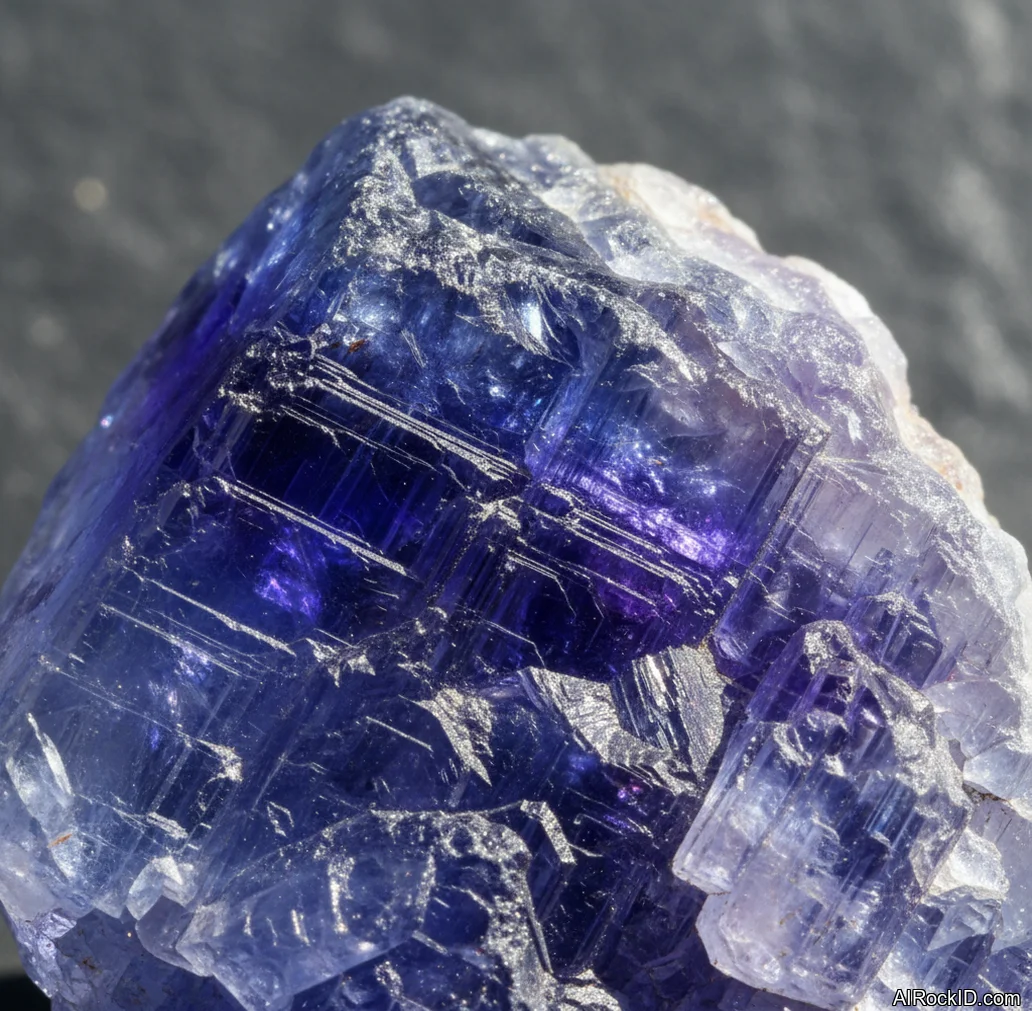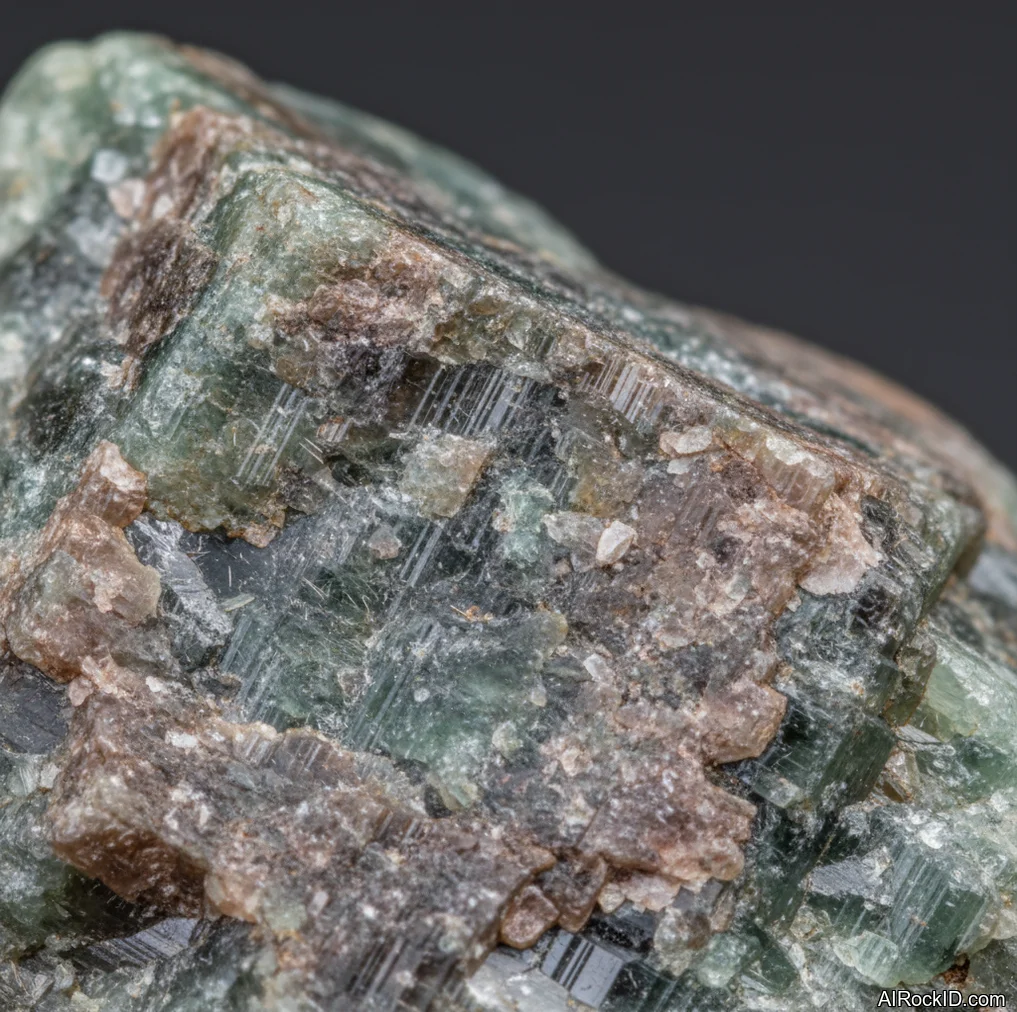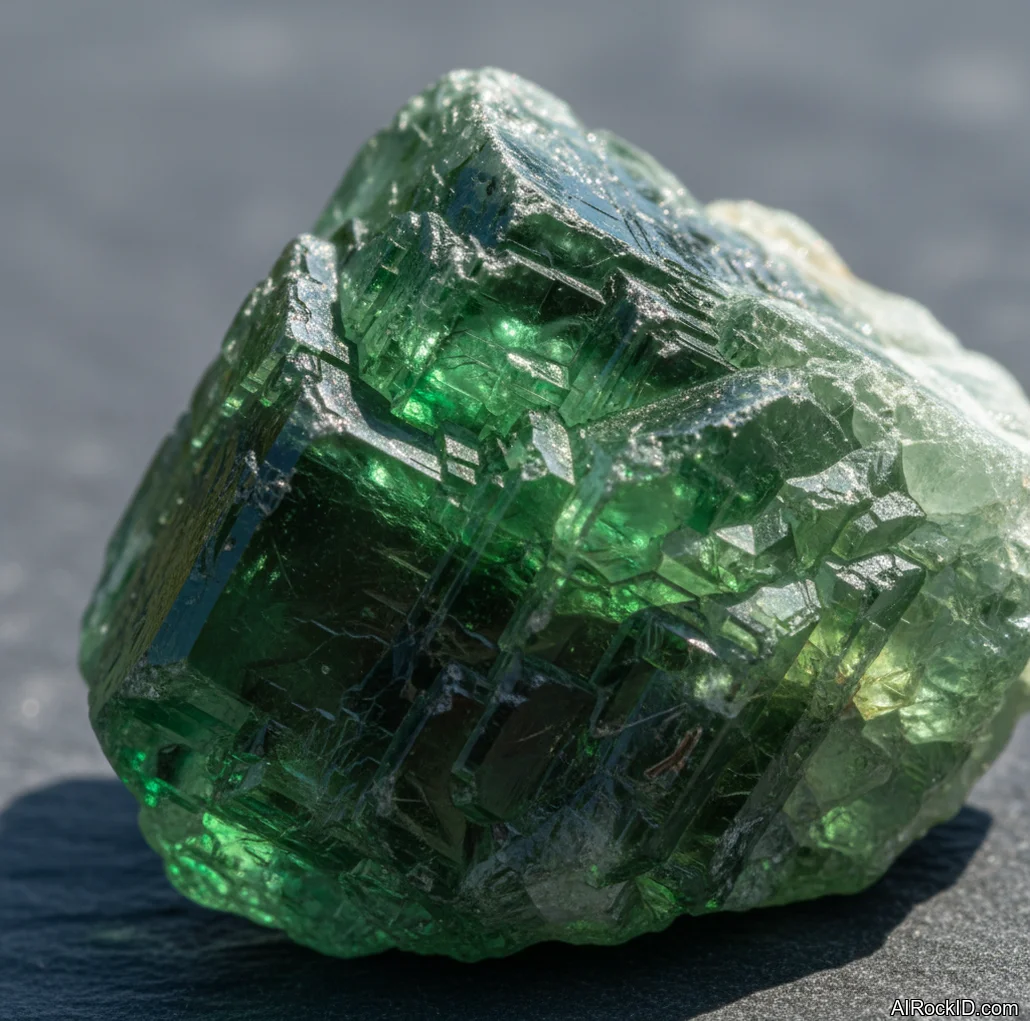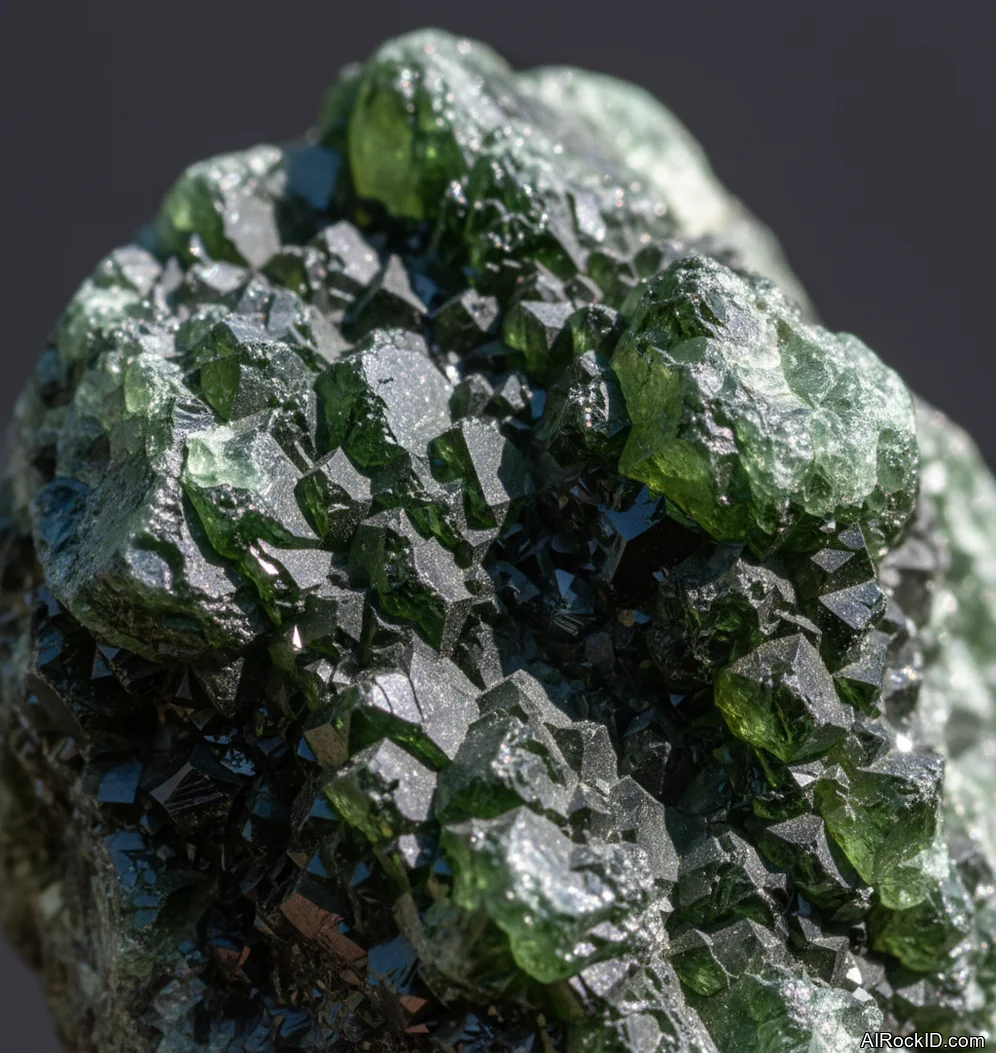
Green Tanzurine


Quick answer: Green Tanzurine is generally described as a green variety of zoisite, the same mineral group that includes blue-violet tanzanite. Identification should focus on zoisite’s hardness, cleavage, pleochroism, and refractive index rather than color alone.
AI Rock ID can help screen a Green Tanzurine specimen by comparing color, luster, crystal habit, and visible inclusions with similar green minerals. RockIdentifier.io should be used as a first-pass identification tool, with lab testing recommended for valuable or unusually represented stones.
Good fit
- Collectors who want a green zoisite variety rather than dyed quartz or glass
- Buyers comparing green transparent stones with overlapping colors
- Jewelry shoppers who prefer moderate hardness stones for pendants or earrings
- Anyone documenting a specimen before requesting gemological testing
Not a good fit
- Daily-wear rings exposed to repeated knocks or abrasion
- Buyers who need a stone that can be verified by color alone
- Situations where a seller cannot provide treatment or origin disclosure
Most commonly confused with
- Tanzanite: Tanzanite is blue to violet zoisite; Green Tanzurine is green and may be confused by trade-name similarity.
- Chrome Diopside: Chrome diopside is usually a vivid green pyroxene with different optical properties and typically lower durability for rings.
- Epidote: Epidote can be yellow-green to pistachio green and may show a different crystal habit and higher refractive index.
- Green Tourmaline: Green tourmaline is typically harder and has a different crystal system and stronger durability profile.
Green Tanzurine Lookalike Comparison
| Stone | Typical clue | Key difference |
|---|---|---|
| Green Tanzurine | Green zoisite; vitreous luster; moderate hardness | Zoisite identity requires optical or lab confirmation |
| Chrome Diopside | Rich green color; often small faceted gems | Different mineral species with distinct refractive index |
| Epidote | Yellow-green to pistachio tones | Usually higher refractive index and different crystal habit |
| Green Tourmaline | Elongated crystals; strong green range | Harder and more durable than zoisite |
| Dyed Quartz or Glass | Even color or bubbles may be visible | Not zoisite; may show dye concentrations or gas bubbles |
AI identification confidence
AI identification confidence for Green Tanzurine is usually moderate because several green gems share similar color and luster in photos. Confidence improves with clear images of crystal form, fracture or cleavage surfaces, transparency, scale, and any accompanying matrix.
When AI gets it wrong
- Photos are taken under strong green-tinted lighting or heavy saturation filters
- The specimen is polished, faceted, or tumbled with no visible crystal habit
- Color-treated quartz, glass, or resin is photographed without magnification
- The sample is a mixed rock containing zoisite with other green minerals
Final recommendation
For buying Green Tanzurine, prioritize sellers who disclose that it is green zoisite and provide treatment information in writing. For higher-value pieces, request gemological confirmation rather than relying on trade names or color descriptions.
How to Check Green Tanzurine Authenticity
A basic authenticity check should look for consistency with zoisite rather than only a green appearance. Useful tests include refractive index, specific gravity, microscopic inspection, and observation of cleavage or pleochroism where applicable. Avoid destructive scratch tests on finished jewelry, because zoisite can be damaged and results may still be inconclusive.
Green Tanzurine Treatments and Disclosure
Green zoisite may be sold under trade names, and treatment disclosure can vary by seller. Ask whether the stone is natural-color, heated, coated, dyed, stabilized, or composite. Unusually vivid color, very low pricing, or identical color across many pieces can justify closer inspection.
Buying Green Tanzurine Online
Online listings should include natural daylight photos, close-up images, dimensions, weight, and a clear mineral identification. Be cautious with listings that use only the word “tanzurine” without stating zoisite, because trade names can be used inconsistently. A return policy and third-party report are useful for faceted or expensive material.
What Is Green Tanzurine?
Green Tanzurine is just green zoisite, chemically Ca2Al3(SiO4)(Si2O7)O(OH).
Pick up a chunk and you’ll feel it right away. It doesn’t have that slick, glassy vibe green quartz can have. It’s cool against your palm, and it’s usually a bit heavier than people guess. The green isn’t some perfectly even “painted” look, either. It tends to sit down in the stone as streaks, foggy swirls, or cloudy patches. And some pieces have those tiny cleavage flashes that pop for a split second when you roll it under bright shop lights, like little winks. Others look more waxy and muted. Still. It doesn’t come off fake.
Thing is, “Tanzurine” gets tossed around as a sales tag, and that’s where folks get tripped up. You’ll see it used for green zoisite, sometimes green tanzanite, and sometimes… who knows. From what I’ve seen at shows, most “Green Tanzurine” sitting in bowls of tumbled stones is green zoisite. It’s a real mineral. But trade names are messy, so I treat it like zoisite and go by how it behaves in the hand, not what the sign says. Sounds fair, right?
Origin & History
Zoisite got its first proper description back in 1805, thanks to Abraham Gottlob Werner. He named it for Baron Sigmund Zois, a mineral collector who’d been sending in specimens from the Saualpe area in what’s now Austria. That name has that heavy, old mineral-dealer feel to it, the kind you still hear when someone’s hunched over a glass case with a loupe in their fingers and a stack of little paper tags off to the side.
“Green Tanzurine,” on the other hand, is a trade name that showed up much later. It leans hard on the fame of Tanzanite, which is the blue-to-violet gem variety of zoisite from Tanzania that landed in the jewelry market in the late 1960s. Dealers love a word that rings a bell, and “Tanzurine” does. But it isn’t an officially recognized mineral species name, so what you’re actually buying is green zoisite, just wrapped up in marketing.
Where Is Green Tanzurine Found?
Green zoisite shows up in metamorphic terrains, with Tanzania being the name people recognize, and classic European material tied to the original zoisite locality in Austria.
Formation
Most green zoisite shows up during regional metamorphism, when calcium-rich rocks get heated up and squeezed hard, and the chemistry lands in that sweet spot where zoisite can actually grow. It’s often linked with amphibolite-grade conditions, and you’ll see it hanging out with garnet, amphibole, and other metamorphic buddies.
Look, if you stare at rough pieces long enough, you can sometimes “read” what happened. The green might run right along grain boundaries, or it’ll show up as bands that follow the original foliation. And if you’ve ever cracked open a mixed lot of rough (dust everywhere, that sharp little snap when it goes), you’ll notice some chunks break clean along cleavage while others just chip and splinter where the rock is more intergrown. That pressure-built feel? You can feel it in your hand.
How to Identify Green Tanzurine
Color: Green Tanzurine typically ranges from pale pistachio to deep forest green, often with zoning, speckling, or darker streaks rather than a flat, even color.
Luster: Vitreous on fresh faces, sometimes shifting to slightly waxy on tumbled surfaces.
If you scratch it with a steel nail, it usually won’t take a mark, but it also won’t feel as glass-hard as quartz. The real test is tilt it under a single bright light and watch for little planar flashes from cleavage, especially on broken chips. Cheap versions sold as “Tanzurine” are sometimes dyed quartzite or glass, and those often feel warmer to the touch and look too uniform, like the green was painted in.
Common Look-Alikes
Green Tanzurine is sometimes confused with these materials:
- Green quartz (prasiolite) and green aventurine quartz
- Serpentine sold as “new jade”
- Jade (nephrite or jadeite), especially lower-grade green cab material
- Chrysoprase and other green chalcedony
- Dyed quartzite or dyed chalcedony sold as “green zoisite/tanzurine”
- Green glass (including “obsidian” style glass fakes)
Market Cautions & Treatments
When AI Can Get This Wrong
At first glance in photos, AI mixes green zoisite up with serpentine and low-grade jade because all three photograph as smooth olive-green with soft highlights. Polished pieces are the worst for this since the camera can’t catch zoisite’s quick cleavage glitter and patchy zoning. The real test is in-hand: check hardness (zoisite should scratch glass), look for bubble-free texture and that brief, mirror-like cleavage flash when you tilt it under a single point light.
Properties of Green Tanzurine
Physical Properties
| Crystal System | Orthorhombic |
| Hardness (Mohs) | 6.0-7.0 (Hard (6-7.5)) |
| Density | 3.10-3.38 g/cm3 |
| Luster | Vitreous |
| Diaphaneity | Transparent to translucent |
| Fracture | Uneven |
| Streak | White |
| Magnetism | Non-magnetic |
| Colors | Pale green, Pistachio green, Olive green, Forest green, Yellow-green |
Chemical Properties
| Classification | Silicates |
| Formula | Ca2Al3(SiO4)(Si2O7)O(OH) |
| Elements | Ca, Al, Si, O, H |
| Common Impurities | Cr, V, Fe, Ti, Mn |
Optical Properties
| Refractive Index | 1.691-1.706 |
| Birefringence | 0.015 |
| Pleochroism | Moderate |
| Optical Character | Biaxial |
Green Tanzurine Health & Safety
Handling it and rinsing it off are generally safe. But like any silicate, you don’t want to breathe the dust if you’re cutting or grinding it (that fine, gritty powder that hangs in the air).
Safety Tips
If you’re going to do any lapidary work, do it wet, keep the area well-ventilated, and wear a proper respirator that’s actually rated for fine particulates.
Green Tanzurine Value & Price
Price Range
Rough/Tumbled: $5 - $40 per tumbled stone (2-4 cm) or $20 - $150 per palm stone
Cut/Polished: $20 - $250 per carat
Prices can swing a lot depending on transparency and how clean the color looks. And most dealers will hit you with a much higher number when the green is bright and the rough is clean enough to facet without that sleepy, washed-out look once it’s under the light.
Durability
Moderate — Scratch resistance: Good, Toughness: Fair
It’s stable in normal conditions, but cleavage means it can chip if it takes a sharp knock on an edge.
How to Care for Green Tanzurine
Use & Storage
Store it in a soft pouch or a divided box so it doesn’t bang into quartz or corundum. I’ve seen nice polish get a haze just from riding around in a mixed pocketful of stones.
Cleaning
1) Rinse with lukewarm water and a drop of mild soap. 2) Use a soft toothbrush to get into any pits or seams. 3) Rinse again and pat dry, then let it air-dry before putting it away.
Cleanse & Charge
If you do energetic cleansing, smoke, sound, or a quick rinse works fine. I wouldn’t leave it baking in direct sun all day just to be safe with color and polish.
Placement
It looks best under a single lamp where you can tilt it and catch the internal zoning. Keep it off a sunny windowsill if you’re picky about long-term appearance.
Caution
Skip ultrasonic cleaners and harsh acids, and seriously, don’t let it hit tile. One unlucky drop and that cleavage will take a nice, clean edge and pop a chip off in no time.
Works Well With
Green Tanzurine Meaning & Healing Properties
In the metaphysical corner of things, green zoisite gets lumped in with the “heart stones,” but it never hits me as sweet or gushy. It’s just… steady green. When I’m sorting inventory late at night, I’ll leave a palm stone on the desk, right by the scale and the little pile of linty bubble wrap, because it feels grounding and it keeps my fingers occupied. That’s not medicine. It’s just a habit.
Next to softer, more floaty greens like prehnite, Green Tanzurine feels firmer in your hand. Even the polish comes up in a more no-nonsense way, like it’s built for use, not daydreams. And that’s exactly why some people go for it. But the name trips folks up, because they picture something neon-bright like chrome diopside. Most pieces aren’t that. They’re mottled and earthy, and sometimes they’ve got that slightly cloudy look you only notice when you tilt it under a lamp.
So if you’re using it for meditation or intention work, I’d treat it like a “slow and consistent” stone. Stick it in your pocket for a week and pay attention to what shifts in your routines and your mood, if anything does. But if you’re dealing with anxiety, depression, or anything medical, that’s a real-world talk with a professional, not something you dump on a rock. Right?
Common mistakes
- Assuming Green Tanzurine is green tanzanite without confirming the seller’s mineral description
- Identifying the stone by green color alone instead of checking optical properties
- Buying vivid green material without asking about dye, coating, or other treatments
- Using a steel knife or household object for scratch testing finished jewelry
- Confusing massive green rocks with gem-quality zoisite based only on polish
Identify Green Tanzurine from a photo
Compare Green Tanzurine traits, care tips, value clues, and common lookalikes with a clear photo.