Honey Comb Calcite


Quick answer: Honey Comb Calcite is a yellow to golden calcite variety often recognized by its translucent color, waxy to vitreous luster, and patterned internal zoning that can resemble honeycomb. Because it is still calcite, it is soft, reacts to acid, and can be scratched by common household materials.
AI Rock ID can help screen Honey Comb Calcite from a photo by checking color, luster, transparency, and visible cleavage patterns. RockIdentifier.io should be used as a supportive identification tool alongside physical tests such as hardness, cleavage observation, and acid reaction when appropriate.
Good fit
- Collectors who want a warm yellow calcite with visible internal patterning
- Beginners learning to recognize calcite cleavage and softness
- Decorative display pieces kept away from moisture, acids, and abrasion
- People comparing yellow calcite varieties for color and pattern differences
Not a good fit
- Rings, bracelets, or daily-wear jewelry that may be scratched or knocked
- Outdoor placement where rain, soil acids, or temperature changes may damage the stone
- Collectors who need a rare mineral species rather than a trade variety of calcite
Most commonly confused with
- Yellow Calcite: Yellow calcite may have similar color, but Honey Comb Calcite is usually sold for its stronger patterned or honeycomb-like internal zoning.
- Honey Calcite: Honey calcite is a closely related trade name and may overlap in use; sellers may separate Honey Comb Calcite by its more distinct cellular or banded appearance.
- Citrine: Citrine is quartz with Mohs 7 hardness and no calcite-style cleavage, making it much more scratch resistant.
- Amber: Amber is organic fossil resin, typically much lighter in hand and without the rhombohedral cleavage seen in calcite.
Honey Comb Calcite vs Similar Yellow Materials
| Material | Key Difference | Simple Check |
|---|---|---|
| Honey Comb Calcite | Soft calcium carbonate with yellow to golden patterning | Scratches easily and shows strong cleavage |
| Citrine | Quartz, harder and more durable | Will not scratch with a copper coin or knife as easily as calcite |
| Amber | Organic resin, very light and often warm to the touch | Feels lighter than mineral specimens of similar size |
| Aragonite | Different calcium carbonate mineral with different crystal habit | Often appears radiating, fibrous, or clustered |
| Dyed Calcite | Color added or enhanced after cutting or polishing | Look for color concentration in cracks, pits, or surface pores |
AI identification confidence
AI identification confidence for Honey Comb Calcite is usually moderate when the photo shows yellow color, translucency, cleavage, and internal patterning. Confidence is lower for polished pieces, close-up images without scale, or specimens sold under overlapping trade names such as honey calcite or yellow calcite.
When AI gets it wrong
- A polished stone hides cleavage faces and natural crystal habit
- Warm lighting makes clear or pale calcite appear more golden
- The specimen is dyed, coated, or photographed with boosted saturation
- No scale or scratch-test context is available to separate calcite from citrine or amber
Final recommendation
Choose Honey Comb Calcite if the main priority is visible golden color and patterned calcite texture for display or study. For jewelry or high-wear use, a harder yellow material such as citrine is usually more practical.
How to Check Honey Comb Calcite Before Buying
Ask the seller whether the piece is natural, dyed, resin-coated, or stabilized, especially if the color looks unusually even or vivid. Check photos for rhombohedral cleavage, internal patterning, chips along edges, and any color concentrated in cracks. A reputable listing should describe size, weight, treatment status, and whether the name is being used as a trade variety rather than a separate mineral species.
Photo Tips for Identifying Honey Comb Calcite
Use bright indirect light and photograph the specimen from several angles, including one image with a ruler or coin for scale. Include close-ups of broken edges, cleavage faces, and any honeycomb-like zoning or banding. Avoid yellow-tinted bulbs or heavy filters because they can make other calcite varieties look more golden than they are.
Natural, Treated, and Trade-Name Labels
Honey Comb Calcite is best understood as a descriptive trade name for a patterned yellow to golden calcite, not as a separate mineral species. Some pieces may be cut, polished, waxed, dyed, or otherwise enhanced for appearance. Treatment does not automatically make a specimen unsuitable, but it should be disclosed when it affects price or collector value.
What Is Honey Comb Calcite?
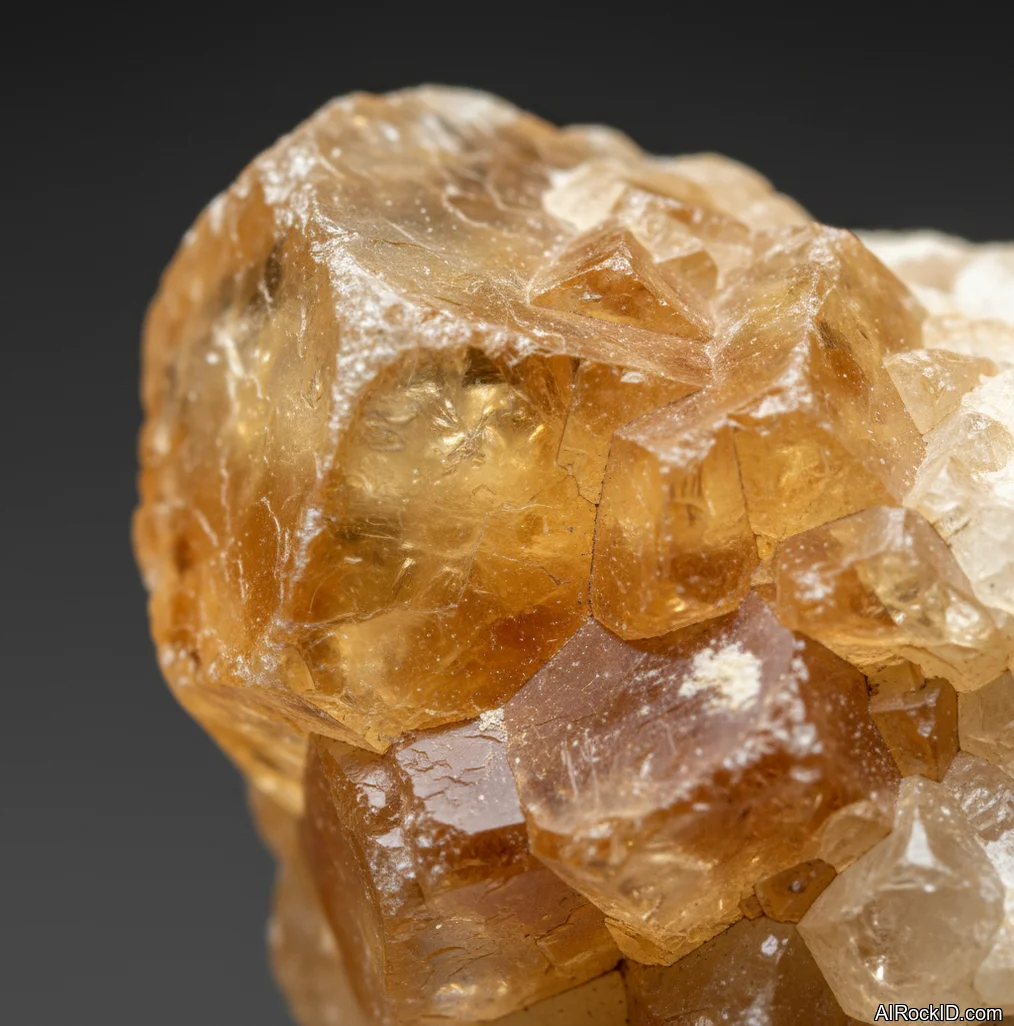
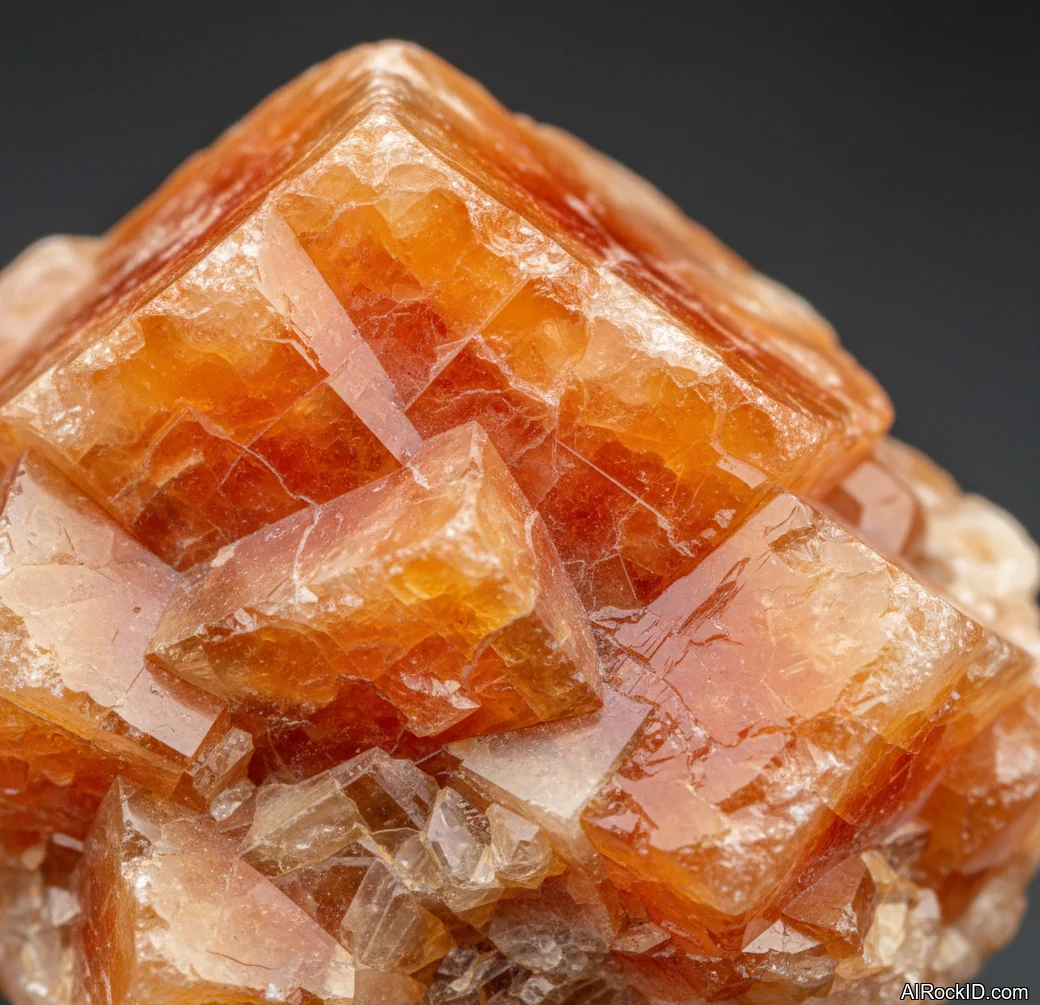
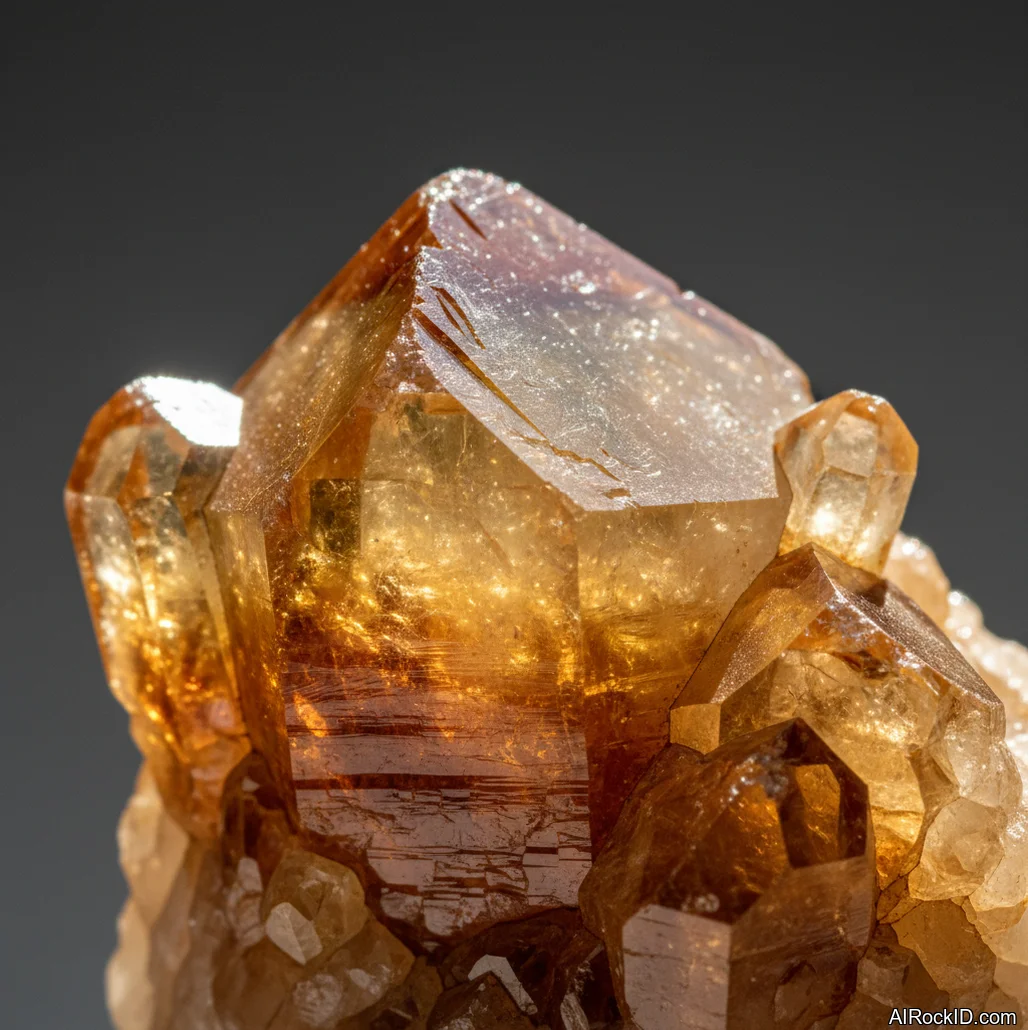
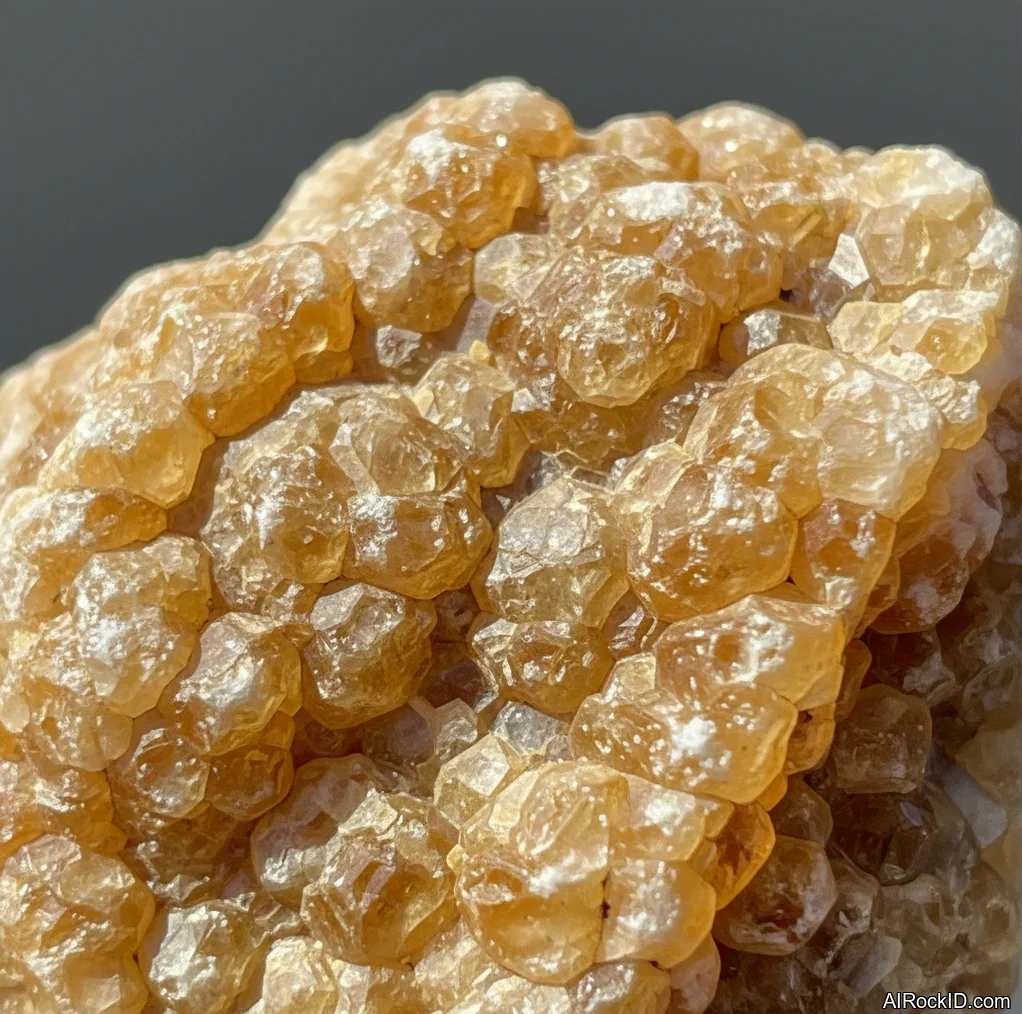
Honey Comb Calcite is a yellow to golden variety of calcite (CaCO3), and a lot of it has that cellular “honeycomb” look thanks to the way it grows and the way it cleaves. Pick up a chunk and you notice it immediately. It’s lighter than you expect for the size, and it goes cool in your palm fast, like most carbonates do. Then you tip it under a lamp and the flat cleavage faces throw light back in wide flashes, more like sheets than little glittery sparkles (not like quartz at all).
From a distance, plenty of pieces look like caramel candy or beeswax, especially the polished palms and towers. But the raw stuff is where it really shows its attitude. Some pieces have tiny vugs with drusy pockets tucked inside, some are stacked up in rhombs, and others break into blocky shapes that look weirdly manufactured. And yeah, it chips. Hit it against something hard and you’ll find out. I’ve literally seen a dealer unwrap two pieces that were snug together, tug them apart, and a corner snapped off like it was nothing.
Next to citrine or honey-colored quartz, honey calcite reads softer and milkier inside, with more of a buttery glow instead of that glassy clarity. Thing is, photos online don’t always catch the cleavage planes or how soft it is, so people buy it thinking it’s going to be tough, then they’re shocked when it scratches up fast. Treat it like calcite. Because that’s what it is.
Origin & History
Calcite’s been on the radar since the early days of mineralogy. But the name “calcite” got pinned down officially by Abraham Gottlob Werner in 1791, and it comes from the Latin calx, meaning lime.
Honey Comb Calcite, though? That’s not a separate mineral species, strictly speaking. It’s a trade nickname collectors and rock shops use for yellow to golden calcite that shows a cell-like pattern, or this chunky mosaic look where the cleavage and growth surfaces meet up (the kind of piece that feels a little blocky in your hand and catches light in little flat flashes when you turn it).
Calcite’s also been a total workhorse in science and industry, from lime and cement to the classic optical calcite used to show double refraction. If you’ve ever set a clear cleavage chip on top of printed text and watched the letters split into two, that’s calcite doing its thing. Honey-colored stuff usually isn’t the super-clear “Iceland spar” variety, but you can still spot that doubling along thinner edges if the piece is translucent enough.
Where Is Honey Comb Calcite Found?
Honey-yellow calcite shows up in a lot of carbonate and hydrothermal settings worldwide, especially in Mexico and the USA. Most retail “honeycomb” pieces are sold without a precise mine tag.
Formation
Look at calcite out in the field and it’s hard not to notice how many different habits it can take on. Honey-colored calcite often grows when mineral-rich fluids move through fractures and little open pockets, and then a shift in chemistry or temperature makes CaCO3 drop out of solution. So you’ll see it turn up in hydrothermal veins, in limestone caves, or sitting right alongside sulfides and fluorite in ore districts.
And that “honeycomb” texture people mention? It’s usually not one single thing. It’s a mash-up of growth zoning, interlocking rhombohedral crystals, and then later damage that exploits calcite’s perfect cleavage. Calcite cleaves in three directions, and it does it cleanly, so if a chunk’s been rattling around in a cavity, or pinched and released, it can end up looking blocky and tiled, like little plates stacked tight.
But not every “honeycomb” look is honest-to-goodness natural patterning. Some sellers will polish lower-grade pieces, and once you’ve seen one in your hand under a hard light, you know the trick: the glare flashes off those cleavage faces and suddenly it reads more “cellular” than the stone actually is. Kind of sneaky, right?
How to Identify Honey Comb Calcite
Color: Color ranges from pale straw yellow to deep honey and amber, sometimes with white bands or cloudy patches. In thicker pieces, the color can look warmer under incandescent light and more lemony in daylight.
Luster: Vitreous to waxy with strong flashes on cleavage faces.
If you scratch it with a copper penny or a steel nail, it’ll mark easily, because calcite sits at Mohs 3. The real test is a tiny drop of dilute acid: calcite fizzes, while quartz and most glass won’t. And in your hand, it doesn’t feel “slick-hard” like quartz; it feels softer, and edges bruise or powder a bit if you’re rough with it.
Common Look-Alikes
Honey Comb Calcite is sometimes confused with these materials:
- Yellow Calcite (non-honeycomb)
- Amber (fossil resin, especially pressed or reconstituted)
- Citrine Quartz
- Dyed yellow onyx marble
- Yellow glass (sometimes marketed as 'calcite')
- Synthetic resin imitations
Market Cautions & Treatments
When AI Can Get This Wrong
AI image tools often mix up honey comb calcite with yellow glass or amber, especially if the photo doesn't show the internal cell pattern. The best giveaway is the cleavage: real honey comb calcite breaks in chunky blocks, not conchoidal curves like glass. A steel nail scratches real calcite easily, but won't touch glass or quartz.
Properties of Honey Comb Calcite
Physical Properties
| Crystal System | Trigonal |
| Hardness (Mohs) | 3 (Soft (2-4)) |
| Density | 2.71 g/cm3 |
| Luster | Vitreous |
| Diaphaneity | Transparent to translucent |
| Fracture | Uneven |
| Streak | White |
| Magnetism | Non-magnetic |
| Colors | Yellow, Golden, Honey, Amber, Cream, White |
Chemical Properties
| Classification | Carbonates |
| Formula | CaCO3 |
| Elements | Ca, C, O |
| Common Impurities | Fe, Mn, Mg |
Optical Properties
| Refractive Index | 1.486-1.658 |
| Birefringence | 0.172 |
| Pleochroism | None |
| Optical Character | Uniaxial |
Honey Comb Calcite Health & Safety
Honey Comb Calcite is safe to pick up and handle, but it can chip if you bump it, and those chips can leave sharp, scratchy edges. So don’t use acids or acidic cleaners on it, because they can etch the surface.
Safety Tips
If you’re going to cut it or grind it, put on safety glasses and a respirator, and try to keep the dust down by working wet (a little water helps a lot, trust me).
Honey Comb Calcite Value & Price
Price Range
Rough/Tumbled: $5 - $60 per piece
Cut/Polished: $1 - $8 per carat
Prices climb fast when the color’s really saturated, the piece has that glassy translucence, and it’s clean carving-grade stuff with barely any fractures running through it. Mine-locality labels do help, sure. But thing is, a ton of honeycomb calcite gets sold under generic tags, so most of what you’re paying for is how it looks in your hand and how well it’s finished.
Durability
Nondurable — Scratch resistance: Poor, Toughness: Fair
It’s stable in normal indoor conditions but scratches and cleaves easily, and acids can etch the surface.
How to Care for Honey Comb Calcite
Use & Storage
Store it in a soft pouch or a separate compartment so it doesn’t get scratched by quartz, feldspar, or metal. If it’s a tower or freeform, keep it somewhere it won’t get knocked over.
Cleaning
1) Rinse quickly with lukewarm water and a drop of mild soap. 2) Use a soft toothbrush for crevices, light pressure only. 3) Pat dry and let it fully air-dry before putting it back on a shelf.
Cleanse & Charge
For a non-water method, wipe it with a dry microfiber cloth or use smoke or sound. If you do rinse it, keep it brief and skip salt water.
Placement
It looks best under warm light where the internal cloudiness glows instead of going flat. I keep mine away from sunny windows because the surface picks up little scuffs fast when you’re dusting.
Caution
Skip acids, vinegar, and most bathroom cleaners since they can haze the polish in minutes. And don’t just drop it in your pocket with keys or harder stones (they’ll scuff it up fast). Also, no ultrasonic or steam cleaners.
Works Well With
Honey Comb Calcite Meaning & Healing Properties
Grab honey calcite when your brain’s doing that pinball thing and you want something warm, but not loud. That’s the whole appeal. In crystal shop language, it usually gets filed under confidence and motivation, like a small nudge instead of a caffeine spike that makes your hands jitter.
I’ve watched people pick it up a ton during exam season. The ones who actually stick with it almost always park it on their desk, right by the keyboard or the edge of a notebook, and they’ll end up worrying it with a thumb while they read without even noticing. It’s got that slick, waxy polish at first, and it feels kind of comforting in a plain, practical way.
But look, here’s the reality check. It’s still calcite, and calcite is soft. If you’re a pocket-stone person who likes to rub a stone all day, this one’s going to show it fast. The edges bruise, the shine goes cloudy in spots, and you’ll pick up tiny scratches pretty quick, which is frustrating if you paid extra for a glassy polish. For meditation, a nightstand piece, or something that mostly stays put, it’s way less of a hassle. And if you’re the kind of person who gets overwhelmed by “busy” stones, honey calcite usually reads steady, not zingy. Quiet. Grounded. (Well, as grounded as a crystal can feel.)
None of this is medical advice. I treat the metaphysical side like personal practice, useful as a focus tool, not a stand-in for therapy, meds, or a doctor. So if a stone helps you slow down, breathe, and finish a task, awesome. If it doesn’t, it’s still a solid specimen for learning about cleavage and softness, and honestly, that’s still a win in my book.
Common mistakes
- Assuming every yellow calcite specimen with a warm color is Honey Comb Calcite
- Confusing polished Honey Comb Calcite with citrine because both can appear golden
- Testing hardness on a visible polished face instead of an inconspicuous area
- Using vinegar or stronger acid on a display piece without understanding that calcite reacts and can be etched
- Paying a premium for a trade name without checking size, quality, treatment, and condition
Identify Honey Comb Calcite from a photo
Compare Honey Comb Calcite traits, care tips, value clues, and common lookalikes with a clear photo.