Irnimite


Quick answer: Irnimite is a trade or informal name rather than an IMA-recognized mineral species. Identification should rely on the actual material present, because verified hardness, density, refractive index, and locality data for “irnimite” are not standardized.
AI Rock ID can help compare a photo labeled irnimite with more established mineral groups and common lookalikes. RockIdentifier.io treats names like irnimite cautiously because non-recognized trade names may refer to mixed, dyed, or misidentified material.
Good fit
- Collectors researching unusual trade names before buying
- People who want to compare a seller’s label against recognized mineral names
- Beginners learning the difference between mineral species and commercial names
- Buyers who can request locality, treatment, and composition details
Not a good fit
- Collectors who require IMA-recognized species names only
- Buyers seeking verified gemological constants for insurance or appraisal
- Anyone relying on a trade name as proof of authenticity
Most commonly confused with
- Jasper: Opaque, patterned quartz varieties are often sold under creative names and may be mislabeled as rare minerals.
- Agate: Banded chalcedony can be given trade names, but agate has recognizable banding and established quartz-family properties.
- Serpentine: Green to mottled stones may resemble some trade-name material, but serpentine is a recognized mineral group with different feel and hardness.
- Dyed Howlite: Porous white howlite can be dyed in many colors and sold under unfamiliar names.
Irnimite vs. Common Lookalikes
| Material | Recognition status | Basic ID clue | Buyer caution |
|---|---|---|---|
| Irnimite | Not IMA-recognized | No standardized diagnostic properties | Ask what mineral it is claimed to be |
| Jasper | Recognized quartz variety | Opaque, usually patterned, Mohs about 6.5–7 | Trade names may describe color, not species |
| Agate | Recognized chalcedony variety | Banded or translucent quartz-family material | Dyeing is common in bright colors |
| Serpentine | Recognized mineral group | Often waxy, softer than quartz | May be confused with many green stones |
| Glass | Manufactured material | Possible bubbles or overly uniform color | Natural-origin claims need support |
AI identification confidence
AI identification confidence for irnimite should be treated as low unless the image clearly matches a recognized mineral or rock type. A photo can suggest likely lookalikes, but it cannot verify a non-standard trade name without supporting tests or documentation.
When AI gets it wrong
- The stone is polished, dyed, coated, or photographed under strong color lighting
- The seller uses a local, metaphysical, or invented trade name instead of a mineral name
- The sample is a rock made of several minerals rather than a single mineral species
- Only one photo is provided and no hardness, streak, density, or locality information is available
Final recommendation
Treat irnimite as an unverified label unless the seller can identify the recognized mineral species or rock type behind the name. For buying decisions, prioritize documentation, clear photos, and basic physical testing over rarity claims.
How to Verify an Irnimite Listing
Ask the seller for the recognized mineral name, locality, treatment history, and any test results associated with the specimen. Useful supporting details include hardness range, streak, specific gravity, and whether the piece is natural, dyed, stabilized, or composite. If the seller cannot explain what irnimite refers to, treat the name as a descriptive trade label rather than an identification.
Photo Clues to Check Before Identification
Use sharp photos in natural light that show the front, back, edges, broken surfaces, and any pits or bands. Look for signs of dye concentration in cracks, air bubbles, resin-filled areas, or unnatural color uniformity. A scale reference and an unpolished area make visual identification more reliable.
Name Status and Labeling
A mineral species name is different from a commercial, local, or metaphysical name. Because irnimite is not IMA-recognized, the label alone does not establish mineral identity, rarity, or value. The most accurate label may be a broader rock or mineral-group name until testing confirms the composition.
What Is Irnimite?
Irnimite isn’t an IMA-recognized mineral species. So there’s no official, published set of physical constants for it, like hardness, density, or refractive index.
Thing is, names like this usually pop up in online marketplace listings, “mystery parcel” lots, or as a trade label slapped on a lookalike that already has a proper mineral name. I’ve literally had someone at a show press a tiny zip baggie into my hand (you know the kind, slightly cloudy plastic with the crooked red seal) and ask, “Is this Irnimite?” And it’s always the same beat. You go hunting for a label with a locality, a collector number, anything at all. Most of the time? Nothing. Just a nickname somebody started using because it sounded cool.
Pick up the specimen and you’ll learn more in ten seconds than a paragraph online will ever give you. Does it sit heavy for its size like a sulfide? Or does it feel light and chalky, like it’s been weathered to death? Does it stay cool in your palm like quartz, or warm up fast like resin? Without a real, documented reference sample, “Irnimite” is basically a question mark. And the only honest way to treat it is as an identification problem, not a mineral species.
Origin & History
Most dealers I’ve talked to haven’t actually seen “Irnimite” show up in any serious mineral catalog, and it doesn’t line up as a formally described species in the references collectors and curators usually check first. That’s the big red flag.
Thing is, trade names spread way faster than corrections ever do. Someone posts a pretty photo, a shop grabs the name, then ten more shops copy that shop. And after a while it starts to feel “real” just because you keep seeing it. But seeing a word repeated isn’t the same as having a published description, a type locality, plus a stored type specimen you can pull later and re-check.
Where Is Irnimite Found?
No verified localities can be listed for Irnimite because it is not a formally recognized mineral species with a documented type locality.
Formation
Compared to a real, nailed-down species like quartz or calcite, there isn’t a single agreed formation story here, because we don’t even have a confirmed identity to pin it to. So when someone says it “forms in pegmatites” or “forms in hydrothermal veins,” they’re guessing. That’s it.
If you’ve got a piece being sold as Irnimite and it comes with actual paperwork, that’s where the formation story begins. I mean the kind of label that lists a locality, the host rock, and what minerals it was sitting next to in the pocket or seam. Those details tell you if you’re dealing with a vein mineral, a pegmatite mineral, a metamorphic accessory, or just some stone that got tumbled smooth (you can usually feel that waxy, rounded edge) and given a new name.
How to Identify Irnimite
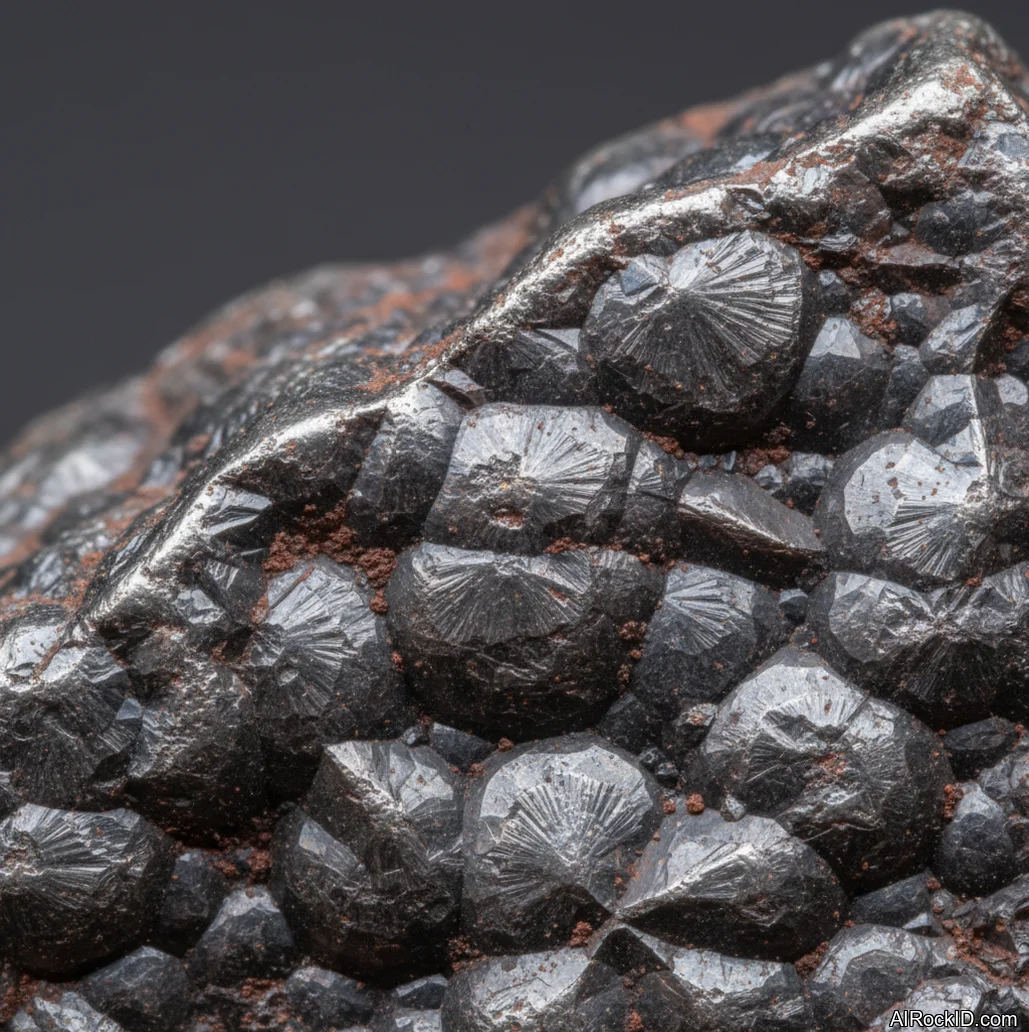
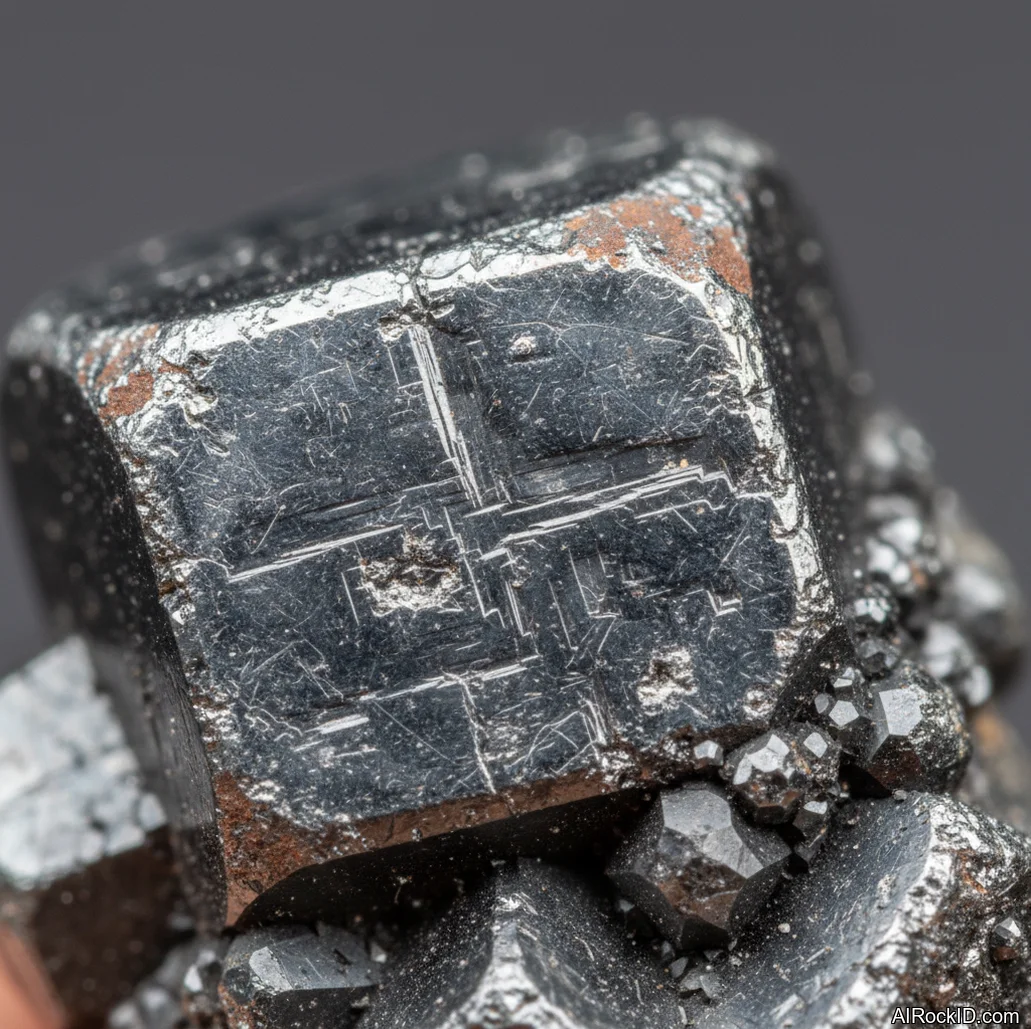
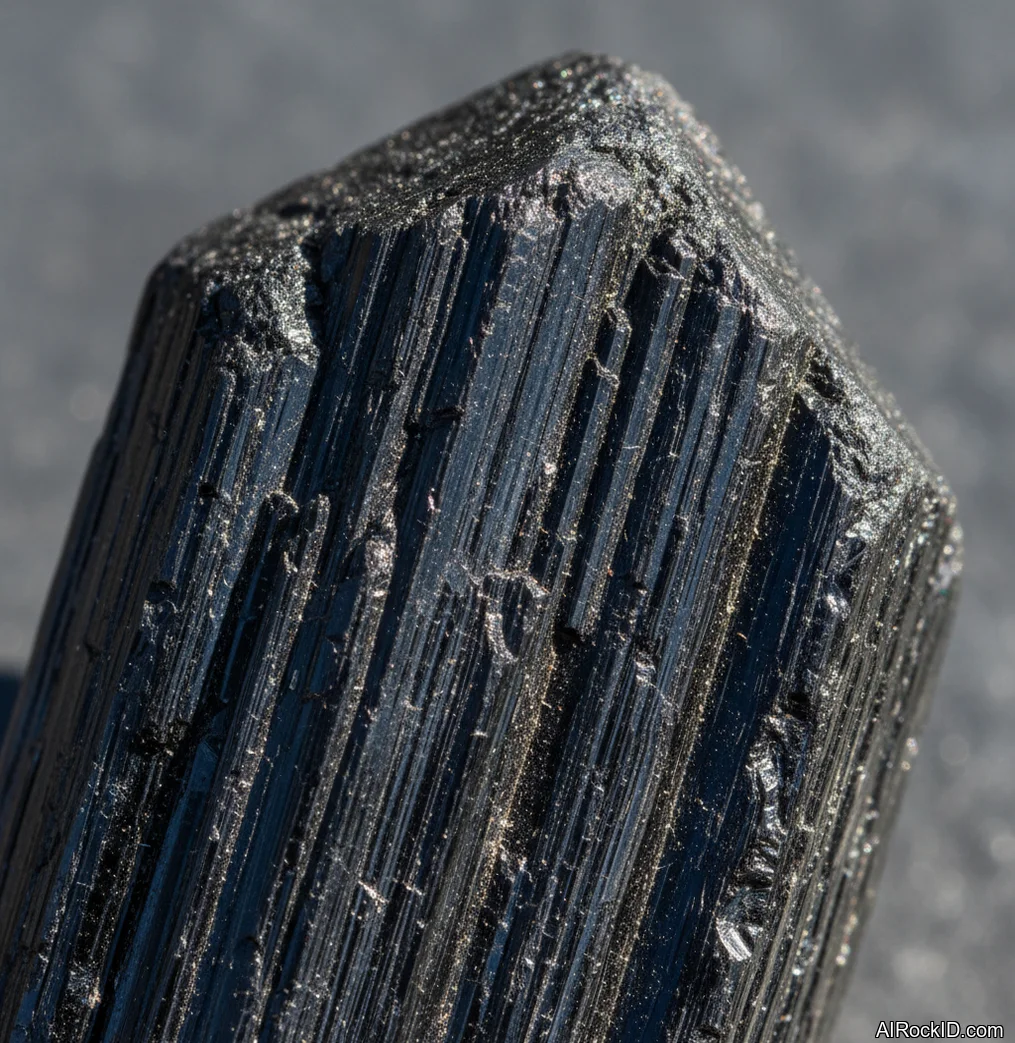
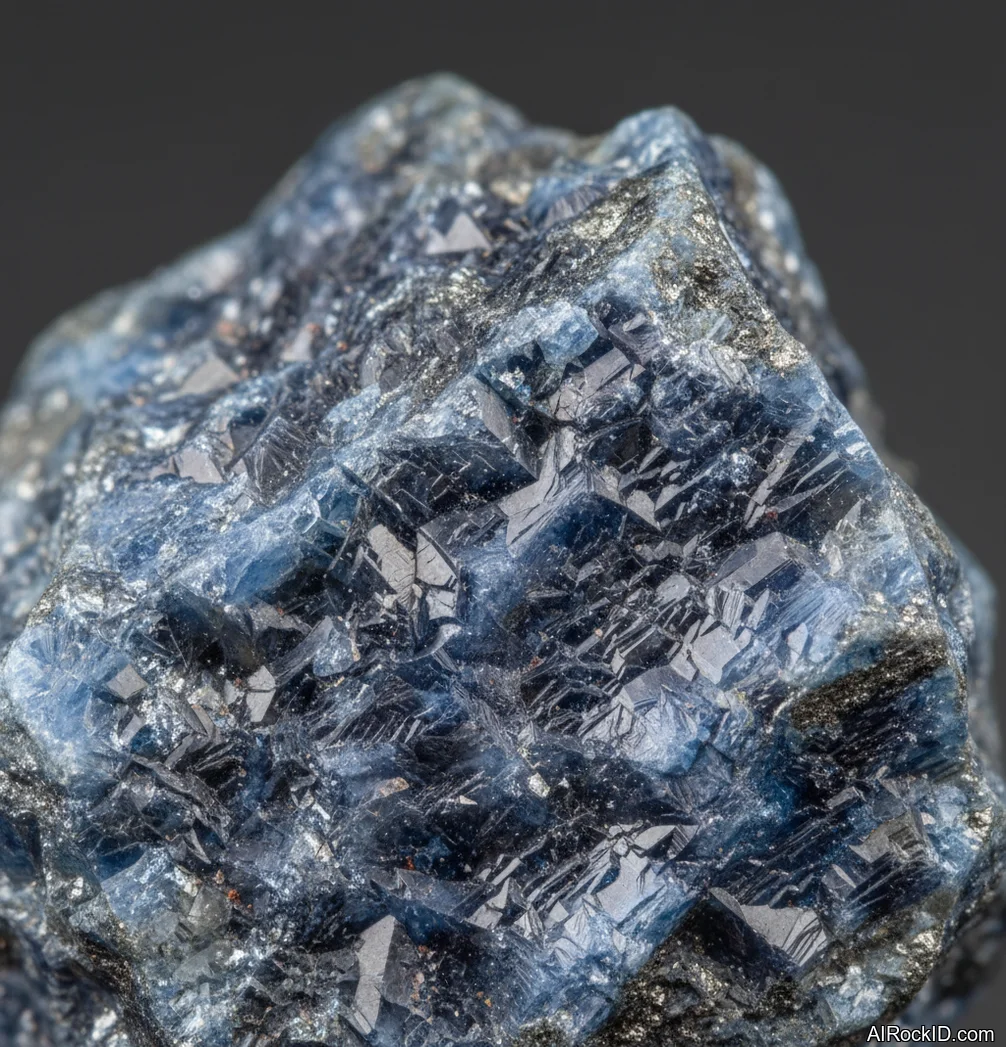
Color: Color can’t be standardized for Irnimite because the name isn’t tied to a single defined mineral. Pieces sold under the label are often described as gray, black, brown, or metallic-looking.
Luster: Luster varies by what the specimen actually is, so listings range from vitreous to metallic without consistency.
Look closely at the basics first: streak, magnetism, and whether it reacts to a drop of dilute acid are quick reality checks. If you scratch it with a steel nail and it cuts easily, that rules out a lot of the “hard rare mineral” claims you’ll see online. The real test is documentation: a label with a specific mine or district, and ideally a match to a known species confirmed by XRD or a reputable lab.
Common Look-Alikes
Irnimite is sometimes confused with these materials:
- Dyed howlite or dyed magnesite (sold as almost any “new” name when the color’s loud)
- Dyed quartz or dyed agate (color concentrates along fractures and around drilled holes)
- Glass “crystal” chunks (too uniform, roundy edges, bubbles or swirl lines if you catch the light right)
- Slag glass / smelter glass (ropy flow textures, weird green-blue tones, sometimes a metallic skin)
- Opalite glass (milky body with blue/orange edge glow, way too consistent piece to piece)
- Aura-coated quartz (thin metallic rainbow skin that sits on top and chips at sharp edges)
Market Cautions & Treatments
When AI Can Get This Wrong
AI photo ID tends to slap “Irnimite” onto anything brightly colored and polished, especially dyed howlite/magnesite and coated quartz because the surface look is what the camera sees. Glass and opalite are trouble in photos too since the glow reads like “mystery mineral,” but in hand the real test is hardness and texture: a steel pin will bite howlite easily, while quartz won’t, and a loupe will often show bubbles or flow lines in glass.
Properties of Irnimite
Physical Properties
| Crystal System | Amorphous |
| Hardness (Mohs) | None (None) |
| Density | None |
| Luster | None |
| Diaphaneity | None |
| Fracture | None |
| Streak | None |
| Magnetism | None |
| Colors |
Chemical Properties
| Classification | None |
| Formula | None |
| Elements | |
| Common Impurities |
Optical Properties
| Refractive Index | None |
| Birefringence | None |
| Pleochroism | None |
| Optical Character | None |
Irnimite Health & Safety
Treat it like an unknown mineral. Wash your hands afterward (especially before you eat), and don’t grind or sand it since that’s how you end up breathing the dust. And don’t soak it in water yet, at least not until you figure out what it is.
Safety Tips
If you’ve gotta test it or trim it back, do it wet and wear a proper respirator, the kind with a real gasket that seals on your face (not a flimsy paper mask). And keep the dust locked down: plastic sheeting taped at the seams, a mist bottle handy, and no dry sweeping. Not sure what it is? Bag it up, seal it tight, and label it “unknown.”
Irnimite Value & Price
Price Range
Rough/Tumbled: $5 - $50 per piece
Price mostly comes down to marketing and looks, since the name isn’t actually pinned to any recognized species. Thing is, provenance and a confirmed ID are the only things that separate a cheap little curiosity from something you’d actually bother keeping.
Durability
Moderate — Scratch resistance: Fair, Toughness: Fair
Stability depends on what the material actually is, so treat it like an unknown until it’s identified.
How to Care for Irnimite
Use & Storage
Store it like you would any unidentified specimen: in a labeled box or zip bag, away from humidity and away from soft minerals that scratch easily. And keep any old label with it, even if it’s messy.
Cleaning
1) Dry brush with a soft paintbrush to remove loose dirt. 2) Wipe with a barely damp microfiber cloth if needed. 3) Air dry fully and avoid soaking or chemicals until the ID is confirmed.
Cleanse & Charge
If you’re doing metaphysical use, stick to smoke cleansing or placing it on a dry selenite plate. Skip saltwater and long sun exposure until you know whether the material fades or reacts.
Placement
Keep it on a shelf where you can see it, but not in a windowsill. If it turns out to be a sulfide, damp air is not its friend.
Caution
Don’t ingest it. Don’t try to turn it into some kind of elixir. And don’t do anything that’ll kick up dust (no grinding, no scraping, none of that). Until you’ve identified it, handle the specimen like it’s touchy around water and like it could be hazardous. Better safe than sorry, right?
Works Well With
Irnimite Meaning & Healing Properties
Here’s the plain issue with metaphysical blurbs about “Irnimite.” If we don’t actually know what the stuff is, then any neat, confident list of “properties” is basically just a template somebody could slap on any random black rock and call it a day.
But people still connect with whatever they’re holding, name tag or no name tag. I’ve literally seen someone’s shoulders drop after a minute of sitting there with a cool, heavy stone in their palm, thumb rubbing the surface while they slowed their breathing. So if you’ve got a piece being sold as Irnimite and you’re using it for meditation, treat it like an unnamed grounding stone. Go slower. Notice the texture (is it slick like polished glass, or does it have that faint gritty drag?). Keep the claims small. And no medical promises.
So pick it up and watch what happens with you. If it makes you feel steadier because it’s dense, dark, and doesn’t sparkle under a lamp, that’s still a real experience. Thing is, it’s your experience, not a universal law. If you want anything firmer than that, get the material identified first, because hematite, tourmaline, magnetite, and plenty of other materials can all end up wearing the same “mystery rare” story.
Common mistakes
- Assuming an unfamiliar name means the stone is rare
- Buying based on color alone without asking about dye or treatment
- Treating a seller’s trade label as a verified mineral species
- Comparing prices without knowing the actual material being sold
- Using one polished photo as the only basis for identification
Identify Irnimite from a photo
Compare Irnimite traits, care tips, value clues, and common lookalikes with a clear photo.