Siderite


Quick answer: Siderite is best identified by its iron-rich brown, tan, gray, or yellowish color, rhombohedral cleavage, moderate softness, and relatively high density for a carbonate mineral. It can resemble other brown carbonates and iron minerals, so streak, cleavage, magnetism, and acid reaction are useful supporting checks.
AI Rock ID can help compare a suspected siderite specimen against visually similar minerals using color, crystal habit, luster, and surface texture. RockIdentifier.io provides reference information that can support field observations, but final identification is strongest when visual clues are paired with simple physical tests.
Good fit
- Collectors interested in iron-bearing carbonate minerals
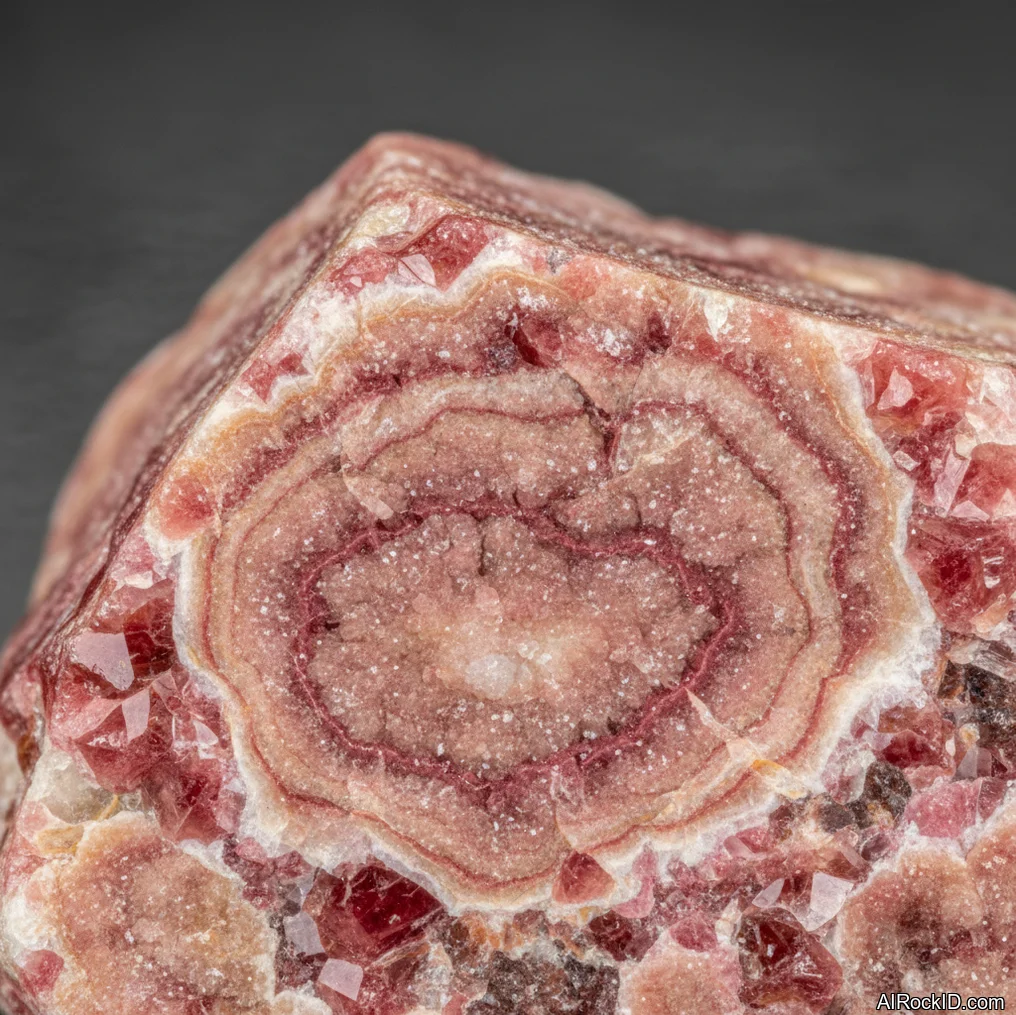
- Specimens with rhombohedral crystals, curved faces, or brown botryoidal surfaces
- Educational collections focused on ore minerals and carbonate minerals
- People comparing brown minerals that may be siderite, limonite, calcite, or dolomite
Not a good fit
- Jewelry that needs strong scratch resistance
- Wet displays, aquariums, or humid storage conditions
- Collectors who want a bright, highly transparent gemstone look
- Situations where an iron mineral may stain porous surfaces
Most commonly confused with
- Calcite: Calcite is usually lighter, less dense, and reacts more readily with dilute acid.
- Dolomite: Dolomite can be tan or brown but is typically less dense and often reacts weakly unless powdered.
- Ankerite: Ankerite is an iron-magnesium carbonate that overlaps in color but has a different composition and may be harder to separate visually.
- Limonite: Limonite is an iron oxide-hydroxide mixture with an earthy yellow-brown streak and no rhombohedral carbonate cleavage.
Siderite Lookalike Comparison
| Mineral | Key Visual Clue | Simple Check | Typical Difference |
|---|---|---|---|
| Siderite | Brown to tan rhombohedral or curved crystals | White to pale brown streak; relatively heavy | Iron carbonate, FeCO3 |
| Calcite | Clear, white, yellow, or brown rhombohedra | Effervesces strongly in dilute acid | Lower density and stronger acid reaction |
| Dolomite | Cream, pink, tan, or brown rhombohedra | Weak acid reaction unless powdered | Usually less iron-rich and less dense |
| Limonite | Earthy, rusty, botryoidal, or massive coating | Yellow-brown streak; no carbonate cleavage | Iron oxide-hydroxide rather than carbonate |
| Pyrite | Brassy metallic cubes or masses | Harder than a knife; dark streak | Metallic sulfide, not a carbonate |
AI identification confidence
AI identification of siderite is usually moderate from clear photos, especially when rhombohedral brown crystals or distinctive botryoidal forms are visible. Confidence drops when the specimen is massive, weathered, coated with iron oxides, or photographed under warm lighting that makes many minerals appear brown.
When AI gets it wrong
- Rusty coatings may cause calcite, dolomite, or quartz specimens to appear like siderite.
- Massive brown siderite can be confused with limonite, goethite, or other iron-stained rocks.
- Lighting and camera white balance can make tan, amber, or gray minerals look more iron-rich than they are.
- Photos alone cannot confirm density, acid reaction, cleavage, or exact carbonate chemistry.
Final recommendation
For buying or confirming siderite, look for clear locality information, natural crystal form, and photos that show multiple angles rather than only a polished surface. If authenticity matters, ask whether the specimen has been tested and whether any brown color is natural siderite rather than iron staining on another carbonate.
How to Check Siderite Authenticity
Authentic siderite commonly shows rhombohedral cleavage, a vitreous to pearly luster, and brown, tan, gray, or yellowish tones that may darken with weathering. A specimen that is unusually bright, uniformly colored, or sold without locality information should be examined carefully. Simple checks such as relative heft, streak, cleavage, and a cautious acid test on an inconspicuous spot can help separate siderite from calcite, dolomite, and iron-stained lookalikes.
Buying Siderite Specimens
Siderite specimens are commonly valued by crystal form, condition, associated minerals, locality, and overall display quality. Sharp rhombohedral crystals, attractive clusters, and well-documented mining localities tend to be more desirable than broken massive material. Buyers should check for repaired crystals, glued matrix, heavy coatings, and labels that confuse siderite with general brown ironstone.
Field Clues for Siderite
In the field, siderite often occurs in sedimentary rocks, hydrothermal veins, and ore deposits with minerals such as quartz, calcite, pyrite, galena, or sphalerite. Fresh surfaces may be gray, yellowish, or brown, while weathered surfaces can become rusty from iron oxidation. A noticeably heavy feel for a carbonate mineral is a useful clue, but it should be combined with cleavage, streak, and context.
What Is Siderite?
Siderite is an iron carbonate mineral with the formula FeCO3.
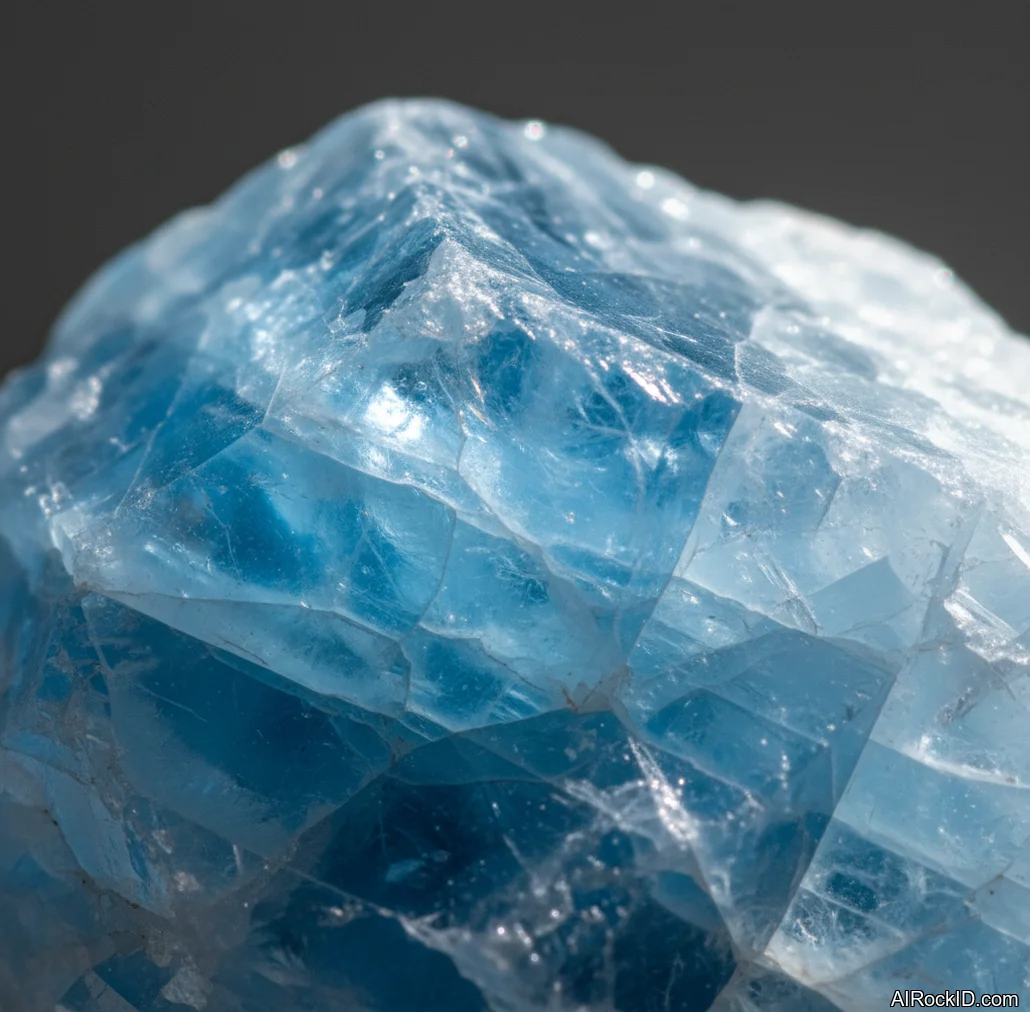
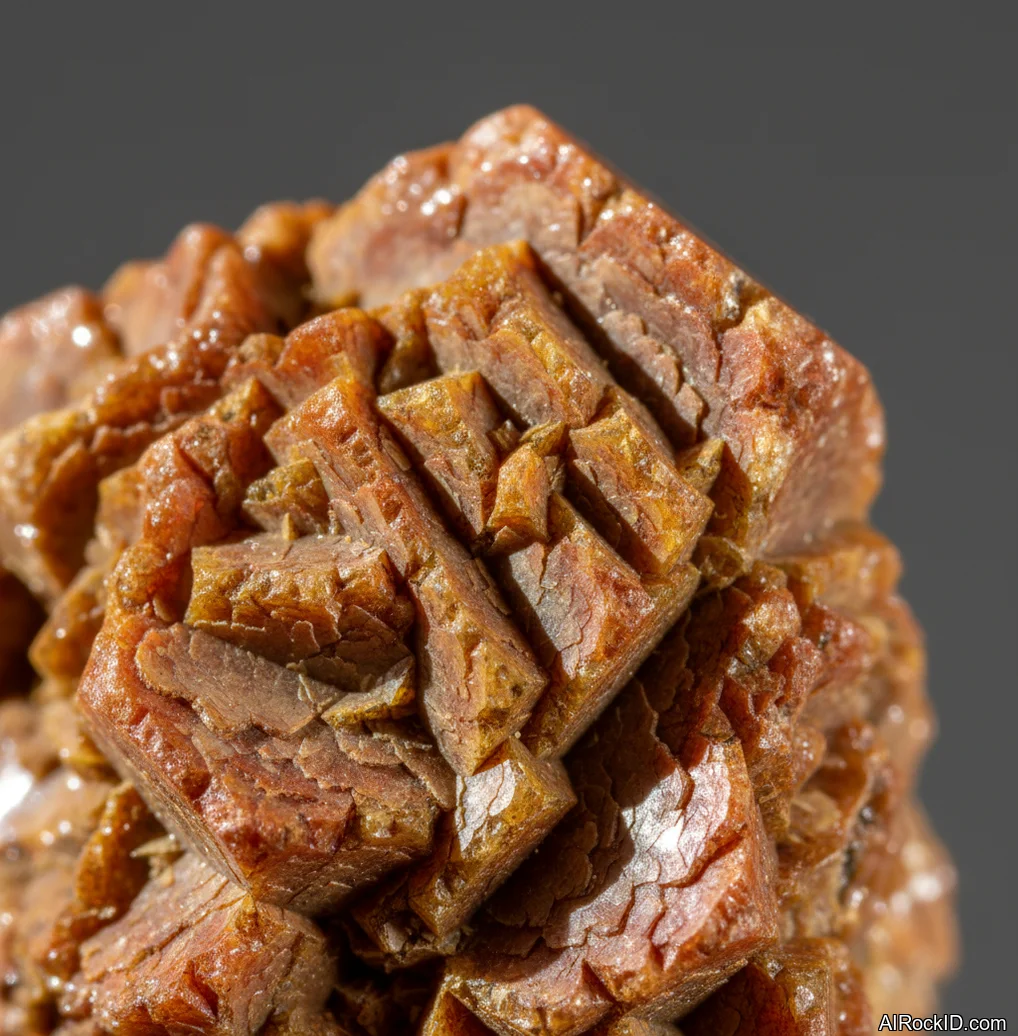
If you pick up a decent crystal cluster, you notice right away it’s not “light and chalky” like some calcite can be. It feels heavier. More serious in the hand, even when the crystals are small. Most of what people run into are honey-brown to tobacco-brown rhombs, and sometimes the faces have that slightly curved, saddle-like look. And when the light catches it just right, there’s this clean, glassy flash off the cleavage planes.
At first it can pass for dull brown calcite. But it doesn’t act the same. It’ll only fizz weakly in cold dilute acid, and a lot of specimens have iron staining that makes the whole piece look a bit rusty around the edges (especially down in the little cracks). I’ve also had siderite surprise me by weathering slowly on a shelf, turning more drab and earthy if the room’s humid. Who expects a rock to “age” like that?
Origin & History
“Siderite” gets its name from the Greek word for iron, *sideros*, which makes sense because iron is basically the whole point of the species. It was formally described in 1845 by Wilhelm Karl von Haidinger, an Austrian mineralogist who did a ton of careful, picky work sorting out carbonates that can look annoyingly similar at first glance.
Older European mining books often used “chalybite” for iron carbonate ores, especially in a working miner’s context, not a collector’s. And out in the field, siderite mattered as an iron ore in places where hematite or magnetite weren’t the main game. It still comes up in ore geology discussions because it can tell you a lot about the fluids and conditions that formed it.
Where Is Siderite Found?
You’ll see siderite from hydrothermal veins, carbonate-hosted deposits, and sedimentary ironstone settings. Classic collector material comes out of Alpine pockets and a handful of vein districts that also produce quartz, fluorite, and sulfides.
Formation
Most siderite shows up when iron-rich fluids bump into carbonate chemistry in low-oxygen conditions. That might be hydrothermal veins slicing through limestone or dolostone. Or it can be sedimentary and diagenetic, where iron and carbonates end up together as sediments compact and water threads its way through.
In vugs and little pockets, it’ll grow as rhombohedra. Sometimes the faces are slightly curved, like the crystal couldn’t quite decide on a flat plane (tiny shifts during growth will do that). In sedimentary settings, it’s usually concretionary or just massive. Collectors tend to pass on that unless it’s got a weird, satisfying shape you can actually see and hold.
Thing is, I learned the hard way that siderite can alter near the surface. A fresh find can look cleaner than it does a year later if you stash it somewhere damp.
How to Identify Siderite
Color: Most siderite runs tan, honey-brown, olive-brown, to deep brown, sometimes with gray or yellow tones. Weathered pieces can go rusty or muddy looking from iron oxidation.
Luster: Vitreous to pearly on cleavage faces.
If you scratch it with a copper penny, you might get a mark, but it won’t feel as soft as pure calcite. The real test is a tiny drop of cold dilute HCl: siderite reacts weakly or slowly compared to calcite, and powdered material reacts more readily. Look closely at crystal shape too, since rhombohedra are common, and many pieces feel a little heavier than similar-sized calcite because of the iron.
Common Look-Alikes
Siderite is sometimes confused with these materials:
- Calcite (especially honey calcite rhombs sold as “siderite” on matrix)
- Dolomite rhombs (tan to brown, often from the same kinds of pockets)
- Smithsonite (brown to honey botryoidal pieces mislabeled as siderite)
- Goethite/limonite after siderite (brown pseudomorphs that keep the shape but lose the carbonate look)
- Dyed calcite or dyed dolomite (brown dye to mimic tobacco-honey siderite tones)
- Brown glass “crystal clusters” (cast rhomb look, too perfect and too warm in the hand)
Market Cautions & Treatments
When AI Can Get This Wrong
At first glance, phone cameras mix up honey-brown siderite rhombs with calcite or dolomite all the time, especially if the photo’s warm-balanced and the piece is dusty. AI also trips on goethite-after-siderite because the old rhomb shape survives even when the surface turns dull and earthy. The real test is a quick hardness and heft check: siderite won’t scratch glass, feels surprisingly weighty for its size, and those cleavage planes give a clean flash when you roll it under a light.
Properties of Siderite
Physical Properties
| Crystal System | Trigonal |
| Hardness (Mohs) | 3.5-4.5 (Soft (2-4)) |
| Density | 3.8-4.0 g/cm3 |
| Luster | Vitreous |
| Diaphaneity | Transparent to translucent |
| Fracture | Uneven |
| Streak | white |
| Magnetism | Non-magnetic |
| Colors | tan, yellow-brown, honey-brown, olive-brown, brown, grayish brown |
Chemical Properties
| Classification | Carbonates |
| Formula | FeCO3 |
| Elements | Fe, C, O |
| Common Impurities | Mn, Mg, Ca, Zn |
Optical Properties
| Refractive Index | 1.875-1.895 |
| Birefringence | 0.179 |
| Pleochroism | Moderate |
| Optical Character | Uniaxial |
Siderite Health & Safety
Normal handling is totally fine, and a quick splash of water won’t do any damage. But the real thing to watch out for is dust if you’re cutting or grinding it, plus those little chips you can get when it cleaves (they can pop off sharper than you’d expect).
Safety Tips
If you’re going to saw it, grind it, or polish it, put on a respirator and do it wet. Keep specimens stored somewhere they won’t get knocked around (a padded box works).
Siderite Value & Price
Price Range
Rough/Tumbled: $10 - $250 per specimen
Cut/Polished: $5 - $30 per carat
Prices jump fast when the crystals come in sharp-edged, glossy, and not chewed up by oxidation. You can find transparent, clean material, sure, but it’s finicky on the wheel (it’ll grab and chip if you push it), and most rough shows inclusions or runs too brown. So faceted stones? Still a pretty niche thing.
Durability
Nondurable — Scratch resistance: Fair, Toughness: Fair
It can tarnish or weather in humid conditions, and cleavage means it can chip if it takes a knock.
How to Care for Siderite
Use & Storage
Keep siderite in a padded box or on a stable shelf where it won’t get knocked over. If your place runs humid, a little silica gel nearby helps slow down surface weathering.
Cleaning
1) Rinse quickly with lukewarm water if needed and don’t soak for hours. 2) Use a soft toothbrush with a drop of mild soap to lift dust from between crystals. 3) Pat dry and let it air dry fully before putting it back in a closed box.
Cleanse & Charge
For a metaphysical-style reset, I stick to dry methods like smoke, sound, or setting it on a larger quartz cluster overnight. I avoid salt bowls because salt can creep into tiny cracks and make cleanup annoying.
Placement
A shelf with steady temperature is best, away from steamy bathrooms and sunny windowsills. I like it under angled light because the cleavage flashes show up better.
Caution
Skip acids and any harsh cleaners, and don’t toss crystal clusters into an ultrasonic cleaner. Seriously. Handle it the way you’d handle a cleavage-prone carbonate, because that’s exactly what it is.
Works Well With
Siderite Meaning & Healing Properties
Most folks who reach for siderite in metaphysical work want that earthy, heavy iron-and-stone feeling, not glitter. For me, it comes off grounding and steady, the piece I grab when my brain’s running too hot and I need something that acts like a paperweight for my attention. But look, that’s just my personal practice. It’s not medicine.
Thing is, I like siderite because it never feels floaty. Pick up a cold rhomb and let it sit in your palm for a minute and it stays cool, and that simple physical chill can snap you back into your body. But I don’t experience it as a social, heart-forward stone. It’s quieter than that. Private. More about staying on task and keeping your feet under you.
But there’s a limit. If you end up with a weathered piece, it can start looking kind of bleak fast, and then your whole desk feels different, you know? And some sellers hype it up like it’s rare and mystical when the real struggle is finding good crystals, not finding siderite at all. So if you want the “best version” of what siderite feels like, I’d go for sharp, clean crystals that still have that glassy shine (you can usually see it right when the light hits).
Common mistakes
- Calling any brown carbonate siderite without checking density or acid reaction
- Confusing iron staining on calcite or dolomite with natural siderite color
- Assuming all rusty, earthy brown masses are siderite rather than limonite or goethite
- Using color alone, since siderite can be gray, yellowish, tan, brown, or reddish brown
- Storing siderite in damp conditions where iron-rich surfaces may oxidize further
- Buying polished brown stones labeled as siderite without asking for locality or test information
Identify Siderite from a photo
Compare Siderite traits, care tips, value clues, and common lookalikes with a clear photo.