Orthoceras
What Is Orthoceras?
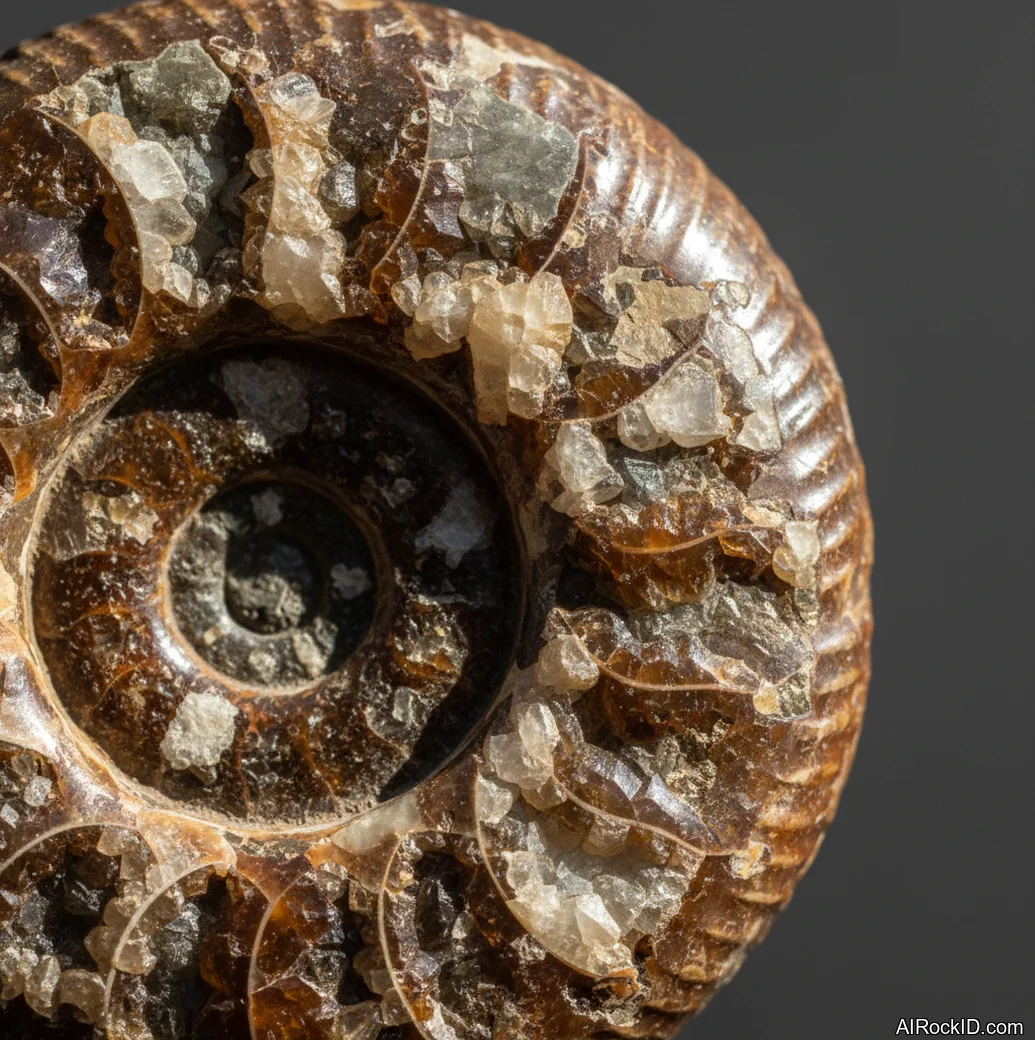
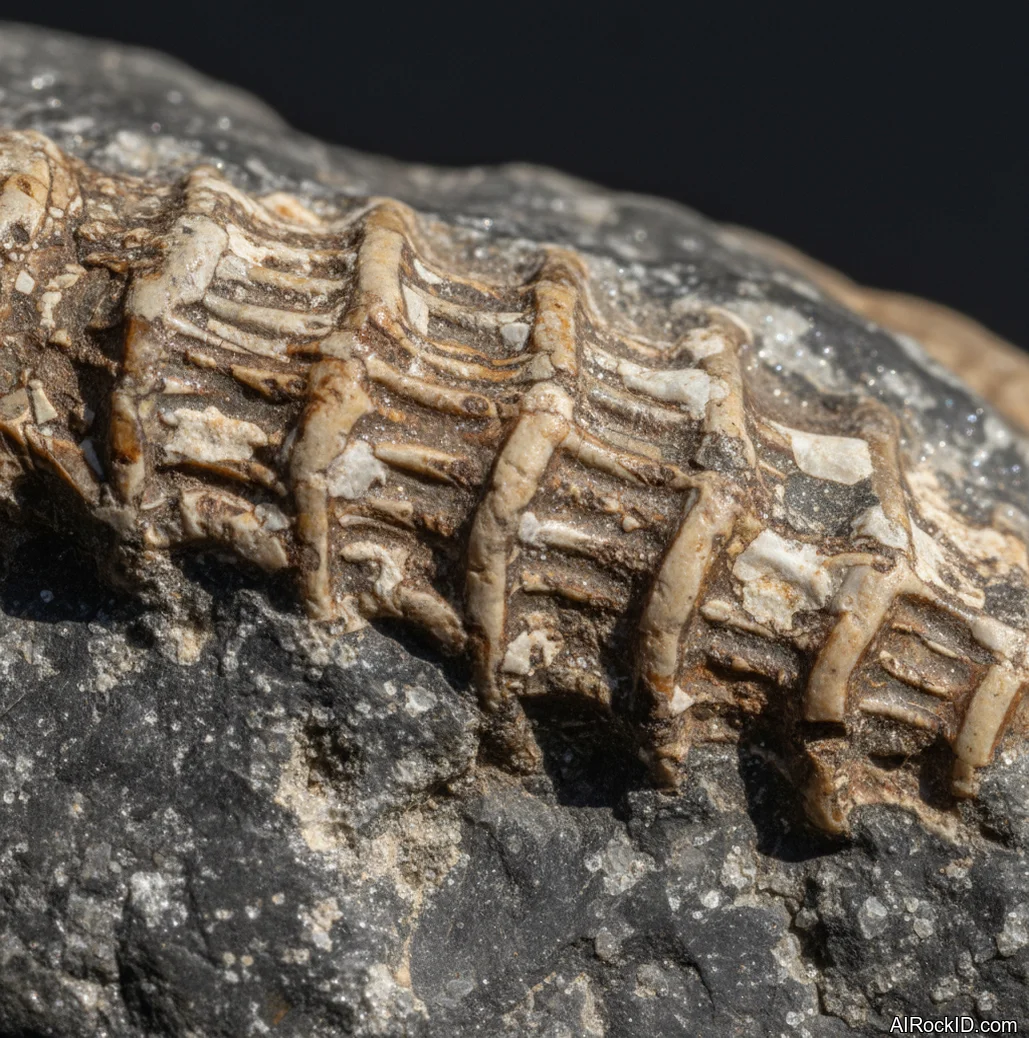
Orthoceras is a straight-shelled nautiloid cephalopod fossil, and you usually see it locked into dark limestone with those pale, calcite-filled chambers.
Pick up a polished Orthoceras plate and you feel it instantly. Cooler than wood. Heavier than you’d guess for something that looks like “just a black tile.” Then the fossil pops out, this long white-to-gray rocket shape, with little chamber lines marching across it. I’ve handled a bunch at gem shows, and the better ones have crisp chamber segmentation you can actually catch with a fingertip (assuming the polish didn’t round the edges into mush).
At first glance people call it a “crystal,” but it’s not. It’s a fossil sitting in a rock matrix. Most of what’s out there gets cut from Moroccan limestone, then polished into towers, spheres, bookends, plus flat slabs. And if you’ve ever seen one of those coffee-table-size slabs, you get the appeal. But if you’re collecting, the real win is finding a piece where the siphuncle line or the chamber detail is clearly visible, not just a white smear.
Origin & History
Orthoceras is a name built from Greek for “straight horn,” and it got slapped on straight-shelled nautiloid fossils early on. These days, in paleontology, “Orthoceras” is a tighter, more specific genus. But in the mineral and fossil trade, it’s basically a grab-bag label for any similar-looking straight nautiloid you see cut and polished (you know the ones in black limestone, with those pale bullet shapes running through it).
And if you spend any time at fossil tables, you’ll hear the exact same line on repeat: “Orthoceras from Morocco, about 350 million years old.” The age is usually somewhere close for Paleozoic marine limestones, so that part isn’t automatically off. Thing is, the name usage has gotten pretty loose. That’s not inherently a scam, it’s just market shorthand. If you want a stricter ID, a lot of what gets sold as “Orthoceras” would be better called orthoconic nautiloids, not Orthoceras sensu stricto.
Where Is Orthoceras Found?
Most commercial decorative material is cut from Moroccan Paleozoic limestones near Erfoud. Orthoconic nautiloid fossils also occur in parts of Europe, North America, and Asia in marine sedimentary rocks.
Formation
Picture the Paleozoic seafloor. A straight-shelled cephalopod dies, drops to the bottom, and its shell can get swallowed up by soft carbonate mud. Later on, that mud hardens into limestone, and the shell’s empty chambers usually end up packed with either calcite spar or finer carbonate sediment. That’s where those pale, segmented bands come from. You’re basically seeing the chamber layout, with the lines popping because the fill material isn’t all the same.
And most of what we buy now has been through a lot since it got buried. Compaction, cementation, and sometimes a bit of recrystallization tighten the rock up so it’ll take a clean polish (you can feel it when you run a fingertip across it, that slick glassy bite). But it’s still limestone at heart.
Thing is, limestone can be softer and more reactive than people expect. So Orthoceras decor looks tough until you treat it like a granite countertop, and then you end up with dull spots.
How to Identify Orthoceras
Color: Common Orthoceras pieces are black to dark gray limestone with white, gray, or tan fossil outlines and chamber bands. The fossil itself can look creamy white when the chambers are calcite-filled.
Luster: Polished surfaces look waxy to vitreous, while unpolished areas are dull and chalky.
Look closely for repeated chamber lines across a long cone or cigar shape. On a real piece, those lines aren’t random, they’re evenly spaced and follow the fossil’s taper. Pick up two similar towers and compare weight and temperature. The limestone ones feel cool and moderately heavy, and the fossil bands stay visible even when you tilt under overhead light. Cheap versions exist as printed resin or dyed stone. The real test is the back side and edges: natural limestone shows tiny pores or fossil bits, while resin looks too perfect and feels warmer in your hand.
Properties of Orthoceras
Physical Properties
| Crystal System | Amorphous |
| Hardness (Mohs) | 3 (Soft (2-4)) |
| Density | 2.70-2.71 g/cm3 |
| Luster | Dull |
| Diaphaneity | Opaque |
| Fracture | Uneven |
| Streak | white |
| Magnetism | Non-magnetic |
| Colors | black, dark gray, white, cream, tan |
Chemical Properties
| Classification | Carbonates |
| Formula | CaCO3 |
| Elements | Ca, C, O |
| Common Impurities | Mg, Fe, Mn, organic carbon |
Optical Properties
| Refractive Index | 1.49-1.66 |
| Birefringence | 0.172 |
| Pleochroism | None |
| Optical Character | Uniaxial |
Orthoceras Health & Safety
Most Orthoceras pieces you’ll see are limestone with calcite in them, so they’re non-toxic and fine to hold in your hands. But if you’re cutting it or sanding it, don’t breathe the dust, it gets in your nose fast (and it’s not fun).
Safety Tips
If you’re drilling or grinding, put on a dust mask. And keep a little water on it to knock the dust down (you’ll see it settle almost right away).
Orthoceras Value & Price
Price Range
Rough/Tumbled: $5 - $150 per piece
Price mostly comes down to size, how good the polish actually is, and whether the fossil detail looks crisp instead of kind of muddy. Bigger slabs with clean, well-centered fossils usually run higher, because there’s a lot of cutting waste getting a piece like that without clipping the good stuff.
Durability
Moderate — Scratch resistance: Fair, Toughness: Fair
It’s stable indoors, but the calcite-based matrix can scratch and can etch from acids or acidic cleaners.
How to Care for Orthoceras
Use & Storage
Store it like you would calcite or marble: separate from harder stones so it doesn’t get scratched up in a bin. If it’s a polished tower, I keep a felt pad under it to avoid grit scratching the base.
Cleaning
1) Wipe with a soft dry cloth to remove grit. 2) If needed, use lukewarm water with a tiny bit of mild soap. 3) Rinse quickly and dry right away; don’t soak and don’t use vinegar or harsh cleaners.
Cleanse & Charge
If you do energy cleansing, stick to smoke, sound, or a quick rinse and dry. Skip salt water and skip acidic sprays because the surface can etch.
Placement
Shelves, desks, and bookcases are ideal since you can see the fossil pattern at eye level. Keep it out of kitchens and bathrooms if cleaning chemicals are around.
Caution
Skip acids, vinegar, and anything scratchy like abrasive pads, because they’ll take the shine right off. And don’t park it somewhere it might get bumped and tumble onto tile, since limestone can chip the second it hits hard.
Works Well With
Orthoceras Meaning & Healing Properties
A lot of people who pick up Orthoceras for “metaphysical” reasons are really reacting to the fossil part. Holding something that used to be an animal’s shell feels totally different than clutching a sparkly crystal point. It’s grounding in the most literal sense, like a heavy paperweight that keeps your hands occupied while your brain tries to sort itself out. And yes, it’s still just a rock and a fossil, not a medical tool.
So grab one of the tower pieces on a rough day and you’ll see why folks reach for it when they’re trying to focus. The surface feels smooth in a very specific way, sort of cool and slick under your fingertips, and the pattern repeats so your eyes have something orderly to latch onto. I’ve watched customers in the shop trace the chamber lines with their thumb without even noticing they’re doing it while they talk through a decision. Not magic. Just a real, physical cue that can help you slow down.
But here’s the blunt part: Orthoceras often gets sold like it’s one single “crystal energy” thing, when a lot of what people are responding to is the plain weight and coolness of calcite-rich stone. If you’re the type who’s sensitive to symbolism, fossils tend to get tied to time, patience, and long-term projects. And if you’re not? It’s still a solid desk piece that looks sharp, starts conversations, and feels good in your hand (even if you’re just fidgeting).
Identify Any Crystal Instantly
Snap a photo and get properties, value, care instructions, and healing meanings in seconds.