Rhodochrosite China
What Is Rhodochrosite China?
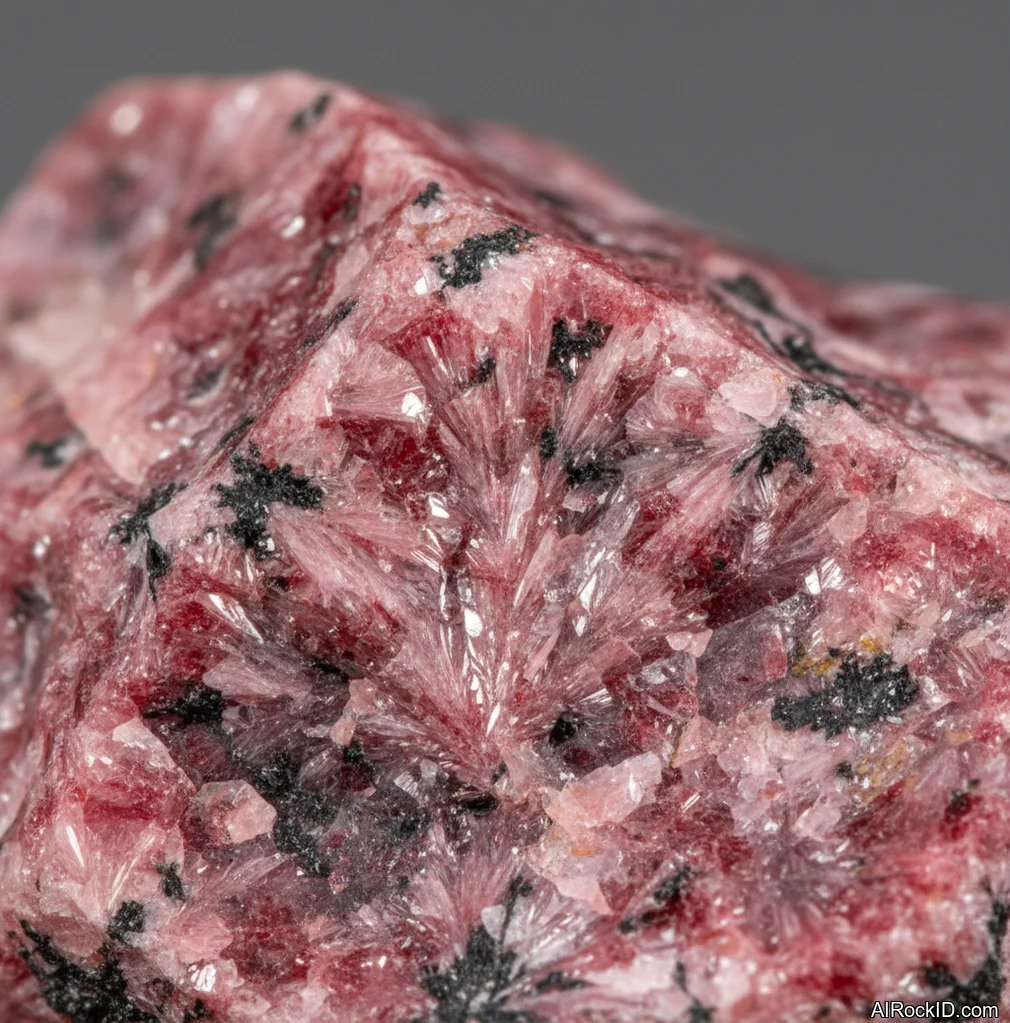
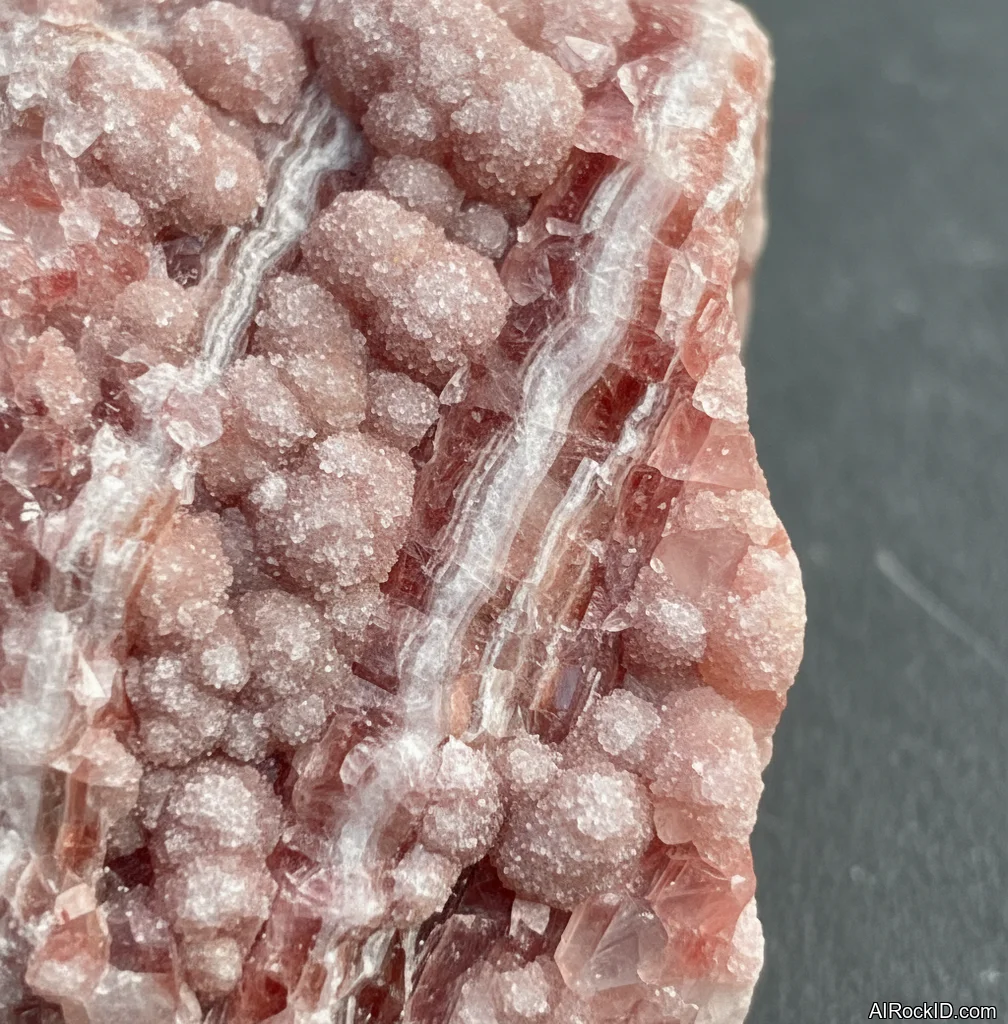
Rhodochrosite from China is just rhodochrosite, the manganese carbonate mineral (MnCO3), coming out of Chinese deposits. Most of what you’ll see shows up as pink, banded pieces or little crystals sitting on matrix.
Grab a chunk and it’s heavier than you’d guess from something that looks like candy. The polished face has this slightly slick, almost soapy feel under your thumb, but the raw edges are another story. They’ve got that crumbly, cleavage-y bite that screams “carbonate” the second you brush a fingernail across it (you can feel it catch).
People confuse it with rhodonite all the time since both can be pink. But rhodonite’s tougher, and it doesn’t give you that easy cleavage flash. Tip Chinese rhodochrosite under a desk lamp and you’ll spot those bright, flat reflections where it wants to split along a plane. Pretty stuff. Not a pocket stone, though, if you want it to stay pretty.
Origin & History
Rhodochrosite got its official “this is a mineral” write-up in 1813, thanks to Johann Friedrich Ludwig Hausmann. The name’s straight out of Greek and it basically means “rose-colored,” which, honestly, is dead-on when you’ve got a clean piece in your hand.
China isn’t part of that naming origin, obviously. “Rhodochrosite China” is more of a dealer shorthand, the kind of locality tag you’ll see scribbled on a little paper card at shows so you don’t confuse it with Argentina’s classic stalactitic banding or Colorado’s old Sweet Home crystal style. The Chinese stuff usually shows up as polished slabs, hearts, freeforms, plus the occasional crystal-on-matrix piece that’s really meant to sit on a shelf (you can feel how it wants to snag on fabric if you try to carry it around).
Where Is Rhodochrosite China Found?
Rhodochrosite occurs worldwide in manganese deposits, but Chinese material in the market often comes from Guangxi and nearby mining districts where manganese carbonates form in veins and replacement zones.
Formation
Most rhodochrosite shows up where manganese-rich fluids run into carbonate chemistry, so you’re usually talking hydrothermal veins, replacement bodies in limestone, plus those little pockets tucked into manganese ore zones. Think hot fluids pushing through cracks, then cooling off and dropping carbonates as they go.
Compared to quartz, it’s softer and more reactive, and you can literally feel it in the way it breaks (it doesn’t “ring” the same). Thing is, the real headache with rhodochrosite is cleavage. It’s perfect in three directions, rhombohedral, and if you’ve ever watched a dealer peel back the tissue paper and instantly start handling it like it’s made of eggshell, that’s the reason. One tiny bump on a corner and suddenly you’ve got a fresh, bright chip that definitely wasn’t there five minutes ago.
How to Identify Rhodochrosite China
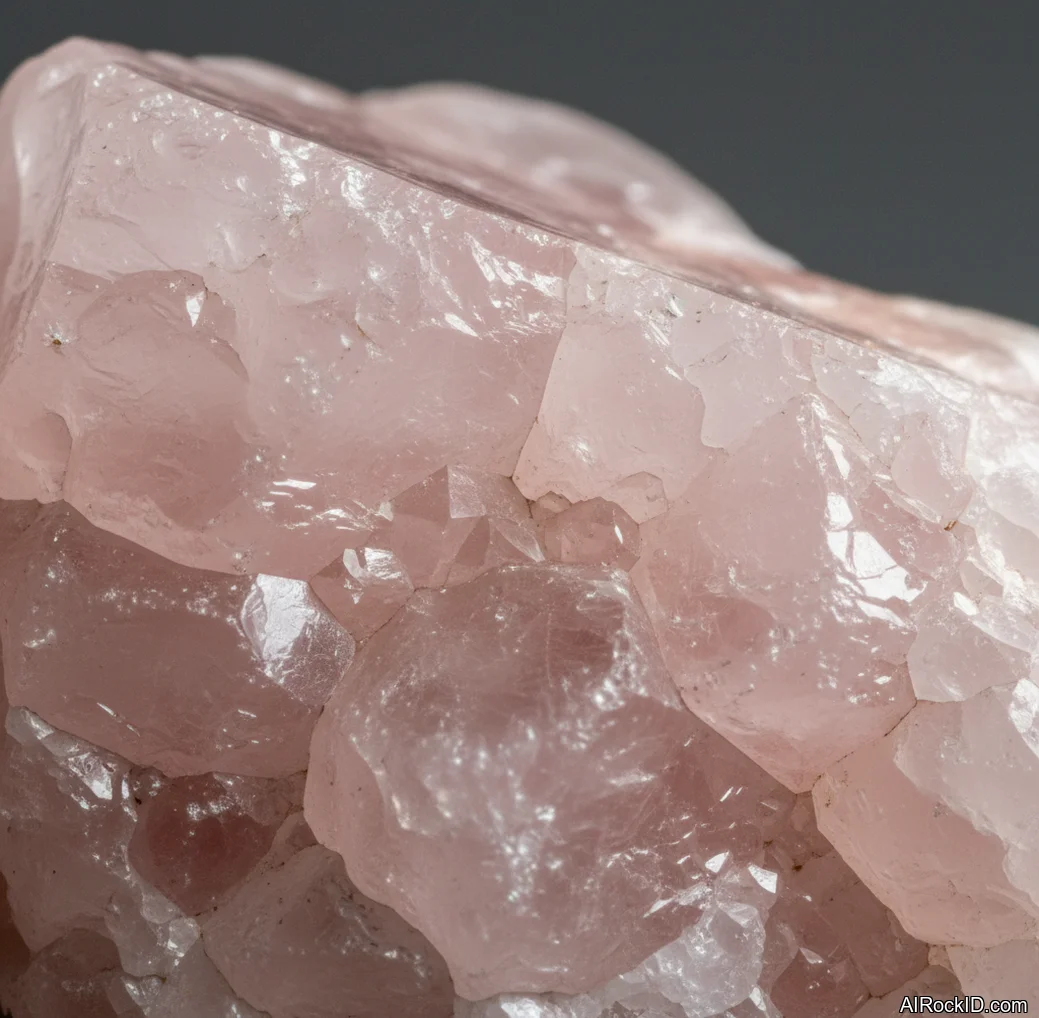
Color: Colors range from pale pink to raspberry and rose-red, often with creamy white banding or cloudy zones. Some Chinese pieces lean “strawberry milk” pink with softer contrast than Argentina’s bold bands.
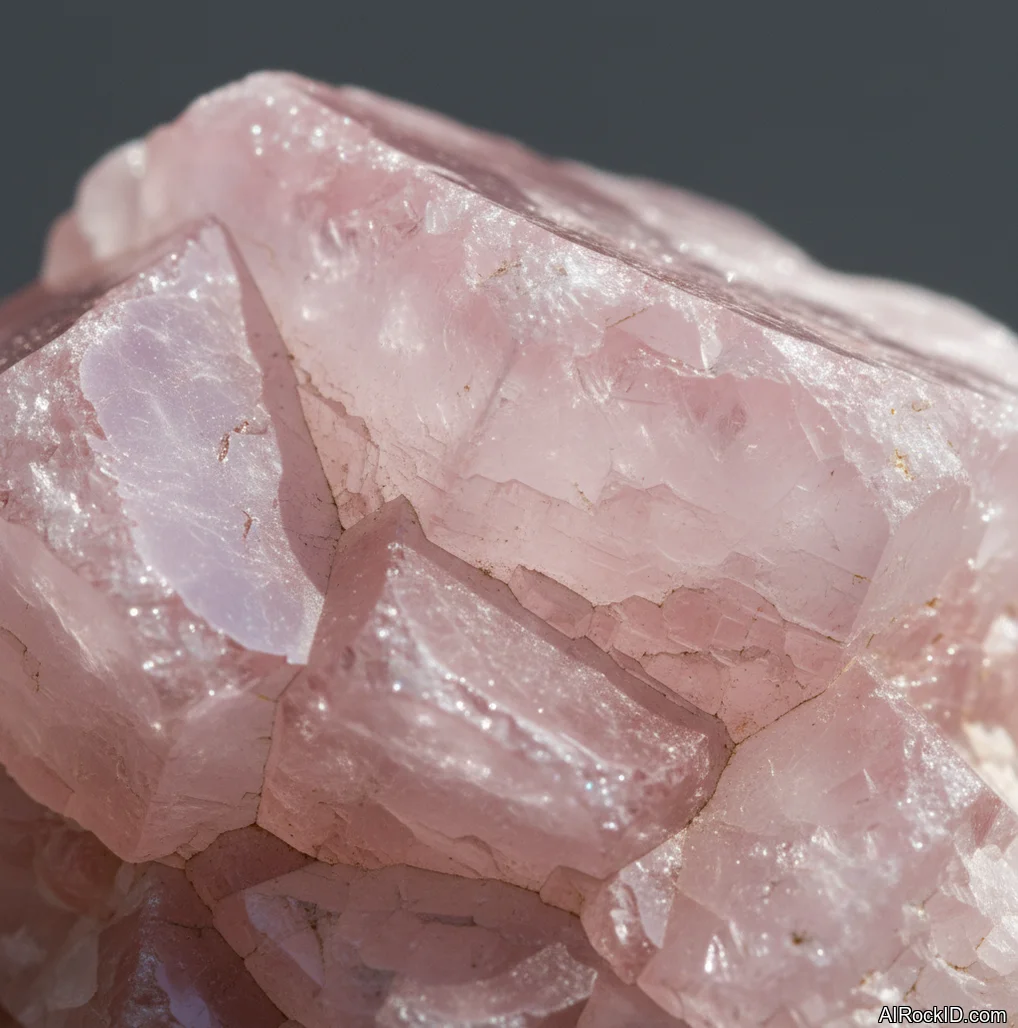
Luster: Vitreous to pearly, especially on fresh cleavage faces.
Look closely for flat, repeating cleavage planes that catch light in sharp flashes when you tilt the specimen. If you scratch it with a copper coin, you may get a mark since rhodochrosite is only Mohs 3.5–4. And if a seller claims it’s “super hard” or “great for rings,” that’s your cue to slow down, because it isn’t.
Properties of Rhodochrosite China
Physical Properties
| Crystal System | Trigonal |
| Hardness (Mohs) | 3.5-4 (Soft (2-4)) |
| Density | 3.60-3.70 g/cm3 |
| Luster | Vitreous |
| Diaphaneity | Transparent to translucent |
| Fracture | Uneven |
| Streak | white |
| Magnetism | Non-magnetic |
| Colors | pink, rose, red, pale pink, white-banded pink, brownish pink |
Chemical Properties
| Classification | Carbonates |
| Formula | MnCO3 |
| Elements | Mn, C, O |
| Common Impurities | Fe, Ca, Mg, Zn |
Optical Properties
| Refractive Index | 1.597-1.816 |
| Birefringence | 0.220 |
| Pleochroism | Weak |
| Optical Character | Uniaxial |
Rhodochrosite China Health & Safety
You can handle it without much worry, but the moment you start cutting, grinding, or drilling, you can kick up dust that contains manganese. That fine powder hangs in the air (and gets on your hands, too). So don’t breathe it in, and don’t dry-sand it.
Safety Tips
If you need to shape it, do it wet, wear the right respirator, and wipe up the slurry (that gray, gritty paste) instead of sweeping up dry dust.
Rhodochrosite China Value & Price
Price Range
Rough/Tumbled: $15 - $200 per piece
Cut/Polished: $10 - $60 per carat
Prices can swing all over the place depending on how strong the banding contrast is, how good the polish looks up close (you can feel it grab a little if it’s not finished well), and how much fracture or pitting is tucked away on the back where nobody sees it in photos. Clean crystals on matrix cost more, sure, but they’re also the easiest to damage in transit, especially when a point is sitting proud of the rock and the packing shifts even a little.
Durability
Fragile — Scratch resistance: Poor, Toughness: Poor
Rhodochrosite chips and cleaves easily, and acids and even mild household chemicals can etch the surface.
How to Care for Rhodochrosite China
Use & Storage
Store it separately from harder stones, because quartz and even feldspar will scuff it up fast. I keep mine wrapped or in a little box so corners don’t turn into fresh chips.
Cleaning
1) Rinse quickly with lukewarm water and a drop of mild soap. 2) Use a soft toothbrush only on sturdy polished areas, not on delicate crystal faces. 3) Pat dry and let it air-dry fully before putting it back in a closed container.
Cleanse & Charge
For a low-drama cleanse, use smoke, sound, or a quick pass over selenite. Skip salt bowls and anything acidic or “cleansing sprays” unless you know exactly what’s in them.
Placement
Keep it off sunny windowsills if you care about the color staying even, and don’t put it where it’ll get knocked over. A stable shelf with a little museum putty is your friend.
Caution
Don’t use ultrasonic or steam cleaners. Skip acids, too, and don’t leave it sitting in water for long. And be gentle with it, because it has perfect cleavage and low hardness, so a small knock on a countertop edge can chip it fast.
Works Well With
Rhodochrosite China Meaning & Healing Properties
A lot of dealers and collectors tie rhodochrosite to heart-centered emotional work, and honestly, the color kind of makes the case for it all by itself. When I’ve got a piece in my hand, it usually feels cool at first, then it warms up against my skin, and the heft of it makes me slow down without even trying. Easy to sit with. No effort.
But look, I’m not going to pretend it’s some indestructible worry stone. If you want something to carry every day and fidget with in your pocket, rhodochrosite will punish you for that. It’s the sort of stone that chips if you knock it against keys or drop it on tile (and yeah, that happens). So I treat it like a “home stone” instead, something that stays by my desk or next to a journal, where it can do the calm, reflective thing without getting banged up.
And if you’re working crystals into personal routines, keep your feet on the ground. Rhodochrosite isn’t medical care, and it won’t replace therapy or treatment. What it can do, though, is give you a physical cue. Pick it up, feel the weight, stare at the banding for a second, and take thirty seconds to breathe before you react to whatever’s happening. Simple. Effective. Why fight it?
Identify Any Crystal Instantly
Snap a photo and get properties, value, care instructions, and healing meanings in seconds.