Mangano Calcite
What Is Mangano Calcite?
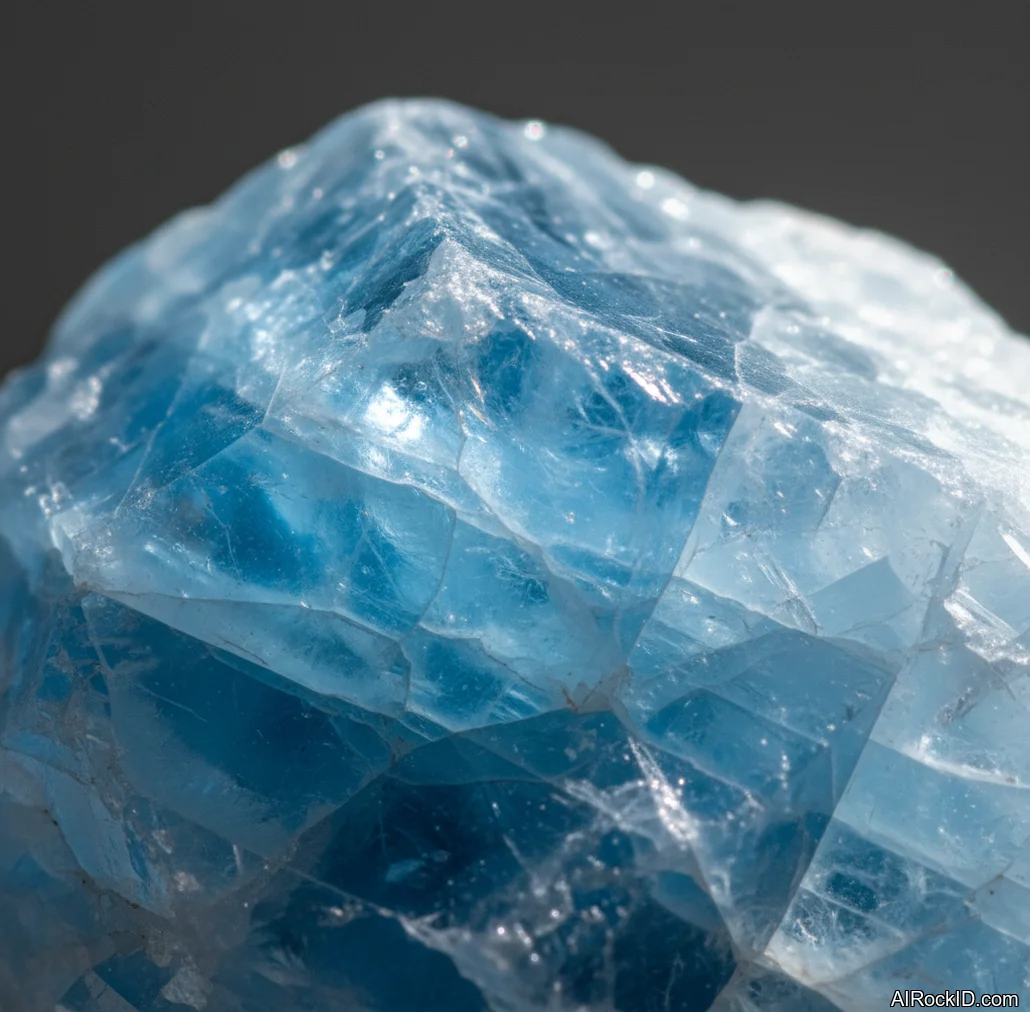
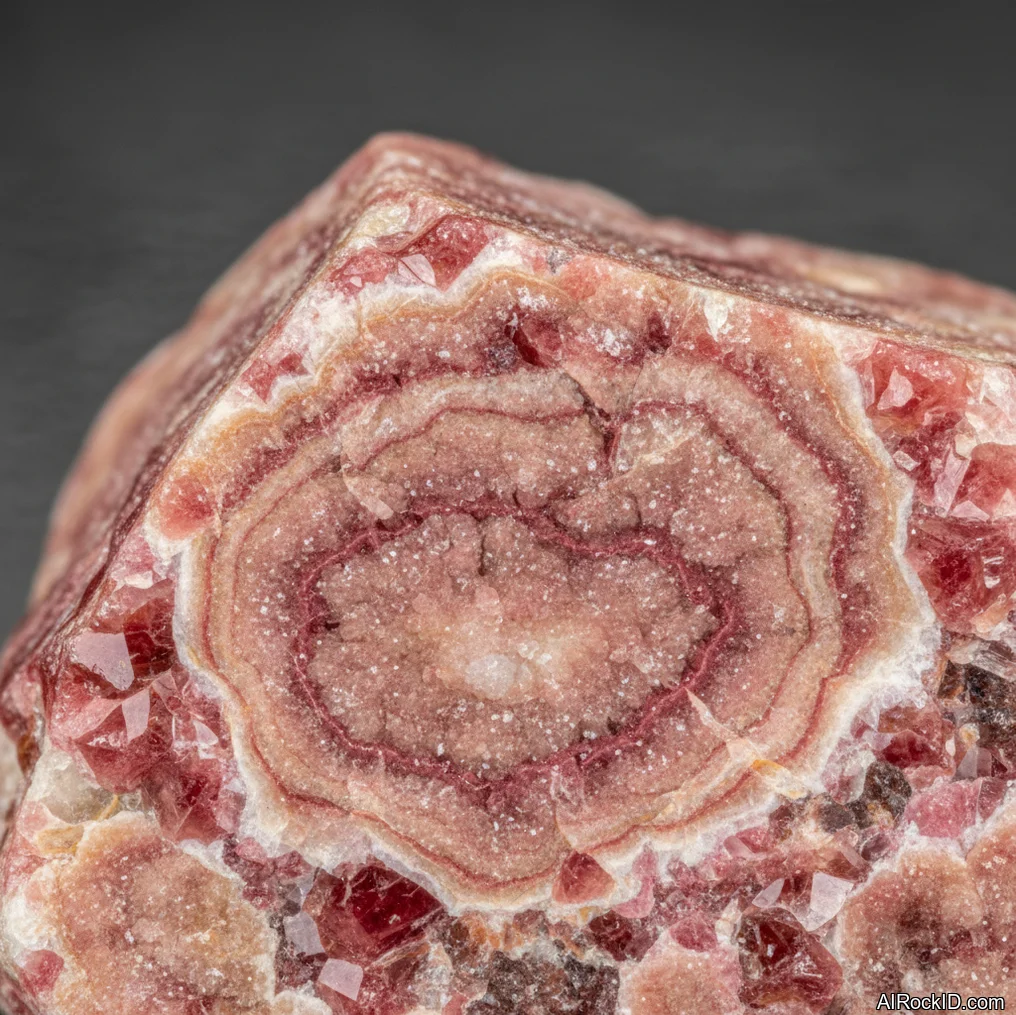
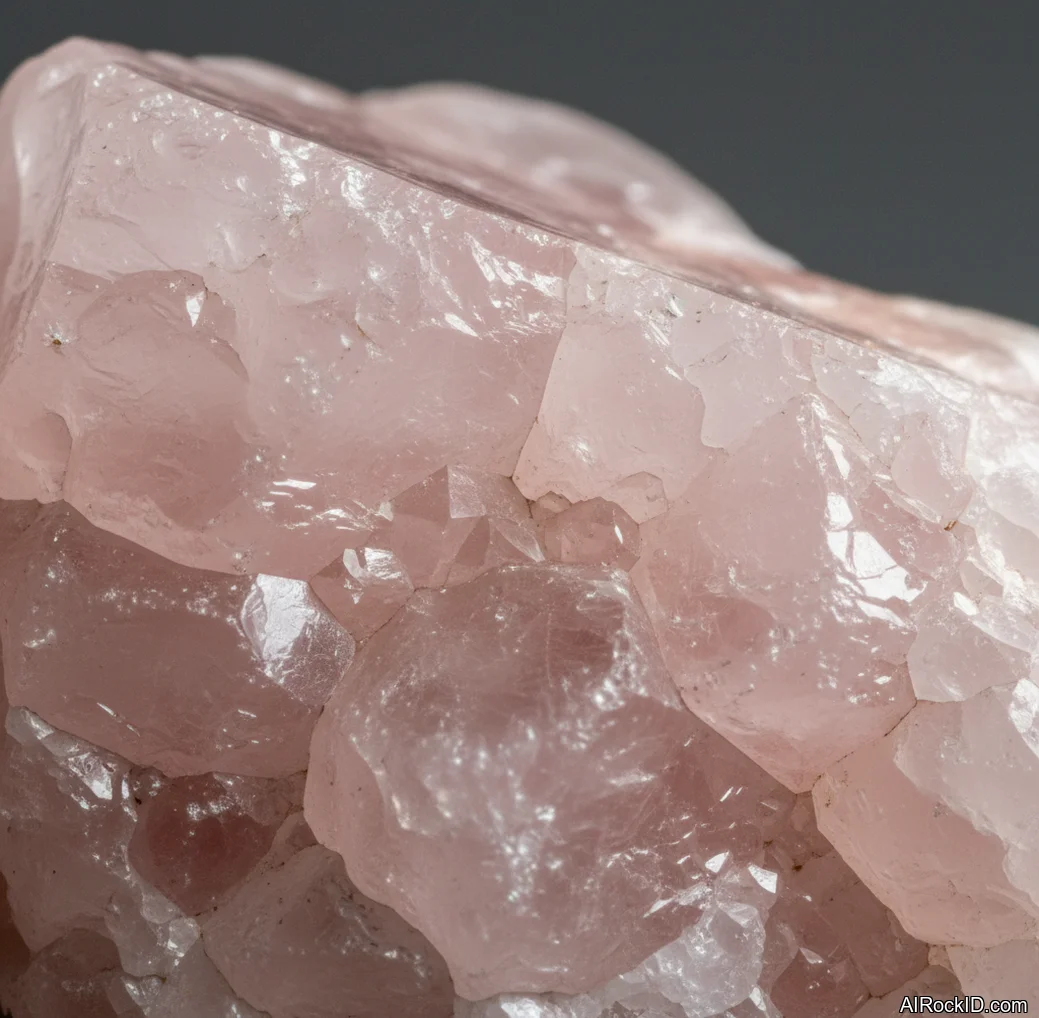
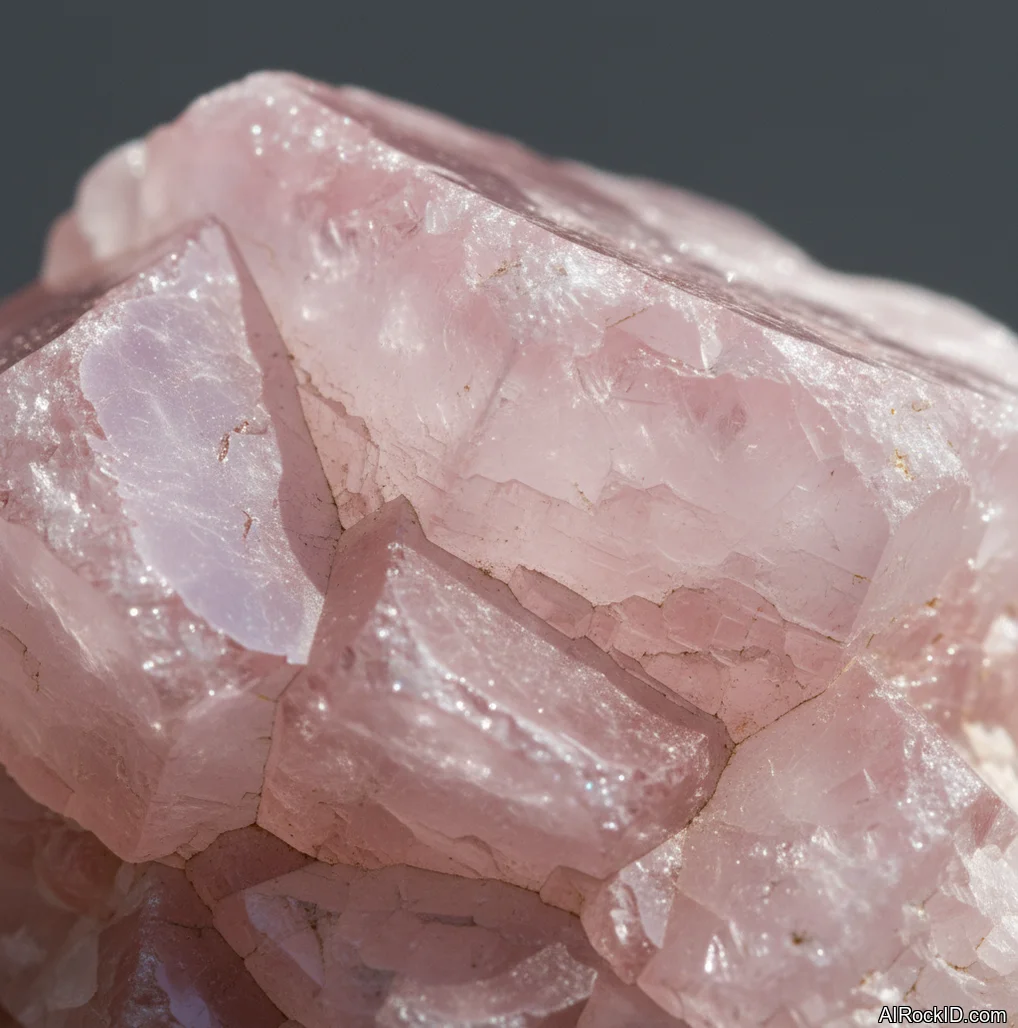
Mangano calcite is basically calcite that’s gone pink because manganese (Mn) slips into the calcite structure. Most of what you run into sits in that soft baby-pink to bubblegum zone, sometimes cut through with white banding. And when it’s snapped or chipped instead of polished, it can have that weird “sugary” look, like tiny grains catching the light.
Grab a chunk and you’ll feel it right away. It’s not got that dead-weight heft like hematite or galena, but it’s still got a solid calcite weight to it. And it stays cool in your palm longer than the glassy fakes do. Look, if you’ve got a polished face, you can spot those flat, planar flashes from cleavage. Tilt it a little and the shine pops, then it drops off fast. Kind of abrupt.
UV is where it gets fun. A lot of mangano calcite fluoresces a hot pink to red, especially under longwave UV, and some pieces are bright enough to light up a whole shelf. But not every pink calcite goes nuclear under the lamp. Dealers mix labels, and some of what’s sold is just plain pink calcite with a weak reaction or none at all. So yeah, check it before you assume.
Origin & History
Thing is, the name’s basically collector shorthand. “Manganoan calcite” just means calcite with enough manganese sitting in the lattice that it shifts the color and, a lot of the time, makes it fluoresce.
Calcite itself has been a known species forever, and “calcite” comes from the Latin “calx,” meaning lime.
And “mangano calcite” as a described variety starts popping up in mineral literature once chemical analysis got good enough to reliably pick out trace elements. But in the shop world? That label really took off when UV collecting got trendy, because the good pieces glow like crazy and you can prove it on the spot with a little UV flashlight at a booth (one click, lights go purple, everyone leans in).
Where Is Mangano Calcite Found?
You’ll run into mangano calcite in hydrothermal veins and carbonate deposits worldwide. In the market, a lot of the polished pink material comes out of Peru and Madagascar, and classic fluorescent pieces show up from places like Missouri.
Formation
Most mangano calcite forms the same basic way plain calcite does, just with manganese floating around in the fluid at the time. Think low to moderate temperature hydrothermal veins, replacement in limestone or dolostone, or those open cavities where carbonates have room to grow. The manganese slips into the calcite structure and nudges the color toward pink.
Out in the field, it’s usually hanging around other carbonates and sulfides. I’ve seen it sitting right alongside dolomite, quartz, fluorite, barite, and, depending on the district, sphalerite or galena. And look, calcite cleavage is no joke. A pocket can look perfect in the wall, then you lift it and it starts popping apart along those smooth, shiny planes (the kind that feel almost greasy under your fingers) if you don’t wrap it right.
How to Identify Mangano Calcite
Color: Usually pale to medium pink, sometimes salmon or peach, often with white banding or cloudy zones. Some pieces are nearly white in room light but still pop pink under UV.
Luster: Vitreous to pearly on cleavage faces, duller on rough broken surfaces.
If you scratch it with a copper penny, it’ll mark pretty easily, and a steel nail will bite in without much effort. The real test is cleavage: it breaks along smooth planes in three directions, and those planes can look like little shiny steps. Under longwave UV, many specimens fluoresce bright pink to red, which is a quick tell when you’re sorting a pile at a show.
Properties of Mangano Calcite
Physical Properties
| Crystal System | Trigonal |
| Hardness (Mohs) | 3 (Soft (2-4)) |
| Density | 2.71 g/cm3 |
| Luster | Vitreous |
| Diaphaneity | Transparent to translucent |
| Fracture | Uneven |
| Streak | White |
| Magnetism | Non-magnetic |
| Colors | Pink, Pale pink, Salmon, Peach, White |
Chemical Properties
| Classification | Carbonates |
| Formula | CaCO3 (Mn-bearing variety; Mn2+ substitutes for Ca2+) |
| Elements | Ca, C, O, Mn |
| Common Impurities | Mn, Fe, Mg |
Optical Properties
| Refractive Index | 1.486-1.658 |
| Birefringence | 0.172 |
| Pleochroism | None |
| Optical Character | Uniaxial |
Mangano Calcite Health & Safety
Mangano calcite is usually safe to handle. But it’s a soft carbonate, so if you’re cutting or sanding it and you see that pale, chalky dust kicking up, don’t breathe it in.
Safety Tips
If you’re sanding this on your lap, keep it wet, put on eye protection, and don’t dry-sand it. Wet sanding keeps the dust from puffing up and sticking to your skin (and you’ll feel it right away if it’s dry).
Mangano Calcite Value & Price
Price Range
Rough/Tumbled: $5 - $120 per piece
Cut/Polished: $2 - $20 per carat
Price usually follows the glow’s strength, how even the color looks, and whether you’re holding a solid, showy chunk or one of those fractured, chalky bits that sheds dust when you rub it. Clean crystals or a nicely banded slab you can actually display will run higher than the everyday tumbles.
Durability
Nondurable — Scratch resistance: Poor, Toughness: Poor
It scratches easily and cleaves easily, so edges chip fast if it rides around in a pocket or rattles in a box.
How to Care for Mangano Calcite
Use & Storage
Store it wrapped or in a separate compartment so it doesn’t get scraped up by quartz or feldspar. If it’s a cleavy chunk, I like a little foam under it so it doesn’t clack against the shelf.
Cleaning
1) Rinse quickly with lukewarm water. 2) Use a soft toothbrush with a drop of mild soap for grime in pits. 3) Pat dry and skip soaking, especially if the piece has fractures.
Cleanse & Charge
If you do ritual cleansing, keep it simple: smoke, sound, or a quick moonlight stint works fine. Don’t use salt water, and don’t leave it baking in sun because the color can look washed out over time.
Placement
Looks great where you can hit it with a UV flashlight once in a while, but keep it away from windowsills and from spots where it’ll get knocked over. A stable stand matters more than people think.
Caution
Don’t use acids or acid-based cleaners on it, vinegar included. Calcite will literally fizz if you hit it with acid, and you’ll end up with etched spots you can feel with a fingernail. And keep it away from harder stones. Toss it in its own little pouch, because at Mohs 3 it picks up scuffs fast, like those dull rub marks you get just from two pieces bumping together in a pocket.
Works Well With
Mangano Calcite Meaning & Healing Properties
Mangano calcite looks like this soft, friendly stone at first, and honestly that’s exactly how it feels when you’ve got a hand-sized piece. It calms you down in a very literal, physical way. I’ve caught myself at my desk just rubbing my thumb over a polished face, and you can feel those tiny shifts in texture right where the cleavage planes meet. Little ridges. Little slick spots. It makes you slow down.
In crystal culture, people connect it with gentle emotional work, compassion, and easing stress. I file that under “supportive practice,” not “medical.” If you want something to hold while you’re journaling or doing therapy homework, it’s a solid choice because it’s soothing and it’s not flashy. But look, it’s not going to magically fix a hard day. Nothing does, right?
One practical thing I’ve noticed: UV collectors love this stuff, and that changes the whole mood for some people. Hit it with a longwave light and the stone can flip into this neon pink glow, which feels more playful than solemn. And that’s totally fine. Just don’t mix up fluorescence with quality across the board. I’ve seen gorgeous pink pieces that barely react at all, and I’ve also seen chalky, crumbly chunks that glow like a sign.
Identify Any Crystal Instantly
Snap a photo and get properties, value, care instructions, and healing meanings in seconds.