Strawberry Quartz
What Is Strawberry Quartz?
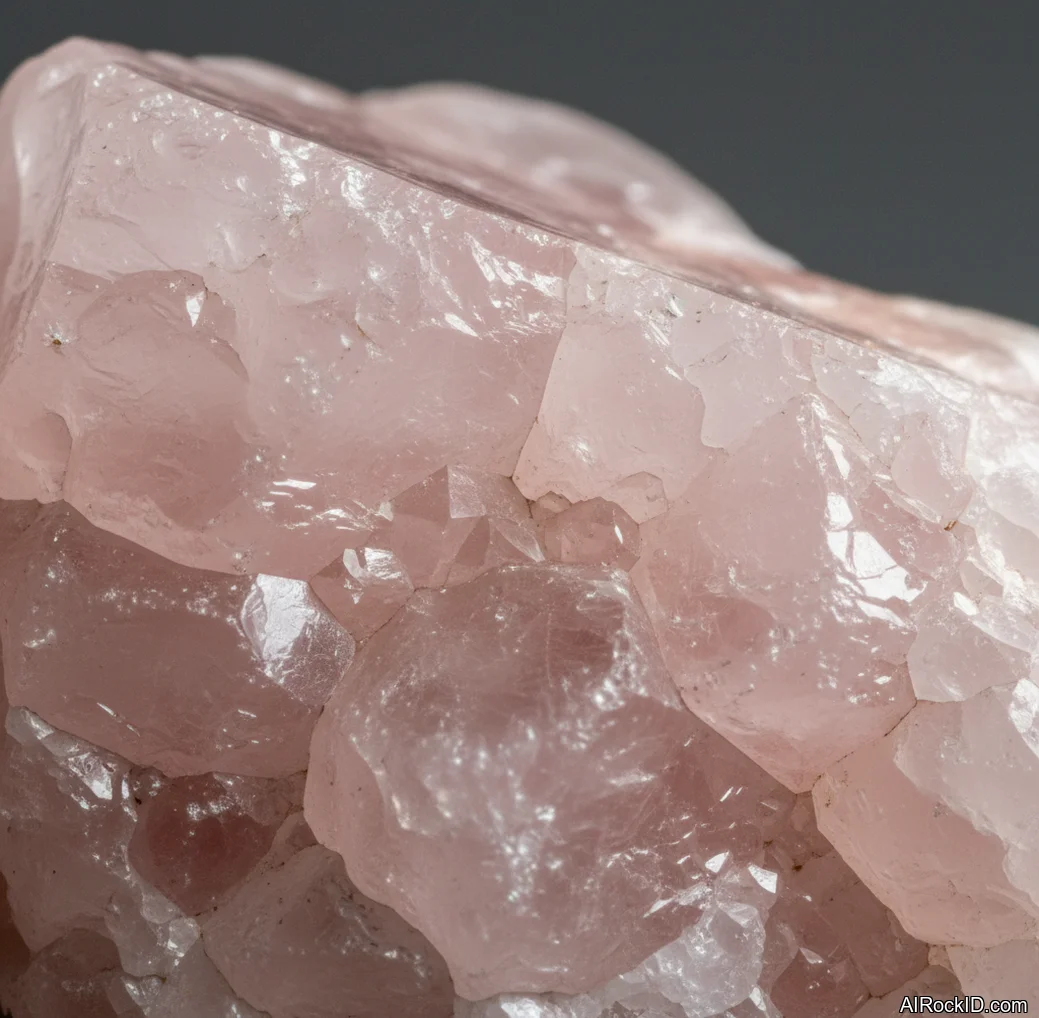
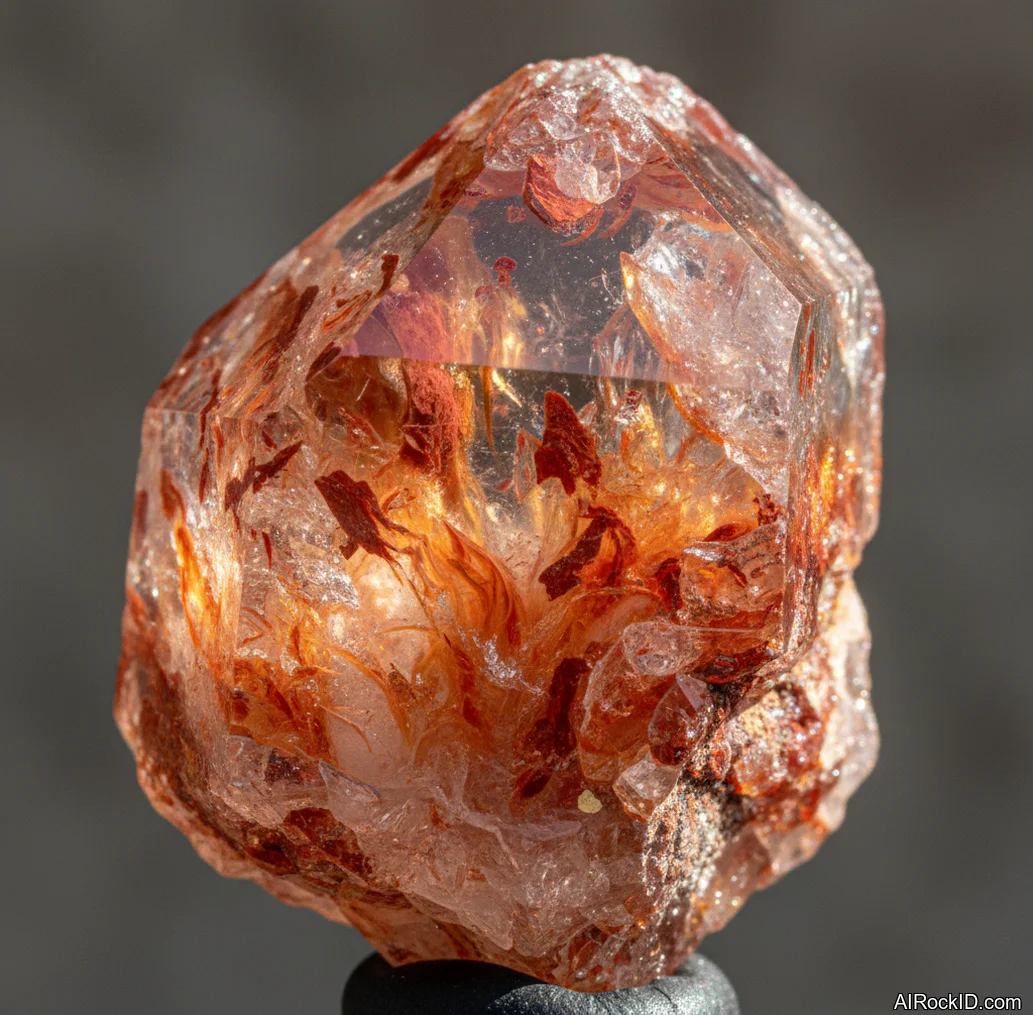
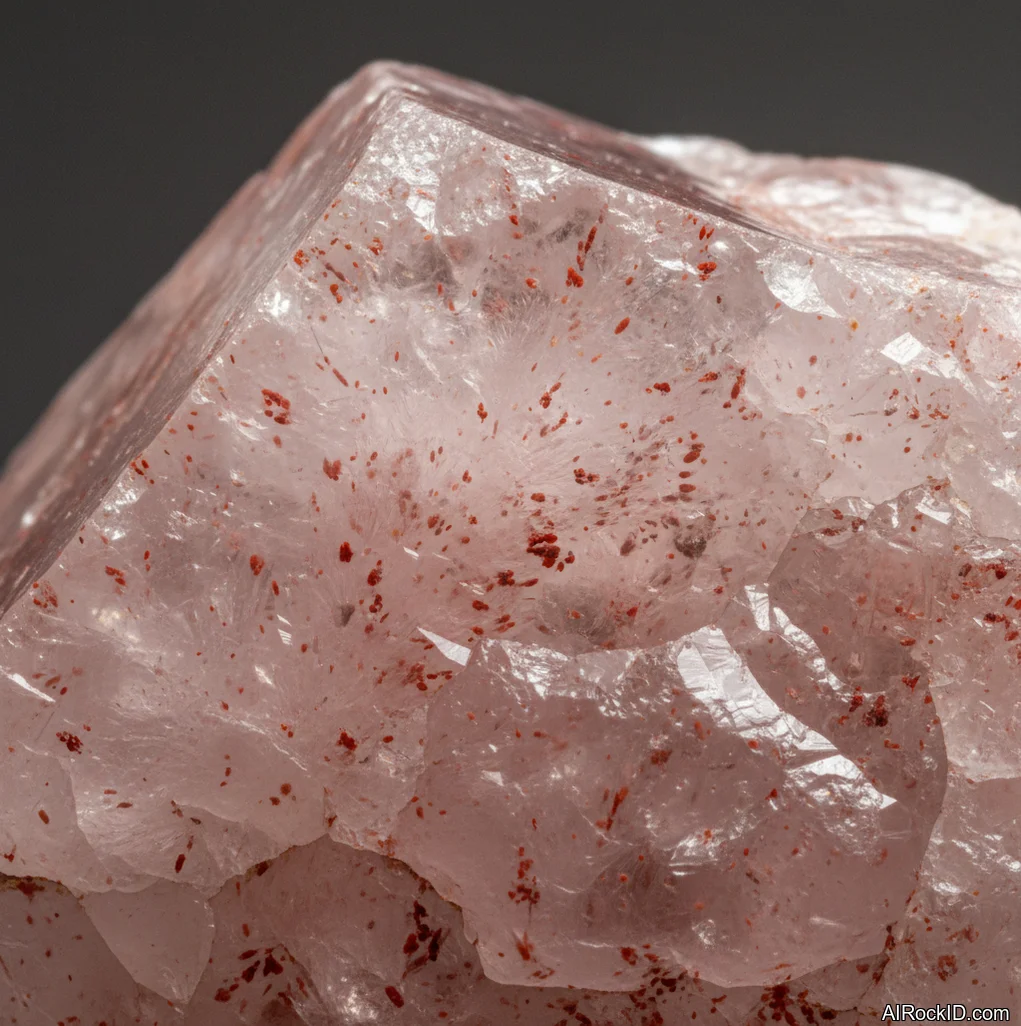
Strawberry Quartz is just quartz, but tinted pink to reddish because of tiny mineral inclusions, usually iron oxides like hematite or goethite. Up close, it can honestly look like someone shook red sugar into clear quartz. But the nicer pieces don’t look “painted” at all. The color’s inside the stone, not sitting on the surface, and if you tilt it under a lamp you can watch the sparkle jump around as different inclusion planes grab the light.
Hold a tumbled piece and you get that familiar quartz thing right away: it’s cool when you first touch it, then it slowly warms up in your palm. And it’s tougher than it looks. It’ll scratch glass without much effort. Thing is, “Strawberry Quartz” gets thrown around as a trade name, so you’ll see everything from pale pink included quartz to dyed crackle quartz sold with that same tag. The better material has real depth, like the pink is hovering in layers, and you’ll usually catch tiny confetti-like points instead of one flat, perfectly even color.
Origin & History
“Strawberry quartz” is just a modern trade label, not an officially defined mineral species. It’s basically quartz (SiO2) with red to pink inclusions, and the “strawberry” bit comes from that seeded, speckled look dealers love to point out once it’s been polished and you can see the little dots catch the light.
Quartz, though, was described and named way before the gem trade started cooking up flavor names. The word “quartz” came through German sources (Quarz) and early European mineralogists used it pretty broadly.
The “strawberry” name shows up much later, mostly in the late 20th century into the early 2000s, when included quartz became a steady supply item for beads, palm stones, and carvings. Most collectors I know treat it like a handy nickname (fine for a show table), but you still want to ask what those inclusions actually are, right?
Where Is Strawberry Quartz Found?
Included pink-red quartz is reported from pegmatites and alpine-type veins in several countries, with Brazil being a common commercial source. Material also turns up from Russia and the western USA in smaller amounts.
Formation
Most strawberry quartz starts out the same way regular quartz does. Silica-rich fluids slip through tiny cracks or open pockets in the host rock, then quartz drops out of that fluid as it cools down or the chemistry changes.
The “strawberry” part kicks in when fine particles of iron oxide (or other minerals) get caught while the crystal’s growing. It can look like a light dusting, little flat plates, or soft cloudy patches trapped inside.
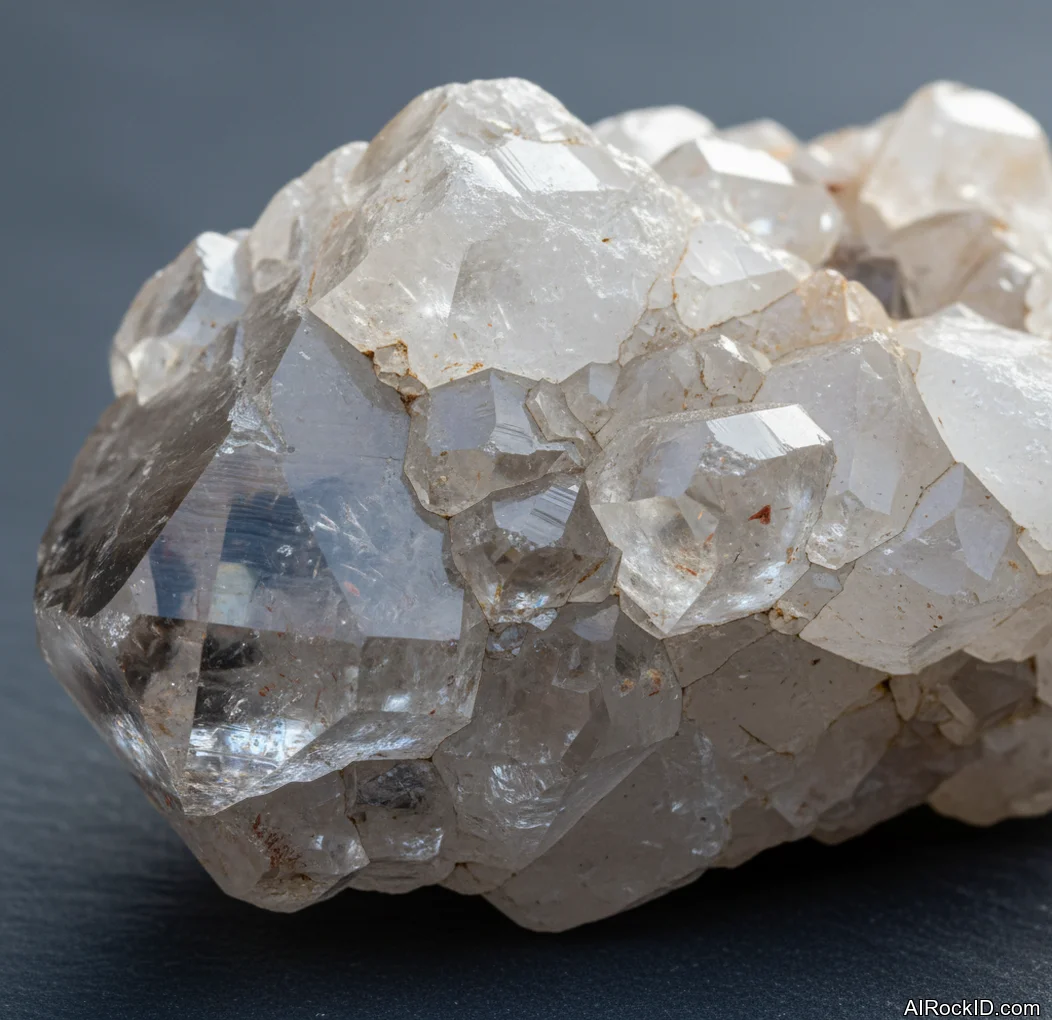
Look, if you’ve got a fresh break (that sharp, sugary-looking surface quartz gets) or even a polished dome under a loupe, you can sometimes see how it grew. You’ll notice bands where the inclusions are packed in tight, then a clearer stripe, then another peppery layer. That kind of zoning is a pretty solid hint it formed in pulses over time, not as one uniform blob. But it doesn’t show up in every piece. A lot of bead-grade rough is more evenly included, which is great for matching color (handy, honestly) and kind of dull for collectors who want a little “story” in the stone.
How to Identify Strawberry Quartz
Color: Colors range from pale rose to raspberry red, usually with scattered specks, glittery points, or smoky-pink clouds rather than a flat solid pink. The color is typically caused by iron-bearing inclusions such as hematite or goethite.
Luster: Vitreous, like ordinary quartz, with a glassy shine on polished surfaces.
Look closely with a 10x loupe: real included quartz shows internal specks or plates that sit at different depths, not color pooled in surface cracks. The real test is a hard, crisp polish and that quartz “snap” at the edges, because softer dyed glass imitations often feel a little waxy and round in a weird way. If you scratch it with a steel knife, the knife should lose, but don’t do that on a finished cab unless you like regret.
Properties of Strawberry Quartz
Physical Properties
| Crystal System | Trigonal |
| Hardness (Mohs) | 7 (Hard (6-7.5)) |
| Density | 2.65 g/cm3 |
| Luster | Vitreous |
| Diaphaneity | Transparent to translucent |
| Fracture | Conchoidal |
| Streak | White |
| Magnetism | Non-magnetic |
| Colors | Pink, Rose, Reddish pink, Red, Peach |
Chemical Properties
| Classification | Silicates |
| Formula | SiO2 |
| Elements | Si, O |
| Common Impurities | Fe, Ti, Al |
Optical Properties
| Refractive Index | 1.544-1.553 |
| Birefringence | 0.009 |
| Pleochroism | None |
| Optical Character | Uniaxial |
Strawberry Quartz Health & Safety
Strawberry quartz is usually fine to touch, and it can handle a quick rinse or brief water contact because, at the end of the day, it’s quartz. Thing is, the real risk is boring and physical: it can chip, a broken bit can leave a sharp little edge that’ll nick you, and those polished pieces get slick fast in a bath and can slip right out of your hand.
Safety Tips
If you’re going to cut or grind it, handle it like any other silica-bearing stone: keep it wet (a little water running down the cut so it turns to slurry instead of dust) and wear proper respiratory protection, because you really don’t want to be breathing that stuff in.
Strawberry Quartz Value & Price
Price Range
Rough/Tumbled: $5 - $60 per piece
Cut/Polished: $1 - $12 per carat
Price jumps around depending on how saturated the color is, how “clean” the quartz looks, and if the inclusions read like tiny glittery specks or more like muddy clouds. A cab that’s cut well and shows an even strawberry tone will run higher than bead-grade stuff, and truly transparent faceting rough is the one that’s tough to track down.
Durability
Durable — Scratch resistance: Excellent, Toughness: Good
It holds up like any quartz in day-to-day wear, but it can chip on sharp edges and it doesn’t love being dropped on tile.
How to Care for Strawberry Quartz
Use & Storage
Store it the same way you’d store other quartz: separated from softer stones so it doesn’t scuff them, and wrapped if you want to prevent tiny edge dings. If it’s a polished sphere or palm stone, a simple ring stand keeps it from rolling off a shelf.
Cleaning
1) Rinse with lukewarm water and a drop of mild soap. 2) Use a soft toothbrush to get into drill holes or carving details. 3) Rinse again and dry with a microfiber cloth.
Cleanse & Charge
For a metaphysical reset, people commonly use smoke, sound, or a quick rinse and dry. If you leave it in sun for long periods, watch for any color shift in lighter pieces and just move it back to shade.
Placement
On a desk, it reads as warm and friendly under indoor light, especially next to clear quartz or smoky quartz. In a display case, give it side lighting so the inclusions flash instead of going flat.
Caution
Skip harsh acids and gritty cleaners. And don’t count on those “salt water soaks” if the piece has fractures or drilled holes, because that stuff loves to sit in there and hold onto grime (you can actually feel the crusty residue when you rub the spot with a fingernail). Keep it away from high heat too, since heat can stress quartz and make internal cracks worse.
Works Well With
Strawberry Quartz Meaning & Healing Properties
Strawberry quartz gets tossed in the same bucket as rose quartz at first because, sure, it’s pink. But in your hand? It doesn’t read the same. Rose quartz usually looks milky, kind of hazy, like it’s got a soft fog under the surface. Strawberry quartz tends to have that speckled glitter in it, the tiny peppery flashes that catch when you tilt it under a shop light, and people clock that as more “uplifting” than purely calming. When I’m sorting a tray at the store, the pieces with fine, even inclusions are the ones that get grabbed, flipped, tilted, flipped again (like someone’s trying to chase the sparkle across the face).
In crystal culture, it gets linked to gentle heart stuff: affection, kindness, easing emotional tension, and getting out of your own head. I’ve also heard people call it a “mood brightener” stone, mostly because the color is cheerful and that shimmer gives your eyes something to lock onto when you’re fidgety. But look, here’s the honest bit: if you’re waiting for some dramatic, instant emotional reset, you’ll probably feel let down. It’s still quartz with inclusions. Subtle. Personal. Sometimes you notice it, sometimes you just like having it there.
So if you use crystals more like reminders, or little props for a routine, strawberry quartz is handy because it’s durable enough to carry and the look is easy to connect with. I like it as a pocket stone on days I’m trying not to be sharp with people. And if you’re the kind of person who does better with a physical anchor, that cool, solid quartz weight sitting in your palm can be the cue. Is it medical care? No. If anxiety or depression is taking up real space in your life, crystals can sit alongside proper support, not replace it.
Identify Any Crystal Instantly
Snap a photo and get properties, value, care instructions, and healing meanings in seconds.