Sugilite
What Is Sugilite?
Sugilite is a rare purple cyclosilicate mineral, formula KNa2(Fe,Mn,Al)2Li3Si12O30. When you actually hold a good piece, it feels a touch heavier than your eyes expect from something that reads as “just” purple. And when it’s polished, it usually comes up more waxy than glassy, like it’s got that soft sheen instead of a hard, mirror sparkle.
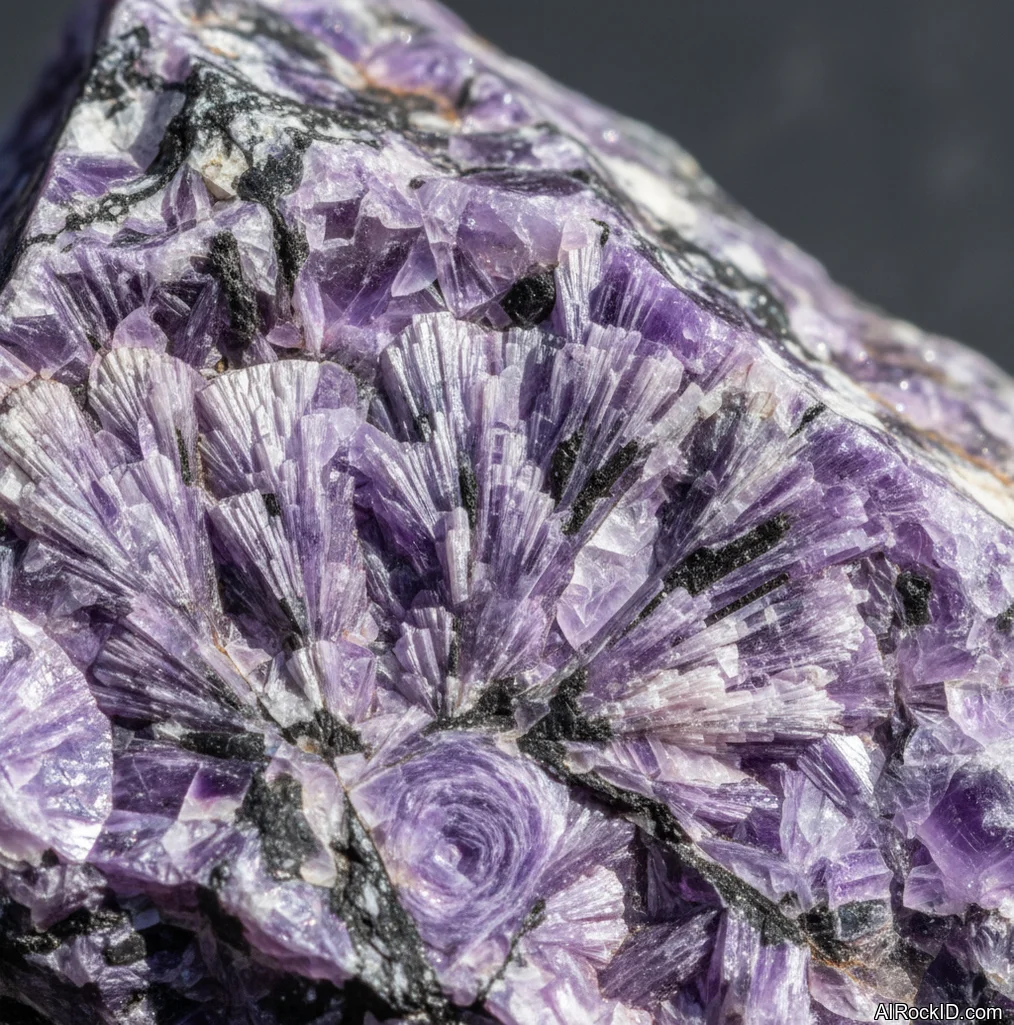
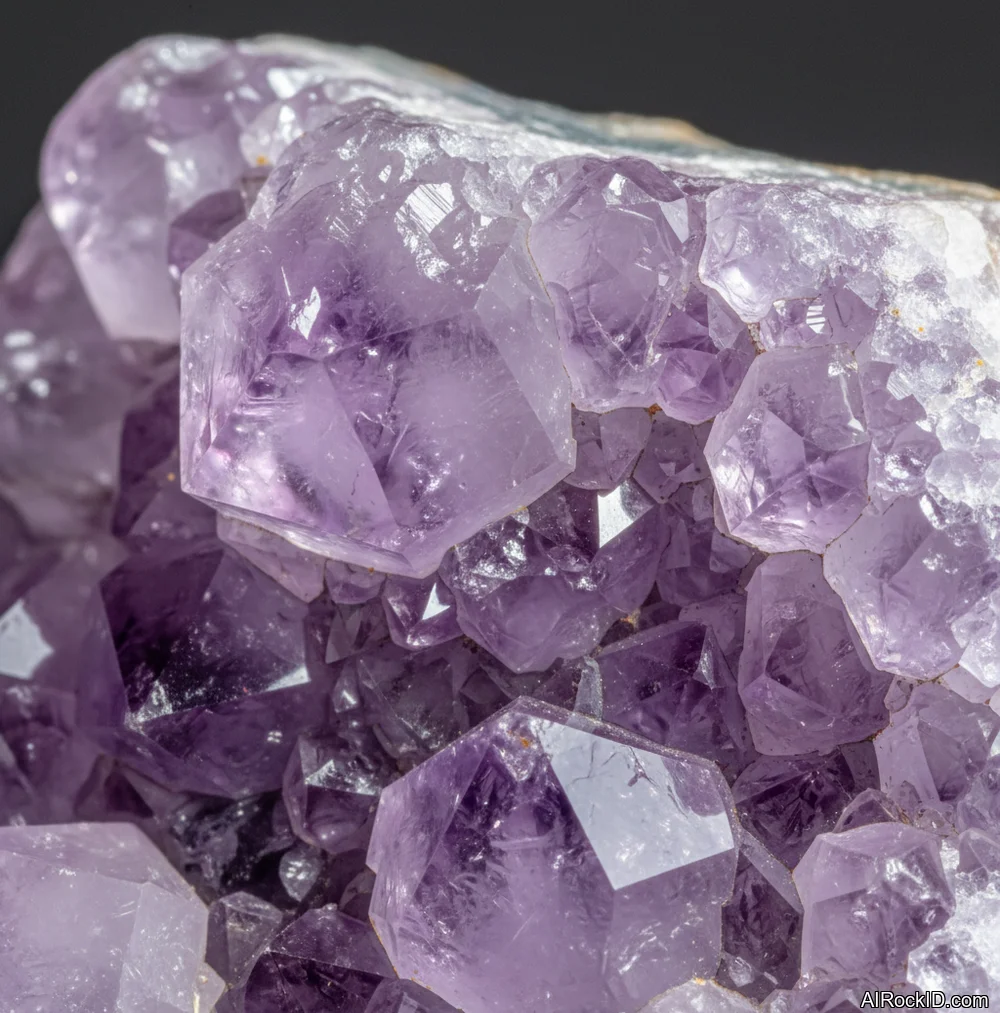
People see it and instantly lump it in with charoite, or even call it purple jasper. But sugilite’s usually got that inky, grapey purple that can drift into lavender, and you’ll often catch black manganese matrix or that webby, spiderline veining. Grab a cabochon and tilt it under a shop light, the kind that throws a tight white reflection. The better stones have real depth, like the purple’s sitting a millimeter down inside the stone, not painted on the surface. Hard to unsee once you’ve noticed it.
Most of what you’ll run into for sale is cut or tumbled, because clean crystals are basically a unicorn. And thing is, even within the same parcel it can be all over the place. One piece is solid purple. Next one’s purple with cream patches (almost like smeared milk). Then you get one that’s mostly black matrix with a few purple streaks threading through it. That inconsistency is kind of the tell, honestly.
Origin & History
Japan’s where this story kicks off. Sugilite was first described in 1944 by the Japanese petrologist Ken-ichi Sugi after he found it in rocks on Iwagi Islet in Ehime Prefecture. The name is basically just his last name with “-lite” stuck on the end, which is about as old-school mineralogy as it gets.
Thing is, collectors didn’t go out of their way for it at first. That changed later, when brighter, more gemmy material turned up in the Kalahari Manganese Field of South Africa. That’s the find that pushed sugilite into the “purple gemstone” category in the trade instead of leaving it as a footnote in a mineral book. And honestly, most dealers today are talking about the South African material, even if they never come right out and say it.
Where Is Sugilite Found?
The classic gem-grade material comes from South Africa’s Kalahari Manganese Field, especially around Wessels. Smaller, collector-type occurrences are reported from Japan and a handful of alkaline and metamorphosed manganese settings elsewhere.
Formation
Think of manganese-heavy rock that’s been knocked around and changed a few times. Sugilite shows up in metamorphosed manganese deposits and in some alkaline igneous settings, but only when the chemistry lines up just right: potassium, sodium, lithium, silica, plus manganese or iron.
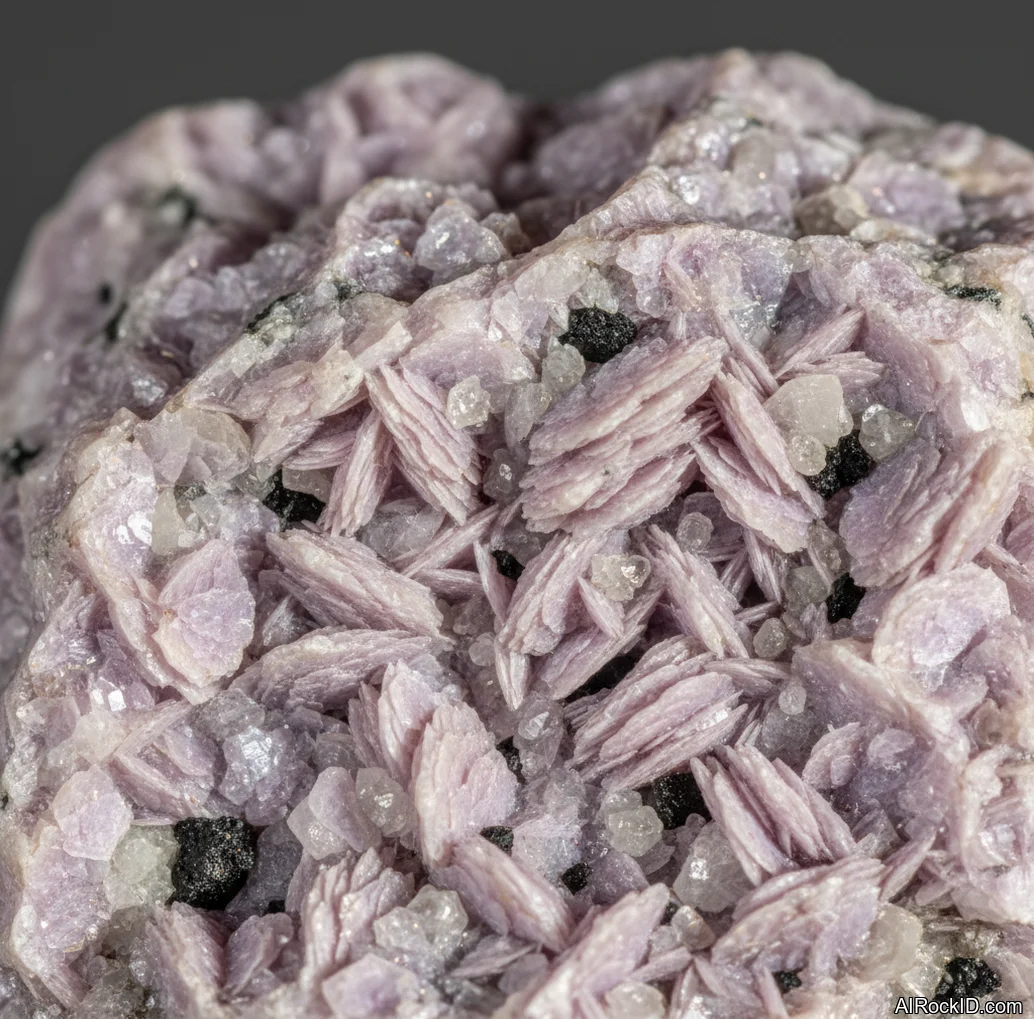
Kalahari rough usually isn’t tidy little crystals you can just pick out with tweezers. It’s more like sugilite tangled up with matrix minerals, stuck in there as thick seams, lumpy pods, and vein-y streaks cutting through a darker host rock (the kind that leaves black dust on your fingers when you handle it). And the annoying thing about “mine run” sugilite? It can look killer on the outside, then you slice it and it goes dead and dull inside. So cutters learn quick: test-slab it first, or you’ll regret it.
How to Identify Sugilite
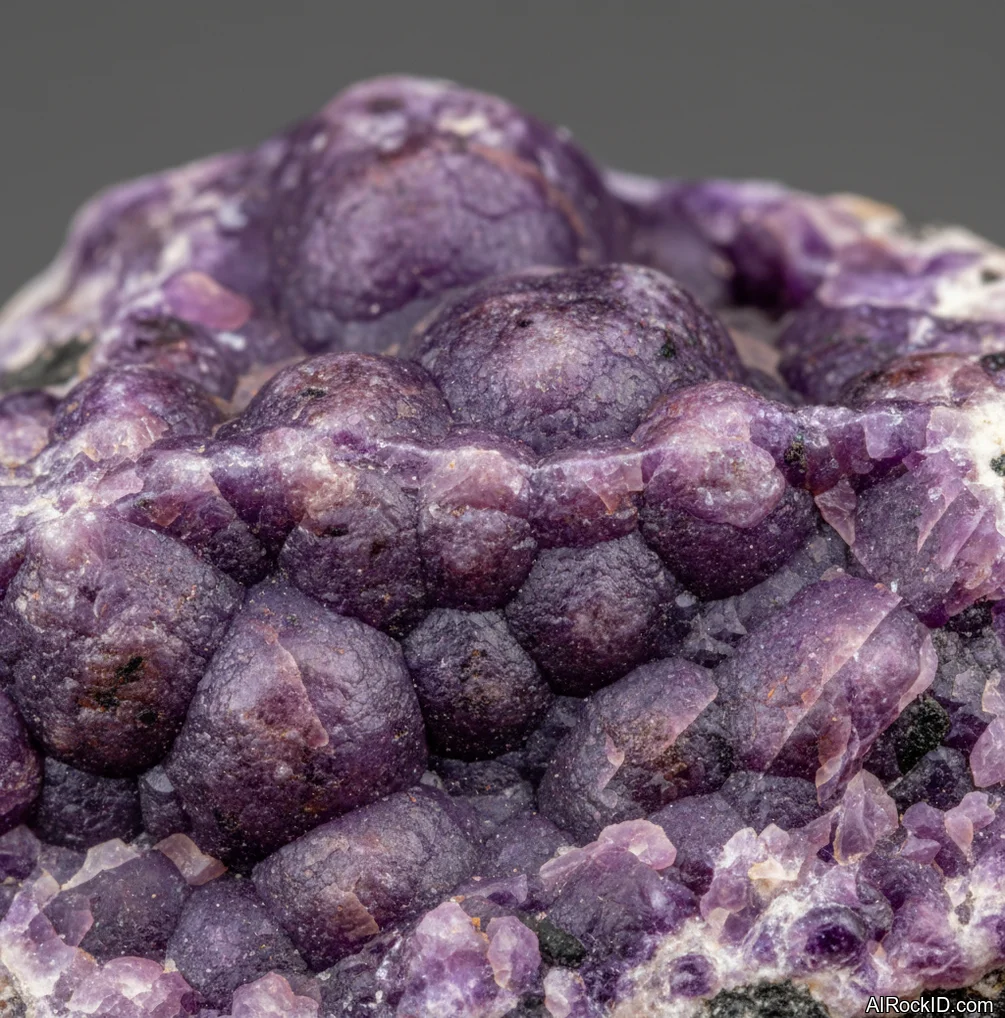
Color: Sugilite ranges from lavender and lilac to deep purple, often with black manganese matrix or brownish to cream patches. The purple is usually more “inky” than amethyst and more uniform than most charoite.
Luster: Polished sugilite is typically waxy to vitreous, depending on quality and how fine the material is.
Pick up a polished piece and check the feel. Real sugilite stays cool in your hand like stone should, while resin fakes warm up fast. Look closely for natural-looking matrix and slight color zoning instead of a flat, printer-ink purple. If you scratch it with a steel point in an inconspicuous spot, many pieces will show a mark because it tops out around Mohs 6.5, so don’t treat it like quartz.
Properties of Sugilite
Physical Properties
| Crystal System | Hexagonal |
| Hardness (Mohs) | 5.5-6.5 (Medium (4-6)) |
| Density | 2.74-2.80 g/cm3 |
| Luster | Vitreous |
| Diaphaneity | Translucent to opaque |
| Fracture | Uneven |
| Streak | White |
| Magnetism | Non-magnetic |
| Colors | Purple, Lavender, Lilac, Pinkish purple, Reddish purple, Black (matrix), Brown, Cream |
Chemical Properties
| Classification | Silicates |
| Formula | KNa2(Fe,Mn,Al)2Li3Si12O30 |
| Elements | K, Na, Fe, Mn, Al, Li, Si, O |
| Common Impurities | Ca, Mg |
Optical Properties
| Refractive Index | 1.607-1.610 |
| Birefringence | 0.003 |
| Pleochroism | Weak |
| Optical Character | Uniaxial |
Sugilite Health & Safety
Sugilite’s usually fine to handle and keep out on a shelf or desk. But if you’re grinding or sanding it (or any stone), stick to standard lapidary precautions, because that dust gets everywhere and it’s not something you want in your lungs.
Safety Tips
If you’re going to cut it or sand it, keep some water on it to keep the dust down, work somewhere with solid airflow (open door, fan, whatever you’ve got), and wear a real mask so you don’t end up breathing in that fine mineral dust.
Sugilite Value & Price
Price Range
Rough/Tumbled: $10 - $250 per piece
Cut/Polished: $5 - $80 per carat
Price can jump all over the place depending on the color, how saturated that purple looks in real light, and how much black matrix is running through it. Clean, deep purple cab material from South Africa goes for a lot more than pale rough that’s all mottled and mixed up.
Durability
Moderate — Scratch resistance: Fair, Toughness: Fair
Sugilite is stable in normal conditions, but it can scratch and chip if you toss it in a pocket with quartz or wear it as a daily ring stone.
How to Care for Sugilite
Use & Storage
Store sugilite separate from harder stones like quartz and topaz so it doesn’t pick up scratches. I keep mine in a small box with foam because polished pieces can bruise on the edges.
Cleaning
1) Rinse with lukewarm water and a drop of mild soap. 2) Use a soft toothbrush to clean around matrix or pits. 3) Rinse well and pat dry with a soft cloth.
Cleanse & Charge
If you do energetic cleansing, stick to gentle options like smoke, sound, or a short sit on selenite. Long direct sun isn’t my go-to for purple stones in general, so I keep sugilite out of bright windows.
Placement
On a desk or nightstand, sugilite reads best under warm indoor light where the purple looks deeper. If it’s a display chunk with matrix, angle it so the black and purple contrast shows.
Caution
Skip ultrasonic cleaners and any harsh chemicals. They can sneak into tiny stress fractures you can’t even see yet, and they’ll chew up a high polish fast. And don’t wear it while you’re doing rough work. At Mohs 5.5–6.5, it’ll scuff and go dull quicker than you’d expect (especially once you’ve seen those little cloudy rub marks show up after a day of banging around).
Works Well With
Sugilite Meaning & Healing Properties
Compared to a lot of the “pretty purple” stones out there, sugilite hits different. It feels heavier in my hand. Calmer, too. When I pick up a decent cab, it kind of sinks into my palm, like it wants to stay put instead of buzzing all over the place.
And that’s why I keep one in my pocket on long show days. The kind where the aisles are packed, somebody’s blasting music two booths over, and by hour four your brain feels fried. I’ll reach in and thumb the smooth face for a second (you know that slightly waxy polish it gets?) and it just takes the edge off.
People in the crystal world like to link sugilite with emotional protection and steadying the nerves. Fine by me, as long as that stays personal and doesn’t drift into medical claims. In real life, it’s basically a comfort object for a lot of folks, and honestly the color does a lot of the heavy lifting. Purple is soothing for plenty of people. That’s it.
But here’s where it gets tricky. The market is a mess. Some sellers will hype dyed material or composite blocks as “high grade” because buyers are chasing that solid, royal purple look. Thing is, once you’ve handled real sugilite, you start noticing the quieter tells, like those little shifts in tone, the natural matrix patterns, even the way the color isn’t perfectly flat. And then you stop chasing that cartoon purple. Why would you?
Identify Any Crystal Instantly
Snap a photo and get properties, value, care instructions, and healing meanings in seconds.