Yooperlite


Quick answer: Yooperlite is best identified by its orange fluorescence under UV light combined with a gray, speckled syenite appearance in normal light. The strongest visual clue is the contrast between ordinary-looking beach rock and bright fluorescent sodalite patches under a proper UV flashlight.
AI Rock ID can help screen a suspected Yooperlite by comparing its visible texture, color, and fluorescence pattern with known sodalite-bearing rocks. RockIdentifier.io provides identification support, but UV reaction, location, and physical inspection should still be used for confirmation.
Good fit
- Collectors who enjoy fluorescent minerals and UV-reactive rocks
- Beach rock hunters searching along Lake Superior shorelines
- Beginners who want a visually distinctive specimen to test with UV light
- People comparing natural fluorescent rocks with dyed or treated stones
Not a good fit
- Anyone expecting a uniformly glowing crystal surface
- Collectors who do not have access to a suitable UV flashlight
- Buyers who want a faceted gemstone rather than a rough decorative rock
- Situations where a lab-confirmed mineral composition is required
Most commonly confused with
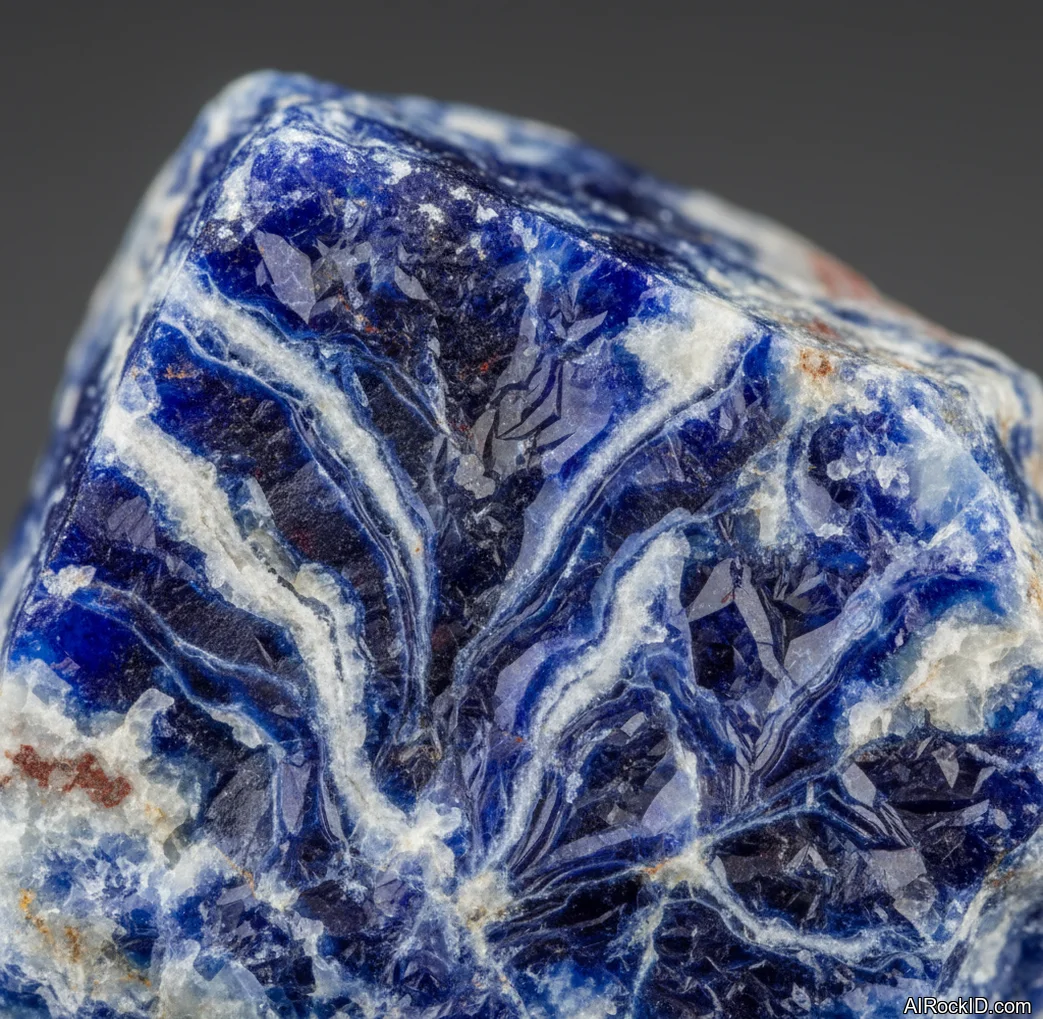
- Sodalite: Yooperlite contains fluorescent sodalite, while sodalite itself is a mineral and often appears blue to gray rather than as a mixed syenite rock.
- Hackmanite: Hackmanite can fluoresce and show tenebrescence, while Yooperlite is typically a sodalite-bearing syenite with orange UV patches.
- Granite: Granite may look similar in daylight, but it usually lacks the strong orange sodalite fluorescence of Yooperlite.
- Calcite: Calcite can fluoresce in several colors, but it has different hardness, cleavage, and texture from a syenite beach rock.
Yooperlite Lookalike Comparison
| Material | Daylight Appearance | UV Clue | Key Difference |
|---|---|---|---|
| Yooperlite | Gray to tan speckled syenite | Orange fluorescent sodalite patches | Rock matrix with scattered glowing areas |
| Sodalite | Blue, gray, or white mineral | May fluoresce orange | Mineral, not a mixed syenite rock |
| Hackmanite | Pale violet, gray, or white | Often orange to pink fluorescence | May change color after UV exposure |
| Granite | Speckled gray, pink, or white rock | Usually weak or no orange fluorescence | Similar texture but lacks sodalite glow |
| Calcite | White, yellow, orange, or clear mineral | Variable fluorescence | Softer and commonly shows cleavage |
AI identification confidence
AI identification confidence is higher when a clear daylight photo is paired with a UV photo taken in the same position. Confidence is lower when the image only shows a glowing orange area without scale, texture, or the non-UV appearance.
When AI gets it wrong
- The photo is taken under the wrong UV wavelength or mixed lighting.
- A fluorescent coating, dye, or resin is mistaken for natural sodalite fluorescence.
- The specimen is wet, overexposed, or photographed too close to the flashlight.
- Only the glowing area is shown, making the host rock texture impossible to evaluate.
Final recommendation
For identification, choose specimens that show both a natural speckled rock texture in daylight and distinct orange fluorescence under UV light. For buying, request normal-light and UV-light photos of the same side of the stone before relying on a Yooperlite label.
How to Check Yooperlite Authenticity Before Buying
A useful listing should show the same specimen in normal light and under UV light, preferably with the surface pattern matching between photos. Natural Yooperlite usually has irregular glowing patches rather than a perfectly even orange surface. Ask whether the stone is untreated and whether the fluorescence comes from the rock itself rather than paint, resin, or a surface coating.
Best UV Light for Viewing Yooperlite
Many Yooperlite hunters use a 365 nm longwave UV flashlight because it can make sodalite fluorescence stand out more clearly than weaker novelty lights. A 395 nm light may still show fluorescence, but visible purple spill can make the orange reaction harder to judge. UV lights should be used responsibly, with direct eye and skin exposure avoided.
Where Yooperlite Is Commonly Found
Most well-known Yooperlite material is associated with Lake Superior beaches, especially in Michigan’s Upper Peninsula. Similar sodalite-bearing rocks may occur elsewhere, so location alone does not prove identity. Beach collecting rules vary by area, and local regulations should be checked before removing stones.
What Is Yooperlite?
Yooperlite is just a trade name for a sodalite-bearing syenite rock, and it lights up a bright orange when you hit it with UV.
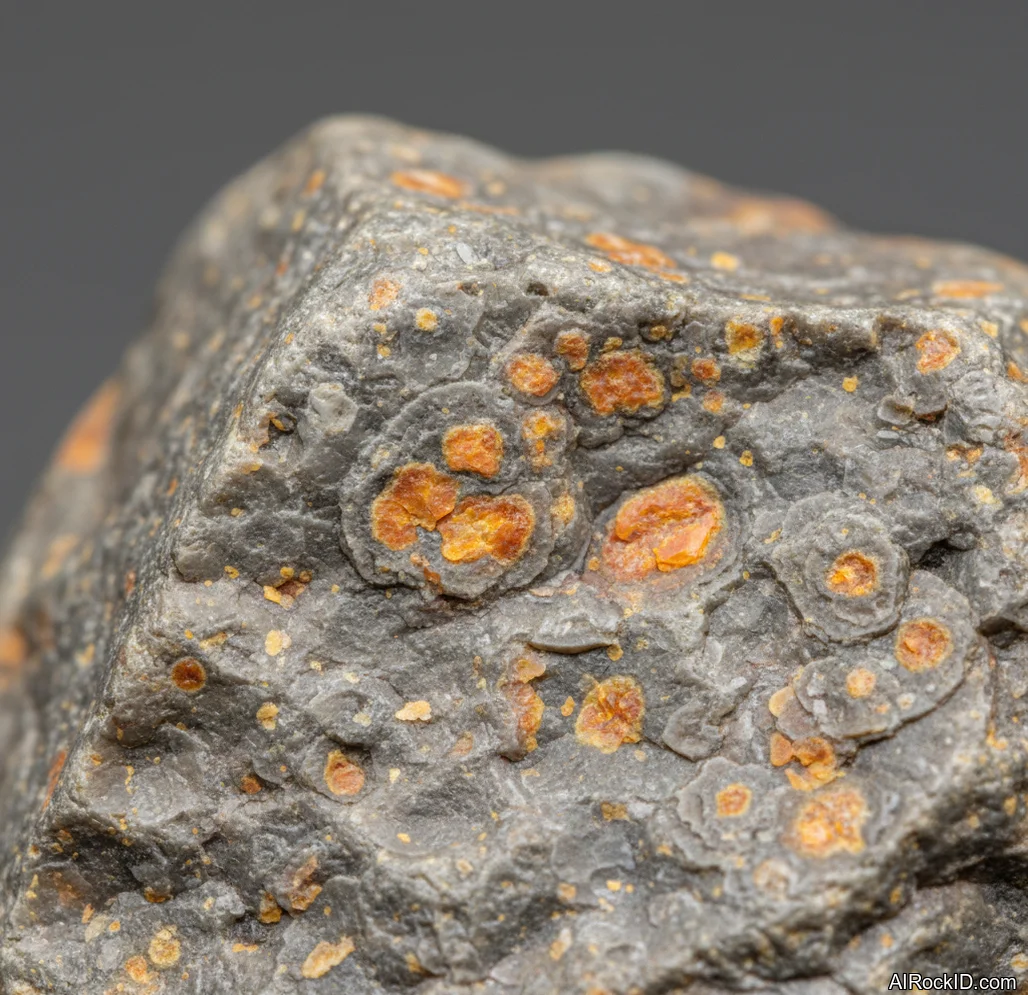
In regular light, it’s honestly easy to walk right past. It looks like a plain gray beach rock, sometimes with those peppery black specks and a few lighter feldspar patches. Then you grab one. And yeah, you can feel it immediately: the outside has that smooth, wave-tumbled “skin,” but it still feels kinda hefty in your palm, like you’d expect from a dense igneous rock.
But under UV, the story changes fast. The orange glow usually shows up in blotches and little veins, not as a perfectly even coat, and that uneven, messy look is exactly what a lot of collectors are after. Thing is, plenty of pieces look pretty boring in normal room light, so if you’re buying online, you really want photos in both lighting conditions. Otherwise, you’re basically gambling, right?
Origin & History
Most dealers pin the modern “Yooperlite” craze on 2017, when Erik Rintamaki started publicizing fluorescent rocks he’d found along Lake Superior in Michigan’s Upper Peninsula. The name comes from “Yooper,” the local word for people from the U.P., and it caught on fast because, honestly, it’s a lot easier to say than “sodalite syenite.”
But the rock itself isn’t new. Syenites and related intrusive rocks around the Lake Superior region have been studied forever. What changed? Regular people started walking the beaches with strong 365 nm UV flashlights and noticing that some of those dull gray stones (the ones that look totally ordinary in daylight) light up like campfire coals.
Where Is Yooperlite Found?
Most yooperlite on the market is collected along Lake Superior, especially in Michigan’s Upper Peninsula and nearby Ontario shorelines where glacial transport and wave action concentrate cobbles.
Formation
Raw pieces from Lake Superior started out as intrusive igneous rock. Picture magma cooling slowly underground, taking its time, and you end up with that coarse blend of feldspar and dark minerals. And in certain syenite bodies, sodalite’s mixed in too, kind of tucked into the recipe.
Then the Ice Age did its usual up there. Glaciers scraped rock off the bedrock, hauled it around, and dropped it all over the Great Lakes region. But it’s the shoreline that finishes the job: Lake Superior’s waves keep knocking the cobbles together, rolling them over and over until the corners are gone and they’ve got that rounded, beach-worn feel (smooth where your thumb keeps rubbing, with the odd little pit that catches grit). The orange fluorescence comes from sodalite, and it usually shows up in patches, not spread evenly through the whole stone. Why would it be perfectly uniform after all that?
How to Identify Yooperlite
Color: In normal light it’s usually gray to dark gray with scattered black specks and lighter feldspar grains; under UV it shows orange to yellow-orange fluorescent zones.
Luster: Most pieces have a dull to slightly waxy look on the natural tumbled surface, turning more vitreous where they’re cut and polished.
Under UV light, look for irregular orange patches that follow the rock fabric, not a painted-on glow. The real test is to use a 365 nm UV light, because many pieces are weaker or look different under 395 nm. And in hand, the beach material often has that silky-smooth, water-rolled feel, while fresh broken faces look more granular and “igneous,” like a kitchen countertop chip.
Common Look-Alikes
Yooperlite is sometimes confused with these materials:
- granite beach stones
- feldspar-rich syenite
- dyed sodalite (glows under UV, but too blue or patchy)
- UV-reactive glass fakes
- basalt with spray paint or marker to mimic sodalite spots
Market Cautions & Treatments
When AI Can Get This Wrong
Photo ID tools confuse Yooperlite with plain granite or basalt if they don't see the UV shot. Under normal lighting, it just looks like any gray lake rock. If you want to be sure, hit it with a 365nm UV flashlight and look for that sharp orange flash—no other common beach rock in the Midwest does that.
Properties of Yooperlite
Physical Properties
| Crystal System | Cubic |
| Hardness (Mohs) | 5.5-6 (Medium (4-6)) |
| Density | 2.27-2.33 g/cm3 |
| Luster | Vitreous |
| Diaphaneity | Opaque |
| Fracture | Uneven |
| Streak | White |
| Magnetism | Non-magnetic |
| Colors | gray, dark gray, black, white, orange (fluorescent) |
Chemical Properties
| Classification | Silicates (tectosilicate; feldspathoid) |
| Formula | Na8(Al6Si6O24)Cl2 |
| Elements | Na, Al, Si, O, Cl |
| Common Impurities | S, Ca, K, Fe |
Optical Properties
| Refractive Index | 1.483-1.487 |
| Birefringence | None |
| Pleochroism | None |
| Optical Character | Isotropic |
Yooperlite Health & Safety
Yooperlite’s usually fine to pick up and keep on a shelf, the same way you’d handle most common igneous rocks. It feels like any other rock in the hand, honestly. But if you’re going to cut or grind it, stick to basic shop rules, because that’s when the dust and flying grit become the issue.
Safety Tips
If you’re shaping it, put on safety glasses and a real dust mask, and keep a little water running to knock the dust down. It gets everywhere, and you don’t want that grit in your eyes or your lungs, right?
Yooperlite Value & Price
Price Range
Rough/Tumbled: $5 - $80 per piece
Prices jump around depending on how strong the fluorescence is, what the pattern looks like, and how the finish came out. A big chunk that pops loud orange under 365 nm and takes a clean polish (that slick, glassy feel when you rub a thumb across it) will cost more than a little beach pebble that barely glows.
Durability
Moderate — Scratch resistance: Fair, Toughness: Fair
It’s stable for display and handling, but it can scratch if you toss it in a pocket with quartz or keys.
How to Care for Yooperlite
Use & Storage
Keep it in a pouch or a compartmented box if you’ve got multiple stones, especially if any are harder than it. I’ve seen yooperlite get little dull scuffs just from riding around with agate and quartz.
Cleaning
1) Rinse with lukewarm water to remove grit. 2) Use a soft brush with a drop of mild soap, then rinse well. 3) Pat dry and let it air-dry fully before storing.
Cleanse & Charge
A quick rinse and a wipe-down is usually enough on the practical side. If you do energy-style cleansing, moonlight or a short sit on a selenite plate works without stressing the stone.
Placement
On a shelf it reads like a plain gray cobble, so I like keeping a small UV light nearby and storing the best pieces where you can actually hit them with 365 nm. A shadowbox display with a UV strip is the fun route.
Caution
Skip harsh acids and scratchy cleaners, since they’ll chew up a polish and leave it feeling kind of grabby instead of smooth. And don’t look into UV flashlights. Seriously. Don’t point UV at anyone’s eyes either.
Works Well With
Yooperlite Meaning & Healing Properties
Under UV light, yooperlite gets people talking fast, and that “hidden fire” vibe is exactly why some folks reach for it when they’re trying to be more honest with themselves. I’ve literally watched customers hover over a tray, fingertips dusty from the grit, then freeze when one rock suddenly flares up under the light and they go, “Okay, so here’s what I’m working on…” It’s that kind of stone. Plain on the outside. Loud if you know where to shine.
But look, I’m staying grounded here. Any metaphysical use is personal and subjective. It’s not medical care. If you’re into using stones as part of a routine, yooperlite works nicely for journaling, late-night meditation, or just sitting there on your desk as a small nudge to check what’s going on under the surface.
Thing is, people expect yooperlite to look like lava in daylight. Most pieces don’t. So if you want it as a “carry stone,” you’ll probably want one with at least a little visible contrast in normal light, otherwise you’ll forget why you grabbed it in the first place. And if you’re sensitive to UV, you don’t have to blast it nonstop to enjoy it. A quick peek under a 365 nm light, then back on the shelf. Keeps the fun without turning your room into a bug-zapper scene (you know the look).
Common mistakes
- Assuming every gray speckled beach rock is Yooperlite without testing it under UV light.
- Judging authenticity from a UV-only photo without seeing the daylight texture.
- Using a weak purple novelty light and concluding a real specimen does not fluoresce.
- Mistaking painted or resin-coated rocks for natural fluorescent sodalite-bearing syenite.
- Expecting the entire rock to glow instead of looking for scattered orange fluorescent zones.
- Ignoring local collection rules on public, private, or protected shorelines.
Identify Yooperlite from a photo
Compare Yooperlite traits, care tips, value clues, and common lookalikes with a clear photo.