Axinite
What Is Axinite?
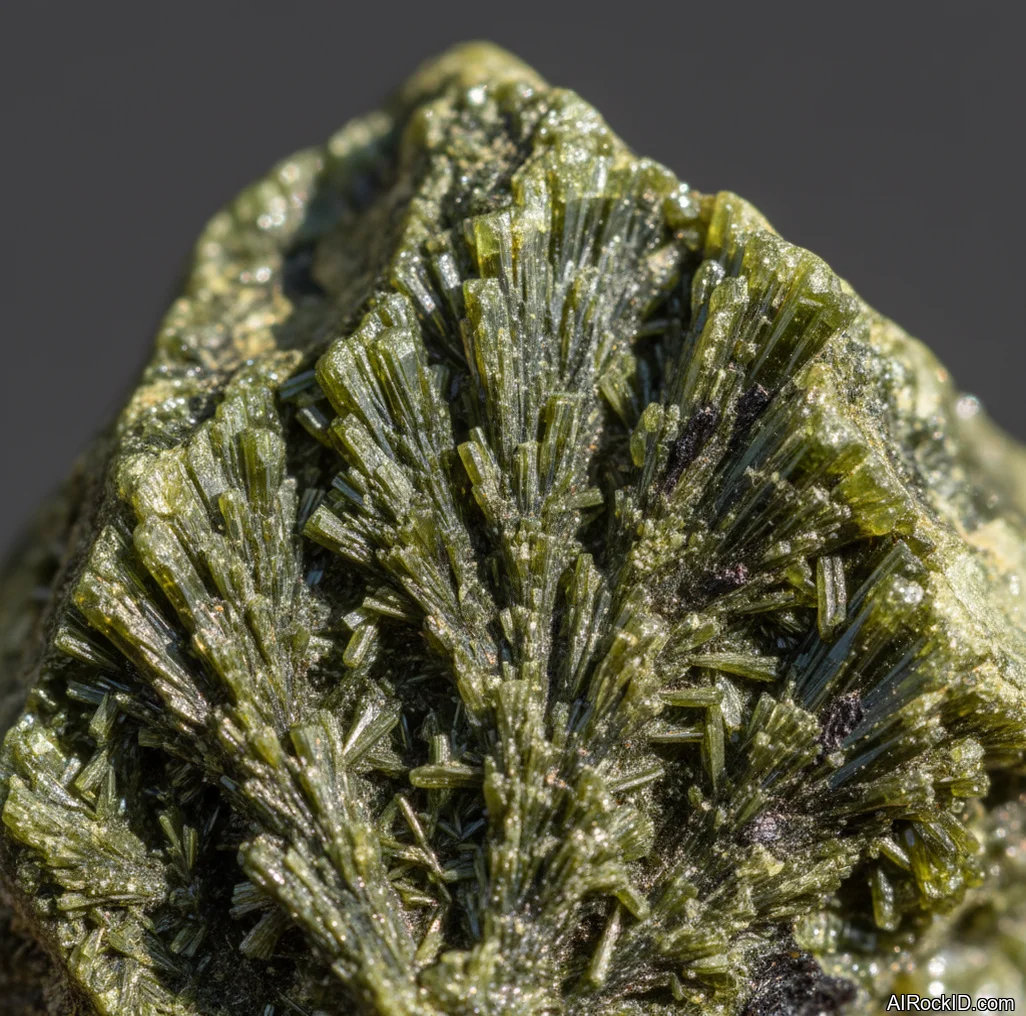
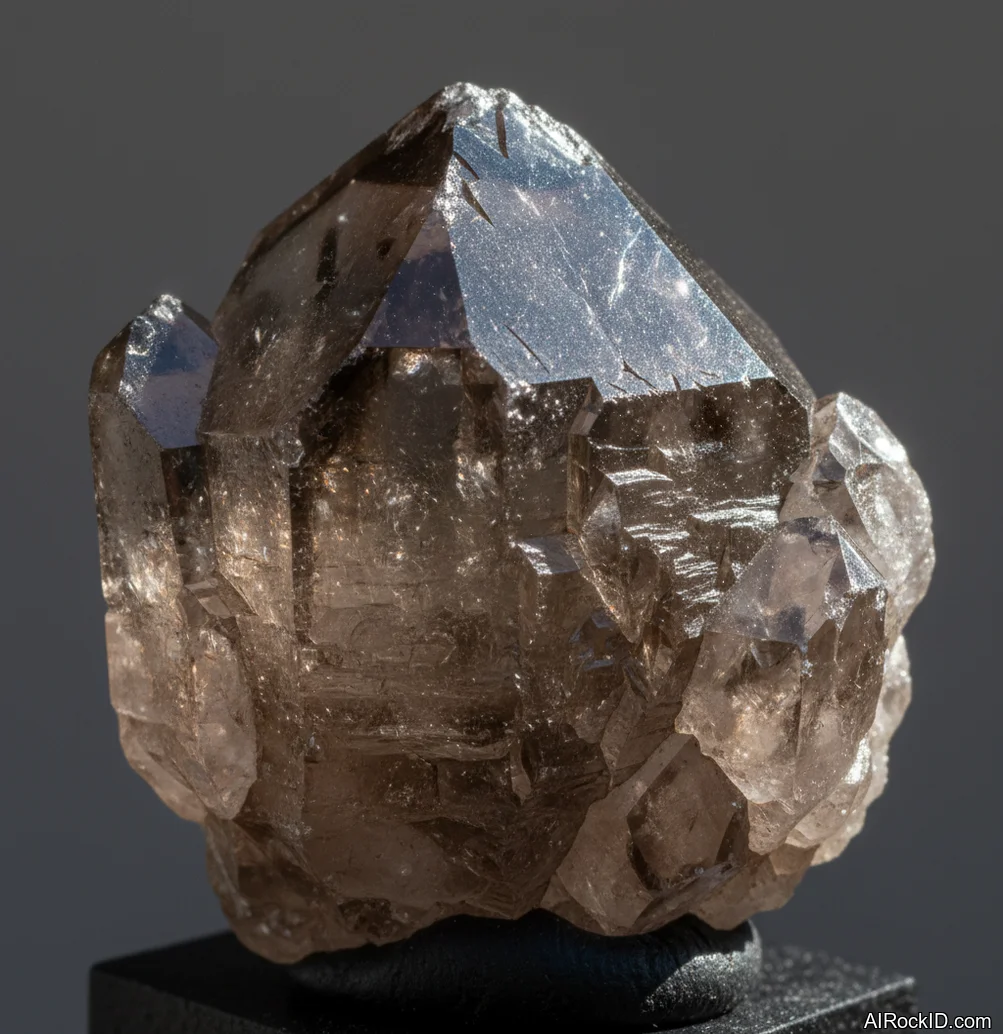
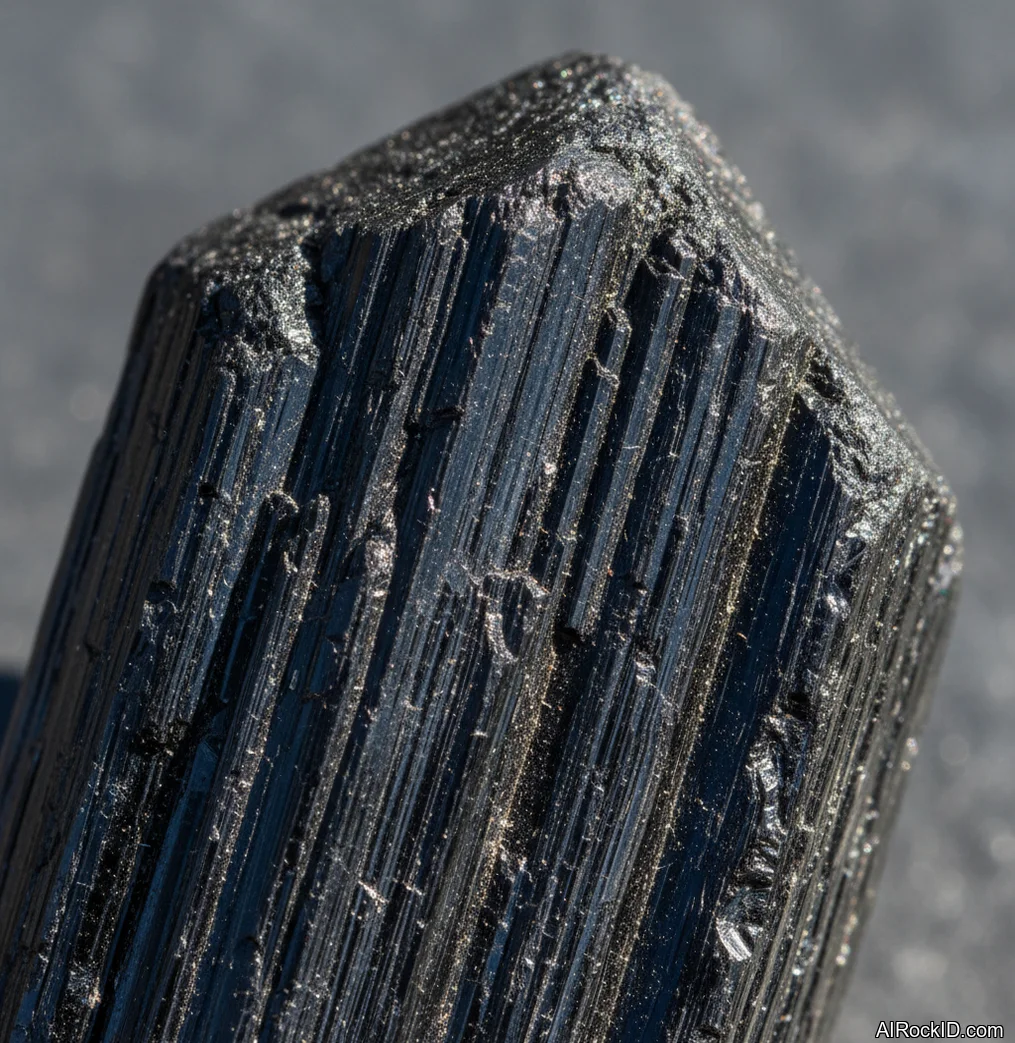
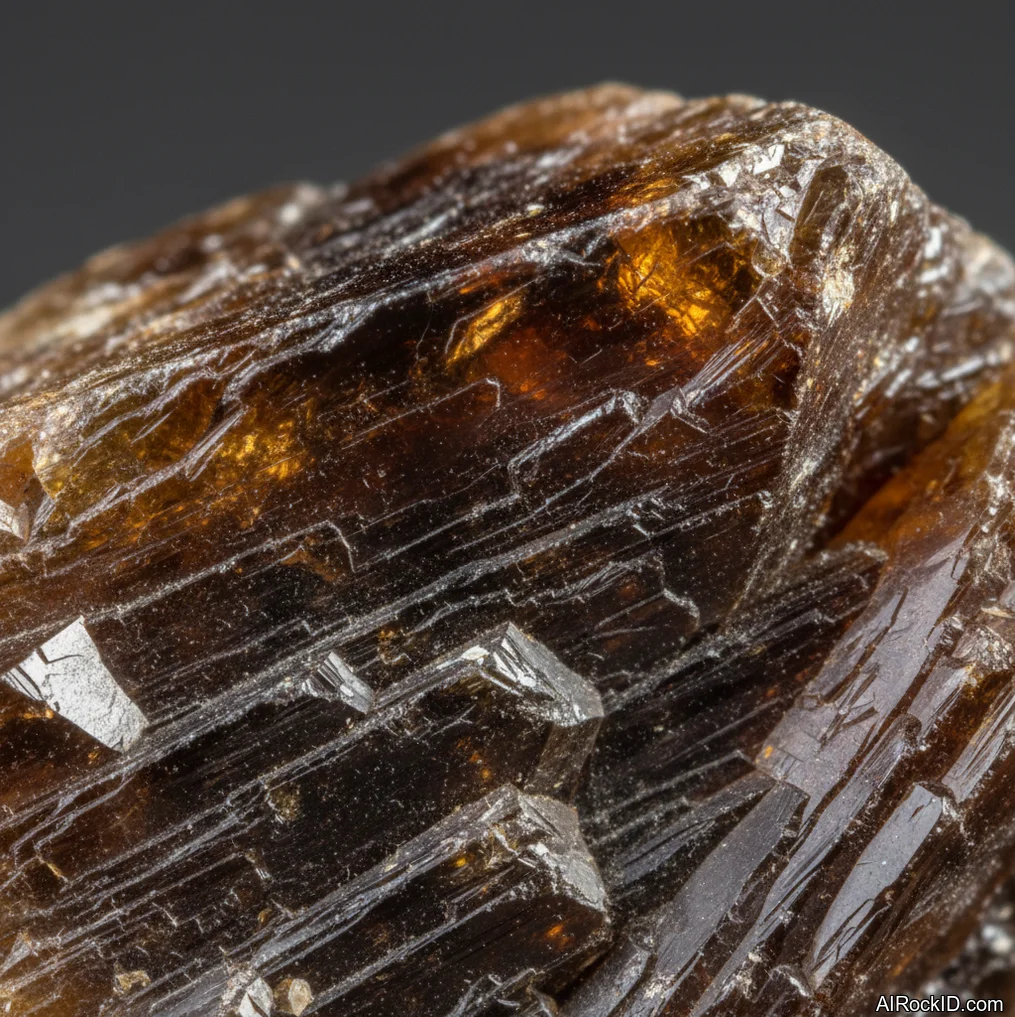
Axinite is a borosilicate mineral group that usually grows in sharp, wedge-shaped crystals, most often in brown, violet, or honey tones.
Pick up a solid axinite specimen and you notice the edges first. Seriously. Even if the crystal isn’t big, it can feel like a little bundle of knives stuck together, with thin, blade-like faces that love to snag on cloth, foam, or the cheap plastic bag you thought would be fine. Tilt it under a single lamp and the color shifts on you. One second it’s warm brown, and then you roll it a hair and a cooler violet or smoky plum shows up out of nowhere.
Thing is, collectors learn fast that photos lie with axinite. A lot of pieces look flat online, then you hold them in your hand and they wake up because the luster is glassy and the faces are so clean and flat. But it’s not a “sparkly everywhere” mineral. It’s more like quick flashes when you catch the right facet, then it settles down again.
Origin & History
France’s the reason axinite even ended up on people’s radar in the first place. René Just Haüy, one of the early heavy hitters in crystallography, described it back in 1797.
The word “axinite” comes from the Greek “axine,” meaning “axe.” And yeah, that clicks the moment you’re holding one and you catch that sharp, wedge-y profile in the light. Those old European finds, especially from alpine-type veins, turned out a ton of the textbook crystals, the kind that got tucked into museum drawers and copied onto those vintage mineral plates.
Where Is Axinite Found?
Axinite shows up in metamorphic and contact zones worldwide, but collectors chase alpine cleft material from Europe and sharp, lustrous crystals from Pakistan and nearby regions.
Formation
Most axinite turns up in spots where hot, boron-bearing fluids can actually get in there and react with rocks that are loaded with calcium and aluminum. So you’re talking contact metamorphism around intrusions, skarns, and metamorphosed limestones. And then there are those classic alpine fissures, the kind with open pockets where crystals have room to grow.
Look at the matrix on a lot of specimens and it kind of tells on itself. Axinite likes company. Chlorite, quartz, albite, epidote, calcite, those show up next to it all the time. I’ve got one piece where the axinite blades are sitting in pale calcite like somebody set them in place (seriously). The calcite’s softer, too, so you can catch the height difference with your fingernail just by brushing across the surface. How often do you get a rock that literally has a “feel” to it like that?
How to Identify Axinite
Color: Common colors run honey-brown, cinnamon, gray-brown, and violet-brown, sometimes with greenish or reddish hints. Color can shift with viewing angle because axinite is strongly pleochroic.
Luster: Vitreous luster on fresh faces, sometimes slightly resinous on rougher surfaces.
Pick up the piece and look for that axe-head or wedge profile, often in thin blades that intersect at sharp angles. The real test is rotating it under one lamp: the color change is usually obvious on clean faces, going from brown to purplish tones. If you scratch it with a steel nail, it generally won’t bite easily, but it still won’t feel “quartz-hard” when you drag the point across an edge.
Properties of Axinite
Physical Properties
| Crystal System | Triclinic |
| Hardness (Mohs) | 6.5-7 (Hard (6-7.5)) |
| Density | 3.24-3.36 g/cm3 |
| Luster | Vitreous |
| Diaphaneity | Transparent to translucent |
| Fracture | Uneven |
| Streak | White |
| Magnetism | Non-magnetic |
| Colors | brown, violet, purple-brown, honey, gray-brown, yellow-brown, greenish-brown |
Chemical Properties
| Classification | Silicates (borosilicates) |
| Formula | Ca2(Fe,Mg,Mn)Al2BSi4O15(OH) |
| Elements | Ca, Fe, Mg, Mn, Al, B, Si, O, H |
| Common Impurities | Ti, Na, K |
Optical Properties
| Refractive Index | 1.674-1.704 |
| Birefringence | 0.010-0.015 |
| Pleochroism | Strong |
| Optical Character | Biaxial |
Axinite Health & Safety
Axinite’s usually fine to handle and display. For most collectors, plain old mineral-handling hygiene does the job.
Safety Tips
If you’re going to cut or grind it, put on safety glasses and a respirator. And run a little water while you work to keep the dust down (it gets everywhere).
Axinite Value & Price
Price Range
Rough/Tumbled: $20 - $400 per specimen
Cut/Polished: $40 - $250 per carat
Clean, sharp wedges with good luster and that obvious pleochroism are what people actually pay up for, especially when the crystal isn’t dinged up. But let’s be real, most of the ones you see have little edge chips (the kind you catch when you run a fingernail along the rim), and the price drops fast after that.
Durability
Moderate — Scratch resistance: Good, Toughness: Fair
Axinite is stable in normal room conditions, but the thin blade edges chip easily if it rattles around.
How to Care for Axinite
Use & Storage
Store axinite so the blades can’t rub on anything, ideally in a perky box or a compartment with foam. I don’t let axinite pieces ride loose in a flat because those edges will pay the price.
Cleaning
1) Rinse briefly with lukewarm water to remove dust. 2) Use a soft toothbrush with a drop of mild soap to work around the crystal bases and matrix. 3) Rinse well and air-dry completely before putting it back in a box.
Cleanse & Charge
For a gentle reset, use smoke, sound, or a quick pass over a selenite plate. If you do moonlight, keep it out of hot window sun so the specimen doesn’t heat-cycle and loosen on matrix.
Placement
Put it where you can rotate it under a lamp, because that’s where the pleochroism shows up. Keep it away from the edge of a shelf since one bump can chip a blade tip.
Caution
Skip ultrasonic cleaners and any rough tumbling. Axinite has thin, knife-like edges and an uneven fracture, so it chips fast, sometimes just from rattling around. And don’t hit the matrix with harsh acids unless you’re 100% sure what the host rock is.
Works Well With
Axinite Meaning & Healing Properties
Next to the big crowd-pleasers like amethyst, axinite usually ends up in that quieter corner of the shop, the one collectors drift toward when they’re not in the mood for the obvious stuff. The folks who go for it aren’t chasing soft, dreamy vibes. They want focus. They want that “okay, un-stuck now” feeling. And honestly, that matches what it’s like in your hand. It’s pointy. Angular. Kind of no-nonsense.
Grab a cluster and you’ll see what I mean fast. It doesn’t read as fluffy or soothing at all. It’s grounding, but in a practical, almost bossy way, like you’re holding something that wants structure and hates clutter. I’ve kept a small axinite on my desk when I’m sorting labels and localities, and it fits that job weirdly well. It sits there, catching the light off those sharp faces, like a little physical nudge to stay on task. Not magic. Not medicine. Just a reminder.
But look, there are limits. If someone’s dealing with anxiety or anything medical, a mineral isn’t going to be the tool for that on its own. Think of it more like a personal anchor, the same way some people use a worry stone (same idea, different shape). And if you’re sensitive to sharp shapes, axinite can feel a little too spiky mentally, especially when the specimen is all blades and no matrix to soften the look. Who wants that buzzing, prickly vibe on their desk all day?
Identify Any Crystal Instantly
Snap a photo and get properties, value, care instructions, and healing meanings in seconds.