Chlorite In Quartz


Quick answer: Chlorite in quartz is clear to milky quartz containing green chlorite inclusions that may appear as wisps, phantoms, clouds, or mossy internal growths. It is usually identified by quartz’s hardness and glassy luster combined with the green inclusions enclosed inside the crystal rather than only coating the surface.
AI Rock ID can help screen photos of chlorite in quartz by comparing visible features such as green inclusions, crystal habit, transparency, and surface texture. RockIdentifier.io provides crystal identification support, but physical tests such as hardness, magnification, and seller documentation are still useful for confirmation.
Good fit
- Collectors who like included quartz with visible internal growth patterns
- Beginners looking for a durable display crystal with Mohs 7 hardness
- Buyers comparing natural green inclusions versus dyed or coated stones
- Macro photographers interested in phantoms, veils, and mossy inclusions
Not a good fit
- Anyone needing a soft stone for carving practice
- Buyers who want a uniform green gemstone without visible inclusions
- People seeking a mineral specimen that can be confirmed by color alone
- Jewelry designs that require a flawless, transparent quartz appearance
Most commonly confused with
- Green Phantom Quartz: Often overlaps with chlorite in quartz, but the key feature is a distinct phantom outline inside the crystal.
- Moss Agate: Moss agate has green dendritic or moss-like patterns in chalcedony and usually lacks the pointed crystal form of quartz.
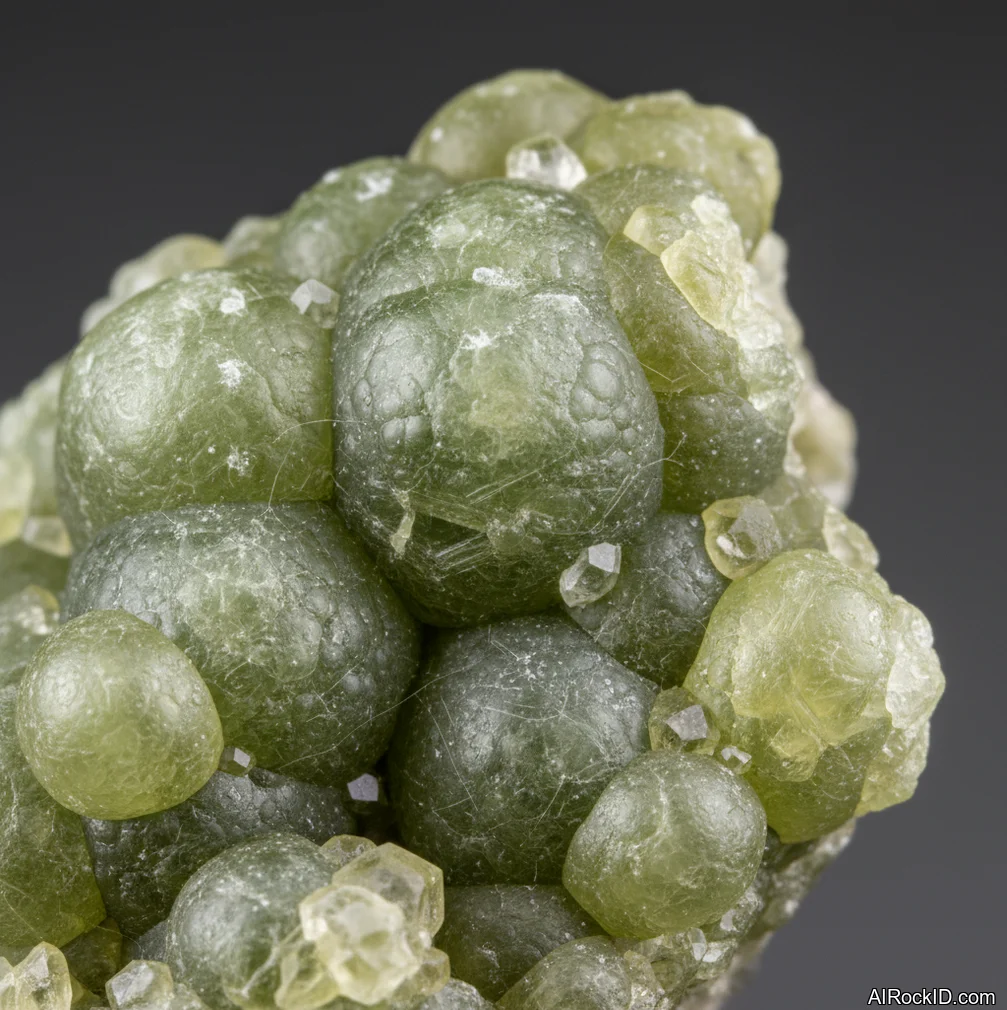
- Prehnite: Prehnite is typically pale green with a waxy to pearly look and has lower hardness than quartz.
- Epidote in Quartz: Epidote inclusions are commonly darker olive to pistachio green and may appear as sharper needles or sprays.
Chlorite in Quartz Lookalike Comparison
| Specimen | Main visual clue | Hardness clue | Common distinction |
|---|---|---|---|
| Chlorite in quartz | Green wisps, phantoms, or mossy inclusions inside quartz | Quartz host scratches glass | Green material is enclosed or naturally included |
| Moss agate | Translucent chalcedony with moss-like patterns | About 6.5–7 | Usually massive or polished, not pointed quartz crystals |
| Prehnite | Pale green, rounded, waxy to pearly masses | About 6–6.5 | Softer than quartz and not an included quartz crystal |
| Epidote in quartz | Olive-green needles, sprays, or grains | Quartz host scratches glass | Inclusions are often sharper and darker than chlorite clouds |
| Dyed quartz | Green color in cracks, edges, or surface zones | Quartz host scratches glass | Color distribution may look artificial or uneven |
AI identification confidence
AI identification confidence is usually moderate when the photo clearly shows quartz crystal form and green internal inclusions. Confidence drops when the specimen is polished, heavily included, artificially colored, or photographed under green-tinted lighting.
When AI gets it wrong
- Green surface coatings can be mistaken for true internal chlorite inclusions.
- Moss agate and included chalcedony may resemble chlorite in quartz in polished pieces.
- Low-resolution photos may hide whether the green material is inside the quartz or on the surface.
- Strong color filters or LED lighting can make ordinary inclusions appear greener than they are.
Final recommendation
Choose chlorite in quartz based on visible natural inclusion patterns, intact crystal form, and clear seller photos rather than color intensity alone. For higher-priced specimens, ask whether the green material is natural, whether the piece has been dyed or treated, and where it was sourced.
How to Check Authenticity Before Buying
Natural chlorite in quartz should show green inclusions that follow internal growth zones, phantoms, veils, or irregular mineral textures. Be cautious of pieces with neon green color, dye concentrated in cracks, or a uniform surface stain. Magnification can help reveal whether the color is enclosed within the quartz or sitting in open fractures.
Photo Tips for Identification
Photograph chlorite in quartz in daylight or neutral white light against a plain background. Include close-up images from several angles so internal inclusions can be separated from surface coatings or reflections. A photo of the crystal edge or termination can help show whether the specimen is true quartz rather than polished chalcedony or glass.
Specimen Quality Factors
Collectors often compare chlorite in quartz by the clarity of the quartz, visibility of the green inclusions, crystal completeness, and whether phantoms or layered growth patterns are present. Damage, heavy iron staining, cloudy surfaces, or uncertain treatment history can reduce buyer confidence. Unusual inclusion placement may be more important than size alone.
What Is Chlorite In Quartz?
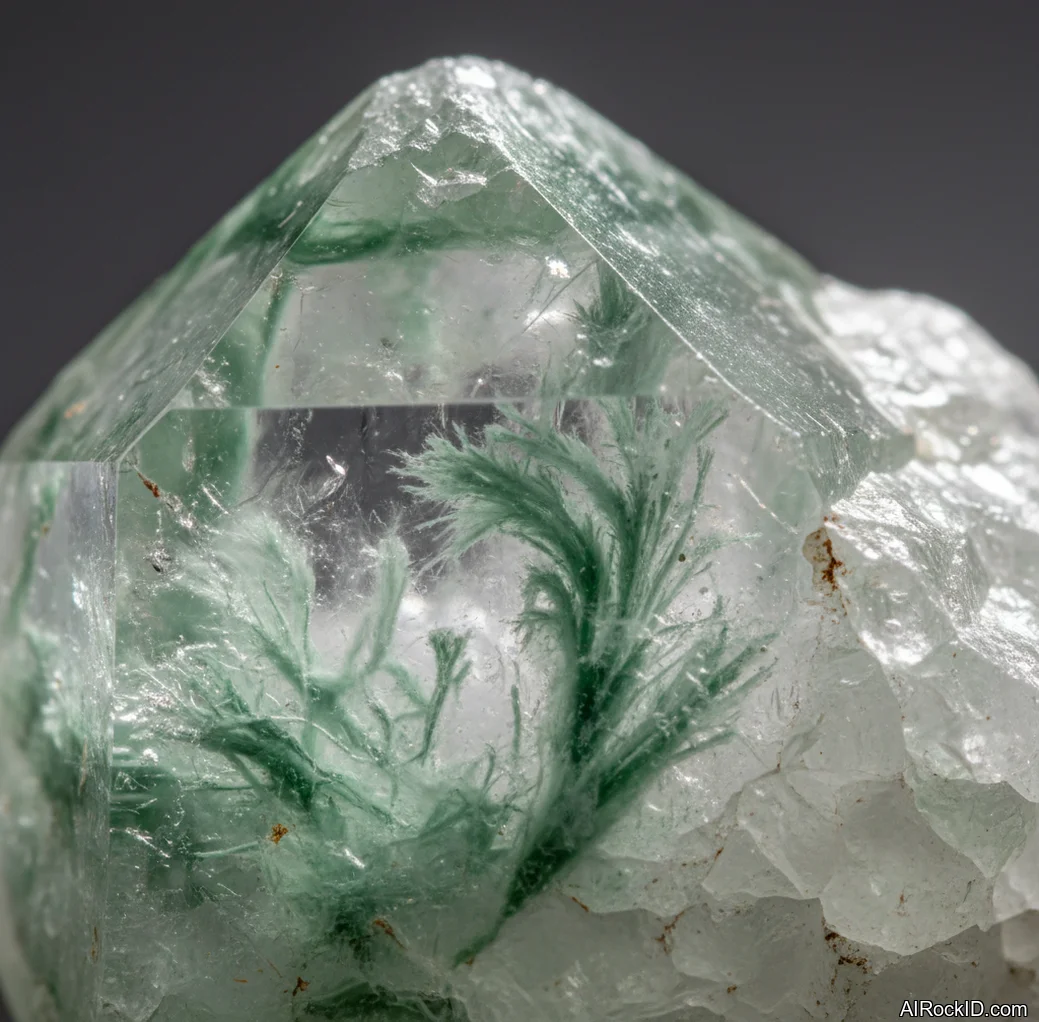
Chlorite in Quartz is clear to milky quartz with green chlorite-group mineral inclusions trapped inside the crystal.
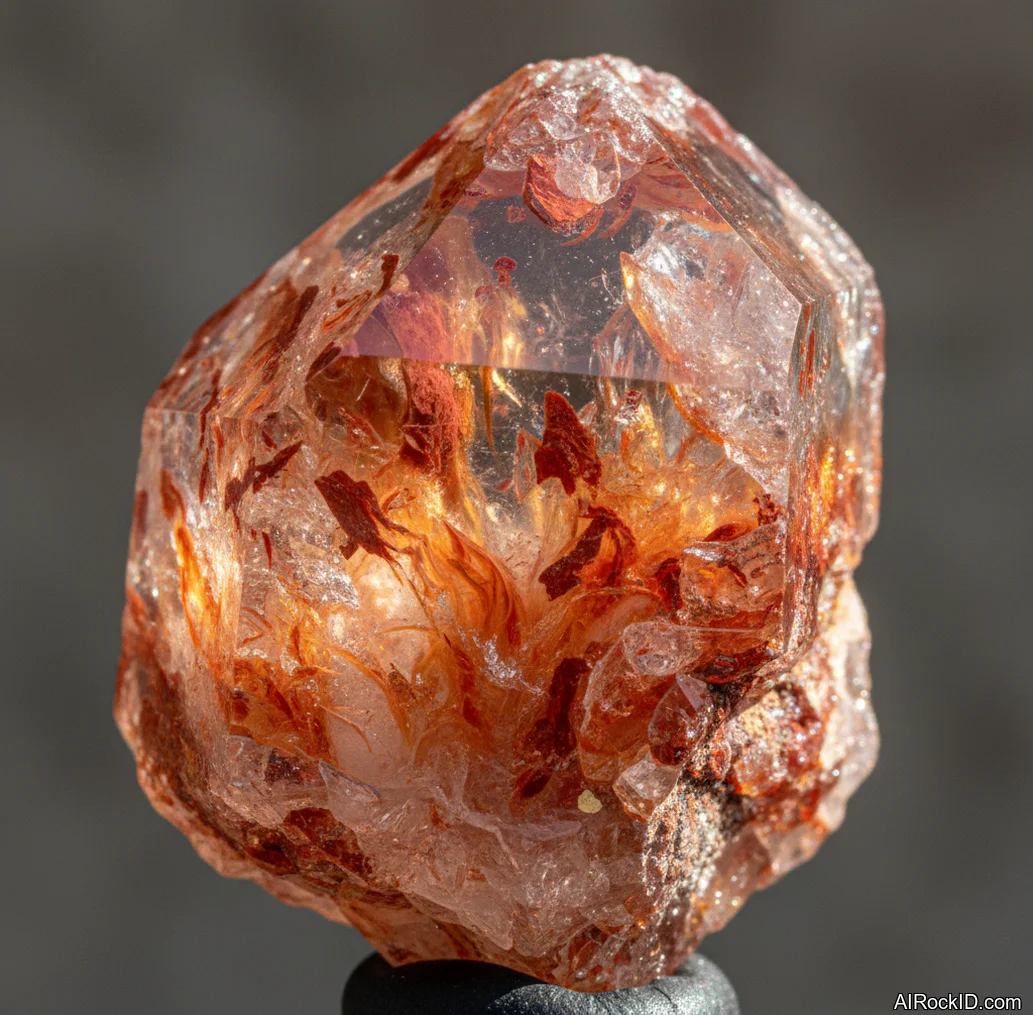
Pick up a piece and, yeah, it still feels like quartz. Cool in your palm. Slick, glassy skin on the outside, and that familiar heft that never really tricks you. Then you tip it a little and the inside wakes up. Like somebody dragged a wet green brush right through the middle. Some pieces read like mossy wisps. Some look more like smoke caught in ice. And then there are the sharp ones, the phantoms, where the chlorite traces older growth lines inside the quartz, almost like a set of faint steps.
People see the green and assume it’s painted on or sitting on the surface. But the real stuff? The green sits under the polish or tucked behind the natural faces, and it changes depth when you roll it under a light. It’s not a smear. It’s that suspended look, like the chlorite is just hanging there inside the crystal. How can something look sealed in and still feel so alive?
Origin & History
Chlorite, as a mineral group, got its name in 1828 from the French mineralogist Pierre Berthier. He pulled it from the Greek “chloros,” which just means green (and yeah, the stuff really does skew green when you’ve got a piece in your hand and you tilt it under a lamp). Quartz, on the other hand, has been recognized and named since antiquity, and the word came into English by way of the German “Quarz.”
“Chlorite in quartz” isn’t an official mineral species name. It’s just dealer and collector shorthand for quartz that has inclusions. And you’ll see trade names like lodolite or garden quartz tossed around for included quartz too. But those terms get messy fast, because the inclusions might be chlorite, hematite, feldspar, clay, or basically whatever else got trapped while the quartz was growing.
Where Is Chlorite In Quartz Found?
It turns up anywhere quartz grows in fractures and veins where chlorite is present, especially alpine-style clefts and hydrothermal veins.
Formation
Most chlorite-in-quartz shows up when silica-rich fluids drop quartz into open cracks, pockets, or alpine clefts, and those tiny chlorite flakes or thin films get snagged as the crystal builds. Sometimes the chlorite is already sitting there, coating the pocket walls like a greenish smear, and the quartz grows right over it, trapping it inside.
Look, if you stare at a good phantom piece under a lamp and tilt it around, you can read the growth like tree rings. Quartz grows. Then things shift, the surface gets dusted with chlorite, and the quartz kicks back in again. But it’s not always that tidy. I’ve handled plenty where the chlorite is clumpy and chaotic, like somebody sloshed the pocket water around and the mess just got locked in when the quartz sealed back up.
How to Identify Chlorite In Quartz
Color: The quartz body is colorless, smoky, or milky, with green inclusions ranging from pale celadon to deep forest green. The green may appear as clouds, mossy plumes, flakes, or sharp phantom outlines.
Luster: The quartz surface has a vitreous (glassy) luster; the chlorite inside looks matte to slightly satiny.
Pick up the piece and rotate it under a single point light. Real inclusions show depth and parallax, like they’re sitting at different layers inside the quartz. The real test is a 10x loupe: chlorite often shows tiny platey flakes or granular patches, not dye-like bleeding. And if the green is only on the outside, wipes off, or pools in fractures with a too-even color, you’re probably looking at a stained or resin-treated novelty.
Common Look-Alikes
Chlorite In Quartz is sometimes confused with these materials:
- Prasiolite (green quartz, sometimes heat-treated amethyst)
- Phantom Quartz with Actinolite inclusions
- Green Aventurine (quartz with fuchsite flakes)
- Glass with green swirls or mossy inclusions
- Chlorite Phantom Quartz (slightly different growth habit but confused often)
- Dyed Quartz with artificial green color
Market Cautions & Treatments
When AI Can Get This Wrong
AI photo ID often mixes up chlorite in quartz with prasiolite or actinolite-included quartz, especially when the inclusions are fuzzy or the green is pale. Phantom quartz with actinolite can trip it up too. The real test is using a loupe—chlorite is never metallic, and the shapes are cloudier or moss-like, not sharp needles or plates.
Properties of Chlorite In Quartz
Physical Properties
| Crystal System | Trigonal |
| Hardness (Mohs) | 7 (Hard (6-7.5)) |
| Density | 2.65 g/cm3 |
| Luster | Vitreous |
| Diaphaneity | Transparent to translucent |
| Fracture | Conchoidal |
| Streak | White |
| Magnetism | Non-magnetic |
| Colors | Colorless, White, Gray, Smoky, Green |
Chemical Properties
| Classification | Silicates |
| Formula | SiO2 (quartz) with chlorite-group inclusions |
| Elements | Si, O, Al, Mg, Fe, H |
| Common Impurities | Al, Fe, Ti, Li |
Optical Properties
| Refractive Index | 1.544–1.553 |
| Birefringence | 0.009 |
| Pleochroism | None |
| Optical Character | Uniaxial |
Chlorite In Quartz Health & Safety
Day-to-day display and handling are low risk. But if you’re cutting, grinding, or sanding quartz, watch out for that fine dust (it gets in the air fast). Don’t breathe it in.
Safety Tips
Use wet cutting when you can, and don’t mess around with the mask. If your lapidary work is kicking up silica dust, put on a proper respirator, the kind that actually seals around your nose and cheeks instead of leaking every time you move your jaw. Silica dust is the stuff you really don’t want in your lungs. Why risk it?
Chlorite In Quartz Value & Price
Price Range
Rough/Tumbled: $10 - $250 per piece
Cut/Polished: $5 - $40 per carat
Prices jump when the clarity’s high, the green phantoms look bold, and the terminations are clean and sharp. Those big, showy points with stacked, layered phantoms (the kind you can catch even when you tilt the stone under a lamp) go for more than tumbled pieces where the inclusions look flat and kind of muddy.
Durability
Durable — Scratch resistance: Excellent, Toughness: Good
Quartz is stable for everyday handling, but sharp blows can chip edges and natural terminations.
How to Care for Chlorite In Quartz
Use & Storage
Store it like you would any quartz point: wrapped or in a tray so terminations don’t clack together. If it’s a cluster, give it space because the tips chip easier than people expect.
Cleaning
1) Rinse with lukewarm water and a drop of mild soap. 2) Use a soft toothbrush around crevices and between points. 3) Rinse well and pat dry; avoid leaving it to air-dry on a sunny windowsill if you’re trying to keep labels from fading.
Cleanse & Charge
If you do energetic cleansing, gentle methods are safest: running water, smoke, or placing it on a dry bed of salt without burying it. It doesn’t need anything fancy.
Placement
Looks best where you get side light, like a shelf near a lamp, so the green layers show depth. I like it on a darker stand because the inclusions pop.
Caution
Don’t hit it with harsh cleaners, bleach, or anything acidic, and don’t shock it by running hot water over it straight from cold. And skip the ultrasonic cleaner if the piece is riddled with internal fractures or has those healed seams inside that look like faint, milky lines under the light.
Works Well With
Chlorite In Quartz Meaning & Healing Properties
Look closely and you’ll see why people reach for “nature” words with this material. That green tucked inside clear quartz hits the same switch as a shady trail: forest floor, damp moss, that clean-after-rain air. I’ve sold pieces to people who wanted something that felt grounding, but still looked crisp and bright sitting on a desk. And honestly, it reads that way even if you’re not into metaphysical talk.
In crystal practice, chlorite in quartz usually gets linked to cleansing, energetic tidying, and a steady kind of calm. From handling piles of it at shows, I’ve noticed the pieces that feel the most “settling” tend to be the ones with soft, cloudlike chlorite, not the super sharp, high-contrast phantoms. Totally subjective, yeah. But it’s a pattern I keep seeing when someone picks one up, turns it under the lights, and then just… pauses.
But let’s keep it real: none of this is medical care. If you’re buying it for anxiety or sleep or anything health-related, treat it like a personal ritual object, not a treatment plan. The practical upside is straightforward. It’s quartz, so it’s hard enough to live on a nightstand, and the chlorite gives each piece that little “weather system in a bottle” vibe, like something green and misty got caught in there and decided to stay.
Common mistakes
- Assuming every green quartz specimen contains chlorite without checking inclusion texture
- Confusing surface algae-like staining with mineral inclusions sealed inside quartz
- Using color alone to separate chlorite, epidote, and actinolite inclusions
- Overlooking dye in cracks, especially in polished or tumbled pieces
- Calling all green included quartz “phantom quartz” even when no phantom outline is visible
Identify Chlorite In Quartz from a photo
Compare Chlorite In Quartz traits, care tips, value clues, and common lookalikes with a clear photo.