Chocolate Calcite


Quick answer: Chocolate Calcite is a brown calcite variety identified by its warm caramel-to-dark chocolate color, vitreous to pearly luster, and low hardness. Because it is a carbonate mineral, it can be scratched by steel and reacts to dilute acid, which helps separate it from harder brown lookalikes.
AI Rock ID can help screen a photo of Chocolate Calcite by comparing color, luster, crystal habit, and visible texture against known mineral patterns. RockIdentifier.io provides crystal identification references that are most useful when paired with basic observations such as hardness, streak, and whether the specimen effervesces with acid.
Good fit
- Collectors who want a warm brown carbonate mineral with visible banding or cleavage
- Beginners learning simple tests such as hardness comparison and acid reaction
- Display pieces kept away from moisture, abrasion, and household acids
- Buyers comparing polished brown calcite, aragonite, and dyed stone items
Not a good fit
- Rings, bracelets, or other jewelry exposed to daily knocks and scratches
- Aquariums, fountains, or wet displays where calcium carbonate can slowly dissolve
- Collectors who need a highly durable mineral for handling or travel kits
- Anyone seeking a crystal that can be cleaned with vinegar, lemon juice, or ultrasonic methods
Most commonly confused with
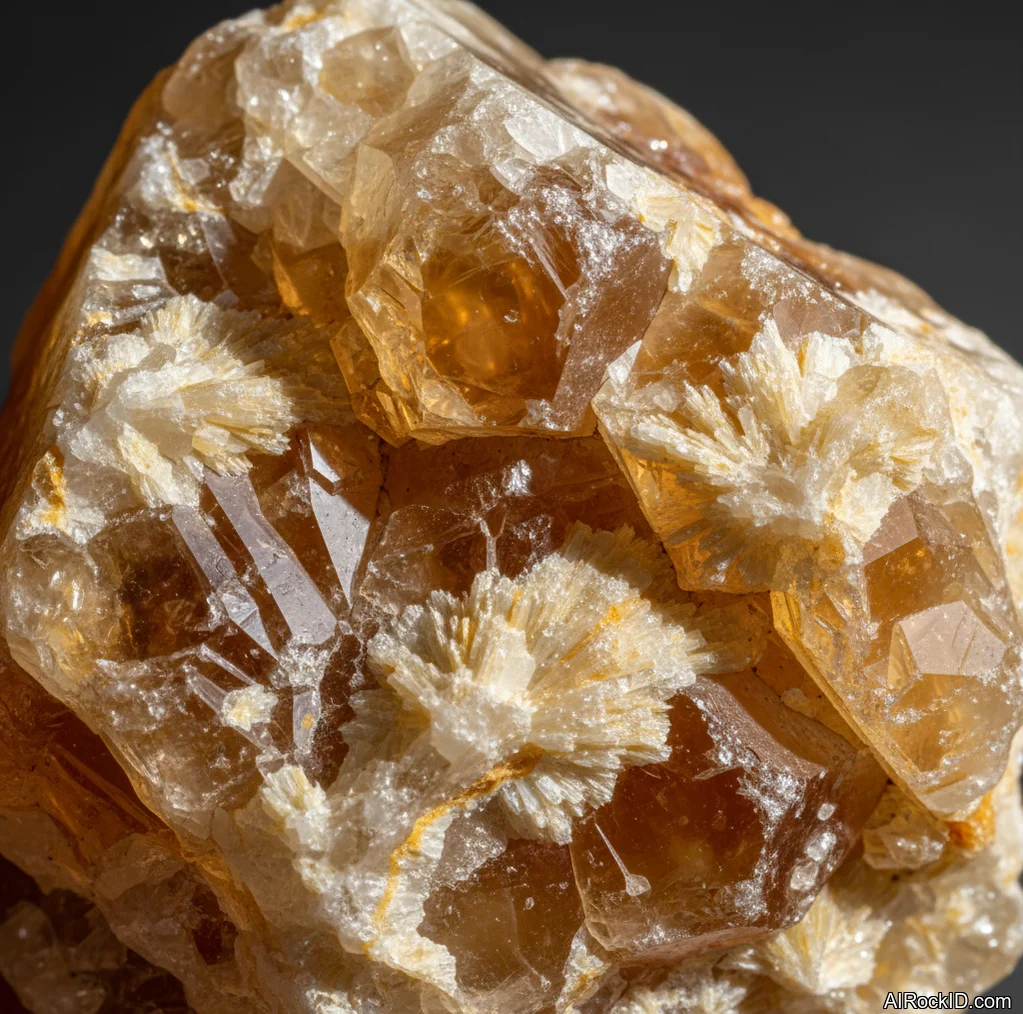
- Aragonite: Aragonite is also calcium carbonate but commonly forms radiating clusters or fibrous habits rather than calcite’s rhombohedral cleavage.
- Septarian: Septarian pieces often show a patterned mix of brown, yellow calcite, and gray limestone rather than a single brown calcite mass.
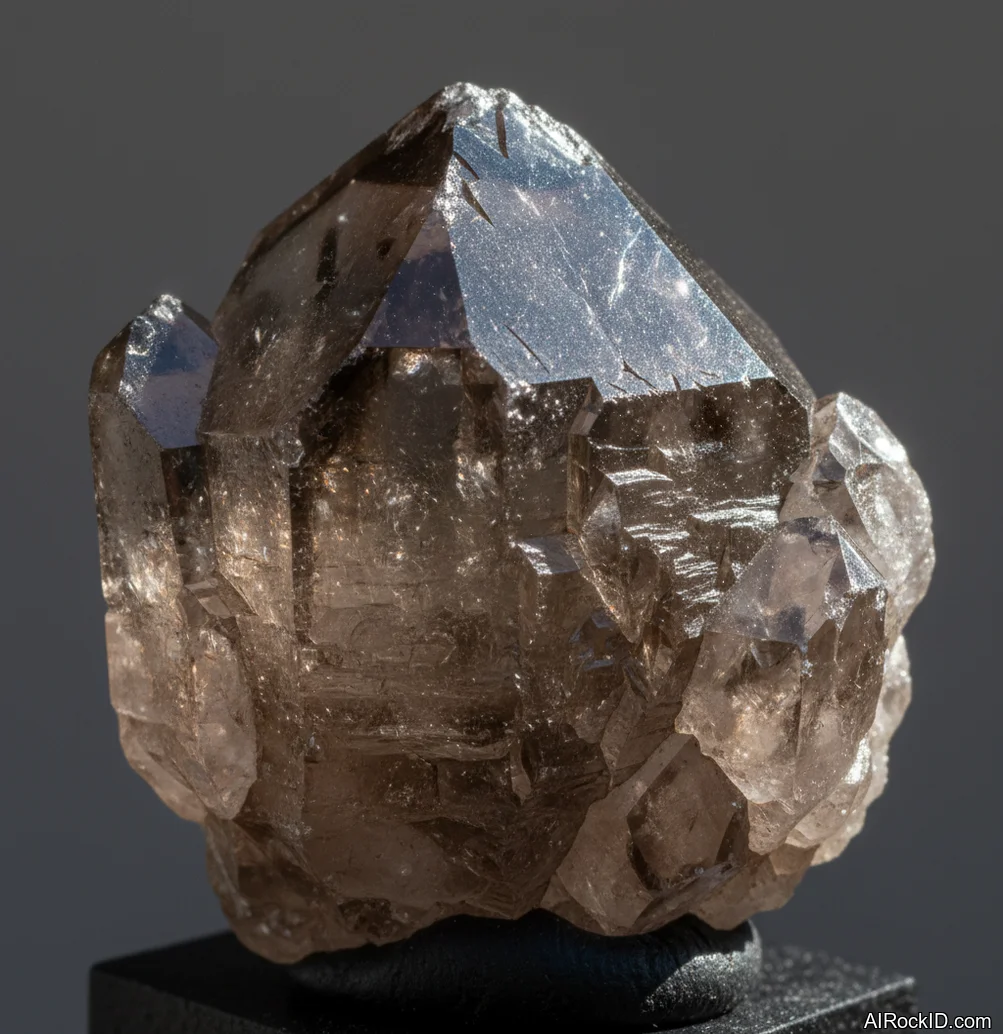
- Smoky Quartz: Smoky quartz is much harder at Mohs 7 and will not fizz with dilute acid.
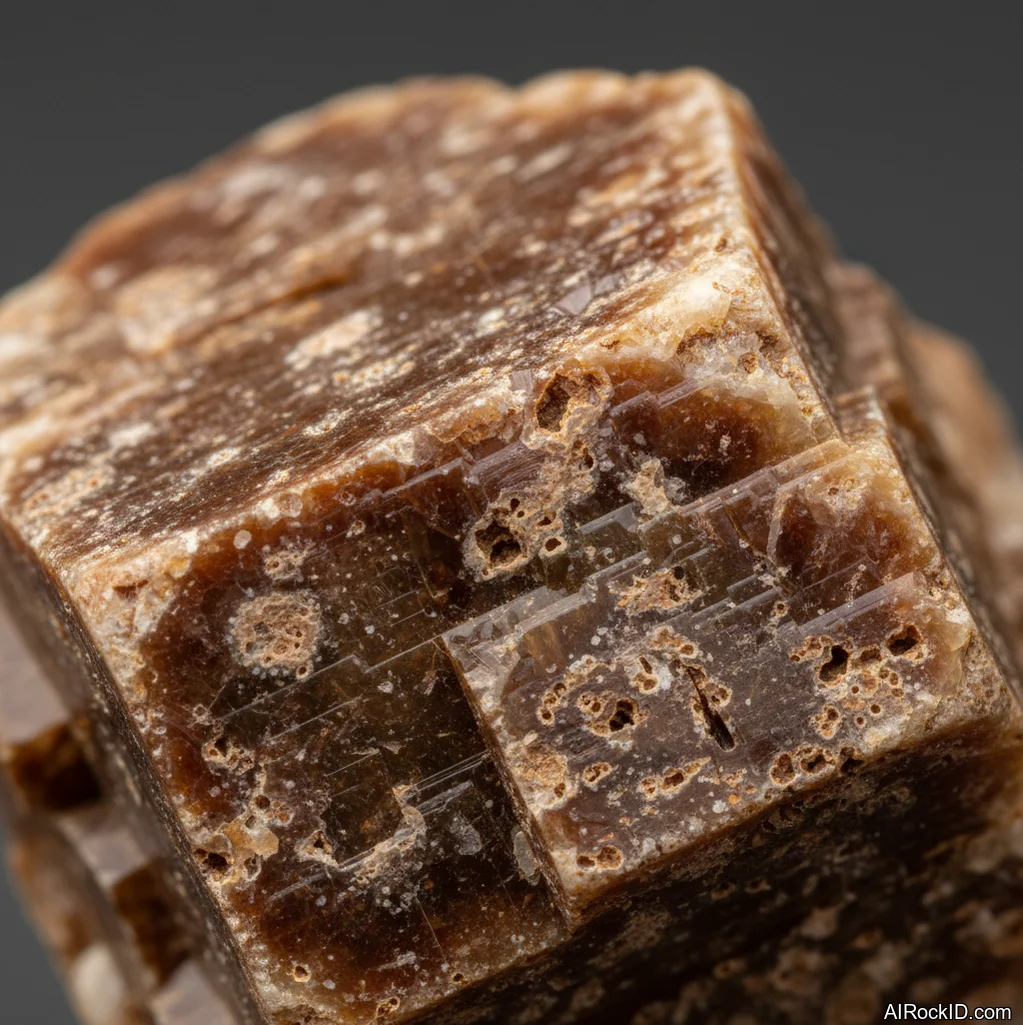
- Brown Fluorite: Brown fluorite is harder than calcite, has perfect octahedral cleavage, and does not show the same carbonate acid reaction.
Chocolate Calcite Lookalike Comparison
| Specimen | Hardness | Key Difference | Acid Reaction |
|---|---|---|---|
| Chocolate Calcite | Mohs 3 | Brown color with calcite cleavage or banding | Fizzes with dilute acid |
| Aragonite | Mohs 3.5–4 | Often radiating, fibrous, or clustered habit | Fizzes with dilute acid |
| Smoky Quartz | Mohs 7 | Glassy quartz; scratches glass easily | No fizz |
| Brown Fluorite | Mohs 4 | Octahedral cleavage; often more translucent | No fizz |
| Septarian | Variable | Mixed patterned nodule with calcite-filled cracks | Carbonate areas may fizz |
AI identification confidence
AI photo identification is usually more reliable for Chocolate Calcite when the image clearly shows brown color, cleavage faces, banding, and scale. Confidence is lower for polished tumbles, spheres, or carvings because surface shape can hide diagnostic calcite features.
When AI gets it wrong
- A polished item lacks visible cleavage, crystal faces, or natural texture
- Warm indoor lighting makes honey calcite, aragonite, or dyed stone appear chocolate brown
- The specimen is a mixed rock such as septarian rather than a single mineral
- The photo does not include scale, multiple angles, or a fresh broken surface
Final recommendation
For the most reliable identification, combine photo-based screening with simple physical checks such as Mohs hardness and carbonate acid reaction. When buying, ask for untreated photos in natural light and be cautious of vague labels such as “brown crystal” or “chocolate stone.”
How to Check Chocolate Calcite Authenticity
Authentic Chocolate Calcite should be soft enough to scratch with a steel nail or knife point, though testing should be done only on an inconspicuous area. A small drop of dilute acid on an unpolished spot should produce fizzing because calcite is calcium carbonate. Avoid using acid on finished jewelry, coated specimens, or pieces you do not own.
Buying Tips for Chocolate Calcite
Look for clear photos taken in natural light, since warm lighting can make yellow or honey-colored calcite appear darker. Ask whether the piece is natural, dyed, coated, stabilized, or assembled with other minerals. Polished shapes should be priced with size, workmanship, and appearance in mind, not rarity alone.
Best Photo Angles for Identification
Useful identification photos show the specimen from several sides, including any broken surface, crystal face, cleavage plane, or banded area. A coin, ruler, or hand in the image helps show scale. Photos taken under neutral daylight reduce confusion with honey calcite, aragonite, and smoky quartz.
What Is Chocolate Calcite?
Chocolate Calcite is just calcite (calcium carbonate, CaCO3) that comes in brown. In your hand, it lands somewhere between warm milk-chocolate and espresso, and some pieces have creamy bands that honestly look like somebody swirled coffee into caramel and stopped halfway.
Grab a palm stone and the softness hits you quick. It’s not flimsy, but it’s got that “calcite feel” collectors know right away: cool for a second, then it heats up in your fingers, and the polish reads more buttery than glassy. Kind of a soft glow. Not a hard sparkle.
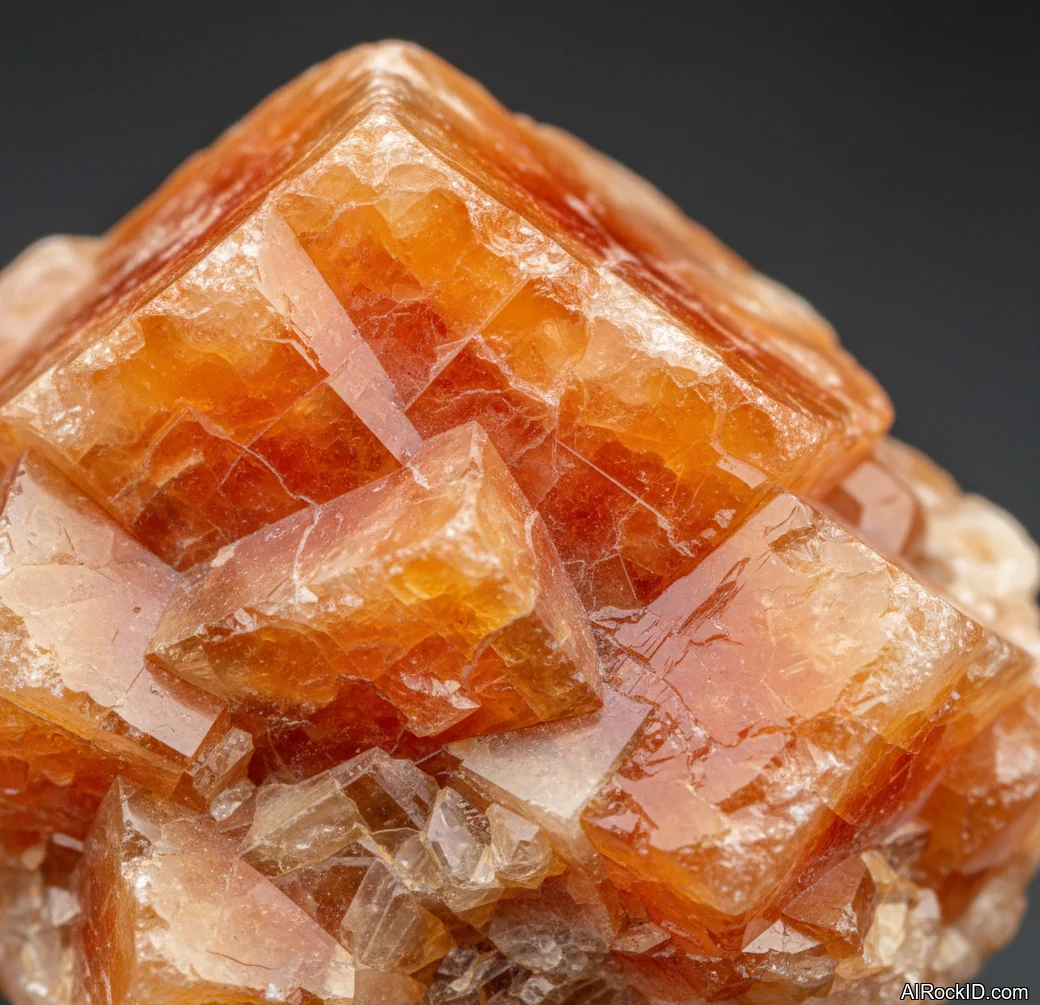
Tip a raw chunk under the light and you’ll usually see cleavage planes flicker as you move it. Calcite’s cleavage is the whole deal here. Crack it the wrong way and it snaps into those angled faces like it was waiting for an excuse. And yeah, some sellers slap “chocolate calcite” on anything brown, but real calcite still acts like calcite when you test it.
Origin & History
“Calcite” got locked in as the mineral name in the 19th century, and people usually point to Wilhelm von Haidinger (1845) for the term. It comes from the Latin “calx,” meaning lime. That tracks, because calcite is basically the backbone mineral in limestone, and in a lot of marble too (the stuff that squeaks a little under a knife when you test it).
“Chocolate Calcite” isn’t a real species name. It’s just a trade nickname that took off because the brown material looks like cocoa, and let’s be honest, it moves faster when it’s got a flavor-sounding label on it. Most of the pieces you see at shows come out of big calcite-producing regions where color zoning and iron staining are common, so dealers sort it by color for bins and online listings.
Where Is Chocolate Calcite Found?
Chocolate-colored calcite turns up anywhere calcite does, but the chunkier brown material in shops often comes from Mexico and Brazil, with smaller amounts from the USA and Peru.
Formation
Most Chocolate Calcite shows up the same basic way regular calcite does: calcium-rich fluids seep through rock and then, when the chemistry shifts, the calcite drops out. Sometimes it’s literally filling cracks as a vein. Other times it’s coating the inside of open spaces as a cavity fill. Either way, it’s a mineral that grows without much fuss when the water chemistry is right.
Compared to quartz, calcite is kind of a drama queen about cleavage. The growth can look nice and blocky, sure, but the second it takes stress, it’ll split cleanly along those rhombohedral planes. That’s why so much brown calcite you see for sale ends up polished or carved. It’s just easier to ship a rounded piece (one that won’t snag on bubble wrap) than a sharp-edged crystal that’s basically begging to chip the moment it rattles around in a box.
The brown color usually comes from impurities or staining, most often iron oxides or organic material that got mixed in while the calcite was forming. And you’ll sometimes see banding where the chemistry changed over time. Some pieces really do look like layered dessert when you turn them in your hand and the bands catch the light. Others? Just plain brown, no frills, and kind of refreshingly honest about it.
How to Identify Chocolate Calcite
Color: Brown calcite ranges from light tan and cinnamon to deep coffee brown, often with creamy white bands or cloudy zones. The color is usually uneven and can look “smoky” inside the stone.
Luster: It has a vitreous to pearly luster, and cleavage faces can look pearly when they catch overhead light.
If you scratch it with a copper coin or a steel nail, it’ll mark pretty easily because it’s Mohs 3. The real test is a tiny drop of dilute acid on an inconspicuous spot: calcite fizzes, even more so if the surface is freshly scratched. And when you tilt a broken face, you’ll often see that clean rhombohedral cleavage flash instead of a random, jagged break.
Common Look-Alikes
Chocolate Calcite is sometimes confused with these materials:
- Brown aragonite (often sold as "chocolate" aragonite; same CaCO3 but different crystal habit)
- Smoky quartz (especially darker tumbled stones that read brown in photos)
- Brown jasper (opaque, heavier feel, no calcite cleavage)
- Brown banded onyx / banded calcite (the stuff shops label "onyx" even though it’s calcite)
- Dyed calcite or dyed marble (color pushed into cracks and along cleavage planes)
- Brown glass "tumbles" (too uniform, slightly rounded edges, wrong heft for the size)
Market Cautions & Treatments
When AI Can Get This Wrong
At first glance in photos, AI mixes Chocolate Calcite up with smoky quartz and brown jasper because the brown range overlaps and most listings are glossy tumbles with blown-out lighting. The real test is hardness and cleavage: a copper coin or steel nail will bite Chocolate Calcite fast, and you’ll often catch flat cleavage flashes when you rotate it, which quartz and jasper won’t do.
Properties of Chocolate Calcite
Physical Properties
| Crystal System | Trigonal |
| Hardness (Mohs) | 3 (Soft (2-4)) |
| Density | 2.71 g/cm3 |
| Luster | Vitreous |
| Diaphaneity | Transparent to translucent |
| Fracture | Uneven |
| Streak | White |
| Magnetism | Non-magnetic |
| Colors | Brown, Tan, Cream, White |
Chemical Properties
| Classification | Carbonates |
| Formula | CaCO3 |
| Elements | Ca, C, O |
| Common Impurities | Fe, Mn, Mg, organic material |
Optical Properties
| Refractive Index | 1.486-1.658 |
| Birefringence | 0.172 |
| Pleochroism | None |
| Optical Character | Uniaxial |
Chocolate Calcite Health & Safety
Chocolate Calcite is safe to handle and it’s non-toxic. But keep acids away from it if you want that glossy shine to stay, because even a little splash will dull the surface fast.
Safety Tips
Don’t use vinegar-based cleaners on it, and don’t let it sit in anything acidic. Just rinse it with plain water, then dry it off with a soft cloth (the kind that doesn’t leave fuzz behind).
Chocolate Calcite Value & Price
Price Range
Rough/Tumbled: $5 - $60 per piece
Prices jump around depending on how good the polish is, how crisp the banding looks, and how big the piece is. If you’ve got a clean, chunky chunk with those nice layered lines you can see even when you tilt it under a lamp, it’ll cost more. But honestly, most brown calcite is still a budget-friendly table stone.
Durability
Nondurable — Scratch resistance: Poor, Toughness: Fair
It’s stable in normal room conditions, but it scratches easily and acids can etch the surface.
How to Care for Chocolate Calcite
Use & Storage
Store it in a soft pouch or a separate compartment so harder stones don’t scratch it up. If you’ve got a big polished chunk, don’t stack it under anything heavy because edges chip.
Cleaning
1) Rinse quickly with lukewarm water. 2) Wipe with a soft microfiber cloth and a tiny bit of mild soap if needed. 3) Rinse again and pat dry, then air-dry fully before putting it away.
Cleanse & Charge
For metaphysical-style cleansing, use smoke, sound, or a quick pass under running water, then dry it right away. Avoid saltwater so you don’t risk surface dulling over time.
Placement
Set it on a desk, nightstand, or shelf where it won’t get bumped. I don’t put calcite where keys, rings, or sand can scrape it.
Caution
Don’t use acidic cleaners, and don’t leave it sitting in any solution for a long soak. And keep it away from heat or direct sun, especially if it has delicate banding or that glassy, high polish you’re trying to keep looking the way it does now.
Works Well With
Chocolate Calcite Meaning & Healing Properties
Most dealers who stock Chocolate Calcite frame it as a grounding stone, and yeah, I see it. The color alone looks like dirt after rain, worn wood, coffee on the counter. Steady stuff. When I’m sorting inventory, a brown calcite palm stone is the one I’ll leave up by the register because it sits heavy in your hand in a calming way, and people “get” it right away.
Pick up a polished piece and run your thumb over it for a minute. It’s slick, sure, but not that glassy agate slick. It’s more of a soft slide, almost buttery, and that feel is honestly half the reason folks reach for it during meditation or their stress routine. But it’s still calcite, so if you’re a serious fidgeter, don’t be surprised when tiny scuffs start showing up over time (they do).
Here’s the reality check: any “healing” talk is personal belief and tradition, not medical treatment. I’ve seen customers use Chocolate Calcite like a simple cue to slow down, eat something, drink water, and get back into their body when their brain’s sprinting. That’s practical even if you’re not into metaphysical ideas. And if you are, Chocolate Calcite usually gets lumped in with root and sacral themes: steadiness, basic confidence, plus a bit of warmth without that sharp buzz some brighter stones can give.
Common mistakes
- Assuming every brown polished stone is Chocolate Calcite without checking hardness
- Confusing septarian nodules with a single piece of brown calcite
- Using vinegar, lemon juice, or acidic cleaners on calcite surfaces
- Buying dyed or coated material without asking for treatment details
- Relying on color alone instead of checking luster, cleavage, hardness, and acid reaction
Identify Chocolate Calcite from a photo
Compare Chocolate Calcite traits, care tips, value clues, and common lookalikes with a clear photo.