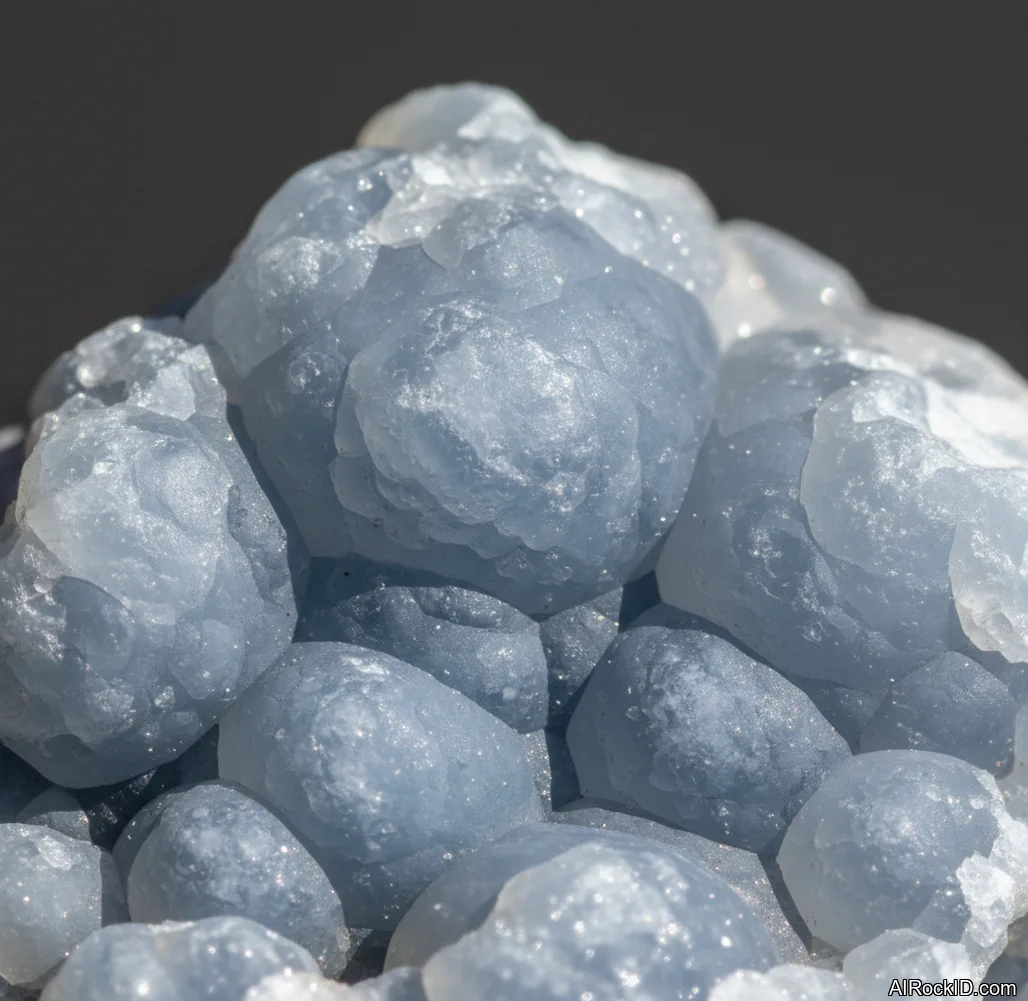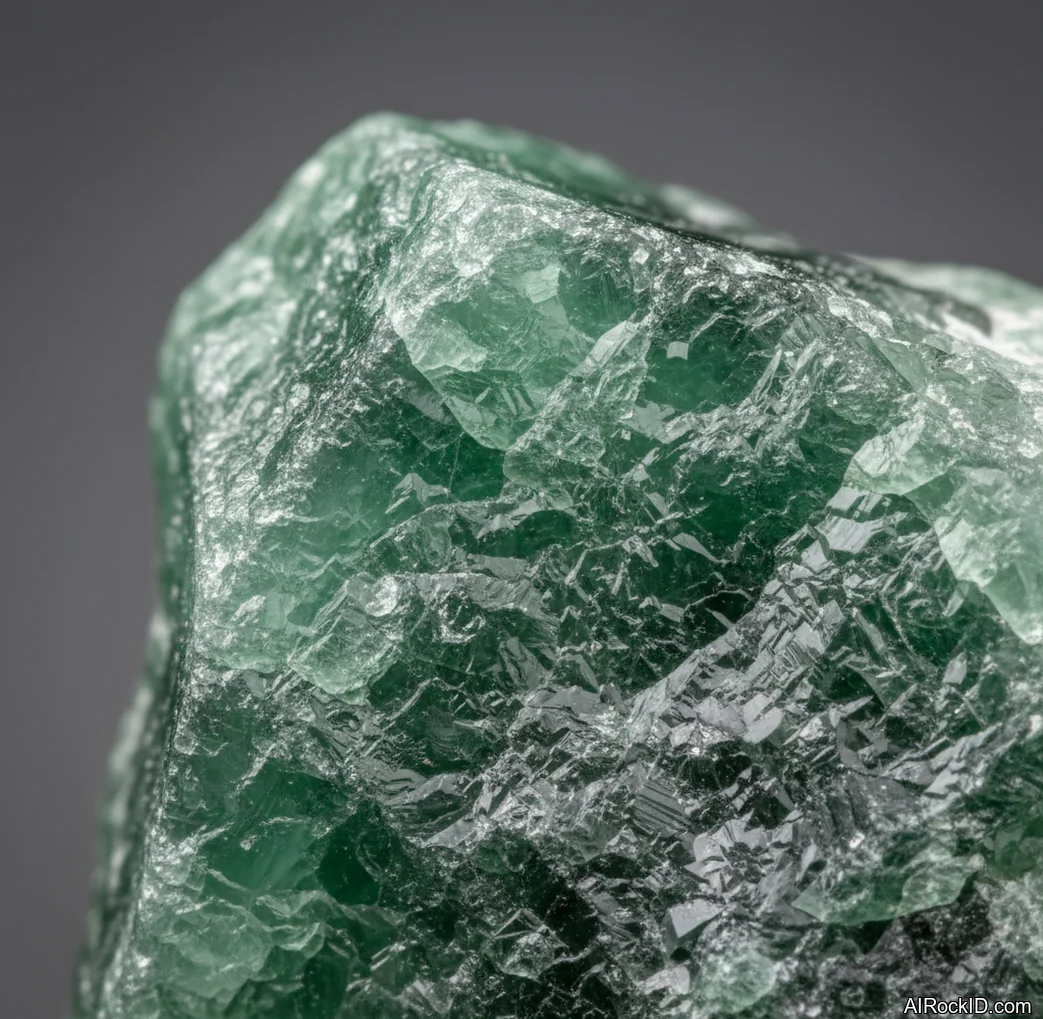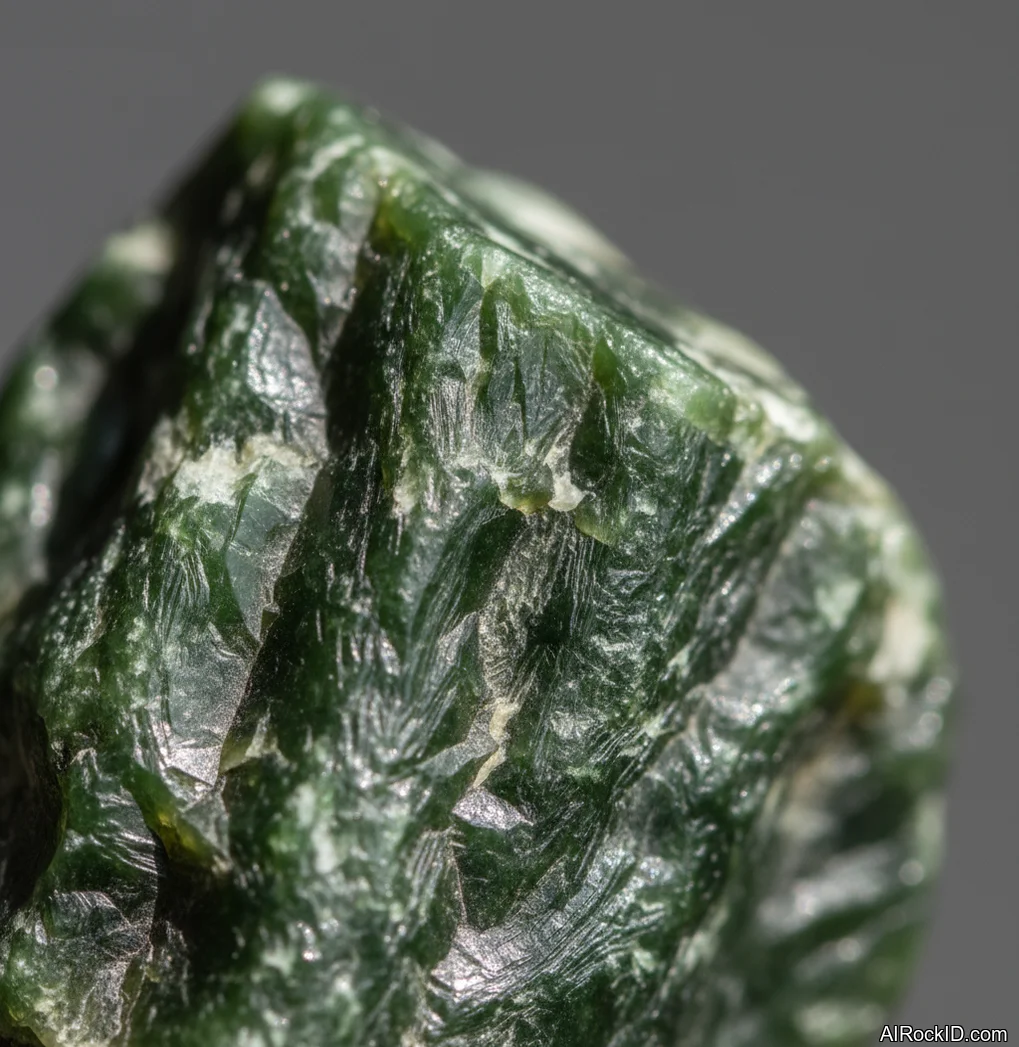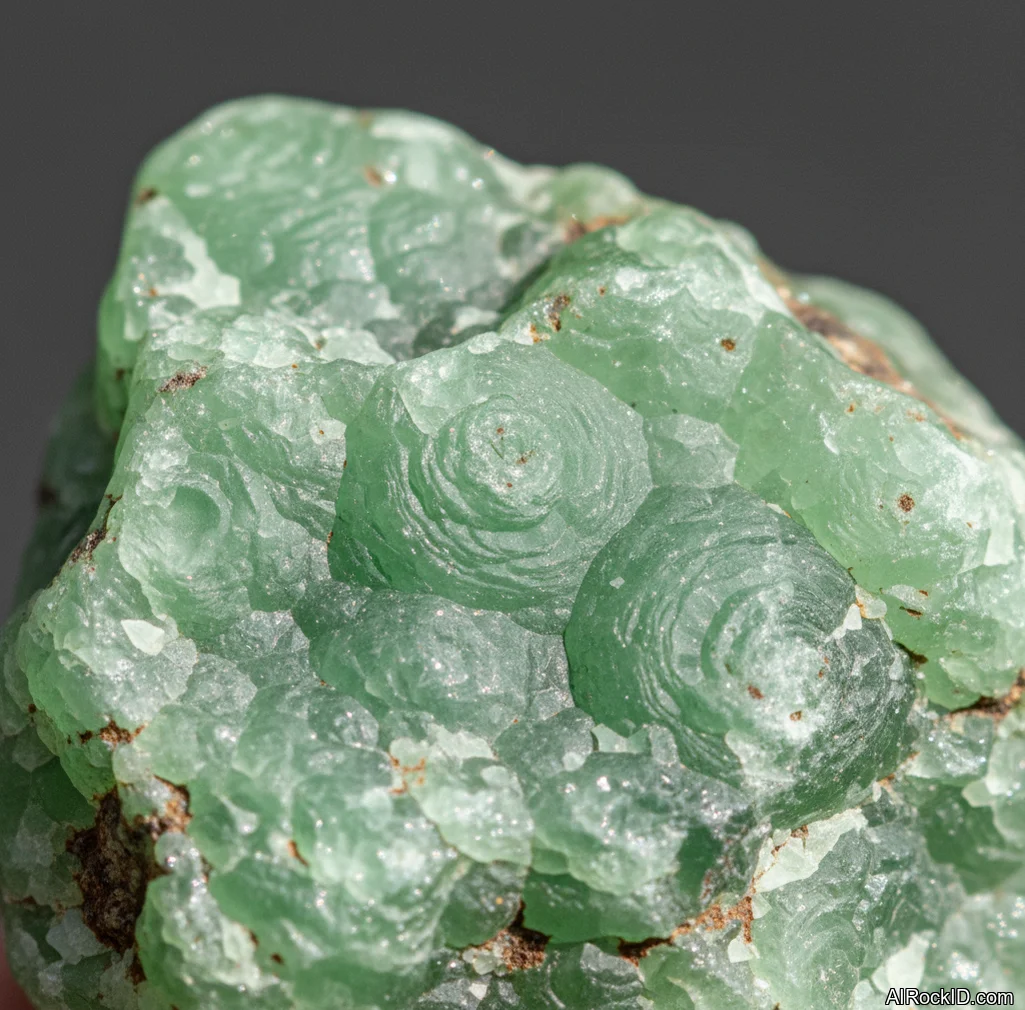
Chrysoprase
What Is Chrysoprase?
Chrysoprase is chalcedony in that apple to bluish-green range, and the nickel is what gives it the color. In your hand, it’s got that classic chalcedony feel: cold on first contact, then it slowly takes on your body heat, while the surface stays a little slick, almost waxy.
Grab a tumbled piece and turn it under a desk lamp. It won’t throw off flashes like labradorite, and it doesn’t glitter like aventurine either. Instead it kind of lights up from inside, especially where it goes a bit translucent around the edges. That inner glow? That’s the whole reason people chase it.
The really good material has a smooth, even green that reads natural, not neon. And you’ll sometimes see little cloudy areas that look, to me, like skim milk swirling in a glass (hard to unsee once you’ve noticed it). But here’s the annoying part: a lot of what’s out there is dyed chalcedony, or even dyed magnesite being sold as “chrysoprase.” Those fakes tend to feel a touch too warm in the hand, and the color likes to settle into cracks and pores in a way real chrysoprase just doesn’t. Ever seen that weird concentrated green line in a fracture? Yeah.
Next to jade, chrysoprase usually feels lighter, and it’ll take a bright polish pretty quickly, but it’s not as tough as good nephrite. I’ve had bracelets chip right at the drill holes from one drop onto tile. It’s still quartz, just that microcrystalline kind that looks soft even when it isn’t.
Origin & History
Back in the 1700s, the mineral crowd started sorting the green chalcedonies with a lot more care, and chrysoprase finally got treated like its own separate thing around then. The word comes out of Greek and basically means “golden leek,” which sounds kind of goofy until you’ve actually held a piece up under warm light and caught that yellow-green tint sneaking through.
And if you’ve spent any time flipping through old jewelry books, chrysoprase shows up over and over as the go-to green for cameos and seals. People were cutting and using it as a gem way before anyone cared about modern locality labels. These days, dealers tend to lean hard on the “Australian” tag, because the classic deposits there really did set the standard for color.
Where Is Chrysoprase Found?
The most respected gem chrysoprase has long come from Australia and Poland, with other occurrences scattered anywhere nickel-rich weathering zones create silica gels that later harden into chalcedony.
Formation
Look at where chrysoprase actually shows up in the rock and it’s pretty obvious why the good stuff comes in pockets and thin seams, not neat, showy single crystals. Chalcedony doesn’t grow like that. It starts when silica-rich fluids seep into cracks, little voids, and those crumbly weathered zones, then the stuff gels up (kind of like a slick, milky paste in a fracture) and, over time, hardens into microcrystalline quartz.
Chrysoprase just has one extra requirement: nickel has to be in the mix. That nickel usually comes from weathering of ultramafic rocks like serpentinite and peridotite, or from lateritic nickel deposits. Groundwater shuffles the silica around, the nickel tags along, and when the conditions shift, the silica drops out as chalcedony with the green color locked in. Thing is, a lot of lower grade material has nickel that’s unevenly spread through it, so you end up with pale patches, brown staining from iron, or that dull gray-green that looks kind of tired. Why? Because the chemistry wasn’t consistent from spot to spot.
How to Identify Chrysoprase
Color: Chrysoprase ranges from pale mint to apple green to a deeper bluish-green; the best color looks juicy but not neon. Some pieces show white clouding, brown matrix, or faint yellow-green zones.
Luster: Waxy to vitreous luster, especially on a good polish.
Pick up a polished piece and check the edges against a strong light. Real chrysoprase usually has a soft internal glow and gentle color zoning, while dyed material often looks flat and overly uniform. If you scratch it with a steel needle, it shouldn’t gouge easily, but it can still take a faint line if the tool is sharp and you lean on it. And watch drill holes in beads: dye loves to pool there, so you’ll sometimes see a darker ring that gives the game away.
Properties of Chrysoprase
Physical Properties
| Crystal System | Trigonal |
| Hardness (Mohs) | 6.5-7 (Hard (6-7.5)) |
| Density | 2.58-2.64 g/cm3 |
| Luster | Waxy |
| Diaphaneity | Translucent to opaque |
| Fracture | Conchoidal |
| Streak | White |
| Magnetism | Non-magnetic |
| Colors | Mint green, Apple green, Yellow-green, Bluish-green, Green with white clouds, Green with brown matrix |
Chemical Properties
| Classification | Silicates |
| Formula | SiO2 |
| Elements | Si, O |
| Common Impurities | Ni, Fe, Mn |
Optical Properties
| Refractive Index | 1.530-1.543 |
| Birefringence | 0.004 |
| Pleochroism | None |
| Optical Character | Uniaxial |
Chrysoprase Health & Safety
Chrysoprase is basically quartz, so it’s safe to handle for normal collecting or wearing as jewelry. But if you’re cutting or grinding it, don’t breathe in the fine dust (that powdery stuff that hangs in the air and settles on everything).
Safety Tips
If you’re shaping it, keep a spray bottle or hose handy and wet it down, make sure you’ve got decent airflow (windows open, fan running), and wear a proper respirator that’s actually rated for silica dust.
Chrysoprase Value & Price
Price Range
Rough/Tumbled: $5 - $80 per piece
Cut/Polished: $3 - $30 per carat
Price usually follows the basics: how even the color is, how strong the saturation looks, and how translucent the stone feels when you tilt it under a light. Once the material gets clean enough to cut cabochons, the top-grade stuff climbs in price fast. But if it’s got brown matrix running through it, that chalky, dead-looking opacity, or dye that’s obvious the second you look close, the value drops hard.
Durability
Durable — Scratch resistance: Good, Toughness: Good
It’s generally stable quartz chalcedony, but prolonged strong sunlight can fade some pieces, especially lighter greens.
How to Care for Chrysoprase
Use & Storage
Store it in a soft pouch or a separate compartment so it doesn’t pick up scuffs from harder stones and rough quartz points. If it’s a bracelet, keep it away from keys and countertop drops.
Cleaning
1) Rinse with lukewarm water and a drop of mild soap. 2) Use a soft toothbrush for creases or bead drill holes. 3) Rinse well and pat dry; skip ultrasonic and steam cleaners if it’s treated or has fractures.
Cleanse & Charge
A quick rinse and a rest on a windowsill in indirect light works fine for most people. I avoid baking it in full sun all day because I’ve seen lighter pieces wash out over time.
Placement
Looks best where light can pass through an edge, like near a lamp or on a shelf at eye level. If you’re wearing it, just remember it’s quartz-hard but not drop-proof.
Caution
Don’t just look at a bright, almost neon-green stone and assume it’s natural chrysoprase. A lot of it’s dyed, and you can usually tell when the color looks a little too even, like it soaked in rather than grew that way. So if you actually care about keeping the color, skip harsh chemicals, and don’t leave it baking in hot sunlight for hours.
Works Well With
Chrysoprase Meaning & Healing Properties
At first glance, chrysoprase just screams “heart stone” because it lands smack in that fresh, springy green. In my own stash, it’s the one I grab when I want calm without the nap-time vibe. Pick up a cool cab and you feel that steady, grounded chalcedony thing right away, kind of waxy-smooth under the thumb, like it isn’t trying to impress you, it’s just… solid.
People love to connect it with an emotional reset, forgiveness, and that tight-chest feeling that can creep in when stress is doing its thing. Look, I’m going to say it plainly: that’s spiritual practice and personal meaning, not medicine. But I get why it lands for people. The color’s gentle. And the stone has this soft, slightly cloudy visual texture that makes you slow down when you keep staring at it (you know that little trance you fall into?).
But don’t assume every piece is going to hit the same. Some strands out there are pale, chalky, or dyed, and they just don’t have that “glow” that makes chrysoprase feel special in the first place. When it’s real and cut well, it’s the kind of stone you can wear every day and it doesn’t feel like you’re announcing yourself to the room. Just easy. Quiet. Works.
Identify Any Crystal Instantly
Snap a photo and get properties, value, care instructions, and healing meanings in seconds.