Green Aventurine
What Is Green Aventurine?
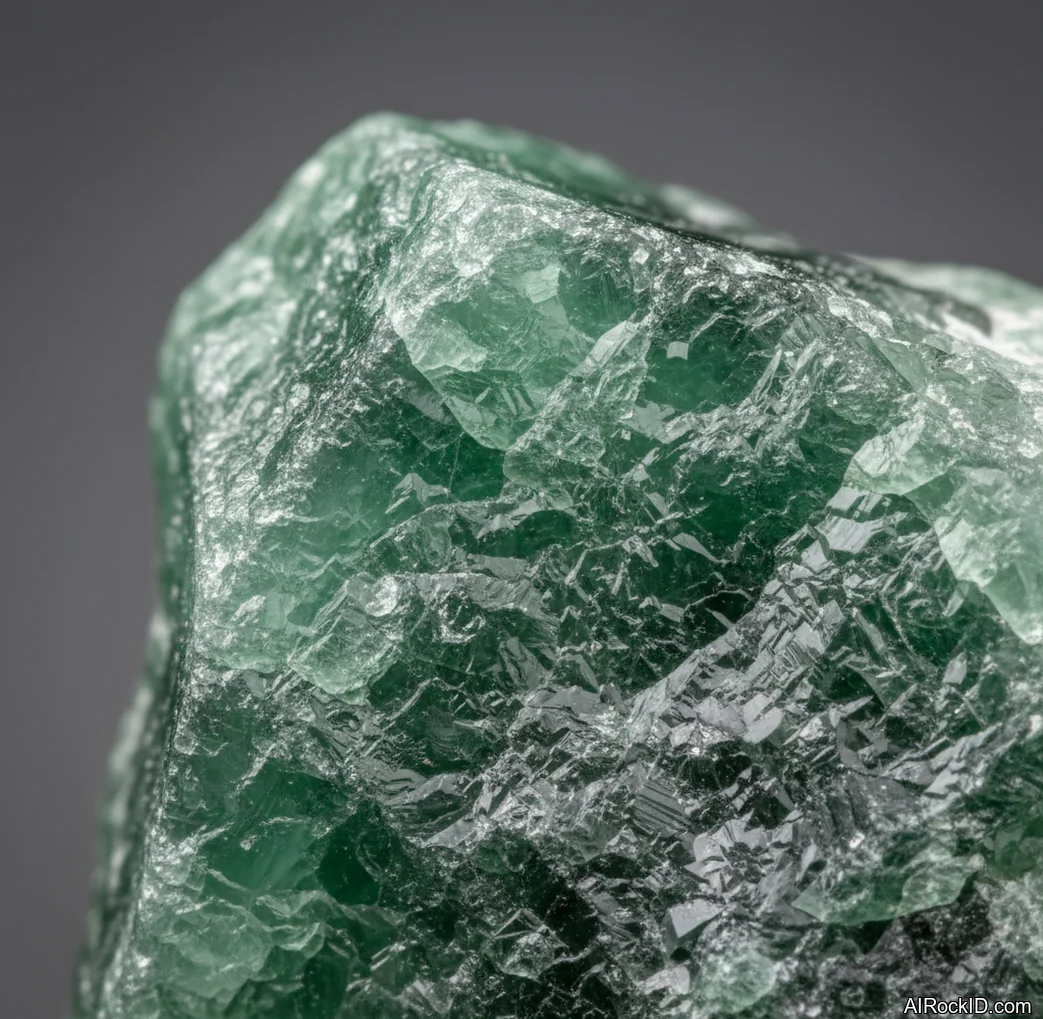
Green aventurine is quartz that’s green because it’s got tiny mica bits inside it, usually fuchsite, and those little inclusions can throw off a soft sparkle people call aventurescence.
Grab a tumbled stone and you notice the quartz weight right away. It’s cool against your palm, and the polish can feel kind of slick, like a river pebble that’s been worked over forever. The green isn’t that loud neon you see in dyed agate. It’s more like crushed leaves sitting in the shade, and you’ll sometimes get pale, milky patches where the quartz went a little cloudy (it happens). Tilt it under a desk lamp and you might catch pinprick flashes from the mica. And yeah, some pieces barely glitter at all. Totally normal.
Most of what’s sold is tumbled stones, beads, worry stones, plus simple cabochons. You can find raw chunks too, but they usually don’t do the classic quartz crystal point look. When I’m sorting through a tray in a shop, I go for the pieces with even color, a fine sparkle that isn’t chunky, and no obvious dye collecting in the cracks. Why buy one that looks stained?
Origin & History
The word “aventurine” comes from the Italian “a ventura,” which basically means “by chance.” It’s tied to aventurine glass (goldstone), which people say was discovered by accident in Venice after copper filings slipped into molten glass and left that sprinkled, glittery effect. And the mineral trade grabbed the same name because the natural stone can show that same scattered sparkle.
Green aventurine itself has been used for ages for beads, seals, small carvings, and decorative pieces anywhere people had workable, quartz-rich rock to cut and polish. In today’s market it got a big push from lapidaries and the metaphysical crowd, but from a geology standpoint it’s still just quartz, as long as it has the right inclusions and grain size.
Where Is Green Aventurine Found?
Commercial green aventurine is widely sourced, with a lot of carving and bead material coming through India and Brazil. Russia and parts of the USA produce decent rough too, but you’ll see it less often in everyday retail bins.
Formation
Aventurine shows up when quartz grows, or later recrystallizes, with flat, shiny mineral inclusions scattered all through it. With green aventurine, those inclusions are usually fuchsite, which is a chromium-bearing muscovite mica. They sit in there as tiny plates, and when you turn the stone in your hand you can see them flashing as they catch the light from different angles.
In the field, it’s most often linked to metamorphic settings: quartzites, schists, and those altered zones where silica and mica are both present and get reworked under heat and pressure. And the texture is the whole game here. If the quartz grains run too coarse, the color won’t look even. But if the mica plates get too big, you end up with that chunky “glitter bomb” sparkle some folks love, even if it can look a little cheap when it’s cut into cabochons.
How to Identify Green Aventurine
Color: Most pieces range from pale mint green to medium forest green, often with cloudy white quartz patches. The color comes from green mica (often fuchsite), not from copper like chrysocolla or from dye like some agates.
Luster: Polished surfaces show a vitreous to slightly waxy luster, with scattered sparkly flashes from mica.
Look closely under a single bright light and tilt it slowly. Real aventurescence shows as tiny, random flashes that wink on and off rather than a uniform glitter layer. If you scratch it with a steel nail, it shouldn’t take a scratch, but it will scratch softer stones like calcite. And cheap versions can be dyed quartzite or dyed chalcedony, and the giveaway is color that’s too even and loud, especially where it settles into little cracks or drill holes.
Properties of Green Aventurine
Physical Properties
| Crystal System | Trigonal |
| Hardness (Mohs) | 7 (Hard (6-7.5)) |
| Density | 2.60-2.66 g/cm3 |
| Luster | Vitreous |
| Diaphaneity | Translucent to opaque |
| Fracture | Conchoidal |
| Streak | White |
| Magnetism | Non-magnetic |
| Colors | Pale green, Mint green, Medium green, Dark green, Green with white mottling |
Chemical Properties
| Classification | Silicates |
| Formula | SiO2 |
| Elements | Si, O |
| Common Impurities | Cr, Fe, Al, K, Mg |
Optical Properties
| Refractive Index | 1.544-1.553 |
| Birefringence | 0.009 |
| Pleochroism | None |
| Optical Character | Uniaxial |
Green Aventurine Health & Safety
Green aventurine is usually fine to touch, and it can get wet without any issues in normal day-to-day use. But if you’re cutting it up with a saw or you start grinding or sanding it, that’s where you need to pay attention, because the real concern is quartz dust.
Safety Tips
If you’re going to cut or polish it, put on a real respirator (not just a flimsy paper mask) and keep things wet so the dust doesn’t get everywhere.
Green Aventurine Value & Price
Price Range
Rough/Tumbled: $2 - $20 per palm stone or small specimen
Cut/Polished: $1 - $10 per carat
Price mostly comes down to how even the color is and how tight that sparkle looks when you tilt it under a lamp. Clean, well-matched bead strands and big blocks you can actually carve (the kind that don’t crumble at the edges) run higher than the usual mixed, tumbled lots.
Durability
Durable — Scratch resistance: Excellent, Toughness: Good
Quartz is stable in normal indoor conditions, but polished pieces can lose their shine if they bang around with harder grit or other quartz in a pouch.
How to Care for Green Aventurine
Use & Storage
Store it like you would any quartz jewelry: separate from softer stones so it doesn’t scuff them, and separate from other quartz if you want to keep the polish crisp. I’ve had tumbled pieces get a hazy “tumbled again” look after a season in a mixed pocket jar.
Cleaning
1) Rinse with lukewarm water and a drop of mild soap. 2) Use a soft toothbrush around drill holes, carvings, and seams where skin oils build up. 3) Rinse well and pat dry; air-dry fully before storing.
Cleanse & Charge
For a simple reset, rinse briefly in water and dry, or leave it on a windowsill for indirect light. Don’t bake it in harsh sun all day if you care about keeping the surface polish looking fresh.
Placement
On a desk, it reads calm and earthy, especially the lighter greens. In a pocket, go for a flatter palm stone since chunky rough will chew up your keys and get edge wear fast.
Caution
Don’t toss anything with fractures into an ultrasonic cleaner. Same goes for drilled beads that feel a little thin around the hole (you can usually spot that chalky ring at the edge) or carvings that have been glued back together. And if you’re shopping for “green quartz” online, be careful. A lot of it’s dyed. So ask the seller for tight close-ups, especially of the drill holes and any cracks. Why there? That’s where dye loves to pool and look too dark.
Works Well With
Green Aventurine Meaning & Healing Properties
People usually grab green aventurine when they want a calm, grounded kind of “yes” energy. Not the whiplash stuff. And I get why. That plant-green shade hits your eyes as “safe” and “alive” almost instantly.
Hold a piece and it has that cool, quiet feel quartz always has. Kind of weighty for its size, too. And if you tilt it under a shop light, you’ll catch those tiny mica flashes, like little sparks buried in the stone, which gives your brain something to focus on when you’re trying to settle down.
In crystal shop talk, it gets linked to the heart area and money luck. My honest take after years behind a counter? It’s great for routines. A new job. A new budget. A new habit. It’s not dramatic, and that’s the whole point. But it won’t replace real planning, real rest, or medical care. If you’re anxious, it can work as a tactile anchor in the same way a smooth worry stone works, because your hands stay busy and your breathing naturally slows.
Thing is, green aventurine gets sold like it’s rare, or “high frequency” (whatever that means), when most of it is just straightforward quartzite with mica. And honestly, that’s fine. The best way to use it is pretty practical: carry it, rub it, set it where you’ll actually see it, and let it be a small nudge to take the next sensible step.
Want more of a heart-centered feel? Pair it with rose quartz. That combo is the one I’ve seen people keep using, mostly because it’s simple and it feels good in the hand. (No fuss.)
Identify Any Crystal Instantly
Snap a photo and get properties, value, care instructions, and healing meanings in seconds.