Dioptase
What Is Dioptase?
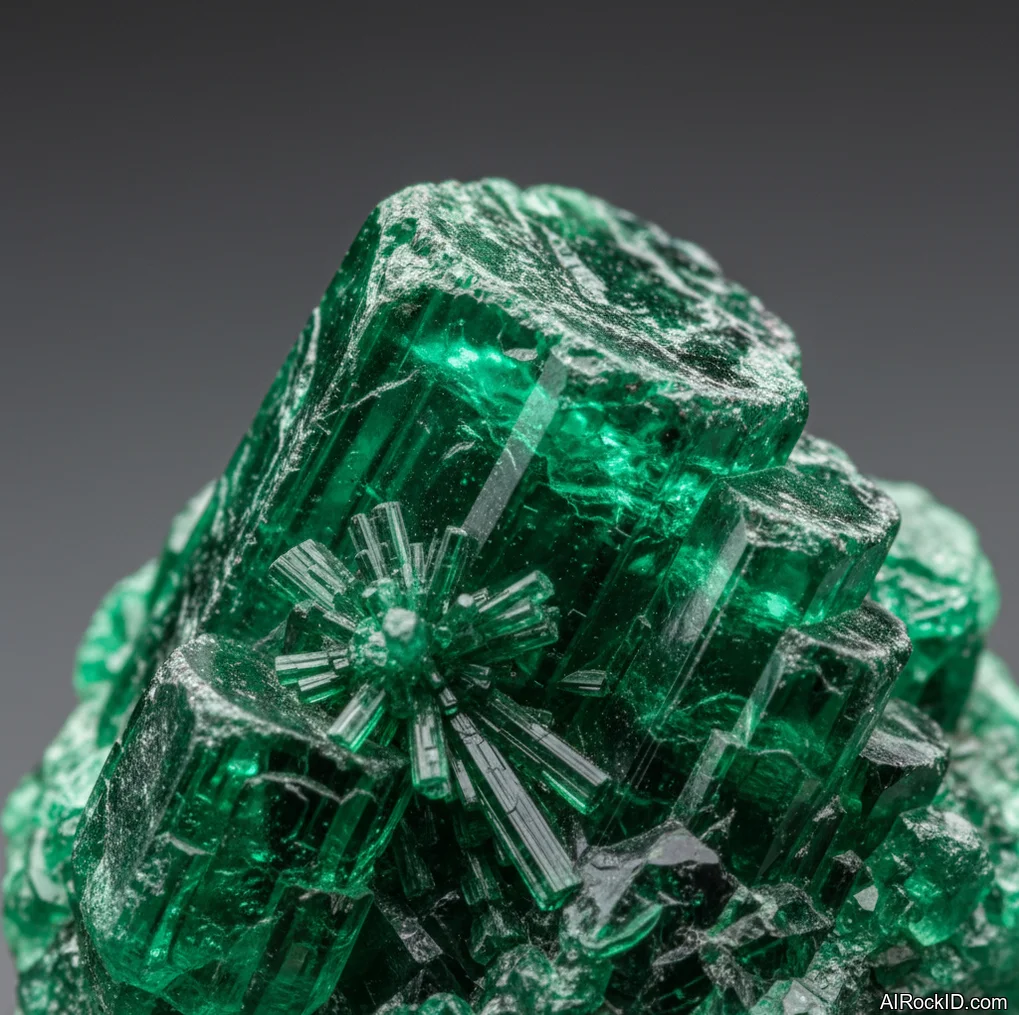
Dioptase is a rare copper cyclosilicate mineral, CuSiO3·H2O, and it grows those punchy emerald-green crystals.
Grab a decent cabinet piece and you’ll notice it right away: it feels spiky in your hand. The tiny trigonal crystals stick up off the matrix like little thorns, and under bright lights they ping back green sparks that honestly look like miniature LEDs. But don’t be fooled. This stuff is fragile. I’ve seen someone at a show tap a crystal point with a fingernail, then immediately regret it when a corner pops off. That’s dioptase.
New folks call it emerald all the time. Can you blame them? The color really is that saturated, especially when it’s sitting on that classic pale calcite or dolomite matrix. Thing is, once you’ve handled both, the differences show up fast. Dioptase has a more delicate feel, and the luster is glassy in this almost-wet way under booth lighting. Tilt it a bit and you’ll catch sharp flashes off cleavage faces, not the broader, steadier glow you get from beryl.
Origin & History
Back in 1797, René Just Haüy wrote up dioptase from Kazakhstan and gave it a name built from Greek for “through” and “visible.” Sounds like professor talk, sure. But it’s really just this: turn the crystal in your fingers and the cleavage pops out because the reflections blink on and off like a little signal.
Collectors will sometimes sell it as “copper emerald,” which is basically a sales hook, not an actual tie to emerald. And, historically, it got mixed up with those old tales about “emerald” deposits in Central Asia. If you’ve ever had a tray of crisp, sharp dioptase crystals sitting next to real emerald under the same light, you can see why people kept making that mistake. (It’s the color that gets you.)
Where Is Dioptase Found?
Most of the show-stopping material people recognize comes from Namibia and the DR Congo, with the original classic locality in Kazakhstan. Smaller occurrences pop up in a bunch of copper districts worldwide.
Formation
Raw chunks from oxidized copper deposits are where dioptase really shows off. It turns up as a secondary mineral in the oxidation zone, when copper-bearing fluids snake through fractures and little cavities, hit silica, and react.
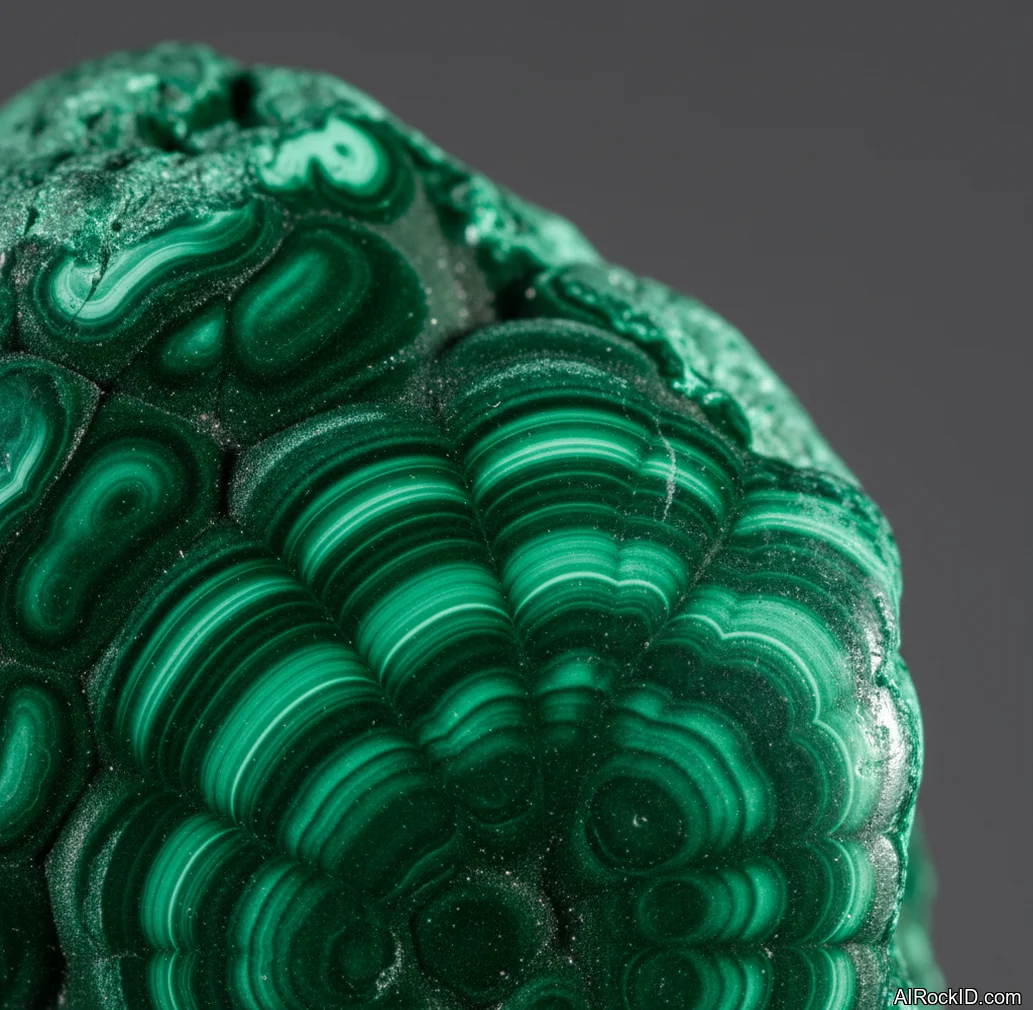
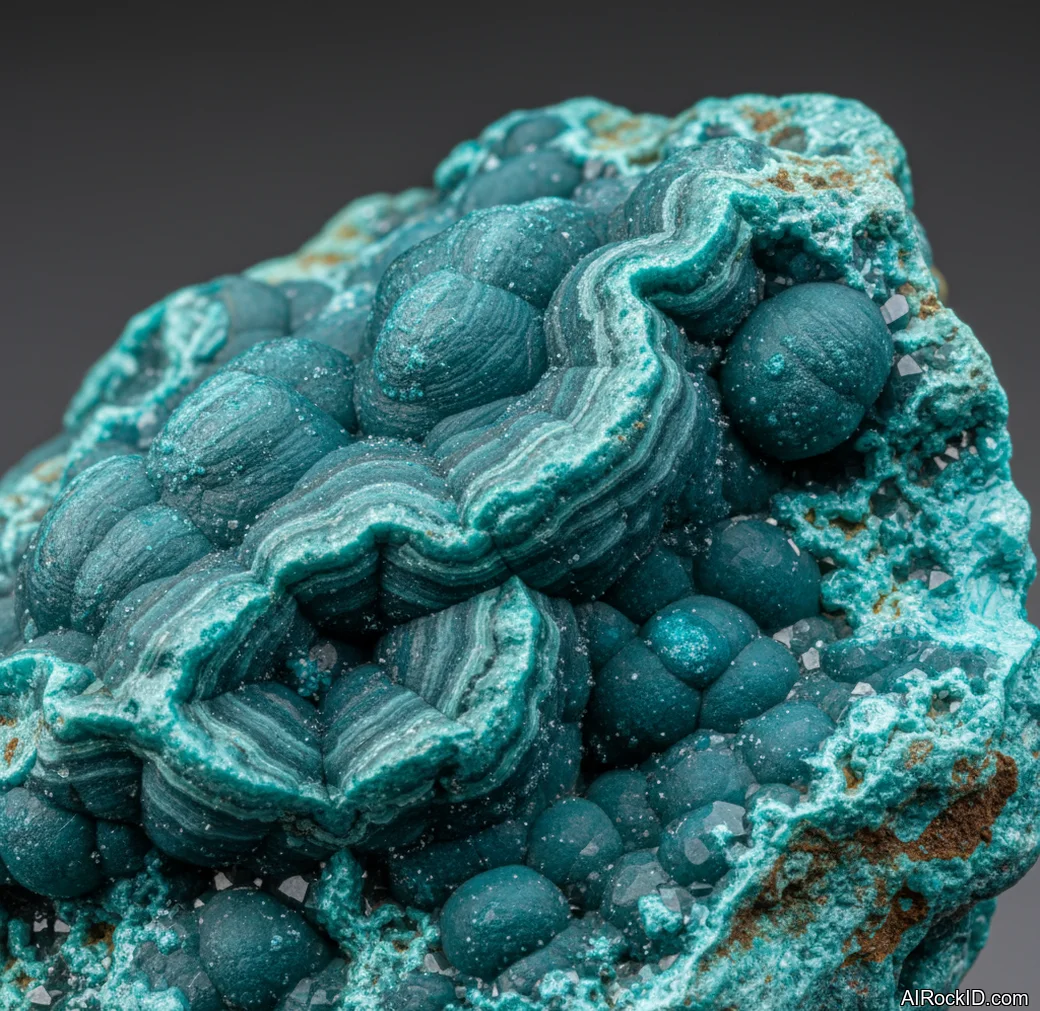
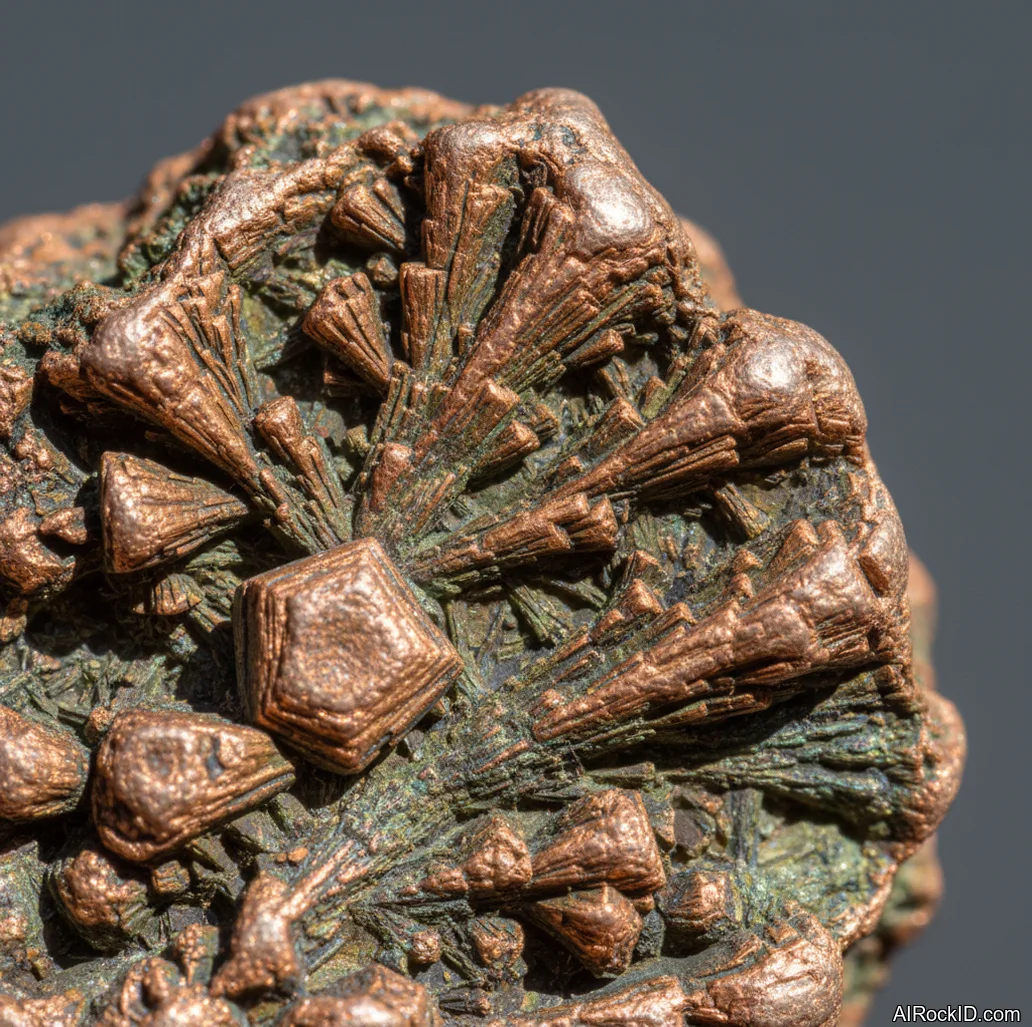
And that’s why you so often find it parked next to the other “copper greens” like malachite, chrysocolla, and sometimes there’s just a light dusting of cuprite or limonite stuck in the cracks.
Look closer at a matrix piece and the crystal habit jumps out. Tiny trigonal prisms. Sometimes they’re packed together like a drusy carpet, other times you’ll get clean single crystals if the pocket had enough breathing room.
I’ve had specimens where the dioptase is sitting right on sparkly calcite, the kind that flashes when you tilt it under a lamp, and you can literally read the sequence on the pocket walls like a little timeline. How often do you get that kind of clear “this happened, then that happened” in one rock?
How to Identify Dioptase
Color: Dioptase ranges from bluish green to deep emerald green, usually very saturated. The color is from copper, and it tends to look “electric” under bright white light.
Luster: Vitreous, often with sharp mirror-like flashes on cleavage faces.
Pick up the specimen and tilt it slowly under a single light source. Dioptase will throw crisp, glassy flashes, and you’ll often catch obvious cleavage reflections as the angle changes. If you scratch it with a steel nail, it’ll usually mark, but it should still feel harder than waxy chrysocolla. And watch for the common mix-up: green calcite can look similar in photos, but calcite feels softer and the cleavage breaks into rhombs that don’t look like dioptase’s little prisms.
Properties of Dioptase
Physical Properties
| Crystal System | Trigonal |
| Hardness (Mohs) | 5 (Medium (4-6)) |
| Density | 3.28-3.35 g/cm3 |
| Luster | Vitreous |
| Diaphaneity | Transparent to translucent |
| Fracture | Conchoidal |
| Streak | Light green |
| Magnetism | Non-magnetic |
| Colors | Emerald green, Bluish green, Dark green |
Chemical Properties
| Classification | Silicates |
| Formula | CuSiO3·H2O |
| Elements | Cu, Si, O, H |
| Common Impurities | Fe, Mn |
Optical Properties
| Refractive Index | 1.644-1.723 |
| Birefringence | 0.052 |
| Pleochroism | Strong |
| Optical Character | Uniaxial |
Dioptase Health & Safety
Normal handling is safe. But I’d still treat it like any copper mineral and keep it away from your mouth, snacks, and anywhere you prep food. Thing is, the biggest real-world problem isn’t exposure at all. It’s chipping or scratching the specimen. I’ve seen little flakes come off just from setting one down on a rough shelf (and once you notice that fresh powdery edge, you can’t unsee it).
Safety Tips
Wash your hands after you’ve been handling a bunch of mineral specimens at a show. That dust gets everywhere, and you can feel it on your fingertips (kind of that dry, chalky grit that sticks around). And if you ever do any lapidary work on it, keep it wet and wear the right respiratory protection.
Dioptase Value & Price
Price Range
Rough/Tumbled: $30 - $2,500 per specimen
Cut/Polished: $80 - $600 per carat
Prices climb fast as the crystals get bigger, sharper, and cleaner, especially when you tilt the piece under a lamp and it throws back that crisp, damage-free sparkle instead of looking cloudy or chipped. And the matrix isn’t just background, either. Green crystals sitting on pale calcite from Tsumeb can go for several times what you’d pay for a similar-sized drusy piece.
Durability
Fragile — Scratch resistance: Fair, Toughness: Poor
Dioptase is brittle with good cleavage, so points chip easily during handling or shipping.
How to Care for Dioptase
Use & Storage
Store it in a box or a display case where it won’t get bumped. I don’t stack dioptase with other minerals because the points chip if they rub.
Cleaning
1) Blow off loose dust with a bulb blower or canned air held at a distance. 2) Use a soft, dry paintbrush to sweep between crystals. 3) If you must use water, do a quick rinse with lukewarm water and pat dry immediately; avoid soaking.
Cleanse & Charge
For a metaphysical-style cleanse, use smoke, sound, or a dry bed of quartz. Skip salt bowls and long water soaks because they’re hard on matrix minerals and can loosen crystals.
Placement
Give it a stable shelf where nobody’s going to grab it by the sparkly side. Under a small spotlight it looks unreal, but keep it out of high-traffic areas.
Caution
Thing is, this mineral’s brittle and it cleaves cleanly, so skip the ultrasonic cleaner, skip the steamer, and don’t just drop it in your pocket to rattle around with keys and coins. And if it’s sitting on calcite, acids are a hard no.
Works Well With
Dioptase Meaning & Healing Properties
Compared to softer, earthy copper minerals like chrysocolla, dioptase feels sharper in the hand, almost like it’s “on.” It has this crisp, switched-on feel when you pick it up, like the edges of the energy are tighter. That’s the vibe people react to when they use it for emotional work.
I’ve seen people split fast: they either love the intensity or they’re like, nope, too much for everyday wear. And honestly? Fair. The color and sparkle can feel loud even when the stone’s just sitting there on a desk doing nothing.
Look, watch what it does in a room. Under warm ламps it leans greener. In daylight, it can flip and show a slightly bluish tone. Subtle, but you notice it when you move it from a window to a table (or even just turn it in your fingers).
People who connect stones with the heart tend to grab dioptase when they want something direct. Less dreamy. More, “Okay, we’re dealing with this today.” But it’s still a crystal, not a therapist. So if someone’s using it alongside real support like counseling, journaling, or grief work, it can work as a simple anchor object. Something to hold. Something to come back to.
But here’s the collector reality: a lot of dioptase sold for “healing” is tiny druse on crumbly matrix, and it sheds grains if you handle it a lot. You can literally end up with that green dust on your fingertips (and in the little seams of your skin) after a few minutes. So if you’re going to work with it, I’d go for a sturdier piece with crystals that aren’t already undercut. And if you’re feeling raw, a calmer stone like rose quartz might be a better first stop. Then dioptase later, when you want the punchier follow-up. Why start with the firecracker?
Identify Any Crystal Instantly
Snap a photo and get properties, value, care instructions, and healing meanings in seconds.