Copper
What Is Copper?
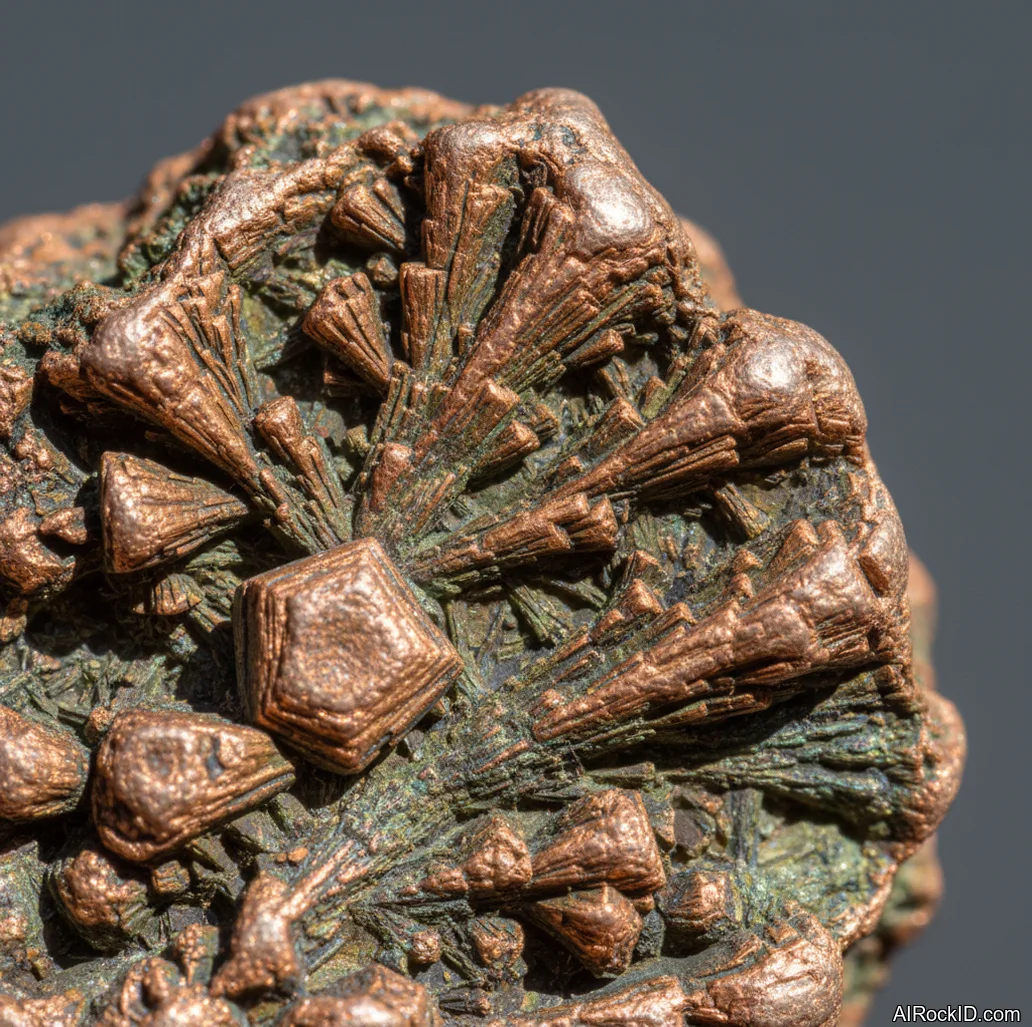
Copper’s one of those native-element minerals, meaning it’s basically elemental Cu that shows up in nature as metallic masses, wiry strands, thin sheets, or full-on crystals.
Pick up a chunk and you feel it right away. Heavy. It just sinks into your palm in a way quartz never does, and that warm reddish-orange glow can look almost fake when you’re holding it under bright shop lights.
Thing is, people expect it to gleam like a brand-new penny. But most collector pieces don’t. A lot of the time there’s a brown skin on it, a few blackened patches, or tiny green specks where it’s started to oxidize (you’ll even catch it in the little pits and along the edges). And honestly? That “used” look is half the appeal.
Origin & History
Most dealers just call it “native copper.” They don’t bother with some slick trade name, because this stuff sells itself. The word *copper* goes back through Latin (*cuprum*), and that name’s tied to Cyprus, which was a major ancient source of copper ore.
As a mineral species, copper has been recognized since the early days of mineral collecting, mostly because you can’t confuse it with much once you’ve actually had a piece in your hand. It’s got that heavy-for-its-size feel, and the surface will pick up little fingerprints or dull spots if you handle it (especially if it’s been sitting out). Long before modern mineralogy, people were pulling native copper and working it, particularly in places where glacial deposits and basalt-hosted deposits put it within reach.
Where Is Copper Found?
Native copper shows up in a bunch of places, but classic specimens come from Michigan’s Keweenaw Peninsula, plus pockets in Arizona, Russia’s Urals, and a handful of big copper districts worldwide.
Formation
Out in the field, copper’s one of those “right chemistry, right fluids” minerals. You’ll see it show up when copper-rich hydrothermal fluids snake through fractures and little open vugs, then hit a reducing spot and the copper drops out as native metal instead of staying dissolved.
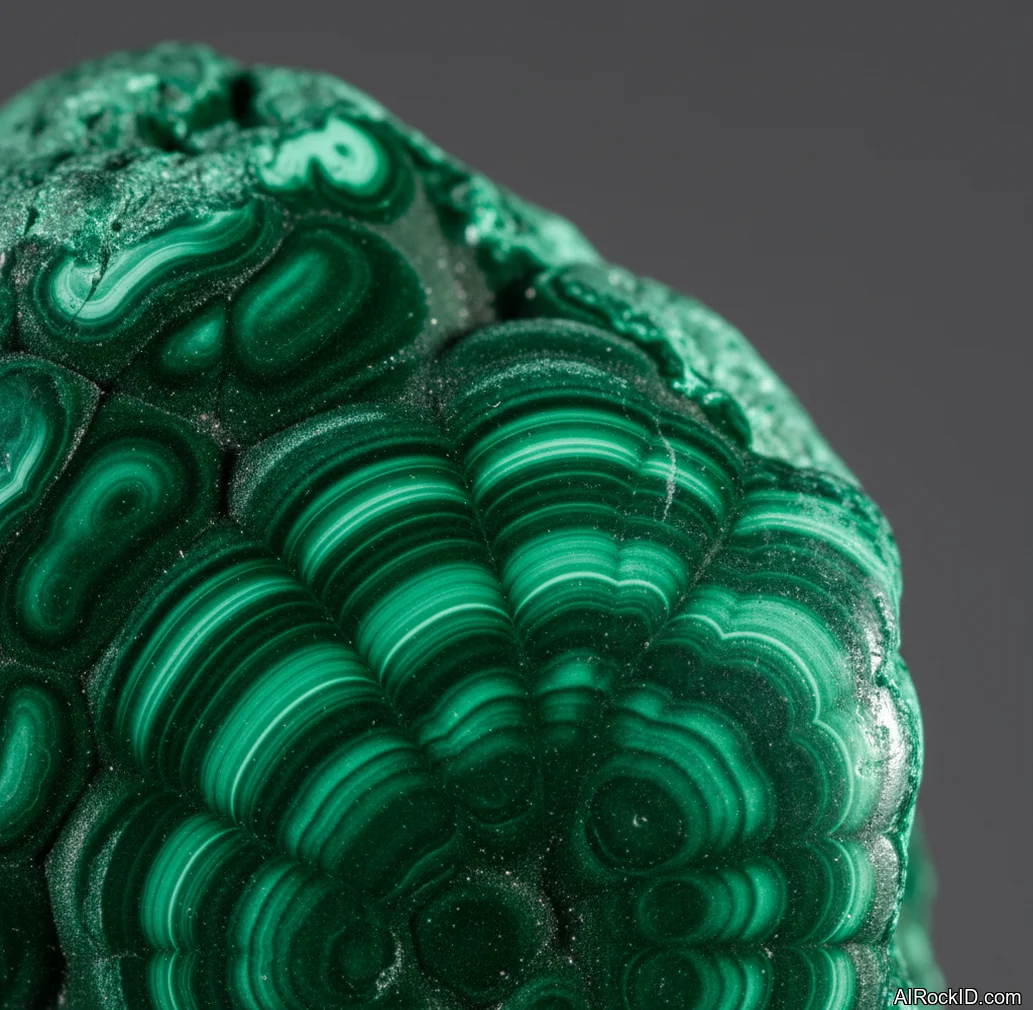
But unlike a lot of the flashy sulfides, native copper doesn’t need a dramatic-looking host. Basalts and volcanic-related settings are famous for it (Michigan is the poster child), and it also turns up in the oxidized zones of copper deposits, where conditions let metallic copper precipitate right alongside cuprite and malachite.
How to Identify Copper
Color: Fresh copper is reddish-orange to copper-red, but most natural surfaces dull to brown, dark red, or even black with age. Green or blue-green spots are common where secondary minerals start forming.
Luster: Metallic luster, often muted by tarnish.
Look closely at the broken edges. Real native copper has a hackly, torn-looking fracture, like it ripped instead of snapped cleanly. If you scratch it with a steel nail, it’ll usually take the scratch because it’s only Mohs 2.5 to 3, but it won’t crumble like some soft oxidized stuff. And the real test is heft: even a small piece feels surprisingly heavy for its size.
Properties of Copper
Physical Properties
| Crystal System | Cubic |
| Hardness (Mohs) | 2.5-3 (Soft (2-4)) |
| Density | 8.92-8.96 g/cm3 |
| Luster | Metallic |
| Diaphaneity | Opaque |
| Fracture | Hackly |
| Streak | copper-red |
| Magnetism | Non-magnetic |
| Colors | copper-red, reddish-orange, brown, black, green (tarnish/secondary) |
Chemical Properties
| Classification | Native elements |
| Formula | Cu |
| Elements | Cu |
| Common Impurities | Ag, As, Sb, Fe |
Optical Properties
| Refractive Index | None |
| Birefringence | None |
| Pleochroism | None |
| Optical Character | Isotropic |
Copper Health & Safety
Handling specimens is generally pretty low risk. But try not to kick up any dust when you’re moving them around (that fine, chalky stuff you can sometimes see puff off the surface). And don’t use copper in drinking-water setups, since copper ions can leach out, especially if the water’s acidic.
Safety Tips
Wash your hands after you’ve been handling it. And if you’re cutting, sanding, or hitting copper with a wire brush, put on a respirator, then wipe up the dust with a damp cloth (you’ll see that fine brown grit cling to the rag).
Copper Value & Price
Price Range
Rough/Tumbled: $10 - $300 per specimen
Prices bounce around a lot depending on the form and where it came from. Wire pieces, those sharp little crystals that’ll snag on fabric if you’re not careful, big float nuggets, and classic Keweenaw specimens with really clean shape usually run higher than the dull, heavy massive chunks that just sit there like a brick.
Durability
Moderate — Scratch resistance: Poor, Toughness: Good
Copper is stable in a display case, but it scratches easily and will tarnish over time, especially in humid air or near sulfur-containing materials.
How to Care for Copper
Use & Storage
Store copper dry and away from rubber bands, foam, or felt that can off-gas sulfur and speed tarnish. I keep nicer wires in little plastic boxes so they don’t get scuffed.
Cleaning
1) Dust with a soft brush or microfiber cloth. 2) For grime, rinse quickly in water with a tiny drop of mild dish soap, then brush gently and rinse again. 3) Dry completely right away; don’t air-dry in a humid room.
Cleanse & Charge
If you do the metaphysical thing, stick to smoke, sound, or a quick intention-based cleanse. I wouldn’t soak it, and I definitely wouldn’t salt-bury it unless you like surprise corrosion.
Placement
A stable shelf with low humidity is best. If you’ve got a wire or delicate crystal, put it where it won’t get bumped because copper dents and bends more easily than people expect.
Caution
If you want to keep the natural patina and not mess up the label, skip acids like vinegar or lemon juice, and don’t go after it with harsh metal polishes. And if you’re trying to slow down tarnish, don’t store it in contact with pyrite or any sulfur-rich minerals. Why invite that reaction?
Works Well With
Copper Meaning & Healing Properties
Most dealers will tell you copper is a “conductor,” and that same idea gets dragged right into how people use it in crystal work. In my own little box of pocket stones, copper is the one that feels the most like a tool. Not fancy. Just useful.
Pick up a smooth piece and you’ll notice it warms up fast compared to quartz or agate. It goes from cool to almost body-temp in seconds, especially if it’s been sitting on a table and you wrap your fingers around it. That quick shift is plain old thermal conductivity, but it’s also why people like it for body-focused practices, like placing it on tense areas or holding it during breath work. I’m not calling that medical treatment. It’s more like a sensory anchor, something to keep your hands occupied so your attention doesn’t skate all over the place.
But here’s the catch: copper tarnishes, and that weirds some folks out. They’ll swear the stone “lost energy” when it’s really just chemistry and skin oils doing their thing (and yeah, sweaty hands speed it up). If you like copper for grounding and focus, the best approach is simple. Keep it clean, handle it often, and don’t expect it to stay penny-bright forever. Why would it?
Identify Any Crystal Instantly
Snap a photo and get properties, value, care instructions, and healing meanings in seconds.