Garnet In Arfvedsonite


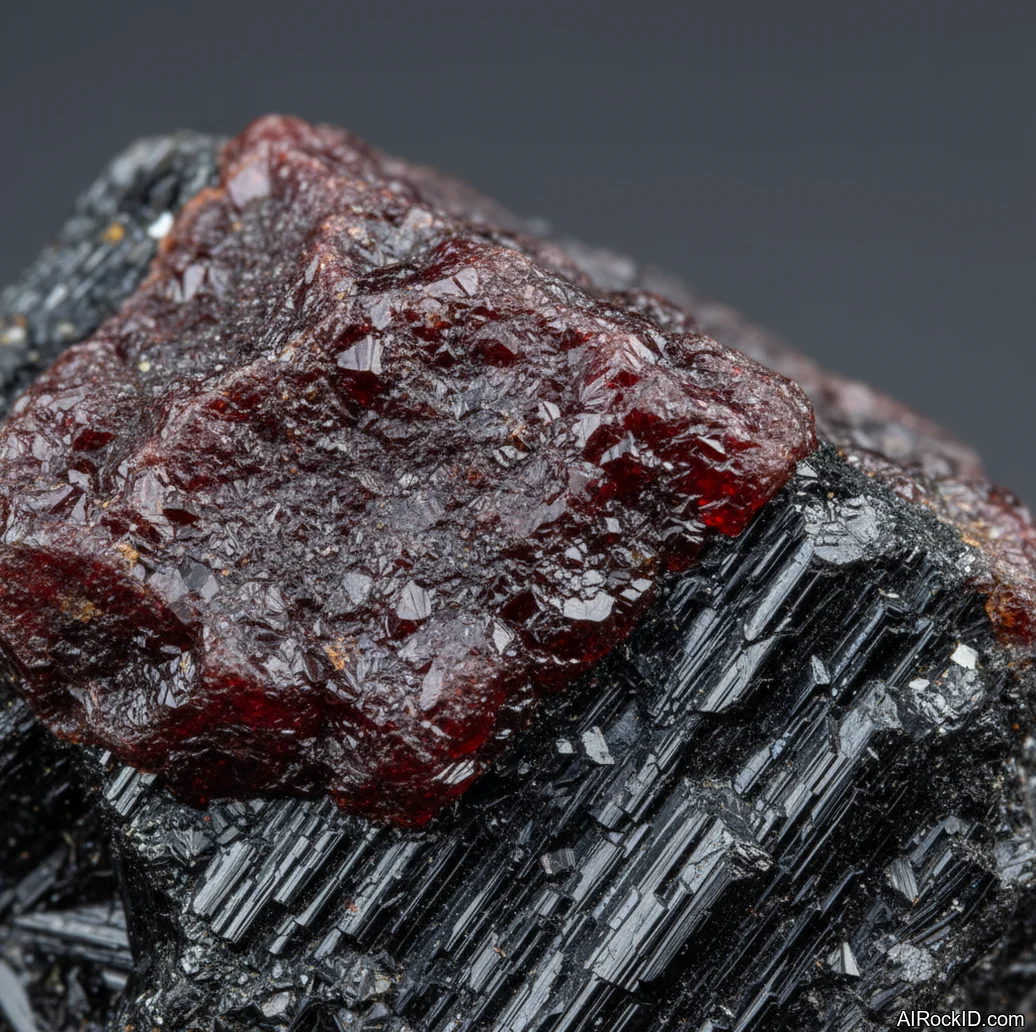
Quick answer: Garnet in arfvedsonite is a mixed mineral specimen showing red to reddish-brown garnet crystals set in a dark blue-black to black arfvedsonite-rich matrix. It is usually identified by the color contrast, crystal habit, and matrix texture rather than by a single uniform hardness or appearance.
AI Rock ID can help compare visible features such as red garnet spots, dark amphibole matrix, luster, and crystal boundaries from a clear photo. RockIdentifier.io provides visual identification support, but a mixed specimen may still require close inspection or lab testing for confident mineral confirmation.
Good fit
- Collectors who like high-contrast mixed mineral specimens
- Anyone comparing red garnet crystals in a dark amphibole matrix
- Buyers who want a decorative stone with visible natural crystal texture
- Beginners learning how composite minerals differ from single-mineral crystals
Not a good fit
- People who need a precisely faceted gemstone with standardized grading
- Buyers expecting every piece to show large, well-formed garnet crystals
- Situations where a single, uniform hardness is required for testing or use
Most commonly confused with
- Garnet in Biotite: Biotite matrix is typically platy and mica-like, while arfvedsonite forms darker amphibole material with a more fibrous or prismatic look.
- Garnet in Schist: Schist usually has a layered, foliated texture, while garnet in arfvedsonite is often more massive and dark amphibole-rich.
- Astrophyllite: Astrophyllite commonly shows bronze to golden radiating blades rather than red garnet crystals in a black matrix.
- Eudialyte: Eudialyte is often pink to red within alkaline rock and may lack the distinct isolated garnet crystal habit.
Garnet in Arfvedsonite Lookalike Comparison
| Specimen | Typical visual clue | Key difference |
|---|---|---|
| Garnet in arfvedsonite | Red garnet in dark blue-black to black matrix | Dark amphibole-rich host with contrasting garnet |
| Garnet in biotite | Red garnet with shiny black mica flakes | Matrix often separates into thin, platy sheets |
| Garnet in schist | Red garnet in layered rock | Strong foliation or banding is common |
| Astrophyllite | Bronze-gold radiating blades | Metallic blades replace the red garnet spots |
| Eudialyte-bearing rock | Pink-red areas in dark alkaline matrix | Red mineral is usually more massive or patchy than garnet crystals |
AI identification confidence
AI photo identification is usually moderate when the specimen shows clear red garnet crystals against a dark arfvedsonite-rich matrix. Confidence drops when the surface is polished, the garnets are tiny, or the dark matrix could also be biotite, schist, aegirine, or another amphibole-rich rock.
When AI gets it wrong
- A polished surface hides crystal shape, cleavage, and matrix texture.
- Red spots are dye, resin fill, eudialyte, or another red mineral rather than garnet.
- Lighting makes black matrix look blue, green, or metallic, causing confusion with other dark silicates.
- The image shows only a small close-up without scale or multiple angles.
Final recommendation
Choose garnet in arfvedsonite when you want a natural mixed specimen with visible red garnet contrast and a dark amphibole-rich host rock. For buying, prioritize clear photos, untreated disclosure, and a seller description that identifies both the garnet and the matrix rather than using only a trade name.
How to Check Authenticity Before Buying
Look for natural variation in the garnet crystals, including uneven size, spacing, and partial embedding in the dark matrix. Be cautious of pieces with perfectly uniform red dots, overly glossy coatings, or color that pools in cracks, as these may indicate dye, resin, or artificial enhancement. Ask for photos in daylight, close-ups of the garnet-matrix boundary, and confirmation that the specimen is natural and not reconstituted.
Photo Tips for Identification
Use bright indirect light and photograph the specimen from several angles, including one close-up and one full-piece image with a ruler or coin for scale. A wet-looking polish can obscure texture, so an additional side or broken-edge photo may help show whether the dark host is amphibole-rich, mica-rich, or schistose. Avoid strong color filters because they can make garnet, eudialyte, and dyed areas harder to distinguish.
What a Seller Label Should Include
A useful label should state that the piece is garnet in arfvedsonite or garnet in an arfvedsonite-bearing matrix, not simply “garnet stone.” Locality information is helpful but may not always be available for commercial tumbled or polished pieces. If the specimen is sold as rare, museum grade, or from a specific mine, request supporting details or provenance.
What Is Garnet In Arfvedsonite?
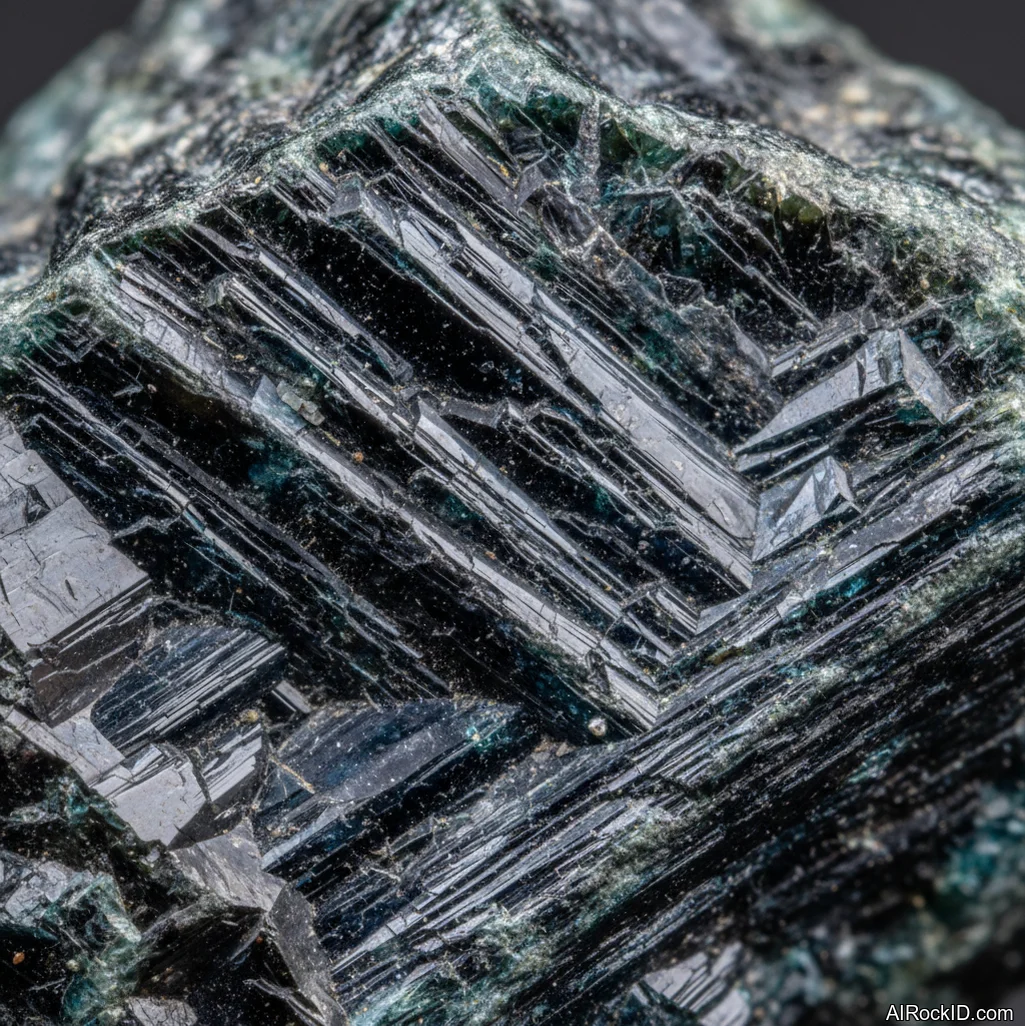
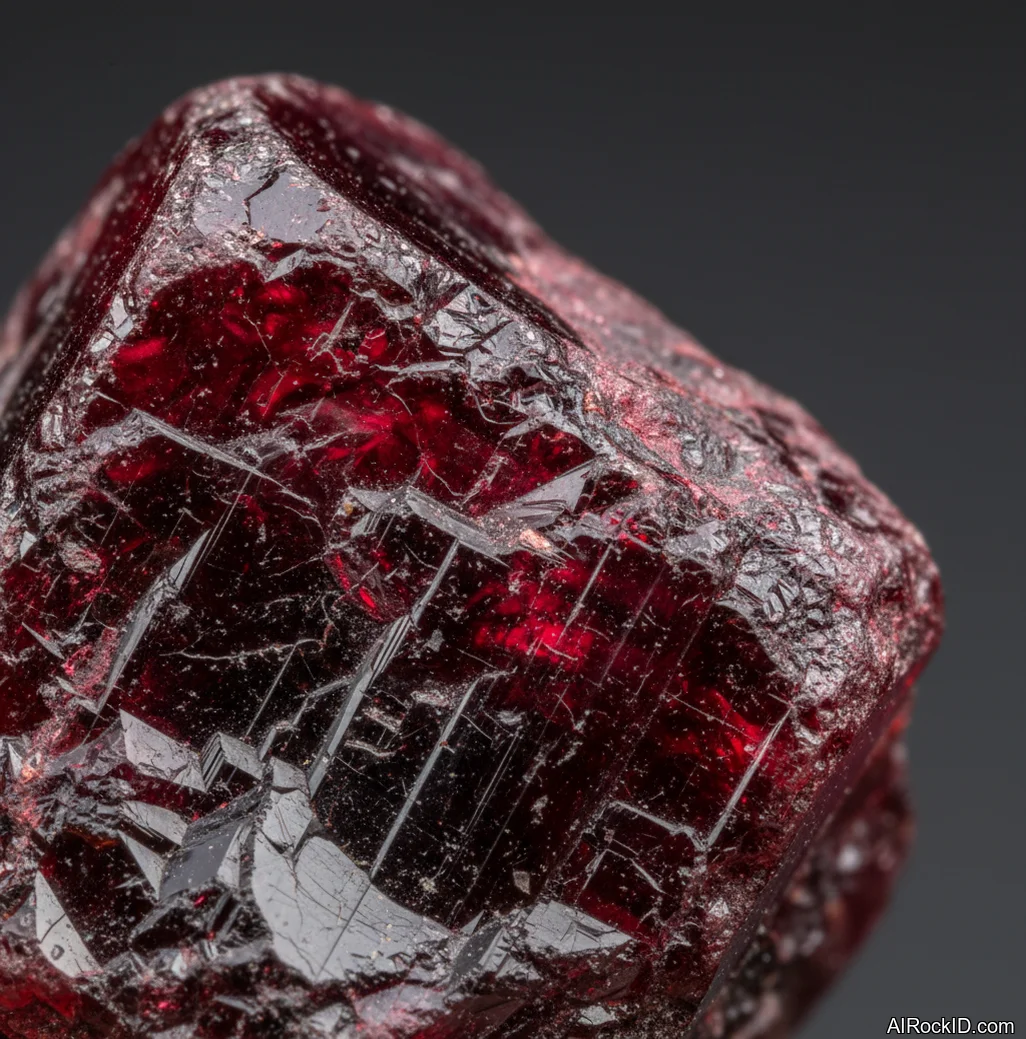
Garnet in Arfvedsonite is a composite rock that’s sold as red garnet crystals set into a dark arfvedsonite amphibole matrix.
Pick up a palm stone and the contrast hits you fast. The garnets read like little red buttons, almost bead-like, sitting in this stormy, inky background that can kick off a silvery-blue flash when you roll it under a lamp. It’s cooler in your hand than you’d guess at first touch, and the matrix has that slightly “oily” amphibole look, not the cleaner, glassy shine you’d expect from quartz.
But look, here’s the honest bit. A lot of the stuff on the market gets polished hard, so people assume they’re holding one single mineral with one neat set of properties. That’s not what it is. You’ve got tough garnet spots sitting in a more splintery amphibole matrix, so it’ll take a nice polish, sure, but it can still chip along the edges if it gets knocked around in a pocket (ever notice those tiny corner dings after a day out?).
Origin & History
Arfvedsonite first got described in 1823, and it was named after the Swedish chemist Johan August Arfwedson, the same person linked to the discovery of lithium. That name stuck to this dark amphibole because it turns up in alkaline igneous settings, where the chemistry’s a bit odd compared to plain, everyday granite.
Garnet’s been recognized and used for a long time. But “garnet in arfvedsonite” as a trade name is newer, more like modern lapidary and shop talk than anything old-school. You mostly see it popping up over the last couple decades in gem show bins, usually as palm stones, spheres, slabs, and those flat display pieces cut to really show the red crystals against that black-blue background.
Where Is Garnet In Arfvedsonite Found?
It’s associated with alkaline igneous complexes and related metamorphic zones where amphiboles and garnet can occur together. Most retail material is sold without tight locality info, but Brazil is a common source in the trade.
Formation
Arfvedsonite is a sodium-heavy amphibole you mostly run into in alkaline igneous rocks that are silica-undersaturated to only mildly silica-rich, especially nepheline syenites and the pegmatites tied to them. Thing is, it usually shows up when the melt cools slowly and the chemistry gets a little weird, with enough sodium and iron around to grow a dark amphibole instead of the more typical hornblende.
And the garnet you see in these pieces is commonly an iron-rich variety like almandine (though sometimes it leans toward spessartine, depending on the chemistry). Garnet can form late in igneous crystallization, or it can grow during metamorphism when the rock’s been heated and squeezed and the ingredients line up just right. In hand samples, you’ll often spot rounded to dodecahedral garnet crystals that look kind of “set into” the matrix, because garnet tends to grow as chunky, stand-alone crystals while the amphiboles creep in later and fill, wrap, and weave around them as the rock keeps evolving.
How to Identify Garnet In Arfvedsonite
Color: Matrix is typically deep blue-black to black with occasional silvery-blue sheen; garnets show as red to reddish-brown crystals or spots. Some pieces look almost wine-red in the garnets under warm indoor light.
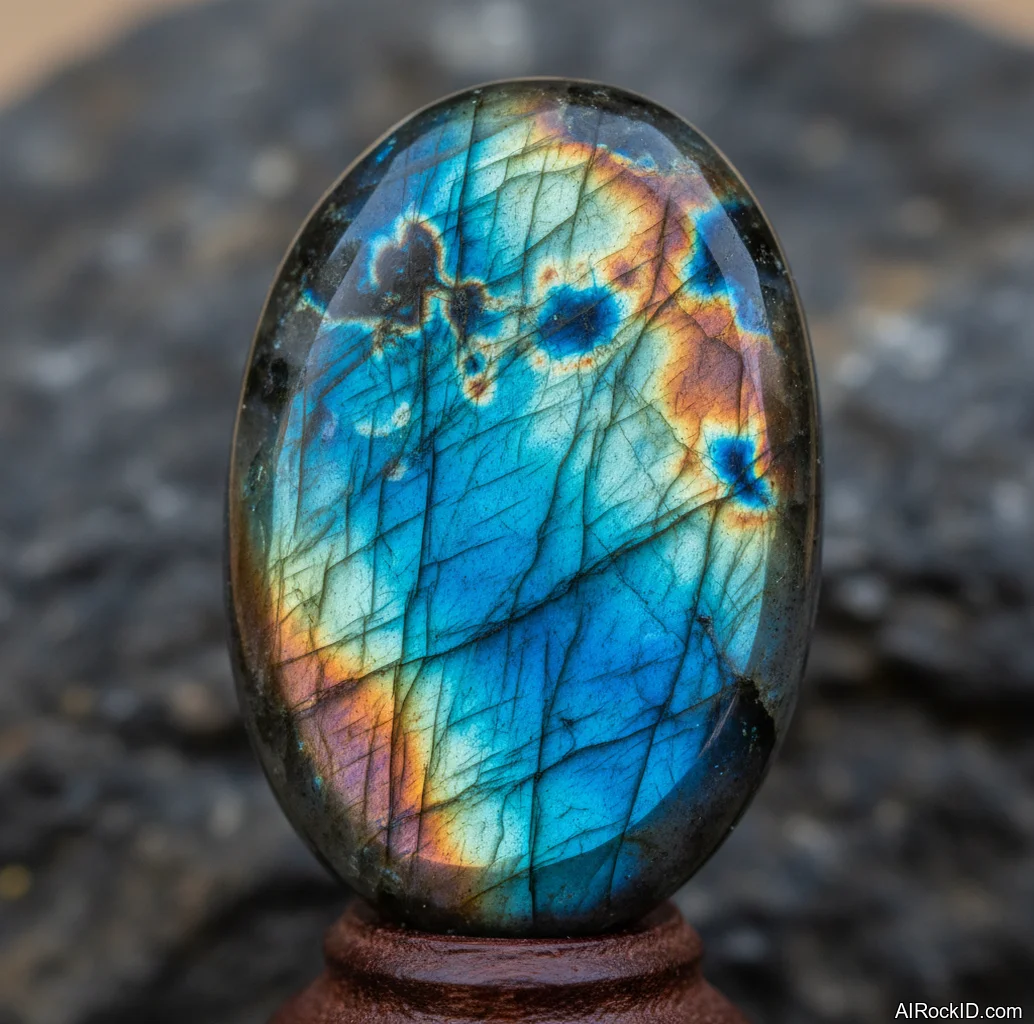
Luster: Arfvedsonite is usually vitreous to silky on fresh surfaces; polished pieces can look glossy with a subtle chatoyant flash.
Look closely at the garnet spots with a loupe. Real garnet tends to have crisp crystal faces or curved dodecahedral outlines, not painted-looking circles. Pick up two similar-sized stones and compare weight. The real stuff tends to feel a bit heavier than a dyed resin fake, and it stays cool in your hand longer. The real test is a bright point light. Tilt it and you’ll catch that amphibole sheen sweeping across the matrix, while the garnet areas stay more glassy and “still.”
Common Look-Alikes
Garnet In Arfvedsonite is sometimes confused with these materials:
- Garnet in biotite schist (almandine “buttons” in sparkly mica, often sold as garnet schist)
- Garnet in hornblende amphibolite (dark amphibole matrix, usually greener-black and more fibrous than arfvedsonite)
- Eudialyte in nepheline syenite (red spots in a black/gray alkaline rock, but the red is usually more smeary and less crystal-shaped)
- Rhodonite in black manganese matrix (pink-red patches in black, but rhodonite tends to look waxier and forms broader blobs, not bead-like dodecahedra)
- Dyed black matrix with glued-in garnet chips (craft material sold as “garnet in arfvedsonite” or “garnet in astrophyillite”)
- Manmade black glass or resin with red glass chips (souvenir palm stones with a too-even peppered look)
Market Cautions & Treatments
When AI Can Get This Wrong
At first glance, photos turn this into “red dots in black rock,” so AI often calls it garnet schist, eudialyte rock, or even rhodonite in manganese. The blue-silver flash from arfvedsonite almost never shows up in seller lighting, so the matrix gets misread as plain hornblende or generic basalt. The real test is in-hand: roll it under a single lamp for that silvery-blue sheen in the black amphibole, and poke at a red crystal edge with a steel needle, real garnet feels stubborn and crisp while dyed filler or resin dents or drags.
Properties of Garnet In Arfvedsonite
Physical Properties
| Crystal System | Monoclinic |
| Hardness (Mohs) | 5-7.5 (Hard (6-7.5)) |
| Density | 3.4-4.3 g/cm3 |
| Luster | Vitreous |
| Diaphaneity | Opaque |
| Fracture | Splintery |
| Streak | grayish white |
| Magnetism | Weakly Magnetic |
| Colors | black, blue-black, dark gray, red, reddish-brown |
Chemical Properties
| Classification | Silicates |
| Formula | Arfvedsonite: Na3(Fe2+4Fe3+)Si8O22(OH)2; Garnet (almandine endmember): Fe3Al2(SiO4)3 |
| Elements | Na, Fe, Al, Si, O, H |
| Common Impurities | Mn, Mg, Ti, Ca |
Optical Properties
| Refractive Index | 1.68-1.88 |
| Birefringence | 0.020-0.030 |
| Pleochroism | Strong |
| Optical Character | Biaxial |
Garnet In Arfvedsonite Health & Safety
It’s safe to handle and keep on display. But if you’re sanding or drilling it, don’t breathe in the dust. Polished pieces are low-risk for normal use.
Safety Tips
If you’re going to cut or grind it, keep a little water running on the spot to knock the dust down. Wear eye protection too, because those tiny chips can sting like hell when they hit your face. And don’t skip the respirator, just make sure it’s rated for fine mineral dust.
Garnet In Arfvedsonite Value & Price
Price Range
Rough/Tumbled: $10 - $120 per piece
Prices bounce around depending on how clean the matrix is, how deep red the garnets are and how nicely they’re formed, plus what you’re actually buying: a basic palm stone, or a heavier sphere or slab that’s been polished until it throws a strong sheen when you tilt it under a light.
Durability
Moderate — Scratch resistance: Good, Toughness: Fair
It’s stable as a display stone, but the amphibole-rich matrix can chip on corners even when the garnet areas stay intact.
How to Care for Garnet In Arfvedsonite
Use & Storage
Keep it in a soft pouch or a separate compartment if you’ve got other stones in the same box. Garnet can scratch softer stuff, and the matrix edges can get dinged up in a jumble.
Cleaning
1) Rinse briefly with lukewarm water. 2) Use a soft brush with a drop of mild soap to lift skin oils from polished surfaces. 3) Rinse and dry completely with a microfiber cloth.
Cleanse & Charge
If you do energy-style cleansing, stick to gentle options like smoke, sound, or a quick pass under running water. Long salt soaks can be rough on mixed-material stones over time.
Placement
A windowsill looks great for the sheen, but don’t cook it in hot direct sun on a glass shelf. A stable shelf with angled light is where the matrix flash really shows.
Caution
Skip ultrasonic cleaners and anything too harsh chemical-wise. They’ve got a way of sneaking into the hairline seams where the garnet meets the matrix, and once that happens, chipping gets a lot more likely.
Works Well With
Garnet In Arfvedsonite Meaning & Healing Properties
In crystal shops, this is the stone people grab when they want “grounded but not dull.” I get it. It has that vibe the second you pick it up. The garnet hits first with this steady, warm nudge, and then the arfvedsonite comes in cooler and darker, almost like looking into a night sky, especially when that silvery flash catches at an angle.
Look, grab a polished piece and run your thumb right over the line where the garnet bumps into the dark matrix. Even when it’s smooth, you can still feel the change. Tiny shift. Slight drag. It’s subtle, but it’s there (and once you notice it, you keep noticing it). That physical contrast is a big part of why people reach for it when they’re trying to focus and actually finish what they start. It’s like a little cue in your hand: you can be intense without getting pulled in five directions. Who doesn’t need that sometimes?
And just to keep it real, none of this is medical care. If someone’s trying to sell it like it’ll fix anxiety or cure anything, I’d step back. I use it more like a supportive object for routines. On my desk when I’m buried in paperwork. In a pocket on days I’m trying not to procrastinate. Or next to the bed when my thoughts want to sprint.
Common mistakes
- Assuming every red area in a dark matrix is garnet without checking crystal shape or hardness context.
- Confusing black mica-rich matrix with arfvedsonite based only on color.
- Using one hardness value for the entire specimen even though garnet and matrix have different hardnesses.
- Mistaking dyed cracks or resin-filled pits for natural garnet crystals.
- Relying on a single polished face for identification instead of viewing multiple surfaces.
Identify Garnet In Arfvedsonite from a photo
Compare Garnet In Arfvedsonite traits, care tips, value clues, and common lookalikes with a clear photo.