Glauberite


Quick answer: Glauberite is an evaporite sulfate mineral made of sodium, calcium, and sulfate. It is usually identified by its pale color range, monoclinic crystal habit, softness, and association with other evaporite minerals such as halite, gypsum, thenardite, and anhydrite.
AI Rock ID can help screen a suspected glauberite specimen by comparing visible features such as color, habit, transparency, and surface texture. RockIdentifier.io can support a preliminary identification, but evaporite minerals often require context, hardness checks, and sometimes laboratory testing for confirmation.
Good fit
- Collectors interested in evaporite minerals and saline lake deposits
- Specimens with clear provenance from known sulfate-rich evaporite localities
- Educational displays about sodium and calcium sulfate mineral formation
- Collectors who can store delicate, water-sensitive minerals in dry conditions
Not a good fit
- Jewelry use, because glauberite is soft and not durable
- Frequent handling or display in humid rooms
- Beginners seeking an easy-to-identify mineral without locality information
- Cleaning methods that involve water, soaking, acids, or ultrasonic tools
Most commonly confused with
- Gypsum: Gypsum is also soft and pale but commonly forms fibrous, bladed, or selenite-like crystals and has a different composition.
- Anhydrite: Anhydrite is a calcium sulfate mineral that may look massive or pale, but it lacks sodium in its formula and has different cleavage and hardness behavior.
- Halite: Halite commonly shows cubic cleavage and a salty taste, while glauberite is monoclinic and should not be taste-tested for identification.
- Calcite: Calcite effervesces in dilute hydrochloric acid and has rhombohedral cleavage, unlike glauberite.
Glauberite vs. Similar Evaporite Minerals
| Mineral | Key visual clue | Simple distinction | Typical setting |
|---|---|---|---|
| Glauberite | Colorless, white, gray, or pale yellow crystals or masses | Sodium calcium sulfate; monoclinic habit | Evaporite deposits |
| Gypsum | Bladed, fibrous, or clear selenite forms | Softer; can be scratched easily with a fingernail | Evaporites, sedimentary beds |
| Anhydrite | Massive, granular, or blocky pale material | Calcium sulfate without water; different cleavage | Evaporite basins |
| Halite | Cubic crystals or cubic cleavage fragments | Sodium chloride; cubic cleavage | Salt deposits and playas |
| Calcite | Rhombohedral cleavage and common carbonate forms | Reacts with dilute acid | Sedimentary, hydrothermal, metamorphic settings |
AI identification confidence
AI identification confidence for glauberite is usually moderate to low from photos alone because many pale evaporite minerals look similar. Confidence improves when the image is paired with locality, hardness observations, crystal habit, and information about associated minerals.
When AI gets it wrong
- A white or gray specimen is photographed without scale, cleavage detail, or locality information.
- The sample is massive or weathered rather than showing recognizable crystal form.
- Nearby minerals such as gypsum, halite, anhydrite, or thenardite are not shown.
- The specimen surface has been altered by humidity, dehydration, or handling.
Final recommendation
Treat glauberite identifications as tentative unless the specimen has reliable locality data or has been confirmed by a knowledgeable collector, dealer, or lab test. For buying, prioritize labeled specimens from evaporite localities and avoid pieces stored in damp or unstable conditions.
How to Check a Glauberite Label Before Buying
A useful glauberite label should include the mineral name, locality, and ideally the mine, basin, or evaporite formation where it was collected. Because glauberite can resemble other sulfate and salt minerals, unlabeled pale specimens should be treated with caution. Older collection labels can be valuable supporting evidence, especially when they match known glauberite-producing localities.
Photo Tips for Identifying Glauberite
Photograph glauberite in bright, indirect light with a neutral background and a size reference. Include close views of crystal faces, cleavage, transparency, and any associated minerals. Avoid wetting the specimen to improve appearance, because evaporite minerals can be sensitive to moisture.
Locality Clues for Glauberite
Glauberite is most consistent with saline lake, playa, and evaporite basin environments where sodium- and sulfate-rich brines were concentrated. Specimens found with halite, gypsum, anhydrite, thenardite, or other evaporite minerals are more plausible than isolated pale stones without geologic context. Locality information is often more important for glauberite than color alone.
What Is Glauberite?
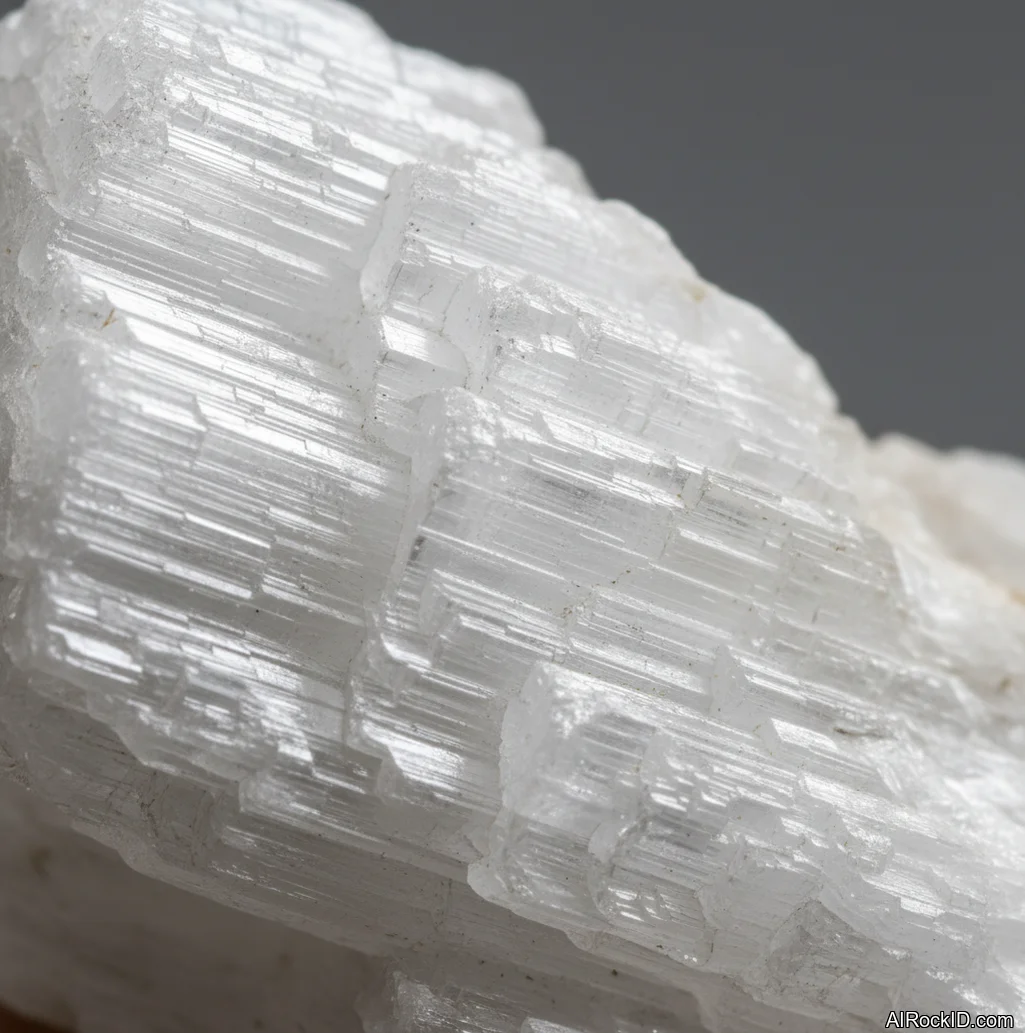
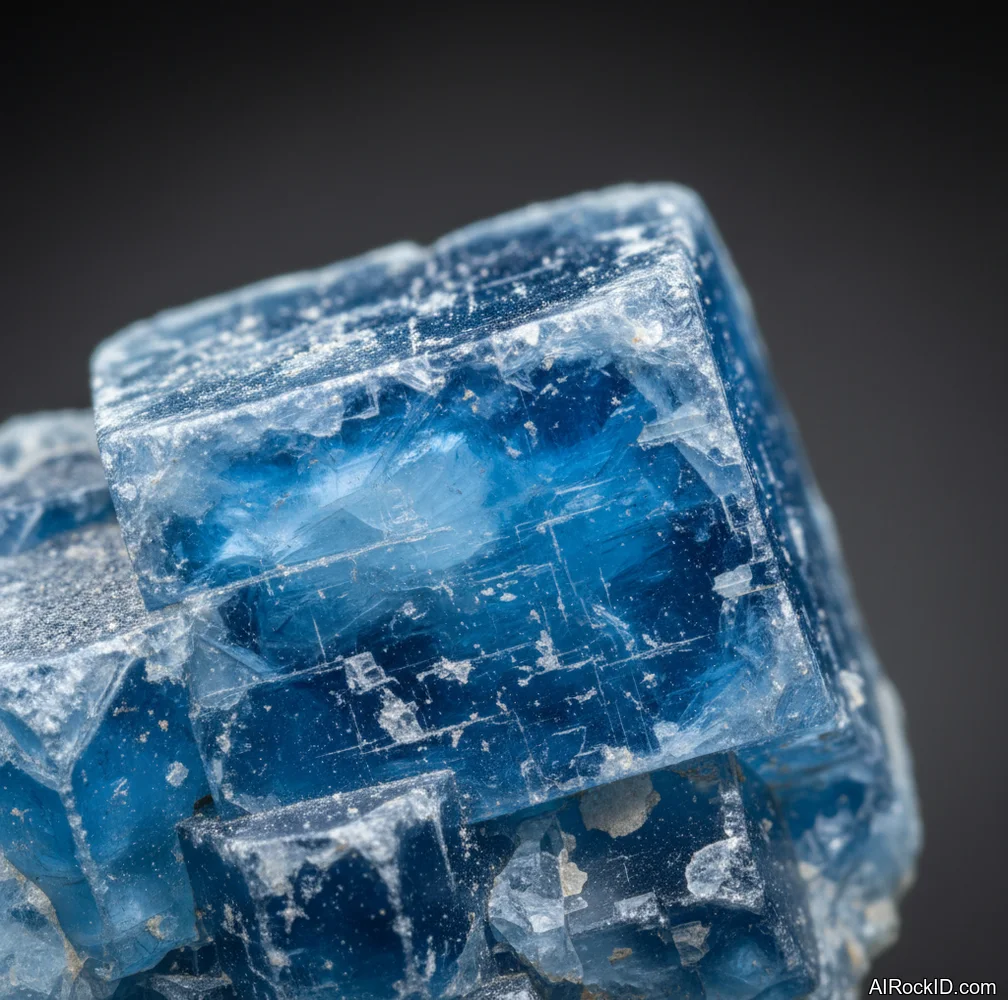
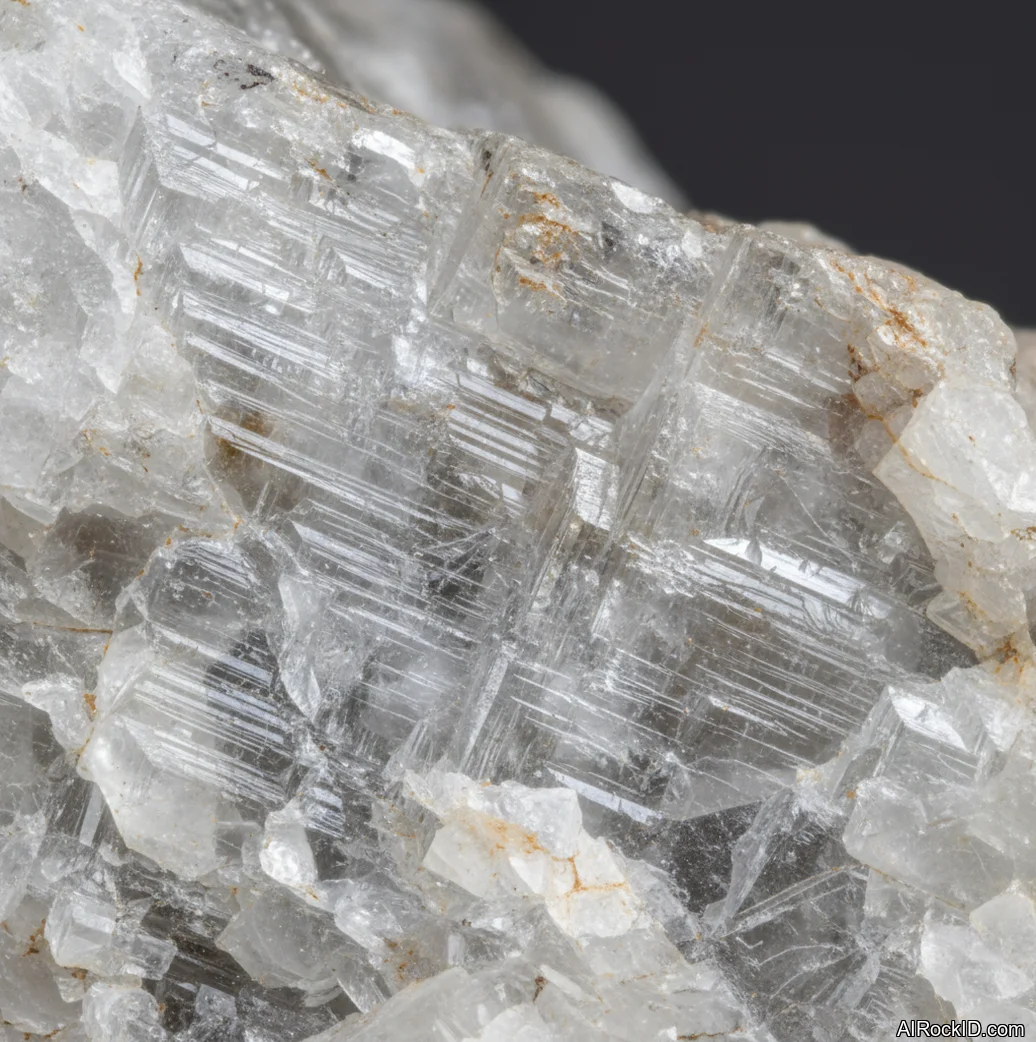
Glauberite is an evaporite sulfate mineral with the formula Na2Ca(SO4)2. Most pieces you run into are blocky, wedgey crystals or chunky cleavage fragments that remind me of frosted glass, the kind with that slightly cloudy, etched look. It’s not going to scream for attention like fluorite or quartz. But when the crystal edges are crisp, the shapes are weirdly satisfying to stare at.
Grab a decent hand specimen and the first thing you notice is how light it feels for something that looks so “solid” in the tray. Fresh cleavage can feel almost slick under your thumb, then you hit a spot that’s been weathered and it turns faintly gritty, like fine dust stuck to the surface (you can feel it snag a bit). And yep, it’s soft. I’ve literally watched people at shows drag a fingernail across a corner “just to check,” and the edge breaks down into powdery chips fast. Why do they always do that?
At a quick glance it can look kind of plain. So tilt it under a booth light and those cleavage faces kick back sharp little flashes that make you do a double take. If it’s from a dry locality and didn’t get knocked around in transport, it can come across almost sugary-clear, with pale gray shadows tucked inside.
Origin & History
Back in the older mineral books, glauberite got its first proper write-up in 1808, credited to the German mineralogist Johann Karl Wilhelm Voigt. The name tips its hat to Johann Rudolf Glauber, the 1600s chemist connected to “Glauber’s salt” (sodium sulfate), even though glauberite itself is the sodium-calcium sulfate.
You’ll usually see it mentioned right alongside industrial sources of sodium sulfate and the whole evaporite chemistry story. And collectors tend to go after it for a pretty specific reason: good crystals can be a pain to keep looking clean, but when they’re fresh, the edges can come out weirdly sharp, almost knife-crisp (and yeah, that’s part of the appeal).
Where Is Glauberite Found?
Glauberite turns up in arid-basin evaporite deposits worldwide, especially where saline lakes and restricted marine basins dry down and concentrate sulfate brines.
Formation
Most glauberite shows up in a pretty plain way: evaporation. Think of a closed basin in a dry climate. Salty water flows in, water leaves as vapor, and what’s left keeps getting brinier until different salts start falling out one after another.
And here’s where it gets interesting. Glauberite can actually grow as crystals inside muds and salt beds, and later on it can get replaced. You’ll spot it tangled up with gypsum, anhydrite, halite, and other evaporites. Sometimes you even get those ghosty outlines, where the chemistry swapped out but the original crystal shape still hangs on, like a mold that never got erased. But in the real world it’s a finicky mineral, so when you see perfect crystals, it usually means that pocket stayed dry and protected.
How to Identify Glauberite
Color: Most glauberite is colorless, white, gray, or pale yellow, often with a cloudy, milky look from internal fractures or inclusions. Cleaner crystals can look like slightly smoked ice.
Luster: Luster is vitreous on fresh cleavage faces and can look a bit dull where it’s weathered.
Look closely for strong cleavage and flat faces that reflect light in broad flashes when you tilt it. If you scratch it with a copper coin or a steel nail, it’ll mark pretty easily, and that’s a quick reality check against harder lookalikes. The real test is handling: fresh glauberite edges crumble more than you expect, and a lot of specimens feel “fragile dry,” like one bump in a drawer will leave new chips.
Common Look-Alikes
Glauberite is sometimes confused with these materials:
- Gypsum (selenite/satin spar) cleavage chunks
- Halite (rock salt) cubes and broken cleavage pieces
- Calcite (clear to white cleavage fragments, especially “Iceland spar” type pieces)
- Anhydrite (white to gray blocky crystals and cleavage plates)
- Glass or acrylic “frosted” chunks sold as mineral specimens
- Dyed gypsum or dyed calcite sold as “rare” colored glauberite
Market Cautions & Treatments
When AI Can Get This Wrong
At first glance, phone ID apps mix glauberite up with gypsum, halite, or calcite because all three can photograph as pale, blocky, and glassy with cleavage flashes. The real test is simple: glauberite won’t fizz in weak acid like calcite, and it’s not as soft and fibery-feeling as gypsum when you drag a fingernail across an edge. If it’s “perfect cubes” in a photo, AI will scream halite, but glauberite usually reads more wedgey and skewed, not that clean salt-block geometry.
Properties of Glauberite
Physical Properties
| Crystal System | Monoclinic |
| Hardness (Mohs) | 2.5-3 (Soft (2-4)) |
| Density | 2.70-2.80 |
| Luster | Vitreous |
| Diaphaneity | Transparent to translucent |
| Fracture | Uneven |
| Streak | white |
| Magnetism | Non-magnetic |
| Colors | colorless, white, gray, pale yellow |
Chemical Properties
| Classification | Sulfates |
| Formula | Na2Ca(SO4)2 |
| Elements | Na, Ca, S, O |
| Common Impurities | Fe, Cl, K, Mg |
Optical Properties
| Refractive Index | 1.517-1.532 |
| Birefringence | 0.015 |
| Pleochroism | None |
| Optical Character | Biaxial |
Glauberite Health & Safety
It’s usually fine to handle, but it can leave behind a gritty dust and little chips (you’ll feel that faint sandpapery grit on your fingertips). And if it sits in water for too long, it can start to degrade or break down. So handle it like a fragile evaporite specimen.
Safety Tips
Wash your hands after you handle it. And don’t grind or drill it, or do anything that kicks up dust, unless you’ve got a mask on and decent ventilation. Keep it dry too. Don’t soak it.
Glauberite Value & Price
Price Range
Rough/Tumbled: $10 - $120 per specimen
Prices bounce around based on how clear the crystal is, how big it is, and how chipped up the edges look. Clean, glassy crystals from the classic evaporite spots go for more, mostly because so many of the pieces show up with little bruises on the faces and that annoying pile of tiny crumbs in the bottom of the bag.
Durability
Fragile — Scratch resistance: Poor, Toughness: Poor
It’s soft and cleaves easily, so chips and edge damage happen fast if it’s stored loose or handled a lot.
How to Care for Glauberite
Use & Storage
Store glauberite in a small box or perky case with padding so it can’t rattle around. If you keep it in a cabinet, give it its own spot so harder minerals don’t tap it.
Cleaning
1) Use a soft, dry brush or a puff of air to remove loose dust. 2) If you must, wipe gently with a barely damp microfiber cloth, then dry it right away. 3) Skip ultrasonic cleaners, saltwater, and long rinses.
Cleanse & Charge
Stick to dry methods like smoke, sound, or setting it near (not on) a selenite plate. Avoid water-based cleansing for glauberite.
Placement
Keep it away from sunny windows and humid bathrooms. A closed shelf or drawer is honestly where most glauberite stays happiest.
Caution
Soft mineral, and it’s got really strong cleavage, so it tends to chip if you so much as bump an edge (you’ll notice little flakes coming off around corners). Don’t soak it in water. And if dust sets off your breathing, skip handling it when it’s dusty.
Works Well With
Glauberite Meaning & Healing Properties
Next to the big, headline-grabbing metaphysical stones, glauberite is kind of a quiet collector’s piece. When I’m back from a show and I’m sorting flats on a folding table, fingertips dusty, light buzzing overhead, it’s the one that makes me pause. It feels clean. Spare. Like it doesn’t want you projecting a whole circus onto it. And that’s usually what people are reaching for with glauberite anyway: clearing, simplifying, cutting through the mental junk.
When you actually pick it up, there’s a dry, crisp sensation to it, almost like you’re holding a chunk of salt pan that decided to grow sharp little angles. It doesn’t have that slick, glassy feel some crystals get. Some people tie that straight back to boundaries and “saying no” work, and yeah, I can see the connection. But look, I’ll say it plainly: none of this is medical. It’s not a swap for therapy, real sleep, a decent meal, or just drinking water if you’re running on fumes.
Thing is, glauberite’s biggest issue in real life is durability. If you’re the type who tosses stones in your pocket, don’t. You’ll pull it out later and it’ll look like it went a few rounds with your keys and lost. I’ve had way better luck treating it as a sit-near-you piece: on a desk while journaling, next to you when you’re doing a hard reset on a cluttered workspace, then back into a little box (lined, if you’ve got it) so it stays intact. Why tempt fate?
Common mistakes
- Assuming any pale evaporite mineral is glauberite without checking crystal habit or locality
- Using taste as an identification method for salt-like minerals
- Washing or soaking a specimen that may be moisture-sensitive
- Mistaking surface alteration or dehydration effects for natural crystal features
- Buying an unlabeled specimen based only on a seller’s visual description
Identify Glauberite from a photo
Compare Glauberite traits, care tips, value clues, and common lookalikes with a clear photo.