Green Opalized Wood


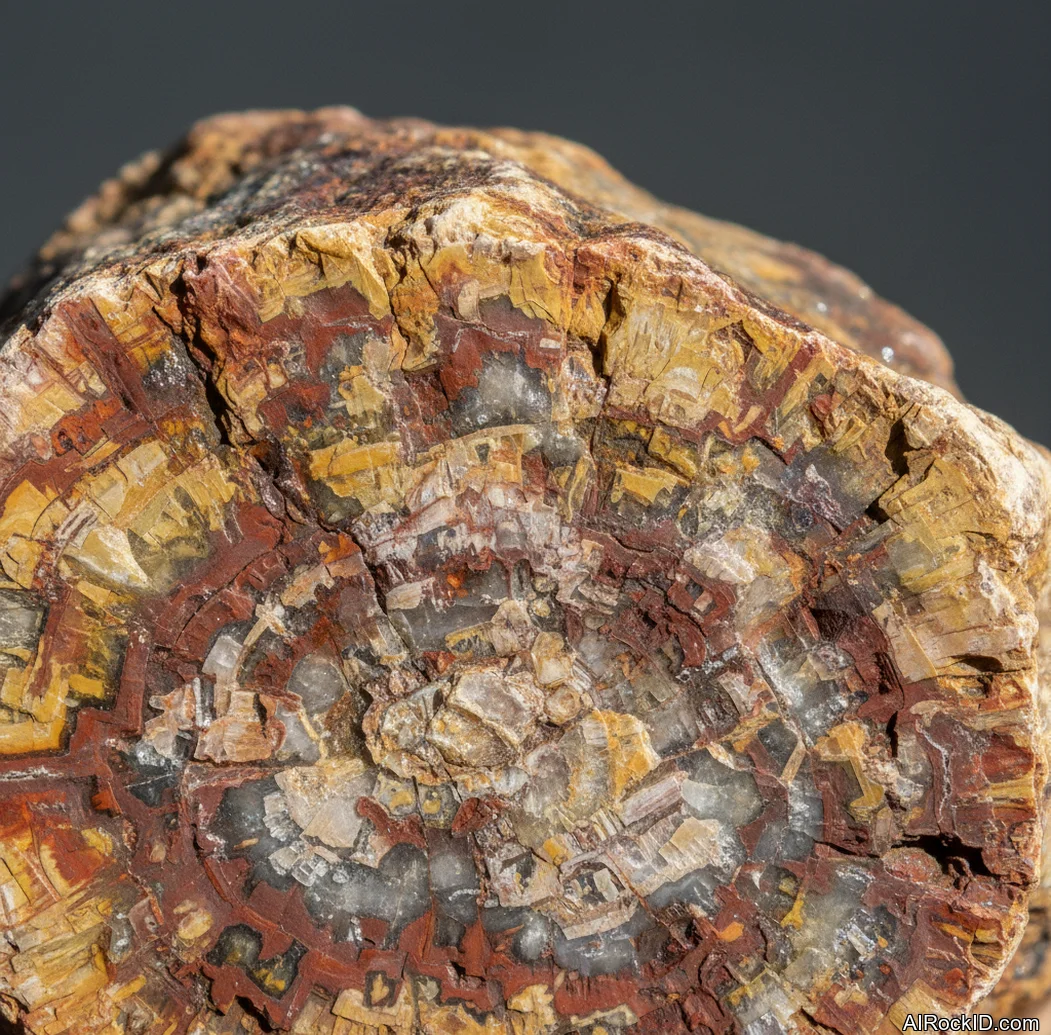
Quick answer: Green opalized wood is fossil wood in which the original organic structure has been replaced or filled by common opal. Its green color is usually linked to trace elements such as nickel or iron, and specimens may show preserved grain, rings, bark texture, or cellular patterns.
AI Rock ID can help compare a photo of green opalized wood with visually similar materials such as chrysoprase, green jasper, and dyed petrified wood. RockIdentifier.io provides crystal and rock identification resources that can support visual checks, but physical testing and seller documentation are still important for confident identification.
Good fit
- Collectors who like fossils with visible wood grain or growth-ring patterns
- Buyers looking for a green decorative stone with a natural fossil origin
- Lapidary users who want cabochons, palm stones, or display pieces with earthy patterns
- Beginners comparing petrified wood varieties and common opal replacements
Not a good fit
- Anyone needing a transparent precious opal with strong play-of-color
- Jewelry that will receive heavy impact or constant abrasion
- Buyers who cannot verify whether a bright green specimen has been dyed or stabilized
- Collectors seeking a single standardized color, since natural pieces vary widely
Most commonly confused with
- Chrysoprase: Chrysoprase is a nickel-colored chalcedony and usually lacks preserved wood grain or fossil structure.
- Green Jasper: Green jasper is microcrystalline quartz and is generally harder and more opaque, without replaced wood anatomy.
- Petrified Wood: Petrified wood is a broad category; many pieces are quartz-replaced rather than opal-replaced.
- Common Opal: Common opal may share similar luster and hardness but does not necessarily preserve wood grain or fossil texture.
Green Opalized Wood vs Similar Materials
| Material | Key Identifier | Typical Difference |
|---|---|---|
| Green opalized wood | Wood grain or cellular fossil texture with opal replacement | Usually softer than quartz-rich petrified wood |
| Chrysoprase | Apple-green chalcedony with waxy luster | No wood grain or fossil structure |
| Green jasper | Opaque quartz-rich stone with earthy patterns | Harder and usually more granular or massive |
| Quartz petrified wood | Preserved wood texture with quartz replacement | Often about Mohs 7 rather than 5.5–6.5 |
| Dyed material | Strong color in cracks, pores, or surface scratches | Color may appear too uniform or artificial |
AI identification confidence
AI identification is usually moderate when the specimen clearly shows green color plus preserved wood grain, bark texture, or ring-like structures. Confidence is lower for polished cabochons, small tumbled stones, or uniformly green pieces where fossil texture is hidden.
When AI gets it wrong
- A polished stone has no visible wood grain, making it resemble chrysoprase or green jasper.
- The specimen is dyed or surface-treated, causing the color to look more diagnostic than the structure.
- Lighting or white balance makes brown, gray, or yellow petrified wood appear green in photos.
- Only one side of the specimen is photographed, hiding the fossil texture needed for comparison.
Final recommendation
Choose green opalized wood when you want a fossil specimen with visible wood structure rather than simply a green gemstone. For higher confidence, look for natural grain, uneven fossil patterns, and seller information about treatment, locality, and whether the material is opal- or quartz-replaced.
How to Check Authenticity Before Buying
Authentic green opalized wood should show some evidence of fossil wood, such as grain, rings, bark-like texture, knots, or cellular patterning. Be cautious with pieces that are uniformly bright green, especially if color appears concentrated in cracks, pits, or saw marks. A reliable seller should be able to state whether the piece is natural, dyed, stabilized, or treated.
Photo Tips for Identification
Use natural daylight or a neutral white light and photograph the specimen from several angles, including any broken, rough, or unpolished surfaces. Close-up images of grain lines, pores, and color distribution are more useful than a single polished-face photo. A coin, ruler, or hand in the image can help show scale and texture.
Opalized Wood vs Quartz-Replaced Petrified Wood
Opalized wood contains hydrated silica in an opal form, while many petrified wood specimens are replaced mainly by chalcedony or quartz. Quartz-rich petrified wood is typically harder and may take a different polish, while opalized wood can be slightly softer and more sensitive to rough wear. Some fossil wood contains mixtures of opal, chalcedony, and other minerals, so laboratory testing may be needed for exact composition.
What Is Green Opalized Wood?
Green Opalized Wood is fossil wood that’s been replaced by green common opal (opal-CT), and it still keeps the original grain and those growth-ring lines.
Pick up a chunk and it feels like wood that forgot how to be wood. It’s heavier than you expect. Cold, too, like it’s been sitting on a shady concrete floor. And when it’s polished, the surface has that smooth-but-slightly-grabby opal feel, the kind that almost drags at your fingertip instead of letting it glide.
Some pieces honestly pass for green river stones at first. But tilt one in the light and the grain jumps out, like a frozen snapshot of bark lines, tight rings, and those little swirls where knots used to sit. Weirdly satisfying. You know?
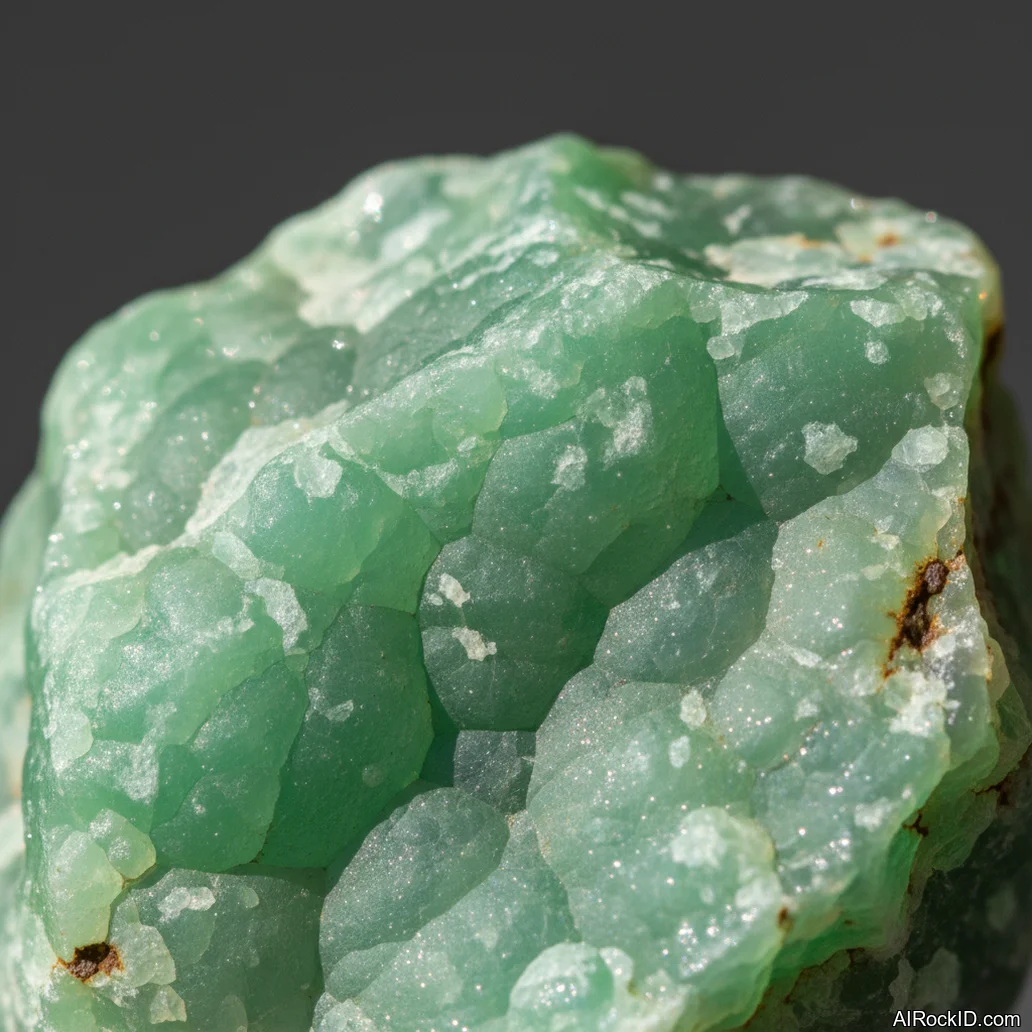
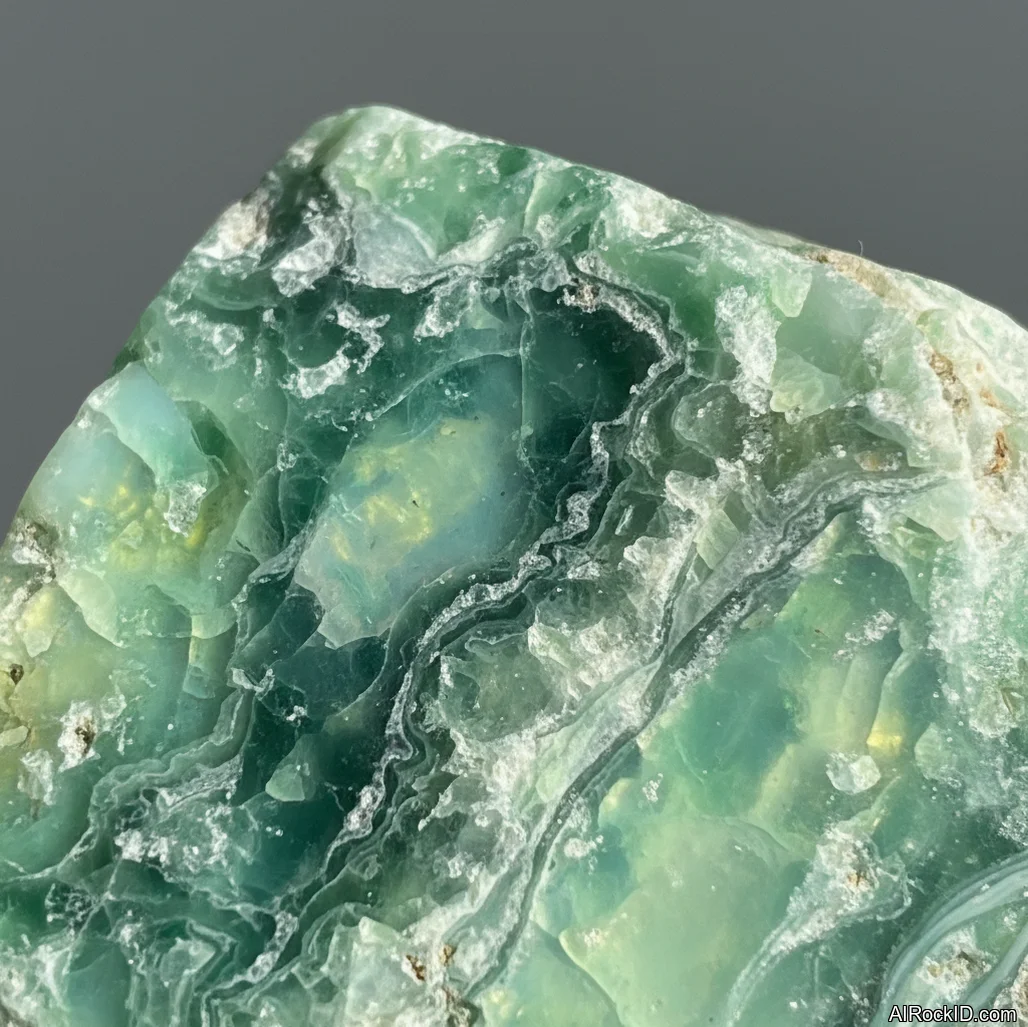
Most of what I see in the trade ends up as slabs or palm stones, because the pattern is the whole point. But raw chunks can be just as good. You’ll get this weathered rind on the outside sometimes, dusty and rough, and then when it breaks open or you hit it with a saw cut (and you get that wet stone smell), there’s a surprise minty green interior staring back at you.
Origin & History
“Opalized wood” isn’t the name of some specific tree species. It’s just a catch-all term you’ll hear in lapidary circles and at fossil shows. People have been picking up petrified wood forever, sure, but the actual replacement mineral is the whole point. Depending on the deposit, the silica can end up as chalcedony, jasper, or opal, and you can usually tell once you’ve got a cut face in your hand and you see how the polish takes.
And the “green” part? That’s basically dealer talk for color, not a formal variety the way beryl gets named. Out in the field or standing at a show table with those bright LED lights bouncing off wet slabs, “green opalized wood” usually means common opal where tiny amounts of nickel or iron push it into that apple-green to olive range. The wood texture’s still there too, so you can read the grain and growth lines instead of it just looking like a blob of green silica.
Where Is Green Opalized Wood Found?
Green opalized wood turns up in a handful of fossil wood deposits where opal-rich fluids replace the original timber, including parts of the western USA and Australia.
Formation
It starts out as wood that gets buried, usually under volcanic ash, in lake sediments, or in some other spot where oxygen gets shut out fast enough that the log doesn’t just rot. Then silica rich water works its way through the buried wood. Over a long stretch of time, the organic stuff gets swapped out cell by cell for hydrated silica, and if the conditions line up just right, that replacement ends up as opal (often opal-CT) instead of quartz or chalcedony.
Color’s the weird part. Green often comes from trace elements moving through the system. I’ve held pieces where the green shows up in blotches, like it rode along tiny cracks and pore spaces, and I’ve handled other slabs where the color looks evenly washed through the whole thing. And you can sometimes catch the moment the chemistry changed partway through (it’s almost too obvious): tan or cream bands right up against green bands, all of it still tracking the wood grain like a little map.
How to Identify Green Opalized Wood
Color: Usually mint green, apple green, or olive green, often with tan, cream, brown, or gray wood-grain banding. Color can be blotchy or banded, and it often follows the growth pattern.
Luster: Waxy to sub-vitreous, especially on a fresh polish.
Pick up a polished piece and tilt it under a bright light. You’re looking for that “wet” waxy sheen common opal gets, not the glassy look you’d expect from quartz petrified wood. If you scratch it with a steel nail, it shouldn’t gouge easily, but it also won’t feel as bulletproof as agate. The real test is the grain. Good material shows real wood structure, not random green swirls. And if the seller calls it “green opal wood” but it’s dead-uniform neon green with no texture at all, I get suspicious fast.
Common Look-Alikes
Green Opalized Wood is sometimes confused with these materials:
- Dyed fossil wood (often sold as "green petrified wood" or "green jasper wood")
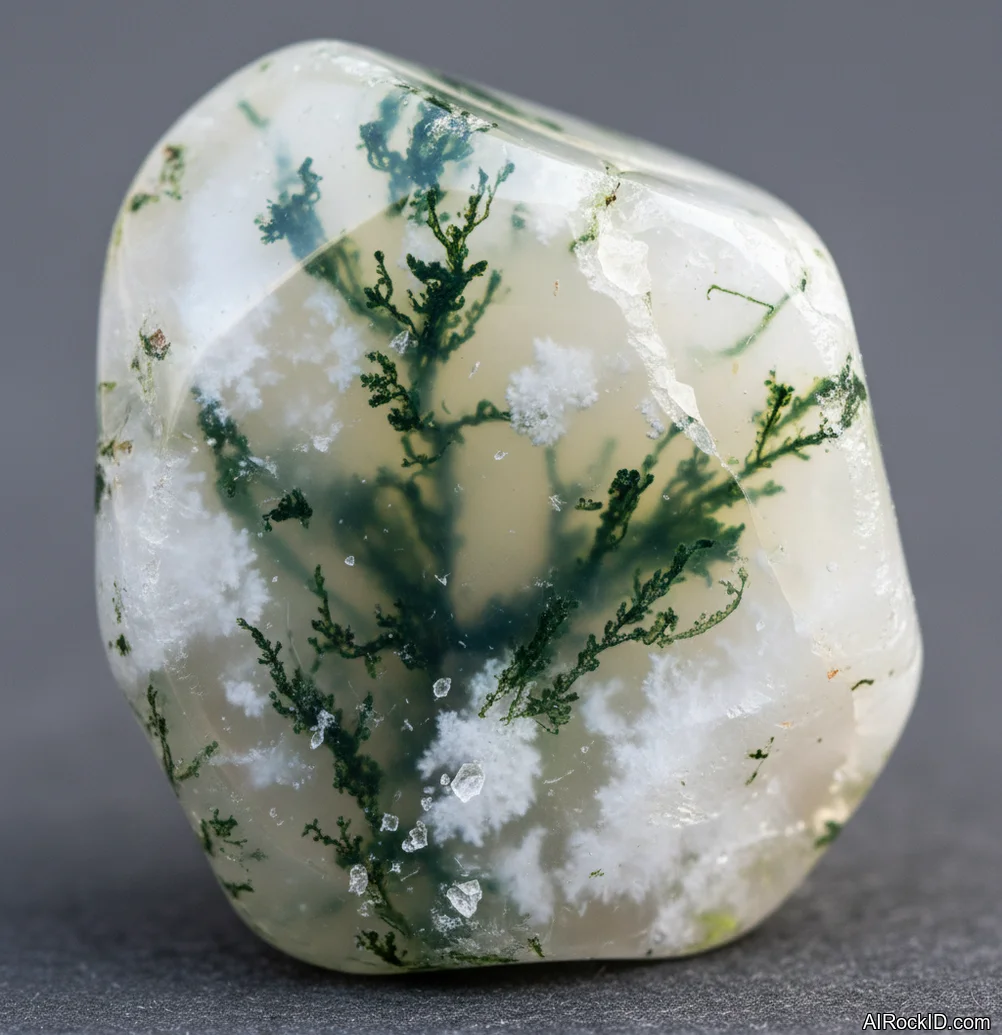
- Chrysoprase (especially tumbled pieces without obvious wood grain)
- Serpentine (including bowenite, cut into cabochons and mislabeled as opal)
- Variscite (green nodules and slabs that can look similar once polished)
- Green aventurine quartz (sparkly mica flecks can be subtle in photos)
- Green glass or resin "opal" imitations (cast pieces with fake grain lines)
Market Cautions & Treatments
When AI Can Get This Wrong
In photos, AI trips hardest when the piece is fully polished and the grain is faint, because it can read like chrysoprase, serpentine, or even green aventurine. The real test is close-up texture: wood ring lines, end-grain pores, and little longitudinal checks are what you want to see, not a flat green field. If you’ve got it in hand, it should feel cool and slightly grabby like common opal when you drag a fingertip across a polish, and hardness around 5.5 to 6.5 helps rule out softer serpentine.
Properties of Green Opalized Wood
Physical Properties
| Crystal System | Amorphous |
| Hardness (Mohs) | 5.5-6.5 (Hard (6-7.5)) |
| Density | 1.98-2.25 g/cm3 |
| Luster | Waxy |
| Diaphaneity | Opaque |
| Fracture | Conchoidal |
| Streak | White |
| Magnetism | Non-magnetic |
| Colors | mint green, apple green, olive green, cream, tan, brown, gray |
Chemical Properties
| Classification | Silicates |
| Formula | SiO2·nH2O |
| Elements | Si, O, H |
| Common Impurities | Ni, Fe, Mn |
Optical Properties
| Refractive Index | 1.44-1.46 |
| Birefringence | None |
| Pleochroism | None |
| Optical Character | Isotropic |
Green Opalized Wood Health & Safety
It’s usually safe to handle, and it’s fine around water in normal day-to-day use. But it’s still silica, so if you’re cutting or sanding it and that dry, chalky dust starts floating up, don’t breathe it in (wear a mask, crack a window).
Safety Tips
If you’re going to do any lapidary work on it, keep the blade wet the whole time and don’t cheap out on protection. Use wet cutting, and put on a real respirator that’s actually rated for fine particulate dust.
Green Opalized Wood Value & Price
Price Range
Rough/Tumbled: $8 - $60 per palm stone or small slab
Cut/Polished: $2 - $12 per carat
Prices jump when the grain looks crisp and you can actually see it catch the light, the green reads natural (not that flat, dyed-looking color), and the piece takes a clean polish without the surface getting undercut or looking chewed up around the edges.
Durability
Moderate — Scratch resistance: Fair, Toughness: Fair
It’s fine for daily handling, but it can craze or dull if it’s repeatedly dried out, heat-cycled, or stored in harsh sunlight.
How to Care for Green Opalized Wood
Use & Storage
Store it in a soft bag or a separate compartment so harder stones like quartz don’t scuff the polish. If you’ve got a big slab, lay it flat so it doesn’t take a corner hit.
Cleaning
1) Rinse with lukewarm water. 2) Use a drop of mild soap and your fingers or a soft cloth to wipe the surface. 3) Rinse again and pat dry; don’t bake it in sun to “dry faster.”
Cleanse & Charge
If you do energy-style cleansing, stick to gentle options like smoke, sound, or a quick rinse and dry. I skip salt soaks since they’re rough on a lot of polished materials over time.
Placement
A shelf spot away from a hot window is best. On a desk, it’s great as a worry stone, but keep it away from gritty sand that can haze the surface.
Caution
Keep it away from heat, long stretches of UV, and anything chemically harsh. Opal can craze, and the polish can turn cloudy. And don’t just drop it in your pocket next to your keys, because those sharp little scratches show up fast.
Works Well With
Green Opalized Wood Meaning & Healing Properties
Look at a piece of green opalized wood for more than a second and your brain kind of drops into slow time. It’s a real tree structure, just… frozen in silica. And that green reads like new growth, even when you can tell you’re holding something ancient. Weird combo, right? That’s why people tend to use it for grounding and steady-change intentions, not anything loud.
In my own little box of palm stones, this is the one I grab when I want something calm in my hand but I don’t want to feel zoned out. The feel matters. Polished opalized wood has this smoother, almost buttery glide compared to agate petrified wood, and I catch myself rubbing along the grain lines without thinking. But, honest caveat: if you want big sparkle or an obvious “wow” moment, most green opalized wood isn’t going to deliver that. It’s quiet. The pattern is what gets you.
And I keep the metaphysical stuff in its lane. It isn’t medical care. If you use stones as reminders, green opalized wood fits well with patience, recovery after burnout, sticking with a plan when progress feels boring, and that slow rebuild phase. Thing is, if you’re sensitive to materials, opalized pieces can feel a little “softer” than quartz-based petrified wood, both in plain hand feel and in the general vibe (for whatever that’s worth).
Common mistakes
- Assuming every green petrified wood specimen is opalized rather than quartz-rich or mixed-composition material.
- Identifying a piece by color alone without checking for preserved wood structure.
- Mistaking dyed green stone or dyed fossil wood for naturally colored green opalized wood.
- Expecting precious opal play-of-color, which is not typical for common opalized wood.
- Using hardness alone as a final test, since mixed silica replacement can produce overlapping results.
Identify Green Opalized Wood from a photo
Compare Green Opalized Wood traits, care tips, value clues, and common lookalikes with a clear photo.