Hollandite In Quartz
What Is Hollandite In Quartz?
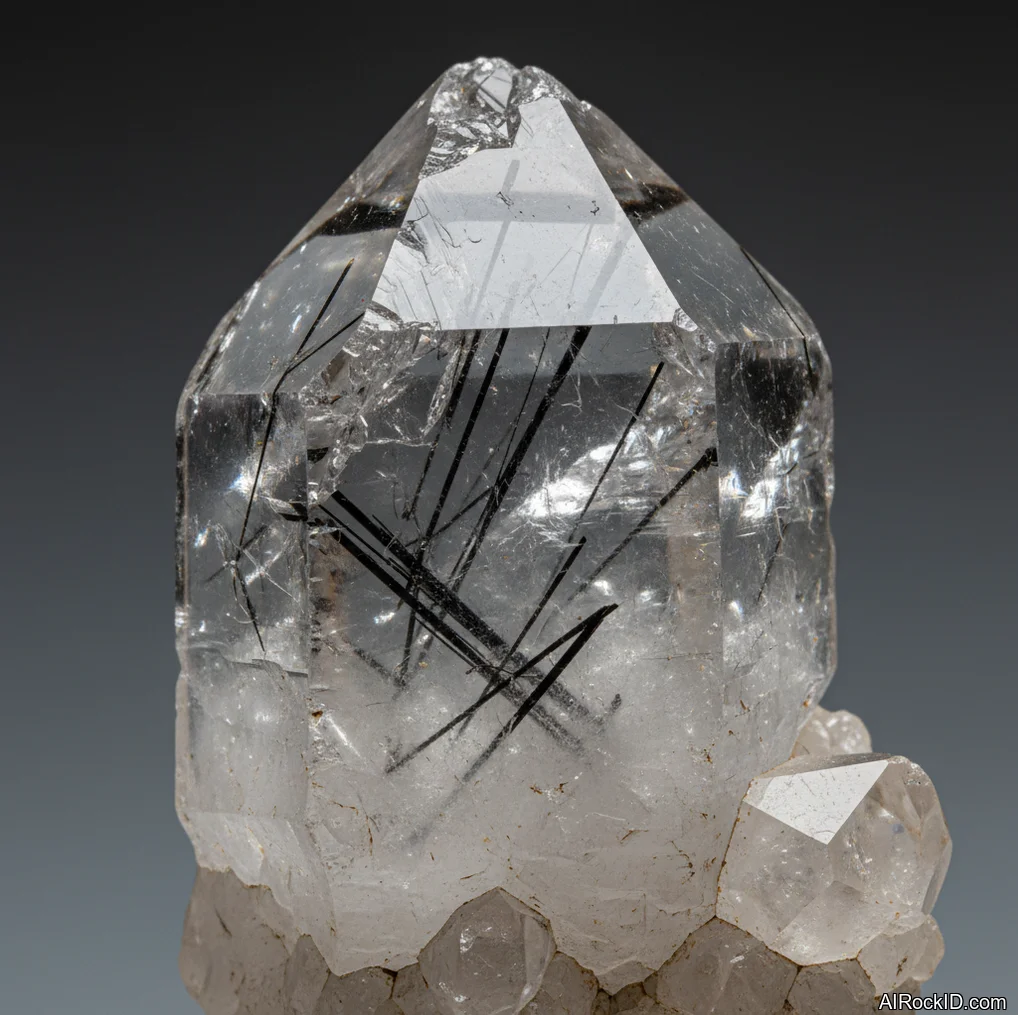
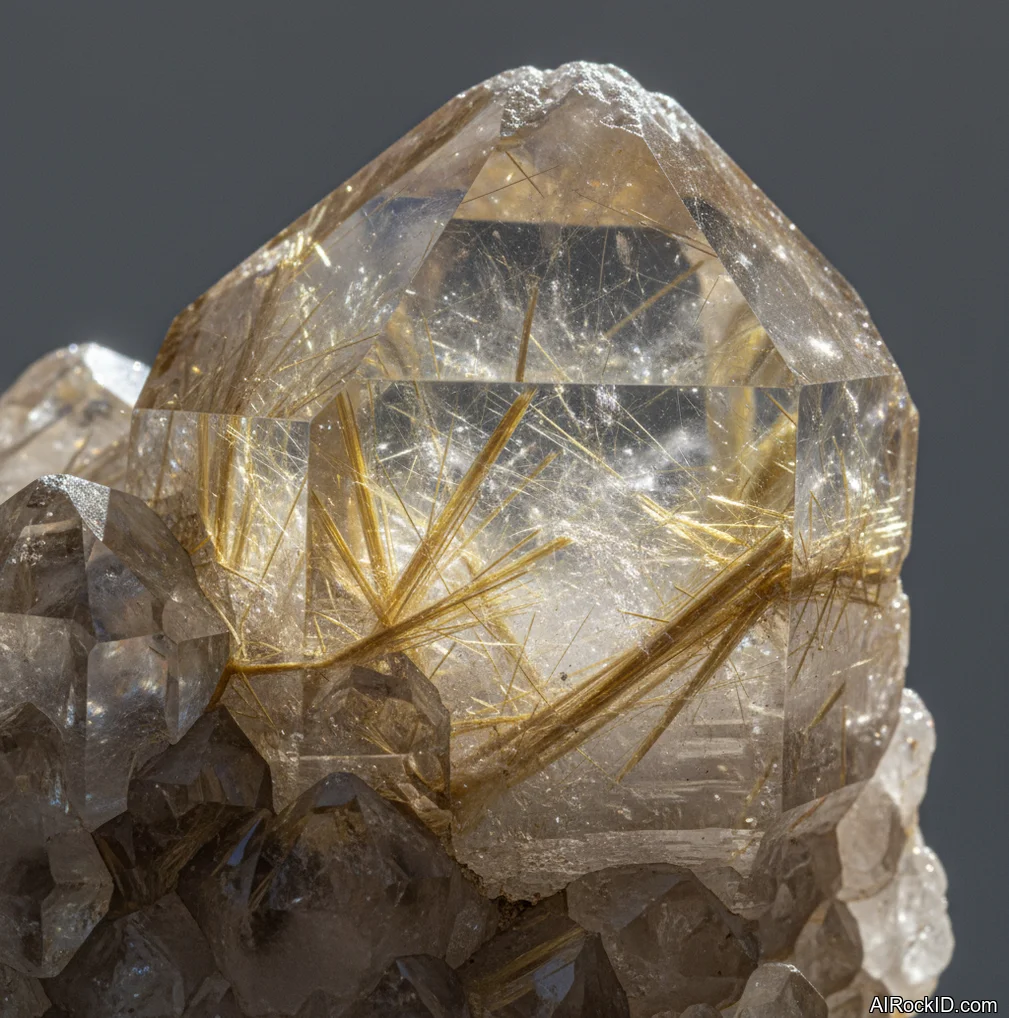
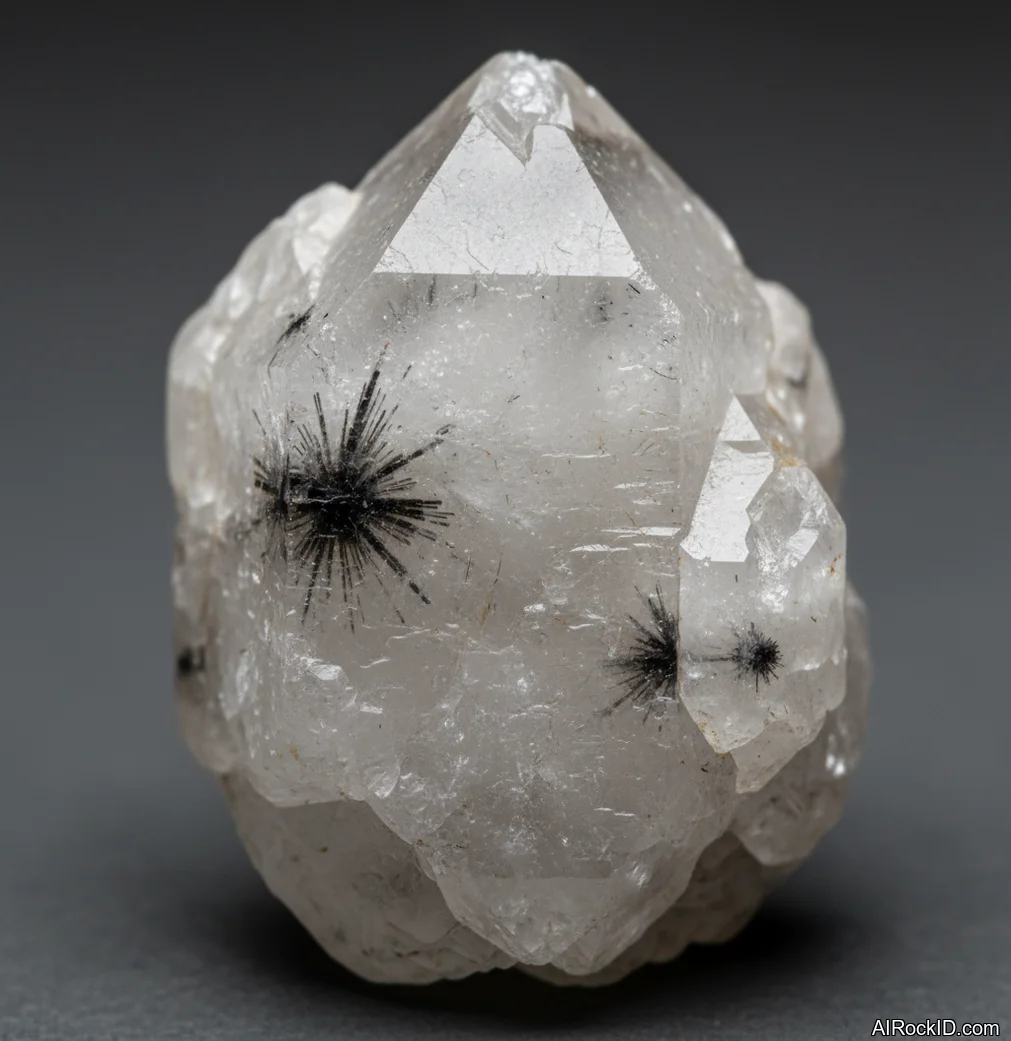
Hollandite In Quartz is quartz (SiO2) with visible inclusions of hollandite-group manganese oxides trapped inside the crystal, usually showing up as black needles, sprays, or starburst-looking bursts.
Grab a clean piece and a couple things hit you fast. The quartz has that cool-to-the-touch, glassy feel. And the hollandite looks like somebody stuck ink-dark threads inside, then forgot about them. Some stones are barely there, all wispy, like a few floating hairs you only catch at the right angle. Others go hard, with tight little starbursts sitting right under a crystal face, and they flash when you tilt the piece under a shop light (you know that sharp pop you get when the light slides across it?).
People glance at it and call it “tourmalinated quartz” all the time. But it isn’t the same look. The needles here tend to be finer and more matte, and they do those little fireworks patterns tourmaline usually doesn’t pull off. And since it’s still mostly quartz, it takes a good polish. Holds it, too.
Origin & History
Hollandite got its first proper description back in 1892, when A. Lacroix studied material collected on the island of Tinos, Greece. He named it after the Dutch mineralogist Thomas Erskine Holland.
And that “in quartz” wording? That’s just collector talk. Quartz tends to grow around whatever’s next to it and end up sealing it in, kind of like it’s locking it under glass. So once dealers started running into those black, spray-like hollandite clusters sitting inside clear quartz (the kind you can tilt under a light and see suspended in there), the label stuck. But you’ll also see the same stuff listed as “hollandite included quartz,” which is basically identical.
Where Is Hollandite In Quartz Found?
Collector-grade hollandite-included quartz is most often associated with alpine-style pockets and Brazilian pegmatite/quartz vein material, with scattered finds in other quartz-producing regions.
Formation
Look at the really good specimens and you can tell this whole thing comes down to timing. Quartz is growing into an open pocket or a fracture, and hollandite-group oxides show up either as earlier needles that later get overgrown, or as tiny crystals that pop in while the quartz is still laying down new layers.
Most of the pieces I’ve handled have that straight-up “pocket crystal” feel: clear quartz, sharp faces you can catch with a fingernail (they’ll snag just a bit), and the black inclusions hanging there like they’re floating instead of being dragged out into streaks. That usually says the fluid stayed pretty clean at first, then you get a brief pulse of manganese-rich chemistry, and then the quartz grows over it and locks it in. But it doesn’t always behave. Some of it turns cloudy, and the inclusions read more like soot than needles. That can happen when you’ve got tons of micro-crystals and not much open space to work with. What else would they do, right?
How to Identify Hollandite In Quartz
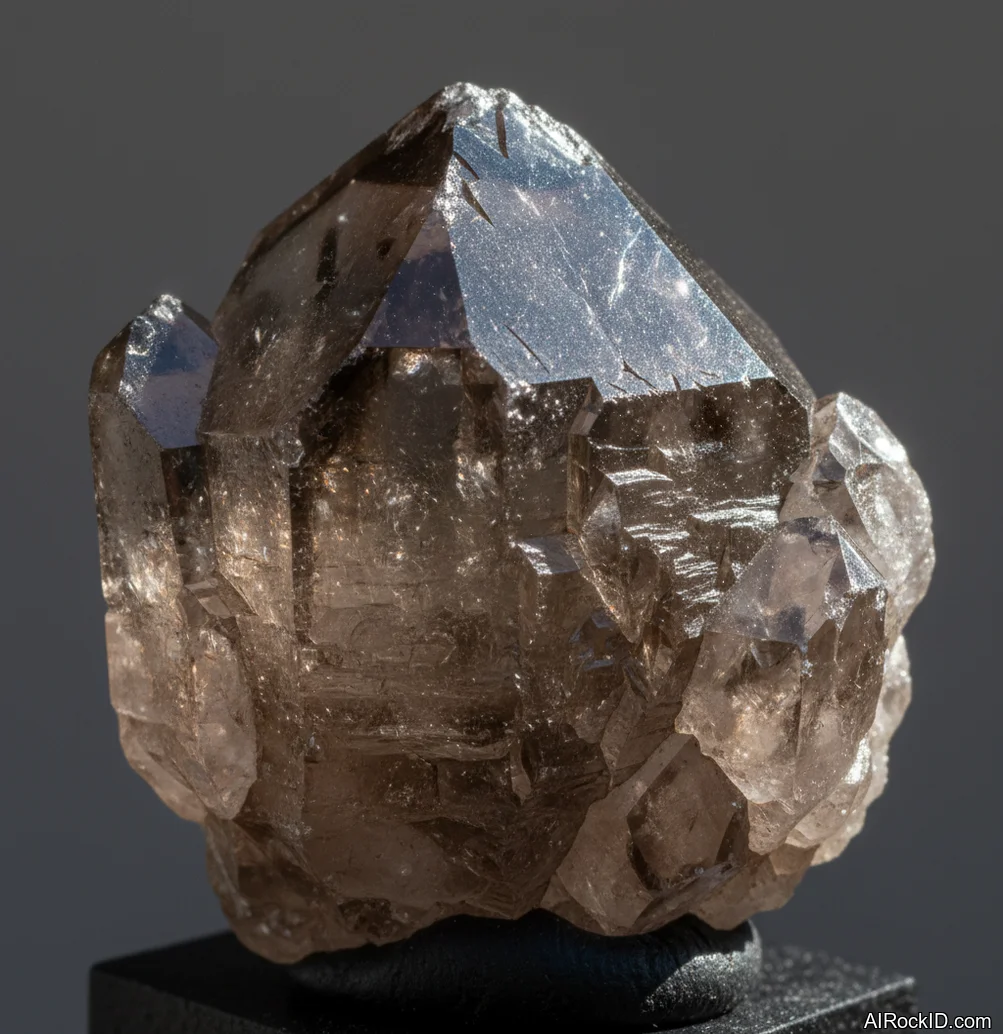
Color: Base is colorless to smoky or lightly milky quartz, with black to dark brown needle-like or fibrous inclusions that may form sprays or starbursts. In bright light the inclusions usually read more matte than shiny.
Luster: Vitreous luster on the quartz; inclusions are typically dull to submetallic in appearance inside the host.
Pick up the piece and rotate it under a single point light. Hollandite inclusions often look like very fine bristles or fireworks sprays rather than the thicker, grooved rods you see in black tourmaline. The real test is hardness: the host quartz scratches glass easily, but the inclusions won’t flake out like paint if they’re truly internal. And if a seller calls it “tourmalinated quartz,” ask for a close macro photo because hollandite can get used as a catch-all name for any black needle inclusion.
Properties of Hollandite In Quartz
Physical Properties
| Crystal System | Tetragonal |
| Hardness (Mohs) | 6.0-6.5 (hollandite); 7.0 (quartz host) (Hard (6-7.5)) |
| Density | 2.65-3.9 g/cm3 |
| Luster | Vitreous |
| Diaphaneity | Transparent to translucent |
| Fracture | Conchoidal |
| Streak | white (quartz); dark brown to black (hollandite) |
| Magnetism | Non-magnetic |
| Colors | colorless, white, smoky gray, black, dark brown |
Chemical Properties
| Classification | Silicates (host quartz) with oxide inclusions (hollandite group) |
| Formula | SiO2 (quartz); Ba(Mn4+,Mn3+)8O16 (hollandite) |
| Elements | Si, O, Ba, Mn |
| Common Impurities | Fe, Ti, K, Na |
Optical Properties
| Refractive Index | 1.544-1.553 |
| Birefringence | 0.009 |
| Pleochroism | None |
| Optical Character | Uniaxial |
Hollandite In Quartz Health & Safety
You can handle it without stressing, and it’s fine around water since the host material is quartz. But if you’re going to cut or grind it, treat it like any other lapidary job: basic precautions still apply (dust, goggles, the usual).
Safety Tips
If you’re shaping or polishing it, put on a respirator and keep things wet. Quartz dust is rough on your lungs, even if the minerals themselves aren’t “toxic.”
Hollandite In Quartz Value & Price
Price Range
Rough/Tumbled: $25 - $250 per specimen
Cut/Polished: $10 - $60 per carat
Price mostly comes down to how clear the quartz is, how bold the inclusion pattern looks, and if the piece is a natural crystal or a polished cab or tower. Thing is, the “graphic” stuff matters a lot. Those tight little starbursts you can spot when you tilt it under a lamp? They cost more.
Durability
Durable — Scratch resistance: Excellent, Toughness: Good
Quartz is stable for daily handling, but sharp edges can chip if it gets knocked around in a bag with harder stuff like corundum.
How to Care for Hollandite In Quartz
Use & Storage
Store it like you’d store any nice quartz point: wrapped or in a compartment so the tips don’t clack into other stones. I’ve chipped more quartz points in tackle-box style cases than I care to admit.
Cleaning
1) Rinse with lukewarm water and a drop of mild dish soap. 2) Use a soft toothbrush around crystal edges and any surface texture. 3) Rinse well and pat dry, then air dry fully before putting it back in a closed box.
Cleanse & Charge
If you’re into that side of things, smoke cleansing or a quick rinse works fine. I avoid salt baths just because it’s messy and can leave crust in tiny seams.
Placement
Look best under a small lamp or windowsill light where the needles throw little shadows inside. But don’t cook it in harsh sun if it’s smoky quartz, since some smoky can fade over long exposure.
Caution
Don’t hit it with harsh acids or rust removers. And keep an eye out for “hollandite quartz” that’s been mislabeled, because some of it is just surface-coated or resin-filled. That kind of stuff looks fine at first, but the second a solvent touches it you can get this cloudy haze, or worse, the coating starts to peel right off.
Works Well With
Hollandite In Quartz Meaning & Healing Properties
Plain clear quartz feels simple. Hollandite-included quartz doesn’t. In your hand it’s still that smooth, cold quartz, the kind that almost squeaks a little when it rubs against another piece in a tray, but your eyes keep snagging on those black sprays like you’re trying to read tiny print. And when I’m sorting flats at a show, these are the ones I keep picking up again and again because the pattern looks different every time the light shifts.
On the metaphysical side, most people treat it as a combo deal: quartz for clarity and amplification, then the dark inclusion for grounding and boundaries. I’m staying practical here. If you use stones as a focus tool, hollandite-in-quartz can be handy for locking your gaze onto one spot and letting your brain quiet down, kind of like watching rain bead up and slide down a window. But it’s not a medical thing. It won’t replace therapy, sleep, or meds.
But here’s the part people skip: the market’s messy. Some sellers slap “hollandite” on any quartz with black needles, and sometimes it’s tourmaline, or rutile that’s dark, or just manganese staining (yeah, it happens). So if you’re buying for the story or the mineral ID, ask for good photos, or buy from someone who’ll just say it plainly when they aren’t 100% sure. Why gamble on the name?
Identify Any Crystal Instantly
Snap a photo and get properties, value, care instructions, and healing meanings in seconds.