Iridescent Goethite Turgite
What Is Iridescent Goethite Turgite?
Iridescent Goethite Turgite is goethite (FeO(OH)) with a thin, oxidation-related surface film that throws off that rainbow, metallic sheen.
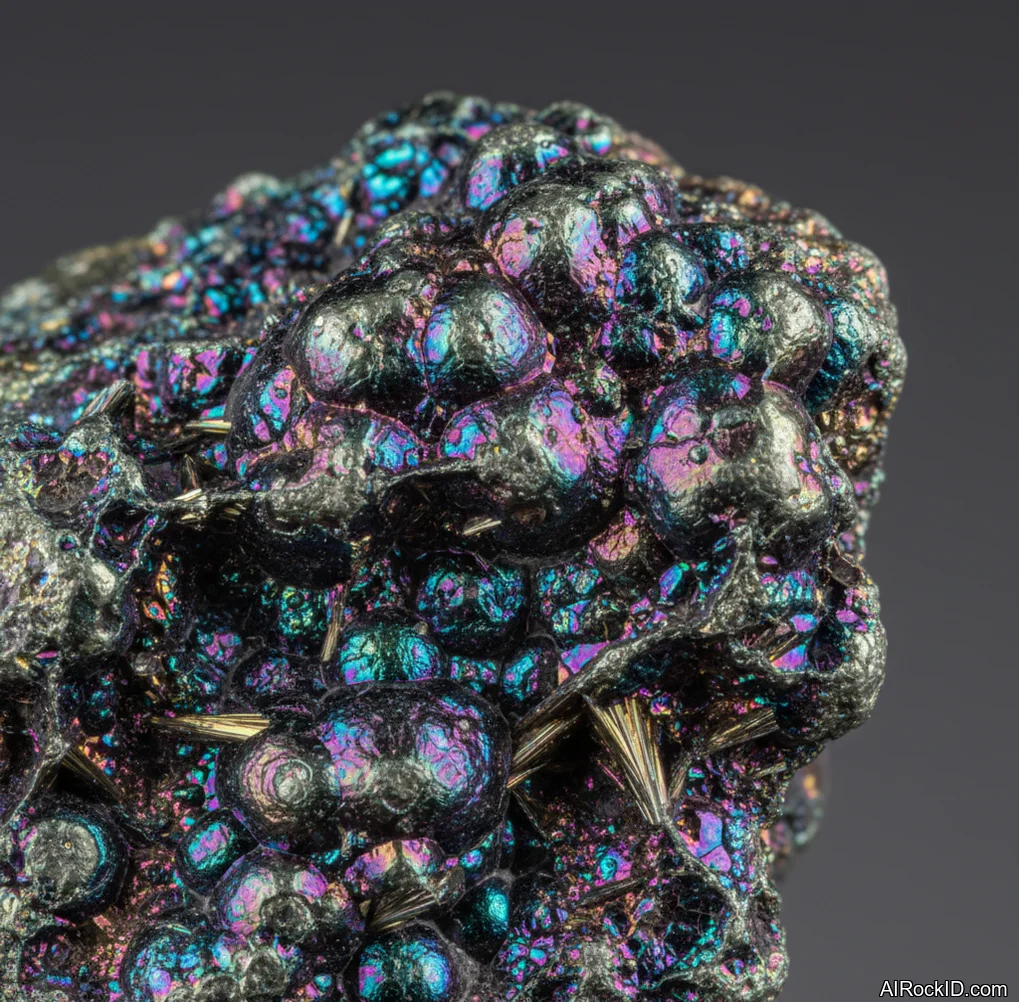
Pick up a piece and the weight hits you first. It feels oddly heavy for something that small, the way iron minerals usually do. Then you roll it under a desk lamp and the colors move like oil on water: purples, peacock blues, a bronzy wash, and every now and then a sharp magenta pop across the rounded, botryoidal bumps (the kind that feel slightly pebbly under your thumb).
But thing is, a lot of listings blur the wording. “Turgite” isn’t a separate species you can drop into a formula chart like quartz or garnet. In the collector world it’s basically a habit and a look, usually goethite with a surface alteration, sometimes described historically as hydrated iron oxide mixtures. So I treat it like goethite when I’m thinking about properties, care, and what it’ll do long term sitting in a display case.
Origin & History
Goethite got its name in 1806, when Johann Georg Lenz named it after Johann Wolfgang von Goethe. Goethe wasn’t just dabbling, either. He had a serious mineral collection and he did real observational science, the kind where you’re actually looking closely and taking notes instead of just repeating what you heard.
And the name stuck. “Goethite” ended up as the clean, modern label for a whole lot of brown-to-black iron oxyhydroxide material that older books used to lump under limonite.
“Turgite,” on the other hand, is an older, messier term. You’ll see it in 19th century mineral literature used for certain hydrated iron oxides and those goethite-like coatings you find smeared on other minerals. It’s also still a trade name for iron oxide pieces with that iridescent, rainbow sheen, the kind that flashes color when you tilt it under a light. Thing is, most dealers today mean the look, not some tight mineralogical definition.
Where Is Iridescent Goethite Turgite Found?
You’ll see iridescent goethite from iron-rich deposits worldwide, especially where weathering and groundwater have had time to work. Brazil (Minas Gerais) is a steady source, and the USA turns up good material around old iron districts and gossans.
Formation
Most iridescent goethite gets going in the weathering zone. Look, you’re basically in oxidizing ground above sulfide deposits or sitting around iron-rich rocks, where water picks up iron, carries it a bit, then drops it back out as goethite.
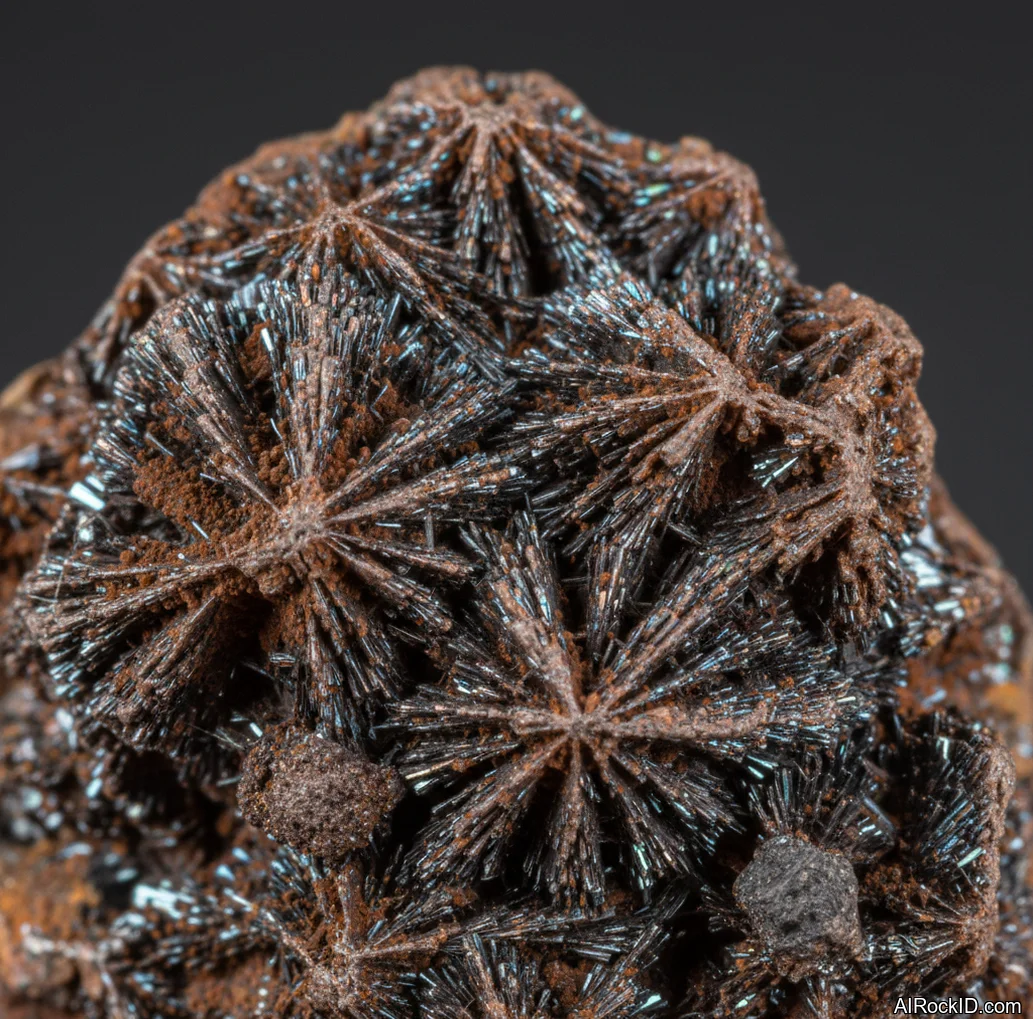
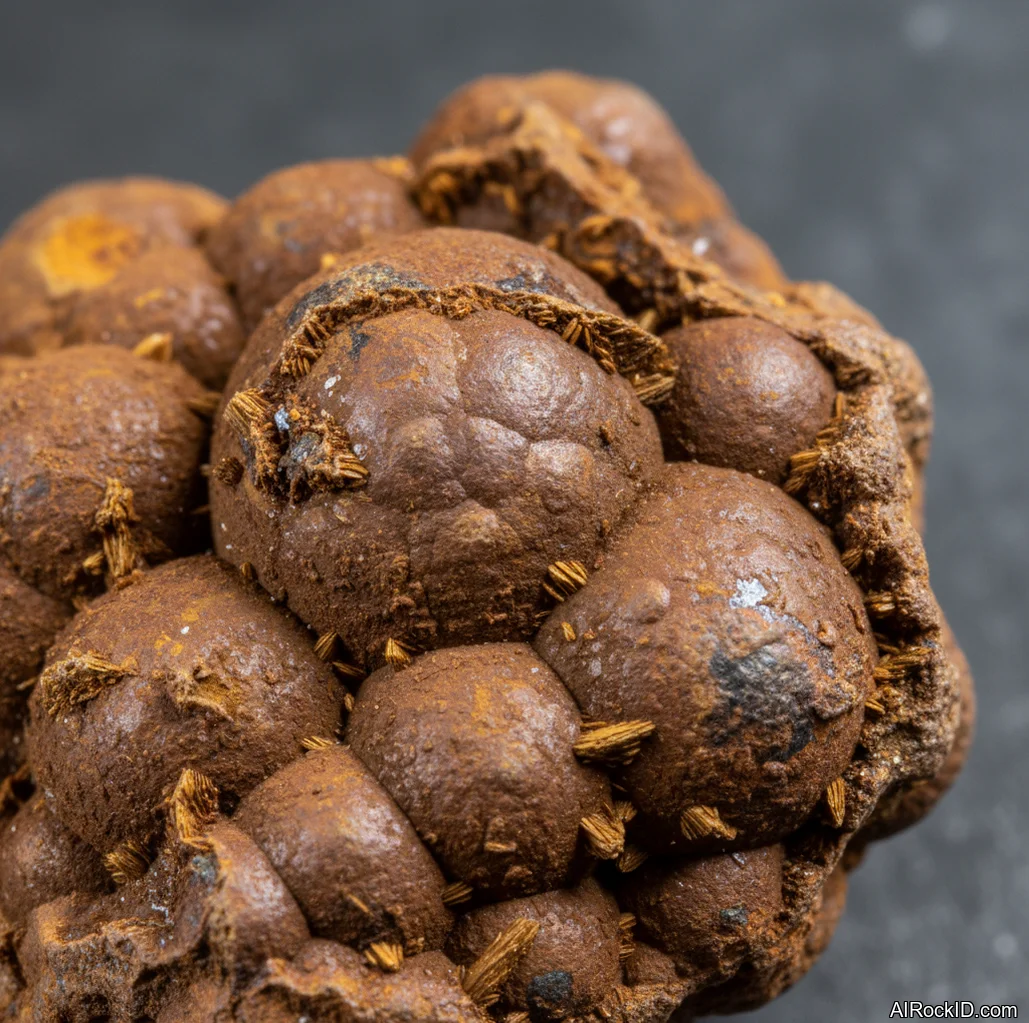
It likes room to grow. So you end up with botryoidal crusts, stalactitic drips, or those velvety, fibrous skins coating other minerals (the kind that feel almost like suede if you brush them lightly).
That rainbow sheen usually comes from a super-thin surface layer, basically a tarnish, built up through oxidation plus those dehydration and rehydration cycles that happen over and over. I’ve cracked open pieces where the outside is all peacock colors, and then the fresh interior is just plain dark brown, zero flash. Kinda disappointing, honestly. But the color’s real. It’s just skin-deep on a lot of specimens.
How to Identify Iridescent Goethite Turgite
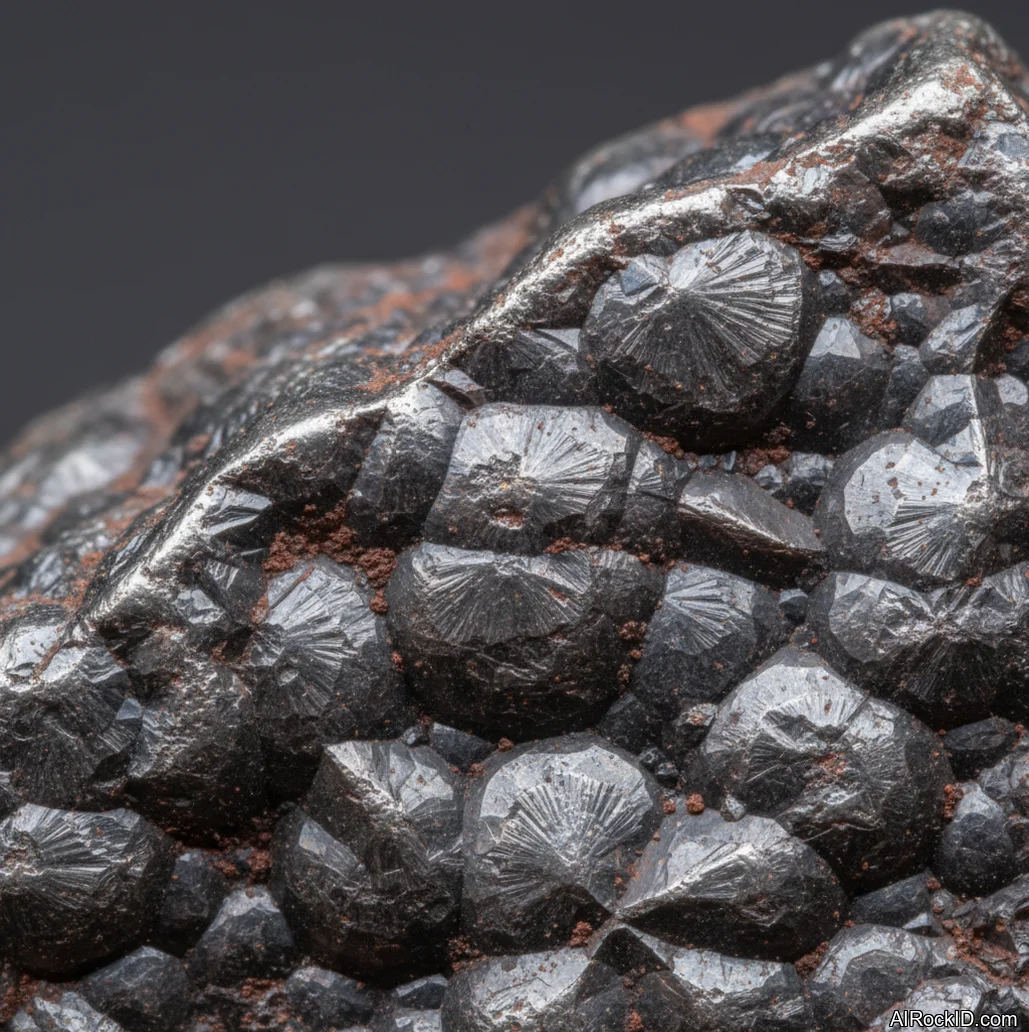
Color: Base color is dark brown to black, with an iridescent surface that can show blue, purple, green, bronze, and pink depending on the angle. Fresh broken surfaces are often duller and more brown.
Luster: Metallic to submetallic on the iridescent surface.
Look closely at the shape: a ton of it is botryoidal, like a cluster of tiny bubbles frozen in place. If you scratch it with a steel nail, it usually resists but can mark with effort, which fits a Mohs around 5 to 5.5. The real test is the streak: on unglazed porcelain it should leave a yellowish brown to brown streak, even if the outside looks rainbow-black.
Properties of Iridescent Goethite Turgite
Physical Properties
| Crystal System | Orthorhombic |
| Hardness (Mohs) | 5-5.5 (Medium (4-6)) |
| Density | 3.3-4.3 g/cm3 |
| Luster | Metallic |
| Diaphaneity | Opaque |
| Fracture | Uneven |
| Streak | yellowish brown |
| Magnetism | Non-magnetic |
| Colors | black, brown, blue, purple, bronze, green, iridescent rainbow |
Chemical Properties
| Classification | Oxides and hydroxides |
| Formula | FeO(OH) |
| Elements | Fe, O, H |
| Common Impurities | Mn, Si, Al |
Optical Properties
| Refractive Index | 2.26-2.39 |
| Birefringence | 0.130 |
| Pleochroism | Strong |
| Optical Character | Biaxial |
Iridescent Goethite Turgite Health & Safety
It’s usually safe to pick up, and a quick splash of water won’t hurt it. The real issue is how it looks after: scrub too hard or use something gritty and you can scuff up that iridescent surface (the kind that catches the light and flashes colors) or strip it right off.
Safety Tips
If you’re cutting, grinding, or sanding anything that’s iron oxide, assume the dust will irritate your lungs. Use water to keep it down, and wear a proper respirator (not just a flimsy mask).
Iridescent Goethite Turgite Value & Price
Price Range
Rough/Tumbled: $10 - $250 per specimen
Prices can swing all over the place depending on the color play, the surface condition, and the size. A small, clean botryoidal piece with even iridescence can cost more than a bigger chunk that looks dull, has scratches you can catch with a fingernail, or is patched with brown spots.
Durability
Moderate — Scratch resistance: Fair, Toughness: Fair
The rainbow surface can scuff or dull if it rubs against harder minerals or gets handled a lot.
How to Care for Iridescent Goethite Turgite
Use & Storage
Store it so the rainbow face isn’t rubbing against quartz points or anything gritty. I keep mine in a padded flat or a small display box because the surface scratches show up fast under light.
Cleaning
1) Rinse quickly with lukewarm water to remove dust. 2) Use a soft makeup brush or microfiber cloth with a tiny bit of mild soap if needed. 3) Pat dry and avoid rubbing the iridescent areas hard.
Cleanse & Charge
If you do energetic cleansing, keep it simple: smoke, sound, or a quick rinse and dry works. Long salt soaks are a bad idea for the finish and for any tiny cracks.
Placement
Put it where you can tilt it toward a single light source, like a shelf with a small lamp. It looks best when you can move your head and watch the colors shift.
Caution
Skip ultrasonic cleaners, harsh acids, and any kind of hard scrubbing, because that iridescent layer can be surprisingly thin and it scuffs fast (you’ll see little dull spots where it used to flash). And don’t just toss it loose in a bag with harder stones, either.
Works Well With
Iridescent Goethite Turgite Meaning & Healing Properties
A lot of people grab iridescent goethite when they want grounding, but not the boring kind. It’s iron-heavy in your hand, and honestly it has this blunt “get real” feeling on days when your brain won’t stop spinning.
I’ve handed it to customers who can’t stop fidgeting at the counter. And a bunch of them do this funny little pause once they notice the heft and that cool, slick surface against their palm.
But yeah, the rainbow sheen matters, especially for anyone who doesn’t want a plain black grounding stone. You still get that protective, contained vibe people associate with darker minerals, only the colors keep it from feeling so stern. I’ve kept one on my desk during paperwork weeks, right next to the mouse where I can tap it without thinking (cold at first, then it warms up). Not a miracle fix. More like a tactile nudge to slow down and finish one thing.
One thing I always say out loud: this isn’t medical care, and it won’t replace treatment for anxiety or anything else. Also, some pieces will shed a little iron-oxide dust if they’ve got earthy patches or soft spots, so if you’re doing body layouts, keep it clean and don’t use crumbly material. Why risk it?
Identify Any Crystal Instantly
Snap a photo and get properties, value, care instructions, and healing meanings in seconds.