Hematite
What Is Hematite?
Hematite is an iron oxide mineral with the chemical formula Fe2O3.
Grab a solid piece and the first thing that hits you is the heft. It’s weirdly dense, like it wants to sink into your palm, and quartz just doesn’t do that. And yeah, that weight is a quick gut check when you’re sorting through a mixed tray at a show (the kind with those shallow felt-lined compartments and bits knocking together).
Most folks take one look and go, “shiny black.” But the real giveaway is the streak. Scratch it across an unglazed porcelain tile and you’ll get that rusty red to reddish-brown line, even if the outside’s gunmetal gray and mirror-bright enough to catch the overhead lights. Kind of surprising, right?
Origin & History
“Hematite” comes from the Greek word *haima*, meaning blood, and it’s not hard to see why once you’ve handled it. Grind it into powder or drag it across a streak plate and you get that red-brown mark. And if you’ve ever rubbed a rough chunk and ended up with rusty-looking dust on your fingertips (the kind that clings in the little lines of your skin), the name makes total sense.
As a mineral species, hematite was formally described in 1773 by Jean-Baptiste Romé de l’Isle. But people were using hematite-rich ochre as pigment long before anyone was writing formal descriptions. You can still spot that same iron-oxide red in ancient paint, and it shows up today in modern polishing compounds too.
Where Is Hematite Found?
Hematite turns up worldwide in iron formations, volcanic settings, and oxidized ore zones. Big commercial iron ore deposits often include hematite as a main player.
Formation
Raw chunks from banded iron formations are kind of the classic path: iron gets deposited (often right alongside silica), and then later on heat, pressure, and moving fluids squeeze it, shuffle it around, and recrystallize it into massive hematite or those sparkly, mirror-like specular plates you can catch the light on when you tilt a piece in your hand. That’s the source of a lot of that familiar “iron ore” vibe.
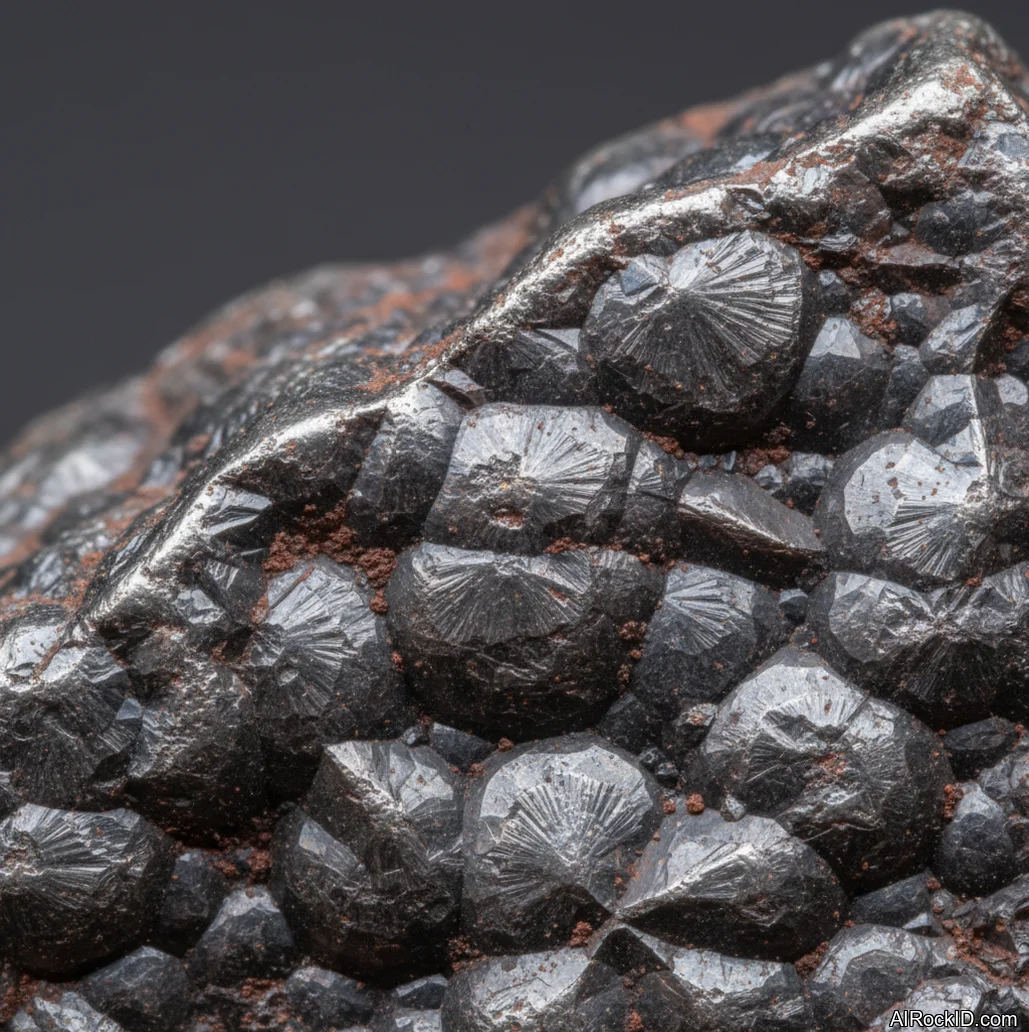
But hematite also shows up the simple way: oxidation during weathering of iron-bearing minerals. It can swap in for magnetite, it can paint other minerals with a thin metallic skin (sometimes you only notice it when a surface flashes steel-gray), or it can form botryoidal “kidney ore” where iron-rich fluids dropped it out in little pockets and along seams. Weirdly organic-looking.
How to Identify Hematite
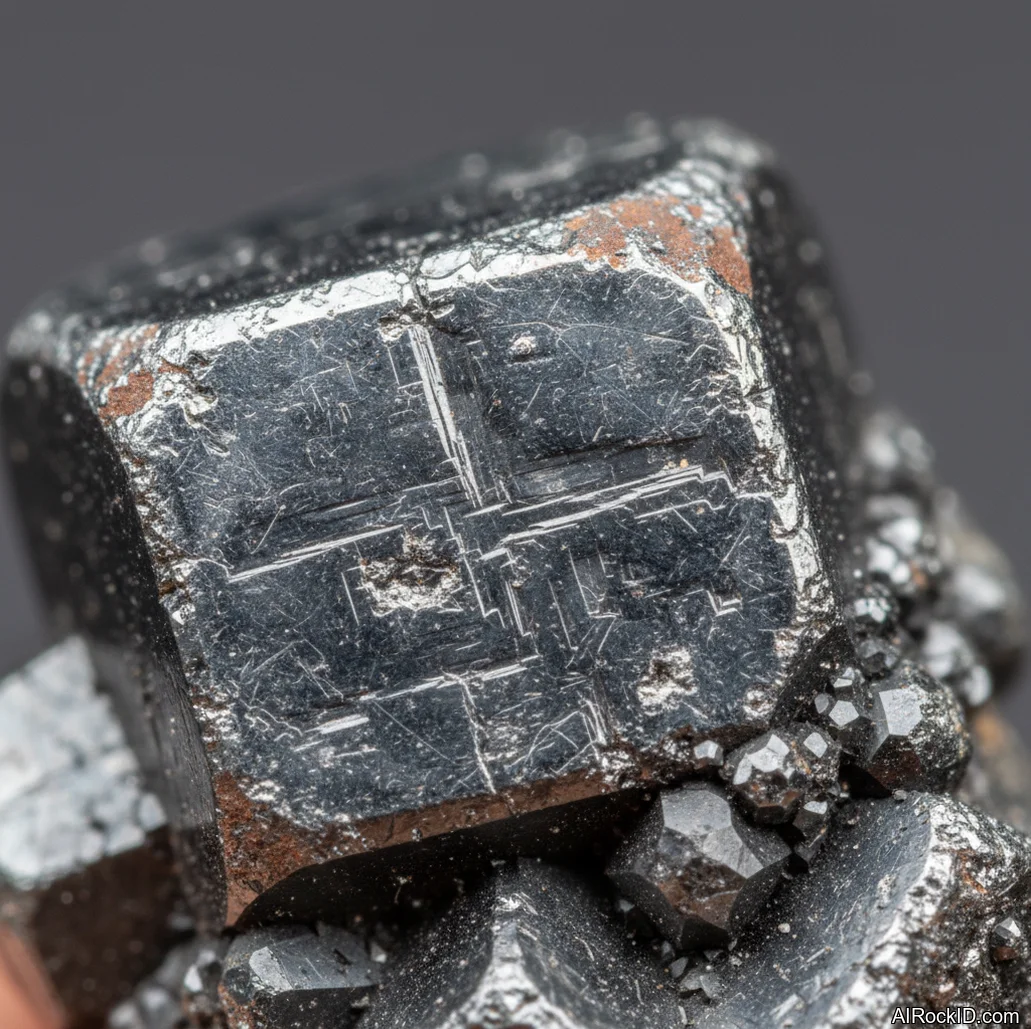
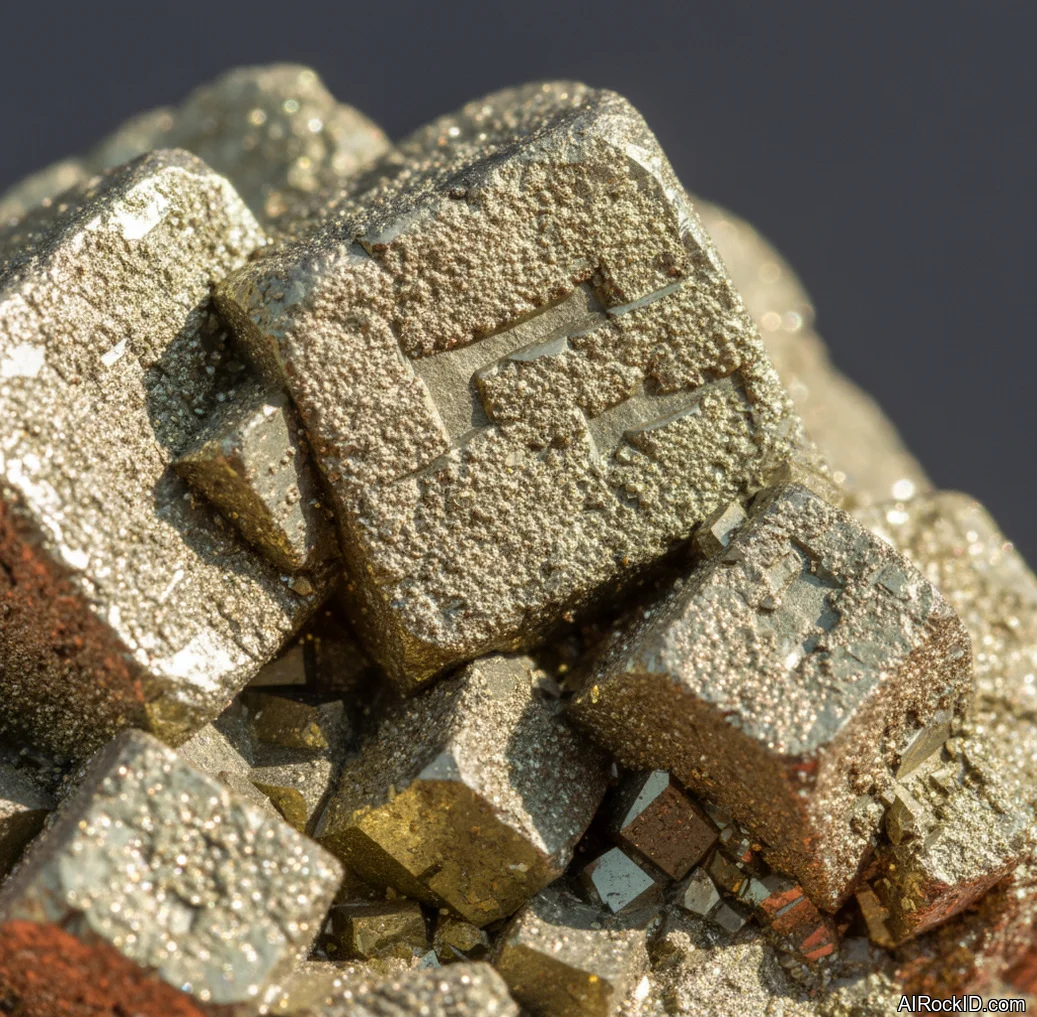
Color: Typically steel-gray to black on the surface, sometimes reddish-brown in earthy material. The streak is red to reddish-brown even when the specimen looks silver-black.
Luster: Metallic to earthy, depending on whether it’s crystalline/specular or fine-grained.
The real test is the streak plate: hematite’s red-brown streak beats almost every look-alike. Compared to magnetite, hematite usually won’t grab a magnet hard, and a lot of common tumbled “hematite” in shops is actually magnetic hematite or coated material. If you scratch it with a steel nail, some hematite will mark, but it won’t feel soft and crumbly like soot. And when you tilt specular hematite under a bright light, you get that glittery, micaceous flash that’s hard to fake.
Properties of Hematite
Physical Properties
| Crystal System | Trigonal |
| Hardness (Mohs) | 5.5-6.5 (Hard (6-7.5)) |
| Density | 5.26-5.30 g/cm3 |
| Luster | Metallic |
| Diaphaneity | Opaque |
| Fracture | Uneven |
| Streak | Red to reddish-brown |
| Magnetism | Weakly Magnetic |
| Colors | Steel-gray, Black, Silver-gray, Reddish-brown, Red |
Chemical Properties
| Classification | Oxides |
| Formula | Fe2O3 |
| Elements | Fe, O |
| Common Impurities | Ti, Mn, Al, Si, H2O |
Optical Properties
| Refractive Index | 2.94-3.22 |
| Birefringence | 0.28 |
| Pleochroism | None |
| Optical Character | Uniaxial |
Hematite Health & Safety
Solid hematite is usually safe to handle day to day, and a quick rinse or brief time in water isn’t a big deal. The real concern shows up when you’re cutting, grinding, or sanding it (that fine gray-black dust gets everywhere, even under your nails), or if you’re dealing with the crumbly, earthy kind that sheds easily.
Safety Tips
If you’re going to saw or sand it, put on a real respirator (not a flimsy paper mask) and use wet methods so the dust doesn’t go everywhere. And if you’ve been handling hematite that’s powdery or has that dry, earthy grit that sticks to your fingers, wash your hands afterward. Why take the chance?
Hematite Value & Price
Price Range
Rough/Tumbled: $3 - $60 per piece
Cut/Polished: $2 - $15 per carat
Price moves around depending on how it looks and what shape it’s in. Mirror-bright, specular plates you can practically see your face in, plus clean botryoidal pieces with that grape-cluster surface, tend to sell quicker than those dull, heavy massive chunks that just sit there. And yeah, properly finished cab material costs more. But a lot of “hematite jewelry” you see out there is plated or synthetic.
Durability
Moderate — Scratch resistance: Fair, Toughness: Fair
Hematite is stable in normal room conditions, but polished surfaces can dull and fine-grained pieces can shed red dust if they’re abraded.
How to Care for Hematite
Use & Storage
Keep hematite in a box or drawer if it’s highly polished, because it’ll pick up micro-scratches from harder stones. Botryoidal pieces chip on edges if they rattle around.
Cleaning
1) Rinse quickly in lukewarm water and wipe with a soft cloth. 2) Use a tiny bit of mild soap for skin oils, then rinse again. 3) Dry right away so water spots don’t haze the polish.
Cleanse & Charge
For a low-drama cleanse, wipe it down or use brief running water, then let it rest on a shelf. If you do sunlight, keep it short since heat can mess with some coatings used on cheap jewelry pieces.
Placement
On a desk, hematite feels like a paperweight that doesn’t slide around much. If it’s a mirror-polished piece, set it on felt so the base doesn’t get scuffed.
Caution
Don’t just take “hematite” beads being magnetic at face value. A lot of them aren’t natural hematite at all, they’re synthetic or they’ve got a coating that can chip and flake off (you’ll sometimes see tiny gray-black specks on your fingers or a dusty ring where they rub). And don’t leave them soaking in salt water for ages, especially if the piece is plated, because salt can pit the finish or leave it looking dull.
Works Well With
Hematite Meaning & Healing Properties
Look at how people actually use hematite day to day and it usually comes down to one thing: feeling steadier. Heavier. Less like your thoughts are pinging off the walls. And honestly, that matches what it’s like in your hand. It’s cool to the touch, dense for its size, and it has that no-nonsense weight that makes you notice it right away.
Most sellers call it “grounding,” and yeah, that word keeps popping up because it’s simple and it fits. In my own stash, I grab hematite when I want something that feels like a stop button in my pocket, not some huge emotional megaphone. But it’s not magic. If you’ve got anxiety, sleep problems, or anything medical going on, treat it like a comfort object (something to hold, something to focus on) and keep the real-world supports in place.
Thing is, the metaphysical market is full of fake or mislabeled hematite. A lot of those super shiny bead strands are magnetic and weirdly lightweight compared to real, solid hematite. So if you’re buying it for ritual or meditation, you should at least get the actual mineral so the experience stays consistent, even if you don’t care about the geology. Why mess with a substitute when the whole point is how it feels?
Identify Any Crystal Instantly
Snap a photo and get properties, value, care instructions, and healing meanings in seconds.