Goethite
What Is Goethite?
Goethite is an iron oxyhydroxide mineral with the formula FeO(OH). It’s one of those minerals that shows up wearing a hundred disguises, so folks swear they’ve never run into it, and then you start pointing at pieces in the field and they go, “Oh. Wait. It’s all over.”
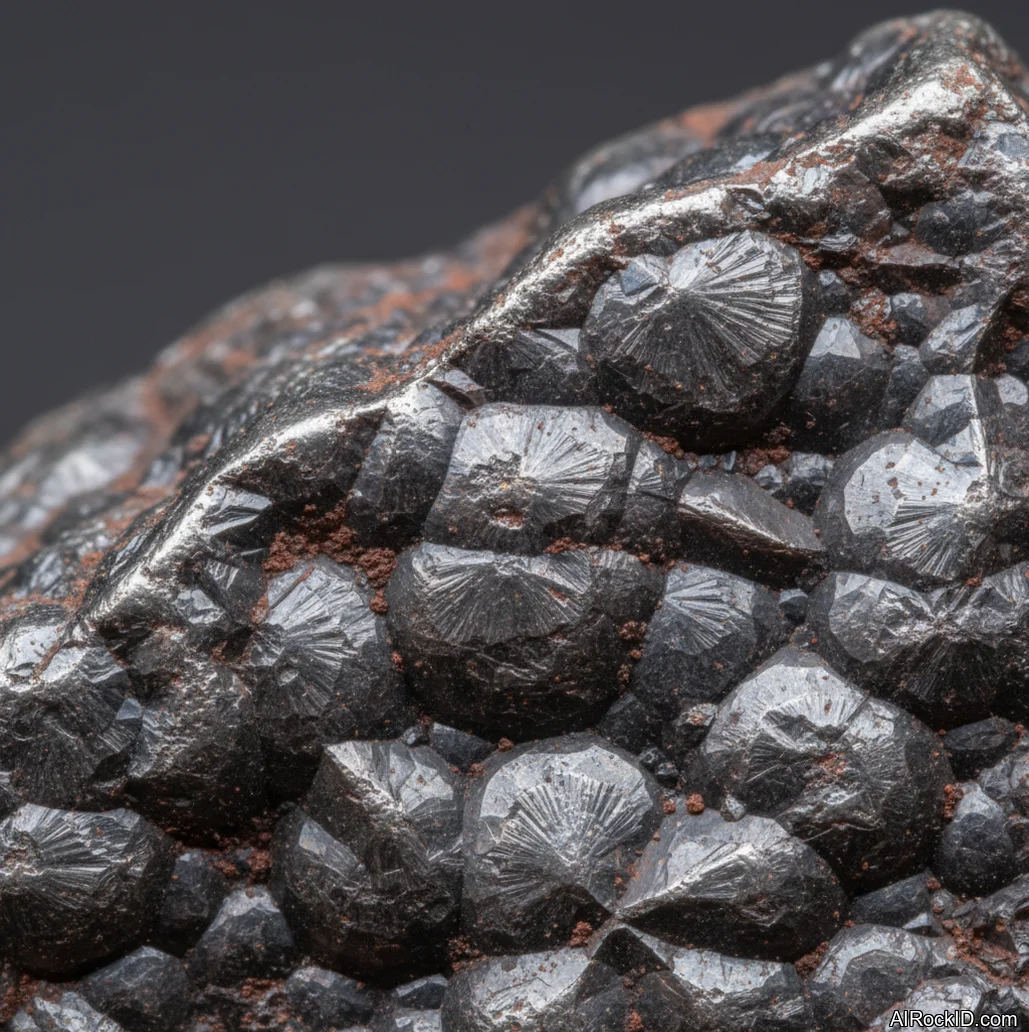
Pick up a solid chunk and the first thing you feel is the heft. It’s that dense, sink-in-your-hand kind of weight, like there’s more iron packed in there than the size has any right to carry. A lot of goethite passes for plain brown rock at a glance. But hit it with a hard light and the surface can change fast, from dull, earthy brown to this slick, almost metallic shine that looks like someone rubbed it with graphite (it’s a weird little moment).
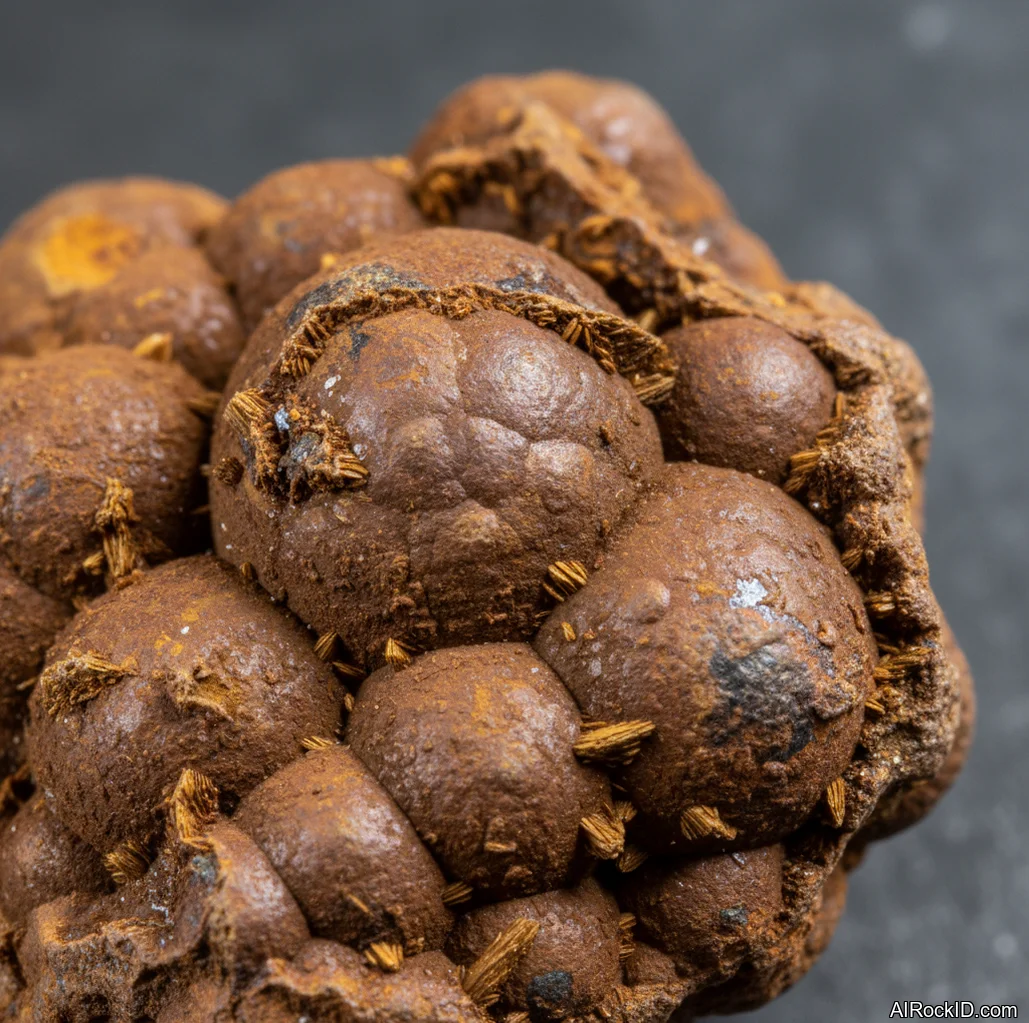
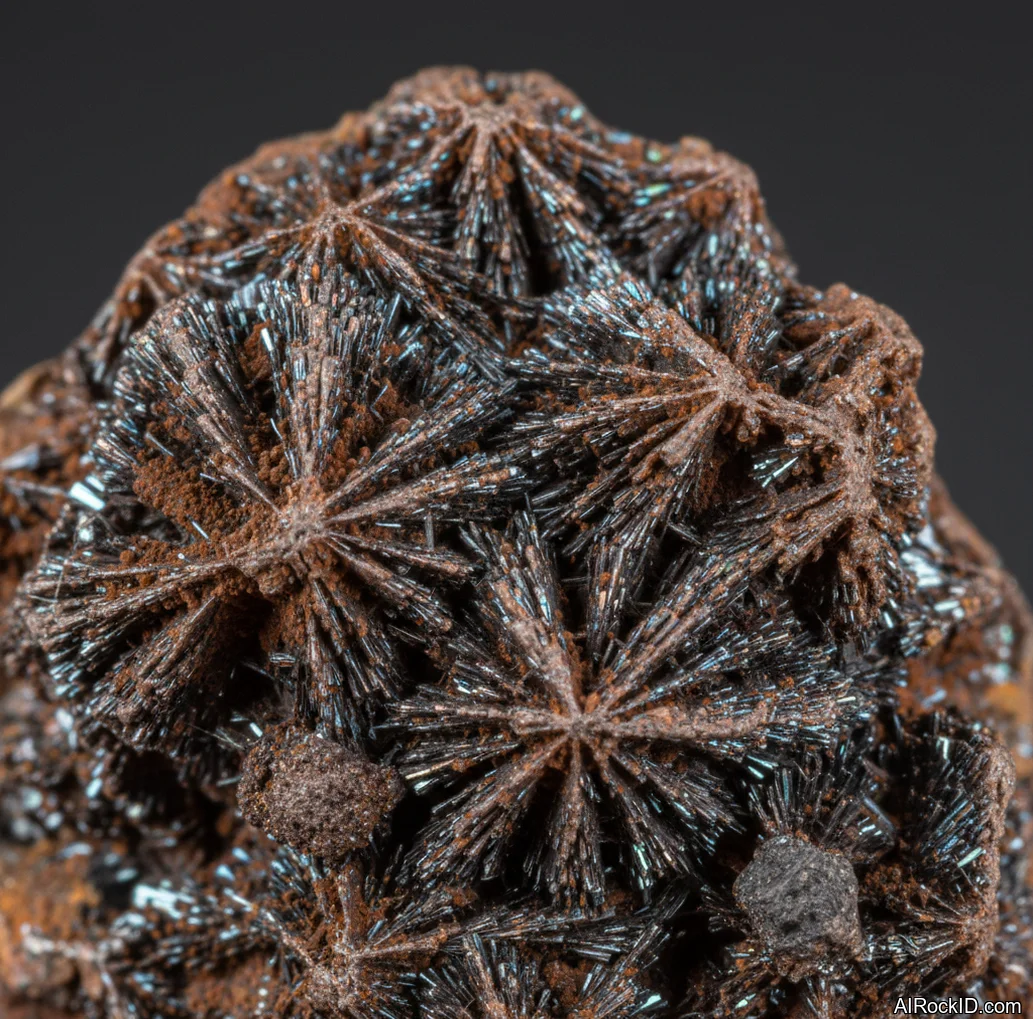
Look closer and the habits are where it gets interesting. You’ll run into velvety coatings that feel almost suede-like under a fingertip, botryoidal lumps that look like tiny bubbles frozen mid-stack, plus those sharp needle sprays that make collectors hover at a dealer table. And here’s the catch: goethite is often mixed with other iron oxides and hydroxides, and sellers will slap “limonite” on basically anything brown and iron-y. So, yeah, expect messy labels unless the specimen is well studied.
Origin & History
Germany’s where the name comes from. Goethite got its formal description in 1806 from Johann Georg Lenz, and he named it after Johann Wolfgang von Goethe, who was genuinely into natural science and mineral collecting.
Thing is, older books and old-time dealers tossed around “brown iron ore” and “limonite” way more loosely than we do now. Out in the field, people still say limonite when they really mean a whole mixed bag, and a lot of that mix is goethite. If you’ve ever picked up one of those classic rusty-brown coatings lining a cavity, the kind that leaves a faint ochre smudge on your fingertips when you rub it, you’ve probably had goethite in your hands even if the label said something else.
Where Is Goethite Found?
Goethite forms worldwide in oxidized zones and iron-rich soils, and you’ll see it from alpine pockets to desert iron deposits. Needle sprays and lustrous botryoidal pieces are especially associated with places like the Swiss Alps and Minas Gerais.
Formation
Most goethite shows up right where iron-bearing minerals get hit with oxygen and water. Look, you see it in weathering zones above ore bodies, in gossans, in laterites, and in those rusty halos along fractures where groundwater clearly ran through (you can almost trace the flow lines with your finger). It’ll also swap in for other minerals molecule by molecule, so you end up with pseudomorphs: the outer shape is from something older, but the stuff you’re holding is goethite.
Compared to hematite, goethite prefers wetter, lower-temperature settings. So it turns up as a secondary mineral coating the walls of cavities, building into fibrous masses, or forming botryoidal crusts over earlier iron oxides. And it’s pretty common to find it sitting right next to hematite in the same piece, which is why some specimens look like they can’t decide between brown-black and steel-gray. Who hasn’t stared at one of those and gone, which one am I looking at?
How to Identify Goethite
Color: Common colors are yellow-brown, red-brown, dark brown, and brown-black, sometimes with iridescent tarnish on fibrous or botryoidal surfaces. Fresh breaks can look more ochre, while dense pieces can read nearly black until you hit them with bright light.
Luster: Luster ranges from earthy and dull to silky or metallic on fibrous and well-crystallized surfaces.
If you scratch it with a steel nail, goethite usually resists a bit but can still get marked, since it sits around Mohs 5 to 5.5. The real test is the streak: on unglazed porcelain it gives a yellow-brown to brown streak, not the cherry-red you’d expect from some hematite. And in-hand, good needle sprays feel slightly prickly at the edges and stay cool to the touch, while many resin or slag lookalikes feel warmer and too uniform.
Properties of Goethite
Physical Properties
| Crystal System | Orthorhombic |
| Hardness (Mohs) | 5-5.5 (Medium (4-6)) |
| Density | 4.2-4.4 g/cm3 |
| Luster | Earthy |
| Diaphaneity | Opaque |
| Fracture | Uneven |
| Streak | yellow-brown to brown |
| Magnetism | Non-magnetic |
| Colors | yellow-brown, red-brown, dark brown, brown-black, black |
Chemical Properties
| Classification | Oxides and hydroxides |
| Formula | FeO(OH) |
| Elements | Fe, O, H |
| Common Impurities | Mn, Al, Si, P, Ti |
Optical Properties
| Refractive Index | 2.260-2.390 |
| Birefringence | 0.130 |
| Pleochroism | Strong |
| Optical Character | Biaxial |
Goethite Health & Safety
Hand-sized pieces are usually safe for most people to pick up and move around, and a quick splash or short soak in water is generally fine. But don’t cut, grind, or sand it in a way that kicks up dust (that’s the part you want to avoid).
Safety Tips
If you’re going to lap or carve it, do it wet. Keep a steady trickle of water on the surface, get some real ventilation moving (you should feel it on your face), and wear a proper respirator that’s actually rated for fine particulates, not a flimsy dust mask. And after you handle iron-oxide-rich stuff that leaves that rusty-looking residue on your fingers, go wash your hands. Seriously.
Goethite Value & Price
Price Range
Rough/Tumbled: $5 - $250 per specimen
Cut/Polished: $10 - $60 per carat
Prices swing a lot depending on form and sparkle. Dull, earthy chunks usually go cheap. But the bright botryoidal stuff or those clean needle sprays from classic localities? That’s where the numbers jump. Condition is a big deal too. The best habits are the ones that chip if you so much as look at them wrong, and you can spot a piece that’s been bounced around in a flat: tiny dings on the tips, a bit of rub on the high points (and sometimes that faint “dusty” look that won’t quite wipe off).
Durability
Moderate — Scratch resistance: Fair, Toughness: Fair
It’s stable in normal room conditions, but fibrous or needle specimens can shed or bruise if handled roughly.
How to Care for Goethite
Use & Storage
Keep delicate sprays and fibrous crusts in a box with padding so nothing rubs the surface. I don’t toss goethite needles in a bowl with other minerals because the tips snap and the luster gets scuffed.
Cleaning
1) Start with a soft, dry brush to lift dust from needles and crevices. 2) If it needs more, rinse quickly in lukewarm water with a drop of mild soap and use a very soft toothbrush on the matrix only. 3) Pat dry and let it air-dry fully before putting it back in a closed container.
Cleanse & Charge
If you do metaphysical cleansing, stick to smoke, sound, or a quick rinse and dry. Avoid long soaks, especially on porous, earthy material that can hold water in tiny seams.
Placement
A shelf is fine, but give it space so it’s not scraping other pieces when you slide things around. Under a strong angled light, botryoidal goethite looks way better than under flat overhead lighting.
Caution
Needle-shaped, fibrous pieces are delicate, and if one snaps it can flick off tiny, sharp splinters. So don’t grab them by the tips. Hold the specimen by the base or the matrix instead. And skip abrasive polishing compounds on the natural faces. They’ll scuff up that silky or metallic look fast (you can feel the grit bite when you rub it).
Works Well With
Goethite Meaning & Healing Properties
“Grounding” is the word everyone grabs for with goethite, and yeah, I see it. It just feels heavy. Steady. You notice that weight the second it hits your palm, especially on a day when your nerves are already running hot.
I’ve had a botryoidal piece sitting on my desk for years. Dark, lumpy, kind of like a little cluster of pebbles fused together. And when I catch myself picking it up without thinking, it does this simple thing: it drags my attention down into my hands instead of letting my brain keep looping.
But look, I’m not going to sell it like some miracle fix. For me, it works way better as a reminder than some instant mood-flip. If you’re anxious, holding a cool, dense chunk and paying attention to the texture, the weight, and your breathing can genuinely help you settle. Goethite is good at that because it’s so tactile. The silky, fibrous material has this tiny-corduroy feel under your fingertip, and the smoother botryoidal pieces have this calm, pebble-in-your-pocket vibe. Hard to ignore.
People also tie it to “shadow work” and looking at old patterns, and I get where that comes from. It’s literally a weathering product, iron that’s been altered by water and air, so the metaphor kind of writes itself. Does that click for everyone? Probably not. For some people, though, it lands.
Thing is, keep it in its lane. It’s not medical care, and it won’t replace therapy, sleep, or the boring basics. Still, it can be a small anchor, especially if you link it to a habit like journaling or a short nightly reset (even two minutes counts).
Identify Any Crystal Instantly
Snap a photo and get properties, value, care instructions, and healing meanings in seconds.