Lava Rock


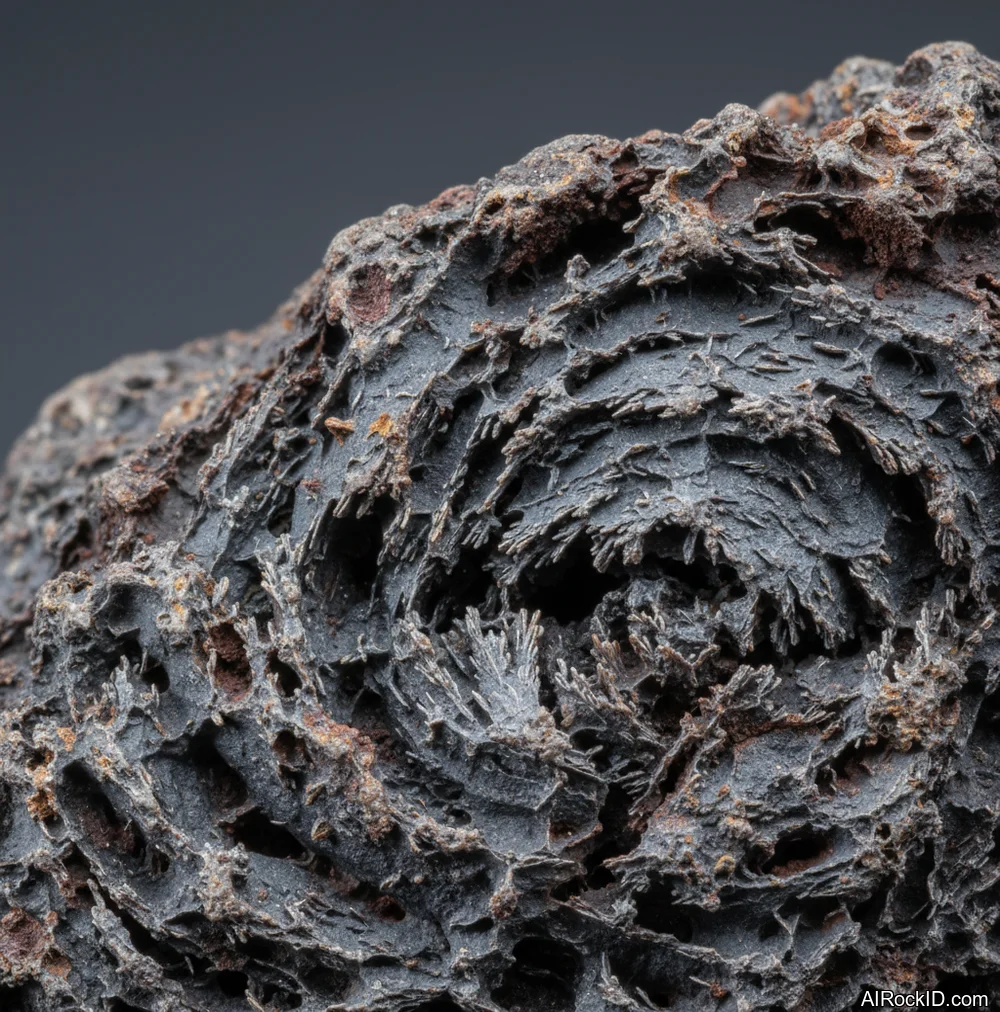
Quick answer: Lava rock is a lightweight, porous volcanic stone commonly sold as black or reddish-brown beads, tumbled pieces, aquarium media, and landscaping rock. It is usually basaltic or scoriaceous material, so identification depends more on vesicles, texture, and weight than on crystal faces or transparency.
AI Rock ID can help compare a lava rock specimen against visually similar volcanic materials using color, pores, texture, and surface features. RockIdentifier.io provides visual identification support, but unusual slag, dyed beads, or heavily weathered pieces may still need a hands-on check.
Good fit
- Collectors who want an inexpensive example of volcanic rock
- Jewelry makers looking for lightweight, matte black or brown beads
- Aquarium or terrarium users who need porous decorative rock after checking safety and cleaning requirements
- Students learning to recognize vesicular volcanic textures
Not a good fit
- Anyone seeking a rare mineral specimen with crystal faces
- Pieces that must be polished to a glassy, high-shine finish
- Situations where exact quarry origin or geologic source is required without documentation
- Use in water systems without checking whether the rock changes pH, sheds debris, or contains coatings
Most commonly confused with
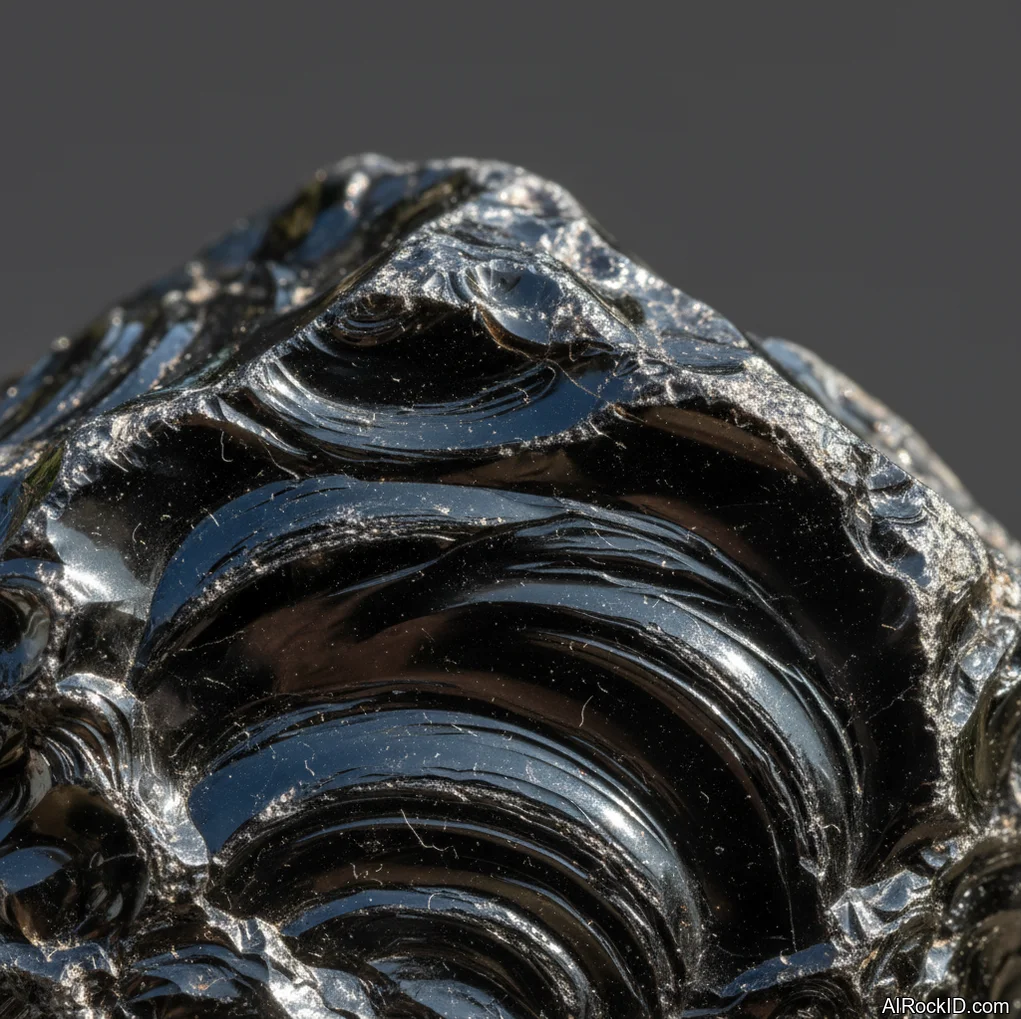
- Obsidian: Obsidian is volcanic glass with a smooth, glassy fracture, while lava rock is rough and full of pores.
- Basalt: Dense basalt may have few visible holes, while commercial lava rock often refers to vesicular basalt or scoria.
- Pumice: Pumice is usually lighter in color and can be so porous that it may float when dry.
- Hematite: Hematite is metallic-looking and much heavier, while lava rock is dull, rough, and lightweight for its size.
Lava Rock vs Similar Volcanic Materials
| Material | Typical Look | Key Difference | Common Use |
|---|---|---|---|
| Lava rock | Black, gray, or red-brown; porous | Rough vesicles and basaltic texture | Beads, decor, landscaping |
| Obsidian | Black or brown; glassy | Smooth conchoidal fracture, little to no porosity | Carvings, specimens, blades |
| Pumice | Pale gray, cream, or tan; very porous | Extremely light and may float when dry | Abrasives, gardening, specimens |
| Dense basalt | Dark gray to black; fine-grained | Heavier with fewer visible holes | Construction stone, specimens |
| Slag | Glassy, bubbly, sometimes metallic or bright colored | Man-made industrial byproduct | Decorative material, curios |
AI identification confidence
AI identification is usually moderate to high when the specimen shows clear pores, a dark volcanic color, and a rough non-glassy surface. Confidence drops when the sample is dyed, polished, coated, photographed in poor lighting, or visually similar to slag or vesicular basalt.
When AI gets it wrong
- Dyed or sealed lava beads may look more uniform than natural porous rock.
- Industrial slag can mimic vesicles and dark volcanic textures in photos.
- Close-up images without scale can make pumice, scoria, and lava rock difficult to separate.
- Wet surfaces may hide matte texture and make lava rock appear glassier than it is.
Final recommendation
Choose lava rock when you want a porous volcanic material rather than a transparent gemstone or polished mineral. For buying, look for natural-looking pores, matte texture, consistent labeling, and disclosure if the piece has been dyed, waxed, sealed, or treated.
How to Tell If Lava Rock Beads Are Dyed
Many black lava rock beads are natural-looking, but some are dyed or sealed to create a deeper, more even color. Check for color rubbing off on a damp white cloth, unusually glossy pore walls, or dye collecting inside holes. A strong chemical odor or perfectly uniform color across every bead can also indicate treatment.
Buying Lava Rock: What to Check
Lava rock is common, so high prices usually reflect carving, bead quality, strand size, or retail presentation rather than rarity. Ask whether beads are natural, dyed, waxed, or stabilized, especially for jewelry or diffuser use. For aquarium, terrarium, or garden use, confirm that the material is clean, untreated, and appropriate for the intended environment.
Photo Tips for Lava Rock Identification
Use bright natural light and include a ruler, coin, or hand for scale when photographing lava rock. Capture both a close-up of the pores and a wider view of the whole specimen. A dry surface is helpful because water can darken the rock and reduce visible texture.
What Is Lava Rock?
Lava rock is a porous volcanic rock that forms when erupted lava cools and hardens, usually as basalt or scoria.
Grab a piece and you feel it right away. Rough. Pitted. Those tiny holes catch on your fingertips, kind of like a pumice stone that didn’t get the memo about floating. Some pieces are weirdly light for how big they look because they’re packed with old gas bubbles. But then you’ll find a chunk that feels denser and tighter in your palm when the bubbles are smaller and it’s more basalt-like.
Most folks take one look and go, “black rock.” But it’s not that simple. There’s charcoal, brown-black, rusty red scoria, and every so often a greenish tint when it’s olivine-rich. Sure, you can get tumbled lava rock, but raw is really the whole point. Why sand off the evidence? The natural surface pretty much tells the entire story.
Origin & History
“Lava” slid into English from Italian, where people used it for those rivers of molten rock pouring out of volcanoes. You start seeing it in scientific writing in the 1700s, right around when volcanology was getting itself sorted out as an actual field. “Basalt” got pinned down as a formal rock name in the late 1700s, and Abraham Gottlob Werner is usually the one credited with really pushing it in geology. And “scoria” comes from the Latin word for “slag,” which fits, because it’s been the go-to term for that frothy, cindery stuff piled up around vents for a long time.
But collectors didn’t need a lab label to get why this material matters. People have used lava as building stone and grinding stone, and in some places even as early cutting tools, mostly because it’s easy to find near volcanic fields and it’s easy to shape when it snaps along those rough surfaces (the kind that chew up your fingertips if you handle it too fast). Why reinvent the wheel when the ground is basically handing you sharp, workable rock?
Where Is Lava Rock Found?
Lava rock occurs in volcanic regions worldwide, especially around basaltic lava flows, cinder cones, and recent or historic volcanic fields.
Formation
Look at the holes for a second and you’re basically staring at the cooling history in plain sight. Lava starts out carrying dissolved gases. Then it erupts, the pressure drops fast, and that gas pops out of solution, forming bubbles. The rock freezes before the bubbles can wiggle their way out. So you end up with vesicles, anywhere from tiny pinpricks to pea-sized cavities.
Basaltic lava is usually runnier than sticky rhyolite, so it tends to spread out in flows and cool into dense basalt or vesicular basalt. Scoria sits on the frothier, cindery end of that range, and it’s commonly tied to fire fountains and cinder cones. And here’s a little collector tip from handling a bunch of pieces at shows (and getting rock dust all over my fingertips): scoria almost always feels lighter and kind of scratchy, while dense basalt feels smoother and more “stone-like,” even when the surface is still rough. Who’d guess a texture check could tell you so much?
How to Identify Lava Rock
Color: Most lava rock sold in shops is black to dark gray, with scoria often trending reddish-brown from iron oxidation. Fresh breaks can look darker than weathered surfaces.
Luster: Luster is dull to earthy, sometimes slightly waxy on smoother basalt surfaces.
If you rub your thumb across it, real lava rock has that dry, abrasive drag and the pores don’t look drilled or uniform. The real test is weight and structure: vesicular pieces feel lighter than a same-sized chunk of granite, but not as light as plastic. If you see perfectly round holes in a very uniform bead, that’s often manufactured material or heavily processed aggregate, not a natural chunk.
Common Look-Alikes
Lava Rock is sometimes confused with these materials:
- Black pumice (lighter, more floaty, often sharper-edged pores)
- Scoria sold as "lava rock" (red-brown vesicular cinders, same family but different look and density)
- Industrial slag/cinder (metallic sheen, glassy patches, sometimes magnetic, weird rainbow oxidation)
- Black volcanic glass (obsidian) marketed as lava rock (smooth, glassy, conchoidal chips instead of pores)
- Dyed porous stone or dyed howlite/magnesite beads sold as "lava" (dye pooled in pits and drill holes)
Market Cautions & Treatments
When AI Can Get This Wrong
At first glance, phone ID apps mix lava rock up with slag, pumice, and even obsidian because photos flatten the texture and just read “black rock.” The real test is touch and weight: lava rock feels rough like sandpaper with open pores, pumice is way lighter and can even float, and obsidian is smooth with sharp glassy chips. If a “lava” bead has perfectly uniform pores and a glossy skin, I’d suspect molded material or slag before I’d trust the label.
Properties of Lava Rock
Physical Properties
| Crystal System | Amorphous |
| Hardness (Mohs) | 5.5-6.5 (Medium (4-6)) |
| Density | 2.6-3.0 |
| Luster | Dull |
| Diaphaneity | Opaque |
| Fracture | Uneven |
| Streak | gray |
| Magnetism | Weakly Magnetic |
| Colors | black, dark gray, brown-black, reddish brown |
Chemical Properties
| Classification | Silicates |
| Formula | No single formula (rock mixture; commonly plagioclase + pyroxene ± olivine + volcanic glass) |
| Elements | Si, O, Al, Fe, Mg, Ca, Na, K, Ti |
| Common Impurities | Mn, P, H2O |
Optical Properties
| Refractive Index | 1.50-1.60 |
| Birefringence | None |
| Pleochroism | None |
| Optical Character | Isotropic |
Lava Rock Health & Safety
For most people, just handling it is pretty low risk. But if it’s broken up or you’ve drilled into it, it can kick off a gritty dust that gets in your lungs and stings your eyes. And if your fingers come away with that black residue (you’ll see it right away), go wash your hands.
Safety Tips
If you’re going to cut it, drill it, or grind it, do it wet and put on a respirator plus eye protection. That dust’s gritty and abrasive, and it’ll get everywhere fast.
Lava Rock Value & Price
Price Range
Rough/Tumbled: $2 - $20 per piece
Price mostly comes down to size, how uniform the piece is, and whether it’s been cleaned up and shaped neatly enough for décor or jewelry. And yeah, red scoria or anything with weird, eye-catching texture usually goes for more than plain black vesicular basalt.
Durability
Moderate — Scratch resistance: Fair, Toughness: Fair
It’s generally stable, but the porous structure chips and crumbles easier than dense igneous rocks when it takes a hard knock.
How to Care for Lava Rock
Use & Storage
Store it in a box or tray where it won’t scrape softer stones; those pores act like sandpaper. If it’s a bead bracelet, keep it away from delicate metal chains that can get scuffed.
Cleaning
1) Rinse under lukewarm water to flush grit out of the pores. 2) Scrub gently with a soft brush and a drop of mild soap. 3) Rinse well and air-dry fully so moisture doesn’t sit in the cavities.
Cleanse & Charge
Smoke cleansing and sound work well since the surface holds onto dust and oils. If you use water, dry it completely because pores stay damp longer than you think.
Placement
It does well on an entry table or near plants since it looks natural and doesn’t mind normal humidity. Just don’t put it where it’ll shed grit onto polished wood or acrylic shelves.
Caution
Don’t go at it with an aggressive ultrasonic cleaner. And don’t grind it indoors unless you’ve got real dust control, because that fine grit ends up on the floor, in your hair, in the vents, everywhere. Thing is, porous pieces can catch on fabric (you’ll feel it snag on a sleeve) and they can scratch softer gemstones.
Works Well With
Lava Rock Meaning & Healing Properties
Next to shiny things like quartz points, lava rock feels blunt. Practical, too. It looks warm, but when you pick it up it’s usually just room-cool, and that little mismatch is exactly why people grab it when they want something that feels steady and real.
I’ve watched this happen a bunch of times at the counter. Someone’s been hovering over sparkly towers for ten minutes, eyes darting around, hands kind of tense. Then I put a chunk of lava rock in their palm. You can see it. Their shoulders drop. They notice the weight right away, and that gritty, almost sandpapery surface (the kind that catches slightly on dry fingertips) pulls them out of their head.
In crystal tradition, lava rock gets linked with grounding, stability, and getting back into your body. I’m not calling it medicine, and I don’t think a rock fixes your life by itself. But as a routine tool? It’s solid. Those little pores will hold essential oils (if you’re into that), and the texture makes it easy to use as a tactile cue during breathwork or meditation. You can literally feel where your fingers are. No guessing.
But there’s a catch people don’t mention much. That same porosity that makes it handy also means it hangs onto skin oils, lotion, and perfume. After a few weeks in a pocket, it can start to smell weird or get shiny in spots like it’s been lightly polished. A quick wash helps, and if you’re using oils, keep it to a tiny amount or it’ll go rancid in the pores. (Yeah, it happens.)
Common mistakes
- Assuming every black porous bead is untreated natural lava rock
- Calling all volcanic glass obsidian when the surface is actually rough and vesicular
- Confusing lightweight pumice with darker scoria-style lava rock
- Using landscape lava rock in aquariums without rinsing and checking suitability
- Judging authenticity by color alone instead of texture, weight, and pore structure
Identify Lava Rock from a photo
Compare Lava Rock traits, care tips, value clues, and common lookalikes with a clear photo.