Lithium Quartz
What Is Lithium Quartz?
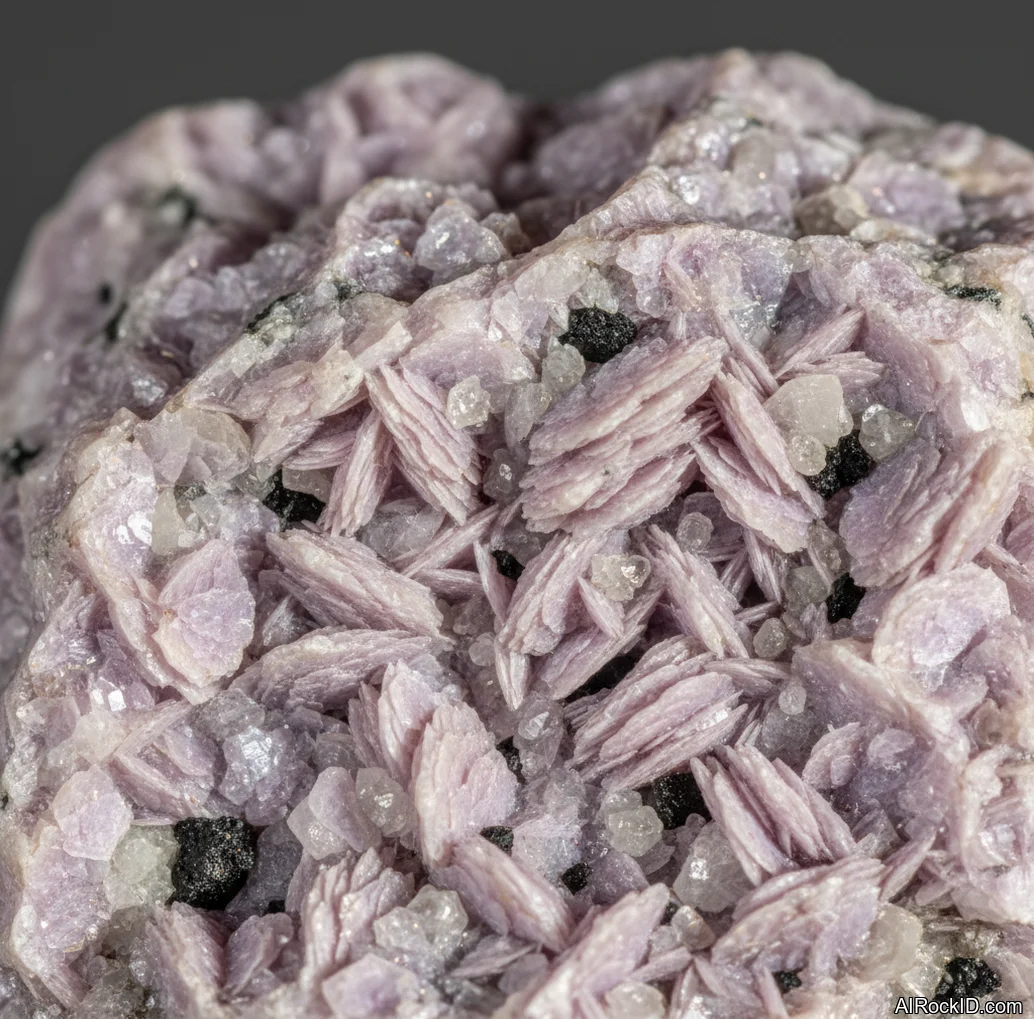
Lithium Quartz is still just quartz (SiO2), but it has lithium-bearing inclusions inside it, most often lepidolite mica, and that’s what gives it that soft pink to lavender cast.
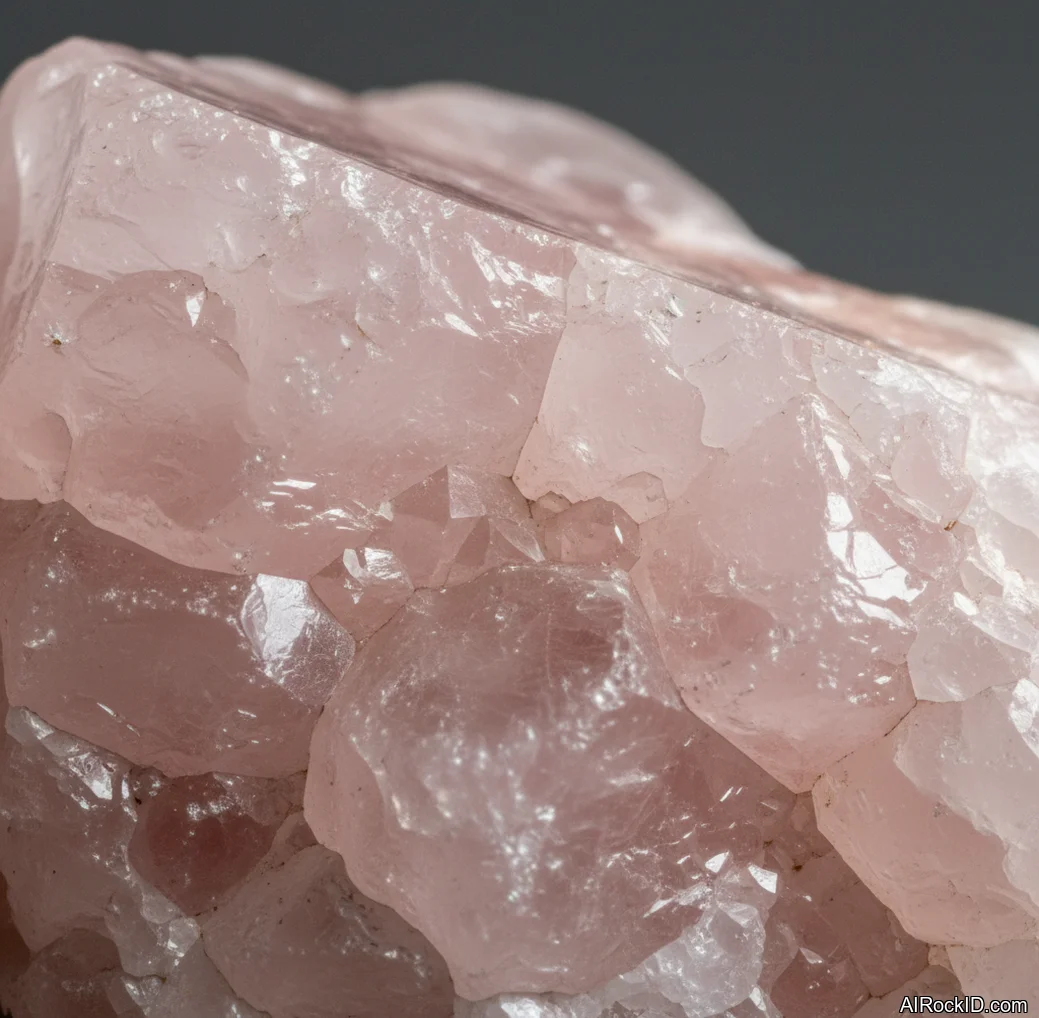
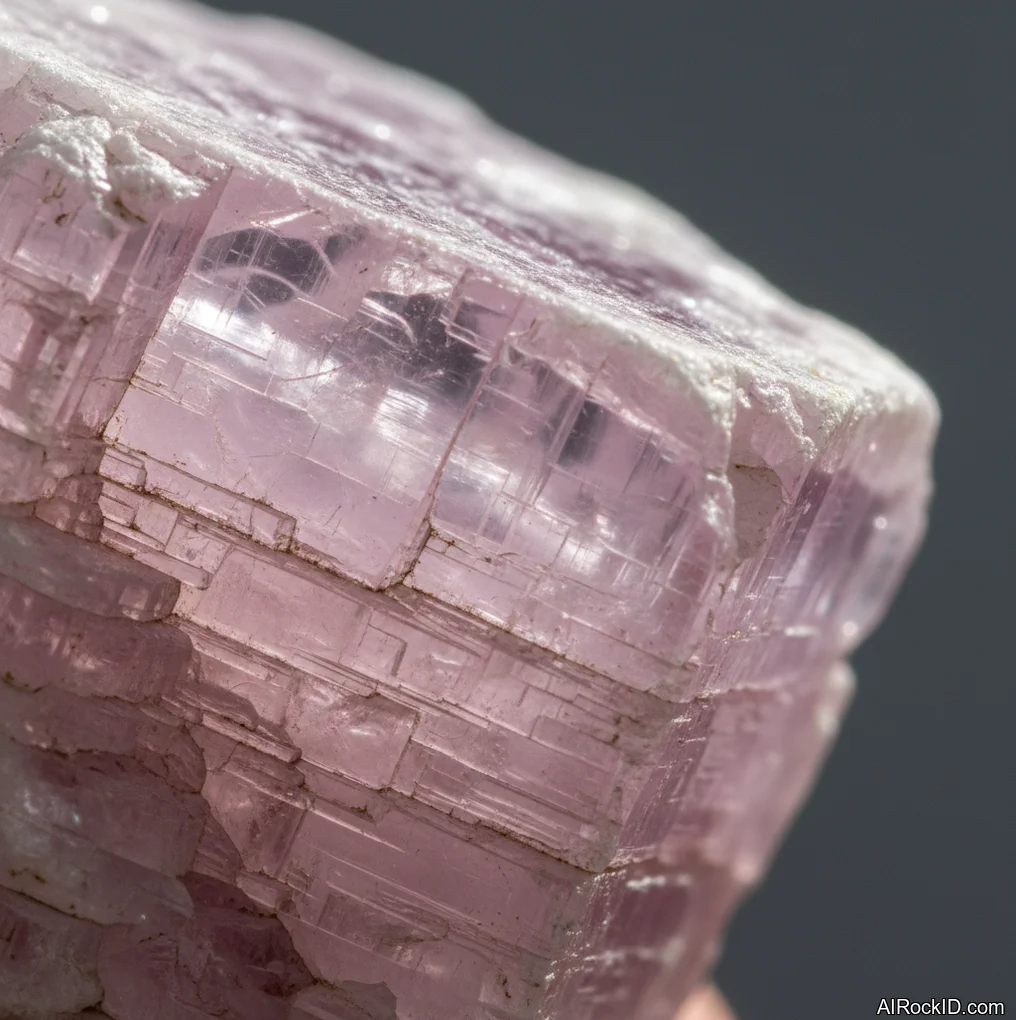
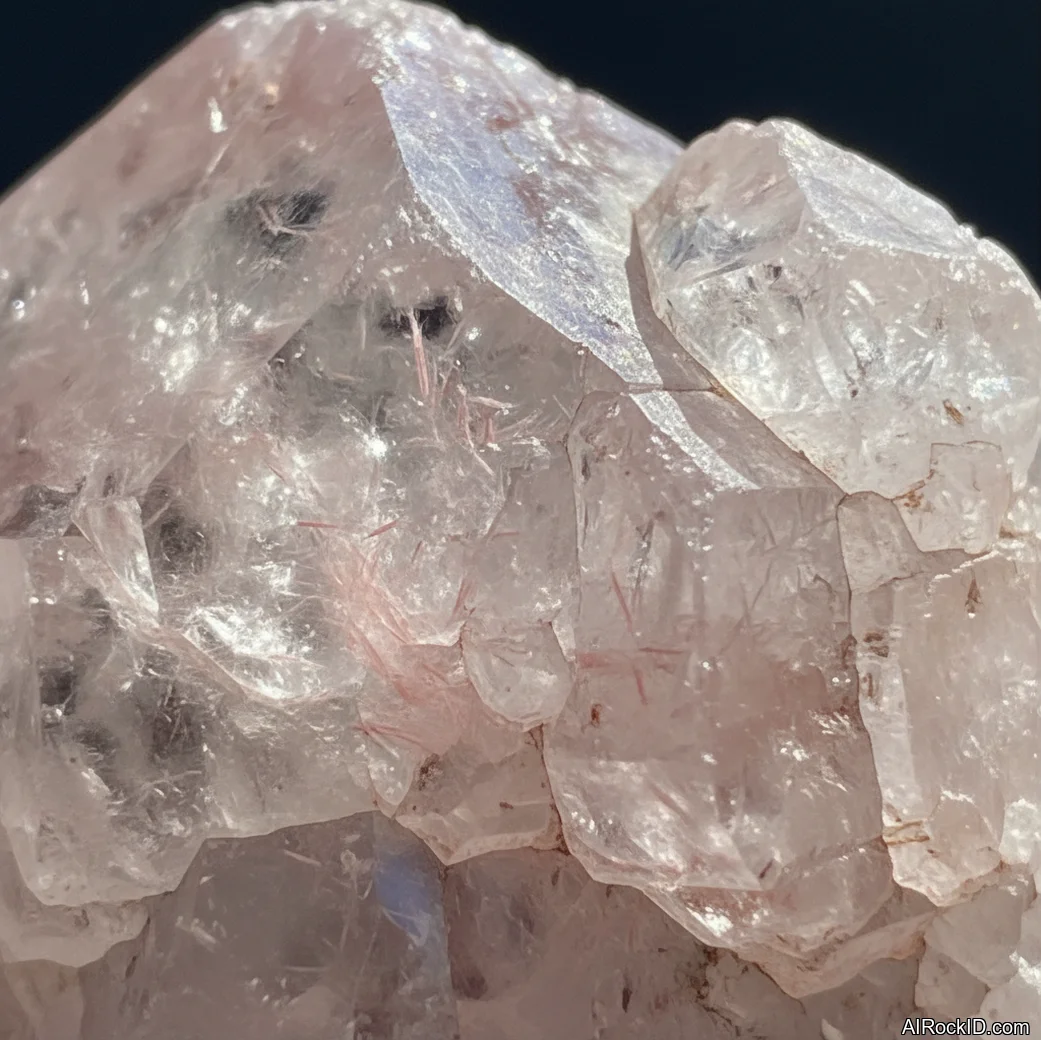
Pick up a chunk and, honestly, it feels like quartz right away. Cool in your palm. Slick, glassy faces. And when you tap two points together you get that clean little “ring” quartz always has. But the color? Not the same vibe as rose quartz at all. It tends to show up patchy or kind of smoky-pastel, like somebody dragged a barely-wet lilac watercolor brush through clear quartz and then stopped halfway. On a lot of pieces you’ll catch wispy internal clouds, plus tiny reflective flecks that flash like micro glitter when you tilt it under a counter light (that bright, harsh overhead lighting makes it jump).
Thing is, dealers toss the name around pretty loosely, and that’s where people get mixed up. Sometimes you’re looking at quartz with visible lepidolite plates included, plain as day. Other times it’s just pinkish quartz from a lithium-rich pegmatite and the “lithium” part is basically assumed. So if you’re buying it for a collection label, ask the seller what they mean by “Lithium Quartz,” and ask if the inclusions were actually identified or if it’s just a trade name based on color.
Origin & History
“Lithium quartz” isn’t some classic, old mineral species name you’ll find carved in stone in the textbooks. It’s really a trade and collector label that popped up because people were selling pegmatite quartz with visible lepidolite, tourmaline, or other lithium pegmatite buddies stuck inside the quartz (sometimes you can even catch those tiny, flaky mica plates glinting when you tilt the piece under a show light).
The word lithium itself comes from the Greek “lithos,” meaning stone, and the term got coined in the early 1800s when lithium was recognized as an element. But out in the field and at shows, the name mostly works as shorthand: quartz from lithium-rich pegmatites, often with that pink-lavender look and mica-like inclusions. Handy? Sure. Consistent? Not really. That’s why two pieces both labeled “lithium quartz” can look totally different sitting on the same table.
Where Is Lithium Quartz Found?
It’s most often sold from lithium-rich pegmatite districts, especially in Brazil. Similar quartz from pegmatites is also reported from parts of the USA and Russia, and alpine-style quartz can show up in Switzerland.
Formation
Raw chunks from pegmatites tell the story right away. Pegmatites are the late-stage, slow-cooling leftovers of granitic melts, and they’re packed with water plus oddball elements that don’t slot neatly into the early-forming minerals. Lithium is one of those “late” elements, so it ends up concentrated in these pockets along with fluorine, boron, and cesium.
Quartz grows into those cavities and fractures, and while it’s coming together it can trap whatever’s drifting through. That’s usually where the lithium link shows up: lepidolite flakes, lithium-rich fluids, and sometimes other pegmatite minerals caught as inclusions or as zoning inside the quartz. Look, if you get a loupe right up close, you can sometimes spot mica plates sitting there like tiny books, flat and stacked, with that silvery sheen when you tilt the stone in the light. But some pieces are just softly tinted with nothing obvious inside, which is why lab confirmation can matter if you’re being strict (and who hasn’t second-guessed a “clean” piece?).
How to Identify Lithium Quartz
Color: Usually pale pink, lavender, or pinkish-gray, often uneven or clouded rather than a solid block of color. Many pieces have internal wisps or mica-like sparkles rather than the milky, even look of common rose quartz.
Luster: Vitreous, like clean window glass on fresh faces.
Look closely: if you can spot tiny platy flashes inside, that’s often lepidolite or another mica and it supports the “lithium” label. Compared to rose quartz, the color in lithium quartz is often more lilac and more irregular, and the stone can be clearer in spots. The real test is hardness: it should scratch glass easily and it shouldn’t feel waxy or warm like some dyed or resin-filled fakes.
Properties of Lithium Quartz
Physical Properties
| Crystal System | Trigonal |
| Hardness (Mohs) | 7 (Hard (6-7.5)) |
| Density | 2.65 g/cm3 |
| Luster | Vitreous |
| Diaphaneity | Transparent to translucent |
| Fracture | Conchoidal |
| Streak | White |
| Magnetism | Non-magnetic |
| Colors | Pale pink, Lavender, Lilac, Pinkish-gray, Clear with pink-lavender zoning |
Chemical Properties
| Classification | Silicates |
| Formula | SiO2 |
| Elements | Si, O |
| Common Impurities | Al, Li, K, Fe, Mn |
Optical Properties
| Refractive Index | 1.544-1.553 |
| Birefringence | 0.009 |
| Pleochroism | None |
| Optical Character | Uniaxial |
Lithium Quartz Health & Safety
Handling it is safe, and if quartz gets splashed with plain water, that’s totally fine. The only real “watch out” is when you’re cutting or grinding it. That’s when you can kick up silica dust, and breathing that stuff is a lung hazard.
Safety Tips
If you’re going to shape it or polish it, keep things wet, make sure you’ve got decent airflow, and wear a proper respirator that’s actually rated for fine dust. Don’t wing it.
Lithium Quartz Value & Price
Price Range
Rough/Tumbled: $10 - $120 per piece
Cut/Polished: $5 - $40 per carat
Price usually comes down to clarity, color (a true lavender-pink beats that flat grayish tone every time), and whether the inclusions are both obvious and actually nice to look at. Clean, terminated crystals with sharp points, crisp edges, and those little included “scenes” you can spot the second you tilt the stone in the light will run higher than basic tumbled stones.
Durability
Durable — Scratch resistance: Excellent, Toughness: Good
It’s stable like other quartz, but it can chip on sharp edges and points if it rattles around in a pocket or drawer.
How to Care for Lithium Quartz
Use & Storage
Store it like you’d store any decent quartz point: separated so the tips don’t smack each other. If it’s a terminated crystal, I wrap the point in a bit of tissue before it goes in a box.
Cleaning
1) Rinse with lukewarm water to remove grit. 2) Use a soft toothbrush with a drop of mild dish soap to get into creases and surface pits. 3) Rinse well and air-dry; avoid blasting hot water onto a cold crystal.
Cleanse & Charge
If you do the metaphysical side, simple is fine: a quick rinse and a dry overnight rest on a shelf works. Skip harsh salt soaks if your piece has visible mica inclusions that could flake at edges.
Placement
On a desk or nightstand it reads best under angled light, because the internal mica flashes show up when you tilt it. Keep it out of a sunny window if the color is very delicate, since some pastel tones can look washed over time.
Caution
Don’t run the included specimens through an ultrasonic cleaner, and don’t just toss the points loose in a bag. Quartz is hard, sure, but the tips still chip if they knock around, and any scratch on a polished face will jump out the second you hit it with bright light.
Works Well With
Lithium Quartz Meaning & Healing Properties
At first glance, lithium quartz tends to get shoved into the calm-and-gentle section of people’s collections. The color looks soft, and the word “lithium” makes a lot of folks think of mellowing out. But in my hand, it reads more like clear quartz with the volume turned down. Same clean, glassy feel, same slick-polished face that catches a window beam, just not as “sparkly loud” as a bright amethyst cluster.
Most dealers pitch it for stress, sleep, and smoothing out rough emotional edges. I’m going to keep this on the ground: that’s spiritual and personal-use language, not medicine. Still, I get why people grab for it. The look alone can slow your brain a notch, especially the pieces with those cloudy lavender veils that kind of slide around when you rotate the stone under a lamp (you can see the haze shift from milky to almost clear at certain angles).
But here’s the catch. A lot of what’s sold as lithium quartz is really “pinkish quartz from a pegmatite” with no clear proof that lithium-bearing inclusions are what’s causing the color. So if you want the story to match the specimen, look for pieces where you can actually spot lepidolite plates, or find a seller who’s blunt about what they’ve got and what they don’t. When you do land a good one, it fits simple routines: hold it while you breathe for a minute, set it next to your bed, tuck it on your desk where you’ll keep bumping into it, or just use it as a little physical reminder to keep things uncomplicated.
Identify Any Crystal Instantly
Snap a photo and get properties, value, care instructions, and healing meanings in seconds.