Nguni Jasper


Quick answer: Nguni Jasper is usually sought for its earthy, animal-hide-like patterning and the durability typical of jasper. It can be a good choice for beads, cabochons, and display pieces, but locality claims should be checked because patterned jaspers from different regions can look similar.
AI Rock ID can help compare Nguni Jasper against visually similar jaspers by analyzing color, banding, opacity, and surface texture from a clear photo. RockIdentifier.io should be used as an identification aid, while seller documentation and gemological testing are more reliable for confirming origin or trade name claims.
Good fit
- Collectors who like brown, cream, black, tan, or reddish patterned stones
- Jewelry buyers who want a tough, opaque quartz material for everyday wear
- People comparing Southern African jasper varieties and trade names
- Cabochon and bead buyers who value natural-looking pattern variation
Not a good fit
- Buyers who need a transparent or faceted gemstone
- Anyone who requires a certified geographic origin without documentation
- Collectors seeking a single standardized pattern, since each piece can vary
- People looking for a soft, easily carved stone
Why people search for this
People often search for Nguni Jasper to verify whether a patterned jasper is natural, dyed, or simply sold under a regional trade name. Searches also commonly focus on distinguishing it from other brown and black jaspers with similar hide-like markings.
Most commonly confused with
- Polychrome Jasper: Often shows larger rounded color fields and broader scenic patches rather than compact hide-like spotting or banding.
- Picture Jasper: Typically has landscape-like tan and brown scenes, while Nguni Jasper is more often described by animal-hide-style patterning.
- Zebra Jasper: Usually has stronger black-and-white striping, while Nguni Jasper commonly includes warmer browns, creams, and tans.
- Mookaite Jasper: Commonly displays mustard, burgundy, cream, and purple tones from Australia, rather than the Southern African trade association.
Nguni Jasper vs. Similar Patterned Stones
| Stone | Typical Look | Key Difference |
|---|---|---|
| Nguni Jasper | Opaque brown, cream, tan, black, or reddish patterned jasper | Often sold for hide-like Southern African patterning |
| Picture Jasper | Tan and brown scenic or landscape-like patterns | Less associated with animal-hide markings |
| Polychrome Jasper | Large rounded patches in earthy colors | Patterns are usually broader and more painterly |
| Zebra Jasper | High-contrast black, white, or gray striping | Usually more linear and stark in contrast |
| Agate | Banded, sometimes translucent chalcedony | Translucency is more common than in jasper |
AI identification confidence
AI identification confidence for Nguni Jasper is usually moderate because many opaque patterned jaspers share similar colors and textures. A strong photo match can support a jasper identification, but it cannot reliably prove the exact trade name or Southern African origin by image alone.
When AI gets it wrong
- The photo is taken under warm indoor lighting that shifts cream, tan, and red tones.
- The stone is polished so highly that reflections hide the true pattern.
- Only a small bead or cropped area is shown, making the larger pattern hard to judge.
- Dyed or stabilized material has colors that mimic natural jasper patterns.
Final recommendation
Choose Nguni Jasper when the pattern, polish quality, and seller transparency matter more than a formally verified locality. For higher-priced pieces, ask for source information, treatment disclosure, and clear photos in neutral light.
How to Check Nguni Jasper Authenticity
Authentic Nguni Jasper should generally appear opaque, with natural-looking pattern transitions rather than surface-only color. Ask sellers whether the material is dyed, stabilized, or treated, especially for beads with unusually saturated colors. A loupe can help reveal dye concentration in cracks, drill holes, or porous areas.
Buying Nguni Jasper Online
Clear photos taken in daylight or neutral lighting are more useful than heavily edited images. Look for listings that show multiple angles, close-ups, and the actual stone being sold rather than a representative sample. If origin matters, request a locality statement or documentation instead of relying only on the trade name.
Natural Variation in Nguni Jasper
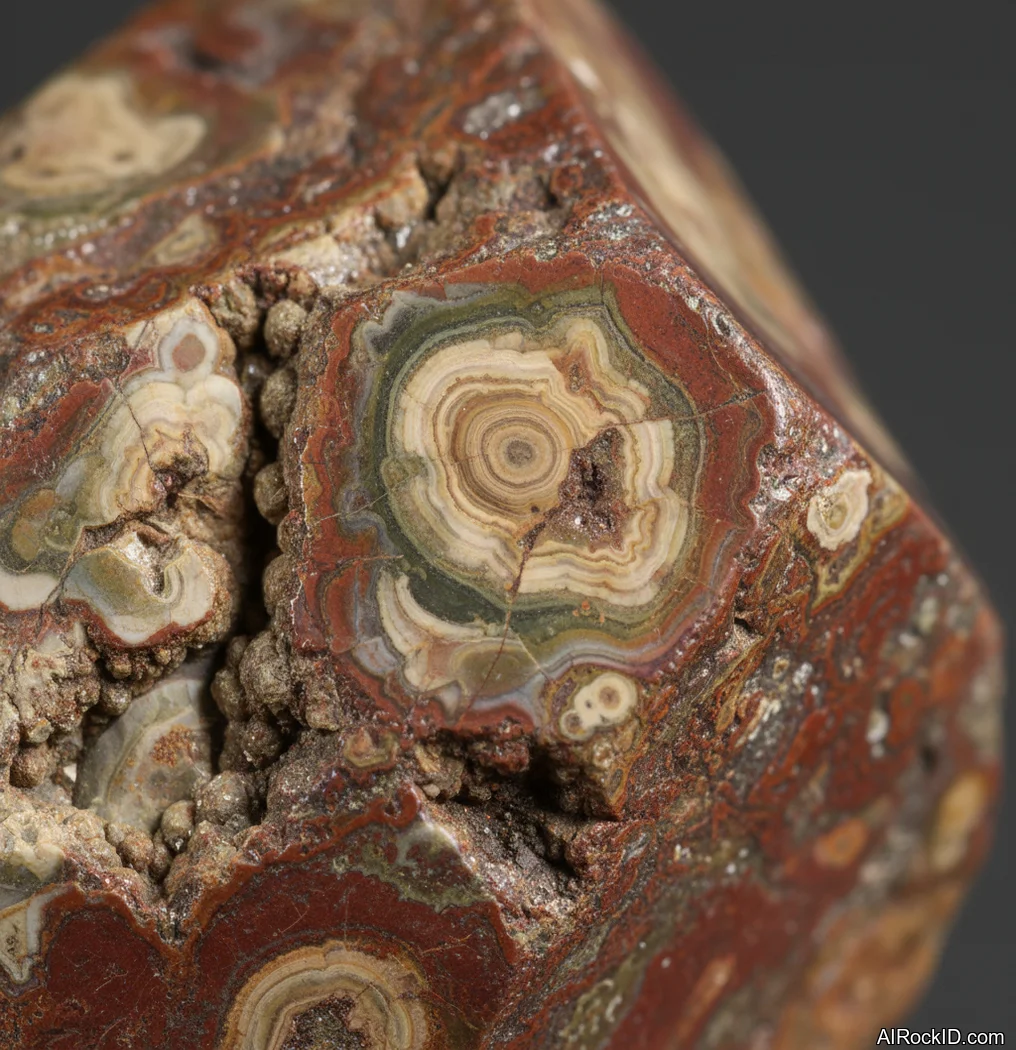
Nguni Jasper can vary from subtle brown-and-cream markings to higher-contrast black, tan, red, or gray patterning. Pattern density may differ within the same piece, so matching beads or cabochons can be difficult. This variation is normal for jasper and does not automatically indicate poor quality or treatment.
What Is Nguni Jasper?
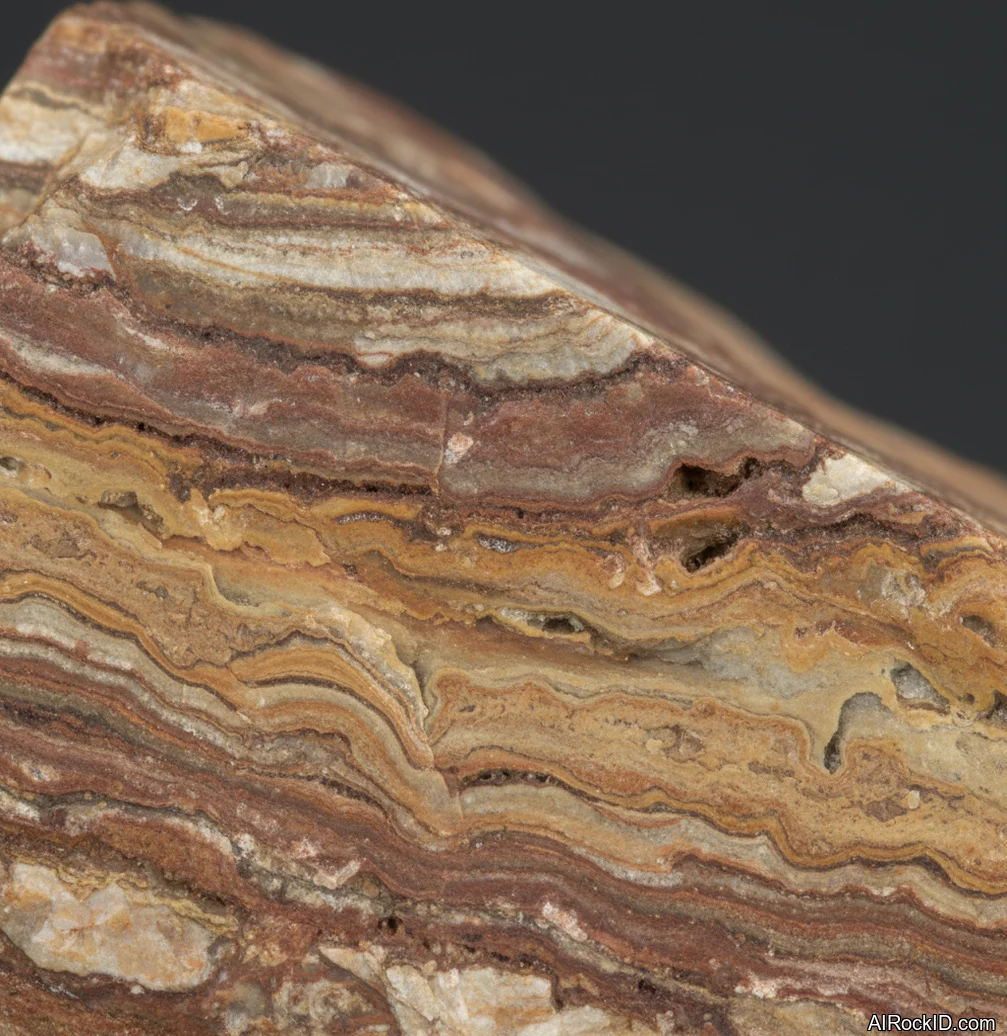
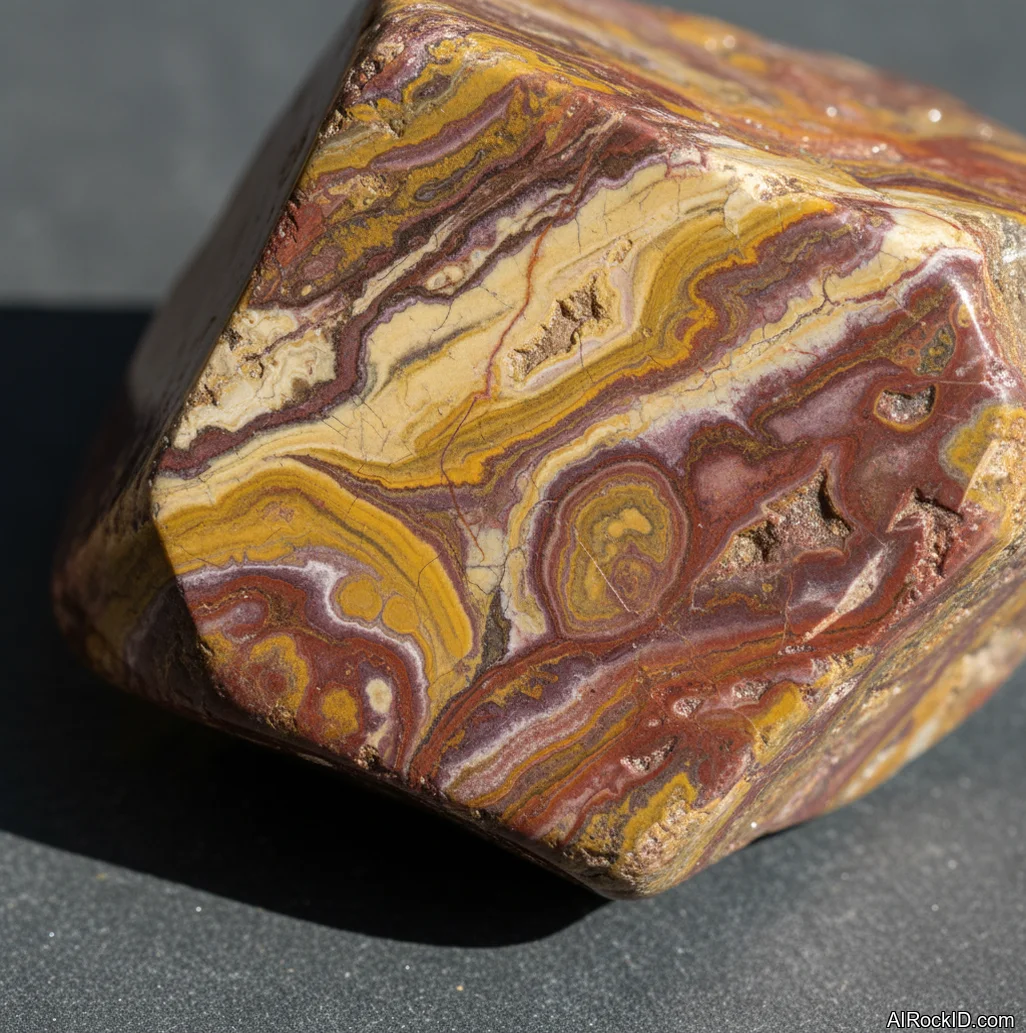
Nguni Jasper is a patterned, opaque type of jasper (microcrystalline quartz), and it gets its name because the markings look like Nguni cattle hide. Most pieces you run into are polished, since that’s when the design really jumps out. Cream and tan, chocolate brown, black. Swirls and bands that honestly read like a little topographic map in your hand.
Pick up a palm stone and the first thing you clock is the heft. It feels heavy for its size and cool right away, and the surface is usually slick from the polish but not that glassy, hard slick you get with obsidian. Look, if you tilt it and really stare, you’ll notice tiny specks and cloudy patches where the silica gel wasn’t perfectly clean when it set. Normal for jasper. Kinda the point, actually.
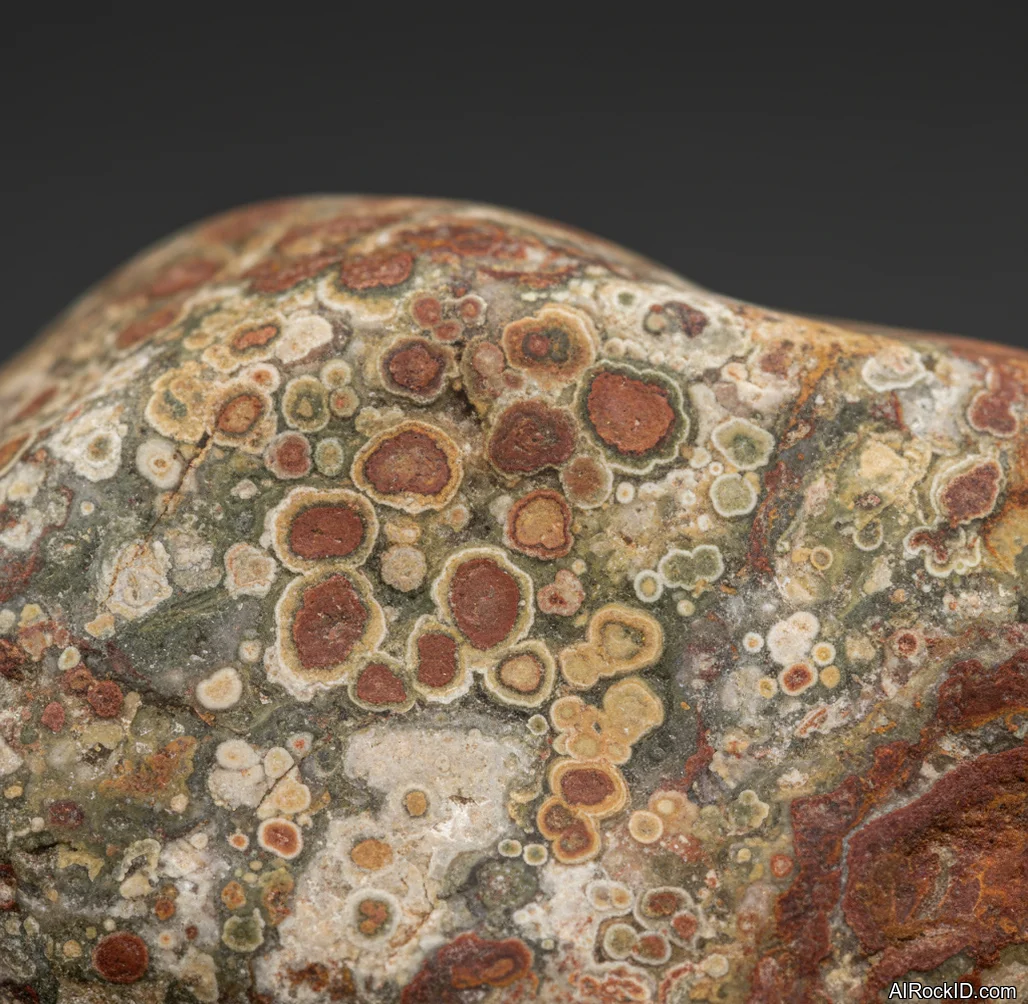
People mix it up with leopard skin jasper at a glance, and I’ve even seen it mistaken for some banded rhyolites. But Nguni tends to flow like a hide pattern, not those neat round spots. And under a bright shop light? No sparkle, no chatoyance. Just that steady, waxy glow across the surface.
Origin & History
“Nguni Jasper” is basically a trade label that spread through Southern African lapidary and bead markets. The “Nguni” part is borrowed from Nguni cattle, the ones with those wild, patchy coats that look like someone brushed on bands of color.
Thing is, it’s not an officially defined mineral species. So you won’t find one original scientific paper where somebody formally “named” it the way a brand-new mineral gets named.
Most sellers use the name for jasper, or jasper-chalcedony, that has those cattle-hide style bands. It usually comes out of South Africa and nearby regions. And from what I’ve seen at shows, the tag started popping up a lot more in the 2000s and 2010s, right when more African jaspers started showing up on the international circuit in steady, polished lots (you know, the kind that arrive already sorted and consistent).
Where Is Nguni Jasper Found?
Market material is commonly attributed to Southern Africa, especially South Africa and nearby countries, and it’s usually sold as tumbled stones, cabochon rough, and beads.
Formation
Jasper shows up when silica-rich fluids work their way through sediments or volcanic rock, then lock in place as microcrystalline quartz. I always picture it like silica gel that finally went hard, except it grabbed whatever was floating around in there, especially iron oxides and other tiny mineral grains that end up tinting it brown, red, or black.
And with Nguni Jasper, the banding is the whole point. Those flowing “hide” patterns come from little shifts in chemistry and grain content while the silica was laying down, sometimes getting nudged along by fractures, bedding planes, or repeated pulses of fluid. If you’ve handled a cut slab, you know the look: one band narrows to almost nothing, and a few millimeters over another one swells up like it got extra material. Random? Not really. Just geology doing its messy thing.
How to Identify Nguni Jasper
Color: Usually cream to tan with brown and black banding, often in irregular, flowing stripes that look like animal hide. Some pieces lean more golden, others more gray-brown depending on iron content.
Luster: Waxy to vitreous when polished, dull to waxy when rough.
If you scratch it with a steel nail, the nail won’t bite, but the jasper can scuff the metal. The real test is a glass plate: jasper at quartz hardness will scratch glass cleanly. And in hand, genuine jasper stays cool longer than resin fakes, which tend to warm up fast and feel a little too “plastic slick.”
Common Look-Alikes
Nguni Jasper is sometimes confused with these materials:
- Polychrome Jasper
- Picture Jasper
- Dalmatian Stone (dyed or natural)
- Leopard Skin Jasper
- Painted Glass (faux jasper)
- Dyed Agate
Market Cautions & Treatments
When AI Can Get This Wrong
AI photo ID stumbles most with Polychrome Jasper and some wild Picture Jasper. Both can show similar color bands, but Nguni’s markings are bolder and higher contrast, almost like cowhide. In hand, the heft and the coolness set it apart—photos can’t show that, but a scratch test (it’ll scratch glass) or a close look for dye in cracks will help confirm.
Properties of Nguni Jasper
Physical Properties
| Crystal System | Trigonal |
| Hardness (Mohs) | 6.5-7 (Hard (6-7.5)) |
| Density | 2.58-2.64 |
| Luster | Waxy |
| Diaphaneity | Opaque |
| Fracture | Conchoidal |
| Streak | White |
| Magnetism | Non-magnetic |
| Colors | Cream, Tan, Brown, Black, Gray, Reddish-brown |
Chemical Properties
| Classification | Silicates |
| Formula | SiO2 |
| Elements | Si, O |
| Common Impurities | Fe, Mn, Al, Ca |
Optical Properties
| Refractive Index | 1.530-1.540 |
| Birefringence | None |
| Pleochroism | None |
| Optical Character | Uniaxial |
Nguni Jasper Health & Safety
Nguni Jasper is safe to handle and non-toxic. But if you’re cutting or grinding it, watch out for the dust. It’s a quartz-rich stone, and that fine powder can be a real lung hazard.
Safety Tips
So, either wet-cut it, or make sure you’ve got solid ventilation and a proper respirator on when you’re grinding. And when you’re done, wipe that slurry off your tools while it’s still wet, because if you let it dry, it turns into dust.
Nguni Jasper Value & Price
Price Range
Rough/Tumbled: $5 - $30 per palm stone or tumble
Cut/Polished: $1 - $6 per carat
Price mostly follows how sharp the pattern looks and how much contrast you get, and then size comes in after that. Clean slabs with crisp, high-contrast markings, no pits, and no undercut spots usually cost more because when you put them on the saw and start cutting, they turn into nicer cabs with way less fuss.
Durability
Very Durable — Scratch resistance: Excellent, Toughness: Good
It’s stable in normal indoor conditions and doesn’t mind handling, but a hard drop can still chip a sharp edge.
How to Care for Nguni Jasper
Use & Storage
Store it in a soft pouch if it’s polished, mainly to keep it from picking up scratches from harder grit or other quartz pieces. If it’s a slab or cab, keep paper between pieces so they don’t rub.
Cleaning
1) Rinse with lukewarm water and a drop of mild soap. 2) Use a soft brush for crevices or drill holes in beads. 3) Rinse well and pat dry with a microfiber cloth.
Cleanse & Charge
A quick rinse and a wipe is plenty for physical cleaning; for ritual-style cleansing, smoke, sound, or leaving it on a shelf overnight works fine. Avoid saltwater if the stone has fractures that can trap residue.
Placement
On a desk it holds up to daily handling and doesn’t look beat up fast. I like it near a window for light, but not in direct sun if you’re worried about the polish looking tired over years.
Caution
Don’t breathe in the dust when you cut or sand it. That fine quartz dust is the real danger, not the chunk in your hand. And don’t just drop it loose in your pocket with your keys either, unless you’re okay with it coming out scuffed up and dull instead of shiny.
Works Well With
Nguni Jasper Meaning & Healing Properties
Most people grab Nguni Jasper when they want something steady and earthy that doesn’t feel floaty. It’s got real weight in your hand. The colors read like soil, bark, and shadow, and under a lamp you can catch the bands shifting as you tilt it. If you’re a fidgeter, a polished Nguni palm stone is perfect for thumb-rubbing because it’s smooth, but you can still feel those tiny little changes right where two bands meet (almost like a seam you keep coming back to).
I’m not tossing it in the medical box. But for daily carry, it’s the kind of stone that quietly pushes you toward routine: drink water, finish the email, wipe down the kitchen counter, go to bed. The pattern helps, too. When I’m sorting a new batch for cabs, I’ll catch myself locking onto one stripe, then another, and my brain just… slows down for a minute.
But here’s the honest limitation. A lot of Nguni Jasper on the market is dyed or re-labeled material from other jaspers, especially when the pattern looks muddy and the color is weirdly uniform. If the blacks look like ink and the tan looks like it came straight off a paint chip, be skeptical. Real pieces usually have softer transitions, plus a few “dirty” zones where the silica grabbed extra mineral grains.
Common mistakes
- Assuming every brown patterned jasper is Nguni Jasper without checking source or seller details
- Treating a trade name as proof of exact geographic origin
- Judging color from a single warm-lit or filtered product photo
- Confusing opaque jasper with translucent agate because both are chalcedony varieties
- Overpaying for ordinary patterned jasper when no origin or treatment information is provided
Identify Nguni Jasper from a photo
Compare Nguni Jasper traits, care tips, value clues, and common lookalikes with a clear photo.