Orange Selenite


Quick answer: Orange selenite is a soft, orange-tinted variety of gypsum often sold as wands, towers, hearts, and rough plates. Its color is commonly associated with iron oxide inclusions or surface staining, and it should be kept dry because gypsum can dissolve or dull with water exposure.
AI Rock ID can help compare orange selenite against visually similar orange, peach, or clear crystals using a photo-based identification workflow. RockIdentifier.io provides crystal reference information that can support, but not replace, basic hands-on checks such as hardness, luster, and water sensitivity.
Good fit
- Collectors who want an affordable orange gypsum specimen
- Beginners learning to distinguish soft evaporite minerals from harder quartz or calcite
- Decorative displays kept away from water, humidity, and frequent handling
- Buyers comparing common carved forms such as towers, hearts, bowls, or palm stones
Not a good fit
- Jewelry that will be worn daily or exposed to sweat and bumps
- Aquariums, fountains, terrariums, or any wet display
- Scratch-resistant pocket stones carried with keys or harder minerals
- Collectors seeking a rare mineral species rather than a common gypsum variety
Most commonly confused with
- Satin Spar: Many items sold as selenite are actually fibrous satin spar gypsum; orange pieces often show a silky, fiber-optic sheen.
- Orange Calcite: Orange calcite is harder than gypsum and reacts readily with acid, while orange selenite is softer and usually shows a pearly to silky luster.
- Carnelian: Carnelian is a much harder quartz-family stone with a waxy luster and better durability.
- Peach Moonstone: Peach moonstone is feldspar and is harder, often showing adularescence rather than the fibrous glow of satin spar gypsum.
Orange Selenite vs Similar Orange Crystals
| Material | Typical hardness | Key difference | Water caution |
|---|---|---|---|
| Orange selenite / satin spar gypsum | 2 | Very soft; can be scratched by a fingernail | Keep dry |
| Orange calcite | 3 | Often shows calcite cleavage and may fizz with acid | Avoid soaking |
| Carnelian | 6.5–7 | Hard, waxy chalcedony; does not scratch easily | Generally more water-tolerant |
| Peach moonstone | 6–6.5 | Feldspar with possible soft glow or flash | Avoid harsh chemicals |
| Honey calcite | 3 | Golden calcite with distinct cleavage planes | Avoid soaking |
AI identification confidence
Photo-based identification of orange selenite is usually moderate when the image clearly shows fibrous texture, soft luster, and common carved gypsum forms. Confidence drops when the specimen is polished, dyed, overexposed, or photographed without a scale or close-up texture.
When AI gets it wrong
- A polished orange calcite palm stone may be mistaken for orange selenite if cleavage and hardness are not visible.
- Dyed gypsum or dyed satin spar can look more saturated than naturally tinted material.
- Carnelian may be misidentified if the photo hides its harder, waxy chalcedony texture.
- Warm lighting can make white satin spar appear orange or peach in photos.
Final recommendation
Choose orange selenite when you want an inexpensive display crystal with a soft orange color and a silky gypsum texture. For jewelry, pockets, or frequent handling, a harder orange stone such as carnelian is usually more practical.
How to Check Orange Selenite Authenticity
A simple authenticity check is to look for gypsum traits: very low hardness, a pearly to silky luster, and a tendency to show fine parallel fibers in satin spar forms. A fingernail can scratch gypsum, but scratch testing should be done only on an inconspicuous area because it can permanently mark the piece. Extremely bright orange color, color concentrated in cracks, or dye rubbing onto a damp cloth can indicate artificial coloring.
Buying Tips for Orange Selenite
Before buying, inspect the piece for chips, flaking edges, glue repairs, and powdery surfaces, all of which are common in soft gypsum. Ask whether the item is natural color, dyed, or coated, especially for vivid orange towers, bowls, and charging plates. For online purchases, request photos in neutral daylight because warm lighting can make pale gypsum look more orange.
Natural Color vs Dyed Orange Selenite
Natural orange tones in gypsum are often pale peach, rusty orange, or uneven due to iron-rich inclusions or staining. Dyed pieces may show stronger, more uniform color, especially along cracks, bases, or carved grooves. Dyed material is still gypsum, but disclosure matters for collectors and for buyers comparing price and appearance.
What Is Orange Selenite?
Orange selenite is a variety of gypsum (CaSO4·2H2O), and it gets that warm orange to honey color from iron-stained layers or little inclusions. In your hand, it’s basically the same family as those white selenite wands everybody’s seen, just with that sunset tint that makes the chatoyancy jump a bit more when you hold it under a lamp.
Grab a chunky piece and the first thing you notice is how weirdly light it feels for its size. And it stays cool to the touch, even after it’s been sitting in a warm room. Drag a fingernail along a natural face and there’s this soft, slightly waxy resistance. Not gritty. More like a gentle tug. If it’s satin spar material, you’ll see that “cat’s eye” stripe glide across the surface when you tilt it. It looks amazing in photos, but man, it also shows every little ding. One bump on a countertop and you’ll spot it right away.
But here’s the reality check: a lot of what’s sold as “orange selenite” is actually satin spar gypsum. Shops use selenite like a catch-all label. True selenite is the clearer, more glassy, platey stuff, while satin spar is fibrous and silky. Both are gypsum, both are soft, and both hate water. (Seriously, don’t get it wet.)
Origin & History
People have known about gypsum since way back in antiquity. But the word “selenite” is from the Greek *selēnē*, meaning moon, which makes sense once you’ve tilted a piece and seen that soft, milky glow flashing off the cleavage faces.
Gypsum as a mineral species got formally described in the early modern era, then later standardized when mineralogy got its paperwork in order. Thing is, none of that stopped people from using gypsum plaster thousands of years earlier, long before anyone cared about a proper species description.
“Orange selenite” isn’t an official mineral name. It’s a trade name dealers use. The orange color usually comes from iron oxides or clay staining in the same evaporite beds that also kick out the white material (you’ll sometimes even see the color sitting in thin, dusty-looking bands). So once the décor and metaphysical market got bigger, sellers leaned hard into color names, and now “orange selenite” is basically a standard bin label at shows.
Where Is Orange Selenite Found?
Orange gypsum sold as orange selenite is most often from evaporite deposits in Morocco and Mexico, with additional material from the USA and Mediterranean evaporite basins.
Formation
Most orange selenite forms the exact same way the white stuff does: salty water dries up and leaves sulfate minerals behind. Picture a shallow marine basin, a salt flat, or one of those closed desert lakes where the water comes and goes and the chemistry keeps getting stronger each cycle. Gypsum drops out early, then later fluids can tint it orange when iron oxides creep through tiny cracks and along the layers.
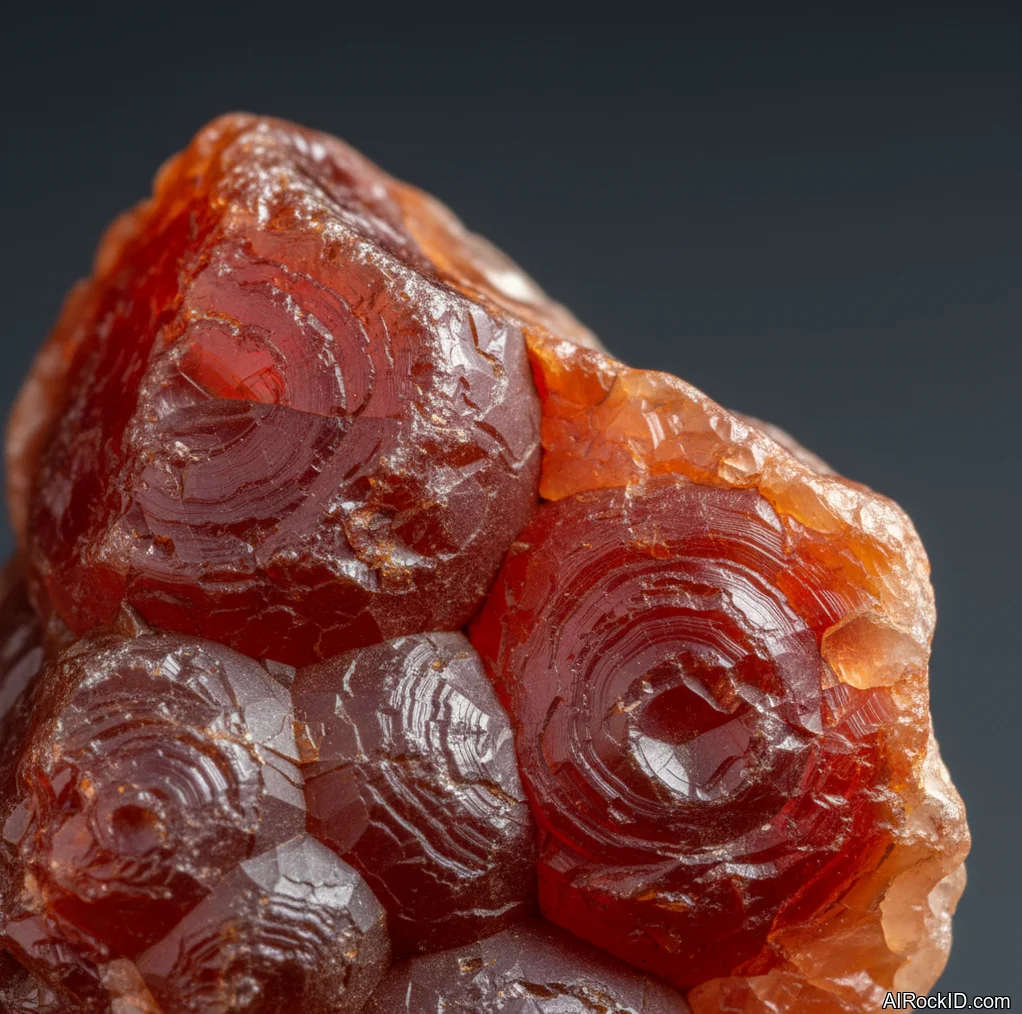
Look at a raw chunk up close and you can usually read the whole process in the bands. You’ll see a pale cream stripe, then a rusty orange seam, then clear-ish gypsum again (sometimes it’s so glassy it almost looks wet when you tilt it). That’s usually not “heat treatment” or anything dramatic. It’s just the growth conditions shifting over time, plus a bit of iron tagging along. How else would those sharp color breaks show up?
How to Identify Orange Selenite
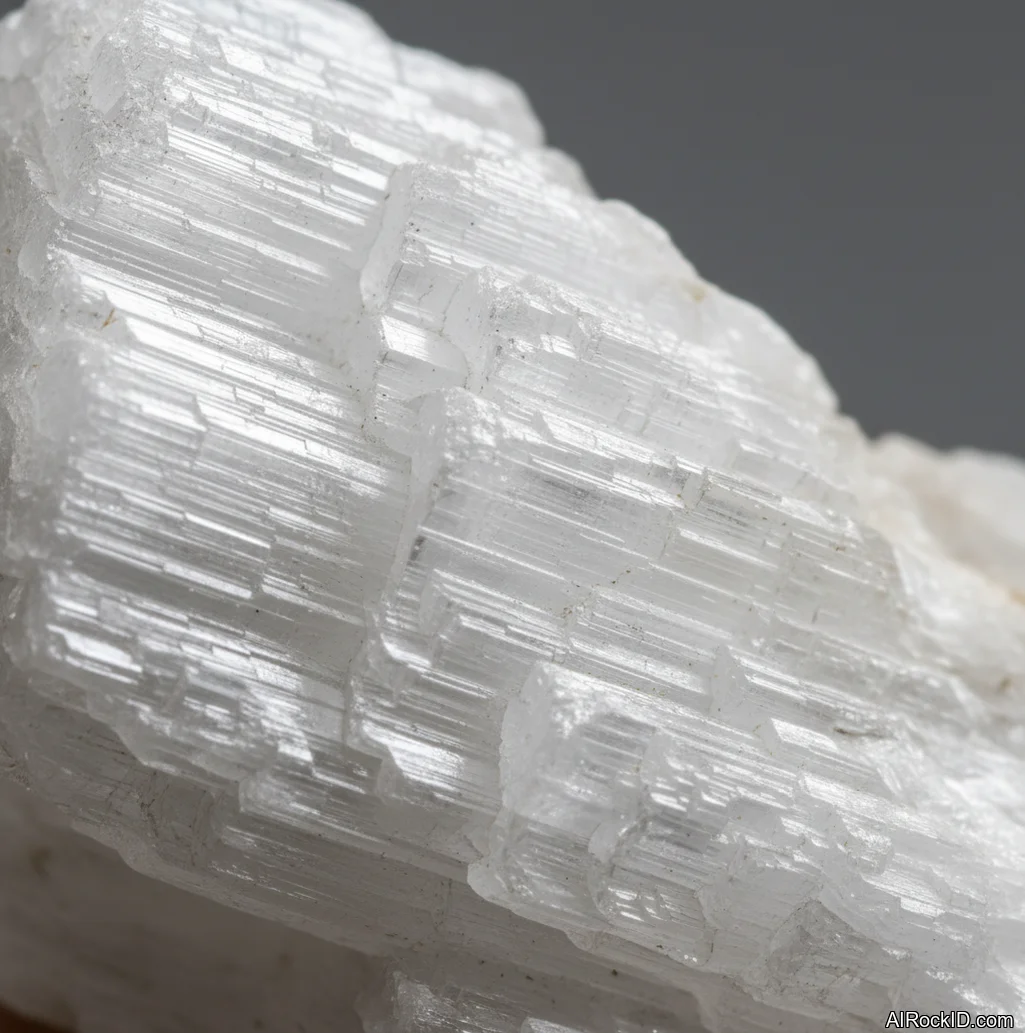
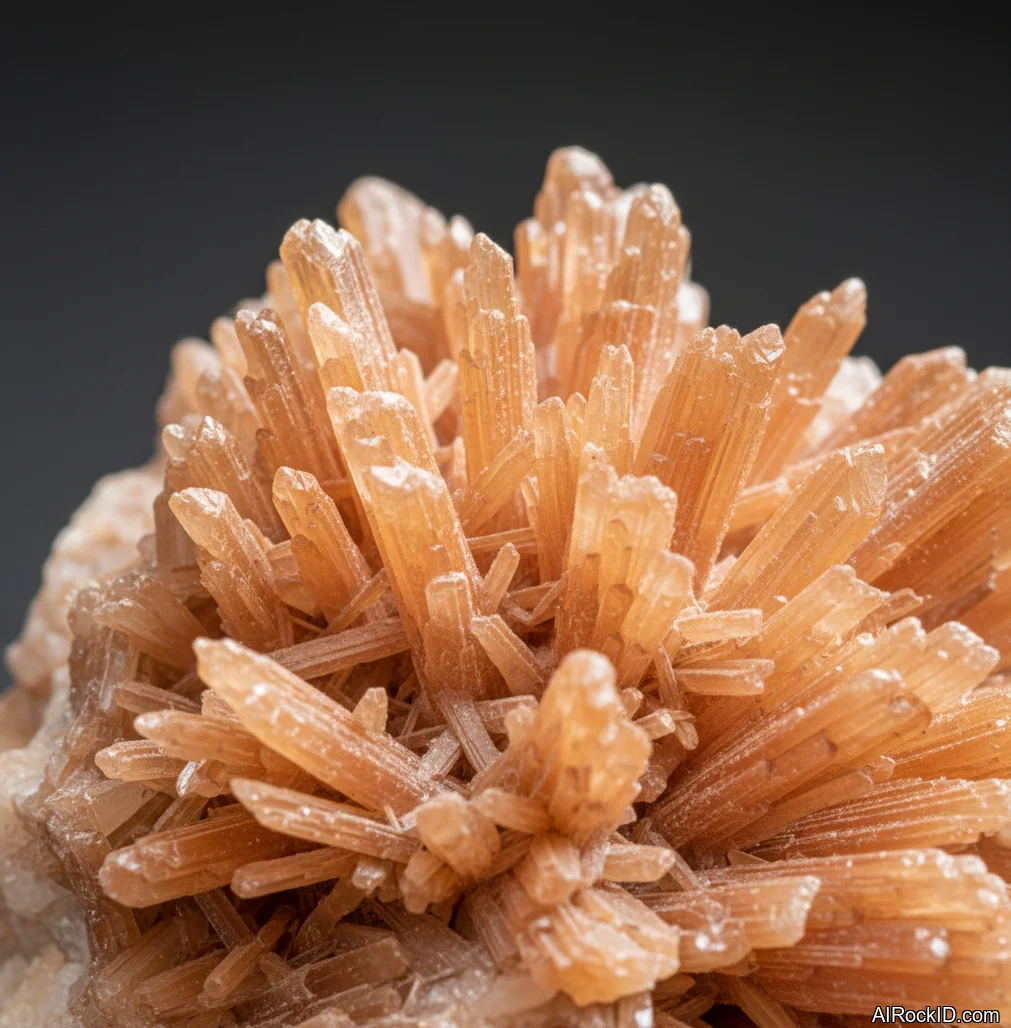
Color: Orange selenite ranges from pale apricot and honey to deeper caramel-orange, often as bands or clouds rather than a perfectly even color. The color usually sits along layers, fractures, or outer surfaces where staining happened.
Luster: Luster is silky on satin spar and vitreous to pearly on clearer, platey selenite.
If you scratch it with a fingernail, it’ll mark easily because gypsum is Mohs 2. The real test is cleavage: snap-prone, very flat faces that flash when you rotate them, and satin spar shows those parallel fibers like a bundle of hair frozen in stone. Cheap versions in orange glass feel warmer and won’t scratch with a nail, and they also won’t show that soft, fibrous shimmer.
Common Look-Alikes
Orange Selenite is sometimes confused with these materials:
- Honey calcite (often sold as “orange calcite” and mixed up with orange selenite in bowls and towers)
- Orange aragonite (banded or fibrous pieces, sometimes mislabeled as orange selenite because the color overlaps)
- Orange satin spar gypsum (same mineral family, but the silky fiber look gets lumped in with “selenite” listings)
- Dyed white selenite/gypsum (color added to plain material, especially on carved hearts, palm stones, and small chunks)
- Orange glass or resin “selenite” (cast shapes with fake internal shimmer, common in cheap online lots)
Market Cautions & Treatments
When AI Can Get This Wrong
At first glance, photos of orange selenite get misread as honey calcite or orange aragonite because all three can look like warm, waxy chunks under indoor light. The real test is touch and softness: orange selenite feels cool and almost chalky-slick, and a fingernail will leave a mark, while calcite and aragonite won’t dent that easily. If the picture shows perfectly even orange color with no natural zoning, AI tends to call it “citrine” or “orange calcite”, so ask for a close-up of cleavage faces and any scratches.
Properties of Orange Selenite
Physical Properties
| Crystal System | Monoclinic |
| Hardness (Mohs) | 2 (Very Soft (1-2)) |
| Density | 2.30-2.33 g/cm3 |
| Luster | Pearly |
| Diaphaneity | Transparent to translucent |
| Fracture | Uneven |
| Streak | White |
| Magnetism | Non-magnetic |
| Colors | orange, honey, apricot, cream, white, tan |
Chemical Properties
| Classification | Sulfates |
| Formula | CaSO4·2H2O |
| Elements | Ca, S, O, H |
| Common Impurities | Fe, Al, Si, Cl |
Optical Properties
| Refractive Index | 1.519-1.523 |
| Birefringence | 0.004 |
| Pleochroism | None |
| Optical Character | Biaxial |
Orange Selenite Health & Safety
Orange selenite is fine to pick up and hold, but don’t breathe in any dust if you sand it or snap a piece off (that powder gets everywhere). It also doesn’t like water. If you leave it soaking for a while, the surface can get damaged.
Safety Tips
If you’ve got to cut it or sand it, do it somewhere with good airflow. Put on a dust mask too. That fine powder gets everywhere. When you’re done, wipe things down with a damp cloth (it grabs the dust way better than a dry rag). And keep the piece away from sinks, aquariums, or that humid windowsill that always beads up with condensation.
Orange Selenite Value & Price
Price Range
Rough/Tumbled: $5 - $60 per piece
Price mostly comes down to size, how strong that orange color is, and if the surface looks clean and properly finished. Bigger, lamp-grade chunks and well-shaped towers run higher, but the material itself is still pretty common.
Durability
Fragile — Scratch resistance: Poor, Toughness: Poor
Gypsum is very soft and can bruise, cleave, or dissolve at the surface if it’s handled roughly or exposed to water for long.
How to Care for Orange Selenite
Use & Storage
Store it like you’d store a soft chalky mineral: separate pouch or a box compartment so it doesn’t get scratched up. And don’t stack pieces, because the edges will bite into each other over time.
Cleaning
1) Dust with a dry microfiber cloth or a soft makeup brush. 2) For grime, wipe lightly with a barely damp cloth and dry right away. 3) Skip soaking, sprays, salt water, and ultrasonic cleaners.
Cleanse & Charge
For non-water cleansing, use smoke, sound, or setting it on a dry plate for a while. If you leave it in sun, keep it brief because surface dryness and micro-scratches show faster over time.
Placement
Put it somewhere it won’t get bumped, like a shelf away from the edge. Satin spar looks best under a single light source so the silky banding actually shows.
Caution
Don’t soak orange selenite, and don’t leave it sitting in a steamy bathroom either. Thing is, moisture gets into it fast. When you’re moving a tower, grab it by the base, not the tip. The pointy end chips easier. And if it ever takes a fall, check it right after for cleavage splits. They can show up as a fresh hairline you can feel with a fingernail (even if it looked fine at first).
Works Well With
Orange Selenite Meaning & Healing Properties
Orange selenite, at a glance, is basically “selenite, but warmer,” and honestly that’s how most people treat it. I’ve got a piece in my own stash that lives on my desk because it’s a total light-chameleon. Morning sun turns it into this pale honey color. But at night, under a warm bulb, the orange bands look tighter and the silky sheen gets almost obnoxious.
On the metaphysical side, people usually link selenite with clarity and that clean, bright feeling. And the orange tint tends to get lumped in with motivation, mood, plus a calmer vibe that feels more grounded. But here’s the thing that actually matters: none of that is medical care. If you like the little ritual of picking it up, taking a breath, and using it as a reset button before you dive back into work, that’s a real, felt habit even if what’s really doing the heavy lifting is attention and routine.
The big issue with orange selenite is people expect it to act like quartz. It won’t. It scratches if you so much as side-eye it, and it can flake along the cleavage planes. So if your thing is carrying a stone in your pocket all day, this one’s going to look cloudy and beat up pretty fast. I’ve got a satin spar wand that started out glassy, and now it has these little thumb-worn matte patches (you can see exactly where my hand sits) from being handled during long phone calls.
Common mistakes
- Assuming every orange piece labeled selenite is transparent bladed selenite; many retail pieces are fibrous satin spar gypsum.
- Placing orange selenite in water to cleanse it, which can dull, pit, or weaken the surface.
- Using orange selenite in rings or bracelets without considering its very low hardness.
- Judging color from warm indoor photos without asking for daylight images.
- Confusing dyed orange gypsum with naturally iron-stained material.
Identify Orange Selenite from a photo
Compare Orange Selenite traits, care tips, value clues, and common lookalikes with a clear photo.