Pink Amethyst
What Is Pink Amethyst?
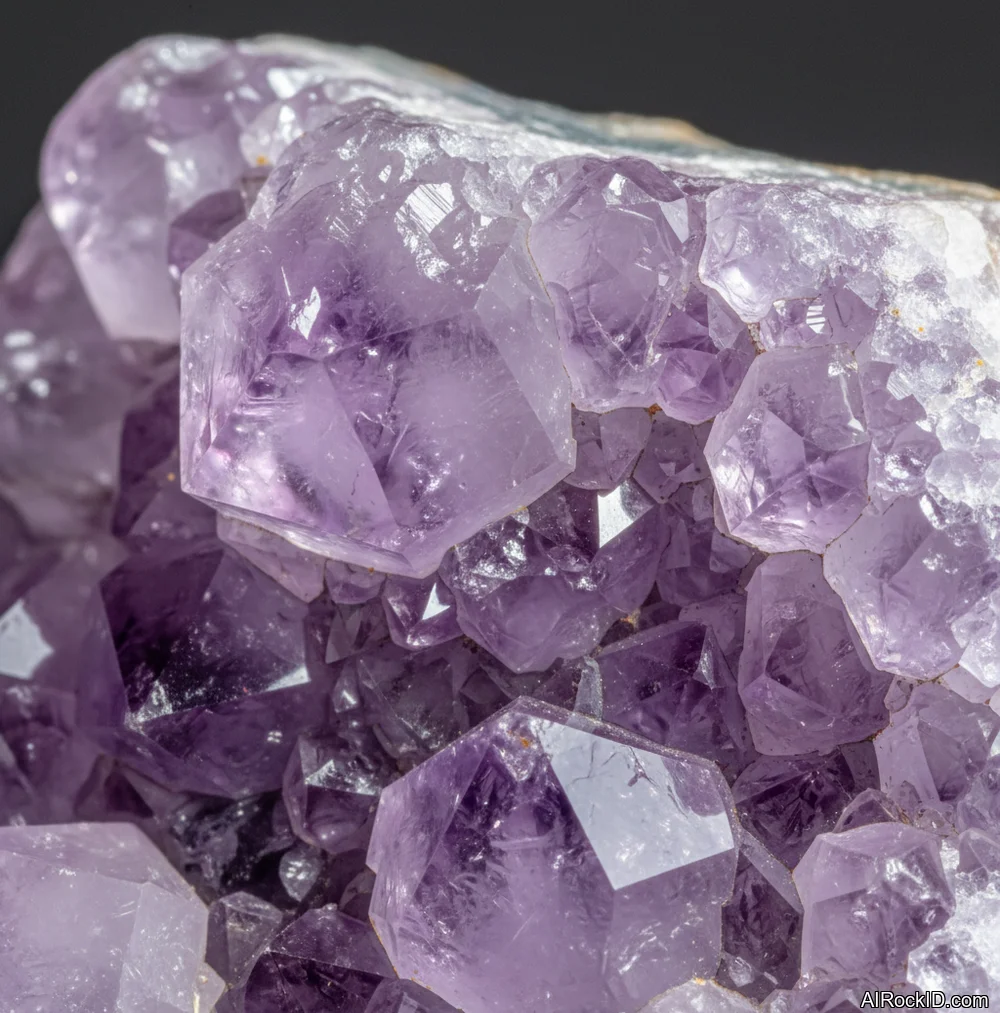
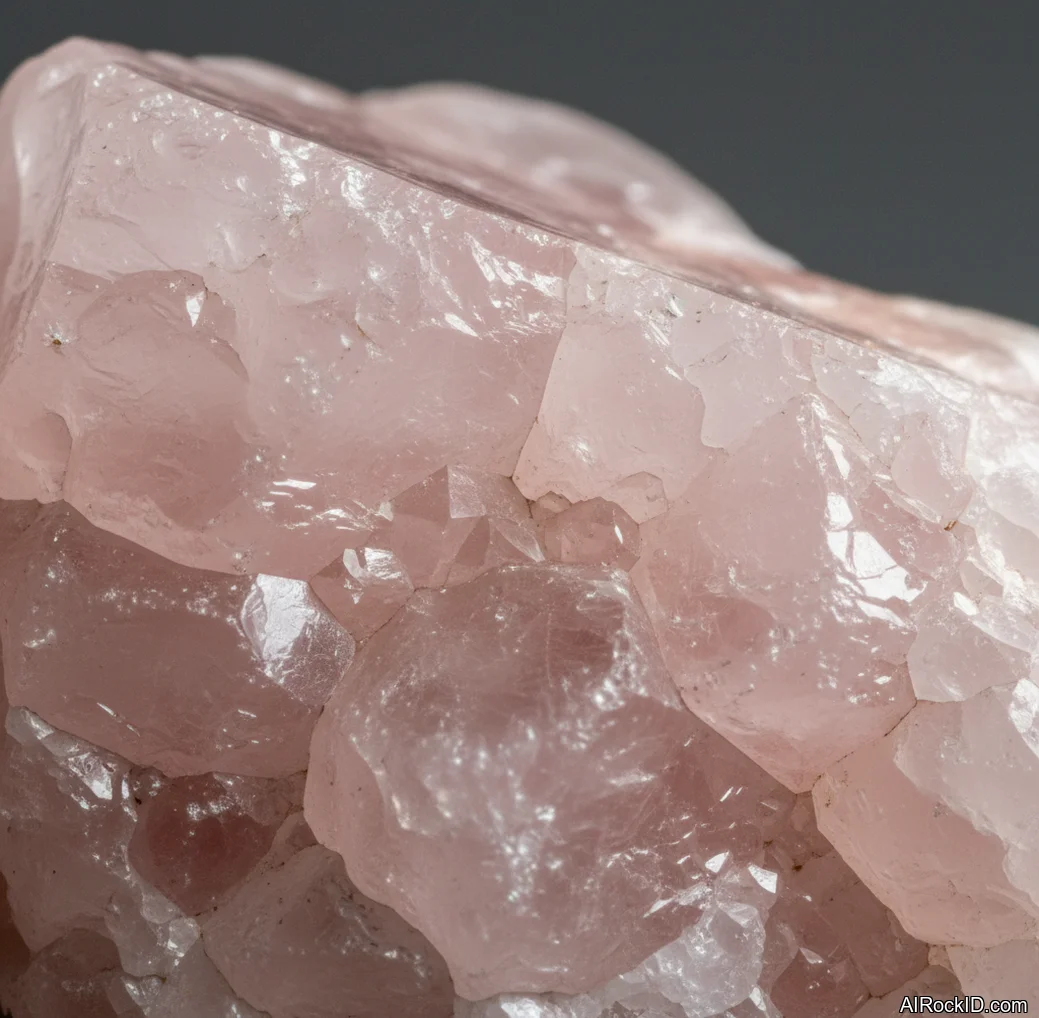
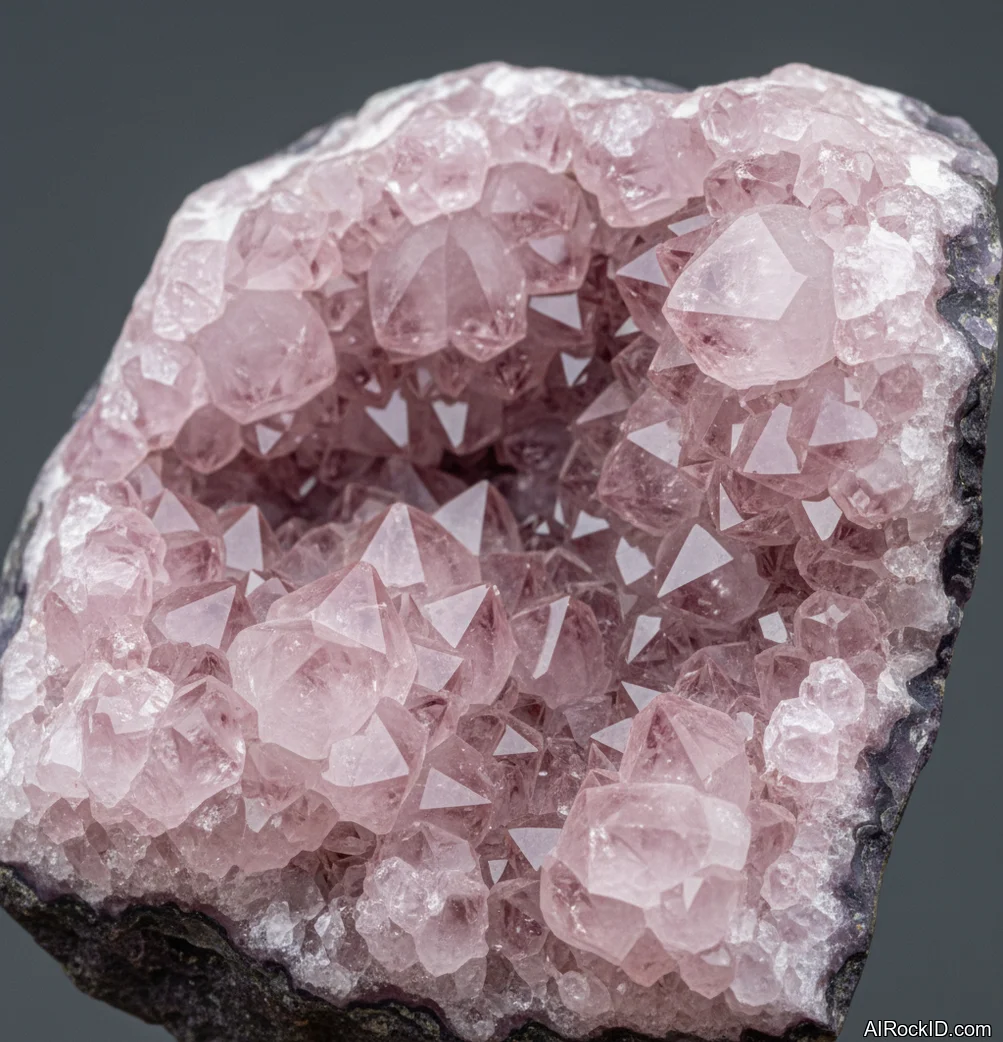
Pink Amethyst is a pale pink to mauve variety of amethyst-colored quartz, and you usually see it as drusy crystal layers or little points lining a geode.
Pick up a slab or a small cathedral and, yeah, the first thing that hits you is that it still feels like quartz. Cool against your palm. That slick, glassy feel. And it’s harder than people expect if they’re used to softer pink stones like rose quartz. The color isn’t bubblegum at all. It’s more of a dusty blush, sometimes with a smoky gray cast, and it shifts depending on the light. Under warm bulbs I’ve had pieces go a bit peachy, then you carry them to a window and they swing back to a lavender-pink.
Most of what’s out there for sale is druse or a geode face where the crystals are tiny and tight, like sugar crystals packed together. It catches the light when you tilt it, that quick little flash off the tips. But larger, cleaner points with that soft pink tone are out there too, just not common, and they’re priced like it.
Thing is, the name gets messy fast. Some sellers call anything pale amethyst “pink,” and some of it is simply light purple amethyst that photographs pink. How many times have you seen that happen?
Origin & History
“Amethyst” comes from the Greek *amethystos*, which literally means “not intoxicated.” That’s tied to the old story about drinking wine from an amethyst cup so you wouldn’t get drunk, plus the long habit of using purple quartz in jewelry and little carvings you can actually feel the edges on.
“Pink amethyst” isn’t a separate mineral name in the classic, textbook way. It’s a newer trade label people use for pale, pink-leaning amethyst material, and it really started showing up in quantity once Brazilian geodes were being sold with that color as the main selling point.
Most dealers I’ve talked to pin the name’s rise on Brazil, especially Rio Grande do Sul, with it catching on hard in the 2010s. And yeah, you’ll still hear folks argue: is it “real amethyst” or is it “just quartz”? Thing is, in practical terms it’s quartz with the same kind of color causes you see in amethyst. The tag is about the color and the vibe, not some new mineral species.
Where Is Pink Amethyst Found?
Most commercial Pink Amethyst on the market comes from southern Brazil and nearby parts of Argentina and Uruguay, usually from basalt-hosted geodes.
Formation
Most pink amethyst starts out the same way regular amethyst does. Silica-rich fluids seep through pockets in volcanic rock, then quartz slowly grows inward, layer by layer, over a long stretch of time.
Down in southern Brazil and Uruguay, those pockets sit in basalt flows, and they can get enormous. I’ve been at a show booth, leaned in close, staring into a geode about half the size of a washing machine. The crystals coat the inside walls like frost, that cold-looking sparkle you only really notice when the lights hit at an angle.
The color is where things get finicky. Quartz is basically SiO2, so that pink tint comes from tiny trace elements plus crystal defects, usually tied to iron, along with radiation effects over geologic time. But it doesn’t always spread evenly through the stone. Look closely and you’ll often catch zoning, or a grayish band with a smoky look to it. And yes, some pieces will fade if they sit on a sunny windowsill for months. Not overnight. But it’s real.
How to Identify Pink Amethyst
Color: Pale pink to mauve to lilac-pink, often with a soft gray or smoky undertone and occasional color zoning. Strong hot-pink is usually a red flag for dye.
Luster: Vitreous, like broken glass or a clean window edge.
Pick up the piece and feel the temperature. Real quartz stays cool longer than glass or resin fakes. If you scratch it with a steel knife, the knife won’t bite much, and the quartz will usually laugh it off. The real test is a hand lens: natural druse shows tiny crystal faces and uneven growth, while dyed or coated material can look too uniform, with color pooled in cracks.
Properties of Pink Amethyst
Physical Properties
| Crystal System | Trigonal |
| Hardness (Mohs) | 7 (Hard (6-7.5)) |
| Density | 2.65 g/cm3 |
| Luster | Vitreous |
| Diaphaneity | Transparent to translucent |
| Fracture | Conchoidal |
| Streak | White |
| Magnetism | Non-magnetic |
| Colors | pale pink, mauve, lilac-pink, pinkish lavender, grayish pink |
Chemical Properties
| Classification | Silicates |
| Formula | SiO2 |
| Elements | Si, O |
| Common Impurities | Fe, Al, Mn, Ti |
Optical Properties
| Refractive Index | 1.544–1.553 |
| Birefringence | 0.009 |
| Pleochroism | Weak |
| Optical Character | Uniaxial |
Pink Amethyst Health & Safety
Pink Amethyst is a non-toxic type of quartz, so it’s generally safe to pick up, handle, and even rinse under water. The only real issue? If you bang it against something, those little points can chip or flake, especially along the sharper edges.
Safety Tips
If you’re going to cut or grind it, put on safety glasses and a respirator rated for silica dust. And run a little water over the work to keep the dust down (that fine, gritty stuff gets everywhere).
Pink Amethyst Value & Price
Price Range
Rough/Tumbled: $10 - $250 per piece
Cut/Polished: $2 - $25 per carat
Price usually follows the obvious stuff: how good the color looks in person, how big the crystals are, and whether you’re looking at a clean geode face or just a small chunk that kind of screams “dyed.” And yeah, the big cathedral pieces that are actually tidy, with that even blush color across the whole face, get expensive fast.
Durability
Durable — Scratch resistance: Excellent, Toughness: Good
It’s stable for daily handling, but prolonged strong sunlight can slowly bleach the color in some pieces.
How to Care for Pink Amethyst
Use & Storage
Store it where the points won’t rub against harder stuff like corundum or topaz. And keep display pieces out of harsh sun if you care about the color staying put.
Cleaning
1) Rinse with lukewarm water to remove dust. 2) Use a soft toothbrush with mild soap to get between drusy crystals. 3) Rinse again and air-dry on a towel; avoid heat guns or direct sun for drying.
Cleanse & Charge
If you do energetic cleansing, a quick rinse, a little sound, or a night on a windowsill with indirect moonlight is plenty. Skip salt soaks if the piece has cracks, metal stands, or glued repairs.
Placement
I like it on a desk or bedside where you can actually see the sparkle up close. A low angle lamp makes the druse flash.
Caution
Don’t hit it with harsh cleaners or anything acidic, and don’t park it in a hot, sunny window for hours on end. And keep an eye out for dyed material, too. If the color starts wicking into tiny cracks or seams, it can bleed and end up looking blotchy once you’re done cleaning (ask me how I know).
Works Well With
Pink Amethyst Meaning & Healing Properties
Pink Amethyst gets tossed into the same bucket as rose quartz at first glance. But if you’ve actually had both in your hands for a while, they don’t feel the same at all.
Rose quartz is usually cloudy and kind of chunky. Pink amethyst, on the other hand, has that sparkly, crisp look and it reads a little more “heady,” at least in the way collectors and crystal folks talk about it. When I’m sorting new stock, the pieces that feel calm to me are the ones with the soft mauve tone and that fine druse that catches light like sugar. Not the loud pink slabs.
A lot of people link it with soothing stress and taking the edge off those anxious looping thoughts. Sort of an amethyst vibe, just with a gentler color. But look, I’ll say it straight: it’s not medicine. If you’re using it as a reminder to slow down, cool. I’ve kept a small geode half by my laptop, and the tiny crystal glitter is enough to make me glance up and take a breath between tasks (especially when I’m bouncing between tabs too fast).
Thing is, the market gets messy because “pink amethyst” gets used like a mood label, and then buyers assume it automatically means “love stone.” Some of what’s sold as pink amethyst is just pale amethyst that photographs pink. Some of it is dyed quartz druse. So if you want that calmer, softer look people are chasing, buy with your eyes in normal light, not under those bright booth LEDs that make everything look candy-colored. And ask where it came from.
Identify Any Crystal Instantly
Snap a photo and get properties, value, care instructions, and healing meanings in seconds.