Pink Lithium Quartz
What Is Pink Lithium Quartz?
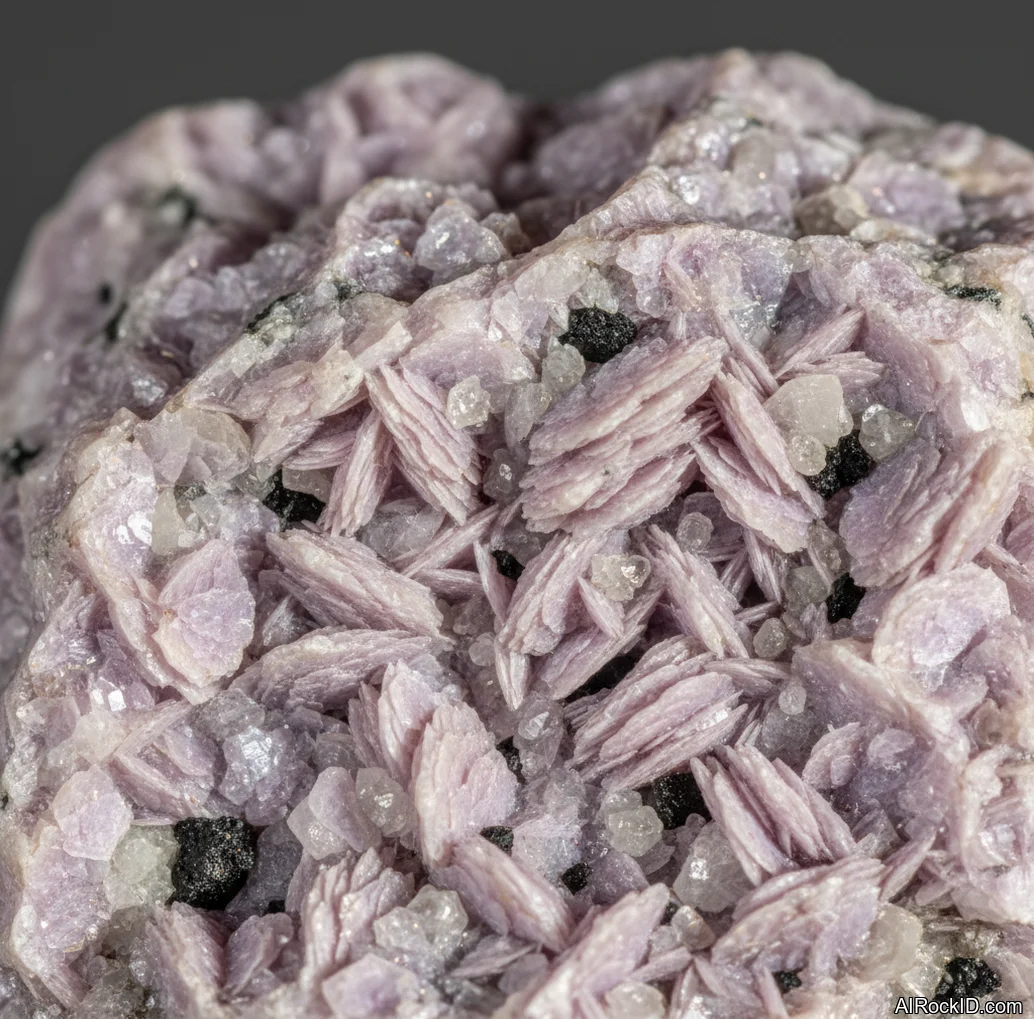
Pink Lithium Quartz is still quartz (SiO2). It just looks pink because it’s got lithium-bearing mineral inclusions, most often lepidolite mica, sitting inside the crystal or even clinging to the surface.
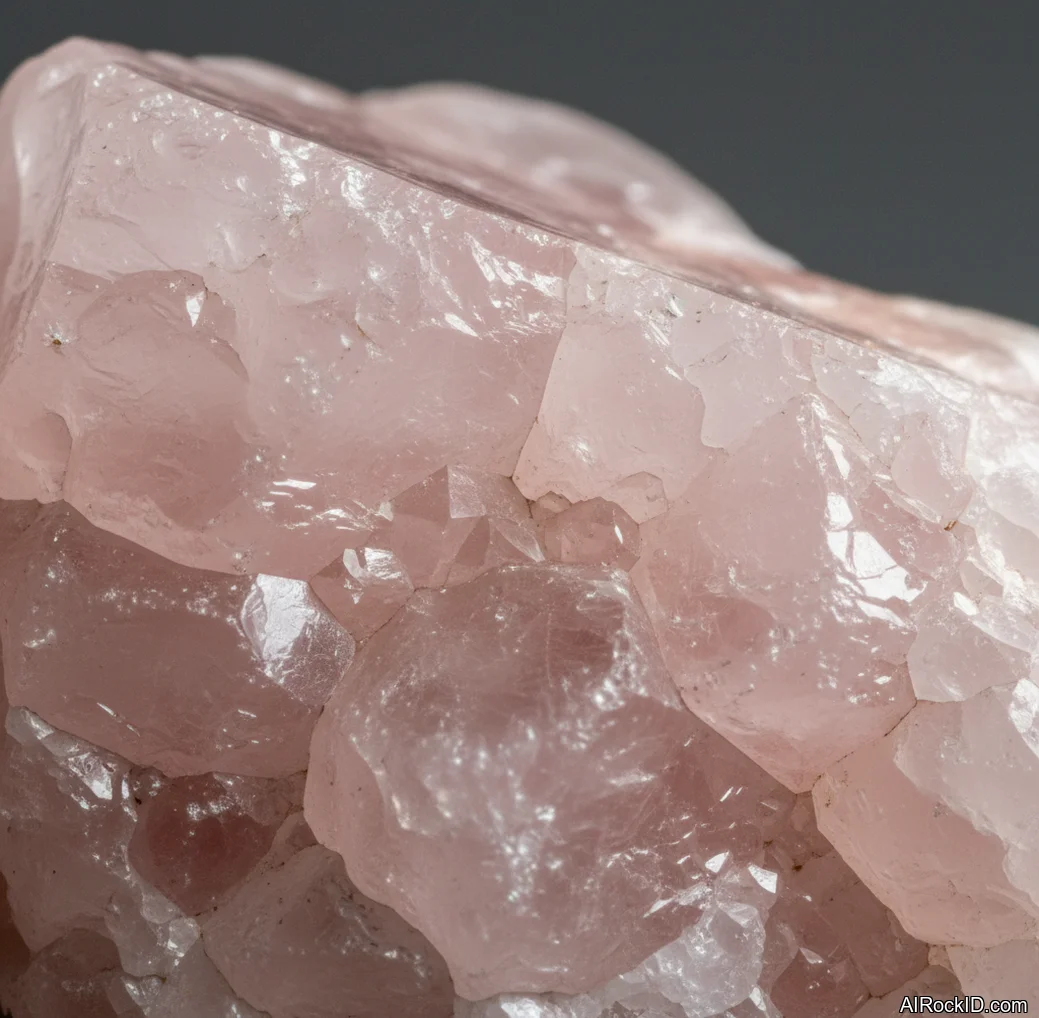
Pick up a polished point and you’ll recognize the feel right away. That solid quartz heft. Cold for a second, then it warms up against your palm like any other piece you’ve handled. The color isn’t usually that clean, even “rose quartz” pink either. It’s more of a blushy haze, with cloudy little blooms and wispy zones that look like they’re floating in there.
Some pieces get pitched at first glance like they’re a fancy new variety. But put a few on a tray at a show and it’s pretty easy to see what’s going on, right? You’ll catch tiny flashes of mica shimmer in certain spots, or pale lavender-pink patches that look particulate instead of dyed. And when you tip it under strong light, the clear, glassy quartz parts throw bright reflections, while the included areas stay softer and kind of foggy (almost velvety by comparison).
Origin & History
“Pink lithium quartz” is basically a shop name, not an officially recognized mineral species, and you’ll see it sold right alongside other quartz names that are built around inclusions. It started popping up when lithium-bearing pegmatite material got trendy, especially in cases where the pink color comes from lepidolite instead of simple iron staining.
Quartz, as a name and as a described material, was around way before modern mineralogy, pulled from the German word “Quarz.” And the “lithium” tag? That’s mostly a sales shortcut. It’s there to hint that the pink tone is tied to lithium minerals mixed in, most often lepidolite, rather than the even, uniform body color you’d expect from true rose quartz.
Where Is Pink Lithium Quartz Found?
Most of what I’ve handled was marketed from Brazilian pegmatite districts, with smaller amounts from other granitic pegmatite regions where lepidolite occurs.
Formation
Granitic pegmatites are really what’s going on here. In that late stage, the pegmatite fluids are basically a weird-element soup, and lithium is one of the big players. As those pocket zones cool off and the chemistry starts to drift, quartz keeps growing, and lithium minerals like lepidolite either form right alongside it or end up getting sealed inside as inclusions.
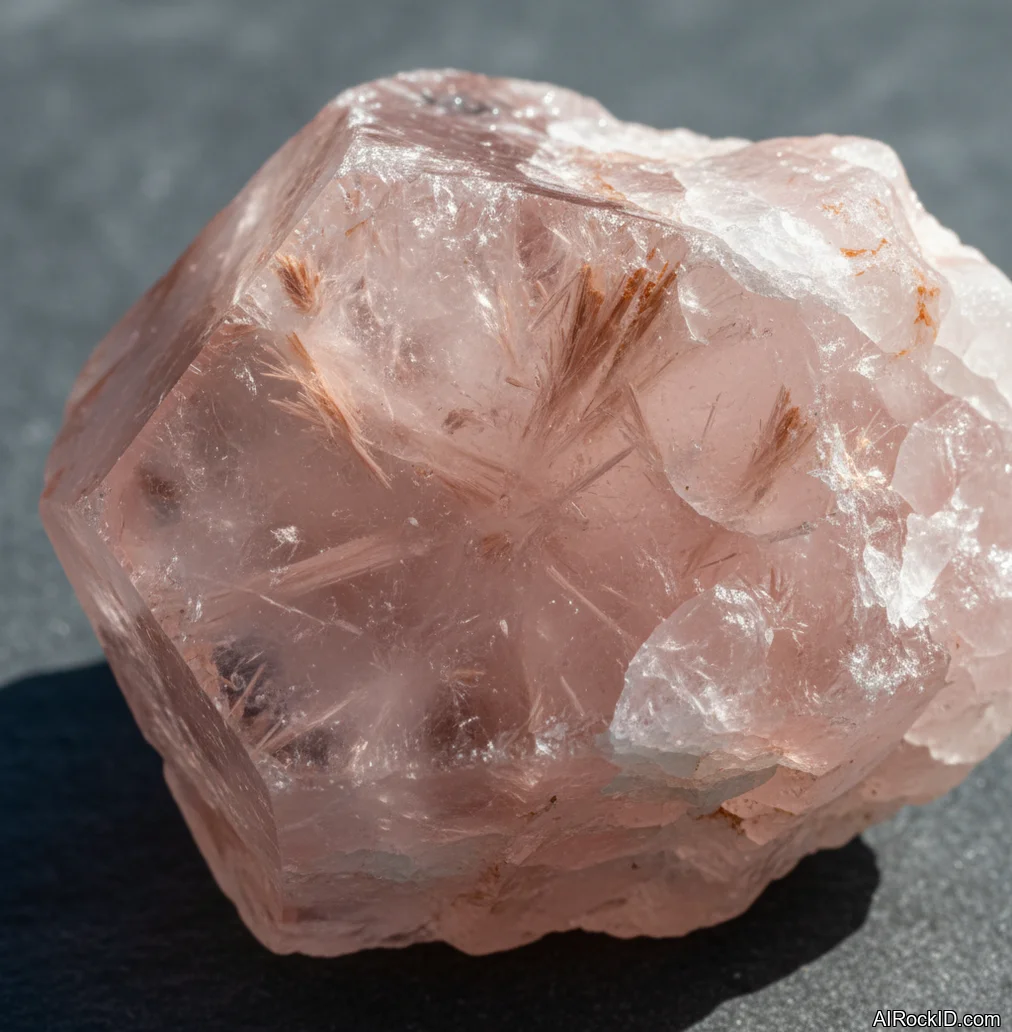
Look, if you’ve got a decent piece in your hand, you can usually figure out whether the pink is “in” the quartz or “on” it. Some specimens have lepidolite literally dusting the outside faces (you can see it catch on the sharper edges), or it’s tucked into tiny seams and those faint growth lines you only notice when you tilt it under a light. But other pieces have these included clouds that look like they just froze mid-swirling while the quartz kept stacking up around them. Pretty hard to unsee once you’ve noticed it, right?
How to Identify Pink Lithium Quartz
Color: Soft pink to lavender-pink, usually cloudy or zoned rather than perfectly uniform. The pink often comes with whitish veils or mica-like specks.
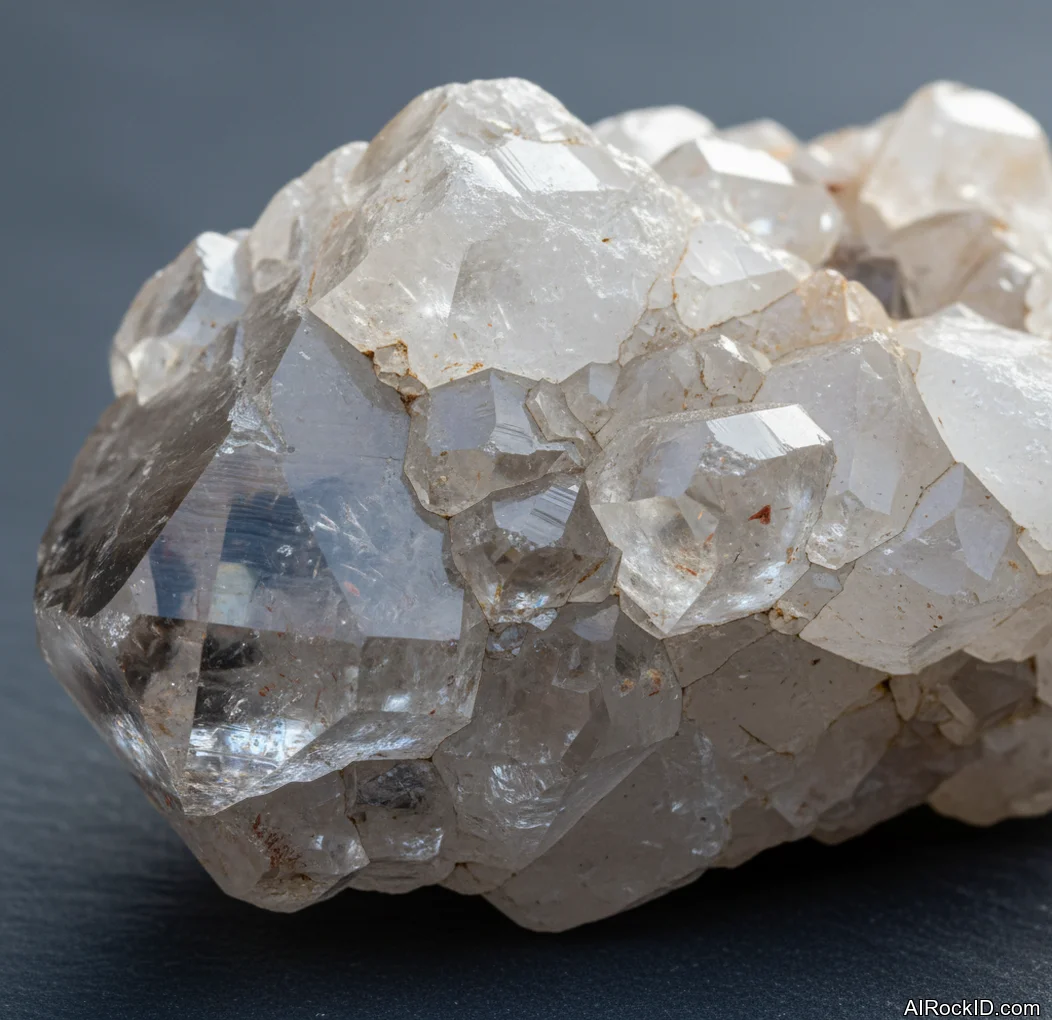
Luster: Vitreous luster on clean quartz surfaces, with a softer sheen where inclusions are dense.
Pick up two pieces side by side with rose quartz and you’ll notice the difference fast: rose quartz is more evenly colored, while pink lithium quartz tends to look misty and inclusion-heavy. The real test is a loupe. You can often catch tiny sparkly mica plates or granular patches that don’t look like simple iron staining. But watch out for dyed quartz: the dye likes fractures and edges, so you’ll see bright color pooled in cracks and around drill holes.
Properties of Pink Lithium Quartz
Physical Properties
| Crystal System | Trigonal |
| Hardness (Mohs) | 7 (Hard (6-7.5)) |
| Density | 2.65 g/cm3 |
| Luster | Vitreous |
| Diaphaneity | Transparent to translucent |
| Fracture | Conchoidal |
| Streak | White |
| Magnetism | Non-magnetic |
| Colors | pink, lavender-pink, pale rose, white, colorless |
Chemical Properties
| Classification | Silicates |
| Formula | SiO2 |
| Elements | Si, O |
| Common Impurities | Al, Li, K, Fe, Mn |
Optical Properties
| Refractive Index | 1.544-1.553 |
| Birefringence | 0.009 |
| Pleochroism | None |
| Optical Character | Uniaxial |
Pink Lithium Quartz Health & Safety
Solid pieces are fine to pick up, and they’re okay to run under water for a quick rinse. But if you’re cutting it or grinding it, don’t breathe in the dust. Quartz dust is a respiratory hazard.
Safety Tips
If you’re going to cut, shape, or drill it, keep it wet and wear real respiratory protection. But for everyday stuff at home, you don’t need to overthink it, just wash your hands if it’s been in dirt or came straight from a dig site (you can feel that gritty film sometimes, right?).
Pink Lithium Quartz Value & Price
Price Range
Rough/Tumbled: $10 - $120 per piece
Cut/Polished: $2 - $15 per carat
Price goes up when the piece has a clean polish, nice-looking internal zoning, and that mica sparkle you can actually see without the whole thing turning cloudy or muddy. Big points that are clear and well-shaped will cost more, sure, but most of what’s out there gets sold as a collector novelty, not priced like a high-end gem.
Durability
Durable — Scratch resistance: Excellent, Toughness: Good
Quartz is stable for everyday handling, but included zones can be a little more prone to looking scuffed if the polish is thin or the mica reaches the surface.
How to Care for Pink Lithium Quartz
Use & Storage
Store it like you’d store any quartz point: separated from softer stones so it doesn’t rub them up. If it has surface lepidolite, wrap it so the flaky bits don’t get knocked loose.
Cleaning
1) Rinse with lukewarm water to remove dust. 2) Use a drop of mild soap and a soft brush for crevices. 3) Rinse well and air-dry on a towel.
Cleanse & Charge
If you do ritual cleansing, gentle options work fine: running water, smoke, or leaving it on a shelf overnight. Skip harsh salt soaks if the piece has surface mica or open seams.
Placement
I keep mine where side light hits it, because the internal haze shows best from an angle. A windowsill looks nice, but direct sun can wash out the vibe of some pale pink pieces over time.
Caution
Don’t use ultrasonic or steam cleaners. Quartz in the stone can have tiny little fractures, and those spots grab stress fast. Skip strong acids too, and don’t leave it soaking in saltwater for ages, especially if any lepidolite is sitting right up at the surface.
Works Well With
Pink Lithium Quartz Meaning & Healing Properties
Plain clear quartz can feel kind of sharp and buzzy. This stuff people reach for? It’s softer. More settling. That lines up with how lepidolite gets described in crystal circles, but I’m not treating it like medical help or anything. It’s just the sort of pocket stone you grab when your brain won’t shut up and you need something to hold.
Look, pick up a piece with visible mica and you can see why people connect it with that calmer feeling. The included areas go a little cloudy, almost padded, like the light’s getting muffled instead of bouncing around. In my own stash, the pieces that actually get used are the slightly included points, not the super clear ones, because the whole look just reads quieter in your hand (and yeah, the slick, platey shimmer from the mica is part of it).
But here’s the thing: a lot of “pink lithium quartz” out there is just pinkish included quartz with a catchy label, and the vibe people report is all over the map. So if you’re buying for metaphysical reasons, go by what your eyes and hands like, not whatever promise is printed on a tag. Why gamble on a sales pitch?
Identify Any Crystal Instantly
Snap a photo and get properties, value, care instructions, and healing meanings in seconds.