Pink Petalite
What Is Pink Petalite?
Pink Petalite is just petalite that comes out pink, a lithium aluminum silicate mineral (LiAlSi4O10) that most often forms in granitic pegmatites.
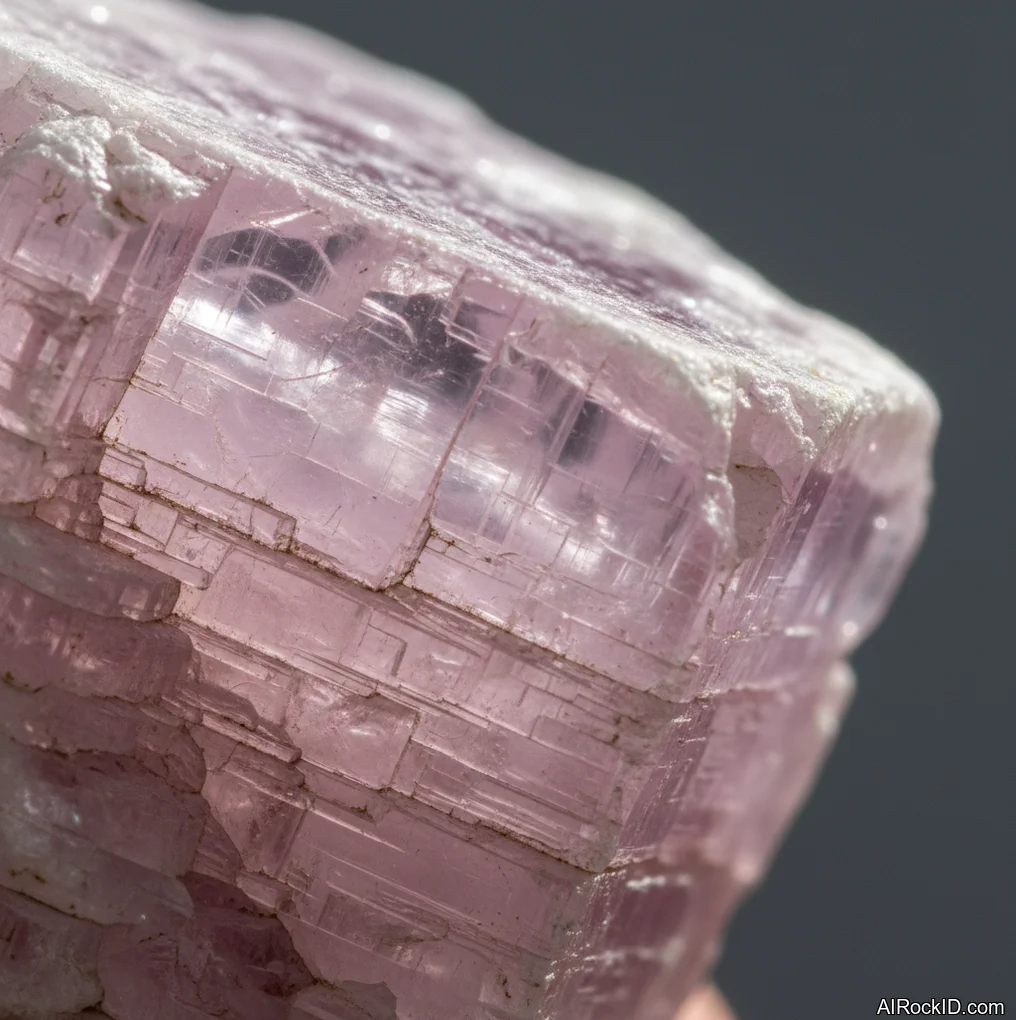
Look, at first glance it can pass for a washed-out bit of rose quartz. But it doesn’t have that sugary, cloudy vibe. Pink petalite reads more like frosted glass, and you can literally see the planes. Pick up a piece and you’ll usually notice it right away: it stays cool in your hand, and those flat cleavage faces flash under shop lights for a second, then go dull the moment you tilt it. Weirdly satisfying.
Most of what you’ll run into for sale is tumbled, pale, and translucent. The nicer material is that chunkier pegmatite stuff with clean cleavage “windows” and a soft blush tone, not just plain milky white. But yeah, fair warning: it’s not a crystal that likes getting knocked around in a pocket (it’ll complain).
Origin & History
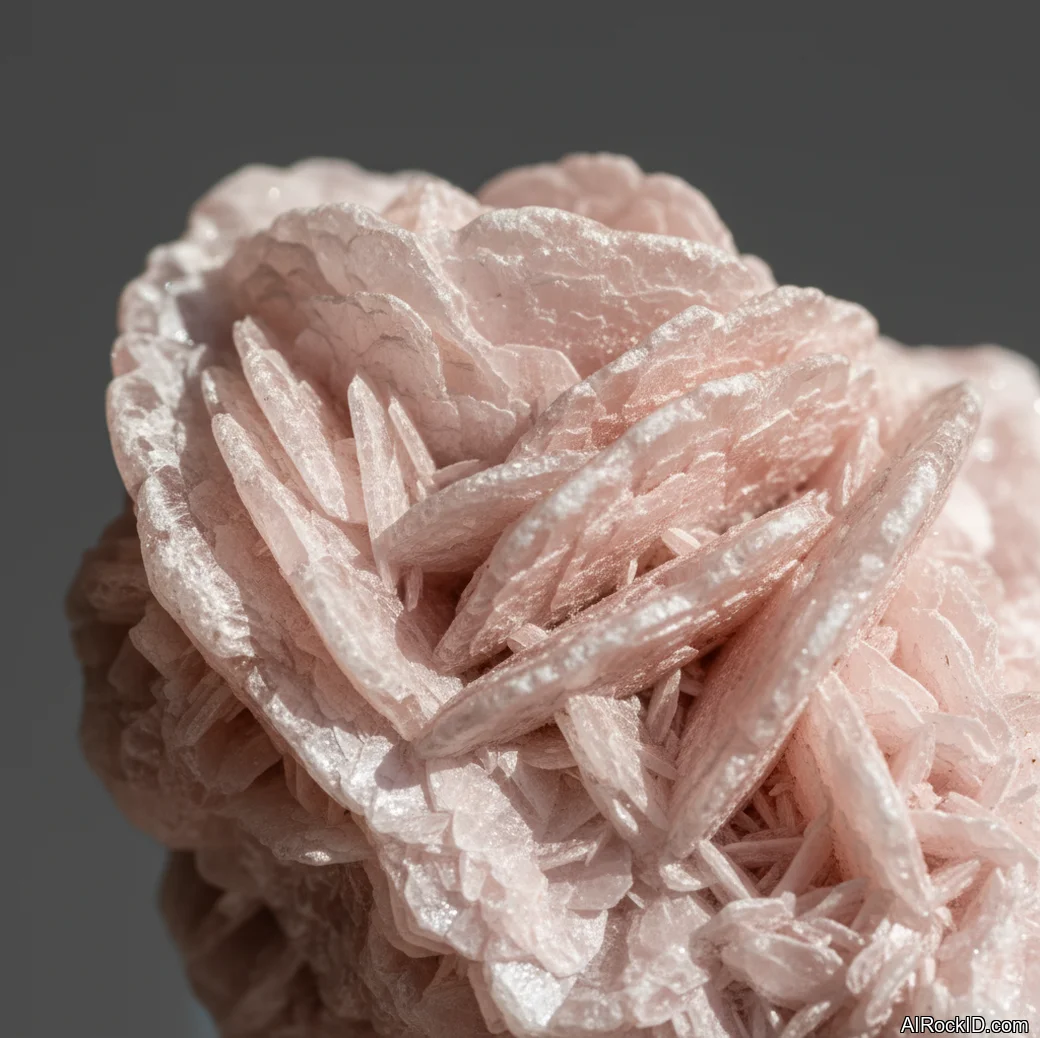
Petalite got its first official write-up in 1800, when the Brazilian-born mineralogist José Bonifácio de Andrada e Silva described it from material collected at Utö, Sweden. The name’s pulled from the Greek “petalon,” meaning “leaf,” which makes sense once you’ve seen how it splits, peeling off into thin plates along its cleavage.
And that pink stuff? It isn’t a separate species, just a color variety, and it usually shows up on the collector market linked to lithium pegmatite localities. In the gem world, petalite keeps a pretty quiet reputation as a lithium ore, and you’ll also hear it mentioned alongside spodumene and lepidolite in the classic pegmatite suites.
Where Is Pink Petalite Found?
It turns up in lithium-rich granitic pegmatites worldwide. Collector-grade pink pieces are most often seen from Brazil and parts of southern Africa, with classic species localities in Sweden.
Formation
Raw chunks out of pegmatites tell you what happened pretty quick. Petalite shows up late as granitic melts cool down, especially when the melt’s loaded with lithium, aluminum, and silica, and the last little bit of fluid ends up concentrating oddball elements and growing those oversized crystals you can literally feel with your fingertips.
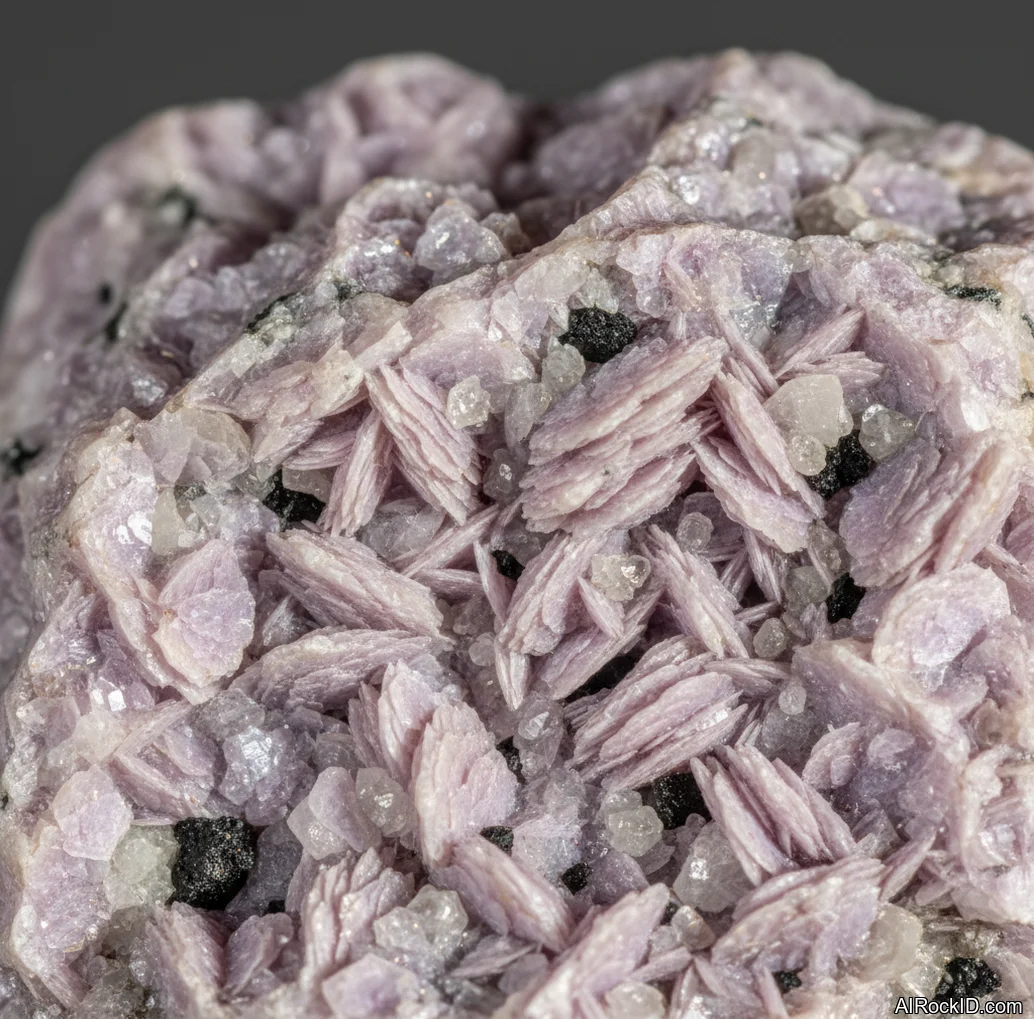
Compared to a neat quartz vein, pegmatites are more like a messy kitchen. Petalite often turns up right next to spodumene, lepidolite, tourmaline, albite, and sometimes beryl, all jammed together in the same pocket like someone dumped a mineral toolbox on the floor. The pink color usually comes from trace-element chemistry and tiny inclusions (the kind that make the surface look a little cloudy in certain light), not from any surface staining. And since petalite has strong cleavage, a lot of crystals don’t make it out as one clean piece. They pop along those planes, so what you see in the end is often broken cleavage blocks or tumbled stones. Why so many chunks instead of perfect crystals? That’s why.
How to Identify Pink Petalite
Color: Pale blush pink to pinkish-white, often with a milky or slightly gray cast. Color is usually subtle rather than saturated.
Luster: Vitreous on fresh surfaces, sometimes pearly on cleavage planes.
Pick up a piece and roll it under a lamp. Those broad, flat cleavage flashes are the giveaway, especially compared to rose quartz’s more even glow. If you scratch it with a steel knife, it usually won’t take a mark easily, but a quartz point can bite it with effort since it sits around Mohs 6 to 6.5. The problem with quick shop IDs is that pink petalite and pale kunzite can get mixed up in listings, so look for petalite’s blocky cleavage breaks instead of spodumene’s longer, splintery habit.
Properties of Pink Petalite
Physical Properties
| Crystal System | Monoclinic |
| Hardness (Mohs) | 6-6.5 (Hard (6-7.5)) |
| Density | 2.39-2.45 g/cm3 |
| Luster | Vitreous |
| Diaphaneity | Transparent to translucent |
| Fracture | Uneven |
| Streak | White |
| Magnetism | Non-magnetic |
| Colors | pale pink, pinkish white, colorless, white, grayish pink |
Chemical Properties
| Classification | Silicates |
| Formula | LiAlSi4O10 |
| Elements | Li, Al, Si, O |
| Common Impurities | Na, K, Fe, Mn |
Optical Properties
| Refractive Index | 1.502-1.525 |
| Birefringence | 0.011-0.014 |
| Pleochroism | None |
| Optical Character | Biaxial |
Pink Petalite Health & Safety
Pink petalite isn’t considered toxic, so it’s safe to handle in your hands. But if you’re going to cut or grind it, treat it like any other lapidary stone: watch the dust, wear a mask, and don’t let that fine powder hang in the air (it gets everywhere).
Safety Tips
If you’re going to shape it, put on a respirator and keep a little water on it so the dust stays down (you’ll see it stop puffing up right away). The real risk is breathing in the fine particulate dust, not anything chemical.
Pink Petalite Value & Price
Price Range
Rough/Tumbled: $15 - $120 per piece
Cut/Polished: $40 - $250 per carat
Prices jump when the color reads as unmistakably pink and the piece shows crisp cleavage faces with no bruising along the edges. Truly transparent, gemmy rough is harder to come by, and well-cut stones run higher because that cleavage means the cutter has to slow way down (and one wrong move can ruin it).
Durability
Moderate — Scratch resistance: Good, Toughness: Fair
It’s stable in normal indoor conditions, but the perfect cleavage means it can chip or split if it’s dropped or squeezed in a tight setting.
How to Care for Pink Petalite
Use & Storage
Store it wrapped or in a compartment box so it doesn’t clack against quartz or topaz. I’ve watched petalite pick up little edge chips just from a shared tray at a show.
Cleaning
1) Rinse with lukewarm water and a drop of mild soap. 2) Use a soft toothbrush around cracks and matrix. 3) Rinse again and pat dry; don’t heat-dry it on a sunny windowsill.
Cleanse & Charge
If you do energetic cleansing, stick to gentle options like brief running water or smoke. Avoid rough salt bowls if the piece has sharp cleavage edges.
Placement
Keep it somewhere it won’t get bumped, like a shelf nook or a small stand. On a desk, it’s fine, but don’t let it live loose next to keys or tools.
Caution
Skip ultrasonic and steam cleaners. Thing is, cleavage plus vibration is a nasty mix, and it can turn into a crack before you even notice. For jewelry, go with protective settings that wrap things in a bit, not those skinny little prongs that feel flimsy the second you pinch them between your fingers.
Works Well With
Pink Petalite Meaning & Healing Properties
Look at pink petalite for a minute and you’ll catch this quiet, steady feeling off it. Not flashy. I’ve sold it to folks who wanted something softer than rose quartz, and they’ll come back later saying it felt more “still” on the nightstand, less sugary, more grounded.
In the metaphysical shop world, most dealers tie petalite to calm, gentle emotional processing and that clean-headspace effect, like cracking a window in a stuffy room. Thing is, there’s also a hands-on, practical reason it gets described that way: it breaks into flat plates, and it literally feels “clearing” when you hold it. Rub your thumb over a cleavage face and you can almost feel the edges and boundaries, like the stone’s drawing a line in the sand.
But let’s keep it real. Any mood or sleep perks are personal and tradition-based, not medical. So if you’re reaching for it for anxiety or sleep, use it like a ritual object, a little cue to slow down (and breathe, sure), not a replacement for therapy, meds, or basic sleep habits.
Identify Any Crystal Instantly
Snap a photo and get properties, value, care instructions, and healing meanings in seconds.