Pyrophyllite


Quick answer: Pyrophyllite is a very soft aluminum silicate mineral that can look similar to talc, soapstone, or pale mica-rich rocks. Its softness, pearly to greasy luster, and common white, gray, greenish, or yellowish tones are useful clues for identification.
AI Rock ID can help compare a pyrophyllite specimen with visually similar soft minerals by evaluating color, luster, texture, and visible crystal habit. RockIdentifier.io provides crystal and mineral reference information that can support identification, buying checks, and specimen comparison.
Good fit
- Collectors who want a soft, talc-like mineral for study rather than daily handling
- Students comparing low-hardness silicate minerals
- Buyers checking whether a pale green or white soft stone may be pyrophyllite, talc, or soapstone
- Specimen owners who want help distinguishing massive pyrophyllite from mica-rich or clay-rich rocks
Not a good fit
- Jewelry that will be worn often, because pyrophyllite scratches very easily
- Pocket stones carried with harder minerals
- Situations where the specimen may be exposed to water, oils, or abrasion
- Buyers looking for a durable carving material without confirming the exact rock type
Most commonly confused with
- Talc: Talc is usually even softer, with Mohs hardness 1, and has a soapy feel similar to pyrophyllite.
- Soapstone: Soapstone is a rock made mostly of talc and other minerals, while pyrophyllite is a specific aluminum silicate mineral.
- Muscovite: Muscovite separates into thin elastic sheets, while pyrophyllite is more commonly massive, compact, or foliated.
- Serpentine: Serpentine is commonly tougher and waxier, often with richer green color and different geological origin.
Pyrophyllite vs. Common Lookalikes
| Mineral or Rock | Typical Hardness | Useful Difference |
|---|---|---|
| Pyrophyllite | Mohs 1–2 | Soft aluminum silicate; often pearly, greasy, massive, or foliated |
| Talc | Mohs 1 | Usually softer and more distinctly soapy to the touch |
| Soapstone | About Mohs 1–3 | A rock mixture, commonly talc-rich, not a single mineral species |
| Muscovite | Mohs 2–2.5 | Splits into thin flexible sheets with strong basal cleavage |
| Serpentine | Mohs 2.5–5.5 | Often waxy green and generally tougher than pyrophyllite |
AI identification confidence
AI identification of pyrophyllite is usually moderate from photos alone because several soft, pale minerals have similar color and luster. Confidence improves when the image is paired with a scratch test result, locality, texture description, and whether the specimen feels soapy, waxy, foliated, or clay-like.
When AI gets it wrong
- A photo shows only a pale, massive surface with no scale, fresh break, or texture detail
- The specimen is a mixed rock such as soapstone rather than a single visible mineral
- Lighting makes pearly, greasy, waxy, and chalky lusters look similar
- Hardness, streak, and cleavage observations are not provided
Final recommendation
For buying, pyrophyllite is best treated as a soft collector or study specimen rather than a durable jewelry stone. Ask sellers for locality, treatment or dye information, and clear photos of fresh surfaces when the material is labeled as pyrophyllite, soapstone, or carving stone.
How to Check Pyrophyllite Authenticity
Authentic pyrophyllite should be very soft and may be scratched by a fingernail or copper coin, depending on the specimen. A greasy, pearly, or talc-like surface can support the identification, but those traits are not unique. For valuable or unusual material, a seller-provided locality and, when needed, lab testing such as X-ray diffraction are more reliable than appearance alone.
Buying Pyrophyllite Specimens
Pyrophyllite is commonly sold as rough, carved material, industrial stone, or mineral specimens rather than faceted gems. Check whether the listing describes a single mineral specimen or a rock sold under a trade name such as soapstone. Avoid assuming bright colors are natural unless the seller clearly states that the material is untreated.
Pyrophyllite in Mixed Rocks
Pyrophyllite often occurs in metamorphic or hydrothermal rocks with quartz, mica, kaolinite, and other minerals. A hand sample may contain pyrophyllite without being pure pyrophyllite throughout. Mixed specimens can show uneven hardness, varied luster, and patches that respond differently to scratching.
What Is Pyrophyllite?
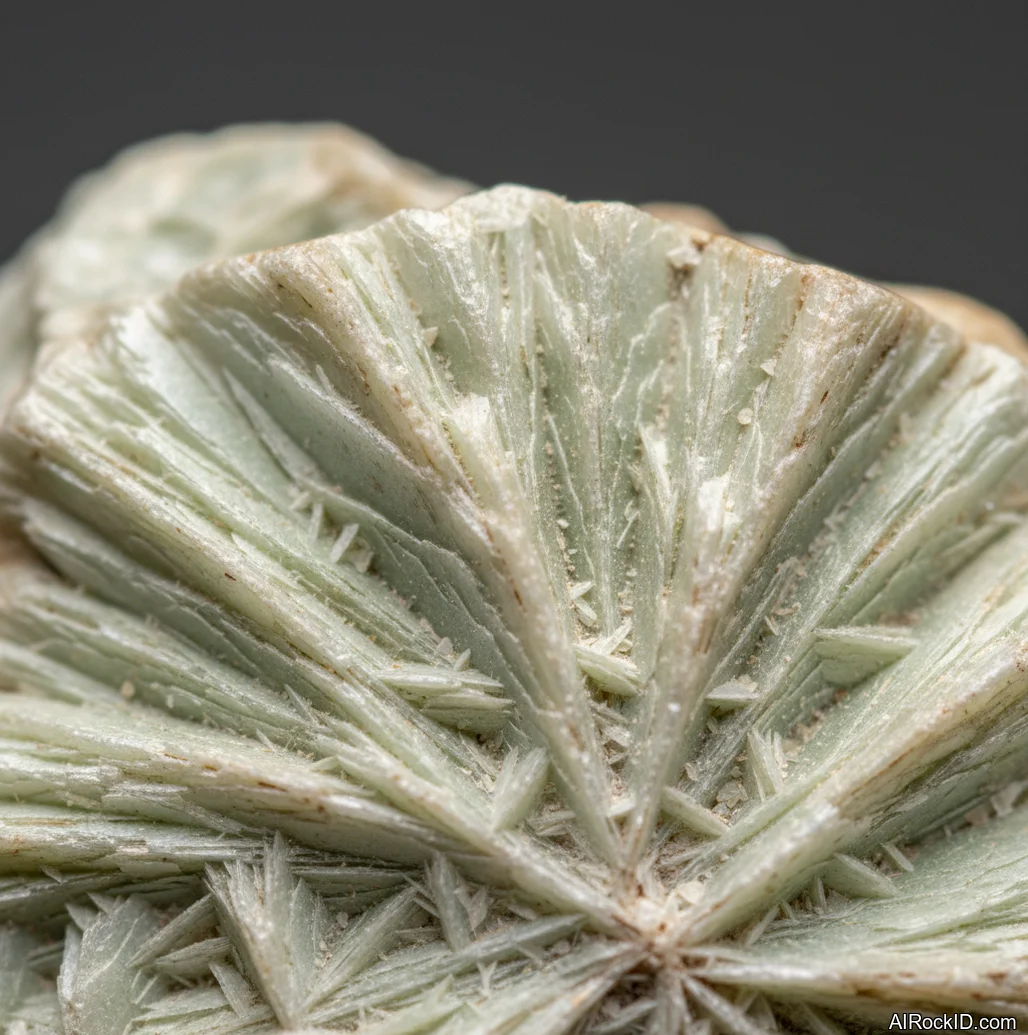
Pyrophyllite is a soft, platy aluminum silicate mineral, and it’s got that talc-like feel with a pearly cleavage sheen.
Grab a hand-size chunk and you’ll understand in about two seconds. It’s slick, kind of soapy, and honestly it feels oddly light for something that looks so “solid.” I’ve picked up plenty of greenish slabs that pass for jade from across a table, but the moment your thumb slides over the face, nope. You can tell. It doesn’t have that cold, glassy bite.
It can look a little boring at first. But tilt it under a shop light and the cleavage flickers like a stack of tiny pages catching the beam. Some pieces come off massive and chalky, and others feel tighter and more stone-like (especially the carving material). Still, no matter what grade you’re holding, softness is the whole story here. Treat it like talc or selenite, not like quartz.
Origin & History
In 1829, René Just Haüy pinned down pyrophyllite as its own mineral species, and the name stuck for a pretty hands-on reason: put it in a flame and it does something you don’t forget. “Pyro” means fire and “phyllon” means leaf, because those thin sheets will exfoliate and curl up when they’re heated.
Most people I’ve met don’t run into it from dusty museum labels, though. They see it in lapidary booths and carving shops. And you’ll spot “agalmatolite” on tags all the time, usually stuck to fine-grained pyrophyllite or mixed pyrophyllite-talc material that carves cleanly (the kind that feels a bit soapy when you’re cutting it). But that label trips people up at shows, because it isn’t a single strict mineral species by itself.
Where Is Pyrophyllite Found?
You’ll run into pyrophyllite in metamorphic belts and altered volcanic settings on several continents. Collectible and carving-grade material is often marketed from China, South Africa, Brazil, and the southeastern USA.
Formation
Look at where pyrophyllite turns up and a pattern jumps out: it hangs around aluminum-rich rocks that have been both heated and soaked. You’ll see it forming during low- to medium-grade metamorphism of clay-heavy sediments. And it shows up in hydrothermal alteration zones too, where hot fluids run through and swap feldspar and other silicates over into sheet minerals.
Next to mica, pyrophyllite is basically the “no potassium” cousin, and that’s not just trivia. Its structure is stacked layers of silica tetrahedra and aluminum octahedra, and those layers like to slide past each other. So it feels slick, almost soapy in your fingers, and it cleaves without much effort.
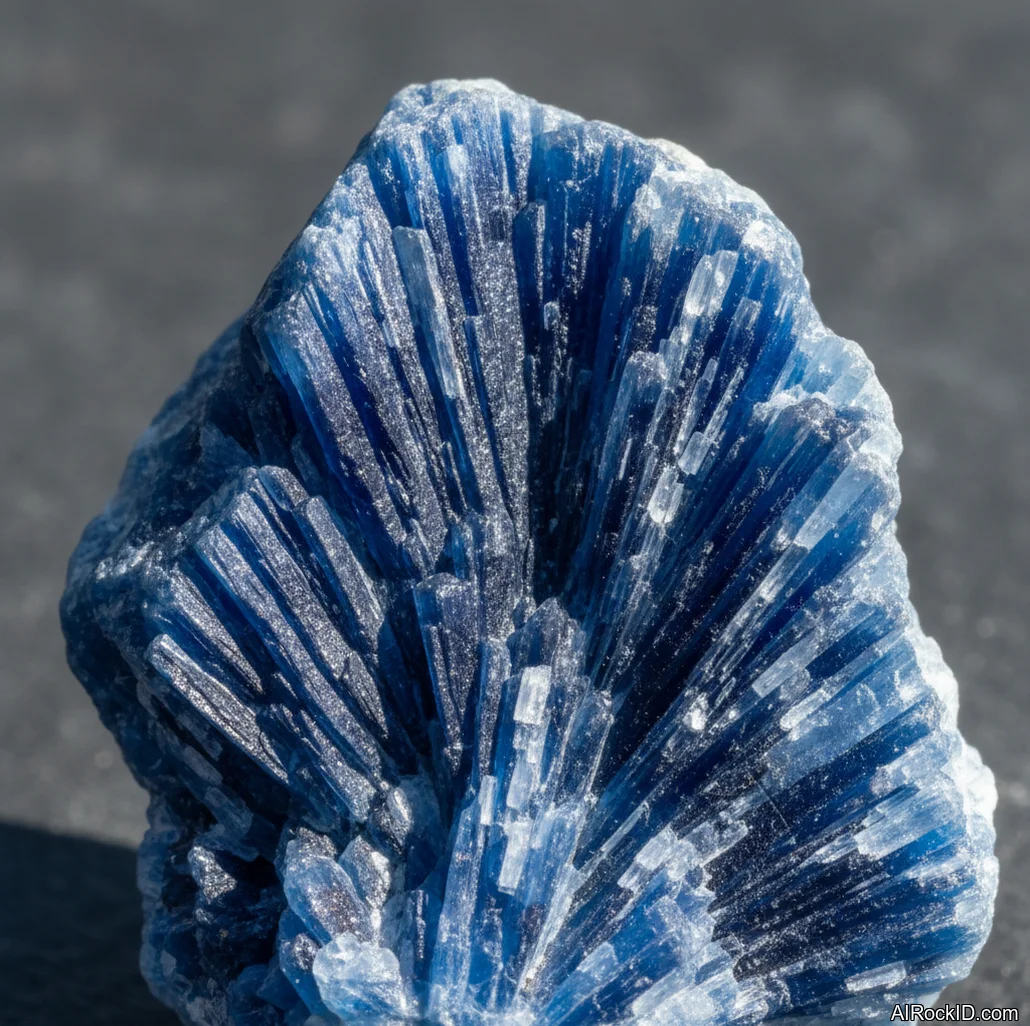
In the field, it can sit alongside kyanite, andalusite, quartz, sericite, chlorite, and sometimes topaz or diaspore, depending on the system. But if you’re hoping for a lot of pretty, stand-alone crystals, you’ll be waiting a while. Most of what you actually end up buying is massive, foliated, or fine-grained.
How to Identify Pyrophyllite
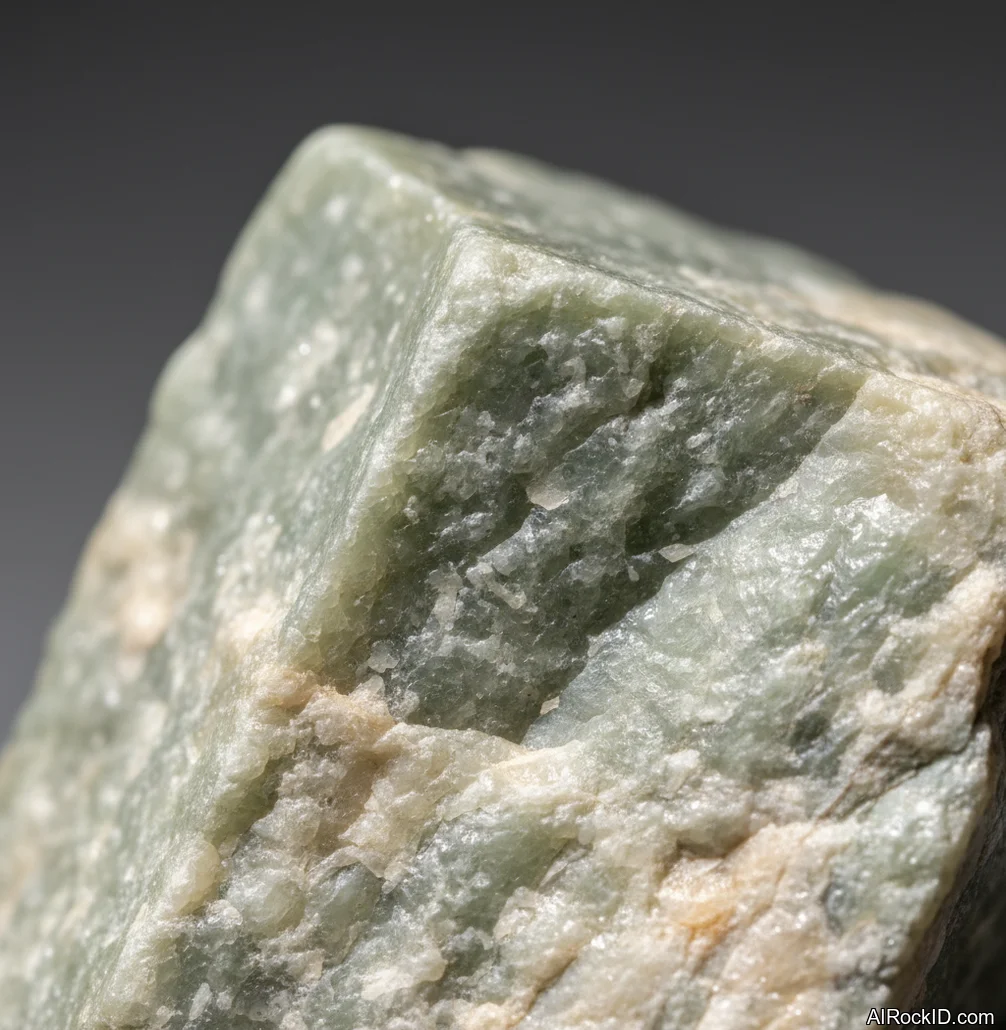
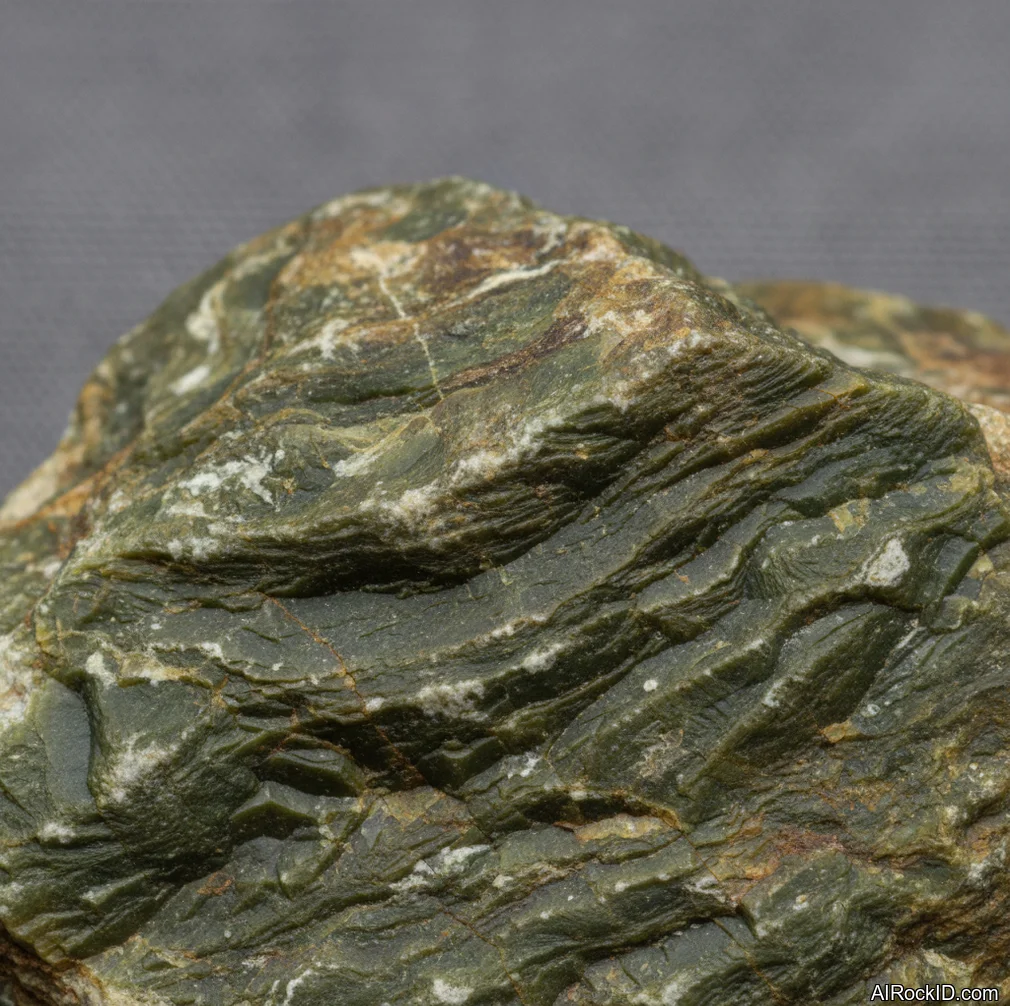
Color: Most pyrophyllite is white, gray, tan, or pale green, sometimes with a bluish cast. Iron staining can push it toward yellow-brown on weathered surfaces.
Luster: Cleavage faces show a pearly to silky luster, while massive surfaces can look dull.
If you scratch it with a fingernail, it marks easily, and that’s the quickest reality check at a dealer table. Rub your thumb across a fresh face and it feels slick and “draggy” at the same time, like a dry bar of soap. The real test is to compare it to jade or serpentine side by side: pyrophyllite feels softer and will show tiny powdery scratches fast.
Common Look-Alikes
Pyrophyllite is sometimes confused with these materials:
- Talc (especially massive soapstone sold as "talc" or "steatite")
- Serpentine (often sold as "new jade" or just "jade")
- Nephrite jade (low-grade or waxed pieces that get compared to green pyrophyllite slabs)
- Jadeite (cheap carvings where the seller uses "jade" loosely)
- Dyed quartzite or dyed marble sold as "jade" (dye grabs fractures and pores)
- Green glass imitations (cabochons and beads marketed as jade or "pyrophyllite jade")
Market Cautions & Treatments
When AI Can Get This Wrong
At first glance, phone photos mix pyrophyllite up with serpentine and low-grade nephrite because all three can sit in that same muted green, waxy-looking zone. AI struggles when the piece is polished since the platy cleavage and pearly flash don’t show up well in a flat, front-lit shot. Pick up a corner and do a quick scratch test: pyrophyllite marks up with a fingernail or copper, while jade and most serpentine won’t give in that easily, and pyrophyllite also feels slick and soapy instead of glassy-cold.
Properties of Pyrophyllite
Physical Properties
| Crystal System | Monoclinic |
| Hardness (Mohs) | 1-2 (Very Soft (1-2)) |
| Density | 2.65-2.90 g/cm3 |
| Luster | Pearly |
| Diaphaneity | Translucent to opaque |
| Fracture | Uneven |
| Streak | white |
| Magnetism | Non-magnetic |
| Colors | white, gray, cream, tan, pale green, yellow-brown |
Chemical Properties
| Classification | Silicates |
| Formula | Al2Si4O10(OH)2 |
| Elements | Al, Si, O, H |
| Common Impurities | Fe, Mg, Ti, Mn |
Optical Properties
| Refractive Index | 1.552-1.597 |
| Birefringence | 0.043 |
| Pleochroism | Weak |
| Optical Character | Biaxial |
Pyrophyllite Health & Safety
Pyrophyllite itself isn’t considered toxic. But if you cut, sand, or drill it, you’ll kick up a super fine powder that hangs in the air and gets in your nose and throat, and that dust is a respiratory hazard, like most silicate dust. Handling solid, intact pieces is usually pretty low risk.
Safety Tips
If you’re carving or grinding, do it wet and put on a properly fitted respirator rated for fine particulates. Don’t sweep up dry dust. Scoop or wipe up the slurry instead.
Pyrophyllite Value & Price
Price Range
Rough/Tumbled: $3 - $40 per specimen
Cut/Polished: $2 - $15 per carat (rare; typically cabochon/carving material)
Most dealers just price it off size and finish. Big, clean carving-grade blocks with that solid green color get tagged higher than the chalky, crumbly white stuff that sheds grit when you rub it between your fingers. And if it’s got that sharp, pearly cleavage that flashes when you tilt it under a light, plus some weird little patterns, plus a locality label you can actually trust, the price jumps fast.
Durability
Fragile — Scratch resistance: Poor, Toughness: Fair
It’s stable in normal room conditions, but the softness means surfaces scuff, shed powder, and pick up dings from almost anything in a display tray.
How to Care for Pyrophyllite
Use & Storage
Store it separate from harder minerals, or it’ll come out of a box looking sanded down. A little padding goes a long way because edges bruise easily.
Cleaning
1) Rinse quickly with lukewarm water if needed. 2) Use a very soft brush or your fingers to lift dirt from cleavage grooves. 3) Pat dry, don’t scrub, and avoid ultrasonic or steam cleaners.
Cleanse & Charge
For a simple reset, use smoke, sound, or a short moonlight sit; avoid salt bowls because the grit scratches. If you do water, keep it brief and dry it well so residue doesn’t cake in the layers.
Placement
Put it somewhere it won’t be handled all day, like a shelf corner or a tray with softer neighbors. I keep mine away from quartz points because one bump leaves a white scar.
Caution
This mineral’s really soft, so treat it gently. Don’t bang it around, don’t scrub it, and skip any polishing cloth that’s made for harder stones (the kind that feels a bit gritty between your fingers). If you’re cutting or carving it, put on dust protection.
Works Well With
Pyrophyllite Meaning & Healing Properties
Next to the flashy stones, pyrophyllite feels almost shy in your hand. When I’m sorting trays at a show, it’s the one that makes me pause, because the surface is weirdly slick and calming, like it’s been burnished already. And honestly, that touch factor is the whole reason a lot of people even bother with it.
In crystal-healing circles, people usually lump it in with cooler, “clear the clutter” vibes: easing mental noise, helping with gentle focus, that soft-landing feeling during meditation. I’m not treating it like medicine, and nobody should. But as an actual object you can hold, it works nicely in a grounding routine because it’s soft enough to feel comforting, and it doesn’t scream for attention the way sparkly stuff does (you know what I mean).
But here’s the catch. It’s fragile. If you’re the type who tosses stones in a pocket with keys, pyrophyllite is going to get chewed up, and you’ll end up with powder in the bottom of your pocket. I’ve watched people blame “bad energy” for that when it’s really just Mohs 1 to 2 doing what Mohs 1 to 2 does. So keep it as a desk stone, a meditation stone, or a carving block you handle on purpose, and it makes a lot more sense.
Common mistakes
- Calling every soft, soapy stone pyrophyllite without separating it from talc or soapstone
- Assuming a carved item is pure pyrophyllite when it may be a mixed rock
- Using color alone to identify pyrophyllite, especially in white, gray, or pale green specimens
- Testing hardness on a weathered surface instead of a fresh or inconspicuous area
- Storing pyrophyllite with harder minerals that can scratch it
Identify Pyrophyllite from a photo
Compare Pyrophyllite traits, care tips, value clues, and common lookalikes with a clear photo.