Rainbow Obsidian
What Is Rainbow Obsidian?
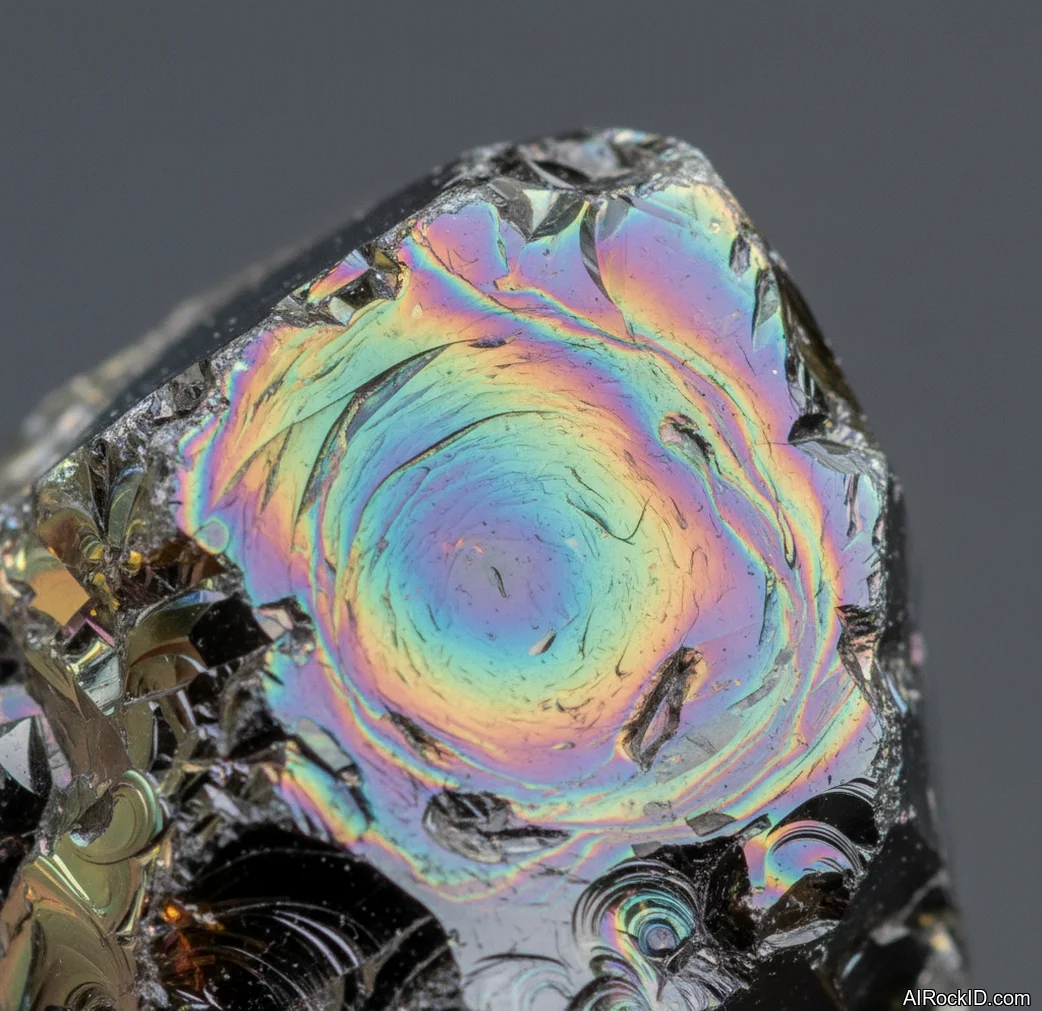
Rainbow obsidian is a naturally occurring volcanic glass with an iridescent, rainbow-ish sheen, and it comes from tiny internal layers and inclusions inside the stone.
Pick up a palm stone and you feel it instantly. Slick, like bottle glass. Cool against your skin. And it’s got that dense, quiet weight obsidian has once it’s been polished up right. At first it just reads as plain black obsidian, honestly, but tip it under one strong light and the color shows itself, green and purple, bronze, sometimes a hint of blue if you catch the angle. The flash isn’t loud like labradorite. It’s more like that oily, oil-slick glow sitting under the surface.
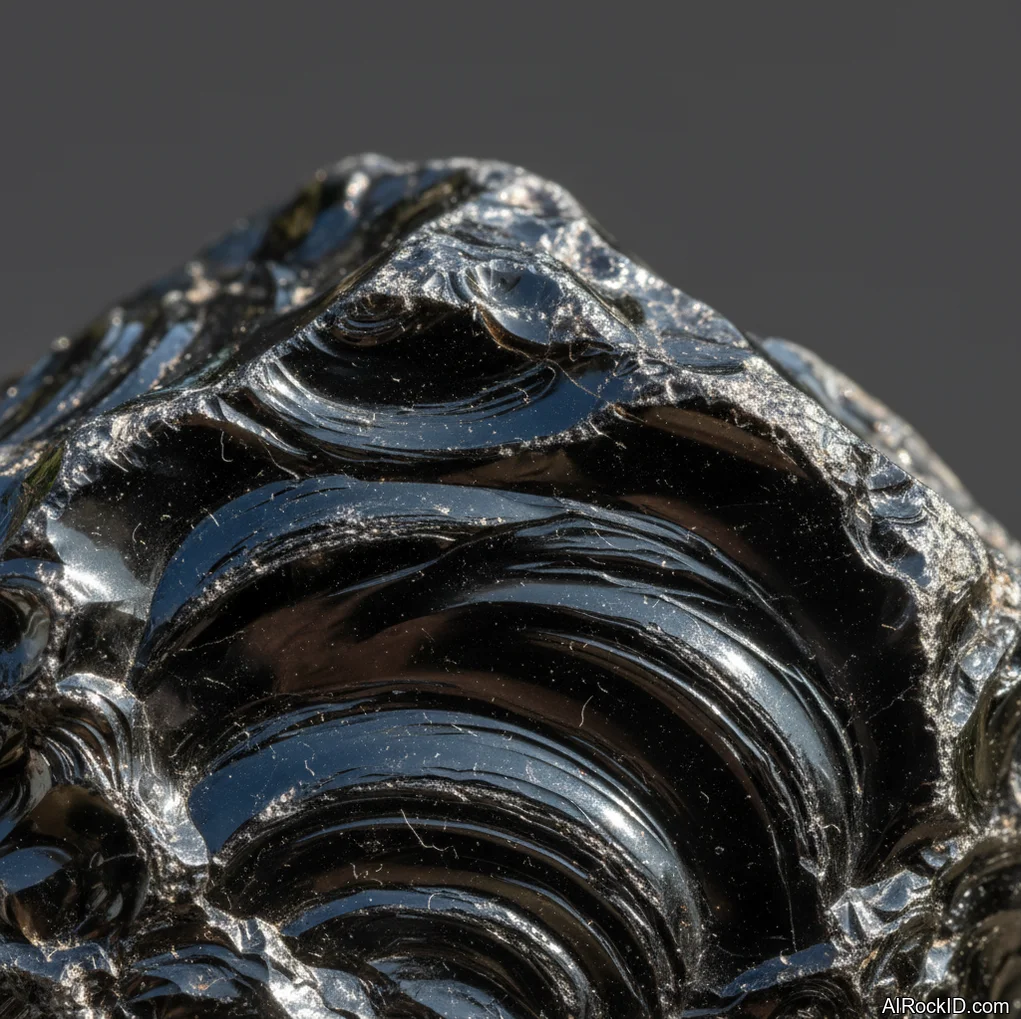
Most pieces you see for sale are polished, because the “rainbow” hides in rough. I’ve had chunks in a flat of black obsidian that looked totally dead until I cut a single face and then, boom, color, but only on one angle. Look, the edges give it away too. It’s glass. Even tumbled pieces can get those razor-ish chips if they’ve been bouncing around in a bowl too long (you’ll feel it when you run a thumb along the rim).
Origin & History
Obsidian’s been used and traded since prehistory, no question. But “rainbow obsidian” is just a modern trade name for certain iridescent material, not a separate mineral species with any formal first description.
The word “obsidian” itself gets pinned to a Roman source: Pliny the Elder wrote about “obsianus lapis,” and he tied it (at least in the story) to a person named Obsius who supposedly brought the stone back from Ethiopia.
In the collector scene, the “rainbow” tag really took off once lapidaries started cutting more black obsidian from Mexico and the western US and kept running into those consistent iridescent layers in some flows. And you’ll hear “peacock obsidian,” too. Same idea. It’s dealer shorthand for separating the flashy pieces from plain black, and it also explains why two stones that look identical sitting in the same bin can end up with totally different prices the second you tilt them under a light.
Where Is Rainbow Obsidian Found?
Rainbow obsidian is most commonly sold from Mexican deposits, with additional material from obsidian flows in the western United States.
Formation
Fast lava. Fast cooling. That’s basically obsidian in a nutshell. When silica-rich lava drops in temperature so fast the crystals can’t get going, it freezes into volcanic glass instead of the usual fine-grained volcanic rock.
The rainbow thing is pickier. It comes from thin internal layers and microscopic inclusions, usually tiny bubbles or mineral dust lined up in bands as the melt slid along and cooled. If you’ve got a cut face in good light, you can sometimes catch the flow lines, like faint streaks under the surface, and they’ll run the same direction as the color. But here’s the catch: “rainbow” depends on the angle. Slice it the wrong way and the color just disappears. Slice it right and that plain black chunk suddenly flashes, and you’ll find yourself turning it back and forth in your fingers at the counter like, wait, did you see that?
How to Identify Rainbow Obsidian
Color: Mostly black to very dark brown in body color, with iridescent bands that can show green, purple, bronze, and blue at certain angles.
Luster: Vitreous, like fresh broken glass.
Look closely under a single strong light and rotate it slowly; the rainbow usually shows as broad bands, not scattered sparkles. If you scratch it with a steel blade, it can mark or chip because it’s glass, and the chip will have a curved, shell-like surface. Cheap versions are often just coated glass or dyed resin, and they tend to feel warmer in the hand and show color from every angle instead of flashing only when you hit the right tilt.
Properties of Rainbow Obsidian
Physical Properties
| Crystal System | Amorphous |
| Hardness (Mohs) | 5.0-5.5 (Medium (4-6)) |
| Density | 2.35-2.60 g/cm3 |
| Luster | Vitreous |
| Diaphaneity | Opaque |
| Fracture | Conchoidal |
| Streak | white |
| Magnetism | Non-magnetic |
| Colors | black, dark brown, green, purple, bronze, blue |
Chemical Properties
| Classification | Silicates |
| Formula | SiO2 (variable, amorphous) |
| Elements | Si, O |
| Common Impurities | Fe, Mg, Ca, Na, K, Al, Ti, Mn |
Optical Properties
| Refractive Index | 1.48-1.51 |
| Birefringence | None |
| Pleochroism | None |
| Optical Character | Isotropic |
Rainbow Obsidian Health & Safety
Handling is usually safe, but those fresh chips can be surprisingly sharp, like they’ll catch a fingertip if you’re not paying attention. And the really fine dust you get from cutting or grinding hangs in the air and turns into a breathing hazard fast.
Safety Tips
If you need to cut or sand it, stick to wet methods, put on eye protection, and wear a properly fitted respirator that’s rated for fine particulates. Dust gets everywhere, fast.
Rainbow Obsidian Value & Price
Price Range
Rough/Tumbled: $5 - $60 per piece
Cut/Polished: $1 - $8 per carat
Price mostly comes down to how strong the sheen is, how much of the surface actually lights up, and how the cutter angled it so you can see that flash instead of chasing it around. Big slabs with clean, even bands (the kind that pop the second you tilt them under a desk lamp) cost more. But if it’s dark and the flash is weak or patchy, it usually ends up in those bargain tumble bins with the scuffed little chips.
Durability
Moderate — Scratch resistance: Fair, Toughness: Fair
It’s stable in normal conditions, but it chips easily on edges and can scratch if it rubs against harder stones in a pocket or bowl.
How to Care for Rainbow Obsidian
Use & Storage
Store it in a soft pouch or wrapped in cloth so it doesn’t clack against quartz or jasper and pick up scratches. Keep polished faces separated, because glass-on-glass scuffs faster than people expect.
Cleaning
Rinse with lukewarm water. Use a drop of mild soap and your fingers or a soft cloth. Rinse again and pat dry; avoid gritty towels that can haze the polish.
Cleanse & Charge
If you do energetic cleansing, simple running water or smoke cleansing is fine, and leaving it in a dark drawer overnight keeps the polish looking good. Skip salt scrubs, since grit can scratch the surface.
Placement
A shelf spot with controlled light works best, because you can aim a lamp and actually see the bands. On a windowsill it’ll look like a black rock most of the day, and it’s easier to knock off.
Caution
Don’t use an ultrasonic cleaner on it. And don’t just chuck it loose into a bag where it can bang around against harder stones. Keep an eye out for sharp little chips along the edges, too, especially on heart shapes and point shapes where those thin tips can get nicked fast.
Works Well With
Rainbow Obsidian Meaning & Healing Properties
Compared to a lot of stones people grab for “protection,” rainbow obsidian doesn’t feel like a shield so much as a mirror with a dimmer switch. It’s still obsidian, so people reach for it when they want that grounded, no-nonsense vibe. But that rainbow layer people talk about? It tends to come with a softer, more emotional edge.
Pick up a polished piece and roll it under a lamp and, yep, you can literally watch the hidden colors wink in and out. You’ll see those bands show up at just the right angle, then vanish the second you tilt it (and your fingerprints show up fast on that glassy surface). That’s a big reason it gets tied to looking at things you usually keep shoved in a drawer, like grief, old anger, or those patterns you swear you don’t repeat. But, thing is, it can hit kind of hard for some people.
I’ve watched customers buy a big palm stone, sleep with it under their pillow, then come back a day or two later saying it was “too much.” Too intense. Too loud in their head. So I usually tell people: start small. See how you react. Why go straight to the deep end?
And none of this is medical care. It’s more like a personal tool, the same way a worry stone or a journal can be a tool (you know what I mean). If you’re using it for meditation, a practical trick is to sit somewhere you can actually catch the flash, because staring at dead-black glass isn’t the same as watching the bands shift while you breathe.
Identify Any Crystal Instantly
Snap a photo and get properties, value, care instructions, and healing meanings in seconds.