Red Jasper
What Is Red Jasper?
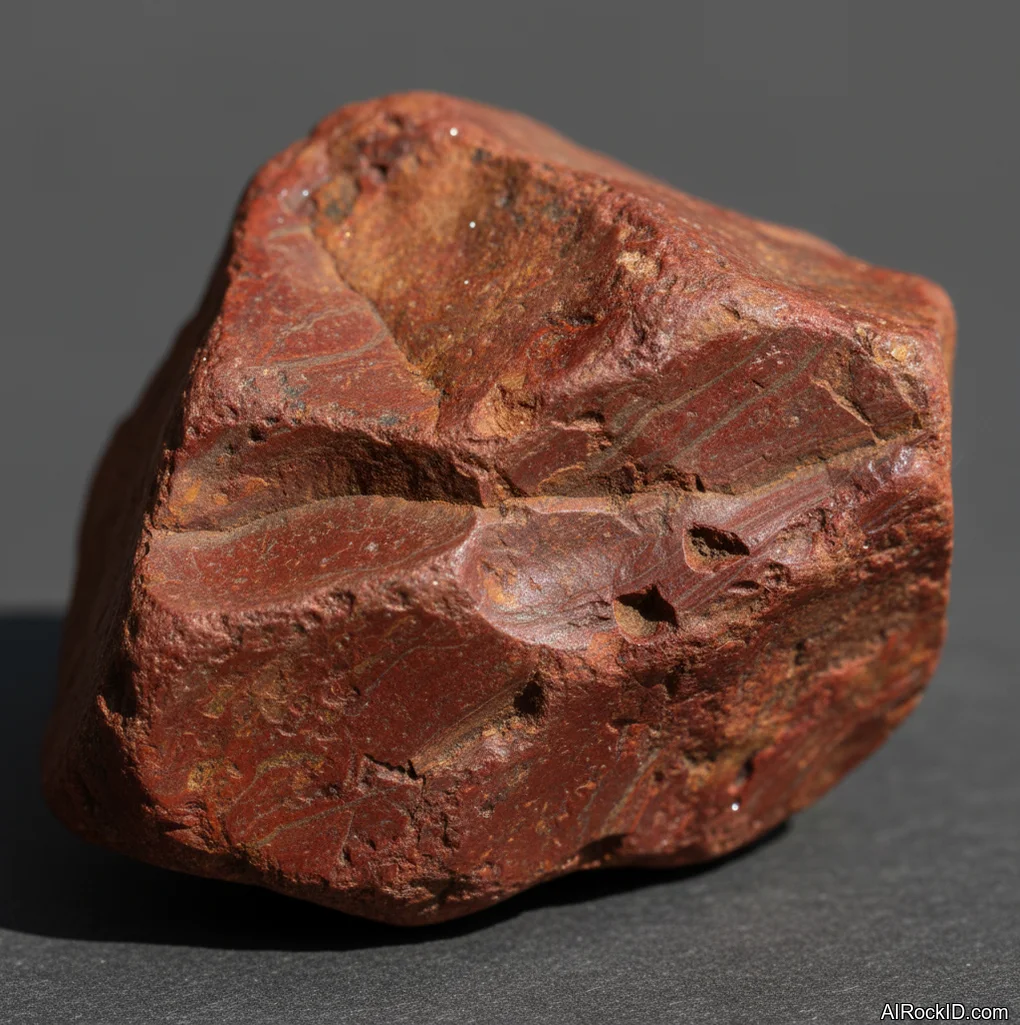
Red Jasper is an opaque, iron-stained type of microcrystalline quartz (jasper). Most of the time it’s brick red or rusty red, and you’ll sometimes see darker veining running through it. Pick up a palm stone and you clock it fast. It’s cool for a second, then it warms up against your skin, and it has that nice quartz heft, not that weird, extra-dense feel you get with hematite.
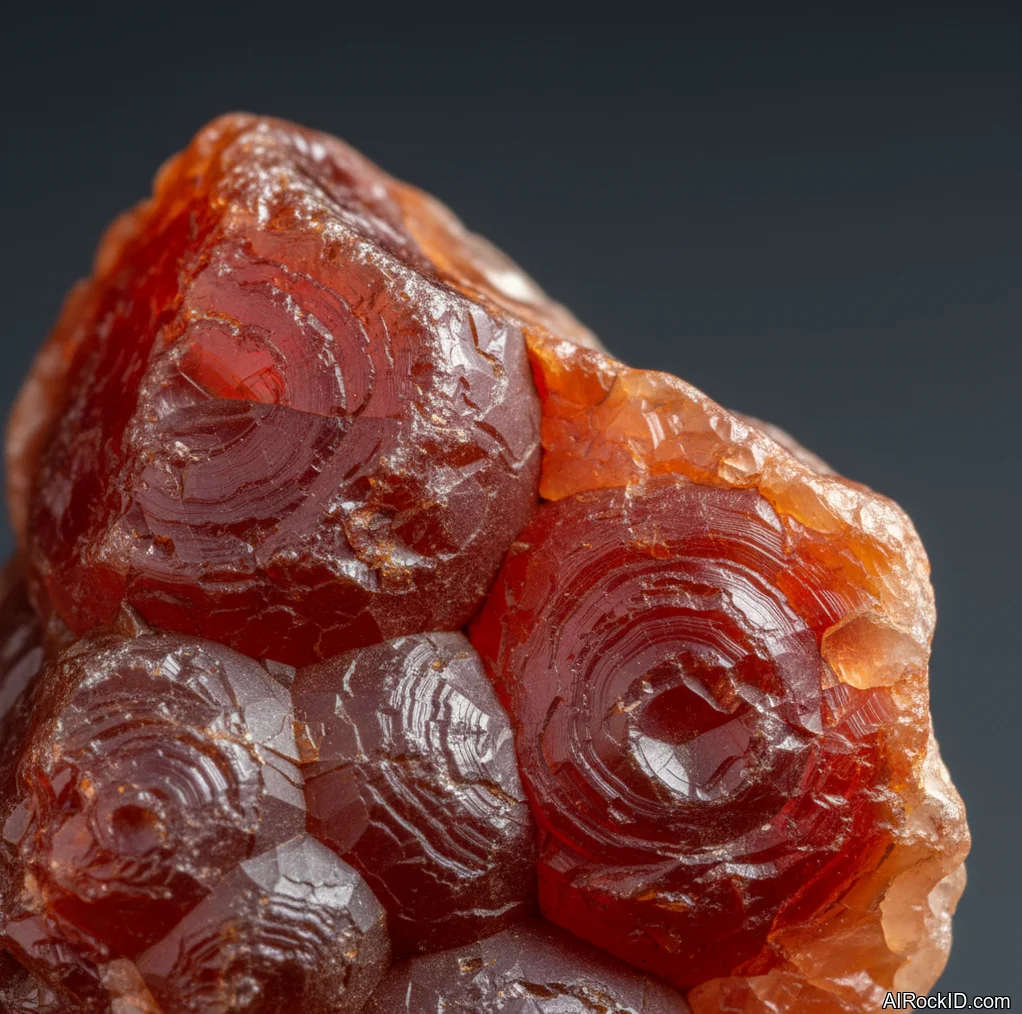
A lot of red jasper reads as just “solid red” from across the table. But when you get a good piece up close, you’ll catch little smoky swirls, those thin black spiderweb lines, or small tan patches where the silica gel didn’t take the iron evenly (it happens). Most of what’s sold is tumbled, and it takes a really clean polish, almost like somebody rubbed a bit of wax on it. But if you’ve handled enough, you can tell a fresh polish from a stone that’s been rattling around in a shop bin for years. Tiny scuffs. Dull spots along the high edges. That slightly tired shine.
Compared to translucent carnelian, red jasper is more opaque and it feels more earthy. And next to red rhyolite or dyed howlite, it usually comes off quieter, more natural. Thing is, people slap “red jasper” on all kinds of red rocks at flea markets. So it’s worth learning the feel and the break pattern if you’re buying rough. Why guess if you don’t have to?
Origin & History
“Jasper” gets to us by way of Latin and Old French, and before that from the Greek “iaspis.” Back then, it was kind of a catch-all name for stones that looked spotted or speckled, the sort of stuff you’d notice right away when you turned it in the sun and the flecks popped out.
Thing is, people were calling things “jasper” long before anyone was arguing about microcrystalline versus macrocrystalline quartz. Nobody was standing around with a hand lens splitting hairs. They just knew it was patterned silica and it took a polish.
In modern geology, jasper ends up defined as an opaque form of chalcedony. And “red jasper” is basically the collector label for pieces where iron oxides shove the color into that brick-red zone (sometimes with streaks or little peppery spots you can feel under a fingernail if the polish isn’t perfect).
Historically, it shows up all over the Mediterranean and the Near East in seals, beads, and small carved pieces. You can still run into old intaglios and signet stones where the cutter clearly hunted for the most even material, with the fewest fractures. Why? Because a tiny crack telegraphs straight through a carving once the light hits it.
Where Is Red Jasper Found?
Red jasper turns up anywhere silica-rich fluids and iron can meet and lock in color, from big sedimentary iron formations to volcanic settings. It’s widespread, so locality usually matters more for pattern than for basic “is it real” checks.
Formation
Look at a piece of red jasper up close and you’re basically staring at silica that took its sweet time. Microcrystalline quartz drops out of silica-rich fluids or gels, then locks in tight into a dense lump made of quartz fibers and grains you can’t pick out without a scope. Iron oxides come along for the ride, mostly hematite and goethite, and they stain the silica red, rusty, or kind of brown.
A lot of jasper shows up in sedimentary settings linked to iron-rich layers, including banded iron formations, where silica and iron take turns as the chemistry shifts back and forth. But you’ll also find jasper in volcanic areas, where silica-rich fluids seep into spaces, fractures, and brecciated zones, then cement the whole mess together. Ever split open a rough chunk and see sharp, angular fragments that look like they’ve been glued in place by red silica (the break feels almost sugary on fresh edges)? That’s the brecciated material sellers like to pitch as its own gem, even though it’s still jasper at heart.
How to Identify Red Jasper
Color: Usually brick red, rusty red, or brownish red, sometimes with black, gray, or tan veining and spots. Color is typically opaque and fairly even compared to translucent red chalcedony like carnelian.
Luster: Waxy to vitreous when polished; dull to slightly waxy when rough.
If you scratch it with a steel nail, it shouldn’t take the scratch, but the nail might leave a gray metal streak you can rub off. The real test is the fracture: broken edges tend to be conchoidal and sharp, like other quartz, not crumbly like softer red rocks. Cheap versions dyed to look “jasper red” sometimes feel a bit chalky in hand, and the color can look too uniform down in tiny pits or drill holes.
Properties of Red Jasper
Physical Properties
| Crystal System | Trigonal |
| Hardness (Mohs) | 6.5-7 (Hard (6-7.5)) |
| Density | 2.58-2.64 |
| Luster | Waxy |
| Diaphaneity | Opaque |
| Fracture | Conchoidal |
| Streak | White |
| Magnetism | Non-magnetic |
| Colors | Red, Brick red, Rusty red, Brownish red, Red with black veining, Red with tan patches |
Chemical Properties
| Classification | Silicates |
| Formula | SiO2 |
| Elements | Si, O |
| Common Impurities | Fe, Mn, Al, Ca |
Optical Properties
| Refractive Index | 1.53-1.54 |
| Birefringence | None |
| Pleochroism | None |
| Optical Character | Uniaxial |
Red Jasper Health & Safety
It’s safe to touch and it won’t mind getting wet, but if you’re cutting, grinding, or sanding it, don’t breathe in the dust.
Safety Tips
Use wet cutting or make sure you’ve got real ventilation (the kind you can actually feel moving air), and wear a respirator if you’re kicking up dust. And when you’re done with lapidary work, go wash your hands.
Red Jasper Value & Price
Price Range
Rough/Tumbled: $3 - $20 per piece
Cut/Polished: $0.50 - $3 per carat
Price mostly follows the polish, the pattern, and how clean the material is, especially when you’re buying rough for cabbing. Flat, dead-even color usually goes for less. But the moment you’ve got crisp veining, brecciation, or one of those scenic patterns that actually reads once it’s polished (you can feel the difference when the slab takes a glassy shine), the price jumps.
Durability
Durable — Scratch resistance: Good, Toughness: Good
Red jasper is stable in normal wear, but a high polish can get scuffed if it rides in a pocket with keys or harder grit.
How to Care for Red Jasper
Use & Storage
Store it in a pouch or a divided box if it’s polished, because quartz scratches can show up as dull scuffs. If it’s rough, I still keep it away from softer stuff like calcite so it doesn’t beat them up.
Cleaning
1) Rinse with lukewarm water. 2) Use a mild soap and a soft brush for skin oils in creases or drill holes. 3) Rinse again and dry with a soft cloth to keep water spots off the polish.
Cleanse & Charge
For a simple reset, rinse and dry it, or leave it on a clean shelf overnight. If you use sunlight, don’t bake it in a hot windowsill for days, since heat can stress fractures in some pieces.
Placement
I like it where it gets handled, like a desk stone or in a bowl by the door, because it’s tough and you don’t have to baby it. On display, side lighting shows off veining better than overhead light.
Caution
Don’t use an ultrasonic cleaner if the piece has visible fractures, or if it’s sitting in a glued jewelry setting. And if you’re cutting or polishing, seriously, don’t breathe in that dust (it hangs in the air longer than you think).
Works Well With
Red Jasper Meaning & Healing Properties
Grab red jasper when you want something steady. Plainspoken. That’s the whole point for a lot of people.
In my own stash, it’s the stone I pass to the person who can’t stop fussing with the stuff on the counter, tapping, sliding, picking things up and putting them down again. It’s smooth in that worn, almost waxy way when it’s tumbled, and it feels grounding mostly because your fingers can’t help but settle on it. And it doesn’t give off that fragile, “don’t drop me” feeling.
In modern crystal culture, red jasper gets linked to grounding, stamina, and that “get it done” kind of energy. So you’ll see people build little habits around it, like keeping a pocket stone on them during a rough week. But look, it’s still a rock, not a prescription. I treat the metaphysical side as personal practice and tradition, not medical care. If someone’s dealing with real anxiety or pain, I’m the first one to say it: carry the stone if you like it, but call a professional too.
Thing is, there’s a practical angle people skip right past. Red jasper is consistent. It doesn’t flake, it doesn’t dissolve, and it doesn’t need special handling. So if someone wants a worry stone that can live in a pocket with keys and loose change and not get wrecked, jasper holds up.
Just don’t mix up “red jasper” with every random red pebble in a seller’s bin. I’ve seen dyed pieces bleed a little color onto a paper towel when they were new (you wipe it and the towel comes away faintly pink). Real jasper won’t do that.
Identify Any Crystal Instantly
Snap a photo and get properties, value, care instructions, and healing meanings in seconds.