Carnelian
What Is Carnelian?
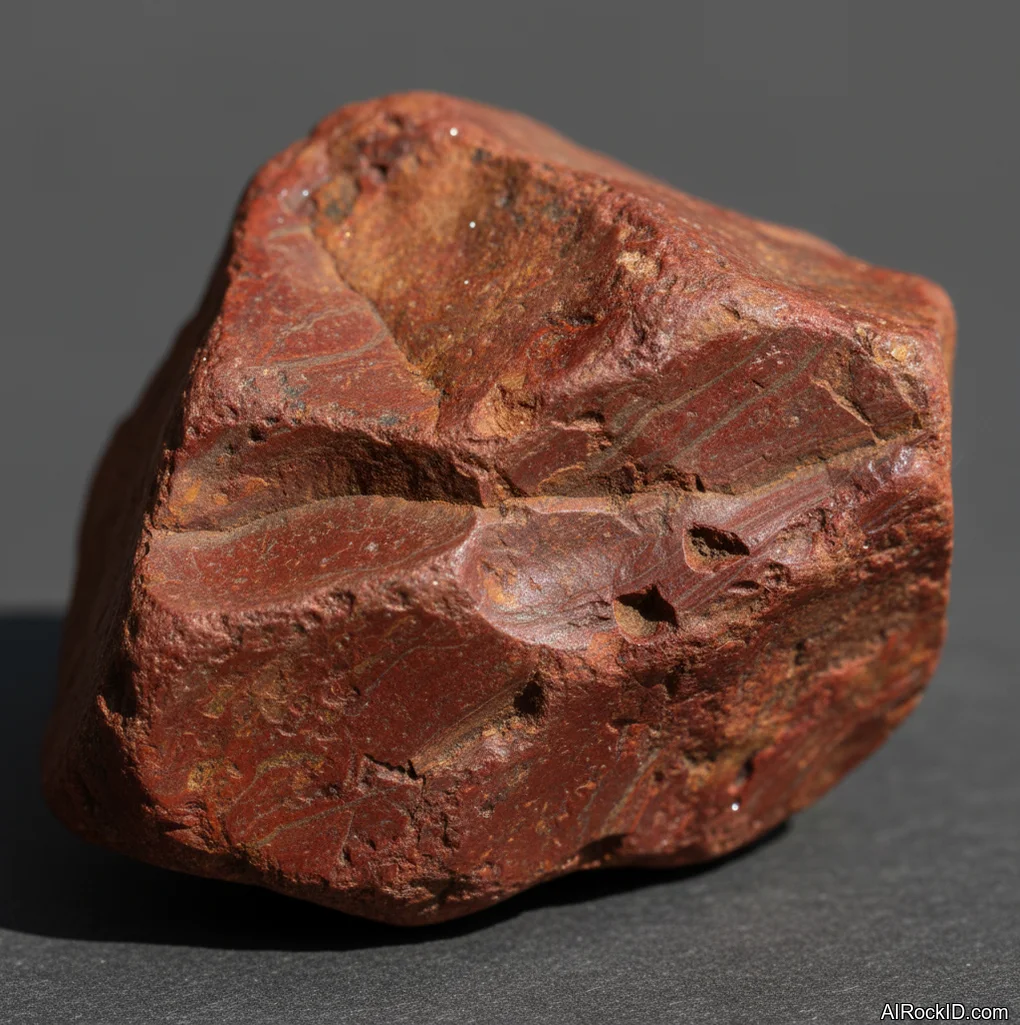
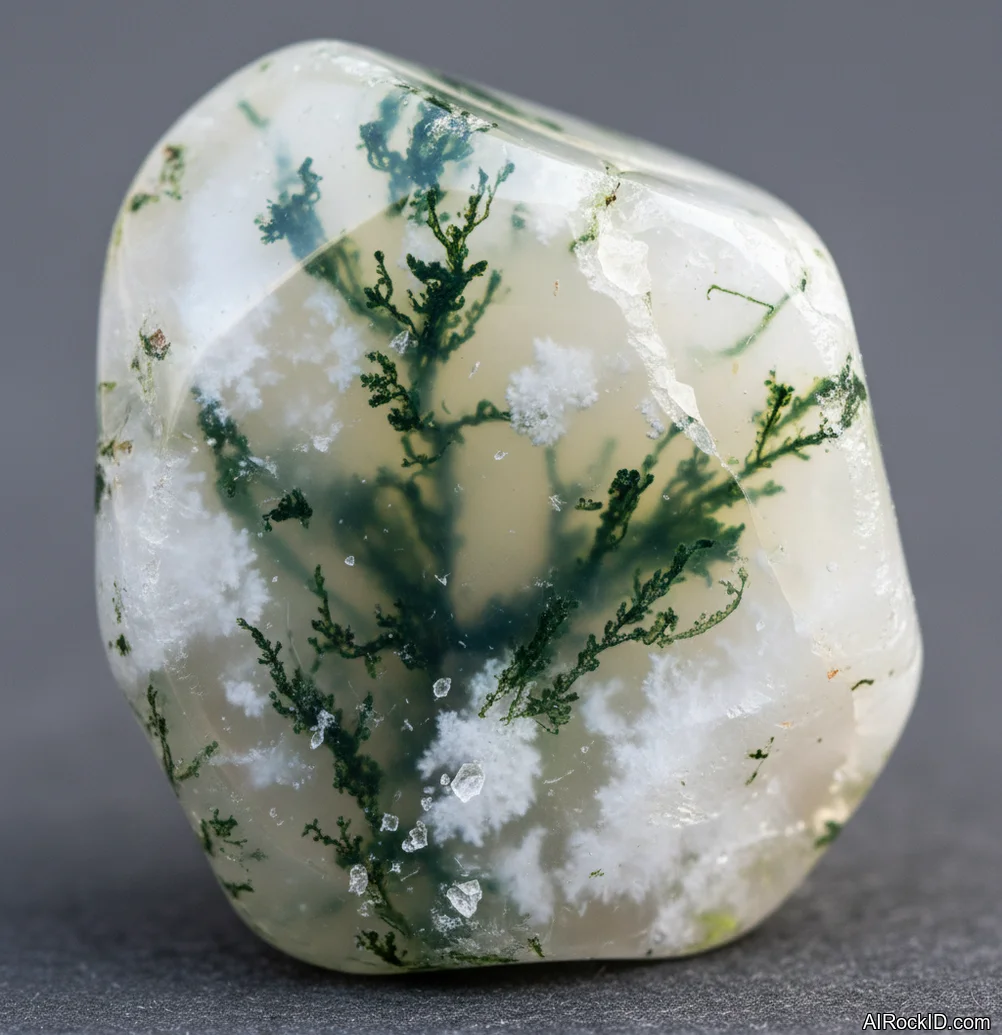
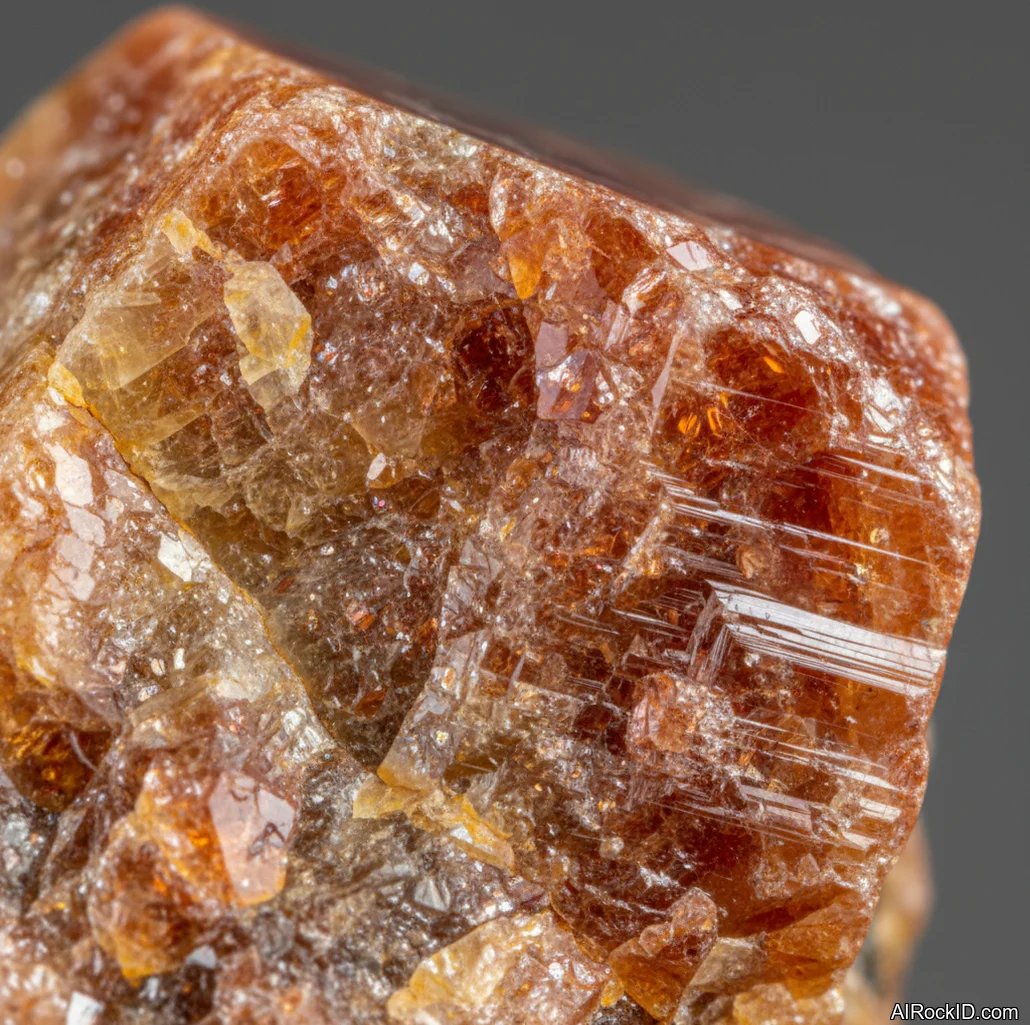
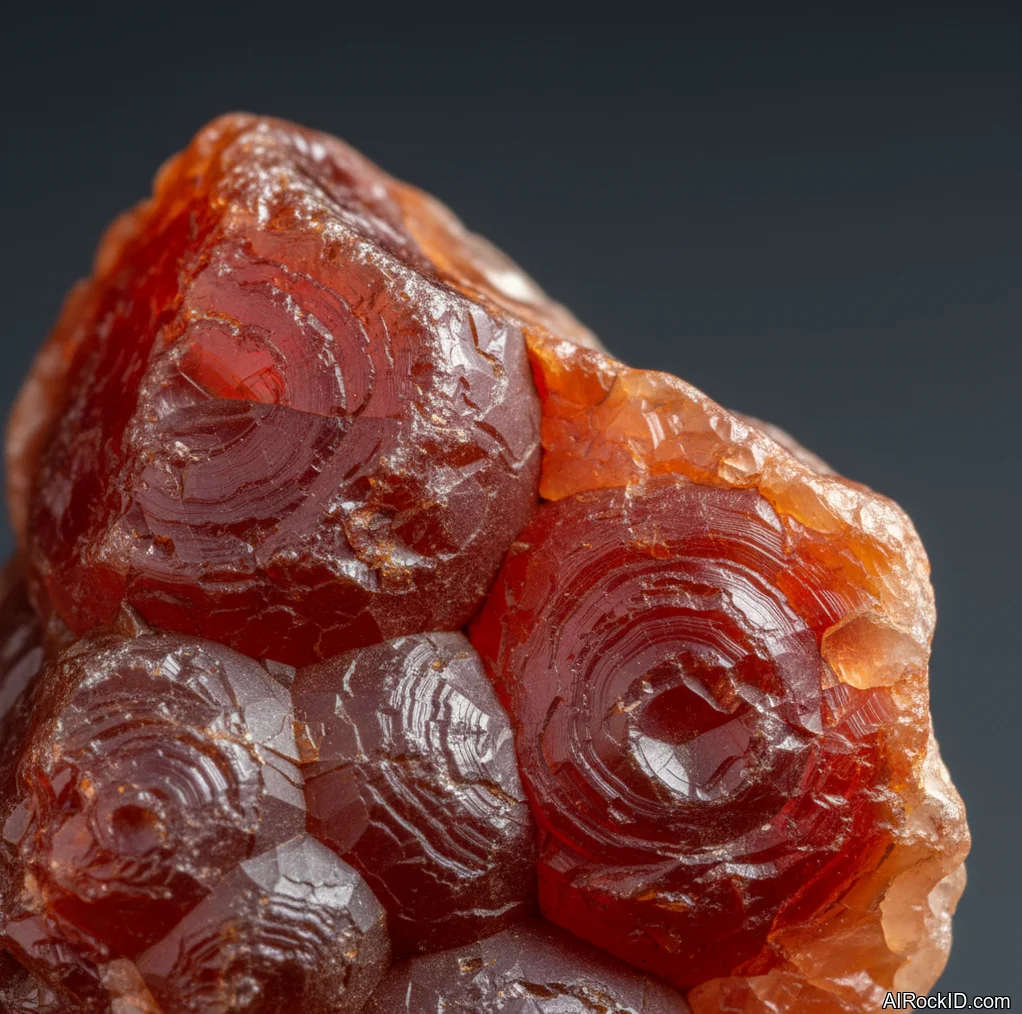
Carnelian runs orange to reddish-brown, and it’s a type of chalcedony, meaning microcrystalline quartz. It’s still quartz, just in an ultra fine-grained form, so instead of pointy crystal tips you get nodules, seams, and chunky pieces that polish up fast and come out glossy.
Grab a tumbled carnelian in your hand and you notice the quartz weight immediately. But the surface feel is different from glass. Smoother. A little waxy, like something that’s been handled a lot. The better pieces have real depth, too. Tip it under a desk lamp and the color doesn’t just sit there on top, it comes from inside, and along the thinner edges it flares up into this ember-orange like a coal that’s still hot.
People confuse it with jasper at first glance, and I’ve seen plenty mistaken for dyed agate. Thing is, carnelian usually lets some light through, even if it’s slight. And once you’ve sifted through a whole tray of them at gem shows (cold table, bright overhead lights, dusty little price tags), you start spotting that specific warm red-orange range that looks like it belongs in a campfire, not a paint bucket.
Origin & History
“Carnelian” goes back through Latin, from *carnis* (flesh), and you’ll also see older spellings like “cornelian,” which is probably a nod to that cornel cherry sort of red. It’s one of those stubborn old lapidary names that hung on because people didn’t need a color chart. They heard the word and pictured the shade. Simple.
And folks were cutting and carving the stuff way before anyone tried to tidy minerals up into official categories. Beads. Seals. Intaglios. Signet rings. In modern mineral terms, it’s not its own species at all, just chalcedony quartz with iron staining, but the trade name’s been used for centuries and it’s not going anywhere. Why would it?
Where Is Carnelian Found?
Carnelian turns up in volcanic terrains and sedimentary gravels worldwide, especially where silica-rich fluids filled cracks and later weathering concentrated nodules in riverbeds.
Formation
Most carnelian forms the same basic way a lot of chalcedony does. Silica-rich fluids work their way through fractures, cavities, and vesicles in volcanic rock, and as that stuff cools it drops out microcrystalline quartz. Give it enough time and you end up with nodules, seams, or those lumpy botryoidal masses. No tidy crystal points here. Just dense, tough material that feels almost waxy when it’s polished.
The orange to red color usually comes from iron. Sometimes that iron shows up as oxides or hydroxides scattered through the chalcedony, kind of like a fine stain rather than obvious specks. And yes, heat can take pale material and nudge it into a more “carnelian” look. Thing is, the market gets messy because a lot of that super uniform, loud orange-red you see is actually heated agate or chalcedony being sold as carnelian. That doesn’t mean it’s fake, but it’s worth knowing what you’re paying for, right?
How to Identify Carnelian
Color: Carnelian ranges from pale orange and apricot to deep reddish-orange and rusty brown, often with cloudy zones and occasional faint banding. Thin edges usually show translucency, even when the center looks more solid.
Luster: Polished carnelian has a waxy to vitreous luster, more “glow” than “sparkle.”
Look closely at the edges against a flashlight. Real carnelian usually lets light through in a soft, hazy way, while many jaspers stay dead opaque. If you scratch it with a steel nail, it shouldn’t scratch easily, but a quartz point will bite it. And when I’m sorting bins at a shop, I watch for dye: color pooling in tiny cracks or around drill holes is a dead giveaway.
Properties of Carnelian
Physical Properties
| Crystal System | Trigonal |
| Hardness (Mohs) | 6.5-7 (Hard (6-7.5)) |
| Density | 2.58-2.64 |
| Luster | Waxy |
| Diaphaneity | Translucent to opaque |
| Fracture | Conchoidal |
| Streak | White |
| Magnetism | Non-magnetic |
| Colors | Orange, Reddish-orange, Red-brown, Brown, Apricot |
Chemical Properties
| Classification | Silicates |
| Formula | SiO2 |
| Elements | Si, O |
| Common Impurities | Fe, Al, Mn |
Optical Properties
| Refractive Index | 1.530-1.540 |
| Birefringence | 0.004 |
| Pleochroism | None |
| Optical Character | Uniaxial |
Carnelian Health & Safety
Carnelian is basically quartz, so it’s safe to pick up, hold, and even rinse under the tap. I’ve done that plenty of times, and it doesn’t get weird or slimy or anything, it just feels like smooth stone in your hand. But if you’re cutting or grinding it, use the usual precautions, because the dust is the issue.
Safety Tips
If you’re doing lapidary work, put on a respirator and keep things wet. Silica dust is nasty stuff, so run water while you cut or grind to keep the dust down.
Carnelian Value & Price
Price Range
Rough/Tumbled: $2 - $30 per tumbled stone or small palm stone
Cut/Polished: $1 - $10 per carat
Price tends to bounce around based on color, translucency, and how clean the polish looks when you tilt it under a light and catch those tiny swirl marks (or don’t). Big carved pieces cost more, and so do matched bead strands where the beads actually line up in tone and “glow” from one to the next. But heated, super-uniform material is usually cheaper when you’re buying it in bulk.
Durability
Durable — Scratch resistance: Good, Toughness: Good
It’s stable for everyday handling, but hard knocks can still chip edges because chalcedony breaks with a classic conchoidal snap.
How to Care for Carnelian
Use & Storage
Keep it in a pouch or a divided box if it’s polished, since quartz will scratch softer stones and can get scuffed by harder grit. I don’t leave my nicer palm stones rolling around in a drawer with loose hematite and feldspar.
Cleaning
1) Rinse with lukewarm water. 2) Use a mild soap and a soft toothbrush to get skin oils out of pits and drill holes. 3) Rinse again and dry with a soft cloth.
Cleanse & Charge
If you like a ritual, running water, smoke, or a night on a windowsill works fine. Just don’t bake it in harsh sun for weeks if you’re picky about color staying consistent.
Placement
It looks best where light can pass through an edge, like on a desk near a lamp. For a bowl of stones, mix it with lighter quartzes so the orange doesn’t get visually swallowed by dark pieces.
Caution
Don’t hit these pieces with sudden temperature swings. And if they’ve got fractures, little vugs, or any glued repairs, skip the harsh household cleaners and don’t toss them in an ultrasonic cleaner either.
Works Well With
Carnelian Meaning & Healing Properties
In metaphysical circles, carnelian gets pegged as a “get moving” stone. And honestly, I get it. You pick up a piece and it’s cool and heavy in your palm, that smooth, dense weight, and then you catch that ember-orange glow when it hits the light. Hard not to link that to momentum, heat, follow-through. It’s the one I keep seeing people grab when they’re trying to show up day after day, not just ride a quick burst of inspiration.
But look, a stone isn’t a stand-in for sleep, food, therapy, or medical care. Not even close. What it can be (at least in my experience) is a physical cue you can’t ignore. I’ve carried a small carnelian in my pocket at shows, the kind of long days where you’re on concrete floors so long your feet feel like they’re buzzing. Every time my fingers bump that little polished nugget through the fabric, it’s a snap-back reminder: shoulders up, breathe, keep pace. Simple. Weirdly effective.
Emotionally, I see people use it more for steadiness than “calm.” It’s less “I’m totally chill,” and more “I’m nervous, but I’m still doing it.” If you’re someone who gets stuck in your head, try this: hold it for a minute. Set one short goal. Put it down. Do the task. So that’s where carnelian actually works best, as a habit anchor you can touch and feel, not some magic fix. Right?
Identify Any Crystal Instantly
Snap a photo and get properties, value, care instructions, and healing meanings in seconds.