Rwanda Amethyst
What Is Rwanda Amethyst?
Rwanda Amethyst is the purple variety of quartz (SiO2) that comes out of deposits in Rwanda.
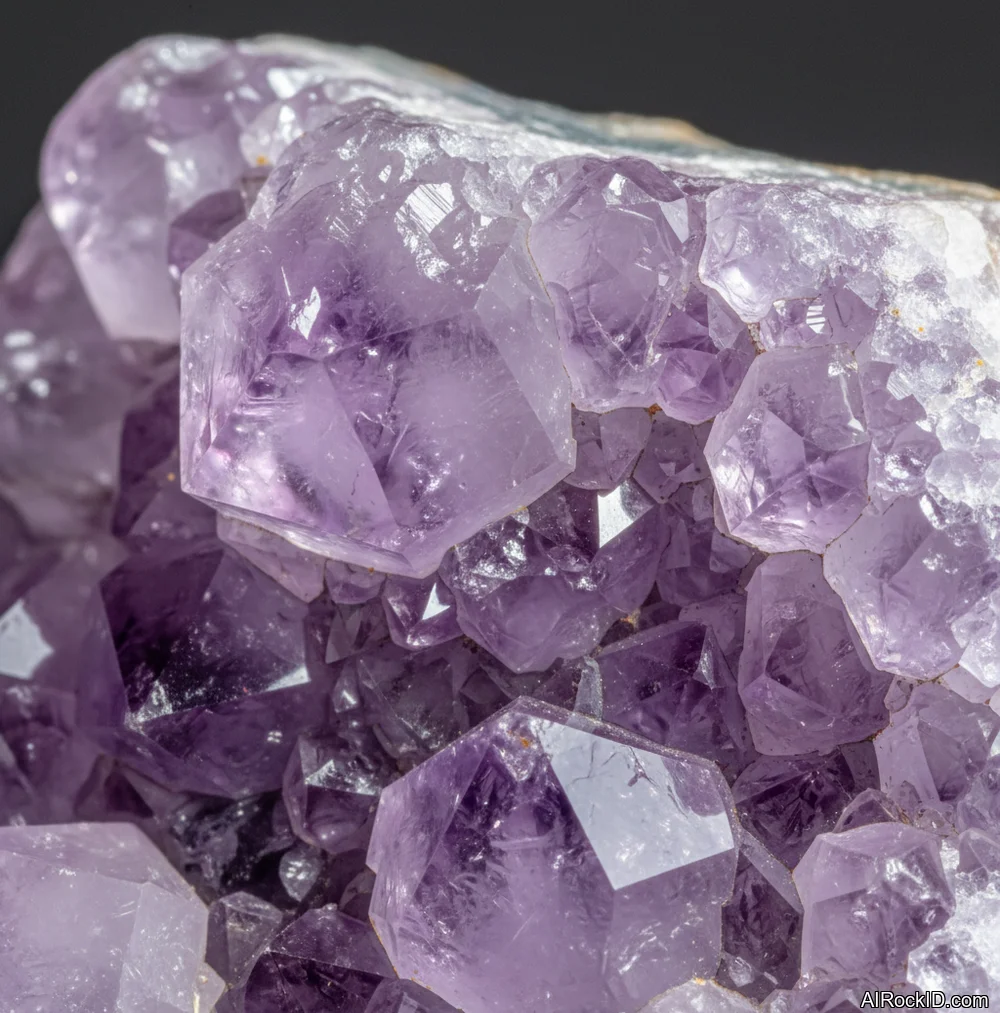
Hold a solid Rwanda piece and you can tell it’s quartz instantly. It feels cool when it hits your palm, it’s a bit heavier than you’d guess for something that size, and the clean faces have that glassy “window” look that catches light just right. A lot of the Rwanda material I’ve had in hand sits in a medium purple range, with little smoky or grayish zoning that suddenly shows up when you tip it under harsh LED case lights (the kind that make everything look a touch sharper than it really is).
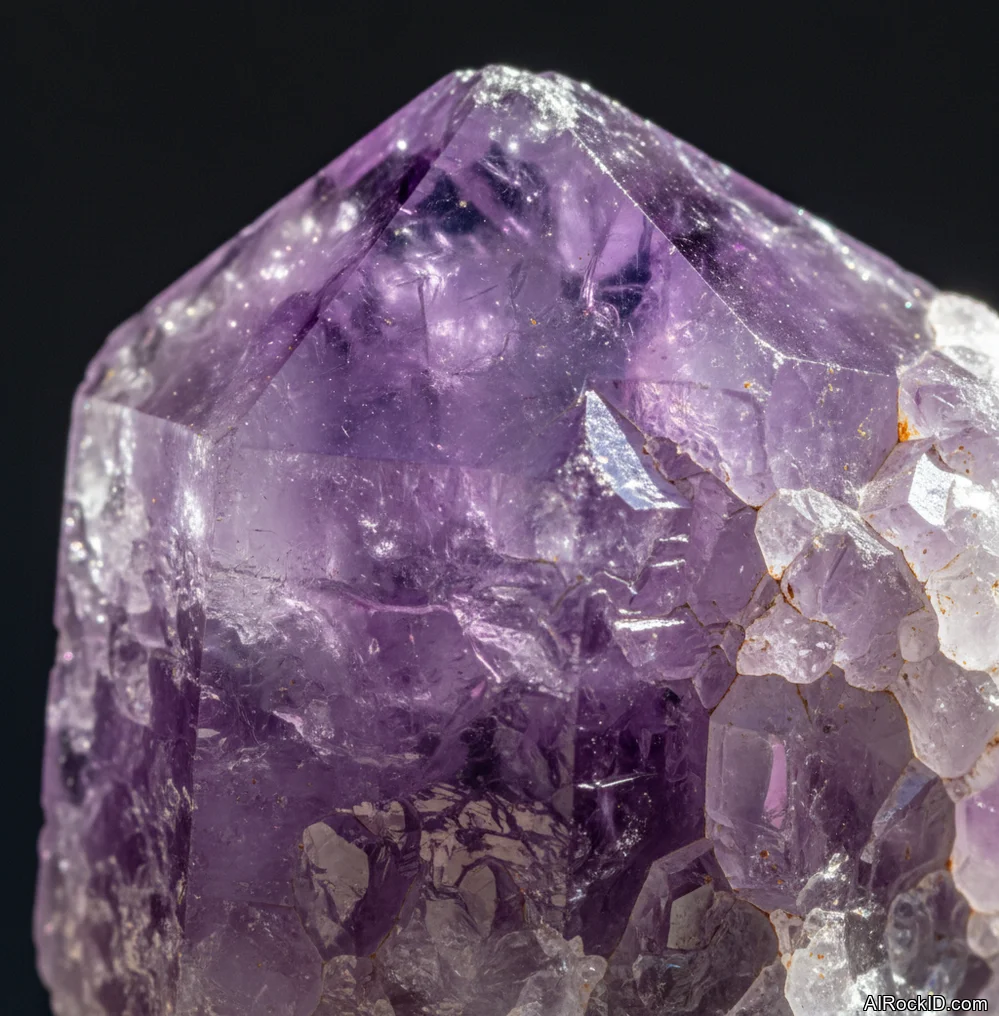
People sometimes expect Uruguay-level saturation at first glance. But Rwanda amethyst usually isn’t trying to win on pure darkness of color. It’s more about sharp crystal form and contrast, like purple tips sitting on paler bases, or phantom bands that only pop when you rotate the crystal slowly in your fingers. And yeah, it scratches glass without any drama. Quartz is quartz.
Origin & History
Amethyst didn’t get introduced as some standalone “new” mineral at first. It was talked about as a variety inside the bigger quartz umbrella that early modern mineralogists were trying to sort out. Quartz itself didn’t really get nailed down in a formal way until the 18th and 19th centuries, once crystallography and chemistry started getting standardized and everyone could agree on what they were looking at.
The word “amethyst” comes from the Greek *amethystos*. It’s tied to those old stories about not getting intoxicated, and that’s why it turns up so often in antique jewelry and church pieces (the kind where the metal’s worn smooth around the bezel from a century of handling).
“Rwanda Amethyst” also isn’t a separate species name. It’s a trade and locality label dealers use when the material is mined in Rwanda and sold that way. And in the last couple decades, I’ve watched more Rwandan lots show up at shows, usually laid out in flats of crystals and clusters, with the location tag doing a lot of the selling for collectors who get into African localities. Why else would they keep the little handwritten card right next to the tray?
Where Is Rwanda Amethyst Found?
Rwanda amethyst is mined from quartz-bearing veins and pockets in Rwanda, often sold through regional mineral markets and export channels.
Formation
Look, if you actually study the way amethyst grows, it’s basically silica-rich fluid doing patient, slow work over a long stretch of time. Amethyst shows up when quartz crystallizes out of hydrothermal fluids inside veins or little cavities, and that purple color comes from iron impurities, plus natural radiation that nudges the iron into a different state inside the crystal lattice.
Rough from Rwanda is usually single crystals or small clusters, not those massive cathedral geodes you see from other places. That tracks with vein-style growth: you get a pocket that opens just enough for points to form, then things seal up and the whole system shuts down. And you’ll notice zoning too, especially when you tilt a piece under a lamp and the bands pop. That’s the fluid chemistry shifting over time, leaving pale-to-dark stripes that honestly look way better in your hand than they ever do in photos.
How to Identify Rwanda Amethyst
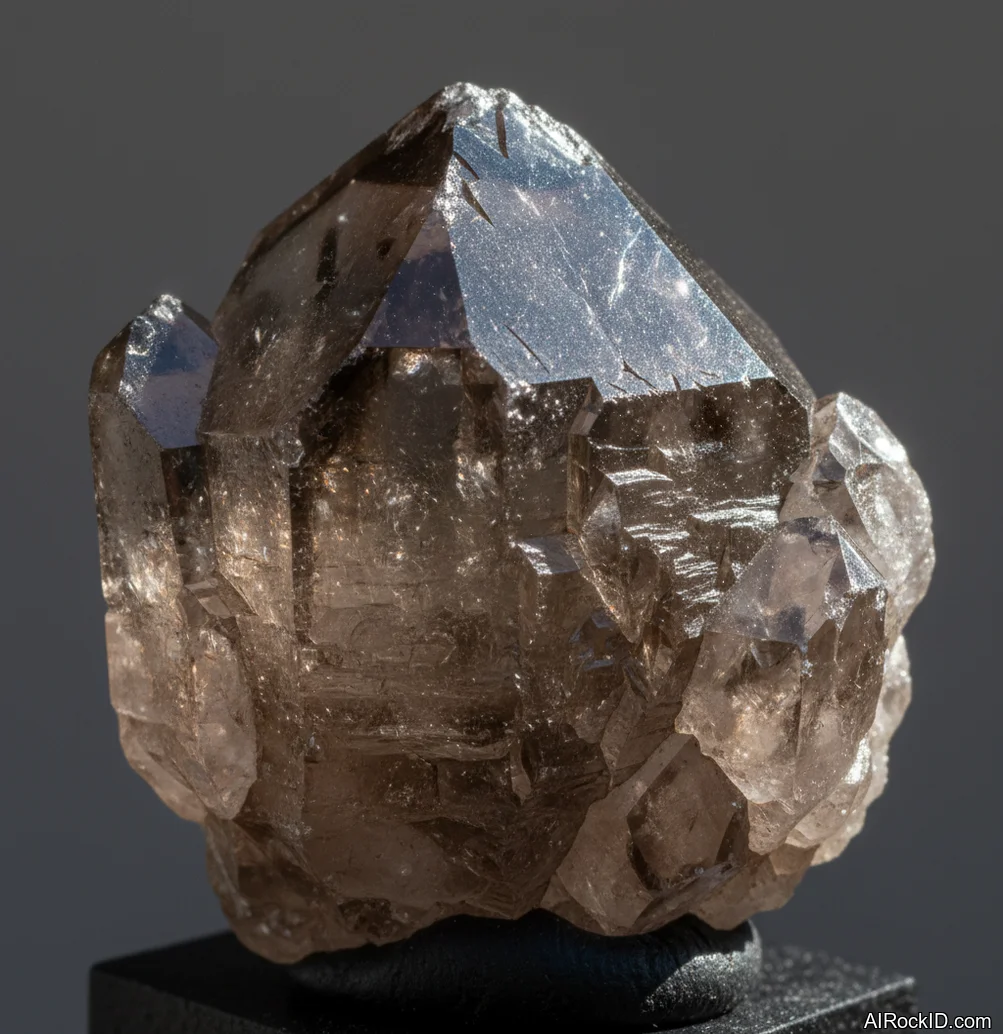
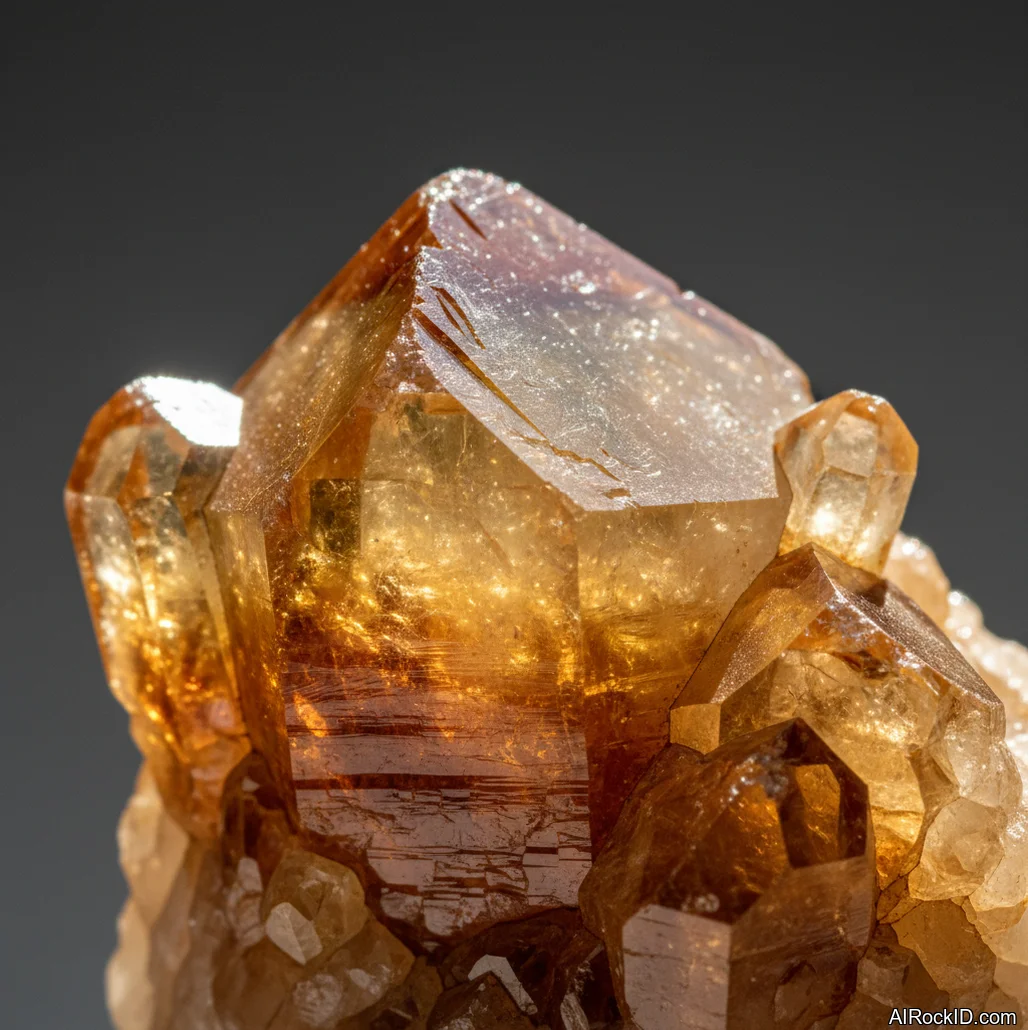
Color: Purple to violet quartz, often medium-toned with lighter zones, smoky-gray undertones, or purple concentrated toward terminations. Some pieces show banding or phantoms when rotated under strong light.
Luster: Vitreous, with a glassy shine on fresh faces.
If you scratch it with a steel nail, it won’t bite, but it will scratch glass without trying. The real test is the feel and the fracture: quartz breaks conchoidally, so chips look like curved shells instead of crumbly grains. Cheap versions in dyed quartz or glass can look too uniform, and glass tends to feel a little warmer and shows rounder, softer edge wear compared to crisp quartz faces.
Properties of Rwanda Amethyst
Physical Properties
| Crystal System | Trigonal |
| Hardness (Mohs) | 7 (Hard (6-7.5)) |
| Density | 2.65 g/cm3 |
| Luster | Vitreous |
| Diaphaneity | Transparent to translucent |
| Fracture | Conchoidal |
| Streak | White |
| Magnetism | Non-magnetic |
| Colors | Purple, Violet, Lavender, Smoky purple, Grayish purple |
Chemical Properties
| Classification | Silicates |
| Formula | SiO2 |
| Elements | Si, O |
| Common Impurities | Fe, Al, Mn, Ti |
Optical Properties
| Refractive Index | 1.544-1.553 |
| Birefringence | 0.009 |
| Pleochroism | Weak |
| Optical Character | Uniaxial |
Rwanda Amethyst Health & Safety
Handling it is pretty low risk. But if a chip breaks, the edge can get surprisingly sharp, like a tiny glassy sliver that’ll nick you if you drag a finger across it. Routine contact is fine, and rinsing it off is fine too.
Safety Tips
If you’re trimming or grinding, put on eye protection and a real respirator. Silica dust gets everywhere (you can taste it in the back of your throat), and it’s a lung hazard.
Rwanda Amethyst Value & Price
Price Range
Rough/Tumbled: $5 - $120 per specimen
Cut/Polished: $2 - $20 per carat
Deep color saturation, clean terminations, and zoning or phantoms that actually catch your eye can crank the price up in a hurry. Most dealers don’t price clusters by weight anyway. They go off eye appeal. And a chipped tip? That knocks the value down way more than people think (even when the rest of the piece looks fine).
Durability
Durable — Scratch resistance: Excellent, Toughness: Good
Quartz is stable for everyday handling, but sharp impacts can chip points and long sun exposure can fade color over time.
How to Care for Rwanda Amethyst
Use & Storage
Store points so the tips aren’t rubbing other stones. I keep clusters in a tray with a bit of foam because quartz points love to find the one hard edge that’ll nick them.
Cleaning
1) Rinse with lukewarm water to remove dust. 2) Use mild soap and a soft toothbrush around the base and between points. 3) Rinse again and air dry; avoid harsh chemicals and avoid long soaks if there’s iron staining you’re tempted to “fix.”
Cleanse & Charge
A quick rinse, a night on a shelf, or a short pass through smoke are common collector methods. If you use sunlight, keep it brief because purple can fade.
Placement
Put it where you’ll actually see the faces, not buried on a crowded windowsill. Indirect light shows zoning better than blasting sun.
Caution
Skip ultrasonic cleaners and steamers, especially if it’s a cluster with internal fractures or bits of matrix trapped inside. And don’t park it in harsh sunlight for weeks on end if you want the color to stay put.
Works Well With
Rwanda Amethyst Meaning & Healing Properties
A lot of crystals get sold as “does everything,” but amethyst has a pretty steady reputation in the crystal crowd: calm, grounded, and kind of floaty in the head. When I’m at a show sorting flats and my eyes are cooked from those buzzing fluorescent lights and all the constant chatter, I’ll park an amethyst point on the table. Just having that purple spike sitting there, cool and a little glassy when you tap it with a fingernail, feels like a visual exhale. It’s not medicine. It’s more like using a familiar object as a cue for your nervous system to unclench.
If you grab a Rwanda piece with clear zoning, you can literally follow the bands with your eyes like you’re tracing a map. That’s how I actually use it. You lock onto the layers, your breathing slows down, and your thoughts quit sprinting for a minute. But look, here’s the part people don’t love: if you’re shopping by the idea that “deeper purple means deeper effect,” Rwanda material is often lighter than Uruguay, and some lots are straight-up pale. Does that ruin it? Not really. It can still work great as a focus stone if you like the piece, but the hype around “African super amethyst” gets ahead of what shows up in the box sometimes.
And if you’re putting it by your bed for sleep, keep your expectations in the real world. Most of the benefit people notice comes from the routine: dim lights, the same spot every night, plus a stone you don’t mentally link with doomscrolling. I’ve also watched people get bummed out because they leave it on a sunny windowsill and it fades, then they swear it “stopped working.” Thing is, that color shift is just physics and time. Keep it out of direct sun and you’ll be a lot happier.
Identify Any Crystal Instantly
Snap a photo and get properties, value, care instructions, and healing meanings in seconds.