Super Seven


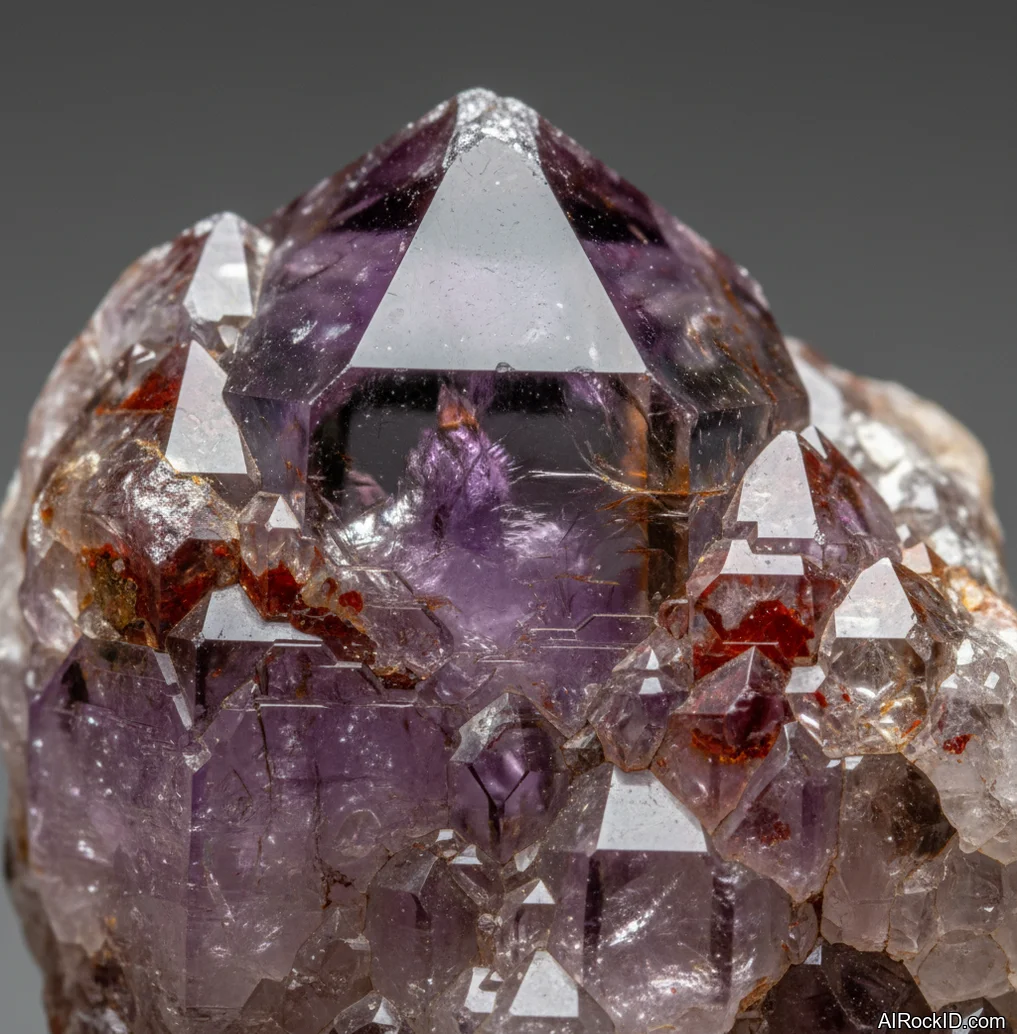
Quick answer: Super Seven is a trade name for quartz specimens sold as containing a mix of inclusions such as amethyst, smoky quartz, clear quartz, rutile, goethite, lepidocrocite, and cacoxenite. Because the name is commercial rather than a single mineral species, careful visual checking and seller disclosure matter when identifying or buying it.
AI Rock ID can help screen Super Seven by recognizing quartz features, purple or smoky zones, and visible inclusions from a photo. RockIdentifier.io treats Super Seven as a quartz-based trade material, so results should be confirmed with close inspection and, for valuable pieces, seller documentation.
Good fit
- Collectors who like included quartz with visible needles, flecks, clouds, or color zoning
- Buyers who want a quartz specimen with amethyst or smoky quartz character in one piece
- People comparing commercial crystal names with mineral-based descriptions
- Beginners who prefer specimens that can be inspected visually without specialized tools
Not a good fit
- Buyers who need a formally recognized mineral species name
- Anyone expecting every piece labeled Super Seven to contain all seven named minerals
- Collectors who require laboratory-confirmed inclusion identification for each component
- People seeking a crystal for medical treatment or guaranteed health effects
Most commonly confused with
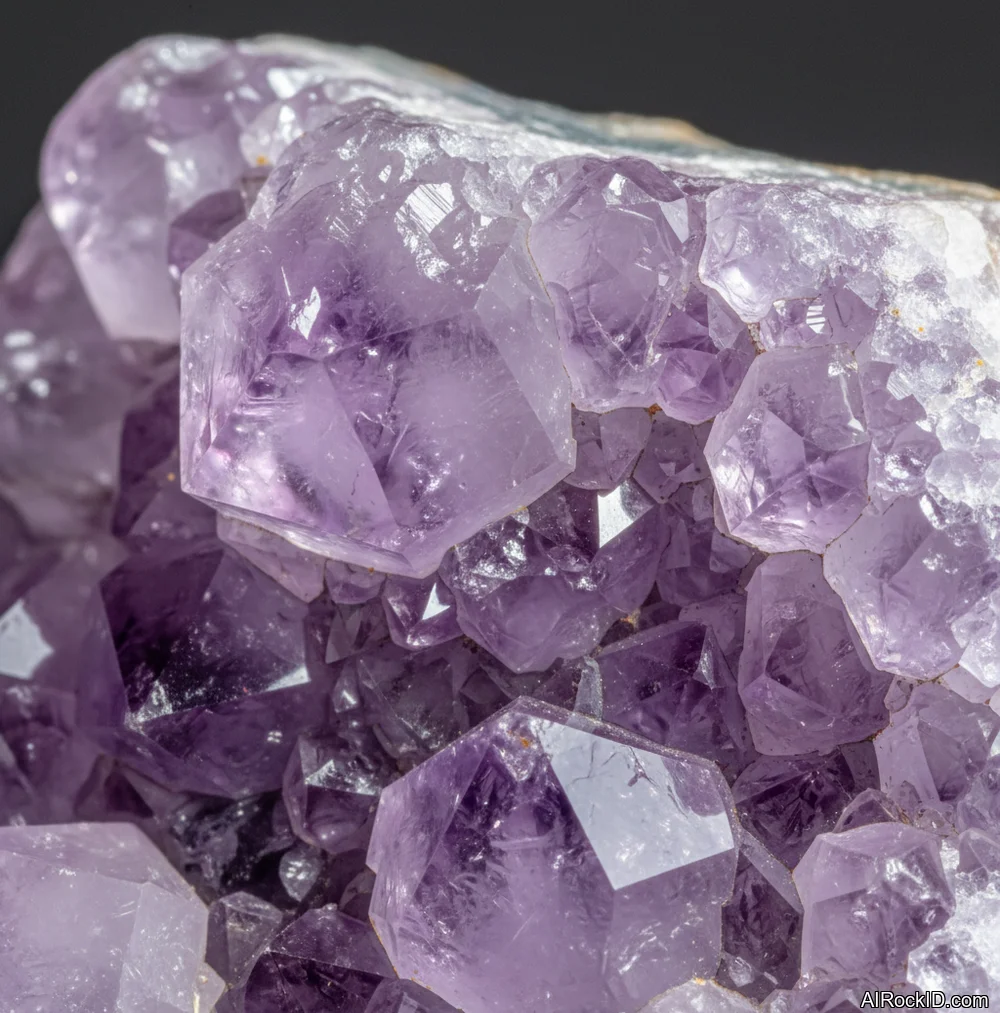
- Amethyst: Amethyst is purple quartz; Super Seven may contain amethyst zones but is sold for multiple inclusions or colors.
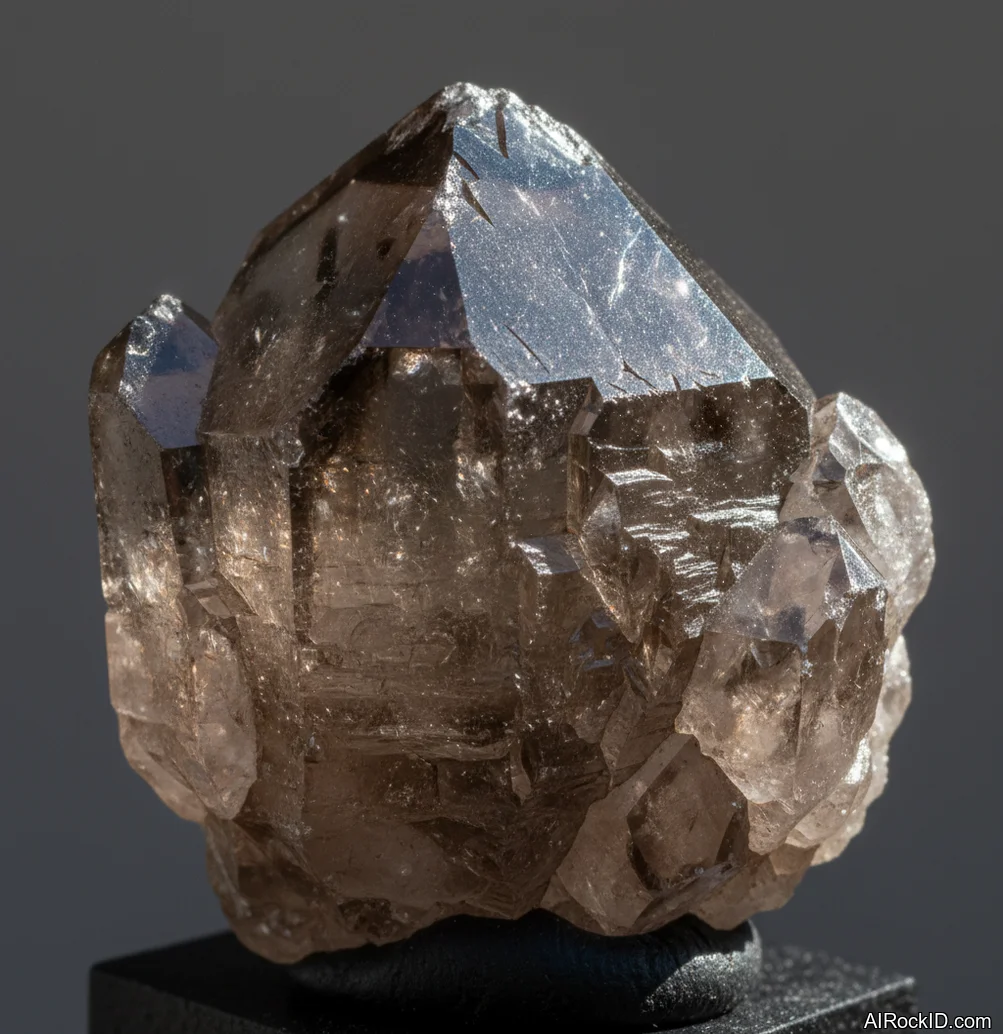
- Smoky Quartz: Smoky quartz is brown to gray quartz; Super Seven may include smoky areas along with other inclusions.
- Rutilated Quartz: Rutilated quartz has rutile needles, while Super Seven may show rutile plus other iron-oxide or quartz features.
- Lodolite: Lodolite is included quartz with scenic internal patterns; Super Seven is a narrower trade label tied to a specific claimed inclusion mix.
Super Seven vs Similar Included Quartz
| Material | Main ID clue | Buying note |
|---|---|---|
| Super Seven | Quartz with mixed purple, smoky, clear, or included zones | Ask which inclusions are visible or documented |
| Amethyst | Purple quartz without needing multiple inclusion types | Color and clarity often drive price |
| Rutilated Quartz | Distinct needle-like rutile inclusions | Needle density and pattern affect appearance |
| Lodolite | Scenic, mossy, or landscape-like inclusions inside quartz | Trade name may cover many inclusion types |
| Auralite 23 | Included amethyst sold under a separate commercial name | Claims of many minerals may need documentation |
AI identification confidence
AI identification is usually moderate for recognizing quartz, amethyst-like color, smoky zones, and obvious inclusions. Confidence is lower for confirming the exact seven named inclusions because many require magnification, chemical testing, or reliable provenance.
When AI gets it wrong
- A single-color amethyst point is labeled Super Seven because it has minor internal veils
- Iron staining, fractures, or clay inclusions are mistaken for specific minerals such as cacoxenite or goethite
- A photo with strong lighting makes clear quartz look smoky or purple
- Dyed, coated, or heated quartz is identified from color alone without checking surface features
Final recommendation
Choose Super Seven by visible features rather than by the label alone: look for natural quartz structure, varied inclusions, and clear seller photos. For higher-priced specimens, request locality information, untreated status, and any available inclusion documentation.
How to Check Super Seven Authenticity
Authentic-looking Super Seven should show inclusions within the quartz rather than paint, glitter, or coating on the surface. Use a loupe to check whether needles, flakes, or clouds continue below the polished surface. Ask the seller for origin, treatment disclosure, and whether the piece is natural, polished, dyed, coated, or assembled.
Buying Super Seven Online
Online listings should show the exact item being sold, not only sample photos. Clear images from several angles help confirm whether inclusions are internal and whether purple, smoky, or clear areas are natural-looking. Be cautious of listings that guarantee all seven minerals without close-up photos or documentation.
Locality and Trade Name Notes
Super Seven is most commonly associated with Brazilian quartz material, especially included amethyst and smoky quartz. The name is not a strict mineral classification, so two pieces sold as Super Seven can look very different. Locality claims can affect price, but they should be supported by seller records or reputable sourcing.
What Is Super Seven?
Super Seven is a trade name dealers use for quartz that’s marketed as having seven minerals, or mineral phases, all in the same piece. Thing is, when it’s in your hand, you’re mostly holding quartz. The rest shows up as inclusions and color zoning that look like tiny rust clouds, black threads, and those purple amethyst patches, like they’re trapped under glass.
Pick one up and you’ll notice the temperature first. Real quartz stays cool, even if it’s been sitting on a dealer’s black velvet tray under hot lights. And when you tilt it, the inclusions don’t “float” the way they do in resin fakes. They sit where they are, at fixed depths, like layers in a window.
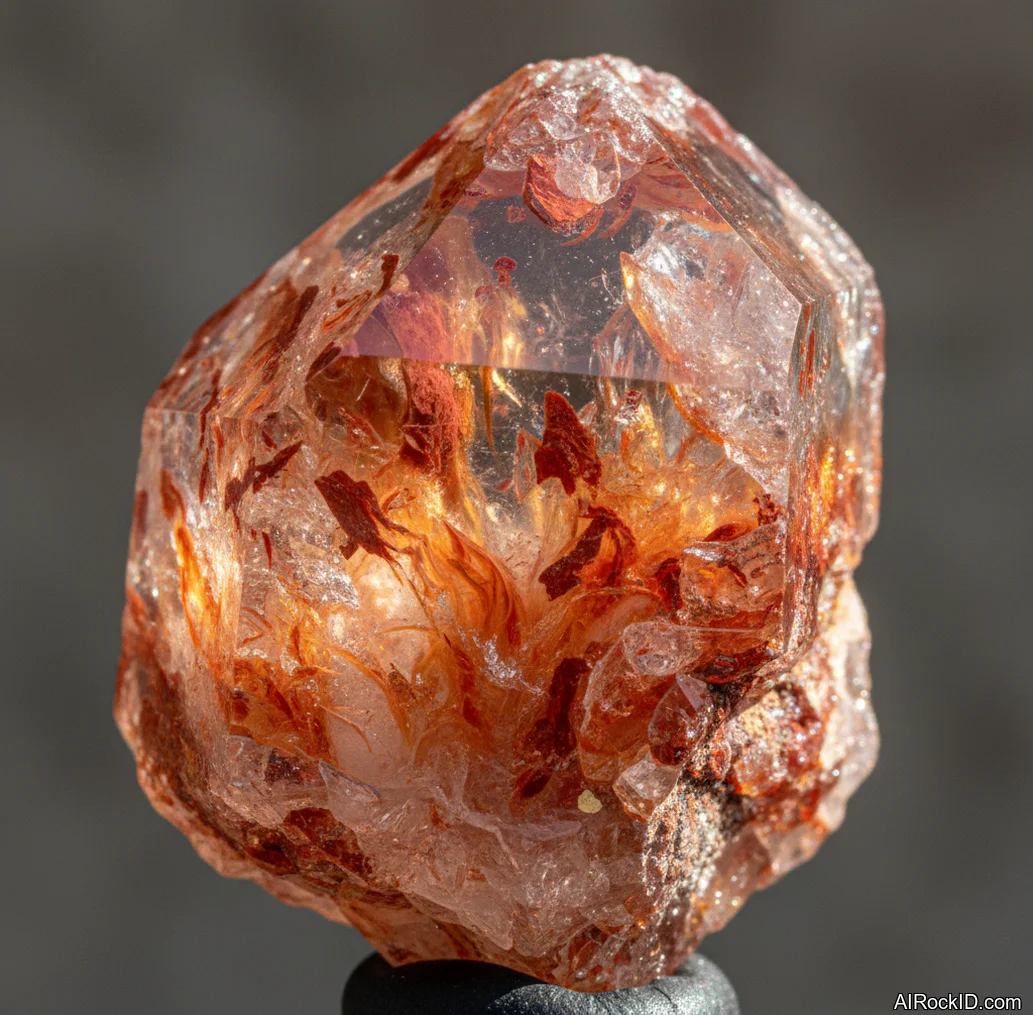
At a glance, a lot of Super Seven on the market can look pretty similar. But the range is bigger than people expect. Some pieces are mostly clear quartz with just a few red-brown sprays. Others go heavy on amethyst, with smoky sections and fine needles. But here’s where it gets messy: that label gets used loosely. I’ve opened parcels where “Super Seven” was basically hematoid quartz with a sales pitch, and nothing close to seven identifiable components.
Origin & History
Most dealers I’ve talked to peg the name “Super Seven” to the 1990s metaphysical market. Back then it was sold as one stone that supposedly carries seven different energies. And you’ll hear it called “Melody’s Stone,” too, linked to Melody (the well-known crystal author) because her books and the whole shop scene helped that label stick.
Name-wise, it’s pretty straightforward: “super” plus “seven,” since sellers say the stone has seven inclusions or associated minerals. The usual lineup is amethyst, clear quartz, smoky quartz, rutile, goethite, lepidocrocite, and cacoxenite. But here’s the catch: if you’re being strict about mineral ID, you can’t always prove every single one is actually present without lab work. Thing is, a lot of what gets pointed out as “cacoxenite” is really just that golden-brown, radial, sunburst-looking inclusion habit, and in the trade it tends to get called cacoxenite anyway.
Where Is Super Seven Found?
Commercial Super Seven is strongly associated with Brazil, especially Minas Gerais and nearby pegmatite and hydrothermal quartz-producing districts; the “Super Seven” name is rarely used for comparable included quartz from elsewhere.
Formation
Look at the best pieces up close and you can practically watch them grow. Quartz builds out of silica-rich fluids sitting in veins and pockets, and when the chemistry drifts you get zoning: clear to smoky, then those purple amethyst bands, then it swings back to clearer quartz again. You can even see the boundaries if you catch it under a hard light and tilt it, that little “step” where the color changes.
Inclusions show up when iron oxides, titanium minerals, or other phases are floating around in the fluid while the crystal’s forming, or when earlier minerals get coated over, trapped, and sealed in as the quartz keeps growing. Thing is, compared to plain rock crystal, included material usually comes from pockets where the fluid was carrying a lot of “stuff.” So instead of a clean, empty look, you get plumes, needles, tiny starbursts. Busy, in a good way.
But not every piece forms in a way that gives you the full “seven” checklist. In my experience, the most convincing Super Seven has obvious amethyst zoning plus at least two clearly different inclusion styles, like reddish plates and black needles, all sealed under crisp quartz faces (the kind that still catch a sharp edge when you run a fingernail along them).
How to Identify Super Seven
Color: Color ranges from clear to smoky gray with patches of amethyst purple, plus red-brown, gold, or black inclusions that look like threads, dust, or little blooms inside the crystal.
Luster: Vitreous luster, like clean glass.
The real test is a loupe. Inclusions in natural quartz have sharp depth and irregular boundaries, not printed-looking speckles or perfectly repeated patterns. If you scratch it with a steel knife, quartz shouldn’t take the scratch, but the knife will leave a faint metal streak you can usually wipe off. And watch for dye: overly even, inky purple that sits in fractures is a red flag, especially in drilled beads.
Common Look-Alikes
Super Seven is sometimes confused with these materials:
- Amethyst with hematite/goethite inclusions (often sold as “red included amethyst” or “hematoid amethyst”)
- Rutilated quartz (golden or black rutile needles that get mistaken for the “seven” mix)
- Smoky quartz with iron staining (natural or irradiated smoky that mimics the gray-brown zones)
- Dyed crackle quartz (dyed purple/red to fake amethyst-lepidocrocite style zoning)
- Glass imitations with suspended glitter or fibers (man-made “inclusion” look, sometimes sold as rare Super Seven)
- Auralite-23 / “capped amethyst” trade-name quartz (another mixed-mineral marketing name that gets swapped in listings)
Market Cautions & Treatments
When AI Can Get This Wrong
At first glance, phone photos can’t separate Super Seven from hematoid amethyst, rutilated quartz, or plain included quartz because the whole story is in the inclusions. AI also gets fooled by polished points where the maker oriented the cut to stack the purple and red into one dramatic face. The real test is in-hand: quartz stays cool, scratches glass cleanly, and under a loupe the inclusions sit on internal planes, not floating like they do in glass.
Properties of Super Seven
Physical Properties
| Crystal System | Trigonal |
| Hardness (Mohs) | 7 (Hard (6-7.5)) |
| Density | 2.65 g/cm3 |
| Luster | Vitreous |
| Diaphaneity | Transparent to translucent |
| Fracture | Conchoidal |
| Streak | White |
| Magnetism | Non-magnetic |
| Colors | Colorless, White, Gray, Brown, Purple, Red, Black, Golden |
Chemical Properties
| Classification | Silicates |
| Formula | SiO2 |
| Elements | Si, O |
| Common Impurities | Fe, Al, Ti, Mn |
Optical Properties
| Refractive Index | 1.544-1.553 |
| Birefringence | 0.009 |
| Pleochroism | None |
| Optical Character | Uniaxial |
Super Seven Health & Safety
Super Seven is usually safe to handle since it’s mostly quartz. Just treat it like you would any other quartz stone. If you’re cutting or grinding it, stick to normal stone-care habits (you know, dust control and all that).
Safety Tips
If you’re going to do any lapidary work, put on a respirator and keep everything wet so the silica dust doesn’t get into the air.
Super Seven Value & Price
Price Range
Rough/Tumbled: $15 - $250 per piece
Cut/Polished: $2 - $20 per carat
Prices shoot up when the amethyst zoning is really strong, the natural points are sharp and clean, and the inclusions are dramatic and mixed. But plain, included quartz gets slapped with the “Super Seven” label too, and honestly? It shouldn’t cost much.
Durability
Durable — Scratch resistance: Excellent, Toughness: Good
Quartz is stable in normal home conditions, but polished points can chip on edges if they bang against other hard stones.
How to Care for Super Seven
Use & Storage
Store it in a pouch or a compartmented box so the tips don’t knock together. Quartz is hard, but pointy edges still chip when they meet other quartz.
Cleaning
1) Rinse under lukewarm water with a drop of mild soap. 2) Use a soft toothbrush around creases and base edges. 3) Rinse well and pat dry; avoid leaving it sitting on a sunny windowsill for long periods.
Cleanse & Charge
For metaphysical-style cleansing, rinse with water or use smoke or sound if you don’t want to wet a wrapped pendant. If you charge in sunlight, keep it brief because some purple can look a bit washed after long, bright exposure.
Placement
I like it where side light hits it, like a shelf near a lamp, because the inclusions pop when the light comes in low. On a desk, set it on a felt pad so it doesn’t skate and click against other pieces.
Caution
Skip harsh chemicals and don’t use an ultrasonic cleaner, especially on included quartz since it can have those tiny fracture networks running through it. And keep polished points from knocking around with other hard stones, because the edges bruise fast (you’ll see little nicks show up right on the sharp corners).
Works Well With
Super Seven Meaning & Healing Properties
A lot of people buy Super Seven for the story as much as the way it looks. In crystal-shop talk, it gets pegged as an “all chakras” stone, like some all-in-one toolkit you can just grab and go. My take, after handling a ton of it (and hearing what customers say year after year), is that it acts like quartz first: it’s a focus stone. You sit with it, your attention tightens up, and that busy, speckled, streaky interior gives your mind something to latch onto.
Next to plain clear quartz, the inclusions seem to shift what people notice. A piece with a lot of smoky zoning often feels more grounded in practice, and the purple amethyst-y sections push things toward calmer, quieter sessions. But look, I’m not going to sell it as medicine. If you’ve got anxiety, sleep issues, or anything physical going on, get real support and treat crystals like a personal ritual object, not a fix.
Thing is, the “Super Seven” label can make people shop by checklist. And honestly, I’ve seen better outcomes when folks just choose with their eyes and their hands. Pick up a few. Feel the weight in your palm, the way the edges catch slightly if it’s been polished a little too sharply, the cool-to-warm shift after it’s been sitting against your skin for a minute. The one you keep turning over without even thinking, that’s usually the right one for your shelf or your pocket, even if it’s “only” got two or three inclusion types you can actually see. Who cares if it ticks every box?
Common mistakes
- Assuming every Super Seven specimen contains all seven named minerals
- Identifying inclusions from color alone without magnification or documentation
- Confusing surface staining with internal mineral inclusions
- Paying a premium for a trade name when the piece is ordinary included quartz
- Overlooking dye, coatings, or enhanced color in brightly colored specimens
- Treating metaphysical descriptions as mineralogical proof
Identify Super Seven from a photo
Compare Super Seven traits, care tips, value clues, and common lookalikes with a clear photo.