Unakite
What Is Unakite?
Unakite is a pink-and-green metamorphic rock made mostly of epidote, pink feldspar, and quartz.
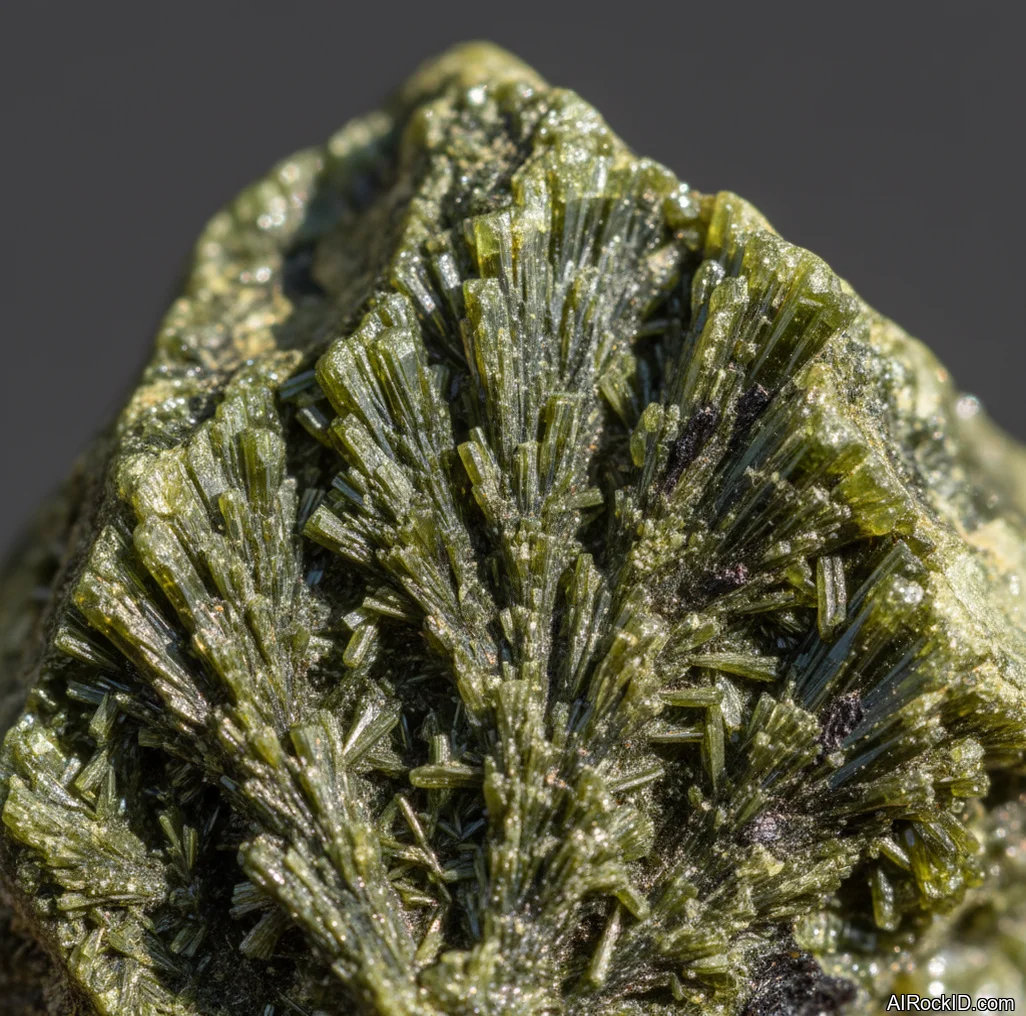
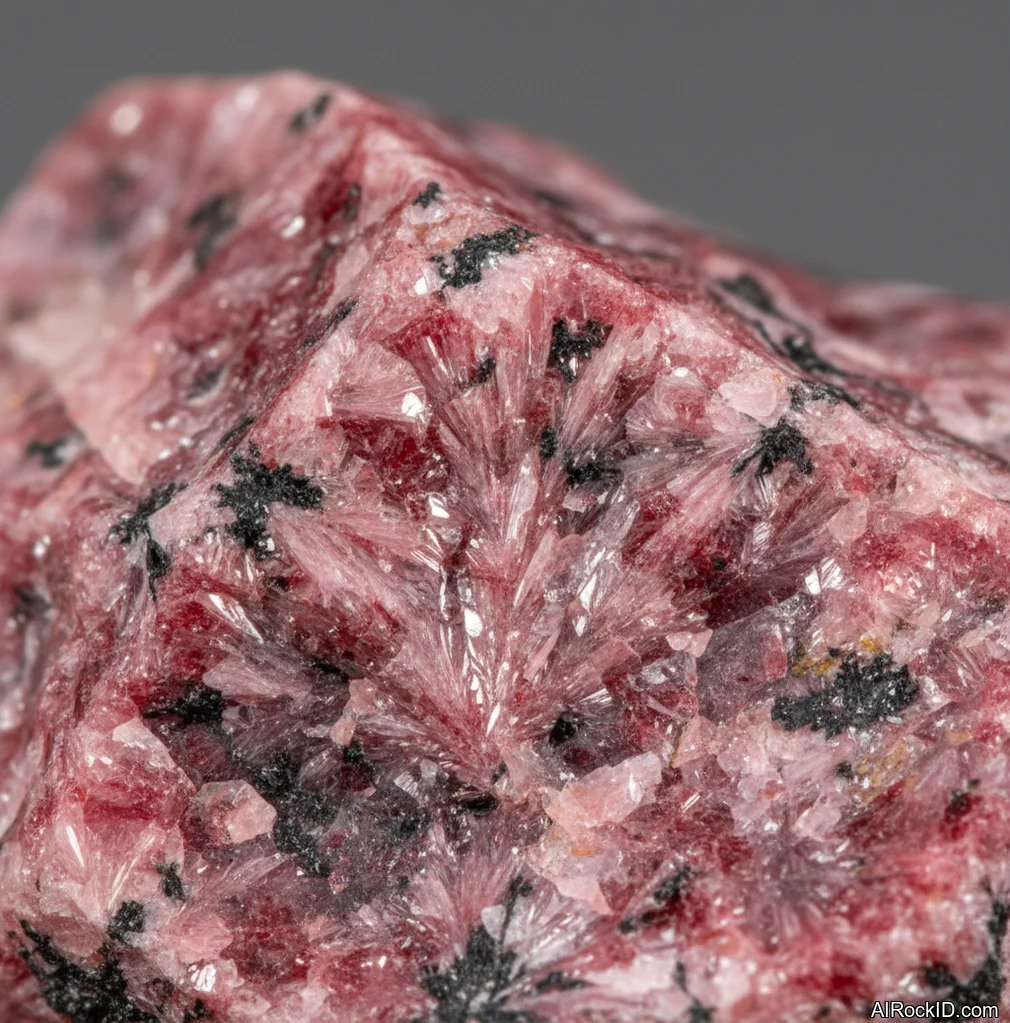
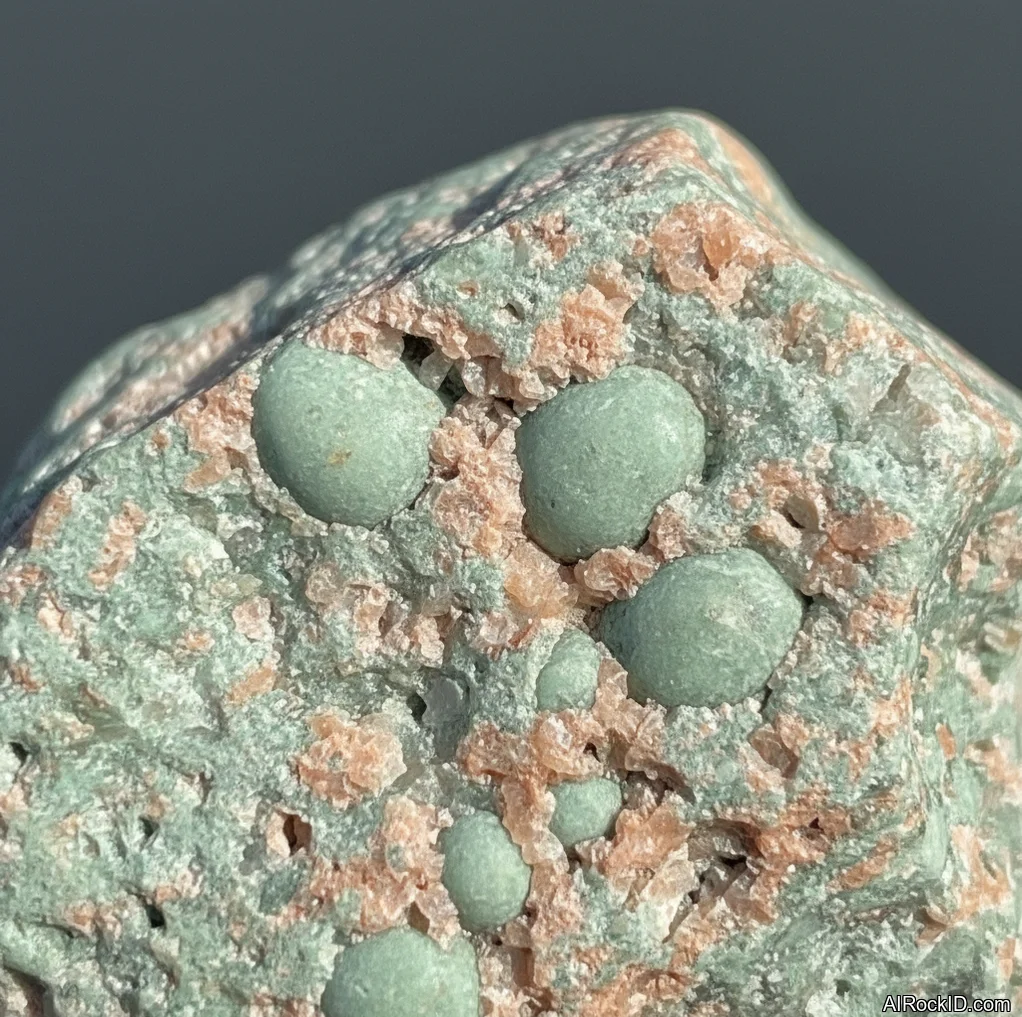
Hold a chunk and it has that classic river-stone heft and smoothness, like it’s happier sitting dead still in your palm than bouncing around. Most pieces come out mottled instead of banded, with pistachio-to-olive green blotches and salmon-pink patches that, honestly, can look like raw ham pressed up against avocado. The quartz tends to show up as glassy gray grains wedged between the bigger feldspar zones. And it’s one of those rocks that just doesn’t photograph the way it looks on the table, because once it’s polished you get a little depth, the quartz flashes when you tilt it, and the epidote stays more matte.
People will glance at it and call it “unakite jasper,” but that’s not quite right. Jasper is microcrystalline quartz. Unakite is a mineral mix you can actually tease apart with a hand lens (if your eyes are cooperating and the light’s decent). And yeah, most of what you’ll see for sale is tumbled or cut. Raw unakite is out there, but the pieces that show good color without any polish can look kinda homely.
Origin & History
“Unakite” gets its name from the Unaka Mountains in the Appalachian region of the southeastern United States. American geologists working up there first described it as a rock type in the late 1800s, and the name just… stuck. The color combo is hard to miss, even in a dusty hand sample.
Thing is, it doesn’t come with the old lapidary legend that jade or lapis does. Unakite’s “history” is more like roadcuts, river gravels, and rock shops. I’ve seen it sitting in shallow plastic bins with little scratches on the sides (the kind that get tossed around all day) everywhere from tourist stores in the Smokies to serious mineral shows, usually right next to jasper and agate. Why? It takes a polish, and it’s tough enough for daily wear.
Where Is Unakite Found?
Unakite shows up in metamorphosed granites and as river-worn cobbles, with classic material coming from the Appalachian Mountains in the eastern United States.
Formation
Look closely at unakite and you’re basically holding a piece of granite that’s been shoved around and chemically reworked. It starts life as a granitic mix with feldspar and quartz. Then metamorphism hits, fluids move through the rock, and part of the feldspar and biotite gets converted into epidote. That’s the source of the green.
Thing is, it only happens when the chemistry lines up and there’s enough fluid movement to do the swapping, so you usually run into it in zones where granites got altered during mountain building. Out in the field it shows up as big, massive rock instead of nice standalone crystals, and when it breaks down it tends to weather into rounded cobbles that roll into streams. And those stream-worn pieces, already smoothed from bouncing off other rocks, are the ones that tumble naturally and really pop in color once you cut or polish them.
How to Identify Unakite
Color: Mottled salmon-pink feldspar with olive to pistachio green epidote, usually with scattered gray-clear quartz grains. Colors are patchy and “chunky,” not banded like many jaspers.
Luster: Polished unakite has a mostly vitreous luster from quartz and feldspar, with epidote areas looking slightly duller.
Pick up a tumbled stone and tilt it under a bright light. The quartz flashes glassy while the green epidote stays more muted, so you can separate the ingredients by eye. If you scratch it with a steel knife, it usually resists pretty well, but it doesn’t feel as uniformly hard as a pure quartz pebble. The real test is a hand lens: you should see different mineral grains, not a single fine-grained quartz texture like true jasper.
Properties of Unakite
Physical Properties
| Crystal System | Triclinic |
| Hardness (Mohs) | 6-7 (Hard (6-7.5)) |
| Density | 2.65-2.90 g/cm3 |
| Luster | Vitreous |
| Diaphaneity | Opaque |
| Fracture | Uneven |
| Streak | White |
| Magnetism | Non-magnetic |
| Colors | pink, salmon, green, olive, gray, white |
Chemical Properties
| Classification | Silicates |
| Formula | Ca2(Al,Fe)3(SiO4)3(OH) |
| Elements | Ca, Al, Fe, Si, O, H |
| Common Impurities | Mn |
Optical Properties
| Refractive Index | 1.705-1.750 |
| Birefringence | 0.035 |
| Pleochroism | Weak |
| Optical Character | Biaxial |
Unakite Health & Safety
Unakite’s usually fine to handle, and it holds up in water for everyday use without any drama. But it’s still a silicate rock, so if you’re cutting it or grinding it and you see that fine, gritty dust (the stuff that clings to your fingers and gets on the workbench), don’t breathe it in.
Safety Tips
If you’re shaping or sanding, keep a little water going, put on a real respirator (not just a paper dust mask), and wipe up the slurry while it’s wet instead of letting it dry out and sweeping it around. Why kick that dust back into the air?
Unakite Value & Price
Price Range
Rough/Tumbled: $2 - $15 per tumbled stone (30-50 mm) or $8 - $40 per pound rough
Cut/Polished: $0.50 - $3 per carat
Price mostly comes down to color balance and how clean it actually polishes up. The top pieces hit that punchy pink and green and still throw off that little quartz sparkle when you tilt it under a light, but they don’t have those crumbly pits you can catch with a fingernail or the annoying black specks that jump out once it’s glossy.
Durability
Durable — Scratch resistance: Good, Toughness: Good
It’s stable in normal household conditions, but polished surfaces can dull if they ride around with harder quartz or grit in a pocket.
How to Care for Unakite
Use & Storage
Store polished unakite away from harder stones like agate and clear quartz if you care about keeping the shine. A simple cloth pouch does the job.
Cleaning
1) Rinse with lukewarm water. 2) Use a drop of mild soap and a soft toothbrush to get into pits. 3) Rinse again and dry with a soft cloth.
Cleanse & Charge
For a simple reset, rinse and let it dry fully, or leave it on a shelf overnight. If you use sunlight, keep it short because long window-sill time can fade some stones and it’s not worth the gamble.
Placement
On a desk or nightstand it reads calm and earthy, and it doesn’t mind being handled. I like it where it can pick up light, because the quartz grains do a lot of the visual work.
Caution
Skip harsh cleaners and ultrasonic machines, especially if the piece has those tiny pits or little fractures you can catch with a fingernail. And don’t just toss it loose in a bag with corundum, topaz, or quartz points. You’ll hear it clack around, and that’s when the trouble starts.
Works Well With
Unakite Meaning & Healing Properties
Next to the flashier stones, unakite just feels… practical. Collectors usually put it in that heart-centered corner, sure, but it’s got this grounded, slightly messy honesty to it that I don’t get from the shinier stuff. I’ve used one as a “cool down” palm stone after a rough day because it’s smooth, a little hefty in your hand, and the colors don’t shout at you. That’s not medicine. It’s just the feel of it.
People tie the pink feldspar to warmth and being a little kinder to yourself, and the green epidote to growth and getting unstuck. And honestly, it’s easy to see why that idea hangs around. The mix can look like spring shoots pushing up through old granite. But here’s the snag: a lot of unakite out there gets cut from dull, muddy rough, and when the green goes too dark the whole mood shifts. It can look bruised.
So if you’re working it into a routine, keep it simple. Hold it during breath work. Set it near your journal (right where you’ll bump it with your elbow). Or just use it as a reminder object when you’re trying to stay steady while you do emotional cleanup. I notice I grab unakite most when I want something friendly that doesn’t feel “high voltage.” It’s more like a warm stone you’d find in a creek and keep in your pocket for a week.
Identify Any Crystal Instantly
Snap a photo and get properties, value, care instructions, and healing meanings in seconds.