Vera Cruz Amethyst


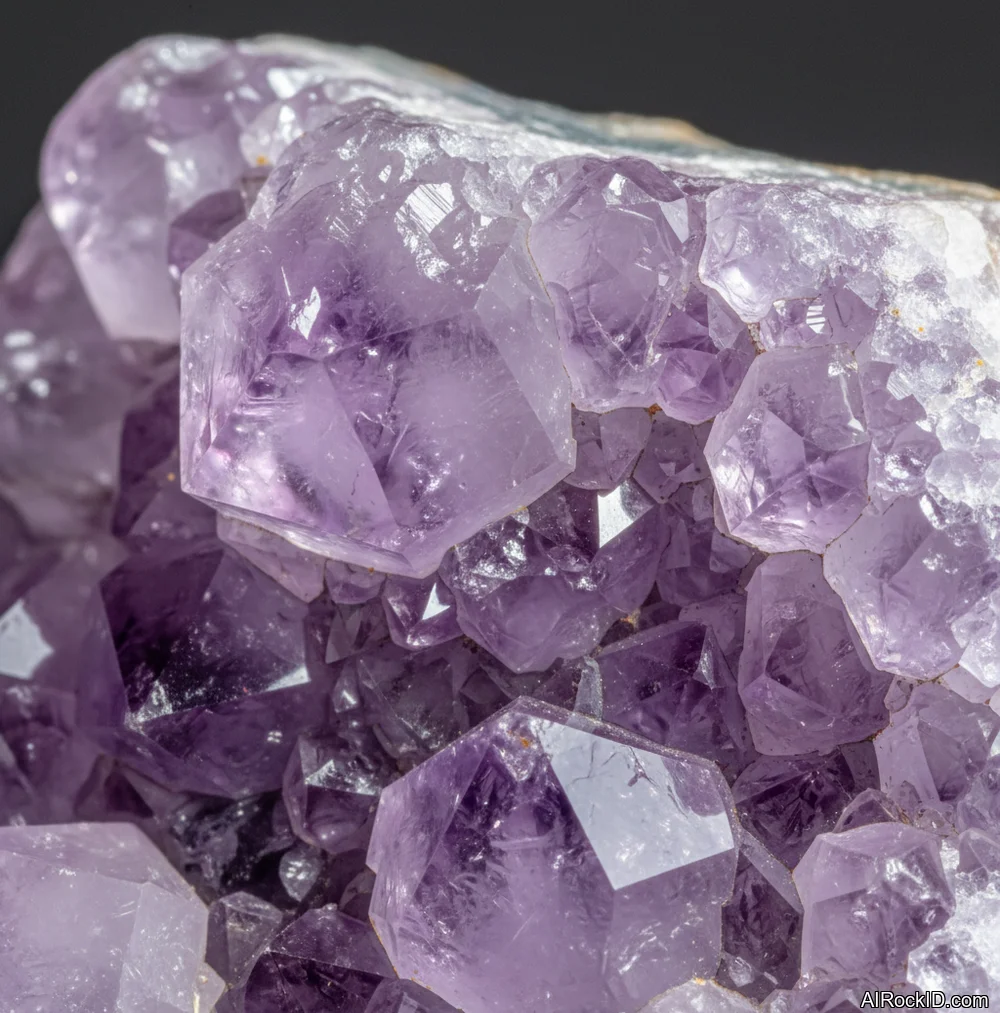
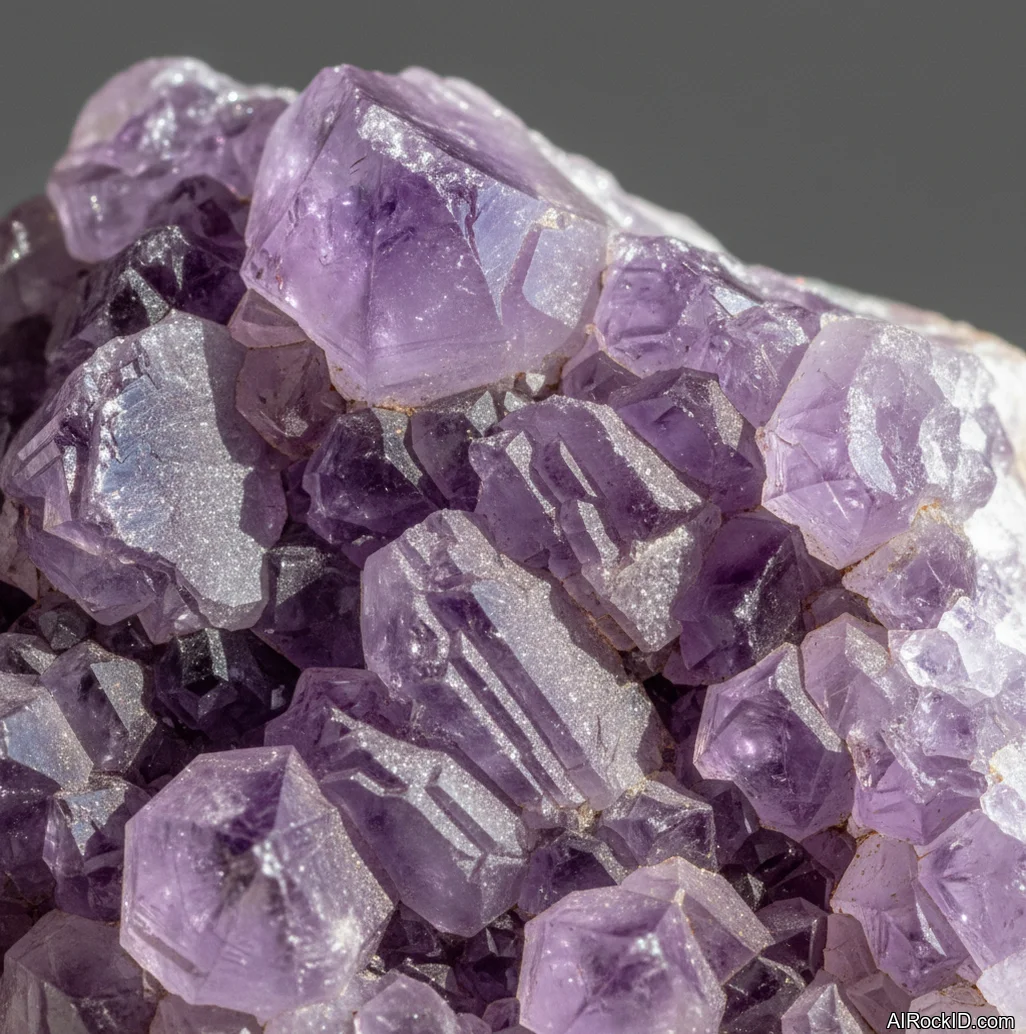
Quick answer: Vera Cruz Amethyst is a light purple variety of quartz associated with Veracruz, Mexico, often seen as slender, transparent points on matrix. It is commonly identified by its delicate lavender color, glassy luster, hexagonal quartz habit, and comparatively fine crystal form.
AI Rock ID can help compare a Vera Cruz Amethyst photo against common quartz lookalikes by checking color, crystal habit, transparency, and surface features. RockIdentifier.io provides visual identification support, but locality claims such as “Vera Cruz” should be confirmed with seller documentation when origin matters.
Good fit
- Collectors who prefer pale lavender amethyst rather than dark purple material
- People looking for delicate quartz points or small crystal clusters
- Buyers who value locality-specific specimens from Mexico
- Photography or display collections where transparency and crystal shape are important
Not a good fit
- Buyers who want deep, saturated purple amethyst color
- High-wear jewelry settings where thin points may chip or break
- Anyone needing guaranteed locality without provenance or seller records
Most commonly confused with
- Amethyst: General amethyst can be darker, chunkier, or from many localities; Vera Cruz material is typically pale and slender.
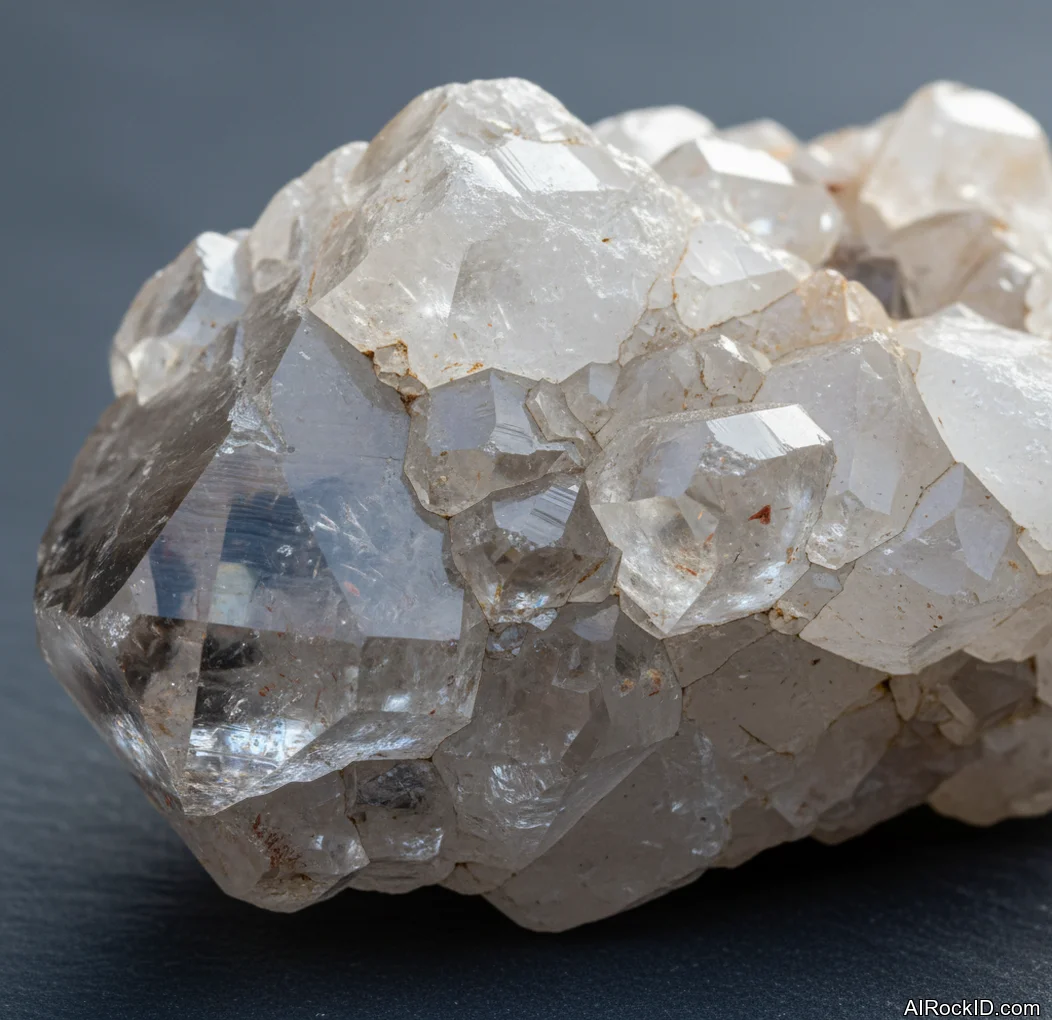
- Clear Quartz: Clear quartz lacks the lavender to violet color that defines amethyst.
- Rose Quartz: Rose quartz is pink and usually massive rather than forming distinct purple points.
- Fluorite: Fluorite can be purple but often shows cubic cleavage and lower hardness than quartz.
Vera Cruz Amethyst vs. Similar Purple Crystals
| Specimen | Typical Color | Crystal Habit | Key Difference |
|---|---|---|---|
| Vera Cruz Amethyst | Pale lavender to light violet | Slender quartz points, often transparent | Locality-associated amethyst from Veracruz, Mexico |
| Dark Amethyst | Medium to deep purple | Points, geodes, clusters, or cut stones | Usually stronger color and broader source range |
| Purple Fluorite | Purple, violet, or banded | Cubic or cleaved forms | Softer than quartz and may show perfect cleavage |
| Clear Quartz with Coating | Colorless with surface tint | Quartz points or clusters | Color may appear superficial rather than internal |
| Spirit Quartz | Lavender, white, gray, or yellowish | Druzy-coated main crystal | Covered with many tiny secondary crystals |
AI identification confidence
AI identification is usually more confident when the specimen shows clear quartz termination, pale lavender color, and visible crystal habit in natural light. Confidence is lower for close-up photos without scale, heavily edited images, dyed pieces, or listings where the claimed Veracruz locality cannot be visually verified.
When AI gets it wrong
- A color-enhanced or filtered photo makes clear quartz appear lavender.
- Purple fluorite is photographed from an angle that hides cubic cleavage.
- A general amethyst cluster is labeled Vera Cruz without locality evidence.
- The specimen is very small, blurry, or photographed under colored lighting.
Final recommendation
Choose Vera Cruz Amethyst for pale color, slender quartz form, and a locality-specific collection focus. If origin affects value, prioritize clear photos, reputable sellers, and written locality information over color alone.
How to Check a Vera Cruz Amethyst Listing
A reliable listing should show the crystal in neutral lighting, include close-up and full-specimen photos, and state whether the piece is from Veracruz, Mexico. Look for natural quartz terminations, pale lavender color, and no obvious dye concentration in cracks. If the price depends on locality, ask whether the seller has mine, dealer, or collection provenance.
Natural Color vs. Enhanced Appearance
Natural Vera Cruz Amethyst is often light in tone, so unusually vivid purple color may deserve closer inspection. Some photos are oversaturated, taken under purple lighting, or edited to make pale amethyst look darker. Natural color should appear within the crystal rather than as a surface film or concentrated stain.
Photo Tips for Identification
Photograph Vera Cruz Amethyst on a plain white or gray background in indirect daylight. Include one image of the entire specimen, one close-up of the termination, and one side view showing transparency and color zoning. Adding a ruler or coin helps distinguish fine Vera Cruz points from larger general amethyst specimens.
What Is Vera Cruz Amethyst?
Vera Cruz Amethyst is a light lavender to pale purple variety of quartz (amethyst) from Veracruz, Mexico, especially around Las Vigas.
Hold a cluster in your hand and it just looks airy. Not like those chunky Brazilian points at all. The crystals tend to be skinny, kind of needle-ish, and honestly a lot more elegant than the beefy stuff. Some pieces are so pale they look almost clear until you tip them under a warm lamp, and then that soft violet finally shows up.
And here’s the collector part people don’t always expect. The best Vera Cruz has this clean, glassy look with sharp little terminations, but it can be way more fragile than you’d think. Those thin points snap if they’re bouncing around in a box at a show. I’ve opened dealer flats where the bottom of the tray had what looked like purple glass splinters from broken tips.
Origin & History
“Amethyst” traces back to the Greek *amethystos*, basically “not drunk,” tied to that old wine myth everybody’s heard at some point.
Vera Cruz Amethyst is a trade name linked to the Mexican state of Veracruz. And in mineral circles you’ll also hear “Las Vigas amethyst,” since that district is where a lot of the classic material comes from.
Quartz has been described and re-described since the early days of mineralogy, but “Vera Cruz” as a locality label is more of a collector/dealer habit than some official “new mineral” moment. Dealers started separating it out because the crystal habit is so recognizable once you’ve actually handled a few pieces (and felt how light and skinny those points are in the hand). Slender crystals. Pale color. A look that just doesn’t match Uruguay or Thunder Bay. It’s the kind of name that tells you what you’re getting before you even see the tray.
Where Is Vera Cruz Amethyst Found?
It’s primarily associated with the Las Vigas district in Veracruz, Mexico, with similar slender amethyst points coming from nearby workings in the same region.
Formation
Most Vera Cruz amethyst comes together the same basic way amethyst does anywhere else: silica-rich fluids work their way through fractures and cavities, quartz starts growing, and iron sneaks into the crystal structure. And then natural radiation in the host rock bumps that iron into the color centers that turn the quartz purple.
If you really stare at the growth, it usually looks like it formed in open space, not jammed in and pinched. The crystals are often long and a bit separated, like they had room to stretch out. But that roomy setup that makes them look so airy also means a lot of real pieces have healed fractures, plus tiny chips right on the tips (the kind you can feel with a fingernail). That’s just normal for this locality, not some automatic red flag.
How to Identify Vera Cruz Amethyst
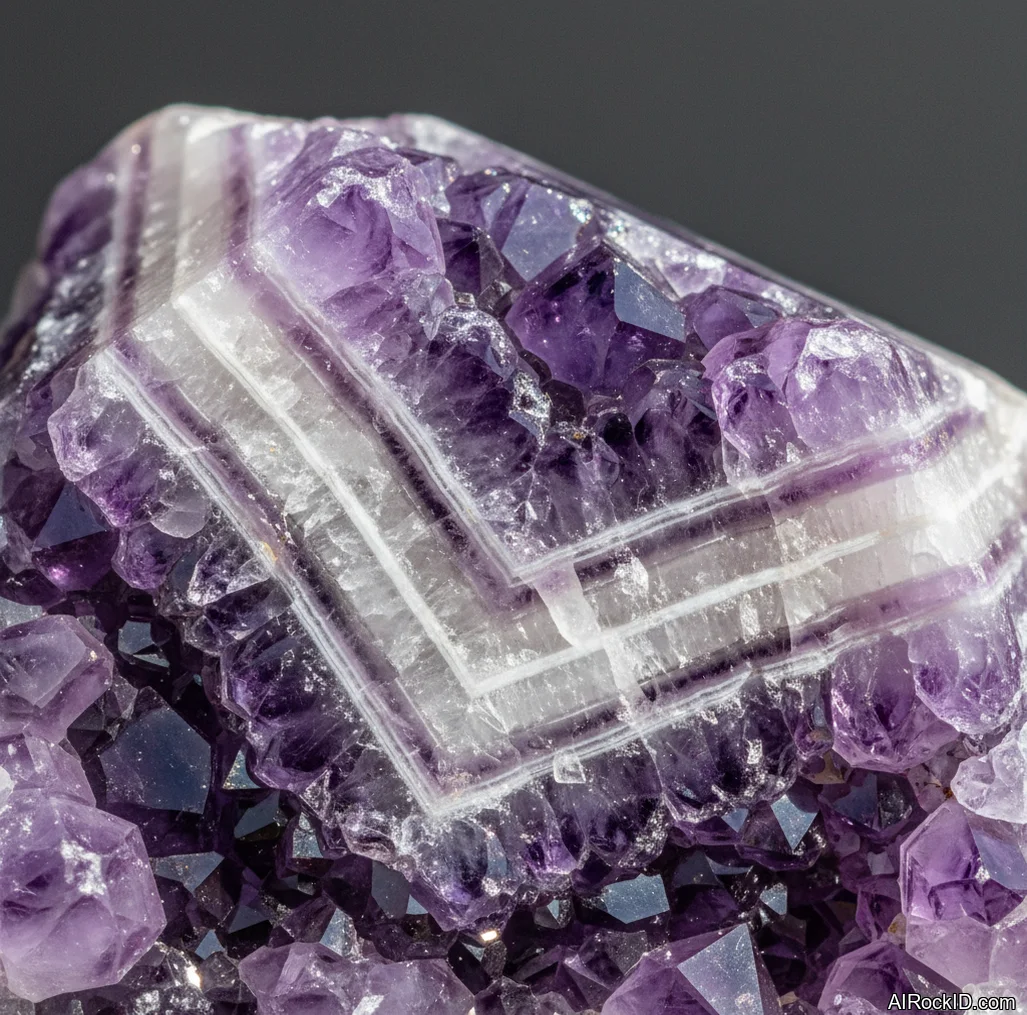
Color: Color ranges from nearly colorless with a faint lilac tint to light lavender and soft medium purple, often stronger toward the tips. Under warm indoor light, the violet can look a touch rosier than it does in daylight.
Luster: Vitreous, like clean glass.
Pick up a specimen and tilt it under a single light source. Good Vera Cruz often has crisp, sharp terminations and a watery clarity that doesn’t look “milky” unless it’s included. The real test is the habit: long, slender points are common, while chunky, dark purple points sold as “Vera Cruz” are usually just generic amethyst with a story. And if the piece feels warm right away, be suspicious of glass; real quartz tends to stay cool in your hand for a bit.
Common Look-Alikes
Vera Cruz Amethyst is sometimes confused with these materials:
- Brazilian Amethyst (pale points)
- Tanzanite Quartz (African origin, similar habit)
- Synthetic Amethyst (lab-grown)
- Dyed Quartz (especially pale lilac)
- Glass fakes (pale purple)
- Heat-treated Amethyst (color-shifted)
Market Cautions & Treatments
When AI Can Get This Wrong
Photo ID tools confuse Vera Cruz Amethyst with pale Brazilian amethyst and some African quartz, especially when the needles are photographed against a white background. AI misses the telltale needle habit and the almost weightless feel in hand. If you can scratch glass with it, spot a sharp natural termination, and see no color pooling, odds are it's the real deal.
Properties of Vera Cruz Amethyst
Physical Properties
| Crystal System | Trigonal |
| Hardness (Mohs) | 7 (Hard (6-7.5)) |
| Density | 2.65 g/cm3 |
| Luster | Vitreous |
| Diaphaneity | Transparent to translucent |
| Fracture | Conchoidal |
| Streak | White |
| Magnetism | Non-magnetic |
| Colors | Pale lavender, Light purple, Lilac, Nearly colorless |
Chemical Properties
| Classification | Silicates |
| Formula | SiO2 |
| Elements | Si, O |
| Common Impurities | Fe, Al, Mn |
Optical Properties
| Refractive Index | 1.544-1.553 |
| Birefringence | 0.009 |
| Pleochroism | Weak |
| Optical Character | Uniaxial |
Vera Cruz Amethyst Health & Safety
Vera Cruz amethyst is just quartz, and it’s non-toxic, so you can handle it safely. Regular, everyday care is plenty. The only real “risk”? Snapping one of those thin, needle-like points if you bump it on a hard countertop or drop it.
Safety Tips
If you’re trimming matrix or scrubbing with a brush, take it slow and put on eye protection. Those snapped tips can pop off little shards, and they’ll fly farther than you’d think.
Vera Cruz Amethyst Value & Price
Price Range
Rough/Tumbled: $25 - $400 per specimen
Cut/Polished: $5 - $30 per carat
Prices jump fast when you’ve got crisp terminations, hardly any dings or bruises, and that classic skinny “spray” habit that fans out the way it’s supposed to. Deep color just isn’t as common for this locality, and honestly the market usually coughs up more for a clean, elegant look and good clarity than it does for sheer darkness.
Durability
Durable — Scratch resistance: Excellent, Toughness: Good
It’s stable in normal conditions, but prolonged sun can fade amethyst color over time.
How to Care for Vera Cruz Amethyst
Use & Storage
Store it so the tips can’t bang into anything. I like a small specimen box with foam, or at least wrap it so the points aren’t taking the hit.
Cleaning
1) Rinse with lukewarm water to remove loose dust. 2) Use a soft toothbrush with a drop of mild dish soap around the base and between points. 3) Rinse well and air-dry; don’t bake it in sun on a windowsill.
Cleanse & Charge
If you do energy-style cleansing, stick to gentle options like smoke, sound, or a quick rinse and dry. Avoid long sunbaths since amethyst color can fade.
Placement
Put it somewhere it won’t get bumped, like a shelf corner or a cabinet. Under a warm lamp it can look more purple than it does in flat daylight.
Caution
Don’t hit it with harsh acids or bleach. And don’t toss it in a tumbler, either. Those thin Vera Cruz points will chip fast, even though quartz is hard. I’ve seen the little razor-y tips catch on other stones and come out with tiny dings (annoying, right?).
Works Well With
Vera Cruz Amethyst Meaning & Healing Properties
In crystal circles, people talk about Vera Cruz amethyst as the “light touch” version. That tracks with what I feel, too. I can be sorting through a tray of dark Uruguay chunks (the kind that feel heavy in your palm), and then I pick up a pale Vera Cruz spray and the whole mood flips. It’s quieter. Softer.
I use it the same way I use any amethyst: to wind down, clear my head, and keep myself from spiraling right before sleep. But I’m not going to pretend it’s medicine. If you’ve got anxiety or insomnia, treat it like a supportive ritual object, not a fix. A small piece on the nightstand can be that little cue to shut the phone off, stop doom-scrolling, and take a breath.
But there’s a practical angle people gloss over. These thin crystals chip easily, and snapping a point off is its own kind of stressful (and yeah, you’ll feel it in your stomach when you hear that tiny click). If you want an amethyst you can toss in a pocket and forget about, grab a tumbled stone. If you want something that looks like a little lavender sea urchin made of quartz points, Vera Cruz is the one. Just handle it like it’s delicate. Why risk it?
Common mistakes
- Assuming every pale amethyst point is from Veracruz without provenance
- Judging value only by purple saturation instead of form, clarity, damage, and locality
- Mistaking purple fluorite for amethyst without checking hardness or cleavage
- Overlooking chipped tips on thin quartz points
- Trusting heavily edited listing photos without requesting neutral-light images
Identify Vera Cruz Amethyst from a photo
Compare Vera Cruz Amethyst traits, care tips, value clues, and common lookalikes with a clear photo.