Watermelon Tourmaline
What Is Watermelon Tourmaline?
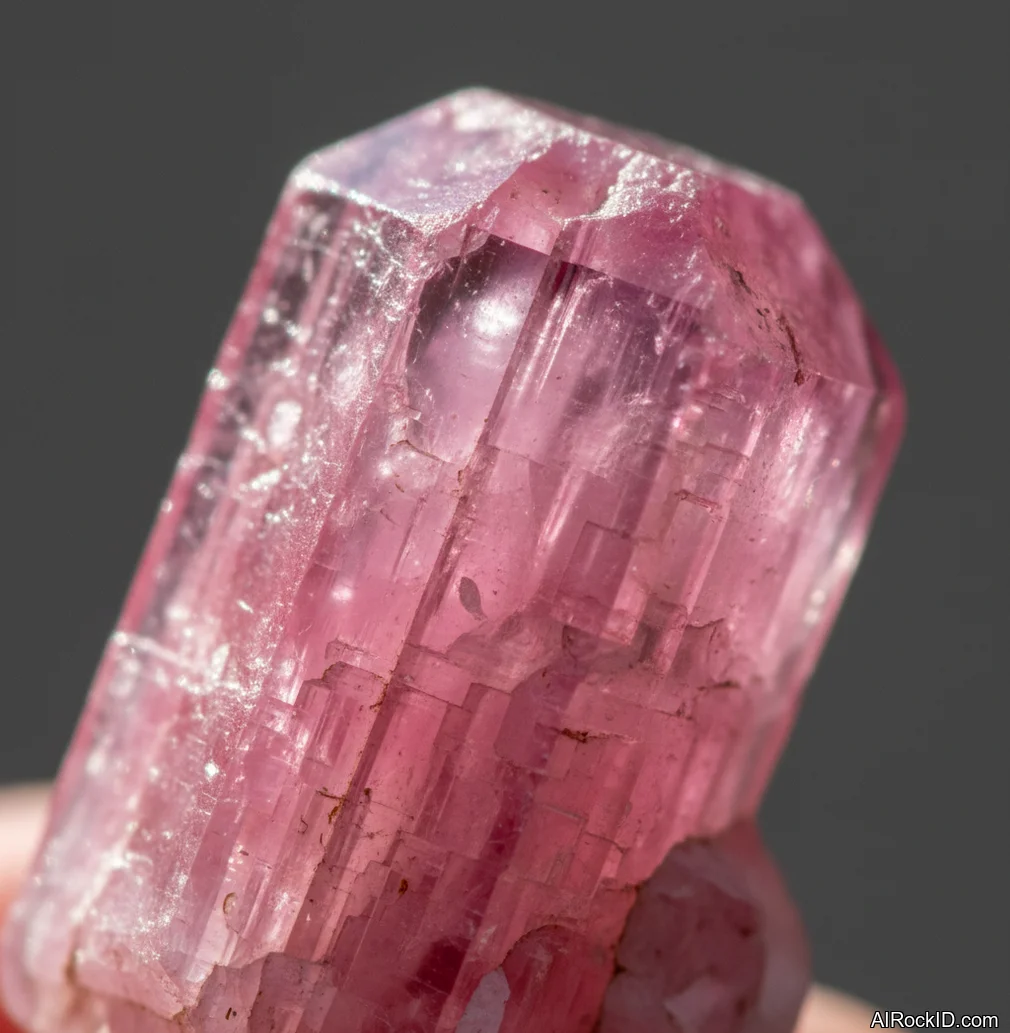
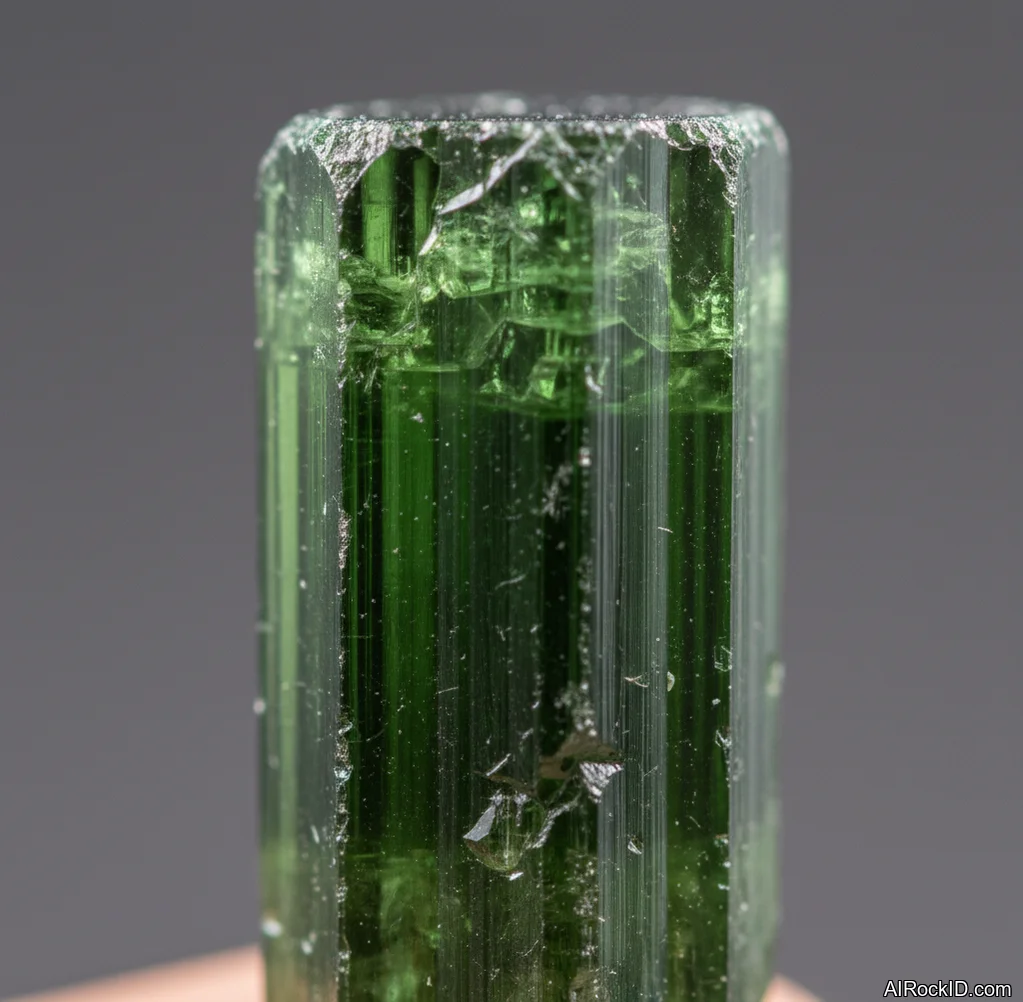
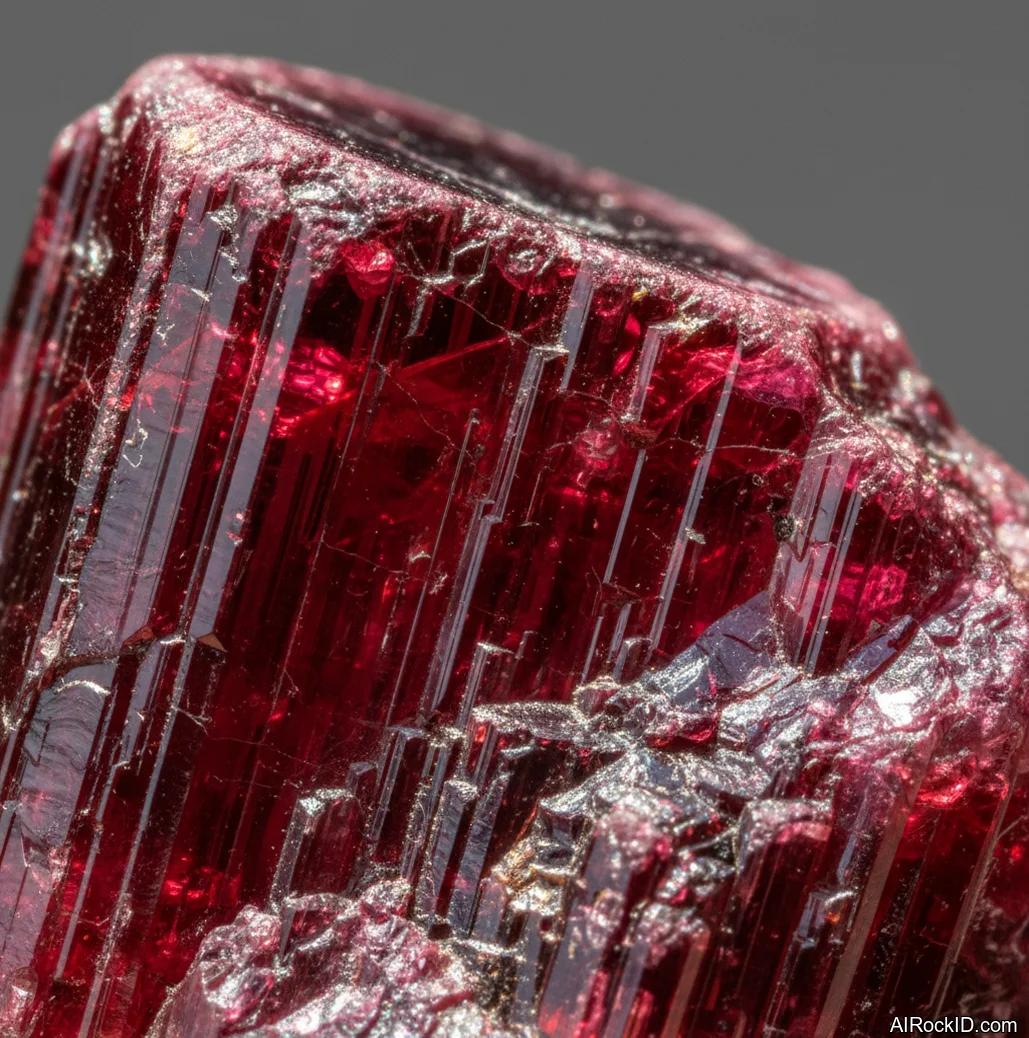
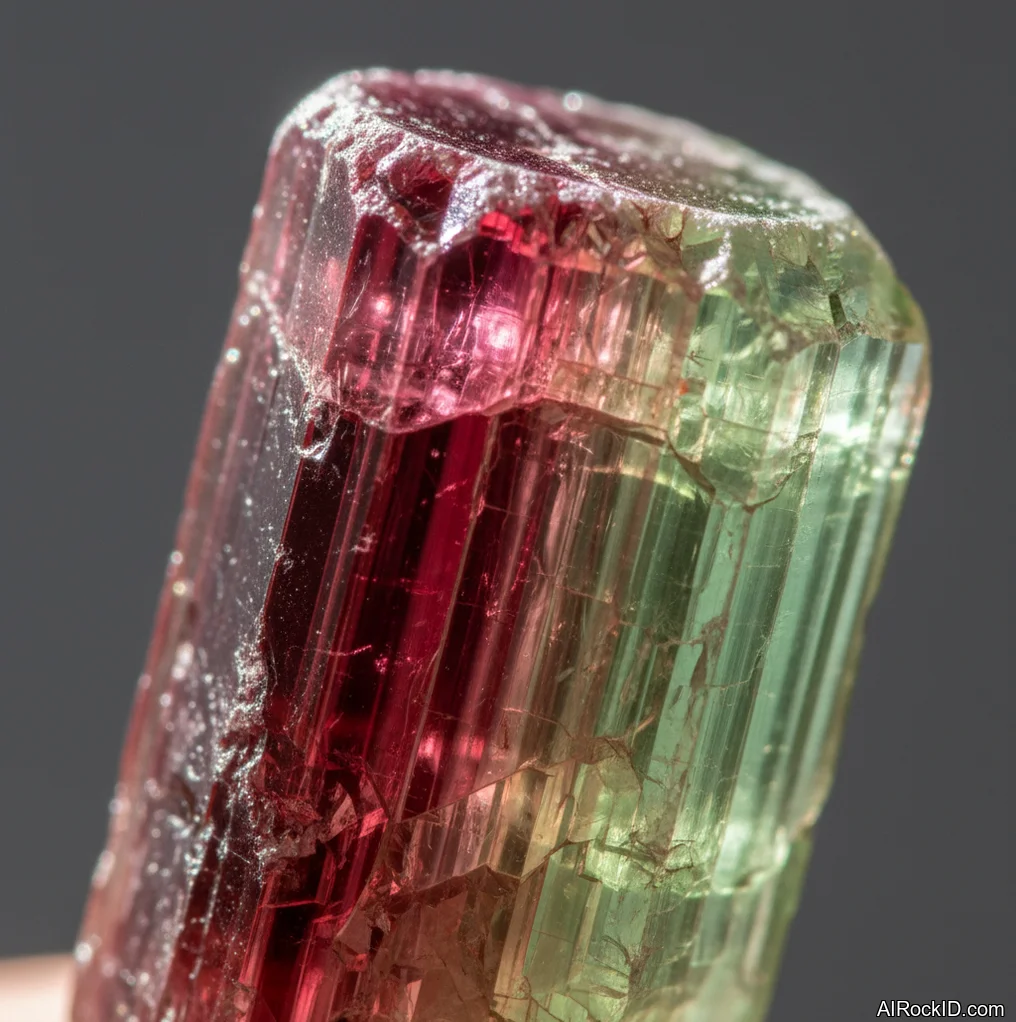
Watermelon tourmaline is an elbaite tourmaline with a pink to red core and a green outer zone, and in cross-section it really does look like a little slice.
Hold one and you notice that tourmaline glassiness immediately. But it isn’t slick the way quartz can be. It’s got this slightly grabby feel on the polish, especially right around the rim where the green zone hits that lighter transition band (you can feel it if you drag a fingertip across it). The top-end slices look like someone went at them with colored pencils. Real stuff? It can be kind of chaotic. Jagged zoning. Tiny fractures you only catch when you tilt it under a light. Sometimes the middle goes pale or even a little brownish. It happens.
People see it once and assume it’s dyed. And sure, some material on the market is treated. Thing is, natural color zoning in tourmaline has a look that’s hard to fake. The pink doesn’t bleed into the green the way dye tends to. It stops. Then you get that thin whitish band. Then it turns green. And clean slices with crisp rings cost more than you’d think for the size.
Origin & History
Tourmaline, as a mineral group, got its formal description in the 18th century. The name traces back to the Sinhalese word “turmali,” which people used for mixed-color stones (the kind you’d dump in a pouch and sort later).
Watermelon tourmaline isn’t its own species. It’s a trade name collectors slapped on bicolored elbaite, especially the pieces with that dead-obvious pink center and a green rim, like a little slice of fruit when it’s cut right.
Elbaite is named for Elba, Italy, since early specimens from there helped pin down what that variety even was. And if you’ve ever stood behind a gem show table with a plastic sign and a tray of polished slices, you’ve heard at least ten versions of who “discovered” watermelon tourmaline first. Thing is, it wasn’t really one person. It’s more that the market gradually settled on the nickname once rods and slices with strong color zoning started showing up regularly from pegmatite localities. Who could resist calling it that?
Where Is Watermelon Tourmaline Found?
Most collector-grade watermelon tourmaline comes out of granitic pegmatites, with Brazil and Madagascar being steady sources and California producing classic pieces.
Formation
Raw chunks pulled out of pegmatites pretty much tell you what happened. Tourmaline shows up late in the pegmatite sequence, right when the melt is packed with boron and all those leftover elements that didn’t slot cleanly into the earlier minerals. So it ends up hanging around lepidolite, quartz, albite, and sometimes those big, blocky microcline pieces that feel like a brick in your hand.
The color zoning is just chemistry changing on the fly while the crystal’s still growing. More manganese and lithium tends to shove elbaite toward pink to red, while iron plus chromium or vanadium pushes things green. And here’s the weird part: the crystal can switch gears mid-growth as conditions drift. You might get a pink core, then a pale band, then green, and sometimes it flips again right near the end (yep, it happens).
But don’t expect every specimen to look like a perfect textbook watermelon. Plenty of crystals are bicolor along the length, and that watermelon effect usually only shows up when someone slices the crystal crosswise with a saw and you see the rings in section.
How to Identify Watermelon Tourmaline
Color: Typically a pink to red center with a green rim, sometimes separated by a thin white or near-colorless band. Zoning can be sharp and ring-like in slices or lengthwise in prismatic crystals.
Luster: Vitreous luster on clean faces and polished surfaces.
Look closely at the boundary between colors. Natural zoning usually has a crisp stop and a narrow transition band, not a fuzzy bleed like dye. If you scratch it with a steel needle, it shouldn’t gouge easily, but it can get a faint mark if the surface is already abraded. And in hand, real tourmaline stays cool and “hard-glassy,” while a lot of dyed quartz slices feel warmer and softer at the edges after a minute.
Properties of Watermelon Tourmaline
Physical Properties
| Crystal System | Trigonal |
| Hardness (Mohs) | 7-7.5 (Hard (6-7.5)) |
| Density | 3.02-3.26 g/cm3 |
| Luster | Vitreous |
| Diaphaneity | Transparent to translucent |
| Fracture | Conchoidal |
| Streak | White |
| Magnetism | Non-magnetic |
| Colors | pink, red, green, white, colorless |
Chemical Properties
| Classification | Silicates |
| Formula | Na(Li,Al)3Al6(BO3)3Si6O18(OH)4 |
| Elements | Na, Li, Al, B, Si, O, H |
| Common Impurities | Mn, Fe, Cr, V, Ti |
Optical Properties
| Refractive Index | 1.614-1.666 |
| Birefringence | 0.018-0.040 |
| Pleochroism | Strong |
| Optical Character | Uniaxial |
Watermelon Tourmaline Health & Safety
Yeah, it’s safe to handle and put on display. The only real “risk” is pretty basic: if it’s bouncing around in a box or pocket with harder stones, a polished edge can pick up little chips or scratches (especially on the sharper corners).
Safety Tips
If you’re going to cut or grind it, assume any mineral dust is bad news. Keep it wet with water so the dust doesn’t plume up, run decent ventilation, and wear a proper respirator (not just a flimsy paper mask).
Watermelon Tourmaline Value & Price
Price Range
Rough/Tumbled: $15 - $250 per slice or specimen
Cut/Polished: $30 - $300 per carat
Clean, crisp color zoning, good transparency, and a tidy polish send the price up in a hurry. But once you’ve actually got it in your hand and tilt it under a lamp, those cracked slices and that muddy brown center show up fast. And yeah, that stuff’s pretty common. It’s also worth a lot less, even if the colors look fine from across the room.
Durability
Durable — Scratch resistance: Good, Toughness: Fair
It holds up fine in normal wear, but it can chip on edges and it doesn’t love hard knocks, especially in thin slices.
How to Care for Watermelon Tourmaline
Use & Storage
Store slices flat or in a padded box so the thin edges don’t knock into anything. If you keep it with other tourmalines, wrap it, since tourmaline-on-tourmaline contact can still leave little scuffs over time.
Cleaning
1) Rinse with lukewarm water and a drop of mild soap. 2) Use a soft toothbrush to clean along the color boundary and any tiny pits. 3) Rinse again and pat dry; don’t heat it to “speed dry” a thin slice.
Cleanse & Charge
For a simple reset, rinse and let it air dry, or set it on a piece of clean quartz for a night. Avoid prolonged direct sun on display if you’re picky about keeping the color looking its best.
Placement
A windowsill looks great for a week, but I prefer a shelf with indirect light so the polish stays sharp and you’re not cooking it all summer. Slices also photograph better under soft side light that brings out the zoning.
Caution
Skip ultrasonic cleaners and anything too harsh chemically. And don’t just drop thin slices into a pouch with tougher stones like corundum or topaz, because they’ll come out with little scuffs (ask me how I know). If it’s set in jewelry, keep it away from sharp knocks, since the edges chip fast.
Works Well With
Watermelon Tourmaline Meaning & Healing Properties
Pick up watermelon tourmaline and you’ll immediately get why people talk about it in “heart” terms. That green next to pink just hits your eye as calm meeting warmth, even if you’re not into metaphysical stuff at all. And when I’m sorting trays at a show, it’s one of the only stones that makes strangers stop mid-sentence, lean in, and ask if they can hold it (you can feel the cool weight in your palm for a second before it warms up).
In crystal lore, it’s tied to emotional balance, gentler communication, and cooling down reactive feelings. I treat that as a personal practice tool, not a medical claim. So if you want to use it on purpose, keep it simple: hold a slice while you journal, or park a small piece near the spot where you decompress at night, then pay attention. Do you slow down a bit? Do you check in with yourself instead of spiraling?
But here’s the honest friction. People expect it to “work” like a switch because it looks so dramatic. It won’t. Thing is, a lot of what’s on the market is thin slices with fractures, and those can feel kind of hectic to some folks if you’re sensitive to visual noise. If that’s you, look for a chunkier piece with softer zoning, or a polished cab where the pattern isn’t so busy.
Identify Any Crystal Instantly
Snap a photo and get properties, value, care instructions, and healing meanings in seconds.