Pink Tourmaline
What Is Pink Tourmaline?
Pink tourmaline is the pink-to-red kind of tourmaline, and most of the time it’s elbaite. The color comes mainly from manganese. And in your hand? It feels exactly like tourmaline ought to. Dense, sure, but not that heavy-for-its-size feeling you get with garnet. Run a fingernail down one of those long prism faces and you can catch the fine lengthwise stripes, like tiny ridges.
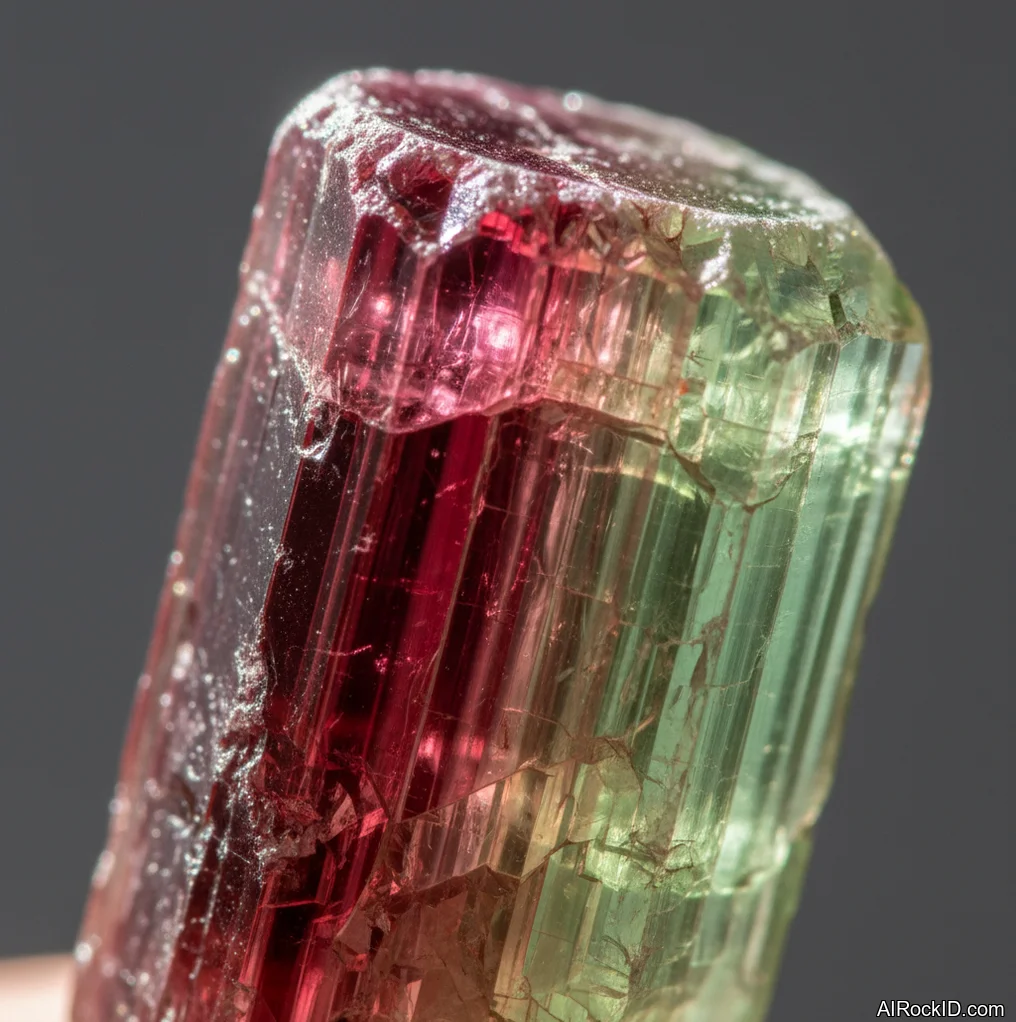
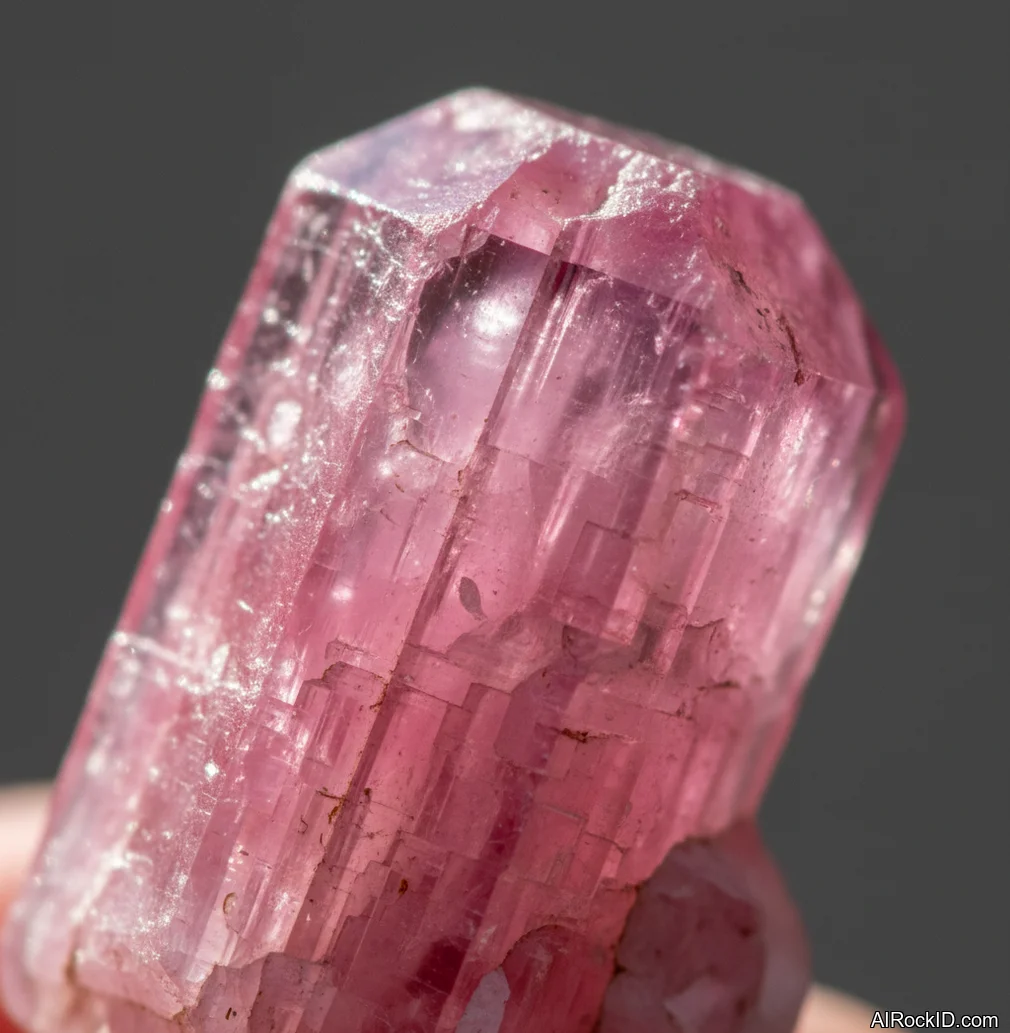
Grab a decent crystal and you’ll see the color isn’t just one flat pink. Tilt it under a lamp and it can swing from bubblegum to raspberry, especially when the piece has strong pleochroism. A lot of what’s sold retail is tumbled, which looks nice, but it covers up the things collectors actually look for (kind of a shame). Raw crystals keep the growth lines, the trigonal cross section, and sometimes you’ll spot a slightly darker “cap” on one end.
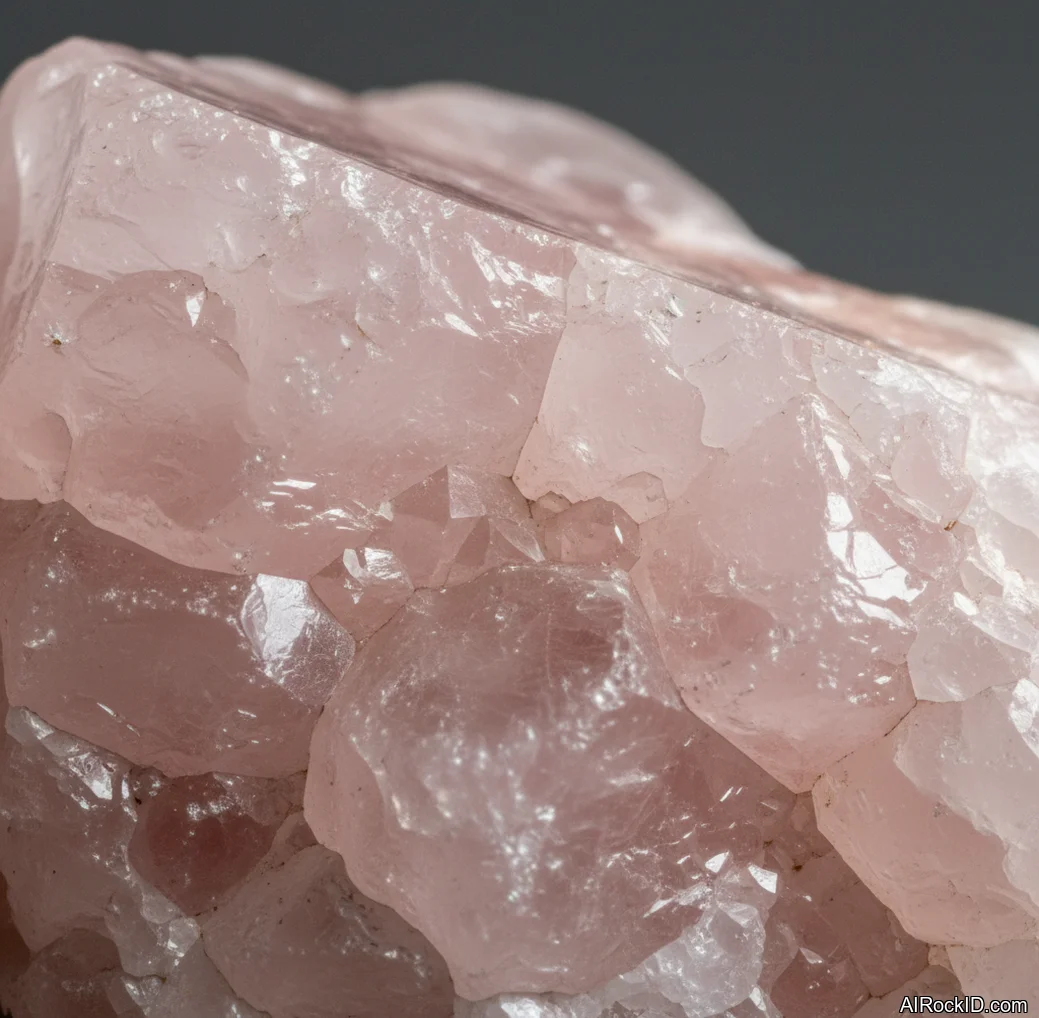
Compared to rose quartz, pink tourmaline reads sharper and more glassy, and the color tends to sit in zones or streaks instead of that soft, cloudy wash. But look, it’s not always the perfect lipstick pink people picture. Plenty of real material comes out pale, or a brownish pink, or it’s cracked up from pegmatite stress. And once you get into clean, saturated pieces, the price climbs fast.
Origin & History
Tourmaline, as a mineral group, was formally described in 1768 by the Swedish mineralogist Johan Gottschalk Wallerius. That write-up leaned on earlier European reports of “turmalin” stones turning up via Dutch trade routes, the kind of shipments that moved in steady, well-worn channels.
The name “tourmaline” itself goes back to the Sinhalese word “tōramalli” (often written as turamali). It was used for mixed-colored gemstones from Sri Lanka. Simple as that.
Pink tourmaline, though? That’s the one that really started getting talked about in the late 1800s and early 1900s, when bright material from California and Maine began showing up in quantity. And China’s imperial court famously favored pink tourmaline carvings, which helped cement the stone’s status as a luxury color long before Instagram and crystal shops. Who would’ve guessed that kind of influence would stick around so long?
Where Is Pink Tourmaline Found?
Pink tourmaline comes mostly from granitic pegmatites, with Brazil and parts of Africa producing a lot of the market material. The U.S. localities are legendary for collector crystals, even if they’re not pumping out volume like Brazil or Mozambique.
Formation
Raw pegmatite chunks kind of spill the whole story right on the table. Pink tourmaline shows up late as granitic melts cool down, when the leftover fluids are stuffed with boron, lithium, plus those weird elements that just won’t squeeze into the earlier minerals.
Look, if you stare at a crystal still sitting on matrix, you’ll usually spot the pegmatite crew crowded around it. Albite cleavelandite in those thin, flaky blades that feel almost like little porcelain chips under your fingernail, quartz, lepidolite, and then sometimes smoky quartz. Sometimes there’s a little beryl tucked in there too.
Manganese is the main color driver for pink. Thing is, the chemistry can shift while the crystal’s still growing, so zoning shows up all the time. That’s how you end up with a green rim wrapped around a pink core in watermelon tourmaline, or a single crystal that slides from hot pink to something much paler as it kept growing.
But pegmatites can be brutal on crystals. They crack. They get etched (you’ll see those slightly frosted faces and tiny surface bites). And a lot of the nicer pink tourmaline comes out as broken bits, because those long prisms really don’t enjoy getting yanked out of hard rock.
How to Identify Pink Tourmaline
Color: Pink tourmaline ranges from very pale blush to saturated magenta and red-pink, often with color zoning along the length of the crystal. Many pieces show slightly different color when viewed down the length versus across the crystal.
Luster: Vitreous luster, especially on fresh prism faces and broken surfaces.
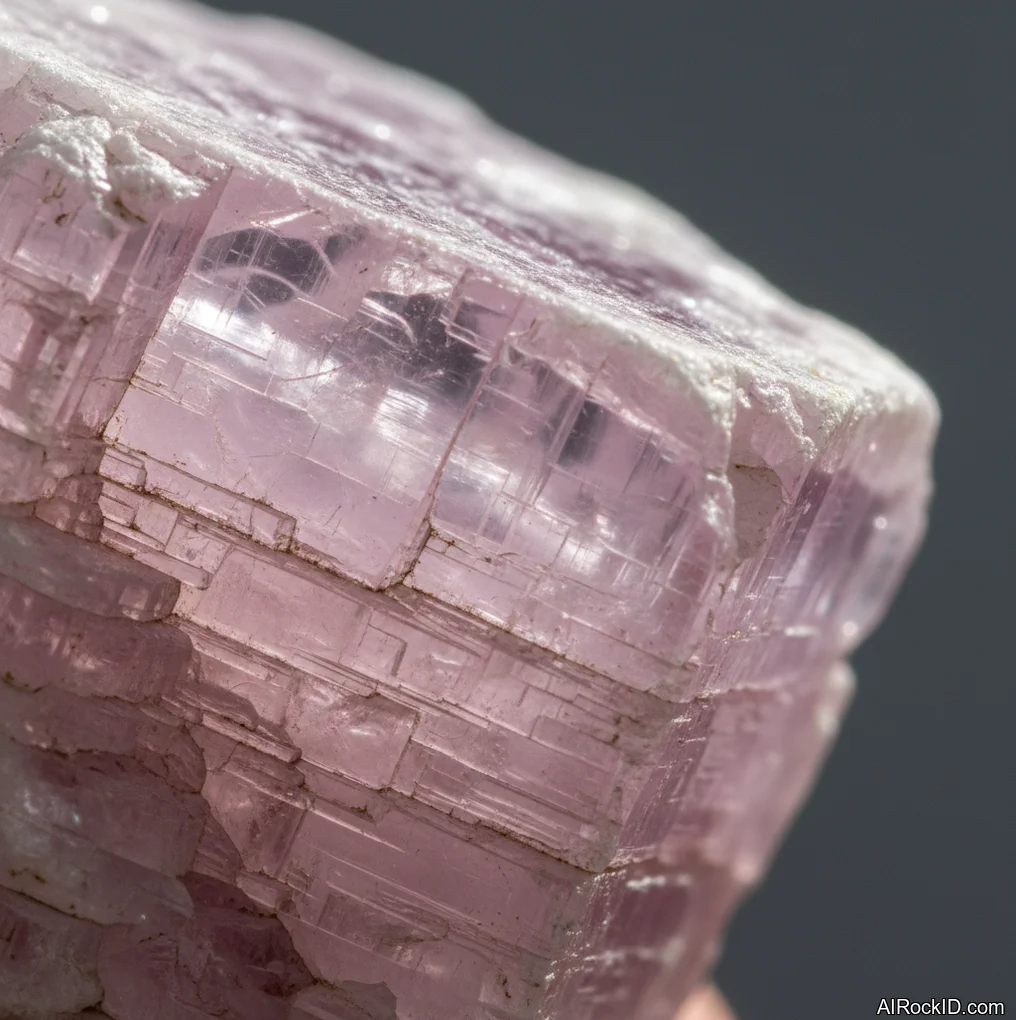
Pick up a raw crystal and run your thumb along the length. Those fine vertical striations are a classic tourmaline feel, almost like a record groove but subtler. If you rotate it under a single light, the color shift can be obvious, and glass imitations usually don’t do that the same way. The real test is the shape. Tourmaline commonly forms long prisms with a rounded triangular cross section, and the ends can be a bit messy or etched. Cheap versions in shops are often uniform pink ovals with no zoning, no inclusions, and a too-warm feel in the hand.
Properties of Pink Tourmaline
Physical Properties
| Crystal System | Trigonal |
| Hardness (Mohs) | 7-7.5 (Hard (6-7.5)) |
| Density | 3.02-3.26 g/cm3 |
| Luster | Vitreous |
| Diaphaneity | Transparent to translucent |
| Fracture | Conchoidal |
| Streak | White |
| Magnetism | Non-magnetic |
| Colors | Pale pink, Rose pink, Hot pink, Magenta, Red-pink |
Chemical Properties
| Classification | Silicates (cyclosilicate) |
| Formula | Na(Li,Al)3Al6(BO3)3Si6O18(OH)4 |
| Elements | Na, Li, Al, B, Si, O, H |
| Common Impurities | Mn, Fe, Ca, K, F |
Optical Properties
| Refractive Index | 1.614-1.666 |
| Birefringence | 0.018-0.040 |
| Pleochroism | Strong |
| Optical Character | Uniaxial |
Pink Tourmaline Health & Safety
Pink tourmaline is usually safe to pick up, wear, or keep out on a shelf. But if you’re cutting it or sanding it, treat it like any other stone: that fine grit gets everywhere (you’ll feel it on your fingers), so use basic rock-dust hygiene.
Safety Tips
If you’re cutting or grinding tourmaline, use water, keep the area well ventilated, and wear a proper respirator so you don’t end up breathing in that fine, silica-bearing dust. It hangs in the air longer than you’d think.
Pink Tourmaline Value & Price
Price Range
Rough/Tumbled: $10 - $250 per piece
Cut/Polished: $30 - $800 per carat
Price mostly comes down to saturation, transparency, and size, and clean hot pink shoots the number up fast. Terminated crystals sitting on matrix and gem cuts with no brown or gray tint (you know, that muddy cast) cost way more than the pale, tumbled stuff.
Durability
Durable — Scratch resistance: Good, Toughness: Fair
Pink tourmaline is stable for everyday wear, but it can chip on edges and it doesn’t love hard knocks, especially if it has internal fractures.
How to Care for Pink Tourmaline
Use & Storage
Store it in a pouch or a compartment box so it doesn’t get scuffed by quartz or corundum. I keep my tourmalines separated because the long crystals love to clack into each other and chip at the ends.
Cleaning
1) Rinse with lukewarm water and a drop of mild dish soap. 2) Use a soft toothbrush to clean along the striations and around matrix pockets. 3) Rinse well and pat dry; skip ultrasonic and steam cleaners.
Cleanse & Charge
If you do energetic cleansing, a quick rinse, a smoke cleanse, or resting it on dry selenite is gentle. I avoid leaving colored tourmaline baking in direct sun for long stretches because some pieces can look washed out over time.
Placement
On a shelf, it looks best with side lighting so the striations throw little highlights. If it’s a gemmy piece, a dark base makes the pink read stronger.
Caution
Don’t bang it around, and please don’t chuck it into a mixed crystal bowl where it’ll clack against everything else. Keep it away from harsh chemicals, too. And skip the hot ultrasonic cleaners, because the heat and vibration can work their way into tiny fractures and make them worse.
Works Well With
Pink Tourmaline Meaning & Healing Properties
At first glance, pink tourmaline gets lumped in with rose quartz, but to me it feels cleaner. Less haze. More snap. When I’m holding a raw chunk, the edges press into my palm a bit and I notice my grip loosens without that drowsy, muffled vibe some softer pink stones give.
People link it to the heart and to emotional repair, and yeah, that tracks with how it’s used in a lot of modern crystal circles. I keep that in the personal-practice bucket, not the medicine bucket. And if you’re dealing with anxiety or grief, crystals can be a grounding habit, but they’re not a replacement for a therapist, a doctor, or actual sleep. (Seriously, sleep.)
Thing is, shopping for it can get messy because the market shoves a bunch of different looks under one label. Some sellers call any pink tourmaline “rubellite,” and that’s not really how gem people use the word. So if you’re picking one for calm, grab the piece that actually feels calming in your hand. Obvious, right? But I’ve watched people buy an expensive hot pink stone that feels sharp and hectic for them, then they wonder why they never reach for it.
Identify Any Crystal Instantly
Snap a photo and get properties, value, care instructions, and healing meanings in seconds.